Arbuscular mycorrhizal fungi (AMF) belong to a widely distributed, ecologically and economically important symbiotic fungal phylum, the Glomeromycota. These heterotrophic fungi take plant-assimilated carbon through an obligate symbiosis with most vascular plants, in exchange of enhancing their host's uptake of mineral nutrients (phosphate and nitrates) from the soil (Bonfante & Genre, 2010) and protecting them against pests and fungal pathogens (Bonfante & Genre, 2010; Corradi & Bonfante, 2012). In addition to being ecologically relevant, the AMF are also intriguing from a cellular and genetic perspective, as they produce coenocytic hyphae and spores that contain multiple nuclei in a common cytoplasm. The presence of co-existing nuclei has been suggested by some to facilitate the purge of deleterious mutations in these supposed ancient asexuals (Sanders & Sanders, 2003; Sanders & Croll, 2010), although recent studies have found indirect evidence that sex and more conventional mode of reproduction may exist in this lineage (Riley & Corradi, 2013; Riley et al., 2014).
The genetic organization of coexisting nuclei in the Glomeromycota has been a major source of debate for the past 15 years, with two opposite hypotheses being supported within the research community. Specifically, the presence of an unusually high sequence variability in some AMF genes has been suggested by some authors to result from the presence of genetically divergent nuclei within AMF spores and hyphae (i.e. heterokaryosis hypothesis). This hypothesis has been backed by sequence analyses of cloned PCR products and fluorescence in situ hybridization (Kuhn et al., 2001), as well as by models based on the existence of hyphal fusions among genetically nonidentical individuals (Bever & Wang, 2005) and by quantitative real-time PCR approaches of a few selected genes (Hijri & Sanders, 2005).
Though highly intriguing, the assumption that AMF could harbor a population of diverse nuclei has also faced challenges from other studies. In particular, PCR-based analyses of individually microdissected nuclei and approaches based on the distribution of genetic variation among and within field isolates of AMF, have both indicated that molecular diversity in AMF may be the result of polyploidy – that is, present within each AMF nucleus, as opposed to among nuclei (Pawlowska & Taylor, 2004; Pawlowska, 2005). Models supporting the possibility of heterokaryosis in AMF based on the nuclear exchange have also been disputed (Pawlowska & Taylor, 2005). More recently, the presence of heterokaryosis in AMF has been challenged by whole genome analyses of diversity, which revealed that model AMF (Rhizophagus irregularis) harbors very little polymorphism (e.g. ranging from 0.06 to 0.43 SNP kb−1, (Tisserant et al., 2013; Lin et al., 2014)), in line with what is known for homokaryotic fungi.
For more than 450 million years, arbuscular mycorrhizal fungi (AMF) have formed intimate, mutualistic symbioses with the vast majority of land plants and are major drivers in almost all terrestrial ecosystems. The obligate plant-symbiotic AMF host additional symbionts, so-called Mollicutes-related endobacteria (MRE). To uncover putative functional roles of these widespread but yet enigmatic MRE, we sequenced the genome of DhMRE living in the AMF Dentiscutata heterogama. Multilocus phylogenetic analyses showed that MRE form a previously unidentified lineage sister to the hominis group of Mycoplasma species. DhMRE possesses a strongly reduced metabolic capacity with 55% of the proteins having unknown function, which reflects unique adaptations to an intracellular lifestyle. We found evidence for transkingdom gene transfer between MRE and their AMF host. At least 27 annotated DhMRE proteins show similarities to nuclear-encoded proteins of the AMF Rhizophagus irregularis, which itself lacks MRE. Nuclear-encoded homologs could moreover be identified for another AMF, Gigaspora margarita, and surprisingly, also the non-AMF Mortierella verticillata. Our data indicate a possible origin of the MRE-fungus association in ancestors of the Glomeromycota and Mucoromycotina. The DhMRE genome encodes an arsenal of putative regulatory proteins with eukaryotic-like domains, some of them encoded in putative genomic islands. MRE are highly interesting candidates to study the evolution and interactions between an ancient, obligate endosymbiotic prokaryote with its obligate plant-symbiotic fungal host. Our data moreover may be used for further targeted searches for ancient effector-like proteins that may be key components in the regulation of the arbuscular mycorrhiza symbiosis.
No tree is an island, and no place is this truer than the forest. Hidden beneath the soil of the forest understory is a labyrinth of fungal connections between tree roots that scientists call the mycorrhizal network. Others have called it the wood-wide web.
The connections are made by the filaments of fungi that grow in and around plant roots and produce many of the forest mushrooms we know and love. They bond trees so intimately that the more you learn about them, the more it is a struggle to view any tree as an individual. Forest trees and their root fungi are more or less a commune in which they share resources in a fashion so unabashedly socialist that I hesitate to describe it in detail lest conservatives reading this go out and immediately set light to the nearest copse.
This story stars two trees. They are the interior douglas-fir and the ponderosa pine — hearty and prolific trees that grow over large spans of the American west. The ponderosa pine is my favorite conifer and maybe also my favorite tree. Its forests are full of air and light; its bark smells like butterscotch or vanilla when warmed by the sun.
Significant resource sharing between mycorrhizal trees is still highly speculative and this lovely hypothesis requires additional experimental evidence.
The ‘phosphorus problem’ has recently received strong interest with two distinct strands of importance. The first is that too much phosphorus (P) is entering into waste water, creating a significant economic and ecological problem. Secondly, while agricultural demand for phosphate fertilizer is increasing to maintain crop yields, rock phosphate reserves are rapidly declining. Unravelling the mechanisms by which plants sense, respond to, and acquire phosphate can address both problems, allowing the development of crop plants that are more efficient at acquiring and using limited amounts of phosphate while at the same time improving the potential of plants and other photosynthetic organisms for nutrient recapture and recycling from waste water. In this review, we attempt to synthesize these important but often disparate parts of the debate in a holistic fashion, since solutions to such a complex problem require integrated and multidisciplinary approaches that address both P supply and demand. Rapid progress has been made recently in our understanding of local and systemic signalling mechanisms for phosphate, and of expression and regulation of membrane proteins that take phosphate up from the environment and transport it within the plant. We discuss the current state of understanding of such mechanisms involved in sensing and responding to phosphate stress. We also discuss approaches to improve the P-use efficiency of crop plants and future direction for sustainable use of P, including use of photosynthetic organisms for recapture of P from waste waters.
An artificial increase of cyclic diguanylate (c-di-GMP) levels in Sinorhizobium meliloti 8530, a bacterium that does not carry known cellulose synthesis genes, leads to overproduction of a substance that binds the dyes Congo red and calcofluor. Sugar composition and methylation analyses and NMR studies identified this compound as a linear mixed-linkage (1→3)(1→4)-β-D-glucan (ML β-glucan), not previously described in bacteria but resembling ML β-glucans found in plants and lichens. This unique polymer is hydrolyzed by the specific endoglucanase lichenase, but, unlike lichenan and barley glucan, it generates a disaccharidic →4)-β-D-Glcp-(1→3)-β-D-Glcp-(1→ repeating unit. A two-gene operon bgsBA required for production of this ML β-glucan is conserved among several genera within the order Rhizobiales, where bgsA encodes a glycosyl transferase with domain resemblance and phylogenetic relationship to curdlan synthases and to bacterial cellulose synthases. ML β-glucan synthesis is subjected to both transcriptional and posttranslational regulation. bgsBA transcription is dependent on the exopolysaccharide/quorum sensing ExpR/SinI regulatory system, and posttranslational regulation seems to involve allosteric activation of the ML β-glucan synthase BgsA by c-di-GMP binding to its C-terminal domain. To our knowledge, this is the first report on a linear mixed-linkage (1→3)(1→4)-β-glucan produced by a bacterium. The S. meliloti ML β-glucan participates in bacterial aggregation and biofilm formation and is required for efficient attachment to the roots of a host plant, resembling the biological role of cellulose in other bacteria.
Most of the nitrogen (N) requirement for soybean is supplied through the N fixation process, which is a result of a beneficial relationship between the plant and soil bacteria. Soybean seed should be inoculated with the appropriate bacteria to facilitate nodulation. Healthy and active nodules are pink to red on the inside and 2-4 mm in diameter. Light green, stunted soybean plants at the beginning of reproductive growth stages may indicate poor nodulation or other deficiency or environmental stress.
The coexistence of symbionts with different functional roles in co-occurring plants is highly probable in terrestrial ecosystems. Analyses of how plants and microbes interact above- and belowground in multi-symbiotic systems are key to understand community structure and ecosystem functioning. We performed an outdoor experiment in mesocosms to investigate the consequences of the interaction of a provider belowground symbiont of legumes (nitrogen-fixing bacteria) and a protector aerial fungal symbiont of grasses (Epichloё endophyte) on nitrogen dynamics and aboveground net primary productivity. Four plants of Trifolium repens (Trifolium, a perennial legume) either inoculated or not with Rhizobium leguminosarum, grew surrounded by 16 plants of Lolium multiflorum (Lolium, an annual grass), with either low or high levels of the endophyte Neotyphodium occultans. After five months, we quantified the number of nodules in Trifolium roots, shoot biomass of both plant species, and the contribution of atmospheric nitrogen fixation vs. soil nitrogen uptake to above ground nitrogen in each plant species. The endophyte increased grass biomass production (+ 16%), and nitrogen uptake from the soil – the main source for the grass. Further, it reduced the nodulation of neighbour Trifolium plants (−50%). Notably, due to a compensatory increase in nitrogen fixation per nodule, this reduced neither its atmospheric nitrogen fixation – the main source of nitrogen for the legume – nor its biomass production, both of which were doubled by rhizobial inoculation. In consequence, the total amount of nitrogen in aboveground biomass and aboveground productivity were greatest in mesocosms with both symbionts (i.e. high rhizobia + high endophyte). These results show that, in spite of the deleterious effect of the endophyte on the establishment of the rhizobia–legume symbiosis, the coexistence of these symbionts, leading to additive effects on nitrogen capture and aboveground productivity, can generate complementarity on the functioning of multi-symbiotic systems.
23rd North America on Symbiotic Nitrogen Fixation (NACSNF) (formerly called the Rhizobium Conference) initiated more than 40 years ago, since then it has been held approximately in a two-year cycle.
Respiratory oxidative burst homolog (RBOH)-mediated reactive oxygen species (ROS) regulate a wide range of biological functions in plants. They play a critical role in the symbiosis between legumes and nitrogen-fixing bacteria or arbuscular mycorrhizal (AM) fungi. For instance, overexpression of PvRbohBenhances nodule numbers, but reduces mycorrhizal colonization in Phaseolus vulgaris hairy roots and downregulation has the opposite effect. In the present study, we assessed the effect of both rhizobia and AM fungi on electrolyte leakage in transgenic P. vulgaris roots overexpressing (OE) PvRbohB. We demonstrate that elevated levels of electrolyte leakage in uninoculated PvRbohB-OE transgenic roots were alleviated by either Rhizobium or AM fungi symbiosis, with the latter interaction having the greater effect. These results suggest that symbiont colonization reduces ROS elevated electrolyte leakage in P. vulgarisroot cells.
Glutathione peroxidases (Gpxs) are antioxidant enzymes not studied so far in legume nodules, despite the fact that reactive oxygen species are produced at different steps of the symbiosis. The function of two Gpxs that are highly expressed in nodules of the model legume Lotus japonicuswas examined. Gene expression analysis, enzymatic and nitrosylation assays, yeast cell complementation, in situ mRNA hybridization, immunoelectron microscopy, and LjGpx-green fluorescent protein (GFP) fusions were used to characterize the enzymes and to localize each transcript and isoform in nodules. The LjGpx1 and LjGpx3 genes encode thioredoxin-dependent phospholipid hydroperoxidases and are differentially regulated in response to nitric oxide (NO) and hormones. LjGpx1 and LjGpx3 are nitrosylated in vitro or in plants treated with S-nitrosoglutathione (GSNO). Consistent with the modification of the peroxidatic cysteine of LjGpx3, in vitro assays demonstrated that this modification results in enzyme inhibition. The enzymes are highly expressed in the infected zone, but the LjGpx3 mRNA is also detected in the cortex and vascular bundles. LjGpx1 is localized to the plastids and nuclei, and LjGpx3 to the cytosol and endoplasmic reticulum. Based on yeast complementation experiments, both enzymes protect against oxidative stress, salt stress, and membrane damage. It is concluded that both LjGpxs perform major antioxidative functions in nodules, preventing lipid peroxidation and other oxidative processes at different subcellular sites of vascular and infected cells. The enzymes are probably involved in hormone and NO signalling, and may be regulated through nitrosylation of the peroxidatic cysteine essential for catalytic function.
Root systems consist of different root types (RTs) with distinct developmental and functional characteristics. RTs may be individually reprogrammed in response to their microenvironment to maximize adaptive plasticity. Molecular understanding of such specific remodeling—although crucial for crop improvement—is limited. Here, RT-specific transcriptomes of adult rice crown, large and fine lateral roots were assessed, revealing molecular evidence for functional diversity among individual RTs. Of the three rice RTs, crown roots displayed a significant enrichment of transcripts associated with phytohormones and secondary cell wall (SCW) metabolism, whereas lateral RTs showed a greater accumulation of transcripts related to mineral transport. In nature, arbuscular mycorrhizal (AM) symbiosis represents the default state of most root systems and is known to modify root system architecture. Rice RTs become heterogeneously colonized by AM fungi, with large laterals preferentially entering into the association. However, RT-specific transcriptional responses to AM symbiosis were quantitatively most pronounced for crown roots despite their modest physical engagement in the interaction. Furthermore, colonized crown roots adopted an expression profile more related to mycorrhizal large lateral than to noncolonized crown roots, suggesting a fundamental reprogramming of crown root character. Among these changes, a significant reduction in SCW transcripts was observed that was correlated with an alteration of SCW composition as determined by mass spectrometry. The combined change in SCW, hormone- and transport-related transcript profiles across the RTs indicates a previously overlooked switch of functional relationships among RTs during AM symbiosis, with a potential impact on root system architecture and functioning.
On July 17-21, 2016, Portland, Oregon, the "City of Roses" at the confluence of the Columbia and Willamette rivers, will host the 17th International Congress of Molecular Plant-Microbe Interactions. The meeting will be held at the Oregon Convention Center, across the river from downtown Portland and connected by light rail to downtown and the airport.
The Local Scientific Committee has been hard at work developing the program, and incorporating lots of suggestions from the IS-MPMI Board and from attendees at past IC-MPMI meetings. The 2016 meeting will offer a streamlined program with lots of time for networking, posters, and recreation. There will be seven plenary sessions, nine sets of three concurrent sessions, and three poster sessions. There is also time on Sunday, July 17, for special sessions. Contact Brett Tyler if you wish to host a special session. Evening and Wednesday afternoon activities are all free.
Abiotic stresses cause changes in the balance of phytohormones in plants and result in inhibited root growth and an increase in the susceptibility of plants to root rot disease. The aim of this work was to ascertain whether microbial indole-3-acetic acid (IAA) plays a role in the regulation of root growth and microbially mediated control of root rot of cotton caused by Fusarium solani. Seed germination and seedling growth were improved by both NaCl and Mg2SO4 (100 mM) solutions when treated with root-associated bacterial strains Pseudomonas putida R4 and P. chlororaphis R5, which are able to produce IAA. These bacterial strains were also able to reduce the infection rate of cotton root rot (from 70 to 39%) caused by F. solani under gnotobiotic conditions. The application of a low concentration of IAA (0.01 and 0.001 μg/ml) stimulated plant growth and reduced disease incidence caused by F. solani (from 70 to 41-56%, respectively). Shoot and root growth and dry matter increased significantly and disease incidence was reduced by bacterial inoculants in natural saline soil. These results suggest that bacterial IAA plays a major role in salt stress tolerance and may be involved in induced resistance against root rot disease of cotton.
Proteins that function in the same pathways, protein complexes or the same environmental conditions can show similar patterns of sequence conservation across phylogenetic clades. In species that no longer require a specific protein complex or pathway, these proteins, as a group, tend to be lost or diverge. Analysis of the similarity in patterns of sequence conservation across a large set of eukaryotes can predict functional associations between different proteins, identify new pathway members and reveal the function of previously uncharacterized proteins. We used normalized phylogenetic profiling to predict protein function and identify new pathway members and disease genes. The phylogenetic profiles of tens of thousands conserved proteins in the human, mouse, Caenorhabditis elegans and Drosophila genomes can be queried on our new web server, PhyloGene. PhyloGene provides intuitive and user-friendly platform to query the patterns of conservation across 86 animal, fungal, plant and protist genomes. A protein query can be submitted either by selecting the name from whole-genome protein sets of the intensively studied species or by entering a protein sequence. The graphic output shows the profile of sequence conservation for the query and the most similar phylogenetic profiles for the proteins in the genome of choice. The user can also download this output in numerical form.
In phosphorus (P)-poor ecosystems, microbial communities can play a major role in the nitrogen (N) mineral nutrition during N2 fixation in legumes. This study investigated the role of P nutrition on the composition of N2-fixing bacterial community in Virgilia divaricata root nodules, grown under glasshouse conditions. V. divaricata seeds were germinated in Fynbos soil as a natural inoculum, and, thereafter, transferred into sterile quartz-sand cultures and supplied with 500 µM P and 5 µM P, respectively. The N2-fixing bacterial communities in the rhizosphere and root nodules were examined on the basis of the polymerase chain reaction–denaturing gradient gel electrophoresis (PCR–DGGE) banding patterns of 16S rDNA and sequencing methods. The GenBank blast results showed that V. divaricata was nodulated by a wide range of root-nodule bacterial strains also found in the rhizosphere. These included Burkholderia phytofirmans, Burkholderia sp. and Bradyrhizobium sp., during both high and low P supply. The 15N natural-abundance data also confirmed that 40–50% of the N nutrition was from symbiotic N2 fixation. This is not only evidence of nodulation, but an indication of the adaptation of a range of N2-fixing bacterial strain species to the nutrient-poor, sandy, acidic soil of the Mediterranean-type ecosystems of the fynbos vegetation in the Cape Floristic Region (CFR). Legume species V. divaricata is highly adapted to the low-nutrient soils of its native range by its association with the symbiotic N2-fixing bacteria.
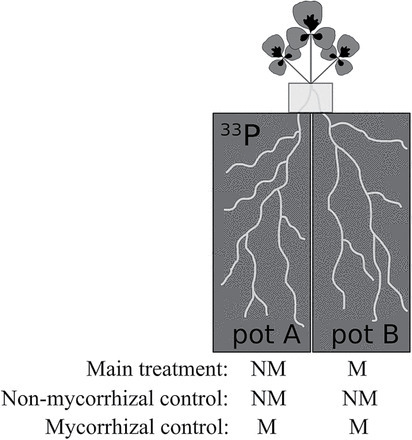
Two pathways exist for plant Pi uptake from soil: via root epidermal cells (direct pathway) or via associations with arbuscular mycorrhizal (AM) fungi, and the two pathways interact in a complex manner. This study investigated distal and local effects of AM colonization on direct root Pi uptake and root growth, at different soil P levels. Medicago truncatula was grown at three soil P levels in split-pots with or without AM fungal inoculation and where one root half grew into soil labelled with 33P. Plant genotypes included the A17 wild type and the mtpt4 mutant. The mtpt4 mutant, colonized by AM fungi, but with no functional mycorrhizal pathway for Pi uptake, was included to better understand effects of AM colonization per se. Colonization by AM fungi decreased expression of direct Pi transporter genes locally, but not distally in the wild type. In mtpt4 mutant plants, direct Pi transporter genes and the Pi starvation-induced gene Mt4 were more highly expressed than in wild-type roots. In wild-type plants, less Pi was taken up via the direct pathway by non-colonized roots when the other root half was colonized by AM fungi, compared with non-mycorrhizal plants. Colonization by AM fungi strongly influenced root growth locally and distally, and direct root Pi uptake activity locally, but had only a weak influence on distal direct pathway activity. The responses to AM colonization in the mtpt4 mutant suggested that in the wild type, the increased P concentration of colonized roots was a major factor driving the effects of AM colonization on direct root Pi uptake.
Biological Nitrogen Fixation, Biological Nitrogen Fixation (Volume II) [Frans J. de Bruijn] on Amazon.com. *FREE* shipping on qualifying offers. Biological Nitrogen Fixation is a comprehensive 3 volume work bringing together both review and original research articles on key topics in nitrogen fixation. Chapters across all three volumes emphasize molecular techniques and advanced biochemical analysis approaches applicable to various aspects of biological nitrogen fixation
IN the coming weeks, two million Americans will earn a bachelor’s degree and either join the work force or head to graduate school. They will be joyous that day, and they will remember fondly the schools they attended. But as this unique chapter of life closes and they reflect on campus events, one primary part of higher education will fall low on the ladder of meaningful contacts: the professors.
Rhizosphere, the interface between soil and plant roots, is a chemically complex environment which supports the development and growth of diverse microbial communities. The composition of the rhizosphere microbiome is dynamic and controlled by multiple biotic and abiotic factors that include environmental parameters, physiochemical properties of the soil, biological activities of the plants and chemical signals from the plants and bacteria which inhabit the soil adherent to root-system. Recent advancement in molecular and microbiological techniques has unravelled the interactions among rhizosphere residents at different levels. In this review, we elaborate on various factors that determine plant-microbe and microbe-microbe interactions in the rhizosphere, with an emphasis on the impact of host genotype and developmental stages which together play pivotal role in shaping the nature and diversity of root exudations. We also discuss about the coherent functional groups of microorganisms that colonize rhizosphere and enhance plant growth and development by several direct and indirect mechanisms. Insights into the underlying structural principles of indigenous microbial population and the key determinants governing rhizosphere ecology will provide directions for developing techniques for profitable applicability of beneficial microorganisms in sustainable agriculture and nature restoration.
Plant species vary greatly in their responsiveness to nutritional soil mutualists, such as mycorrhizal fungi and rhizobia, and this responsiveness is associated with a trade-off in allocation to root structures for resource uptake. As a result, the outcome of plant competition can change with the density of mutualists, with microbe-responsive plant species having high competitive ability when mutualists are abundant and non-responsive plants having high competitive ability with low densities of mutualists. When responsive plant species also allow mutualists to grow to greater densities, changes in mutualist density can generate a positive feedback, reinforcing an initial advantage to either plant type. We study a model of mutualist-mediated competition to understand outcomes of plant-plant interactions within a patchy environment. We find that a microbe-responsive plant can exclude a non-responsive plant from some initial conditions, but it must do so across the landscape including in the microbe-free areas where it is a poorer competitor. Otherwise, the non-responsive plant will persist in both mutualist-free and mutualist-rich regions. We apply our general findings to two different biological scenarios: invasion of a non-responsive plant into an established microbe-responsive native population, and successional replacement of non-responders by microbe-responsive species. We find that resistance to invasion is greatest when seed dispersal by the native plant is modest and dispersal by the invader is greater. Nonetheless, a native plant that relies on microbial mutualists for competitive dominance may be particularly vulnerable to invasion because any disturbance that temporarily reduces its density or that of the mutualist creates a window for a non-responsive invader to establish dominance. We further find that the positive feedbacks from associations with beneficial soil microbes create resistance to successional turnover. Our theoretical results constitute an important first step toward developing a general understanding of the interplay between mutualism and competition in patchy landscapes, and generate qualitative predictions that may be tested in future empirical studies.
Brassinosteroids (BRs) have been shown to enhance stress tolerance by inducing antioxidant defense systems. However, the mechanisms of BR-induced antioxidant defense in plants remain to be determined. In this study, the role of calcium (Ca2+) and maize calcium/calmodulin-dependent protein kinase (CCaMK), ZmCCaMK, in BR-induced antioxidant defense, and the relationship between ZmCCaMK and Ca2+ in BR signaling were investigated. BR treatment led to a significant increase in cytosolic Ca2+ concentration in protoplasts from maize mesophyll, and Ca2+ was shown to be required for BR-induced antioxidant defense. Treatment with BR induced increases in gene expression and enzyme activity of ZmCCaMK in maize leaves. Transient overexpression and silencing of ZmCCaMK in maize protoplasts demonstrated that ZmCCaMK was required for BR-induced antioxidant defense. The requirement for CCaMK was further investigated using a loss-of-function mutant of OsCCaMK, the orthologous gene of ZmCCaMK in rice. Consistent with the findings in maize, BR treatment could not induce antioxidant defense in the riceOsCCAMK mutant. Furthermore, Ca2+ was required for BR-induced gene expression and activation of ZmCCaMK, while ZmCCaMK was shown to enhance the BR-induced increase in cytosolic Ca2+ concentration. Moreover, our results also showed that ZmCCaMK and H2O2 influenced each other. These results indicate that Ca2+ works together with ZmCCaMK in BR-induced antioxidant defense, and there are two positive feedback loops between Ca2+ or H2O2 and ZmCCaMK in BR signaling in maize.
Orthologous proteins of the Crp/Fnr family have been previously implicated in controlling expression and/or activity of the NifA transcriptional activator in some diazotrophs. This study aimed to address the role of three Fnr-like proteins from H. seropedicae SmR1 in controlling NifA activity and consequent NifA-mediated transcription activation.
Results
The activity of NifA-dependent transcriptional fusions (nifA::lacZ and nifB::lacZ) was analysed in a series of H. seropedicae fnr deletion mutant backgrounds. We found that combined deletions in both the fnr1 and fnr3 genes lead to higher expression of both the nifA and nifB genes and also an increased level of nifH transcripts. Expression profiles of nifB under different oxygen concentrations, together with oxygen consumption measurements suggest that the triple fnrmutant has higher respiratory activity when compared to the wild type, which we believe to be responsible for greater stability of the oxygen sensitive NifA protein. This conclusion was further substantiated by measuring the levels of NifA protein and its activity in fnr deletion strains in comparison with the wild-type.
Conclusions
Fnr proteins are indirectly involved in controlling the activity of NifA in H. seropedicae, probably as a consequence of their influence on respiratory activity in relation to oxygen availability. Additionally we can suggest that there is some redundancy in the physiological function of the three Fnr paralogs in this organism, since altered respiration and effects on NifA activity are only observed in deletion strains lacking both fnr1 and fnr3.
The specific interaction between legumes and Rhizobium-type bacteria leads to the establishment of a symbiotic relationship characterized by the formation of new differentiated organs named nodules, which provide a niche for bacterial nitrogen (N2) fixation. In the nodules, bacteria differentiate into bacteroids with the ability to fix atmospheric N2 via nitrogenase activity. As nitrogenase is strongly inhibited by oxygen, N2fixation is made possible by the microaerophilic conditions prevailing in the nodules. Increasing evidence has shown the presence of NO during symbiosis, from early interaction steps between the plant and the bacterial partners to N2-fixing and senescence steps in mature nodules. Both the plant and the bacterial partners participate in NO synthesis. NO was found to be required for the optimal establishment of the symbiotic interaction. Transcriptomic analysis at an early stage of the symbiosis showed that NO is potentially involved in the repression of plant defence reactions, favouring the establishment of the plant–microbe interaction. In mature nodules, NO was shown to inhibit N2 fixation, but it was also demonstrated to have a regulatory role in nitrogen metabolism, to play a beneficial metabolic function for the maintenance of the energy status under hypoxic conditions, and to trigger nodule senescence. The present review provides an overview of NO sources and multifaceted effects from the early steps of the interaction to the senescence of the nodule, and presents several approaches which appear to be particularly promising in deciphering the roles of NO in N2-fixing symbioses.
by Joan Caliz, Miguel Montes-Borrego, Xavier Triadó-Margarit, Madis Metsis, Blanca B. Landa, Emilio O. CasamayorThe microbial ecology of the nitrogen cycle in agricultural soils is an issue of major interest.
To get content containing either thought or leadership enter:
To get content containing both thought and leadership enter:
To get content containing the expression thought leadership enter:
You can enter several keywords and you can refine them whenever you want. Our suggestion engine uses more signals but entering a few keywords here will rapidly give you great content to curate.


 Your new post is loading...


 Scoop.it!