Your new post is loading...

|
Scooped by
Jean-Michel Ané
August 21, 2015 4:36 PM
|
Understanding the underlying mechanisms driving responses of belowground communities to increasing soil fertility will facilitate predictions of ecosystem responses to anthropogenic eutrophication of terrestrial systems. We studied the impact of fertilization of an alpine meadow on arbuscular mycorrhizal (AM) fungi, a group of root-associated microorganisms that are important in maintaining sustainable ecosystems. Species and phylogenetic composition of AM fungal communities in soils were compared across a soil fertility gradient generated by 8 years of combined nitrogen and phosphorus fertilization. Phylogenetic patterns were used to infer the ecological processes structuring the fungal communities. We identified 37 AM fungal virtual taxa, mostly in the genus Glomus. High fertilizer treatments caused a dramatic loss of Glomus species, but a significant increase in genus richness and a shift towards dominance of the lineage of Diversispora. AM fungal communities were phylogenetically clustered in unfertilized soil, random in the low fertilizer treatment and over-dispersed in the high fertilizer treatments, suggesting that the primary ecological process structuring communities shifted from environmental filtering (selection by host plants and fungal niches) to a stochastic process and finally to competitive exclusion across the fertilization gradient. Our findings elucidate the community shifts associated with increased soil fertility, and suggest that high fertilizer inputs may change the dominant ecological processes responsible for the assembly of AM fungal communities towards increased competition as photosynthate from host plants becomes an increasingly limited resource.
|
|
Scooped by
Jean-Michel Ané
August 21, 2015 4:33 PM
|
Plant roots and rhizospheres are colonized by an extensive and diverse microbial community. These microbes may form mutualistic, commensal, and/or pathogenic relationships and influence agricultural and forest productivity. Symbiotic ectomycorrhizal (EcM) fungi colonize the roots of many tree species, and the literature on these associations extensively describes their influence on plant nutrient relations and response to environmental stress. Similarly, soil bacteria ubiquitously colonize roots and rhizospheres and many of these bacteria may also play roles in influencing tree productivity. In particular, plant growth promoting rhizobacteria (PGPR) positively affect plant growth by altering nutrient availability in soils and inducing changes in plant hormone balance, plant stress resistance, and immunity pathways. In nature, EcM fungi and soil PGPR co-exist and the interaction and composition of this multi-tiered rhizosphere community aids in the acquisition of nutrient resources from soils as well as host plant response to environmental stress. The assembly of EcM communities is influenced by tree species and environmental conditions, and the tree and EcM species further influence PGPR community structure. Functionally, these symbiotic associations exhibit unique expression profiles and ecophysiological activities within the tripartite association. EcM and PGPR mediate production of complex arrays of exudates, including organic acids, siderophores, enzymes, and other organic compounds, which alter nutrient equilibria in soils, leading to increased access to phosphorus (P) and other macro- and micronutrients. As a metaorganism, the tripartite ectomycorrhizas increase the ecological breadth of host trees and influence the structure and function of forested ecosystems.
|
|
Scooped by
Jean-Michel Ané
August 21, 2015 4:30 PM
|
A better understanding of biogeography of Glomeromycota is essential for the conservation of arbuscular mycorrhizal (AM) fungal species and the ecosystem services that they provide worldwide. We examined the spatial dynamics of AM fungi along two slopes (4149 m a.s.l. to the summit at 5033 m a.s.l.) of Mount Mila on the Tibetan Plateau. Our hypothesis was that AM fungal communities at higher elevation would show distinct assemblages with lower diversity in conditions of increasing environmental harshness. A total of 52 operational taxonomic units (OTUs) spanning all four orders were detected and some OTUs were habitat specific. Nearly 30% of the OTUs were new phylotypes, including two family-like clades. Distinct communities of AM fungi were found at the higher elevation, demonstrating potential niche differentiation along the elevation gradient. Elevation patterns of taxon richness/diversity differed between the two transects, decreasing with increasing elevation on the eastern slope and being unimodal (or lacking a pattern) on the western slope. Taken together, our findings provide evidence of a significant spatial structure of AM fungi across the elevation gradient, with the distribution patterns of these fungi regulated simultaneously by the plant communities, soil properties and climatic conditions in this plateau montane ecosystem.
|
|
Scooped by
Jean-Michel Ané
August 21, 2015 4:26 PM
|
Bradyrhizobium japonicum is a Gram-negative soil bacterium that can fix nitrogen into ammonia by developing a symbiotic relationship with the soybean plant. MocR proteins make up a subfamily of GntR superfamily, one of the most widely distributed and prolific groups of the helix-turn-helix transcription factors. In this study, we constructed a mutant strain for mocR (blr6977) to investigate its role in cellular processes and symbiosis in B. japonicum. Although growth rate and morphology of the mutant were indistinguishable from those of the wild type, the mutant showed significant differences in motility and attachment (i.e., biofilm formation) from the wild type. The mutant displayed a decrease in biofilm formation, but was more motile than the wild type. The inactivation of mocR did not affect the number of nodules on soybean roots, but caused delayed nodulation. Delayed nodulation intrigued us to study competitiveness of the mutant infecting soybeans. The mutant was less competitive than the wild type, indicating that delayed nodulation might be due to competitiveness. Gene expressions of other MocR subfamily members were also compared between the wild type and mutant strains. None of the mocR-like genes examined in this study were differentially expressed between both strains.
|
|
Rescooped by
Jean-Michel Ané
from Plants and Microbes
August 21, 2015 4:21 PM
|
- Arbuscule branching is impaired in Medicago truncatula exo70i mutants - Incorporation of STR and STR2 into the periarbuscular membrane is limited in exo70i- EXO70I accumulates adjacent to the tips of the arbuscule branches. - EXO70I partially co-localizes with Vapyrin and interacts with Vapyrin.
In eukaryotic cells, polarized secretion mediated by exocytotic fusion of membrane vesicles with the plasma membrane is essential for spatially restricted expansion of the plasma membrane and for the delivery of molecules to specific locations at the membrane and/or cell surface. The EXOCYST complex is central to this process, and in yeast, regulation of the EXO70 subunit influences exocytosis and cargo specificity [ 1, 2 ]. In contrast to yeast and mammalian cells, plants have upwards of 23 EXO70 genes with largely unknown roles [ 3–6 ]. During arbuscular mycorrhizal (AM) symbiosis, deposition of the plant periarbuscular membrane (PAM) around the fungal arbuscule creates an intracellular membrane interface between the symbionts. The PAM has two major membrane sub-domains, and symbiosis-specific transporter proteins are localized in the branch domain [ 7–11 ]. Currently, the mechanisms and cellular machinery involved in biogenesis of the PAM are largely unknown. Here, we identify an EXO70I protein present exclusively in plants forming AM symbiosis. Medicago truncatula exo70imutants are unable to support normal arbuscule development, and incorporation of two PAM-resident ABC transporters, STR and STR2, is limited. During arbuscule branching, EXO70I is located in spatially restricted zones adjacent to the PAM around the arbuscule hyphal tips where it interacts with Vapyrin [ 12–14 ], a plant-specific protein required for arbuscule development. We conclude that EXO70I provides a specific exocytotic capacity necessary for development of the main functional sub-domain of the PAM. Furthermore, in contrast to other eukaryotes, plant EXO70s have evolved distinct specificities and interaction partners to fulfill their specialized secretory requirements.
Via Kamoun Lab @ TSL
|
|
Scooped by
Jean-Michel Ané
August 21, 2015 4:18 PM
|
The symbiotic interaction between legumes and nitrogen-fixing bacteria has a high relevance at ecological and agronomical level. This mutualistic interaction has been extensively studied, over the years. However, recent experimental evidence suggests that there are many gaps that have to be filled-up. For example, large-scale studies indicate the existence of several yet-uncharacterized regulators of the very early events of the legume–rhizobia interaction. In addition, it has been reported that microRNAs play a critical role in the regulation of the early responses. Likewise, different studies suggest that a very critical step to establish this symbiosis is the negative regulation of the plant innate immunity. In this chapter, we will summarize and discuss the most recent discoveries on the control of the early responses of the symbiosis between legumes and nitrogen-fixing bacteria.
|
|
Scooped by
Jean-Michel Ané
August 21, 2015 4:17 PM
|
Survival of the endophyte (Neotyphodium coenophialum) during seed storage of tall fescue (Lolium arundinaceum (Schreb.) Darbysh) has commercial value. The objectives of this research were to (1) identify accelerated aging (AA) conditions that compromise endophyte viability without affecting seed germination, (2) Determine whether the response to selection for endophyte persistence is consistent in laboratory and warehouse conditions (3) determine whether selection affected agronomic characteristics of the populations. ‘Jesup’ tall fescue with non-toxic endophyte strain AR542 was incubated for 35-d in sealed food containers with different salt solutions to create varying relative humidities (RH). Seed were sampled and tested for germination and endophyte viability every 7 d to determine which treatment provided the most effective conditions to induce AA. Base populations (C0) of ‘Jesup’ AR542 (Jesup MaxQ) and Jesup AR584 had previously been selected for endophyte survival after 18 months under ambient laboratory conditions to produce C1 populations. Seed from C1 were exposed to accelerated aging conditions, and seedlings with viable endophytes were selected to produce C2AA populations. All six populations (two each of C0, C1, and C2AA) were grown in isolated blocks in the field to produce the seed used in these experiments. Seed from C0 and C1 populations was stored in cloth bags at ∼21 °C in the laboratory and tested for endophyte viability monthly for 22 months. Seed from C2AA populations in addition to C0 and C1 were stored in a warehouse for 27 months and endophyte viability tested every 3 months. Heritability for endophyte survival was calculated for the C1 and C2AA populations. Seventy-five percent RH was effective in inducing accelerated aging of the endophyte without compromising seed health. Heritability estimates for endophyte survival were high in both Jesup AR542 and JesupAR584 for both C1 (0.51-0.62) and C2AA (0.54-0.64). Agronomic characteristics for all populations remained comparable to the original Jesup release (C0) after both cycles of selection (C1 and C2AA).
|
|
Scooped by
Jean-Michel Ané
August 21, 2015 2:50 PM
|
Plants can be inhabited by a broad range of microbes, including prokaryotic bacteria, eukaryotic fungi and oomycetes. These taxonomically very diverse microbes are able to colonize all types of plant organs/tissues, including roots, stems, leaves, flowers and fruits. Plant–microbe interactions can be mutually beneficial, neutral or parasitic. While the former give rise to so-called symbiotic relationships, the latter typically results in disease. Seemingly neutral microbial plant residents (‘endophytes’) have been neglected for a long time but recently gained increasing attention with the advent of metagenomic studies that are driven by new sequencing technologies. Historically, plant–microbe interactions have been often studied at the level of entire plants or tissues. With the advancement of molecular, biochemical and particularly cell biological tools and techniques, individual cells have increasingly moved to the forefront of interest (Lipka & Panstruga, 2005; Hückelhoven & Panstruga, 2011; Gutjahr & Parniske, 2013; Dörmann et al., 2014). It became clear that each cell provides the interface for the molecular dialogue between plant and microbe. Amongst other factors, the delivery of microbial effectors to plant cells is a key factor that shapes this molecular conversation (Kuhn & Panstruga, 2014). Both compatible and incompatible interactions are accompanied by a plethora of cellular changes and adaptations on the plant and microbial site. The combination of advanced imaging devices and genetically encoded fluorophores now enables unprecedented insights into the microcosm of cellular events that occur at the plant–microbe interface. In this Virtual Special Issue, devoted to the forthcoming 36th New Phytologist Symposium ‘Cell biology at the plant–microbe interface’ (http://www.newphytologist.org/symposiums/view/38), we bring together a group of papers published recently in New Phytologist that illustrate various aspects of cell biology in different types of plant–microbe interactions. The nine cell biological themes highlighted in this Virtual Special Issue are also depicted in Fig. 1.
|
|
Scooped by
Jean-Michel Ané
August 21, 2015 2:47 PM
|
Soil fungi are the key elements in the maintenance of ecosystems, but they are not usually considered when assessing the impact of recovery practices. This study aimed to determine the community composition of arbuscular mycorrhizal fungi (AMF) in natural and revegetated coastal areas of the so-called ‘restingas’ on the borderline of the tropical Atlantic Forests and to provide information on the recuperation of the soil mycobiota in recovering environments. Soil samples were collected in two consecutive years at four sites (two natural and two revegetated ‘restinga’ areas), and the fungal communities were identified. Thirty AMF species were identified. Species of Acaulospora and Glomus prevailed in both areas, and the revegetated areas had a higher species richness than the natural areas. The BIO-ENV analysis did not select any soil characteristics that could affect the AMF communities, but the ANOSIM indicated that the AMF communities differed between the ‘restinga’ areas (Rglobal = 0.621; p < 0.0001). Because the physico-chemical soil factors do not directly influence this relationship, these differences may be due to the biological soil–plant interactions between the areas. Funneliformis halonatus was an indicator of natural ‘restinga’ areas, but no species was an indicator of the revegetated areas. These areas had a higher species richness, demonstrating that revegetation contributed to the recovery and increased the AMF diversity. The results emphasized the importance of biodiversity inventories in coastal areas subjected to natural and anthropic pressures. These areas have rarely been studied from the point of view of soil microorganisms, and this study highlighted the need for conservation policies.
|
|
Scooped by
Jean-Michel Ané
August 21, 2015 2:44 PM
|
We examined combined effects of biochar, arbuscular mycorrhizal (AM) fungi and salinity on plant growth and physiology to test whether and how biochar influences AM fungi mediated growth and nutrition enhancements, and whether and how biochar provides amelioration in salt stressed soils. We carried out a full three-factorial greenhouse experiment with Lactuca sativa; and a second study with a wider range of biochar and salt additions to examine physicochemical effects on soil parameters. Biochar together with AM fungal inoculation resulted in an additional plant yield increase compared to each alone under non-saline conditions. In parallel with increased plant growth, we found increased uptake of P and Mn with AM fungi and biochar addition, but to a lesser extent than biochar-induced growth promotion. Both factors, but especially biochar alleviated salinity-caused growth depressions, and improved Na/K ratio in salinity stressed plants. Reduced Na uptake of plants and reduced conductivity in biochar-ameliorated soils suggest that a likely mechanism involves ion adsorption to biochar surfaces. Our results suggest that plants depend on symbiotic microorganisms to fully exploit biochar benefits in soils, suggesting avenues for joint management in agriculture. Biochar may be advantageous in saline soils, but long-term studies are required before recommendations should be given.
|
|
Scooped by
Jean-Michel Ané
August 21, 2015 2:37 PM
|
Oryza sativa, a model plant for Arbuscular Mycorrhizal (AM) symbiosis, has both host and non-host roots. Large lateral (LLR) and fine lateral (FLR) roots display opposite responses: LLR support AM colonization, but FLR do not. Our research aimed to study the molecular, morphological and physiological aspects related to the non-host behavior of FLR. RNA-seq analysis revealed that LLR and FLR displayed divergent expression profiles, including changes in many metabolic pathways. Compared with LLR, FLR showed down-regulation of genes instrumental for AM establishment and gibberellin signaling, and a higher expression of nutrient transporters. Consistent with the transcriptomic data, FLR had higher phosphorus content. Light and electron microscopy demonstrated that, surprisingly, in the Selenio cultivar, FLR have a two-layered cortex, which is theoretically compatible with AM colonization. According to RNA-seq, a gibberellin inhibitor treatment increased anticlinal divisions leading to a higher number of cortex cells in FLR. We propose that some of the differentially regulated genes that lead to the anatomical and physiological properties of the two root types also function as genetic factors regulating fungal colonization. The rice root apparatus offers a unique tool to study AM symbiosis, allowing direct comparisons of host and non-host roots in the same individual plant.
|
|
Scooped by
Jean-Michel Ané
August 21, 2015 12:52 AM
|
Gene expression during arbuscular mycorrhizal development is highly orchestrated in both plants and arbuscular mycorrhizal fungi. To elucidate the gene expression profiles of the symbiotic association, we performed a digital gene expression analysis of Lotus japonicus and Rhizophagus irregularis using a HiSeq 2000 next-generation sequencer with a Cufflinks assembly and de novo transcriptome assembly. There were 3,641 genes differentially expressed during arbuscular mycorrhizal development in L. japonicus, approximately 80% of which were up-regulated. The up-regulated genes included secreted proteins, transporters, proteins involved in lipid and amino acid metabolism, ribosomes and histones. We also detected many genes that were differentially expressed in small-secreted peptides and transcription factors, which may be involved in signal transduction or transcription regulation during symbiosis. Co-regulated genes between arbuscular mycorrhizal and root nodule symbiosis were not particularly abundant, but transcripts encoding for membrane traffic-related proteins, transporters and iron transport-related proteins were found to be highly co-up-regulated. In transcripts of arbuscular mycorrhizal fungi, expansion of cytochrome P450 was observed, which may contribute to various metabolic pathways required to accommodate roots and soil. The comprehensive gene expression data of both plants and arbuscular mycorrhizal fungi provide a powerful platform for investigating the functional and molecular mechanisms underlying arbuscular mycorrhizal symbiosis.
|
|
Scooped by
Jean-Michel Ané
August 21, 2015 12:42 AM
|
[Abstract] Rhizobia interact symbiotically with legumes to form root nodules, where by rhizobia fix atmospheric dinitrogen into ammonia in exchange for carbon produced via photosynthesis. The symbiotic interaction is agriculturally important by reducing the need for fertilizer containing nitrogen. The root and stem nodule bacteria commonly include bacteria in the genera Rhizobium, Mesorhizobium, Sinorhizobium (Ensifer), and Bradyrhizobium, although other genera of bacteria have now been shown to form root nodule symbioses with several legume species (Weir, 2012). Different rhizobial strains form different numbers of nodules on specific legume plant varieties (or cultivars), and the nitrogen fixing effectiveness of each rhizobial strain, its ability to fix nitrogen and transfer it to the plant, is also highly variable (Toro, 1996). Some native rhizobia are ineffective at fixing nitrogen yet form a majority of nodules in filed grown plants. This is referred to as the competition for nodulation problem (Triplett and Sadowsky, 1992). Competition studies are not feasible when evaluating a large number of different native strains. However, nodulation speed of individual strains correlates well with overall competiveness and can be used to identify native strains that overcome the competition problem (De Oliveira and Graham, 1990; Bhuvaneswari et al., 1980).
|
|
|
Scooped by
Jean-Michel Ané
August 21, 2015 4:36 PM
|
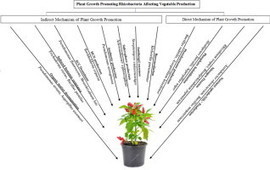
In order to optimize the crop production and hence, to achieve food security, synthetic fertilizers have largely been used in high input agronomic practices to offset major and sometimes minor nutrient deficiencies of soils with concomitant intensification in food production. When used repeatedly in horticultural practices, such environmentally un-friendly fertilizers have deleteriously impacted soil fertility and consequently, the crop productivity. Taking these threats into account, scientists are desperate to find inexpensive, environmentally benign and easy to operate options to overcome fertilizer toxicity problems. In this regard, plant growth promoting rhizobacteria (PGPR) have magnetize the agrarian communities due in part to their low cost, easy access and simple mode of application. Broadly, PGPR when used either alone or in consortia, have resulted in tremendous positive impact on horticultural production. Among horticultural crops, the interest in quality of vegetables in recent times among consumers has increased worldwide. The results of studies conducted so far worldwide on the impact of PGPR carrying numerous multi-functional plant growth promoting activities on horticultural crops especially vegetables grown distinctively in different production systems is discussed and considered. The review will conclude by identifying several PGPR for future researches aiming to improve the health and quality of vegetables grown in different production systems. Also, the findings presented here are likely to reduce the use of chemical fertilizers in horticultural practices and to protect human health (via food chain) from the ill effect of fertilizers used in different agronomic environment.
|
|
Scooped by
Jean-Michel Ané
August 21, 2015 4:32 PM
|
Several diazotrophic Paenibacillus strains were isolated from extracts of surface-sterilized lodgepole pine seedling and tree tissues. One strain, Paenibacillus polymyxa P2b-2R, was found to fix high amounts of nitrogen when reintroduced to the gymnosperms, lodgepole pine and western red cedar. We wanted to determine if P. polymyxa P2b-2R could colonize rhizosphere and internal tissues, fix N and promote growth of corn (Zea mays L), an important agricultural crop. We inoculated corn seeds with P. polymyxa strain P2b-2R and grew seedlings for 30 days. Corn seedlings were harvested 10, 20 and 30 days after inoculation for evaluation of endophytic and rhizospheric colonization as well as nitrogen fixation and growth promotion. P2b-2R successfully colonized the rhizosphere as well as internal root tissues of corn (i.e., endophytically) with population densities near 106 cfu. Corn seedling growth was promoted significantly by inoculation with P2b-2R with an increase of up to 35% in length and up to 30% in biomass after 30 days of inoculation. Seedlings inoculated with P2b-2R derived up to 20% of foliar nitrogen from atmosphere after 30 days of inoculation, which is significant considering the fact that this was a short growth trial. These results suggest that P. polymyxa P2b-2R might have a broad range of plant hosts and is able to fix N and promote the growth of at least one important agricultural crop i.e. Corn.
|
|
Scooped by
Jean-Michel Ané
August 21, 2015 4:29 PM
|
Plants have evolved a sophisticated two-layered immune system to protect themselves from microbial invaders. However, in order to promote infection, plant associated microbes including pathogens as well as mutualists secrete molecules called effectors to suppress the plant’s immune response. Mutualistic fungi including the arbuscular mycorrhiza (AM) Glomus intraradices and the ectomycorrhiza (ECM) Laccaria bicolor secretes effector proteins which contribute to the establishment and maintenance of mutualistic symbiosis by suppressing host immunity during root colonization.
The root endophytic fungus, Piriformospora indica is capable of colonizing the roots of a wide variety of different plant species including the monocot barley (Hordeum vulgare) and the dicot Arabidopsis thaliana and establishes mutualistic symbiosis during colonization. The colonization pattern of P. indica is mainly divided into two phases, an initial biotrophic phase and a later cell death-associated colonization phase. Colonization by the fungi which is mostly limited to the root cortex cells leads to several beneficial effects to the host such as growth promotion, increased resistance to biotic and abiotic stresses. The recently released genome of P. indica helped to identify hundreds of small secreted proteins (SSPs) coding for candidate effectors and provides an opportunity to investigate the role of these effectors during the interaction between this endophytic fungus with plants. It has been reported that P. indica actively suppresses PTI to colonize and establish a mutualistic relationship with plants. However, the deployment of effectors and their role during the interaction of P. indica with plants has not been reported.
In this study, PIIN_08944, an effector candidate of P. indica was functionally characterized in- planta. PIIN_08944 encode a 120 amino acid protein with a predicted 23 amino acid N-terminal signal peptide. Expression profile analysis revealed that PIIN_08944 was induced in in-vitro germinated P. indica chlamydospore as well as in-planta during colonization of Arabidopsis roots by P. indica. To investigate the functional role of PIIN_08944 in mutualistic symbiosis, transgenic P. indica with reduced production or complete loss of PIIN_08944 were generated. RNAi silencing as well as deletion of the gene coding for PIIN_08944 by homologous recombination resulted in delayed colonization of Arabidopsis roots by P. indica. On the hand transgenic Arabidopsis and barley plants expressing PIIN_08944 show enhanced colonization by P. indica compared to wild type. Heterologous expression of PIIN_08944 in barley suppresses flg22 and chitin triggered ROS production. Meanwhile expression of PIIN_08944 in Arabidopsis interfered with the transcription of marker genes for PTI, AtWRKY22 and salicylic acid, CBP60g. However, the expression of PIIN_08944 in Arabidopsis and barley did not affect the plant’s response to the necrotrophic fungal pathogens Botrytis cinerea and Fusarium graminearum respectively. Yeast two hybrid screen revealed that PIIN_08944 interacts with CSN5A and CSN5B, components COP9 signalosome protein complex, in Arabidopsis and N. benthamiana and with SINA3, a member of the SEVEN IN ABSENTIA family of E3 protein ligase in tobacco. Subcellular localization assays performed on N. benthamiana leaves revealed that CSN5A, CSN5B and PIIN_08944 localized to the nucleus and cytoplasm. In summary, the fact that PIIN_08944 targets the evolutionarily conserved eukaryotic proteins, CSN5A and CSN5B and interfere with basal defense, indicate that P. indica has evolved strategies involving the use of effectors as general compatibility determinants to establish and/or maintain a mutualistic relationship during interaction with plants. Moreover, this might further explain the capability of P. indica to colonize a multitude of different plant species.
|
|
Scooped by
Jean-Michel Ané
August 21, 2015 4:26 PM
|
Bradyrhizobium japonicum strain FN1 was found to produce bacteriocin-like zones of clearing when tested against other strains of bradyrhizbia. The genome was sequenced, and several putative bacteriocin-producing genes, in addition to the expected genes involved in nodulation and nitrogen fixation, were identified.
|
|
Scooped by
Jean-Michel Ané
August 21, 2015 4:20 PM
|
Root endosymbioses are associations between plants and soil microorganisms which contribute worldwide to plant nutrition and fitness. The most common associations is with arbuscular mycorrhizal fungi (AMF) and this is formed by the majority of land plants with fungi belonging to the Glomeromycota. Another important association is that formed by the Gram-positive actinobacteria, Frankia, and actinorhizal plants such as Discaria trinervis. In this paper we studied the effect of dual symbioses resulting from spot inoculation. This method was developed and tested to ensure actinorhizal nodule development only at the site of inoculation. Our results show that both symbioses can coexist and that AMF and Frankia can stimulate plant growth both as a single inoculum and in combination. Moreover, we suggest that there is no interference between the regulation of actinorhizal and arbuscular mycorrhizal symbiosis in D. trinervis, and that there is a synergistic effect on plant growth following the development of both symbioses.
|
|
Scooped by
Jean-Michel Ané
August 21, 2015 4:17 PM
|
Fungus-derived indole-3-acetic acid (IAA), which is involved in ectomycorrhizal development, affects both partners. The biosynthesis pathway, excretion from fungal hyphae, the induction of branching in fungal cultures and enhanced Hartig' net formation in mycorrhiza were shown. Gene expression studies, incorporation of labeled compounds into IAA, heterologous expression of a transporter and bioinformatics were applied to study the effect of IAA on fungal morphogenesis and on ectomycorrhiza. Tricholoma vaccinum produces IAA from tryptophan via indole-3-pyruvate, with the last step of this biosynthetic pathway being catalyzed by an aldehyde dehydrogenase. The gene ald1 was found to be highly expressed in ectomycorrhiza and induced by indole-3-acetaldehyde. The export of IAA from fungal cells is supported by the multidrug and toxic extrusion (MATE) transporter Mte1 found in T. vaccinum. The addition of IAA and its precursors induced elongated cells and hyphal ramification of mycorrhizal fungi; in contrast, in saprobic fungi such as Schizophyllum commune IAA did not induce morphogenetic changes. Mycorrhiza responded by increasing its Hartig' net formation. The IAA of fungal origin acts as a diffusible signal, influencing root colonization and increasing Hartig' net formation in ectomycorrhiza.
|
|
Scooped by
Jean-Michel Ané
August 21, 2015 2:59 PM
|
Lipo-chitooligosaccharides produced by nitrogen-fixing rhizobia are signaling molecules involved in the establishment of an important agronomical and ecological symbiosis with plants. These compounds, known as Nod factors, are biologically active on plant roots at very low concentrations indicating that they are perceived by specific receptors. This article summarizes the main strategies developed for the syntheses of bioactive Nod factors and their derivatives in order to better understand their mode of perception. Different Nod factor receptors and LCO-binding proteins identified by genetic or biochemical approaches are also presented, indicating perception mechanisms that seem to be more complicated than expected, probably involving multi-component receptor complexes.
|
|
Scooped by
Jean-Michel Ané
August 21, 2015 2:49 PM
|
The isolation and characterisation of nitrogen-fixing root nodule bacteria from Medicago marina, a tolerant legume species, were studied in two areas from southwest Spain. A total of 30 out of 82 isolates with distinct ERIC-PCR fingerprints were analysed on the basis of molecular (PCR-RFLP of the 16S-23S rDNA intergenic spacer region (IGS) with two endonucleases, analysis of the 16S rDNA and symbiotic nodC gene sequences, plasmid profiles and SDS-PAGE of LPS, including the partial sequence of the housekeeping gene glnII and the symbiotic gene nodA of some representatives), physiological (utilisation of sole carbon sources, tolerance to antibiotics, NaCl, heavy metals, temperature and pH) and symbiotic parameters (efficacy on M. marina, M. minima, M. murex, M. orbicularis, M. polymorpha, M. sativa and M. truncatula). All the bacteria isolated from M. marina nodules belonged to Ensifer meliloti, except for one strain that belonged to E. medicae. To determine the nodulation range of M. marina, 10 different Ensifer species were tested for their ability to nodulate on this plant. E. kummerowiae CCBAU 71714 and the E. medicae control strain M19.1 were the only Ensifer species tested that developed nitrogen-fixing nodules on this plant. Most of the M. marina-nodulating strains showed tolerance to stress factors and all of them shared the presence of a gene similar to cadA, a gene that encodes for a PIB-type ATPase, which is a transporter belonging to the large superfamily of ATP-driven pumps involved in the transport of metals across cell membranes.
|
|
Scooped by
Jean-Michel Ané
August 21, 2015 2:45 PM
|
Asexual Epichloë endophytes establish mutualistic symbioses with grasses, improve fitness of their hosts and modify the surrounding environment. To test the hypothesis that this symbiotic association increases the abundance and diversity of phosphate-solubilizing fungi (PSF), a pot experiment was conducted combining two endophytic statuses: Epichloë-infected (E+) and non-infected (E−) Bromus auleticus plants, and two soil types collected from agricultural (A) and non-agricultural (NA) fields. Soil fungi were isolated at the beginning of the experiment and 12 months after the introduction of B. auleticus, and tested for their inorganic P (Pi)-solubilizing capability. Arbuscular mycorrhizal colonization in B. auleticus roots of E+ and E− plants was also analyzed. PSF abundance was affected by the endophytic status and by the type of soil; the highest value was detected in the E−NA treatment, followed by the E+A treatment. PSF diversity was higher in NA than in A soils and higher in soils treated with E+ than in those treated with E−. Arbuscular mycorrhizal fungi colonization was higher in E+ plants. We hypothesize that the positive association between Epichloë endophytes and mycorrhizal fungi with an increase in the PSF diversity would generate an increase in the phosphorus (P) available to plants.
|
|
Scooped by
Jean-Michel Ané
August 21, 2015 2:41 PM
|
Arbuscular mycorrhiza (AM) fungi (Glomeromycota) form symbiosis with and deliver nutrients via the roots of most angiosperms. AM fungal hyphae are taken up by living root epidermal cells, a program which relies on a set of plant common symbiosis genes (CSGs). Plant root epidermal cells are also infected by the plant growth-promoting fungus Piriformospora indica (Basidiomycota), raising the question whether this interaction relies on the AM-related CSGs. Here we show that intracellular colonization of root cells and intracellular sporulation by P. indica occurred in CSG mutants of the legume Lotus japonicus and in Arabidopsis thaliana, which belongs to the Brassicaceae, a family that has lost the ability to form AM as well as a core set of CSGs. A. thaliana mutants of homologs of CSGs (HCSGs) interacted with P. indica similar to the wild-type, suggesting that AM fungi and P. indica exploit different host pathways for infection. Moreover, increased biomass of A. thaliana evoked by P. indica was unaltered in HCSG mutants. We conclude that colonization and growth promotion by P. indica are independent of the CSGs.
|
|
Scooped by
Jean-Michel Ané
August 21, 2015 12:58 AM
|
It is well known that rhizosphere microbiomes differ from those of surrounding soil, and yet we know little about how these root-associated microbial communities change through the growing season and between seasons. We analyzed the response of soil bacteria to roots of the common annual grass Avena fatua over two growing seasons using high-throughput sequencing of 16S rRNA genes. Over the two periods of growth, the rhizosphere bacterial communities followed consistent successional patterns as plants grew, although the starting communities were distinct. Succession in the rhizosphere was characterized by a significant decrease in both taxonomic and phylogenetic diversity relative to background soil communities, driven by reductions in both richness and evenness of the bacterial communities. Plant roots selectively stimulated the relative abundance of Alphaproteobacteria, Betaproteobacteria, and Bacteroidetes but reduced the abundance of Acidobacteria, Actinobacteria, and Firmicutes. Taxa that increased in relative abundance in the rhizosphere soil displayed phylogenetic clustering, suggesting some conservation and an evolutionary basis for the response of complex soil bacterial communities to the presence of plant roots. The reproducibility of rhizosphere succession and the apparent phylogenetic conservation of rhizosphere competence traits suggest adaptation of the indigenous bacterial community to this common grass over the many decades of its presence.
|
|
Scooped by
Jean-Michel Ané
August 21, 2015 12:42 AM
|
Salinity is one of the major abiotic stresses limiting crop growth and yield. This study investigated the underlying mechanisms of Trichoderma asperellum Q1 in promoting cucumber growth under salt stress, including the abilities of the strain to solubilize phosphate and to produce phytohormone. The results showed that T. asperellum Q1 could solubilize inorganic or organic phosphate and the activities of phosphatases and phytase could be detected in the culture supernatant. In hydroponic experiments, the growth of cucumber seedlings was increased in the hydroponic system treated by culture filtrate of strain Q1 with tricalcium phosphate or calcium phytate under salt stress. This strain also exhibited the ability to produce indole acetic acid (IAA), gibberellic acid (GA) and abscisic acid (ABA) in liquid medium without any inducers. The levels of those three phytohormones in cucumber seedling leaves also increased after inoculated with this strain, along with increased root growth and root activities of the plant. These results demonstrated the mechanisms of T. asperellum Q1 in alleviating the suppression effect of salt stress involving the change of phytohormone levels in cucumber plant and its ability of phosphate solubilization.
|