Nitrogen is fundamental to all life forms and is also one of the most limiting of nutrients for plant growth. Several clades of angiosperms have developed symbiotic relationships with actinorhizal bacteria that fix atmospheric nitrogen and increase access to this nutrient. However, the evolutionary patterns of actinorhizal nitrogen-fixing symbioses remain unclear to date. Furthermore the underlying environmental pressures that led to the gain of symbiotic actinorhizal nitrogen fixation have never been investigated. Here, we present the most comprehensive genus-level phylogenetic analysis of the nitrogen-fixing angiosperms based on three plastid loci. We found that actinorhizal nitrogen-fixing species are distributed in nine distinct lineages. By dating the branching events, we determined that seven actinorhizal nitrogen-fixing lineages originated during the Late Cretaceous, and two more emerged during the Eocene. We put forward a hypothesis that multiple gains of actinorhizal nitrogen-fixing symbioses in angiosperms may have been associated with increased global temperatures and high levels of atmospheric carbon dioxide during these two time periods, as well as the availability of open habitats with high light conditions. Our nearly complete genus-level time-tree for the nitrogen-fixing clade is a significant advance in understanding the evolutionary and ecological background of this important symbiosis between plants and bacteria.
Prof Giles Oldroyd introduces his work on nitrogen-fixing bacteria and its potential benefits for farmers in sub-Saharan Africa. He discusses the environmental issues around the large scale usage of inorganic fertilisers in agriculture, and some of the ethical implications around increasing food yields around the world. Giles also talks about the challenging process of scientific research and discovery, and about the exciting opportunities for the next generation of scientists.
For many years now we have started Permaculture Design Courses with a lighthearted ‘entrance exam’, part of which is to ask people to draw a tree not as a contest in drawing skills or species accuracy, but looking for one thing only. Does their tree have roots? Once folks get this they become much more aware of the earth beneath our feet. The fact that so much of what we depend on is not (in ordinary circumstances) visible to us.
The life in the soil may be millions of individual organisms in a single handful. Animal and plant life in a constant process of exchange. Plant and tree roots provide the most astonishing marketplace, where bacteria, other roots, nematodes, earthworms etc. mingle in the jelly like rhizosphere doing what they do best. Green leaved plants ensure energy supply by producing sugars through photosynthesis which they may swap for nitrogen (the building blocks of life) from air in the soil harvested by (for example) leguminous plants.
We all know legumes produce nitrogen don’t we? No? Of course they don’t! It is bacteria staying in the little root nodule hotels they produce who do that job. And hugely significant are the largest living organisms yet found on planet earth. Blue whales?! No, fungi. Not mushrooms, which are only their fruiting bodies, but mycelium, vast underground networks of whitish thread like material (largest yet discovered: thirty-five hectares which would be a lot of blue whales).
Burkholderia glumae PG1 is a soil-associated motile plant pathogenic bacterium possessing a cell density-dependent regulation system called quorum sensing. Its genome contains three genes, here designated bgaI1-3, encoding distinct autoinducer-1 synthases, which are capable of synthesizing QS signalling molecules. Here, we report on the construction of B. glumae PG1 ΔbgaI1-3 mutants, their phenotypic characterization and genome-wide transcriptome analysis using RNA-sequencing technology (RNA-seq). Knockouts in each of these bgaI genes resulted in strongly decreased motility, reduced extracellular lipase activity, reduced ability to cause plant tissue maceration and decreased pathogenicity. RNA-seq analysis of all three B. glumae PG1 AI-1 synthase mutants performed in the transition from exponential to stationary growth phase revealed differential expression of a significant number of predicted genes. In comparison with wild-type B. glumae PG1, 481 genes were differentially expressed in mutant ΔbgaI1, 213 in ΔbgaI2, and 367 in ΔbgaI3. Interestingly, only a minor set of 78 genes was co-regulated in all three mutants. The majority of the QS-regulated genes were linked to metabolic activities and the most pronounced regulation was observed for the genes involved in rhamnolipid and Flp pili biosynthesis, the type VI secretion system and genes linked to a CRIPSR-cas gene cluster.
The bloom-containing water bodies may have an impact due to cyanotoxins production on other microorganisms and aquatic plants. Where such water is being used for crops irrigation, the presence of cyanotoxins may also have a toxic impact on terrestrial plants and their rhizosphere microbiota. For that purpose, PCR-based 454 pyrosequencing was applied to phylogenetically characterize the bacterial community of Medicago sativa rhizosphere in response to cyanotoxins extract. This analysis revealed a wide diversity at species level, which decreased from unplanted soil to root tissues indicating that only some populations were able to compete for nutrients and niches in this selective habitat. Gemmatimonas, Actinobacteria, Deltaproteobacteria and Opitutae mainly inhabited the bulk soil, whereas, the root-adhering soil and the root tissues were inhabited by Gammaproteobacteria and Alphaproteobacteria. The proportion of these populations fluctuated in response to cyanotoxins extract exposure. Betaproteobacteria proportion increased in the three studied compartments, whereas Gammaproteobacteria proportion decreased except in the bulk soil. This study revealed the potential toxicity of cyanotoxins extract towards Actinobacteria, Gemmatimonas, Deltaproteobacteria, and Gammaproteobacteria, however Clostridia, Opitutae and bacteria related with Betaproteobacteria, were stimulated denoting their tolerance. Altogether, these data indicate that crop irrigation using cyanotoxins containing water might alter the rhizosphere functioning.
Agroforestry systems can buffer crop performance against the impacts of climate change, particularly decreases in the availability of soil water. Nonetheless, farmers are reluctant to adopt agroforestry systems due to concerns of yield losses, predominantly in the tree-crop competitive zone. Yet little is known about crop performance in the tree-crop competitive zone under water limited conditions. We therefore studied the effect of a full season water deficit on soybean N2-fixation, nodulation, and yield in the tree-crop zone of a mature agroforestry system. We hypothesized higher N2-fixation yet lower but stable yield in the tree-crop zone. Rainfall reduction shelters were used to reduce available soil moisture throughout the growing season in the tree-crop competitive zone of a 27-year-old tree-based intercropping agroforestry system and a paired monoculture control plot in southern Ontario, Canada. Results show that soybean yields in the tree-crop zone were lower compared to monoculture. However, soybean yields were stable in agroforestry and only in monoculture did the rainfall reduction induce a significant decline in soybean yields. Soybeans in the tree-crop zone relied heavily on N2-fixation to meet N demand, with a percentage of N derived from atmosphere (%Ndfa) of 91 % versus 63 % in monoculture. However, total fixed N declined significantly under rainfall reduction in both the tree-crop zone and in monoculture. Of note, soybean nodulation patterns adapted to soil moisture availability, allocating a larger proportion of nodules lower on the rooting system under water limitation. Our results demonstrate that important N pathways may be altered under water limitation. We can also expect that in areas where growing conditions are predicted to become drier in the future, yields in the tree-crop competitive zone will not be reduced further, thus increasing the viability of adopting agroforestry systems in areas affected by climatic change.
Plant biostimulants are formulated with diverse microorganisms and/or substances that are applied to crops with the aim of enhancing growth, development and adaptation to abiotic stress. Trichoderma-based products have been particularly successful because of their capacity to control phytopathogenic fungi. Some Trichoderma strains have a predominant biostimulant action that makes them unique for their extended use in horticulture. They are safe for humans, livestock and crop plants and in their natural environment colonize plant roots without apparent adverse reactions. Both solid and liquid formulations containing conidia can be used to produce suitable quantities of active and viable inocula during product formulation and field use. The mechanism of phytostimulation by Trichoderma involves multilevel communication with root and shoot systems, as it releases into the rhizosphere auxins, small peptides, volatiles and other active metabolites, which promote root branching and nutrient uptake capacity, thereby boosting plant growth and yield. Recent proteomic and genetic data suggest that Trichoderma activates the mitogen activated protein kinase 6, transcription factors and DNA processing proteins, which represent promising targets toward formulation of more efficient products.
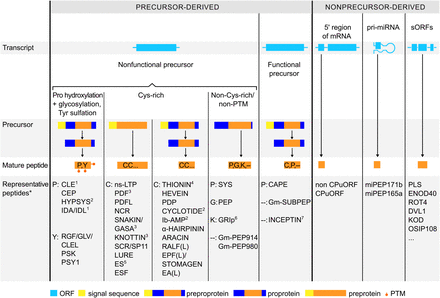
Peptides fulfill a plethora of functions in plant growth, development, and stress responses. They act as key components of cell-to-cell communication, interfere with signaling and response pathways, or display antimicrobial activity. Strikingly, both the diversity and amount of plant peptides have been largely underestimated. Most characterized plant peptides to date acting as small signaling peptides or antimicrobial peptides are derived from nonfunctional precursor proteins. However, evidence is emerging on peptides derived from a functional protein, directly translated from small open reading frames (without the involvement of a precursor) or even encoded by primary transcripts of microRNAs. These novel types of peptides further add to the complexity of the plant peptidome, even though their number is still limited and functional characterization as well as translational evidence are often controversial. Here, we provide a comprehensive overview of the reported types of plant peptides, including their described functional and structural properties. We propose a novel, unifying peptide classification system to emphasize the enormous diversity in peptide synthesis and consequent complexity of the still expanding knowledge on the plant peptidome.
The application of commercial rhizobial inoculants to legume crops is proving to be an alternative to synthetic fertilizer use. The challenge for sustainable agriculture resides in the compatibility between crop, inoculants and environmental conditions. The evaluation of symbiotic efficiency and genetic diversity of indigenous rhizobial strains could lead to the development of better inoculants and increased crop production. The genetic variability of 32 wild indigenous rhizobial isolates was assessed by RAPD (Random Amplified Polymorphic DNA). The strains were isolated from red clover (Trifolium pratense L.) nodules from two distinct geographical regions of Northern and Eastern Romania. Three decamer primers were used to resolve the phylogenetic relationships between the investigated isolates. Cluster analysis revealed a high diversity; most strains clustered together based on their geographical location.
Microbial communities in rhizosphere interact with each other and form a basis of a cumulative impact on plant growth. Rhizospheric microorganisms like Piriformospora indica and Azotobacter chroococcum are well known for their beneficial interaction with plants. These features make P. indica /A. chroococcum co-inoculation of crops most promising with respect to sustainable agriculture and to understanding the transitions in the evolution of rhizospheric microbiome. Here, we investigated interactions of P. indica with A. chroococcum in culture. Out of five Azotobacter strains tested, WR5 exhibited growth-promoting while strain M4 exerted growth-inhibitory effect on the fungus in axenic culture. Electron microscopy of co-culture indicated an intimate association of the bacterium with the fungus. 2-D gel electrophoresis followed by mass spectrometry of P. indica cellular proteins grown with or without WR5 and M4 showed differential expression of many metabolic proteins like enolase-I, ureaseD, the GTP binding protein YPT1 and the transmembrane protein RTM1. Fungal growth as influenced by bacterial crude metabolites was also monitored. Taken together, the results conform to a model where WR5 and M4 influence the overall growth and physiology of P. indica which may have a bearing on its symbiotic relationship with plants.
Background and aims Understanding the interactions between endophytic bacteria, rhizobia, free living root associated bacteria and their host plants under stressed conditions remains a significant challenge for proposing strategies to improve the efficacy of PGPR. In this study we analyzed the role of the endophytic bacterium Stenotrophomonas rhizophila in alleviating salinity stress in plants. The nodulation efficiency, plant growth, nitrogen and phosphorus uptake of soybean under hydroponic salt stress conditions were determined. Methods Soybean seedlings were inoculated with Bradyrhizobium japonicum BDYD1 and S. rhizophila ep-17 were grown in hydroponic plastic pots containing 2 l of Hoagland solution for 42 days. Salinity conditions were established by adding 50 and 75 mM NaCl to the nutrient solution. Results The results showed that the salinity decreased the colonization of B. japonicum BDYD1 in the rhizosphere of soybean, inhibited shoot, root growth, and nodulation compared with those of unstressed plants. We found synergistic interactions between compatible salt tolerant S. rhizophila ep-17 and B. japonicum BDYD1 strains which were manifested themselves as improved root, shoot length, dry weight, N and P uptake and number of nodules compared with the uninoculated plants grown under 75 mM NaCl condition. Conclusions S. rhizophila and Bradyrhizobium build beneficial association in the rhizosphere and can act synergistically on promoting plant growth, nutrient uptake and fitness of hydroponically grown soybean under salt stress condition.
Symbiotic nitrogen fixation (SNF) injects 40-60 million tons of nitrogen into agricultural systems each year in an ecofriendly manner critical for sustainable agriculture1. Legumes can harbor a small group of nitrogen fixing bacteria called rhizobia in a specialized organ called the nodule. In response to signals produced by compatible soil rhizobia, plant cell division is triggered in root cortical cells, which generates a nodule primordium (pre-nodule) and, eventually, mature nitrogen-fixing nodules. Rhizobia are released, via endocytosis, into the cytoplasm of post meristematic cells of the nodule primordium. This results in bacteria surrounded by a plant membrane, which creates a novel organelle termed the symbiosome. Root nodule development and cellular differentiation involve changes in the expression of thousands of plant genes2. Hundreds of transcription factor (TF) genes are expressed during nodule development2,3. We have taken a systematic, reverse-genetic approach to elucidate the role of uncharacterized M. truncatula TF genes in SNF. We have targeted several nodule-specific TFs using a tobacco (Nicotiana tabacum) retrotransposon (Tnt1) insertion mutant population of Medicago4. Knockout of a nodule specific Cysteine-2/Histidine-2 (C2H2) TF in M. truncatula resulted in a strong non-nitrogen fixing phenotype (Fix-). Functional characterization of this mutant indicated that the gene controls symbiosome development and hence the gene was named as REGULATOR OF SYMBIOSOME DIFFERENTIATION (RSD)5. Transcriptome analysis, of rsd mutant and wildtype nodules, using Affymetrix microarrays, revealed some of the gene regulatory networks behind the control of symbiosome development and helped us to identify target(s) of RSD activity. The phenotype of rsd nodules and the role of RSD in symbiosome development will be discussed in detail.
Plant biology is rapidly entering an era where we have the ability to conduct intricate studies that investigate how a plant interacts with the entirety of its environment. This requires complex, large studies to measure how plant genotypes simultaneously interact with a diverse array of environmental stimuli. Successful interpretation of the results from these studies requires us to transition away from the traditional standard of conducting an array of pairwise t tests toward more general linear modeling structures, such as those provided by the extendable ANOVA framework. In this Perspective, we present arguments for making this transition and illustrate how it will help to avoid incorrect conclusions in factorial interaction studies (genotype × genotype, genotype × treatment, and treatment × treatment, or higher levels of interaction) that are becoming more prevalent in this new era of plant biology.
Ectomycorrhizal symbiosis is important for forest ecosystem functioning with tree-fungal cooperation increasing performance and countering stress conditions. Aldehyde dehydrogenases (ALDHs) are key enzymes for detoxification and thus may play a role in stress response of the symbiotic association. With this focus, eight dehydrogenases, Ald1 through Ald7 and TyrA, of the ectomycorrhizal basidiomycete Tricholoma vaccinum were characterized and phylogenetically investigated. Functional analysis was performed through differential expression analysis by feeding different, environmentally important substances. A strong effect of indole-3-acetic acid (IAA) was identified, linking mycorrhiza formation and auxin signaling between the symbiosis partners. We investigated ald1 overexpressing strains for performance in mycorrhiza with the host tree spruce (Picea abies) and observed an increased width of the apoplast, accommodating the Hartig’ net hyphae of the T. vaccinum over-expressing transformants. The results support a role for Ald1 in ectomycorrhiza formation and underline functional differentiation within fungal aldehyde dehydrogenases in the family 1 of ALDHs.
A two-day workshop bringing together leaders from the science and forest monitoring communities. The first day will be devoted to research presentations introducing the state-of-the-art and the second day to discussing knowledge gaps and exploring the ways forward.
The field of microbiome research is arguably one of the fastest growing in biology. Bacteria feature prominently in studies on animal health, but fungi appear to be the more prominent functional symbionts for plants. Despite the similarities in the ecological organization and evolutionary importance of animal-bacterial and plant–fungal microbiomes, there is a general failure across disciplines to integrate the advances made in each system. Researchers studying bacterial symbionts in animals benefit from greater access to efficient sequencing pipelines and taxonomic reference databases, perhaps due to high medical and veterinary interest. However, researchers studying plant–fungal symbionts benefit from the relative tractability of fungi under laboratory conditions and ease of cultivation. Thus each system has strengths to offer, but both suffer from the lack of a common conceptual framework. We argue that community ecology best illuminates complex species interactions across space and time. In this synthesis we compare and contrast the animal-bacterial and plant–fungal microbiomes using six core theories in community ecology (i.e., succession, community assembly, metacommunities, multi-trophic interactions, disturbance, restoration). The examples and questions raised are meant to spark discussion amongst biologists and lead to the integration of these two systems, as well as more informative, manipulatory experiments on microbiomes research.
Background and aims Understanding the interactions between endophytic bacteria, rhizobia, free living root associated bacteria and their host plants under stressed conditions remains a significant challenge for proposing strategies to improve the efficacy of PGPR. In this study we analyzed the role of the endophytic bacterium Stenotrophomonas rhizophila in alleviating salinity stress in plants. The nodulation efficiency, plant growth, nitrogen and phosphorus uptake of soybean under hydroponic salt stress conditions were determined. Methods Soybean seedlings were inoculated with Bradyrhizobium japonicum BDYD1 and S. rhizophila ep-17 were grown in hydroponic plastic pots containing 2 l of Hoagland solution for 42 days. Salinity conditions were established by adding 50 and 75 mM NaCl to the nutrient solution. Results The results showed that the salinity decreased the colonization of B. japonicum BDYD1 in the rhizosphere of soybean, inhibited shoot, root growth, and nodulation compared with those of unstressed plants. We found synergistic interactions between compatible salt tolerant S. rhizophila ep-17 and B. japonicum BDYD1 strains which were manifested themselves as improved root, shoot length, dry weight, N and P uptake and number of nodules compared with the uninoculated plants grown under 75 mM NaCl condition. Conclusions S. rhizophila and Bradyrhizobium build beneficial association in the rhizosphere and can act synergistically on promoting plant growth, nutrient uptake and fitness of hydroponically grown soybean under salt stress condition.
In the Medicago genus, triterpenic saponins are bioactive secondary metabolites constitutively synthesized in the aerial and subterranean parts of plants via the isoprenoid pathway. Exploitation of saponins as pharmaceutics, agrochemicals and in the food and cosmetic industries has raised interest in identifying the enzymes involved in their synthesis. We have identified a cytochrome P450 (CYP72A67) involved in hemolytic sapogenin biosynthesis by a reverse genetic TILLING approach in a Medicago truncatula ethylmethanesulfonate (EMS) mutagenized collection. Genetic and biochemical analyses, mutant complementation, and expression of the gene in a microsome yeast system showed that CYP72A67 is responsible for hydroxylation at the C-2 position downstream of oleanolic acid synthesis. The affinity of CYP72A67 for substrates with different substitutions at multiple carbon positions was investigated in the same in vitro yeast system, and in relation to two other CYP450s (CYP72A68) responsible for the production of medicagenic acid, the main sapogenin in M. truncatula leaves and roots. Full sib mutant and wild-type plants were compared for their sapogenin profile, expression patterns of the genes involved in sapogenin synthesis, and response to inoculation with Sinorhizobium meliloti. The results obtained allowed us to revise the hemolytic sapogenin pathway in M. truncatula and contribute to highlighting the tissue specificities (leaves/roots) of sapogenin synthesis.
Background The importance of appropriate, accurate measurement and reporting of environmental parameters in plant sciences is a significant aspect of quality assurance for all researchers and their research. There is a clear need for ensuring research across the world can be compared, understood and where necessary replicated by fellow researchers. A common set of guidelines to educate, assist and encourage comparativeness is of great importance. On the other hand, the level of effort and attention to detail by an individual researcher should be commensurate with the particular research being conducted. For example, a researcher focusing on interactions of light and temperature should measure all relevant parameters and report a measurement summary that includes sufficient detail allowing for replication. Such detail may be less relevant when the impact of environmental parameters on plant growth and development is not the main research focus. However, it should be noted that the environmental experience of a plant during production can have significant impact when subsequent experiments investigate plants at a molecular, biochemical or genetic level or where species interactions are considered. Thus, researchers are encouraged to make a critical assessment of what parameters are of primary importance in their research and these parameters should be measured and reported.
Content This paper brings together a collection of parameters that the authors, as members of International Committee on Controlled Environment Guidelines (ICCEG) in consultation with members of our three parent organizations, believe constitute those which should be recorded and reported when publishing scientific data from experiments in greenhouses. It provides recommendations to end users on when, how and where these parameters should be measured along with the appropriate internationally standardized units that should be used.
Plants have a diverse internal microbial biota that has been shown to have an important influence on a range of plant health attributes. Although these endophytes have been found to be widely occurring, few studies have correlated agricultural production practices with endophyte community structure and function. One agricultural system that focuses on preserving and enhancing soil microbial abundance and biodiversity is organic farming, and numerous studies have shown that organically managed system have increased microbial community characteristics. Herein, the diversity and specificity of culturable bacterial endophytes were evaluated in four vegetable crops: corn, tomato, melon, and pepper grown under organic or conventional practices. Endophytic bacteria were isolated from surface-sterilized shoot, root, and seed tissues and sequence identified. A total of 336 bacterial isolates were identified, and grouped into 32 species and five phyla. Among these, 239 isolates were from organically grown plants and 97 from those grown conventionally. Although a diverse range of bacteria were documented, 186 were from the Phylum Firmicutes, representing 55% of all isolates. Using the Shannon diversity index, we observed a gradation of diversity in tissues, with shoots and roots having a similar value, and seeds having the least diversity. Importantly, endophytic microbial species abundance and diversity was significantly higher in the organically grown plants compared to those grown using conventional practices, potentially indicating that organic management practices may increase endophyte presence and diversity. The impact that these endophytes could have on plant growth and yield was evaluated by reintroducing them into tomato plants in a greenhouse environment. Of the bacterial isolates tested, 61% were found to promote tomato plant growth and 50–64% were shown to enhance biomass accumulation, illustrating their potential agroecosystem application.
It is widely accepted that bacterial endophytes actively colonize plants, interact with their host, and frequently show beneficial effects on plant growth and health. However, the mechanisms of plant-endophyte communication and bacterial adaption to the plant environment are still poorly understood. Here, whole-transcriptome sequencing of B. phytofirmans PsJN colonizing potato (Solanum tuberosum L.) plants was used to analyze in planta gene activity and the response of strain PsJN to plant stress. The transcriptome of PsJN colonizing in vitro potato plants showed a broad array of functionalities encoded in the genome of strain PsJN. Transcripts upregulated in response to plant drought stress were mainly involved in transcriptional regulation, cellular homeostasis, and the detoxification of reactive oxygen species, indicating an oxidative stress response in PsJN. Genes with modulated expression included genes for extracytoplasmatic function (ECF) group IV sigma factors. These cell surface signaling elements allow bacteria to sense changing environmental conditions and to adjust their metabolism accordingly. TaqMan quantitative PCR (TaqMan-qPCR) was performed to identify ECF sigma factors in PsJN that were activated in response to plant stress. Six ECF sigma factor genes were expressed in PsJN colonizing potato plants. The expression of one ECF sigma factor was upregulated whereas that of another one was downregulated in a plant genotype-specific manner when the plants were stressed. Collectively, our study results indicate that endophytic B. phytofirmans PsJN cells are active inside plants. Moreover, the activity of strain PsJN is affected by plant drought stress; it senses plant stress signals and adjusts its gene expression accordingly.
The rice endophyte Harpophora oryzae shares a common pathogenic ancestor with the rice blast fungus Magnaporthe oryzae. Direct comparison of the interactions between a single plant species and two closely-related (1) pathogenic and (2) mutualistic fungi species can improve our understanding of the evolution of the interactions between plants and fungi that lead to either mutualistic or pathogenic interactions. Differences in the metabolome and transcriptome of rice in response to challenge by H. or M. oryzae were investigated with GC-MS, RNA-seq, and qRT-PCR. Levels of metabolites of the shikimate and lignin biosynthesis pathways increased continuously in the M. oryzae-challenged rice roots (Mo-roots); these pathways were initially induced, but then suppressed, in the H. oryzae-challenged rice roots (Ho-roots). Compared to control samples, concentrations of sucrose and maltose were reduced in the Ho-roots and Mo-roots. The expression of most genes encoding enzymes involved in glycolysis and the TCA cycle were suppressed in the Ho-roots, but enhanced in the Mo-roots. The suppressed glycolysis in Ho-roots would result in the accumulation of glucose and fructose which was not detected in the Mo-roots. A novel co-evolution pattern of fungi-host interaction is proposed which highlights the importance of plant host in the evolution of fungal symbioses.
Groundbreaking research on the universality and diversity of microorganisms is now challenging the life sciences to upgrade fundamental theories that once seemed untouchable. To fully appreciate the change that the field is now undergoing, one has to place the epochs and foundational principles of Darwin, Mendel, and the modern synthesis in light of the current advances that are enabling a new vision for the central importance of microbiology. Animals and plants are no longer heralded as autonomous entities but rather as biomolecular networks composed of the host plus its associated microbes, i.e., "holobionts." As such, their collective genomes forge a "hologenome," and models of animal and plant biology that do not account for these intergenomic associations are incomplete. Here, we integrate these concepts into historical and contemporary visions of biology and summarize a predictive and refutable framework for their evaluation. Specifically, we present ten principles that clarify and append what these concepts are and are not, explain how they both support and extend existing theory in the life sciences, and discuss their potential ramifications for the multifaceted approaches of zoology and botany. We anticipate that the conceptual and evidence-based foundation provided in this essay will serve as a roadmap for hypothesis-driven, experimentally validated research on holobionts and their hologenomes, thereby catalyzing the continued fusion of biology's subdisciplines. At a time when symbiotic microbes are recognized as fundamental to all aspects of animal and plant biology, the holobiont and hologenome concepts afford a holistic view of biological complexity that is consistent with the generally reductionist approaches of biology.
We are currently witnessing an increasingly higher throughput in image-based plant phenotyping experiments. The majority of imaging data are collected using complex automated procedures and are then post-processed to extract phenotyping-related information. In this article, we show that the image compression used in such procedures may compromise phenotyping results and this needs to be taken into account. We use three illuminating proof-of-concept experiments that demonstrate that compression (especially in the most common lossy JPEG form) affects measurements of plant traits and the errors introduced can be high. We also systematically explore how compression affects measurement fidelity, quantified as effects on image quality, as well as errors in extracted plant visual traits. To do so, we evaluate a variety of image-based phenotyping scenarios, including size and colour of shoots, leaf and root growth. To show that even visual impressions can be used to assess compression effects, we use root system images as examples. Overall, we find that compression has a considerable effect on several types of analyses (albeit visual or quantitative) and that proper care is necessary to ensure that this choice does not affect biological findings. In order to avoid or at least minimise introduced measurement errors, for each scenario, we derive recommendations and provide guidelines on how to identify suitable compression options in practice. We also find that certain compression choices can offer beneficial returns in terms of reducing the amount of data storage without compromising phenotyping results. This may enable even higher throughput experiments in the future.
To get content containing either thought or leadership enter:
To get content containing both thought and leadership enter:
To get content containing the expression thought leadership enter:
You can enter several keywords and you can refine them whenever you want. Our suggestion engine uses more signals but entering a few keywords here will rapidly give you great content to curate.


 Your new post is loading...









Wow... so cool...