Applications are invited for a Post-doctoral Research Associate position in the group of Dr Sebastian Schornack at the Sainsbury Laboratory (SLCU), Cambridge University, to study early descendant land plants.
The position is part of the OpenPlant (http://openplant.org/) project. OpenPlant is a BBSRC-EPSRC funded Synthetic Biology Research Centre. It is based in the United Kingdom and is a collaboration between the University of Cambridge, the John Innes Centre and The Sainsbury Laboratory Norwich. The successful candidate will benefit from engagement with laboratories in all partner organisations.
Along our group's general interest in understanding principles of plant colonisation by filamentous microbes, the candidate will study filamentous pathogen interactions with liverworts and hornworts. Main model organisms will be the Agrobacterium-transformable liverwort Marchantia polymorpha and related species. The successful candidate will develop new molecular biological and genetic resources (in particular TAL effector activators and repressors) to modulate gene expression in early descendant plants (e.g. Liverworts/hornworts). The candidate will be provided with horticultural/technician support and will be able to team up with post docs studying plant-microbe interactions in angiosperms.
Candidates must have, or be close to completing, a PhD in Plant Biology, Plant Biotechnology, or related field. Knowledge of modular cloning strategies such as GoldenGate cloning is essential. Previous experience with synthetic biology and/or TAL effector assembly as well as handling of sterile plants, Agrobacterium-mediated plant transformation or knowledge on plant-microbe interactions, is desirable. Also desirable is previous experience with liverworts, hornworts or other early descendant plants. Proficiency in sequence analysis, general biological databases, qPCR analysis and confocal fluorescence microscopy is also required.
The successful candidate will be fully involved in the basic research in these areas whilst also writing up their research work for presentation and publication. The post holder may be required to assist in the supervision of student projects, provide instructions to students and deliver seminars relating to their research area.
Good communication skills are essential as the post holder will need to work well in a team and collaborate with other researchers in the Institute. Candidates would ideally have published or submitted papers in this area. Candidates should demonstrate a history of science communication (e.g. presentations, outreach activities, teaching).
You will learn about Nitrogen Cycle in this video. Nitrogen constitutes around 78% of the air. However, atmospheric nitrogen cannot be used directly by plants .
NITROGEN CYCLE:Nitrogen is the important essential element for all living organisms by the synthesis of Amino acids, proteins, Enzymesetc.What happens if .
In this study, we performed a detailed characterization of the siderophore metabolome, or “chelome,” of the agriculturally important and widely studied model organism Azotobacter vinelandii. Using a new high-resolution liquid chromatography-mass spectrometry (LC-MS) approach, we found over 35 metal-binding secondary metabolites, indicative of a vast chelome in A. vinelandii. These include vibrioferrin, a siderophore previously observed only in marine bacteria. Quantitative analyses of siderophore production during diazotrophic growth with different sources and availabilities of Fe showed that, under all tested conditions, vibrioferrin was present at the highest concentration of all siderophores and suggested new roles for vibrioferrin in the soil environment. Bioinformatic searches confirmed the capacity for vibrioferrin production in Azotobacter spp. and other bacteria spanning multiple phyla, habitats, and lifestyles. Moreover, our studies revealed a large number of previously unreported derivatives of all known A. vinelandii siderophores and rationalized their origins based on genomic analyses, with implications for siderophore diversity and evolution. Together, these insights provide clues as to why A. vinelandii harbors multiple siderophore biosynthesis gene clusters. Coupled with the growing evidence for alternative functions of siderophores, the vast chelome in A. vinelandii may be explained by multiple, disparate evolutionary pressures that act on siderophore production.
Nitrogen is essential for many aspects of plant growth, including the biosynthesis of proteins, chlorophyll and nucleic acids. Earth's atmosphere is 78% nitr...
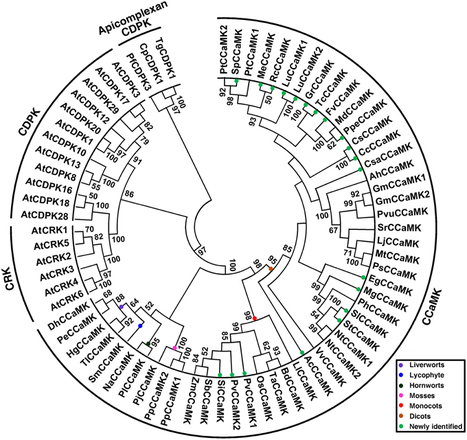
Calcium and calmodulin-dependent protein kinase (CCaMK) is a member of calcium/calmodulin-dependent protein kinase superfamily and is essential to microbe- plant symbiosis. To date, the distribution of CCaMK gene in plants has not yet been completely understood, and its function in plant disease resistance remains unclear. In this study, we systemically identified the CCaMK genes in genomes of 44 plant species in Phytozome and analyzed the function of tomato CCaMK (SlCCaMK) in resistance to various pathogens. CCaMKs in 18 additional plant species were identified, yet the absence of CCaMK gene in green algae and cruciferous species was confirmed. Sequence analysis of full-length CCaMK proteins from 44 plant species demonstrated that plant CCaMKs are highly conserved across all domains. Most of the important regulatory amino acids are conserved throughout all sequences, with the only notable exception being observed in N-terminal autophosphorylation site corresponding to Ser 9 in the Medicago truncatula CCaMK. CCaMK gene structures are similar, mostly containing six introns with a phase profile of 200200 and the exception was only noticed at the first exons. Phylogenetic analysis demonstrated that CCaMK lineage is likely to have diverged early from a calcium-dependent protein kinase (CDPK) gene in the ancestor of all nonvascular plant species. The SlCCaMK gene was widely and differently responsive to diverse pathogenic stimuli. Furthermore, knock-down of SlCCaMK reduced tomato resistance to Sclerotinia sclerotiorum and Pseudomonas syringae pv. tomato (Pst) DC3000 and decreased H2O2 accumulation in response to Pst DC3000 inoculation. Our results reveal that SlCCaMK positively regulates disease resistance in tomato via promoting H2O2 accumulation. SlCCaMK is the first CCaMK gene proved to function in plant disease resistance.
Arbuscular mycorrhizal fungi (AMF) are considered as a potential biotechnological tool for improving phytostabilization efficiency and plant tolerance to heavy metal-contaminated soils. However, the mechanisms through which AMF help to alleviate metal toxicity in plants are still poorly understood. A greenhouse experiment was conducted to evaluate the effects of two AMF species (Funneliformis mosseae and Rhizophagus intraradices) on the growth, Pb accumulation, photosynthesis and antioxidant enzyme activities of a leguminous tree (Robinia pseudoacacia L.) at Pb addition levels of 0, 500, 1000 and 2000 mg kg-1 soil. AMF symbiosis decreased Pb concentrations in the leaves and promoted the accumulation of biomass as well as photosynthetic pigment contents. Mycorrhizal plants had higher gas exchange capacity, non-photochemistry efficiency, and photochemistry efficiency compared with non-mycorrhizal plants. The enzymatic activities of superoxide dismutase (SOD), ascorbate peroxidases (APX) and glutathione peroxidase (GPX) were enhanced, and hydrogen peroxide (H2O2) and malondialdehyde (MDA) contents were reduced in mycorrhizal plants. These findings suggested that AMF symbiosis could protect plants by alleviating cellular oxidative damage in response to Pb stress. Furthermore, mycorrhizal dependency on plants increased with increasing Pb stress levels, indicating that AMF inoculation likely played a more important role in plant Pb tolerance in heavily contaminated soils. Overall, both F. mosseae and R. intraradices were able to maintain efficient symbiosis with R. pseudoacacia in Pb polluted soils. AMF symbiosis can improve photosynthesis and reactive oxygen species (ROS) scavenging capabilities and decrease Pb concentrations in leaves to alleviate Pb toxicity in R. pseudoacacia. Our results suggest that the application of the two AMF species associated with R. pseudoacacia could be a promising strategy for enhancing the phytostabilization efficiency of Pb contaminated soils.
Secretion of organic acids is an important mechanism for phosphate solubilizing bacteria (PSB) to dissolve insoluble phosphorus in soil. However, the composition of organic acids produced by PSB in the presence of different phosphorus compounds is poorly known, and little is known about the ability of PSB to degrade pollutants in sediment. In this study, we isolated a strain Pseudomonas sp. PSB12 from the sediment of the Qihe River. PSB12 had maximum phosphate solubilization index (SI) of 3.86 on Pikovskaya's agar medium. The phosphate solubilizing activity was associated with the release of organic acids produced from glucose, while the composition of organic acids produced by PSB12 was dependent on the phosphorus forms. When initial soluble phosphorus was insufficient (in MP1 and MP2 media), gluconic acid was the predominant organic acid. In contrast, the formic acid, butyrate, and propanedioic acids were main organic acids produced when only soluble phosphorus (MP3) was supplied. RT-PCR indicated that the expression of glucose dehydrogenase gene (gcd) of PSB12 was 2–4 folds higher in MP1 than in MP3. PSB12 also possessed the phenol hydroxylase gene (phe) suggesting that phenol could be used as the carbon source to dissolve insoluble phosphorus. PSB12 is a potential candidate for in situ bioremediation and for promoting plant growth in soil contaminated by phenol with low levels of soluble phosphorus.
Soil microbial communities contribute to ecosystem function and structure plant communities, but are altered by anthropogenic disturbance. Successful restoration may require microbial community restoration. Inoculation of plants with arbuscular mycorrhizal fungi (AMF) may improve ecological restoration, but AMF species that are locally adapted to native plant communities are often unavailable and commercially propagated AMF are not necessarily locally adapted to the desired plant community target. The disconnect between readily available commercial fungi and later-successional plants may inhibit successful establishment of the restoration. We tested this concept using four mid- to late successional prairie plant species planted with one of three inoculum sources: a locally adapted AMF mix cultured from native prairie, a non-locally adapted commercial AMF product, or a sterilized background soil control. The inoculated plants (termed nurse plants) were planted in the middle of field plots. In each plot, uninoculated plants (test plants) were planted at 0.5, 1, and 2 m from the nurse plants in order to test whether growth and survival of test plants could be affected by inoculum source. Generally, plants grew larger when inoculated with native AMF compared to commercial inoculum or the control. Later successional species responded most positively to native AMF. Benefits of inoculation also spread to neighbors, as uninoculated late successional test plant, Sporobolus heterolepis, grew larger when its' neighbors were inoculated with native AMF than with commercial AMF or the control. Due to an unanticipated herbivory event, we also assessed the degree to which rate of herbivory or plant tolerance to herbivory is affected by inoculum source. The mid- successional nurse plant, Ratibida pinnata, received the majority of the herbivore damage, and when it was inoculated with commercial AMF, it experienced significantly more herbivory than plants inoculated with native AMF or the control. R. pinnata inoculated with native AMF grew significantly larger one month following herbivory, though there was no significant difference in growth in the second year of sampling. This study suggests that native, locally adapted AMF can improve restoration of prairie plant species and these benefits can extend to neighbors up to two meters from the inoculation point.
The objective of this study was to investigate the impact of mycorrhizal symbiosis on qualitative characteristics of onion (Allium cepa L.) For this reason, five onion cultivars with different scale color and three different strains of arbuscular mycorrhizal fungi (Diversispora versiformis, Rhizophagus intraradices, Funneliformis mosseae) were used. Red cultivars mainly ‘Red Azar shahr’ showed highest content in vitamin C, flavonols and antioxidant enzymes. Mycorrhizal inoculation increased total phenolic, pyruvic acid and vitamin C of onion plants. Considerable increase was observed in quercetin-4′-O-monoglucoside and isorhamnetin-4′-O-monoglucoside content in plants inoculated with Diversispora versiformis, but quercetin-3,4′-O-diglucoside was not significantly influenced. Analyses for phenylalanine ammonia-lyase (PAL) and antioxiodant enzyme activities such as polyphenol oxidase (PPO), catalase (CAT) and peroxidase (POD) revealed that all excep PPO were enhanced by mycorrhizal inoculation. Overall, these findings suggested that mycorrhizal inoculation influence biosynthesis of flavonol glucosides and antioxidant enzymes by increasing nutrient uptake or by induction of the plant defence system.
Facilitation by the nurse effect can occur through an amelioration of environmental stress. Plant-microorganism interaction, however, is another key facilitation mechanism of the nurse effect, but is by far the least documented. Here we tested if microclimatic mitigation and soil microorganisms isolated from the root-zone of the nurse shrub Porlieria chilensis can increase the establishment of other native plants in a semiarid community. We conducted field and greenhouse experiments to evaluate the direct and indirect effects of the presence of P. chilensis on the survival and growth of three native plants. In the field experiment, we compared the survival and growth of transplanted individuals beneath nurses and outside of them in pots filled with soil from both microsites (beneath and outside nurses). Finally, in the greenhouse experiment we grew native plants in soil taken from both microsites (below and outside nurses) and with and without soil microorganisms (sterilization process). We found a clear and significant nurse effect of P. chilensis on the tested species through of amelioration of climatic (air temperature, soil moisture, and solar radiation) and edaphic (nitrogen availability) conditions, increasing the performance of these native species. Moreover, performance and establishment were enhanced when soil was kept with microorganisms. Thus, nurse effect mediated by microclimatic amelioration, edaphic improvement and presence of soil microorganisms could be key mechanisms to increase the establishment of native plant species in semiarid communities of central Chile.
To investigate the expression of assimilatory nitrate-and nitrite reductase activity of Rhizobium meliloti SU 47. Methods
Rhizobium cell were grown in medium, after 20 hrs cells were washed with potassium phosphate buffer and assayed the enzyme activity through nitrite estimation. Result
Expression of assimilatory nitrate-and nitrite reductase was observed in GTS/glutamate medium. The enzymes were inducible in nature since it expressed only in presence of nitrate or nitrite. Ammonium inhibited the enzyme activity. Cyanate acted as a gratituous inducer of both the enzymes. Molybdenum acts as modulator whereas tungstate as an inhibitor of the enzyme. Conclusion
Both the enzymes, assimilatory nitrate-and nitrite reductases expressed in GTS/glutamate medium in presence of nitrate.
rbuscular mycorrhizal (AM) fungi play an essential role for the nutrient uptake of the majority of land plants, including many important crop species. The extraradical mycelium of the fungus takes up nutrients from the soil, transfers these nutrients to the intraradical mycelium within the host root, and exchanges the nutrients against carbon from the host across a specialized plant-fungal interface. The contribution of the AM symbiosis to the phosphate nutrition has long been known, but whether AM fungi contribute similarly to the nitrogen nutrition of their host is still controversially discussed. However, there is a growing body of evidence that demonstrates that AM fungi can actively transfer nitrogen to their host, and that the host plant with its carbon supply stimulates this transport, and that the periarbuscular membrane of the host is able to facilitate the active uptake of nitrogen from the mycorrhizal interface. In this review, our current knowledge about nitrogen transport through the fungal hyphae and across the mycorrhizal interface is summarized, and we discuss the regulation of these pathways and major research gaps.
Setting aside overmature planted forests is currently seen as an option for preserving species associated with old-growth forests, such as those with dispersal limitation. Few data exist, however, on the utility of set-aside plantations for this purpose, or the value of this habitat type for biodiversity relative to old-growth semi-natural ecosystems. Here, we evaluate the contribution of forest type relative to habitat characteristics in determining species richness and composition in seven forest blocks, each containing an ancient old-growth stand (> 1000 yrs) paired with a set-aside even-aged planted stand (ca. 180 yrs). We investigated the functionally important yet relatively neglected ectomycorrhizal fungi (EMF), a group for which the importance of forest age has not been assessed in broadleaved forests. We found that forest type was not an important determinant of EMF species richness or composition, demonstrating that set-aside can be an effective option for conserving ancient EMF communities. Species richness of above-ground EMF fruiting bodies was principally related to the basal area of the stand (a correlate of canopy cover) and tree species diversity, whilst richness of below-ground ectomycorrhizae was driven only by tree diversity. Our results suggest that overmature planted forest stands, particularly those that are mixed-woods with high basal area, are an effective means to connect and expand ecological networks of ancient old-growth forests in historically deforested and fragmented landscapes for ectomycorrhizal fungi.
A rhizobial strain, Sinorhizobium meliloti NM, could use 3,3′,4,4′-tetrachloro-biphenyl (PCB 77) as the sole carbon and energy source for growth in mineral salt medium. The degradation efficiency of PCB 77 by strain NM and the bacterial growth increased with a decrease in PCB 77 concentration (5–0.25 mg L−1). The addition of secondary carbon sources, phenolic acids and one surfactant influenced PCB 77 degradation, rhizobial growth and biofilm formation. The highest degradation efficiency was observed in the presence of caffeic acid. Benzoate and chloride ions were detected as the PCB 77 metabolites. The up-regulation of benzoate metabolism-related gene expression was also observed using quantitative reverse transcription-polymerase chain reaction. This report is the first to demonstrate Sinorhizobium using coplanar tetrachlorobiphenyl as a sole carbon and energy source, indicating the potential wide benefit to the field of rhizobia-assisted bioremediation.
A £10M investment from the Newton-Bhabba fund will support collaboration between UK and Indian scientists which will help meet the challenge of sustainably producing enough food for a growing population whilst reducing pollution and greenhouse gas emissions.
The Pseudomonas genus contains a metabolically versatile group of organisms that are known to occupy numerous ecological niches, including the rhizosphere and endosphere of many plants. Their diversity influences the phylogenetic diversity and heterogeneity of these communities. On the basis of average amino acid identity, comparative genome analysis of >1,000 Pseudomonas genomes, including 21 Pseudomonas strains isolated from the roots of native Populus deltoides (eastern cottonwood) trees resulted in consistent and robust genomic clusters with phylogenetic homogeneity. All Pseudomonas aeruginosa genomes clustered together, and these were clearly distinct from other Pseudomonas species groups on the basis of pangenome and core genome analyses. In contrast, the genomes of Pseudomonas fluorescens were organized into 20 distinct genomic clusters, representing enormous diversity and heterogeneity. Most of our 21 Populus-associated isolates formed three distinct subgroups within the major P. fluorescens group, supported by pathway profile analysis, while two isolates were more closely related to Pseudomonas chlororaphis and Pseudomonas putida. Genes specific to Populus-associated subgroups were identified. Genes specific to subgroup 1 include several sensory systems that act in two-component signal transduction, a TonB-dependent receptor, and a phosphorelay sensor. Genes specific to subgroup 2 contain hypothetical genes, and genes specific to subgroup 3 were annotated with hydrolase activity. This study justifies the need to sequence multiple isolates, especially from P. fluorescens, which displays the most genetic variation, in order to study functional capabilities from a pangenomic perspective. This information will prove useful when choosing Pseudomonas strains for use to promote growth and increase disease resistance in plants.
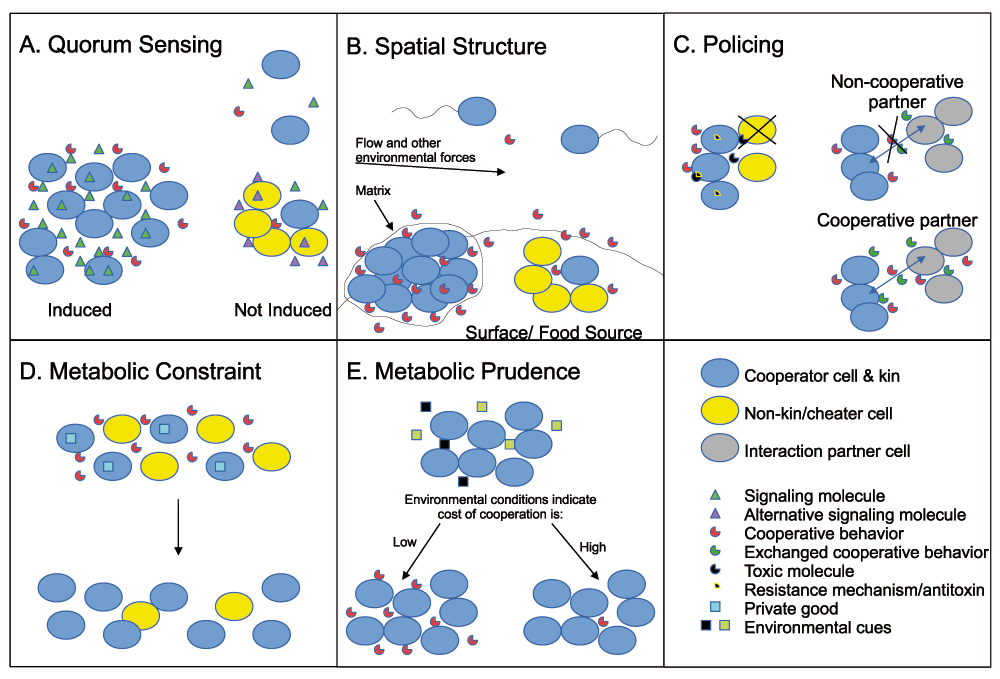
Microbes are now known to participate in an extensive repertoire of cooperative behaviors such as biofilm formation, production of extracellular public-goods, group motility, and higher-ordered multicellular structures. A fundamental question is how these cooperative tasks are maintained in the face of non-cooperating defector cells. Recently, a number of molecular mechanisms including facultative participation, spatial sorting, and policing have been discovered to stabilize cooperation. Often these different mechanisms work in concert to reinforce cooperation. In this review, we describe bacterial cooperation and the current understanding of the molecular mechanisms that maintain it.
The role of plant tyrosyl-DNA phosphodiesterase 1α in genome stability is studied using a Medicago truncatula MtTdp1α-depleted line. Lack of MtTdp1α results in a 39% reduction of methylated cytosines as compared to control. RNA-Seq analyses revealed that 11 DNA transposons and 22 retrotransposons were differentially expressed in the Tdp1α-2a line. And among them all DNA transposons (MuDR, hAT, DNA3-11_Mad) and seven retrotransposons (LTR/Gipsy, LTR/Copia, LTR and NonLTR/L1) were down-regulated, while remaining 15 retrotransposons were up-regulated. Results suggest that the occurrence of stress-responsive cis-elements as well as changes in the methylation pattern at the LTR promoters might be responsible for the enhanced retrotransposon transcription.
e of the most important factors influencing crop quality and yield. Seed germination and vigour, components of seed quality, are therefore important characteristics that need to be considered by farmers before planting. Seed lots from two maize cultivars were evaluated in germination and vigour tests and the seed lot with lower vigour was used in the trials. Seven PGPR isolates viz. T19, T29, A32, S6, S7, A08 and T22, were applied as seed treatments in a seed germination bioassay to determine their effect on a low vigour seed lot of cultivar, PAN 6Q-308B, in two experimental runs. Isolate T22 significantly increased germination by up to 8% in both experimental runs. Treatment with isolate S6 resulted in the highest increase in shoot dry mass (35.2%) and shoot length (25%) in both experimental runs. Isolate A32 also enhanced both shoot length and shoot dry mass significantly, by 21.7 and 27.7%, respectively. None of the PGPR isolates enhanced root length significantly except for isolate T19 which promoted root length by 23.5% in experimental run 2. Isolate S7 significantly enhanced root dry mass by 40.7% (average of experimental runs 1 and 2) compared with the untreated control. Isolate T19 also showed a tendency to enhance dry root mass in experimental run 1 and caused a significant increase (39.4%) in dry root mass in experimental run 2. These findings show the ability of PGPR isolates T22, S6, S7, A32 and T19 to enhance the early growth parameters of maize with low seed vigour, when applied as seed treatments, and therefore demonstrate their potential use in the seed industry and sustainable farming.
The nitrogen phosphotransferase system (PTSNtr) consists of EINtr, NPr and EIIANtr. The active phosphate moiety derived from phosphoenolpyruvate is transferred through EINtr and NPr to EIIANtr. Sinorhizobium fredii can establish nitrogen-fixing symbiosis with legume crops soybean (determinate nodules) and pigeonpea (indeterminate nodules). In this study, S. fredii mutants of ptsP and ptsO (encoding EINtr and NPr, respectively) formed ineffective nodules on soybean while the ptsN mutant (encoding EIIANtr) is not defective in symbiosis with soybean. A notable reduction in the number of bacteroids within each symbiosome and poly-β-hydroxybutyrate granules in bacteroids was observed in nodules infected by the ptsP or ptsO mutants but not in those infected with the ptsN mutant. However these defects of ptsP and ptsO mutants were recovered in the double mutants ptsPptsN or ptsOptsN, implying a negative role of unphosphorylated EIIANtr in symbiosis. Moreover, the symbiotic defect of the ptsP mutant was also recovered by expressing EINtr with or without the GAF domain, indicating that the putative glutamine-sensing domain GAF is dispensable in symbiotic interactions. The critical role of PTSNtr in symbiosis was also observed when related PTSNtr mutants of S. fredii were inoculated on pigeonpea. Furthermore, nodule occupancy and carbon utilization tests suggest that multiple outputs could be derived from components of PTSNtr in addition to the negative role of unphosphorylated EIIANtr.
The soil contamination legacy of postindustrial sites has become an issue of increasing ecological and public health concern. This study examines the ectomycorrhizal and above-ground plant relationships in the metaliferous soil of an urban brownfield. Ectomycorrhizal fungi (EMF) were microscopically identified by physical morphotyping followed by sequencing of ribosomal DNA. Plant productivity was assessed through Leaf Area Index (LAI) measurements taken from May through July 2012 and 2013. Results indicate that there were significant changes in EMF community composition and plant productivity based on their position along a total soil metal load gradient. Cenococcum geophilum was the dominant species in the soils where total soil metal load was below previously established threshold values, and Russula species were the dominant genera in soils where the total soil metal load was above the threshold value. Higher LAI values are seen in environments with higher soil metal levels. However, higher LAI could be due to multiple factors such as increased moisture and the dominance of metal-tolerant tree species. This study suggests that soil metal contamination affects plant productivity and EMF community composition and supports the idea that EMF species have varying levels of tolerance for metals.
The microbiome presents great opportunities for understanding and improving the world around us and elucidating the interactions that compose it. The microbiome also poses tremendous challenges for mapping and manipulating the entangled networks of interactions among myriad diverse organisms. Here, we describe the opportunities, technical needs, and potential approaches to address these challenges, based on recent and upcoming advances in measurement and control at the nanoscale and beyond. These technical needs will provide the basis for advancing the largely descriptive studies of the microbiome to the theoretical and mechanistic understandings that will underpin the discipline of microbiome engineering. We anticipate that the new tools and methods developed will also be more broadly useful in environmental monitoring, medicine, forensics, and other areas.
The characterization of mycorrhizal status in hosts can be a good indicator of symbiotic associations in inoculation experiments or in ecological research. The most common microscopic-based observation methods, such as (i) the gridline intersect method, (ii) the magnified intersections method and (iii) the five-class system of Trouvelot were tested to find the most simple, easily executable, effective and objective ones and their appropriate parameters for characterization of mycorrhizal status. In a pot experiment, white clover (Trifolium repens L.) host plant was inoculated with 6 (BEG144; syn. Rhizophagus intradices) in pumice substrate to monitor the AMF colonization properties during host growth. Eleven (seven classical and four new) colonization parameters were estimated by three researchers in twelve sampling times during plant growth. Variations among methods, observers, parallels, or individual plants were determined and analysed to select the most appropriate parameters and sampling times for monitoring. The comparability of the parameters of the three methods was also tested. As a result of the experiment classical parameters were selected for hyphal colonization: colonization frequency in the first stage or colonization density in the later period, and arbuscular richness of roots. A new parameter was recommended to determine vesicule and spore content of colonized roots at later stages of symbiosis.
Jatropha curcas L. (Jatropha) is a potential biodiesel crop that can be cultivated on marginal land because of its strong tolerance to drought and low soil nutrient content. However, seed yield remains low. To enhance the commercial viability and green index of Jatropha biofuel, a systemic and coordinated approach must be adopted to improve seed oil and biomass productivity. Here, we present our investigations on the Jatropha-associated nitrogen-fixing bacteria with an aim to understand and exploit the unique biology of this plant from the perspective of plant–microbe interactions. Results An analysis of 1017 endophytic bacterial isolates derived from different parts of Jatropha revealed that diazotrophs were abundant and diversely distributed into five classes belonging to α, β, γ-Proteobacteria, Actinobacteria and Firmicutes. Methylobacterium species accounted for 69.1 % of endophytic bacterial isolates in leaves and surprisingly, 30.2 % which were able to fix nitrogen that inhabit in leaves. Among the Methylobacterium isolates, strain L2-4 was characterized in detail. Phylogenetically, strain L2-4 is closely related to M. radiotolerans and showed strong molybdenum-iron dependent acetylene reduction (AR) activity in vitro and in planta. Foliar spray of L2-4 led to successful colonization on both leaf surface and in internal tissues of systemic leaves and significantly improved plant height, leaf number, chlorophyll content and stem volume. Importantly, seed production was improved by 222.2 and 96.3 % in plants potted in sterilized and non-sterilized soil, respectively. Seed yield increase was associated with an increase in female–male flower ratio. Conclusion The ability of Methylobacterium to fix nitrogen and colonize leaf tissues serves as an important trait for Jatropha. This bacteria–plant interaction may significantly contribute to Jatropha’s tolerance to low soil nutrient content. Strain L2-4 opens a new possibility to improve plant’s nitrogen supply from the leaves and may be exploited to significantly improve the productivity and Green Index of Jatropha biofuel.
The use of RNA-guided Cas9 endonuclease for the concurrent engineering of multiple genes has been demonstrated in a number of plant species. Although Cas9 is a large monomeric protein, the single guide RNA (sgRNA) that directs it to a specific DNA target sequence is small and easy to reprogram. It is therefore relatively simple to produce numerous sgRNAs to target multiple endogenous sequences. Several approaches to express multiple sgRNAs and Cas9 in plants for the purpose of simultaneous editing or transcriptional regulation of many genes have recently been reported.
To get content containing either thought or leadership enter:
To get content containing both thought and leadership enter:
To get content containing the expression thought leadership enter:
You can enter several keywords and you can refine them whenever you want. Our suggestion engine uses more signals but entering a few keywords here will rapidly give you great content to curate.


 Your new post is loading...


 Scoop.it!









It seems that everybody is going to work liverworts these days :-)