Ralstonia solanacearum is a globally distributed soil-borne plant pathogenic bacterium, which shares a broad ecological range with many plant- and soil-associated fungi. We sought to determine if R. solanacearum chemical communication directs symbiotic development of polymicrobial consortia. R. solanacearum produced a diffusible metabolite that induced conserved morphological differentiation in 34 species of fungi across three diverse taxa (Ascomycetes, Basidiomycetes and Zygomycetes). Fungi exposed to this metabolite formed chlamydospores, survival structures with thickened cell walls. Some chlamydospores internally harbored R. solanacearum, indicating a newly described endofungal lifestyle for this important plant pathogen. Using imaging mass spectrometry and peptidogenomics, we identified an undescribed lipopeptide, ralsolamycin, produced by an R. solanacearum non-ribosomal peptide synthetase-polyketide synthase hybrid. Inactivation of the hybrid non-ribosomal peptide synthetase-polyketide synthase gene, rmyA, abolished ralsolamycin synthesis. R. solanacearum mutants lacking ralsolamycin no longer induced chlamydospore development in fungal coculture and invaded fungal hyphae less well than wild-type. We propose that ralsolamycin contributes to the invasion of fungal hyphae and that the formation of chlamydospores may provide not only a specific niche for bacterial colonization but also enhanced survival for the partnering fungus.
Because of publication deadlines, I started to write this newsletter the day before the Iowa caucuses. International members of the Society may be unfamiliar with the somewhat bizarre procedure whereby the people of the state of Iowa select their preferred choices for presidential nominee for both major parties, and I would bet that many in the United States are likewise not really sure what goes on. It is lucky that voting for elected positions within ASPB is much simpler—you just have to return a ballot. But reflecting on the Iowa system did make me think about member representation within the Society and about what our manifesto is for the membership.
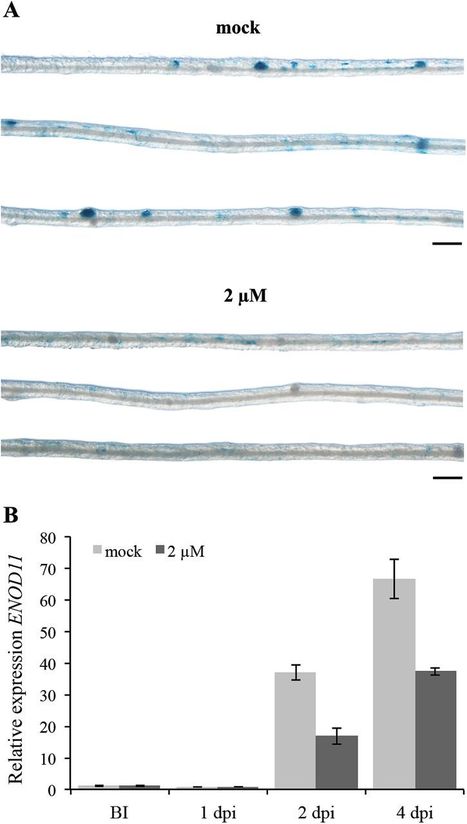
OK... a bit more serious.In the rhizosphere, strigolactones not only act as crucial signalling molecules in the communication of plants with parasitic weeds and arbuscular mycorrhiza, but they also play a key role in regulating different aspects of the root system. Here we investigated how strigolactones influence the root architecture of Medicago truncatula. We provide evidence that addition of the synthetic strigolactone analogue GR24 has an inhibitory effect on the lateral root density. Moreover, treatment with GR24 of Sinorhizobium meliloti-inoculated M. truncatula plants affects the nodule number both positively and negatively, depending on the concentration. Plants treated with 0.1 µM GR24 had a slightly increased number of nodules, whereas concentrations of 2 and 5 µM strongly reduced it. This effect was independent of the autoregulation of nodulation mechanism that is controlled by SUPER NUMERIC NODULE. Furthermore, we demonstrate that GR24 controls the nodule number through crosstalk with SICKLE-dependent ethylene signalling. Additionally, because the expression of the nodulation marker EARLY NODULATION11 was strongly reduced in GR24-treated plants, we concluded that strigolactones influence nodulation at a very early stage of the symbiotic interaction.
While at CannaCon last week we let Aaron of Santiam Organics pitch his companies Myco_Fusion products and explain the benefits of mycorrhizae when growing pl...
Gene duplications generate new genes that can acquire similar but often diversified functions. Recent studies of gene coexpression networks have indicated that, not only genes, but also pathways can be multiplied and diversified to perform related functions in different parts of an organism. Identification of such diversified pathways, or modules, is needed to expand our knowledge of biological processes in plants and to understand how biological functions evolve. However, systematic explorations of modules remain scarce, and no user-friendly platform to identify them exists. We have established a statistical framework to identify modules and show that approximately one-third of the genes of a plant’s genome participate in hundreds of multiplied modules. Using this framework as a basis, we implemented a platform that can explore and visualize multiplied modules in coexpression networks of eight plant species. To validate the usefulness of the platform, we identified and functionally characterized pollen- and root-specific cell wall modules that multiplied to confer tip growth in pollen tubes and root hairs, respectively. Furthermore, we identified multiplied modules involved in secondary metabolite synthesis and corroborated them by metabolite profiling of tobacco (Nicotiana tabacum) tissues. The interactive platform, referred to as FamNet, is available at http://www.gene2function.de/famnet.html.
Phytotechnologies are rapidly replacing conventional ex-situ remediation techniques as they have the added benefit of restoring aesthetic value, important in the reclamation of mine sites. Alders are pioneer species that can tolerate and proliferate in nutrient-poor, contaminated environments, largely due to symbiotic root associations with the N2-fixing bacteria, Frankia and ectomycorrhizal (ECM) fungi. In this study, we investigated the growth of two Frankia-inoculated (actinorhizal) alder species, A. crispa and A. glutinosa, in gold mine waste rock from northern Quebec. Alder species had similar survival rates and positively impacted soil quality and physico-chemical properties in similar ways, restoring soil pH to neutrality and reducing extractable metals up to two-fold, while not hyperaccumulating them into above-ground plant biomass. A. glutinosa outperformed A. crispa in terms of growth, as estimated by the seedling volume index (SVI), and root length. Pyrosequencing of the bacterial 16S rRNA gene for bacteria and the ribosomal internal transcribed spacer (ITS) region for fungi provided a comprehensive, direct characterization of microbial communities in gold mine waste rock and fine tailings. Plant- and treatment-specific shifts in soil microbial community compositions were observed in planted mine residues. Shannon diversity and the abundance of microbes involved in key ecosystem processes such as contaminant degradation (Sphingomonas, Sphingobium and Pseudomonas), metal sequestration (Brevundimonas and Caulobacter) and N2-fixation (Azotobacter, Mesorhizobium, Rhizobium and Pseudomonas) increased over time, i.e., as plants established in mine waste rock. Acetate mineralization and most probable number (MPN) assays showed that revegetation positively stimulated both bulk and rhizosphere communities, increasing microbial density (biomass increase of 2 orders of magnitude) and mineralization (five-fold). Genomic techniques proved useful in investigating tripartite (plant-bacteria-fungi) interactions during phytostabilization, contributing to our knowledge in this field of study.
As the major crops in north China, spring crops are usually planted from April through May every spring and harvested in fall. Wheat is also a very common crop traditionally planted in fall or spring and harvested in summer year by year. This continuous cropping system exhibited the disadvantages of reducing the fertility of soil through decreasing microbial diversity. Thus, management of microbial diversity in the rhizosphere plays a vital role in sustainable crop production. In this study, ten common spring crops in north China were chosen sole-cropped and four were chosen intercropped with peanut in wheat fields after harvest. Denaturing gradient gel electrophoresis (DGGE) and DNA sequencing of one 16S rDNA fragment were used to analyze the bacterial diversity and species identification. DGGE profiles showed the bacterial community diversity in rhizosphere soil samples varied among various crops under different cropping systems, more diverse under intercropping system than under sole-cropping. Some intercropping-specific bands in DGGE profiles suggested that several bacterial species were stimulated by intercropping systems specifically. Furthermore, the identification of these dominant and functional bacteria by DNA sequencing indicated that intercropping systems are more beneficial to improve soil fertility. Compared to intercropping systems, we also observed changes in microbial community of rhizosphere soil under sole-crops. The rhizosphere bacterial community structure in spring crops showed a strong crop species-specific pattern. More importantly, Empedobacter brevis, a typical plant pathogen, was only found in the carrot rhizosphere, suggesting carrot should be sown prudently. In conclusion, our study demonstrated that crop species and cropping systems had significant effects on bacterial community diversity in the rhizosphere soils. We strongly suggest sorghum, glutinous millet and buckwheat could be taken into account as intercropping crops with peanut; while hulled oat, mung bean or foxtail millet could be considered for sowing in wheat fields after harvest in North China.
Plant–plant facilitation is a crucial ecological process, as many plant species (facilitated) require the presence of an established individual (nurse) to recruit. Some plant facilitative interactions disappear during the ontogenetic development of the facilitated plant but others persist, even when the two plants are adults. We test whether the persistence of plant facilitative interactions is explained by the phylogenetic diversity of mutualistic and non-mutualistic fungi that the nurse and the facilitated species add to the shared rhizosphere. We classify plant facilitative interactions as persistent and non-persistent interactions and quantify the phylogenetic diversity of mutualistic and non-mutualistic fungi added by the plant species to the shared rhizosphere. Our results show that the facilitated species add less phylogenetic diversity of non-mutualistic fungi when plant facilitative interactions persist than when they do not persist. However, persistent and non-persistent facilitative interactions did not differ in the phylogenetic diversity of mutualistic fungi added by the facilitated species to the shared rhizosphere. Finally, the fungal phylogenetic diversity added by the nurse to the shared rhizosphere did not differ between persistent and non-persistent interactions. This study suggests that considering the fungal associates of the plant species involved in facilitative interactions can shed light on the mechanisms of persistence for plant–plant interactions.
Pollen allergies have been rapidly increasing over the last decades. Many allergenic proteins and non-allergenic adjuvant compounds of pollen are involved in the plant defense against environmental or microbial stress. The first aim of this study was to analyze and compare the colonizing microbes on allergenic pollen. The second aim was to investigate detectable correlations between pollen microbiota and parameters of air pollution or pollen allergenicity. To reach these aims, bacterial and fungal DNA was isolated from pollen samples of timothy grass (Phleum pratense, n = 20) and birch trees (Betula pendula, n = 55). With this isolated DNA, a terminal restriction fragment length polymorphism analysis was performed. One result was that the microbial diversity on birch tree and timothy grass pollen samples (Shannon/Simpson diversity indices) was partly significantly correlated to allergenicity parameters (Bet v 1/Phl p 5, pollen-associated lipid mediators). Furthermore, the microbial diversity on birch pollen samples was correlated to on-site air pollution (nitrogen dioxide (NO2), ammonia (NH3), and ozone (O3)). What is more, a significant negative correlation was observed between the microbial diversity on birch pollen and the measured NO2 concentrations on the corresponding trees. Our results showed that the microbial composition of pollen was correlated to environmental exposure parameters alongside with a differential expression of allergen and pollen-associated lipid mediators. This might translate into altered allergenicity of pollen due to environmental and microbial stress.
Betaproteobacteria were the most common isolates from the water-filled tank of a Costa Rican bromeliad. Isolates included eight species from the orders Neisseriales and Burkholderiales, with close relatives recovered previously from tropical soils, wetlands, freshwater, or in association with plants. Compared to close relatives, the isolates displayed high temperature and comparatively low pH optima, reflecting the tropical, acidic nature of the bromeliad tank. Bromeliad-associated bacteria most closely related to Chromobacterium, Herbaspirillum, and Aquitalea were all isolated exclusively at pH 6, while Ralstonia, Cupriavidus, and three species of Burkholderia were isolated mostly at pH 4. Activity profiles for the isolates suggest pervasive capabilities for the breakdown of plant-sourced organics, including d-galacturonic acid, mannitol, d-xylose, and l-phenylalanine, also reflecting a niche dominated by decomposition of leaves from the overlying canopy, which become entrained in the tanks. Metabolic activity profiles were overlapping between the Burkholderiales, isolated at pH 4, and the Neisseriales, isolated at pH 6, suggesting that plant material decomposition, which is presumably the underlying process sustaining the tank community and possibly the plant itself, occurs in the tanks at both pH extremes. These results suggest that bromeliad-associated betaproteobacteria may play an important role in the cycling of carbon in this unusual aquatic habitat.
Atrazine residues in water pose a serious threat to the environment and to human health. One method to reduce levels of atrazine in the environment is phytoremediation, a potential technology for in situ remediation. However, as atrazine is a herbicide, it damages the growth of plants and weakens the effect of phytoremediation. In this work, a pot culture experiment was conducted to investigate the effect of Funnelliformis mosseae inoculation on the phytoremediation of atrazine by Canna indica L. var. flava Roxb. The results demonstrated that C. indica was found as a novel tolerant species, and that inoculation with F. mosseae can alleviate the physiological inhibition of atrazine in the growth of plants and promote photosynthesis. Furthermore, C. indica inoculated with F. mosseae exhibited a greater efficiency to remove atrazine and to lower atrazine residue concentrations than plants without inoculation. With inoculation of F. mosseae, the maximum removal rates increased from 68.064% to 95.670%, while the concentration with the highest removal rates changed from 1.489 mg L−1 to 7.363 mg L−1. Inoculation of F. mosseae contributed 2.2–52.0% to the removal rate. This study shows that C. indica inoculated with F. mosseae may ultimately serve as a viable phytoremediation solution for in situ remediation.
The application of biochar to soil is considered to have the potential for long-term soil carbon sequestration, as well as for improving plant growth and suppressing soil pathogens. In our study we evaluated the effect of biochar on the plant growth of soybeans, as well as on the community composition of root-associated bacteria with plant growth promoting traits. Two types of biochar, namely, maize biochar (MBC), wood biochar (WBC), and hydrochar (HTC) were used for pot experiments to monitor plant growth. Soybean plants grown in soil amended with HTC char (2%) showed the best performance and were collected for isolation and further characterization of root-associated bacteria for multiple plant growth promoting traits. Only HTC char amendment resulted in a statistically significant increase in the root and shoot dry weight of soybeans. Interestingly, rhizosphere isolates from HTC char amended soil showed higher diversity than the rhizosphere isolates from the control soil. In addition, a higher proportion of isolates from HTC char amended soil compared with control soil was found to express plant growth promoting properties and showed antagonistic activity against one or more phytopathogenic fungi. Our study provided evidence that improved plant growth by biochar incorporation into soil results from the combination of a direct effect that is dependent on the type of char and a microbiome shift in root-associated beneficial bacteria.
Plants are involved in intimate interactions with microbes during their entire life and these interactions are essential for plant growth and health. Within this project we aim to harness the power of the soil and rhizosphere microbiome to protect plants against biotic and abiotic stresses, with the main focus to decipher the ecological role of diffusible and volatile microbial metabolites. Particular attention will be paid to bacterial terpenes, a largely underexplored class of metabolites. Together with the Bioinformatics department at Wageningen University and the department of Microbial Biotechnology at Leiden University state-of-the-art metagenomics and metabolomics will be integrated to identify microorganisms, biosynthetic gene clusters and compounds important to combat plant diseases and abiotic stress.
Several recent discoveries point to amazing connections between global forces and Earth's tiniest creatures that maintain the habitability of our planet. Consider some examples and think about the implications.
If Mycorrhizal Fungi dose what it says on the packet I can't wait to see the results of this trial. Potatoes, carrots, beans & onions, all get a dusting of M...
Pathogenic bacteria utilize type 3 secretion systems to inject type 3 effectors (T3Es) into host cells, thereby subverting host defense reactions. Similarly, T3Es of symbiotic nitrogen-fixing rhizobia can affect nodule formation on roots of legumes. Previous work showed that NopL (nodulation outer protein L) of Sinorhizobium (Ensifer) sp. strain NGR234 is multiply phosphorylated in eukaryotic cells and that this T3E suppresses responses mediated by mitogen-activated protein (MAP) kinase signaling in yeast (mating pheromone signaling) and plant cells (expression of pathogenesis-related defense proteins). Here, we show that NopL is a MAP kinase substrate. Microscopic observations of fluorescent fusion proteins and bimolecular fluorescence complementation analysis in onion cells indicated that NopL is targeted to the nucleus and forms a complex with SIPK (salicylic acid-induced protein kinase), a MAP kinase of tobacco. In vitro experiments demonstrated that NopL is phosphorylatyed by SIPK. At least nine distinct spots were observed after two-dimensional gel electrophoresis, indicating that NopL can be hyperphosphorylated by MAP kinases. Senescence symptoms in nodules of beans (Phaseolus vulgaris cv. Tendergreen) were analyzed to determine the symbiotic effector activity of different NopL variants with serine to alanine substitutions at identified and predicted phosphorylation sites (serine–proline motif). NopL variants with six or eight serine to alanine substitutions were partially active, whereas NopL forms with 10 or 12 substituted serine residues were inactive. In conclusion, our findings provide evidence that NopL interacts with MAP kinases and reveals the importance of serine–proline motifs for effector activity during symbiosis.
Previous studies with Paenibacillus lentimorbus B-30488” (hereafter referred as B-30488), a plant growth promoting rhizobacteria (PGPR) isolated from cow’s milk, revealed its capabilities to improve plant quality under normal and stress conditions. Present study investigates its potential as a biocontrol agent against an economically important virus, Cucumber mosaic virus (CMV), in Nicotiana tabacum cv. White Burley plants and delineates the physical, biophysical, biochemical and molecular perturbations due to the trilateral interactions of PGPR-host-CMV. Soil inoculation of B-30488 enhanced the plant vigor while significantly decreased the virulence and virus RNA accumulation by ~12 fold (91%) in systemic leaves of CMV infected tobacco plants as compared to the control ones. Histology of these leaves revealed the improved tissue’s health and least aging signs in B-30488 inoculated tobacco plants, with or without CMV infection, and showed lesser intercellular spaces between collenchyma cells, reduced amount of xyloglucans and pectins in connecting primary cells, and higher polyphenol accumulation in hypodermis layer extending to collenchyma cells. B-30488 inoculation has favorably maneuvered the essential biophysical (ion leakage and photosynthetic efficiency) and biochemical (sugar, proline, chlorophyll, malondialdehyde, acid phosphatase and alkaline phosphatase) attributes of tobacco plants to positively regulate and release the virus stress. Moreover, activities of defense related enzymes (ascorbate peroxidase, guaiacol peroxidase, superoxide dismutase and catalase) induced due to CMV-infection were ameliorated with inoculation of B-30488, suggesting systemic induced resistance mediated protection against CMV in tobacco. The quantitative RT-PCR analyses of the genes related to normal plant development, stress and pathogenesis also corroborate well with the biochemical data and revealed the regulation (either up or down) of these genes in favor of plant to combat the CMV mediated stress. These improvements led tobacco plant to produce more flowers and seeds with no negative impact on plant health. The present study may advocate the applicability of B-30488 for crop yield improvement in virus infested areas.
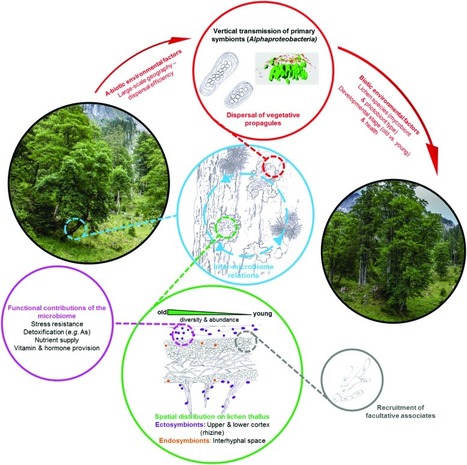
Lichens are commonly recognized as a symbiotic association of a fungus and a chlorophyll containing partner, either green algae or cyanobacteria, or both. The fungus provides a suitable habitat for the partner, which provides photosynthetically fixed carbon as energy source for the system. The evolutionary result of the self-sustaining partnership is a unique joint structure, the lichen thallus, which is indispensable for fungal sexual reproduction. The classical view of a dual symbiosis has been challenged by recent microbiome research, which revealed host-specific bacterial microbiomes. The recent results about bacterial associations with lichens symbioses corroborate their notion as a multi-species symbiosis. Multi-omics approaches have provided evidence for functional contribution by the bacterial microbiome to the entire lichen meta-organism while various abiotic and biotic factors can additionally influence the bacterial community structure. Results of current research also suggest that neighboring ecological niches influence the composition of the lichen bacterial microbiome. Specificity and functions are here reviewed based on these recent findings, converging to a holistic view of bacterial roles in lichens. Finally we propose that the lichen thallus has also evolved to function as a smart harvester of bacterial symbionts. We suggest that lichens represent an ideal model to study multi-species symbiosis, using the recently available omics tools and other cutting edge methods.
We present the draft genome sequence of Bacillus mycoides M2E15, a bacterium isolated from potato endosphere. Analysis of the 6.08-Mbp draft genome sequence identified 6,386 protein-encoding sequences, including potential plant growth promoting genes. Specifically, genes for proteins involved in phosphate utilization, iron acquisition, and bacteriocin production were identified.
Phosphorus, an essential element for life, is continuously depleting from soils and thus demands sustainable management particularly in agriculture and forestry. Inorganic P constitutes the major proportion as tricalcium phosphate in soils of lower Himalayan region of Pakistan. We sampled these soils and screened for P-solubilizing microbes. A range of culturable microbial community (bacteria and fungi) was isolated and molecularly characterized which make the P available from mineral phosphates. There was an increase in abundance of phosphate solubilizing bacteria (PSB) in 6-inch depth of the pine rhizosphere compared to the surface soil samples. Moreover, the isolates from lower Himalaya have higher abundance and better efficiency to solubilize the inorganic P than the ones from non-Himalaya. Most likely the P-solubilization done by our P-solubilizing microbes is via acidification as we observed the decrease in pH of the medium of microbial growth. Furthermore, the majority of isolated PSB belong to gammaproteobacterial class of gram negative bacteria. Most interestingly, 13% of our isolated PSB were psychrotolerant (physiologically active at cold environment i.e. 4°C) and able to solubilize inorganic P as efficiently as at ambient temperature. This study is unique for reporting the P-solubilizing microbes, particularly the psychrotolerant bacterial strains, of Lower Himalaya. Therefore the isolated bacterial and fungal strains have potential and may serve as biofertilizers in the region to increase the P availability in soils.
Fungal secretome consists of various functional groups of proteins, many of which participate in nutrient acquisition, self-protection, or manipulation of the environment and neighboring organisms. The least characterized component of the secretome is small secreted proteins (SSPs). Some SSPs have been reported to function as effectors, but most remain to be characterized. The composition of major secretome components, such as carbohydrate-active enzymes, proteases, lipases, and oxidoreductases, appear to reflect the lifestyle and ecological niche of individual species. We hypothesize that many SSPs participate in manipulating plants as effectors. Obligate biotrophs likely encode more and diverse effector-like SSPs to suppress host defense compared to necrotrophs, which generally use cell wall degrading enzymes and phytotoxins to kill hosts. Because different secretome prediction workflows have been used in different studies, available secretome data are difficult to integrate for comprehensive comparative studies to test this hypothesis. In this study, SSPs encoded by 136 fungal species were identified from data archived in Fungal Secretome Database (FSD) via a refined secretome workflow. Subsequently, compositions of SSPs and other secretome components were compared in light of taxa and lifestyles. Those species that are intimately associated with host cells, such as biotrophs and symbionts, usually have higher proportion of species-specific SSPs (SSSPs) than hemibiotrophs and necrotrophs, but the latter groups displayed higher proportions of secreted enzymes. Results from our study established a foundation for functional studies on SSPs and will also help understand genomic changes potentially underpinning different fungal lifestyles.
The symbiosis between α nitrogen (N2)-fixing Proteobacteria (family Rhizobiaceae) and legumes belonging to the Fabaceae (a single phylogenetic group comprising three subfamilies: Caesalpinioideae, Mimosoideae and Papilionoideae) results in the formation of a novel root structure called a nodule, where atmospheric N2 is fixed into NH3+. In the determinate type of nodules harbored by Rhizobium-nodulated Fabaceae species, newly synthesized NH3+ is finally converted into allantoin (C4H6N4O3) and allantoic acid (C4H8N4O4) (ureides) through complex pathways involving at least 20 different enzymes that act synchronously in two types of nodule cells with contrasting ultrastructure, including the tree nodule cell organelles. Newly synthesized ureides are loaded into the network of nodule-root xylem vessels and transported to aerial organs by the transpirational water current. Once inside the leaves, ureides undergo an enzymatically driven reverse process to yield NH4+ that is used for growth. This supports the role of ureides as key nitrogen (N)-compounds for the growth and yield of legumes nodulated by Rhizobium that grow in soils with a low N content. Thus, a concrete understanding of the mechanisms underlying ureide biogenesis and catabolism in legumes may help agrobiologists to achieve greater agricultural discoveries. In this review we focus on the transmembranal and transorganellar symplastic and apoplastic movement of N-precursors within the nodules, as well as on the occurrence, localization and properties of enzymes and genes involved in the biogenesis and catabolism of ureides. The synthesis and transport of ureides are not unique events in Rhizobium-nodulated N2-fixing legumes. Thus, a brief description of the synthesis and catabolism of ureides in non-legumes was included for comparison. The establishment of the symbiosis, nodule organogenesis and the plant’s control of nodule number, synthesis and translocation of ureides via feed-back inhibition mechanisms are also reviewed.
The stringent response, mediated by the (p)ppGpp synthetase RelA and the RNA polymerase-binding protein DksA, is triggered by limiting nutrient conditions. For some bacteria, it is involved in regulation of virulence. We investigated the role of two DksA-like proteins from the Gram-negative nitrogen-fixing symbiont Sinorhizobium meliloti in free-living culture and in interaction with its host plant Medicago sativa. The two paralogs, encoded by the genes SMc00469 and SMc00049, differ in the constitution of two major domains required for function in canonical DksA: the DxxDxA motif at the tip of a coiled-coil domain, and a zinc-finger domain. Using mutant analyses of single, double, and triple deletions for SMc00469 (designated dksA), SMc00049 and relA, we found that ΔdksA, but not ΔSMc00049, showed impaired growth on minimal medium, reduced nodulation on the host plant, and lower nitrogen fixation activity in early nodules, while its nod gene expression was normal. ΔrelA showed severe pleiotropic phenotypes in all conditions tested. Only S. meliloti dksA complemented the metabolic defects of an E. coli dksA mutant. Modifications of the DxxDxA motif in SMc00049 failed to establish DksA function. Our results imply a role for transcriptional regulator DksA in the S. meliloti/M. sativa symbiosis.
IMPORTANCE The stringent response is a bacterial transcription regulation process triggered upon nutritional stress. Sinorhizobium meliloti, a soil bacterium establishing agriculturally important root nodule symbioses with legume plants, undergoes constant molecular adjustment during host interaction. Analyzing the components of the stringent response in this α-proteobacterium helps understand molecular control regarding the development of plant interaction. Using mutant analyses, we describe how the lack of DksA influences symbiosis with Medicago sativa, and show that a second paralogous S. meliloti protein cannot substitute for this missing function. This work contributes to the field by showing similarities and differences of S. meliloti DksA-like proteins to orthologs from other species, adding information to the diversity of the stringent response regulatory system.
To get content containing either thought or leadership enter:
To get content containing both thought and leadership enter:
To get content containing the expression thought leadership enter:
You can enter several keywords and you can refine them whenever you want. Our suggestion engine uses more signals but entering a few keywords here will rapidly give you great content to curate.


 Your new post is loading...













Beautiful work!!
Beautiful work!!
Beautiful work!!