A plant growth-promoting Neorhizobium huautlense T1-17 was evaluated for its immobilization of Cd and Pb in solution. Meanwhile, the impacts of T1-17, immobilizers (vermiculite and peat) and their combination on the fruit biomass and heavy metal accumulation of hot pepper were characterized. T1-17 could significantly reduced water-soluble Cd and Pb in solution. T1-17, vermiculite + T1-17, peat, and peat + T1-17 significantly increased the fruit biomass (ranging from 45% to 269%) and decreased the fruit Cd (ranging from 66% to 87%) and Pb (ranging from 30% to 56%) contents and water-soluble Cd and Pb (ranging from 23% to 59%) contents of the rhizosphere soils compared to the controls. T1–17 + vermiculite or peat had higher ability to increase the fruit biomass than T1-17 or vermiculite or peat. Furthermore, T1–17 + peat had higher ability to reduce the water-soluble Cd and Pb contents of the rhizosphere soil and the fruit Pb uptake of hot pepper. The results showed that T1-17 and the immobilizers alleviated the heavy metal toxicity and decreased the fruit heavy metal uptake of hot pepper. The results also showed the synergistic effects of T1-17 and the immobilizers on the growth and Cd and Pb accumulation of hot pepper.
The roots of Panax genus with ginseng saponins as bioactive ingredients have been widely used as herbal medicines and food additives. Panax ginseng, Panax quinquefolius and Panax notoginseng are three major commercial species in Panax genus, with similar morphological appearance but different pharmacological functions. Various methods have been developed and applied for the differentiation of these species. In this work, MALDI-TOF-mass spectrometry imaging (MSI) was employed for the localization of saponins in root tissues and for the rapid differentiation of the three Panax species for the first time. After a simple sample preparation, MALDI-TOF-MSI analysis of root tissue allowed the detection of 51 saponins. Localization of saponins in the tissue were mapped in ion images, which were obviously related to botanical structure. The localization modes varied with Panax species, providing valuable information for the discrimination of ginseng species. Principal component analysis (PCA) of data collected from areas with abundant saponins based on ion images was applied for the differentiation. Nine characteristic saponin peaks were identified from the PCA analysis. The MALDI-TOF-MSI together with area-specific data analysis provided high potential for the rapid differentiation of Panax herbs.
Phosphorus (P) is a crucial nutrient for plant growth, but its availability to roots is limited in soil. Arbuscular mycorrhizal (AM) symbiosis is a promising strategy for improving plant P acquisition. However, P fertilizer reduces fungal colonization (P inhibition) and compromises mycorrhizal P uptake, warranting studies on the mechanistic basis of P inhibition. In this study, early morphological changes in P inhibition were identified in rice (Oryza sativa) using fungal cell wall staining and live-cell imaging of plant membranes that were associated with arbuscule life cycles. Arbuscule density decreased, and aberrant hyphal branching was observed in roots at 5 h after P treatment. Although new arbuscule development was severely inhibited, preformed arbuscules remained intact and longevity remained constant. P inhibition was accelerated in rice pt11-1 mutant, which lacks P uptake from arbuscule branches, suggesting that mature arbuscules are stabilized by the symbiotic P transporter under high P condition. Moreover, P treatment led to increases in the number of vesicles, in which lipid droplets accumulated and then decreased within a few days. The development of new arbuscules resumed within by 2 days. The present data established that P strongly and temporarily inhibits new arbuscule development, but not intraradical accommodation of AM fungi.
Chronic exposure to airborne fungi has been associated with different respiratory symptoms and pathologies in occupational populations, such as grain workers. However, the homogeneity in the fungal species composition of these bioaerosols on a large geographical scale and the different drivers that shape these fungal communities remain unclear. In this study, the diversity of fungi in grain dust and in the aerosols released during harvesting was determined across 96 sites at a geographical scale of 560 km2 along an elevation gradient of 500 m by tag-encoded 454 pyrosequencing of the internal transcribed spacer (ITS) sequences. Associations between the structure of fungal communities in the grain dust and different abiotic (farming system, soil characteristics, and geographic and climatic parameters) and biotic (wheat cultivar and previous crop culture) factors were explored. These analyses revealed a strong relationship between the airborne and grain dust fungal communities and showed the presence of allergenic and mycotoxigenic species in most samples, which highlights the potential contribution of these fungal species to work-related respiratory symptoms of grain workers. The farming system was the major driver of the alpha and beta phylogenetic diversity values of fungal communities. In addition, elevation and soil CaCO3 concentrations shaped the alpha diversity, whereas wheat cultivar, cropping history, and the number of freezing days per year shaped the taxonomic beta diversity of these communities.
Researchers at CBGP have participated in the discovery of a new form of symbiotic association between an endophytic fungus and the model plant Arabidopsis thaliana, published today in the journal Cell.
The team of the researcher Soledad Sacristán, at the Centre for Plant Biotechnology and Genomics (CBGP (UPM-INIA)) at Universidad Politécnica de Madrid (UPM), has collaborated with theMax Planck Institute of Plant Breeding Research at Germany, in the publication today in Cell showing, for the first time, the symbiotic association between the Brassicaceae species Arabidopsis thaliana and the endophytic fungus Colletotrichum tofieldiae. This new discovered symbiosis promotes plants growth and can contribute to decrease the use of inorganic fertilizers for a more sustainable agriculture.
Plants take advantage of mutualistic associations with different types of symbiotic fungi, such as mycorrhizas and endophytes. Mycorrhizal associations are among the best studied mutualisms because they are quite extended in the plant kingdom, and improve plants ability to absorb phosphorous and other nutrients from soil. Despite the important function of mycorrhizas, there are some plant species, such as Arabidopsis thaliana and all the other species in the family Brassicaceae, that are not able to form mutualistic associations with mycorrhizas.
Soledad Sacristán and her team at CBGP isolated the endophytic fungus Colletotrichum tofieldiae (Ct) from wild populations of A. thaliana in Spain. They discovered that Ct forms a natural mutualistic association with A. thaliana, since Arabidopsis plants inoculated with Ct produce more fruits and seeds than control plants. In collaboration with researchers from Max Planck Institute of Plant Breeding Research in Germany, they have discovered that Ct infects the plants from the roots and is able to colonize the plant systemically. Ct transfers the macronutrient phosphorus to shoots, promoting plant growth and increasing fertility under phosphorus-deficient conditions. The host phosphate starvation response (PSR) system controls Ct root colonization and is required for plant growth promotion (PGP). PGP also requires PEN2-dependent indole glucosinolate metabolism, a component of innate immune responses, indicating a functional link between innate immunity and the PSR system during beneficial interactions with Ct.
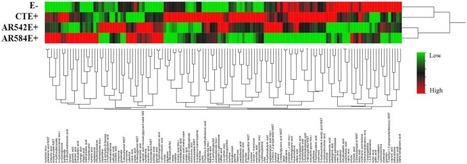
Tall fescue [Lolium arundinaceum (Schreb.)] is a cool-season perennial grass used in pastures throughout the Southeastern United States. The grass can harbor a shoot-specific fungal endophyte (Epichloë coenophiala) thought to provide the plant with enhanced resistance to biotic and abiotic stresses. Because alkaloids produced by the common variety of the endophyte cause severe animal health issues, focus has been on replacing the common-toxic strain with novel varieties that do not produce the mammal-toxic alkaloids but maintain abiotic and biotic stress tolerance benefits. Little attention has been given to the influence of the plant-fungal symbiosis on rhizosphere processes. Therefore, our objective was to study the influence of this relationship on plant biomass production and root exudate composition in tall fescue cultivars PDF and 97TF1, which were either not infected with the endophyte (E-), infected with the common toxic endophyte (CTE+) strain or with one of two novel endophytes (AR542E+, AR584E+). Plants were grown sterile for 3 weeks after which plant biomass, total organic carbon, total phenolic content and detailed chemical composition of root exudates were determined. Plant biomass production and exudate phenolic and organic carbon content were influenced by endophyte status, tall fescue cultivar, and their interaction. GC-TOF MS identified 132 compounds, including lipids, carbohydrates and carboxylic acids. Cluster analysis showed that the interaction between endophyte and cultivar resulted in unique exudate profiles. This is the first detailed study to assess how endophyte infection, notably with novel endophytes, and tall fescue cultivar interact to influence root exudate composition. Our results illustrate that tall fescue cultivar and endophyte status can influence plant growth and root exudate composition, which may help explain the observed influence of this symbiosis on rhizosphere biogeochemical processes.
Azorhizobium caulinodans ORS571 is a free-living nitrogen-fixing bacterium, which can induce nitrogen-fixing nodules both on the root and the stem of its legume host Sesbania rostrata. This bacterium which is an obligate aerobe, motioned by a polar flagellum, possesses a single chemotaxis signal transduction pathway. The objective of this work was to examine the role that chemotaxis and aerotaxis play in the lifestyle of the bacterium in free-living and symbiotic conditions. In bacterial chemotaxis, chemoreceptors sense environmental changes and transmit this information to the chemotactic machinery to guide motile bacteria to preferred niches. Here, we characterized a chemoreceptor of A. caulinodans containing an N-terminal PAS domain, named IcpB. IcpB is a soluble heme binding protein that localized at the cell poles. An icpB mutant strain was impaired in sensing oxygen gradients and in chemotaxis response to organic acids. Compared to the wild type strain, the icpB mutant strain was also affected in the production of extracellular polysaccharides and impaired in flocculation. When inoculated alone, the icpB mutant induced nodules on S. rostrata, but the nodules formed were smaller and had reduced N2-fixing activity. The icpB mutant failed to nodulate its host when inoculated competitively with the wild type strain. Together, the results identify chemotaxis and sensing of oxygen by IcpB as key regulators of the A. caulinodans-S. rostrata symbiosis.
The nature and direction of coevolutionary interactions between species is expected to differentiate among distinct environments. Consequently, locally coevolved symbiotic traits would be well matched in similar environments, but mismatched elsewhere. In a classic mutualistic trade-off, rhizobia provide nitrogen (N) to legume host plants in return for photosynthates. Despite earlier predictions, there is little evidence so far that spatial differences in soil N content mediate the coevolutionary outcome of the legume–Rhizobium mutualism. To test the existence of such selection mosaics, different genotypes of Vicia cracca and Rhizobium leguminosarum originating from spatially and environmentally highly differentiated sites were cross inoculated across different soil N regimes. In accordance with theoretical predictions, we found highly significant effects of genotype by genotype by environment (G×G×E) interactions, on both nodulation and plant growth, even when R. leguminosarum genotypes showed high genetic similarity. Our results show that the trajectory of the coevolutionary interactions between rhizobia and legumes is differentiated across different environments, and that selection mosaics may play an important role in shaping differences in the genetic composition of rhizobial populations.
A field experiment was conducted for three consecutive years to study the effect of set treatment of Gluconacetobacter diazotrophicus and PSB on seed yield, quality and saving of chemical N and P fertilizers for sugarcane seed plot. The set inoculation of Gluconacetobacter diazotrophicus + PSB coupled with 75 % recommended N and 75 % recommended P2O5 significantly improved the growth, two eye bud-set yield and quality. Among fertilizer levels, 75 % recommended N and 75 % recommended P recorded the highest yield of two eye bud-sets (883.63 and 885.44 thousands/ha, respectively). Between the inoculation treatments, fresh planting material inoculated with Acetobacter recorded higher two eye bud-sets (858.96 thousands/ha) than the uninoculated planting material from previous-year Acetobacter inoculated plot (828.47 thousands/ha); however, they were statistically indistinguishable. Moreover, the higher population and activity of G. diazotrophicus were observed at 75 % recommended N and 75 % recommended P. Among various interactions, the interaction of 75 % N and inoculation treatment showed significantly highest Acetobacter count in cuttings (7.38 × 10⁴). The available N and P status of soil at harvest was significantly influenced by different fertilizer levels (N and P levels), inoculation treatments and their interactions as well.
The stalk, ear and root rot (SERR) of maize caused by Fusarium verticillioides (Fv) severely impacts crop production in tropical and subtropical regions. The aim of the present work was to screen bacterial isolates in order to find novel native biocontrol agents against Fv. A culturable bacterial collection consisting of 11,520 isolates enriched in Firmicutes and Proteobacteria was created from rhizosphere samples taken from SERR symptomatic or asymptomatic maize plants. The complete collection was screened for potential activity against Fv using a liquid antagonism assay followed by dual cultures in solid medium, selecting for 42 bacteria (Bacillus, Pseudomonas and Paenibacillus) that inhibit Fv growth (>45 %). In planta assays demonstrated that three Bacillus isolates: B. megaterium (B5), B. cereus sensu lato (B25) and Bacillus sp. (B35) displayed the highest antagonistic activity against Fv. Pot experiments performed in a greenhouse with Bacillus cereus sensu lato B25 confirmed these findings and showed a reduction of Fv disease severity and incidence on plants. Antagonistic activity analysis revealed that these strains produce glucanases, proteases or chitinases, as well as siderophores and auxins and suggests these as possible control mechanisms against Fv.
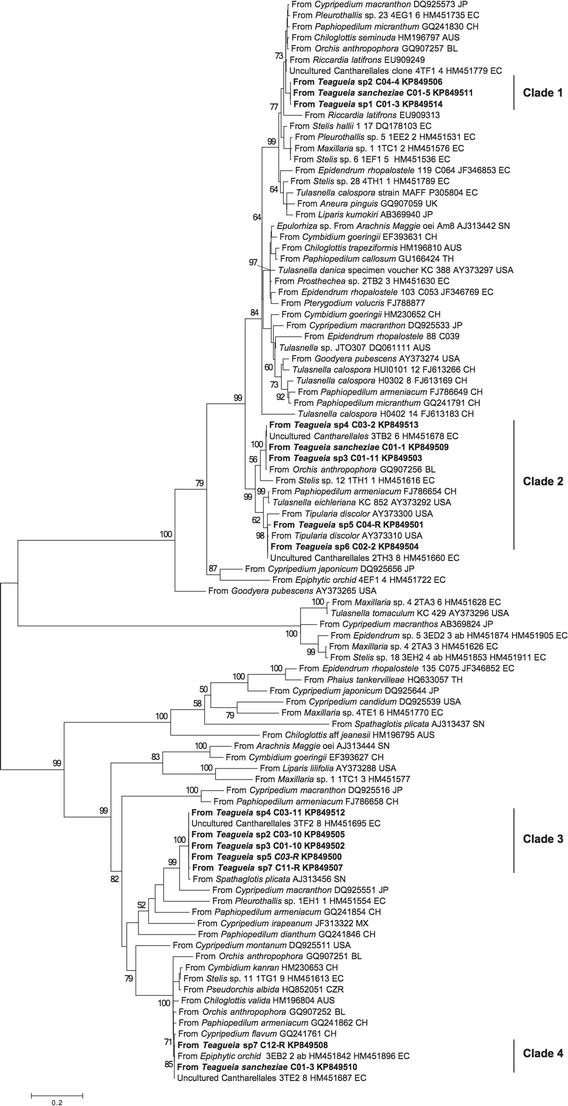
The orchid genus Teagueia Luer (Orchidaceae, subtribe Pleurothallidinae) presents an extraordinary example of recent local evolutionary radiation. In principle, mutualisms might affect the origin of plant species via an effect on speciation. As orchids depend on mycorrhizal fungi for seed germination and early plantlet development we tested whether certain mycorrhizal fungi are acting as drivers of this radiation in Teagueia species. Sampling was carried out near Baños in east Andean Ecuador. Roots were collected from a total of 11 flowering individuals of eight morphospecies (referred to as Teagueia spp). The whole ITS1-5.8S- ITS2 nrDNA region and part of the 28S nrDNA were amplified, cloned and sequenced. Molecular phylogeny of the obtained sequences revealed four phylogenetic species of Tulasnellaceae and one of Atractiellales (Pucciniomycotina, Basidiomycota) associated with Teagueia spp. Tulasnelloid fungi were detected in all samples. Up to three different phylogenetic species of mycobionts were found associated with one Teagueia species. We found that co-occurring Teagueia species share mycobionts. All detected mycobionts had wide geographical distribution. Based on the available evidence we conclude that the extraordinary local radiation of Teagueia is most likely driven by other factors than by mycorrhizal fungi, but that mycorrhiza may be a key factor for the coexistence of so many closely related orchid species.
Under paddy field conditions, biological sulfur oxidation occurs in the oxidized surface soil layer and rhizosphere, in which oxygen leaks from the aerenchyma system of rice plants. In the present study, we examined community shifts in sulfur-oxidizing bacteria associated with the oxidized surface soil layer and rice roots under different sulfur fertilization conditions based on the 16S ribosomal RNA (rRNA) gene in order to explore the existence of oligotrophic sulfur-oxidizing bacteria in the paddy rice ecosystem. Rice plants were grown in pots with no fertilization (control) or CaCO3 or CaSO4 fertilization. A principal-coordinates analysis (PCoA) showed that CaSO4 fertilization markedly affected bacterial communities associated with rice roots and soil, whereas no significant differences were observed in plant growth among the fertilizer treatments examined. In rice roots, the relative abundance of Acidobacteria, Alphaproteobacteria, Gammaproteobacteria, and TM7 was significantly higher in CaSO4-fertilized pots than in control pots. Alphaproteobacteria, Bradyrhizobiaceae, and Methylocystaceae members were significantly more abundant in CaSO4-fertilized roots than in control roots. On the other hand, the abundance of Actinobacteria and Proteobacteria was lower in CaSO4-fertilized soil than in control soil. These results indicate that the bacteria associated with rice roots and soil responded to the sulfur amendment, suggesting that more diverse bacteria are involved in sulfur oxidation in the rice paddy ecosystem than previously considered.
Sesbania cannabina is a plant that grows naturally along the seashores in Rudong County, China (RDC) and it has been introduced into the Yellow River Delta (YRD) as a pioneer plant to improve the saline-alkaline soils. In order to investigate the diversity of S. cannabina rhizobia in these soils, a total of 198 rhizobial isolates were characterized and phylogenetic trees were constructed based on data from multilocus sequence analysis (MLSA) of the housekeeping genes recA, atpD and glnII, as well as 16S rRNA. Symbiotic features were also studied by establishing the phylogeny of the symbiotic genes nodA and nifH, and by performing nodulation assays. The isolates had highly conserved symbiotic genes and were classified into nine genospecies belonging to the genera Ensifer, Agrobacterium, Neorhizobium and Rhizobium. A unique community structure was detected in the rhizobia associated with S. cannabina in the saline-alkaline soils that was characterized by five novel genospecies and four defined species. In addition, Ensifer sp. I was the predominant rhizobia in YRD, whereas Ensifer meliloti and Neorhizobium huautlense were the dominant species in RDC. Therefore, the study demonstrated for the first time that this plant strongly selected the symbiotic gene background but not the genomic background of its microsymbionts. In addition, biogeographic patterns existed in the rhizobial populations associated with S. cannabina, which were mainly correlated with pH and salinity, as well as the mineral nutrient contents. This study provided novel information concerning the interaction between soil conditions, host plant and rhizobia, in addition to revealing the diversity of S. cannabina rhizobia in saline-alkaline soils.
In an effort to ensure profitable production on the estimated 5.1 million acres of soybeans in 2015, Nebraska farmers are scrutinizing inputs and really focusing on profit. Using products/inputs that may increase yields 2 bushels per acre might have been profitable when soybeans were $14.40 per bushel in 2012, but becomes a stretch at the $9.73 per bushel set in February for some crop insurance policies.
Very few studies reported the potential of arbuscular mycorrhizal symbiosis to dissipate hydrocarbons in aged polluted soils. The present work aims to study the efficiency of arbuscular mycorrhizal colonized wheat plants in the dissipation of alkanes and polycyclic aromatic hydrocarbons (PAHs). Our results demonstrated that the inoculation of wheat with Rhizophagus irregularis allowed a better dissipation of PAHs and alkanes after 16 weeks of culture by comparison to non-inoculated condition. These dissipations observed in the inoculated soil resulted from several processes: (i) a light adsorption on roots (0.5% for PAHs), (ii) a bioaccumulation in roots (5.7% for PAHs and 6.6% for alkanes), (iii) a transfer in shoots (0.4 for PAHs and 0.5% for alkanes) and mainly a biodegradation. Whereas PAHs and alkanes degradation rates were respectively estimated to 12 and 47% with non-inoculated wheat, their degradation rates reached 18 and 48% with inoculated wheat. The mycorrhizal inoculation induced an increase of Gram-positive and Gram-negative bacteria by 56 and 37% compared to the non-inoculated wheat. Moreover, an increase of peroxidase activity was assessed in mycorrhizal roots. Taken together, our findings suggested that mycorrhization led to a better hydrocarbon biodegradation in the aged-contaminated soil thanks to a stimulation of telluric bacteria and hydrocarbon metabolization in mycorrhizal roots.
All multicellular hosts form associations with groups of microorganisms. These microbial communities can be taxonomically diverse and dynamic, and their persistence is due to robust, and sometimes coevolved, host–microbe and microbe–microbe interactions. Chemical and physical sources of stress are prominently situated in this molecular exchange, as cues for cellular responses in symbiotic microbes. Stress in the symbiotic environment may arise from three sources: host tissues, microbe-induced immune responses, or other microbes in the host environment. The responses of microbes to these stresses can be general or highly specialized, and collectively may contribute to the stability of the symbiotic system. In this review, we highlight recent work that emphasizes the role of stress as a cue in the symbiotic environment of plants and animals.
The majority of the vascular flowering plants form symbiotic associations with fungi from the phylum Glomeromycota through which both partners gain access to nutrients, either mineral nutrients in the case of the plant, or carbon, in the case of the fungus 1. The association develops in the roots and requires substantial remodeling of the root cortical cells where branched fungal hyphae called arbuscules are housed in a new membrane-bound apoplastic compartment 2. Nutrient exchange between the symbionts occurs over this interface and its development and maintenance is critical for symbiosis. Previously, we showed that DELLA proteins, which are well known as repressors of gibberellic acid signaling, also regulate development of AM symbiosis and are necessary to enable arbuscule development3. Furthermore, constitutive overexpression of a dominant DELLA protein (della1-Δ18) is sufficient to induce transcripts of several AM symbiosis-induced genes, even in the absence of the fungal symbiont 4. Here we further extend this approach and identify AM symbiosis genes that respond transcriptionally to constitutive expression of a dominant DELLA protein and also genes that do respond to this treatment. Additionally, we demonstrate that DELLAs interact with REQUIRED FOR ARBUSCULE DEVELOPMENT 1 (RAD1) which further extends our knowledge of GRAS factor complexes that have the potential to regulate gene expression during AM symbiosis.
LYR3 (Lysin Motif (LysM) Receptor-Like Kinase 3) of Medicago truncatula is a high affinity binding protein for symbiotic lipo-chitooligosaccharidic (LCO) signals, produced by Rhizobia bacteria and arbuscular mycorrhizal fungi. This work shows that LYR3 from several other legumes, but not from two Lupinus species which are incapable of forming the mycorrhizal symbiosis, bind LCOs with high affinity and discriminate them from chitooligosaccharides (COs). The biodiversity of these proteins and the lack of binding to the Lupinus proteins were used to identify features required for high affinity LCO binding. Swapping experiments between each of the three LysMs of the extracellular domain of the M. truncatula and Lupinus angustifolius LYR3 proteins revealed the crucial role of the third LysM in LCO binding. Site directed mutagenesis identified a Tyr residue, highly conserved in all the LYR3 LCO-binding proteins, which is essential for high-affinity binding. Molecular modeling suggests that it may be part of a hydrophobic tunnel able to accommodate the LCO acyl chain. The lack of conservation of these features in the binding site of plant LysM proteins binding COs, provides a mechanistic explanation of how LCO recognition might differ from CO perception by structurally-related LysM receptors.
A staggering diversity of endophytic fungi associate with healthy plants in nature, but it is usually unclear whether these represent stochastic encounters or provide host fitness benefits. Although most characterized species of the fungal genus Colletotrichum are destructive pathogens, we show here that C. tofieldiae (Ct) is an endemic endophyte in natural Arabidopsis thaliana populations in central Spain. Colonization by Ct initiates in roots but can also spread systemically into shoots. Ct transfers the macronutrient phosphorus to shoots, promotes plant growth, and increases fertility only under phosphorus-deficient conditions, a nutrient status that might have facilitated the transition from pathogenic to beneficial lifestyles. The host’s phosphate starvation response (PSR) system controls Ct root colonization and is needed for plant growth promotion (PGP). PGP also requires PEN2-dependent indole glucosinolate metabolism, a component of innate immune responses, indicating a functional link between innate immunity and the PSR system during beneficial interactions with Ct.
Background The Cerrado—an edaphic type of savannah— comprises the second largest biome of the Brazilian territory and is the main area for grain production in the country, but information about the impact of land conversion to agriculture on microbial diversity is still scarce. We used a shotgun metagenomic approach to compare undisturbed (native) soil and soils cropped for 23 years with soybean/maize under conservation tillage—“no-till” (NT)—and conventional tillage (CT) systems in the Cerrado biome.
Results Soil management and fertilizer inputs with the introduction of agriculture improved chemical properties, but decreased soil macroporosity and microbial biomass of carbon and nitrogen. Principal coordinates analyses confirmed different taxonomic and functional profiles for each treatment. There was predominance of the Bacteria domain, especially the phylum Proteobacteria, with higher numbers of sequences in the NT and CT treatments; Archaea and Viruses also had lower numbers of sequences in the undisturbed soil. Within the Alphaproteobacteria, there was dominance of Rhizobiales and of the genus Bradyrhizobium in the NT and CT systems, attributed to massive inoculation of soybean, and also of Burkholderiales. In contrast, Rhizobium, Azospirillum, Xanthomonas, Pseudomonas and Acidobacterium predominated in the native Cerrado. More Eukaryota, especially of the phylum Ascomycota were detected in the NT. The functional analysis revealed lower numbers of sequences in the five dominant categories for the CT system, whereas the undisturbed Cerrado presented higher abundance.
Conclusion High impact of agriculture in taxonomic and functional microbial diversity in the biome Cerrado was confirmed. Functional diversity was not necessarily associated with taxonomic diversity, as the less conservationist treatment (CT) presented increased taxonomic sequences and reduced functional profiles, indicating a strategy to try to maintain soil functioning by favoring taxa that are probably not the most efficient for some functions. Our results highlight that underneath the rustic appearance of the Cerrado vegetation there is a fragile soil microbial community.
For a long time, it was thought that the sole role of the immune system was to distinguish between friend and foe and to fend off pathogens. In fact, it is more like a microbial management system that is also involved in accommodating beneficial microorganisms in the plant when required. Researchers from the Max Planck Institute for Plant Breeding Research in Cologne in collaboration with an international consortium of other laboratories discovered this relationship between the model plant Arabidopsis thaliana, or thale cress, and the fungus Colletotrichum tofieldiae. The plant tolerates the fungus when it needs help in obtaining soluble phosphate from the soil and rejects the microbe if it can accomplish this task on its own.
A total of 30 morphologically distinct bacterial cultures were isolated from rhizosphere of wild tropical leguminous plant, Teramnus labialis (L. f.) Spreng. These isolates were screened for different plant growth promoting (PGP) traits amongst which a bacterial isolate designated as SN19 identified as Enterobacter cloacae (JQ904624) exhibited maximum IAA production (382.23 µg ml−1 in 0.1% l-tryptophan supplemented medium) along with other PGP traits. The production of IAA was confirmed by TLC and LC-MS/MS analysis. Biological potency of the bacterial IAA was determined using wheat coleoptile bioassay and in vitro root induction of Pluchea lanceolata shoot explants. The seed bacterization and bioinoculation of groundnut (Arachis hypogaea), rice (Oryza sativa), wheat (Triticum aestivum), mung (Vigna radiata) and maize (Zea mays) using this siderophorogenic IAA producer resulted in enhanced seed germination rate and plant vigour under in vivo condition. Thus, our findings indicate that the bacterium Enterobacter cloacae SN19 can serve as a promising plant growth promoting microbial inoculant.
Seed-associated fungal communities affect multiple parameters of seed quality at all stages of production, from seed development to post-harvest storage and germination. We therefore investigated the diversity and dynamics of fungal communities in the seeds of common buckwheat (Fagopyrum esculentum) and Tartary buckwheat (F. tataricum) from harvest to 1 year of storage. Fungal populations in seeds were relatively stable, comprised mainly of field fungi. Incidence of fungi was most likely determined by fungal interspecies direct interactions, as well as by their synthesis of volatile organic compounds. Most prominent antagonistic interactions were seen for two plant pathogens, Alternaria alternata on Botrytis cinerea. Detrimental effects of the fungi on seed germination and seedling development were related to fungal extracellular enzyme activity, and in particular to amylase, cellulase and polyphenol oxidase. Polyphenol and tannin concentrations in buckwheat seedlings were related to fungal growth rate and intensity of fungal cellulase activity, respectively, which suggests that physical penetration of the fungi through the host tissues is probably the stimulus for the activation of plant defence reactions in these seedlings.
Arbuscular mycorrhizal fungi (AMF) establish mutualistic associations with the most important agricultural food and feed crops, sustaining plant growth, nutrient uptake and tolerance of biotic and abiotic stresses. Scanty information is available on the role played by crop identity and diversity as a driving force shaping AMF species communities in the field, in particular in low-input and organic farming, where crop rotation and the use of cover crops are common practices. Here, using a molecular approach, we investigated whether plant communities established in low and high diversity cover crop treatments affect the composition of native AMF root communities of subsequent maize in a Mediterranean organic agroecosystem. A total of 16 AMF sequence types were detected, with Acaulospora cavernata as the most abundant phylotype, accounting for 37.4 % of the sequences, followed by Funneliformis mosseae, Claroideoglomus lamellosum and Rhizoglomus intraradices. Sequences matching to Funneliformis caledonium, Diversispora aurantia, Diversispora epigaea and Archaeospora schenckii corresponded to less than 2.0 % of the total. The most abundant sequences retrieved in plants from cover crop treatments were represented by A. cavernata, while sequences in maize roots were related to F. mosseae, R. intraradices and Glomus sp. Such data show for the first time a change in the composition of native AMF communities colonizing maize roots, which was independent of the identity and diversity of the preceding crop. Our findings suggest that host preference may represent a strong driver of AMF community dynamics in agroecosystems, differentially boosting or depressing AMF species, possibly in relation to their functional significance.
To get content containing either thought or leadership enter:
To get content containing both thought and leadership enter:
To get content containing the expression thought leadership enter:
You can enter several keywords and you can refine them whenever you want. Our suggestion engine uses more signals but entering a few keywords here will rapidly give you great content to curate.


 Your new post is loading...











Ha ha ha... It's a hot topic :-)