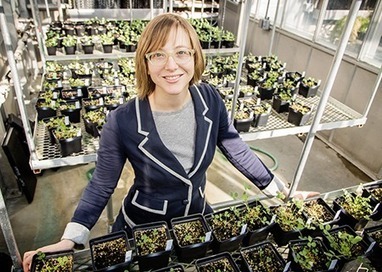
For more than 500 million years, a large fraction of land plants exist in a mutually beneficial, symbiotic relationship with arbuscular mycorrhizal fungi. The plants share their carbohydrates with the fungi that inhabit their roots. In exchange, these fungi provide plants with nitrogen and phosphorus, and improve the stress resistance of their host. This ancient mutualism has the prospect of making agriculture more sustainable by reducing the need for chemical fertilizers, says Professor Heike Bücking.
Dr Bücking, from South Dakota State University Department of Biology and Microbiology, has been studying such ecological relationships in food and bioenergy crops including wheat, corn, soybeans, alfalfa, clover and perennial grasses, such as prairie cordgrass. She is considered a pioneer in her field with numerous publications to validate her achievements.
The structures of arbuscular mycorrhizal (AM) fungi (hyphae, arbuscules, vesicles, spores) are used to make inferences about fungal activity based on stored samples, yet the impact of storage method has not been quantified, despite known effects of temperature and host condition on AM fungal colonisation. Methods
We measured how four storage treatments (cool or ambient conditions, with and without plant shoots attached, i.e. n = four treatment combinations) affected AM fungal colonisation of subterranean clover (Trifolium subterraneum L.) after 0, 2, 6 and 10 days of storage. Roots were assessed for colonisation of fine root endophyte and coarse AM fungi. Results
For coarse AM fungi, total colonisation was unaffected, but arbuscules were reduced at Day 6 and increased again by Day 10, except Ambient-Minus-Shoots. There was a loss of vesicles in all treatments at Day 2, and an increase in spore number at Day 6 within Cool-Plus-Shoots. In contrast, for fine root endophyte, total colonisation was greatly reduced at Day 6 but increased again at Day 10, in all except the Cool-Plus-Shoots treatment. Conclusions
Our data demonstrate that AM fungal activity is not suspended in commonly used plant storage conditions. Storage method and time impacted AM fungal colonisation, particularly for fine root endophyte. We recommend samples are processed within 2 days of harvest.
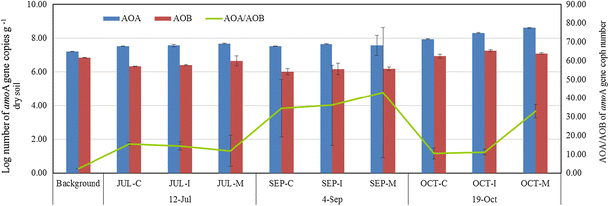
The abundance, diversity and community structure of ammonia oxidizing archaea (AOA) and bacteria (AOB) in rice rhizosphere soils under three different irrigation cultivated modes, named continuous irrigation mode (C), intermittent irrigation mode (I) and semi-arid mode (M), respectively, were investigated using amoA gene as a molecular biomarker. Clone libraries and quantitative polymerase chain reaction results indicated the highest number of archaeal amoA gene copy was detected in M cultivation mode, then in I and C, whereas, their order of amoA gene copy numbers were I > M > C for AOB, and those were obvious higher than in the bulk soil. The ratios of AOA/AOB were greater than 1 for all samples, suggested the predominance of AOA throughout the period of rice growth in the three different irrigation cultivation modes. Diversity index (SChao1 and Shannon H) have an obvious variation in three different irrigation cultivation modes. For AOA, SChao1 was highest in M and lowest in I mode, whereas, Shannon H was highest in M cultivation mode and lowest in C mode. For AOB, mode M exhibited the highest diversity index (SChao1 and Shannon H), while C showed the lowest highest diversity, suggested long-term water input (continuous mode) may decrease diversity of ammonia oxidizers, whereas mode M may be more appropriate for them. In addition, AOA sequences fall within Nitrososphaera, Nitrosopumilus and Nitrosotalea cluster with proportion of 89.38, 8.85 and 1.77 %, respectively. AOB gene sequences belonged to the Nitrosomonas and Nitrosospira genera with proportion of 90.97 and 9.03 %, respectively. In addition, the abundances, diversity and community structure had an obvious temporal variation in three developmental stages of rice, further suggested rice growth obviously affected the ammonia oxidizing prokaryotes in their rhizosphere soil.
Last month, in the early hours, an act of traumatising racist violence occurred on the campus of Emory University in Atlanta, Georgia. Students woke up to find that someone had written, in chalk, the words “Trump 2016” on various pavements and walls around campus. “I think it was an act of violence,” said one student. “I legitimately feared for my life,” said another; “I thought we were having a KKK rally on campus”. Dozens of students met the university president that day to demand that he take action to repudiate Trump and to find and punish the perpetrators. Writing political statements in chalk is a common practice on American college campuses and, judging from the public reaction to the Emory event, most Americans consider the writing to be an act of normal free speech during the national collective ritual of a presidential election. So how did it come to pass that many Emory students felt victimised and traumatised by innocuous and erasable graffiti?
A majority of land plants can form symbiosis with arbuscular mycorrhizal (AM) fungi. MicroRNAs (miRNAs) have been implicated to regulate this process in legumes, but their involvement in non-legume species is largely unknown. In this study, by performing deep sequencing of sRNA libraries in tomato roots and comparing with tomato genome, a total of 700 potential miRNAs were predicted, among them, 187 are known plant miRNAs that have been previously deposited in miRBase. Unlike the profiles in other plants such as rice and Arabidopsis, a large proportion of predicted tomato miRNAs was 24 nt in length. A similar pattern was observed in the potato genome but not in tobacco, indicating a Solanum genus-specific expansion of 24-nt miRNAs. About 40% identified tomato miRNAs showed significantly altered expressions upon Rhizophagus irregularis inoculation, suggesting the potential roles of these novel miRNAs in AM symbiosis. The differential expression of five known and six novel miRNAs were further validated using qPCR analysis. Interestingly, three up-regulated known tomato miRNAs belong to a known miR171 family, a member of which has been reported in Medicago truncatula to regulate AM symbiosis. Thus, the miR171 family likely regulates AM symbiosis conservatively across different plant lineages. More than 1000 genes targeted by potential AM-responsive miRNAs were provided and their roles in AM symbiosis are worth further exploring.
La plante dispose d'un système racinaire limité en superficie et en diamètre. Lorsqu'elle ne peut plus accéder seules aux nutriments en quantité suffisante dans les quelques millimètres autour de ces racines, elle cherche à étendre son périmètre au delà de la rizhosphère.
C'est alors qu'elles cherchent à développer une collaboration avec des organismes du sol, dont les champignons, pour étendre son réseau de captage d'eau et de nutriments jusqu'à plusieurs centimètres autour de leurs racines. Il existe au moins deux types de symbioses: exogène - autour de la racine ou endogène - pénétrant la racine.
Les champignons disposent d'un réseau fibreux extrêmement vaste et très fins dans toute la mycrhizosphère. Leurs filament, appelés hyphes, font de 3 à 15 microns. Ils peuvent couvrir une superficie de plusieurs kilomètres et se glisser dans les plus fins interstices des roches et capter les nutriments même peu mobiles comme le phosphore, le potassium, le cuivre, le zinc, le magnésium, le silicium... Les champignons fournissent également des enzymes protectrices, défensives ou inhibitrices selon les besoins de la plante. Une réelle communication chimique, gazeuse et sonore s'établit alors pour réguler ces échanges proboitiques.
Les recherches ont montré qu'en condition normale, hors agriculture chimique, les relations symbiotiques entre plantes, arbres et champignons mycorhiziens sont plus fortes lorsque la teneur du sol en phosphore soluble est modérément faible. En effet, lorsque le sol est appauvri, les mycorhizes aident à l’absorption du phosphore en prolongeant la zone d’absorption hors de la zone appauvrie en phosphore. Les plants de pin mycorhisés par exemple absorbent 2 à 3 fois plus d'azote, de potassium et de phosphore (Hatch). Les plantes mycorhisées trouvent même qu'il est plus avantageux de dépenser leurs ressources carbonées pour favoriser la croissance de la mycorhize plutôt que de favoriser la croissance de leur propre système racinaire. (Jackson & Manson). Les plants mycorhisés sont plus grands, plus forts et plus résistants aux maladies du fait de cette symbiose bénéfique.
Jean Dénarié’s early career was a defining period. First was the appeal of research, which he describes as a universal, unifying intellectual activity that offers experimentally validated answers to questions. Early in his education, he turned to the hard sciences, including biology, which study mechanisms at molecular level, where there is very little uncertainty in scientists’ interpretation. Another major factor was Dénarié’s interest in a particular area: at the end of his Maîtrise postgraduate degree, he knew he wanted to work on nitrogen cycle genetics. The nitrogen cycle is fundamental to life on Earth; he thought genetics could provide insight into the workings of the cycle. Eventually the knowledge gained might be harnessed to improve human food and nutrition and preserve the environment. From that point on, with unwavering determination, Dénarié did everything possible to achieve these goals.
Ken Giller towers over most of the people he meets. An agroecologist at Wageningen University in the Netherlands, he’s a wiry 6 feet 4 inches tall. But in the rural farming villages in Africa he visits, his height really stands out. It’s because of the villagers’ diets, he says: People are stunted because their bodies simply haven’t had enough food to grow properly.
Giller leads a network of local nonprofits, government, and universities in the N2Africa project. Working in 11 countries, including Tanzania, Rwanda, and Zimbabwe, the project gives farmers hands-on training to expand their cultivation of legumes and experiment with different techniques to make their crops more productive. Giller has worked in Africa for over two decades. He knows the farmers, their hopes and hardships.
The legume genus Aeschynomene is notable in the ability of certain semiaquatic species to develop nitrogen-fixing stem nodules. These species are distributed in two clades. In the first clade, all the species are characterized by the use of a unique Nod-independent symbiotic process. In the second clade, the species use a Nod-dependent symbiotic process and some of them display a profuse stem nodulation as exemplified in the African Aeschynomene afraspera. To facilitate the molecular analysis of the symbiotic characteristics of such legumes, we took an integrated molecular and cytogenetic approach to track occurrences of polyploidy events and to analyze their impact on the evolution of the African species of Aeschynomene. Our results revealed two rounds of polyploidy: a paleopolyploid event predating the African group and two neopolyploid speciations, along with significant chromosomal variations. Hence, we found that A. afraspera (8x) has inherited the contrasted genomic properties and the stem-nodulation habit of its parental lineages (4x). This study reveals a comprehensive picture of African Aeschynomene diversification. It notably evidences a history that is distinct from the diploid Nod-independent clade, providing clues for the identification of the specific determinants of the Nod-dependent and Nod-independent symbiotic processes, and for comparative analysis of stem nodulation.
From an environmental perspective, for example, these could include the need for farming systems to address soil health and erosion, carbon sequestration, waste production or to consider agro-ecological processes that employ closed loop cycles within the farm wherever possible to limit inputs and reduce waste. Examples here include nutrient cycling (macro and micro), biological nitrogen fixation, predation and symbiosis.
Plant–microbe mutualisms can improve plant defense, but the impact of root endophytes on below-ground herbivore interactions remains unknown. We investigated the effects of the root endophyte Piriformospora indica on interactions between rice (Oryza sativa) plants and its root herbivore rice water weevil (RWW; Lissorhoptrus oryzophilus), and how plant jasmonic acid (JA) and GA regulate this tripartite interaction. Glasshouse experiments with wild-type rice and coi1-18 and Eui1-OX mutants combined with nutrient, jasmonate and gene expression analyses were used to test: whether RWW adult herbivory above ground influences subsequent damage caused by larval herbivory below ground; whether P. indica protects plants against RWW; and whether GA and JA signaling mediate these interactions. The endophyte induced plant tolerance to root herbivory. RWW adults and larvae acted synergistically via JA signaling to reduce root growth, while endophyte-elicited GA biosynthesis suppressed the herbivore-induced JA in roots and recovered plant growth. Our study shows for the first time the impact of a root endophyte on plant defense against below-ground herbivores, adds to growing evidence that induced tolerance may be an important root defense, and implicates GA as a signal component of inducible plant tolerance against biotic stress.
Mycorrhizal fungi have diverse roles in soil and they hold a central position at the interface between chemical, physical and biological components of soil fertility. This 2-day symposium provides an opportunity to participate in discussion of mycorrhizal fungi with international, interstate and WA experts. In addition to presentations by the invited speakers, considerable time on both days will be allocated to submitted POSTERS and DISCUSSION of key issues.
Hope Jahren’s memoir of her life in science, Lab Girl, has been described by the New York Times as a book that “at its best, does for botany what Oliver Sacks’s essays did for neurology” Now 46 and professor of geobiology at the University of Hawaii, Jahren has built a hugely successful research career delving into everything from the secrets of fossilised plants and ancient ecosystems to developing forensic tests for improvised explosive devices. Along the way she has scooped three Fulbright awards as well as medals from both the Geological Society of America and the American Geophysical Union. But, she says, making it to the top in academia takes more than just a love of plants and soil. It takes grit, too.
N2-fixing bacteria belonging to the genus Raoultella of the family Enterobacteriaceae are widely associated with plants. Raoultella sp. strain L03 was isolated from surface-sterilized sugarcane roots. In this study, we inoculated the strain L03 to microbe-free micropropagated plantlets of the main sugarcane cultivar ROC22 grown in Guangxi, China and determined N2-fixation and association between strain L03 and sugarcane plants. Inoculation of strain L03 increased plant biomass, total N, N concentration and chlorophyll, and relieved N-deficiency symptoms of plants under an N-limiting condition. An 15N isotope dilution assay revealed 15N isotope dilution in the inoculated sugarcane plants and incorporation of the fixed 14N from air into chlorophyll. Moreover, a gfp-tagged and antibiotic-resistant L03 strain was reisolated from surface-sterilized sugarcane plants and was detected in plant tissues by fluorescent microscopy. This study for the first time demonstrates that a Raoultella bacterium is able to fix N2 in association with the plant host.
The effect of domestication and modern breeding on aboveground traits in maize (Zea mays) has been well-characterized, but the impact on root systems and the rhizosphere remain unclear. The transition from wild ecosystems to modern agriculture has focused on selecting traits that yielded the largest aboveground production with increasing levels of crop management and nutrient inputs. Root morphology, anatomy, and ecophysiological processes may have been affected by the substantial environmental and genetic shifts associated with this transition. As a result, root and rhizosphere traits that allow more efficient foraging and uptake in lower synthetic input environments might have been lost. The development of modern maize has led to a shift in microbiome community composition, but questions remain as to the dynamics and drivers of this change during maize evolution and its implications for resource acquisition and agroecosystem functioning under different management practices. Better understanding of how domestication and breeding affected root and rhizosphere microbial traits could inform breeding strategies, facilitate the sourcing of favorable alleles, and open new frontiers to improve resource use efficiency through greater integration of root development and ecophysiology with agroecosystem functioning.
Trophic exchanges constitute the bases of the symbiosis between the nitrogen-fixing actinomycete Frankia and its host plant Alnus, but the identity of the compounds exchanged is still poorly known. In the current work, previously published transcriptomic studies of Alnus nodules and of symbiotic Frankia were reexamined for TCA cycle related genes. The bacterial TCA enzyme genes were all upregulated, especially the succinyl-CoA synthase and the citrate synthase while on the plant side, none was significantly modified in nodules relative to non-inoculated roots. A preliminary metabolomics approach permitted to see that citrate, 2-oxoglutarate, succinate, malate and fumarate were all more abundant (FC (Fold change) = 5–70) in mature nitrogen-fixing nodules than in roots. In the evaluation of the uptake and metabolism of these organic acids, a significant change was observed in the morphology of nitrogen fixing vesicles in vitro: the dicarboxylates malate, succinate and fumarate induced the formation of larger vesicles than was the case with propionate. Moreover, the production of spores was also modified depending on the organic acid present. The assays showed that most C4 dicarboxylates were taken up while C6 tricarboxylates were not and citrate even partially blocked catabolism of reserve carbon. Tests were performed to determine if the change in membrane permeability induced by Ag5, a peptide previously shown to modify the membranes of Frankia, increased the uptake of specific organic acids. No effect was observed with citrate while an increase in nitrogen fixation was seen with propionate.
The 14-3-3 gene family, which is conserved in eukaryotes, is involved in protein-protein interactions and mediates signal transduction. However, detailed investigations of the 14-3-3 gene family in Medicago truncatula are largely unknown. In this study, the identification and study of M. truncatula 14-3-3-family genes were performed based on the latest M. truncatula genome. In the M. truncatula genome, 10 14-3-3 family genes were identified, and they can be grouped into ε and non-ε groups. An exon-intron analysis showed that the gene structures are conserved in the same group. The protein structure analysis showed that 14-3-3 proteins in M. truncatula are composed of nine typical antiparallel α-helices. The expression patterns of Mt14-3-3 genes indicated that they are expressed in all tissues. Furthermore, the gene expression levels of Mt14-3-3 under hormone treatment and Sinorhizobium meliloti infection showed that the Mt14-3-3 genes were involve in nodule formation. Our findings lay a solid foundation for further functional studies of 14-3-3 in M. truncatula.
With growing interest in the role of microbiomes, and symbionts in particular, the aim of this study was to determine the diversity of the bacterial endophyte population within Miscanthus and to ascertain the extent of vertical transmission via the seed. A great diversity of endophytic bacteria were found in all parts of the mature plant (rhizome, root, stem and leaf), and in seedlings grown from sterilised seed grown in sterile conditions. A total of 3 phyla and 5 families of bacteria were identified as cultures compared to 19 phyla and 85 families using 16S rDNA amplification and sequencing. Not all cultured bacteria could be identified by 16S rDNA, implying that the true diversity is even greater.
More bacterial diversity was identified in sterile-grown seedlings than in all parts of the mature plant combined, 17 and 13 phyla respectively with 11 in common. 5 phyla were present in all plant samples examined. Vertical transmission via the seed may therefore be a major source of endophytes in Miscanthus, presumably supplemented by ingress of soil bacteria as the plant grows. Bacteria identified from the mature plant were predominantly similar to known bacterial sequences in Genbank, but a small number from the stem and many from the seed were novel, potentially adapted to an in planta lifecycle. Endophytic bacteria were found to form spores and other dense structures, and this provides a mechanism for long term survival and seed transmission. The staining of germinating seeds identified bacteria at the root tip of the emerging radicle. We propose that seed transmission of bacterial endophytes requires adaptation of both plant and microbes, plays a role in germination and has evolutionary significance and implications for future plant breeding approaches, in Miscanthus and more widely.
Bacterial strains isolated from the nodules, tissues, and root surface of wild legumes growing in the Southern Urals related to the tribes Galegeae, Hedysareae, Genisteae, Trifolieae, and Loteae were examined for the presence in their genomes of symbiotic (sym) genes. It was found that the sym-genes are present in microorganisms isolated only from the nodules of the analyzed plants (sym+ -strains). Phylogenetic analysis of sym+ -strains on the basis of a comparative analysis of 16S rRNA gene sequences showed that sym+ -strains belong to five families of nodule bacteria: Mesorhizobium, Bradyrhizobium, Sinorhizobium, Rhizobium, and Phyllobacterium. A study the phylogeny of the sym-genes showed that the nodule bacteria of leguminous plants of the Southern Urals at the genus level are mainly characterized by a parallel evolution of symbiotic genes and the 16S rRNA gene. Thus, cases of horizontal transfer of sym genes, which sometimes leads to the formation of certain types of atypical rhizobial strains ofleguminous plants, are detected in nodule bacteria populations.
Anthropogenic changes can influence mutualism evolution; however, the genomic regions underpinning mutualism that are most affected by environmental change are generally unknown, even in well-studied model mutualisms like the interaction between legumes and their nitrogen (N)-fixing rhizobia. Such genomic information can shed light on the agents and targets of selection maintaining cooperation in nature. We recently demonstrated that N-fertilization has caused an evolutionary decline in mutualistic partner quality in the rhizobia that form symbiosis with clover. Here, population genomic analyses of N-fertilized versus control rhizobium populations indicate that evolutionary differentiation at a key symbiosis gene region on the symbiotic plasmid (pSym) contributes to partner quality decline. Moreover, patterns of genetic variation at selected loci were consistent with recent positive selection within N-fertilized environments, suggesting that N-rich environments might select for less beneficial rhizobia. By studying the molecular population genomics of a natural bacterial population within a long-term ecological field experiment, we find that: (i) the N environment is indeed a potent selective force mediating mutualism evolution in this symbiosis, (ii) natural variation in rhizobium partner quality is mediated in part by key symbiosis genes on the symbiotic plasmid, and (iii) differentiation at selected genes occurred in the context of otherwise recombining genomes, resembling eukaryotic models of adaptation.
Plant biologists at the University of Illinois and Michigan State University have pinpointed the area of genomes within nitrogen-fixing bacteria in roots, called rhizobia, that's being altered when the plant they serve is exposed to nitrogen fertilizer.
The study, published in the Royal Society journal Proceedings of the Royal Society B, deepens the understanding of an Illinois study last year that indicated rhizobia—which are particularly beneficial to legumes such as clover, beans, peas, soybeans, lentils, and others—are less beneficial for plants when they are exposed to nitrogen fertilizer. "This is one of the first times we've found at the genetic level the basis of an evolutionary change in mutualism," said Katy Heath, professor of plant biology at Illinois and one of the study's authors, referring to the mutually beneficial relationship between rhizobia and plants that has evolved over millions of years. Rhizobia receive sugar from the plant and in turn provide the plant with nitrogen.
Did you know that the world “pulse” originates from Latin “puls,” or thick soup/porridge? Or that pulses are actually the dried seed of a legume?
Pulses have been a healthy diet staple since approximately 7000 - 8000 B.C. Based on archaeological evidence, pulses were grown in the Mediterranean and Mesopotamia regions—now they are grown around the world and consumed in a variety of ways. Pulses provide a multitude of benefits for health, and also agronomic benefits for smallholder farmers around the world who grow them.
1.The plant-soil feedback (PSF) framework has become an important theory in plant ecology, yet many ecological and evolutionary factors that influence PSFs have yet to be fully considered. Here, we discuss the importance of local adaptation among plants and root-associated fungi and bacteria. Furthermore, we show how inclusion of the optimal resource allocation model can help predict the direction and outcome of PSFs under environmental change.
2.Plants and associated soil microbes have coevolved for millennia, generating adaptations to each other and to their local environment. This local co-adaptation is likely generated by a suite of multi-directional exchanges of goods and services among plants, fungi and bacteria, and the constant changes in aboveground-belowground interaction.
3.Resource limitation may be a driver of local adaptation among organisms involved in nutritional symbioses. The optimal resource allocation (OA) model states that when an essential resource is limited, natural selection will favor taxa that forage optimally by adjusting their biomass and energy allocation such that productivity is equally limited by all resources. Co-adaptation will therefore respond to the local limiting resource conditions through taxa-specific resource transfer interactions.
4.The OA model can help predict the outcomes of PSFs across a range of resource gradients and environmental changes such as increasing drought or atmospheric nitrogen deposition. Positive feedback is predicted in systems where resource exchange among plants and associated soil microbes can ameliorate resource limitation, or in systems where microbes provide another important service such as pathogen defense. Feedback strength is expected to diminish as resources become less limiting. Negative feedback is predicted when resources are in luxury supply and populations of opportunistic plant pathogens increase relative to commensal or mutualist microbes.
5.Future, field-based studies that integrate naturally co-occurring systems of plants, microbes and their local soil are needed to further test the hypothesis that resource availability is an effective predictor of the direction and magnitude of PSFs. A more mechanistic understanding of PSFs will help land managers and farmers to manipulate plant-microbial-soil interactions to respond to environmental change and to effectively harness beneficial symbioses for plant nutrition and pathogen control.
To get content containing either thought or leadership enter:
To get content containing both thought and leadership enter:
To get content containing the expression thought leadership enter:
You can enter several keywords and you can refine them whenever you want. Our suggestion engine uses more signals but entering a few keywords here will rapidly give you great content to curate.


 Your new post is loading...













Go Heike!