Your new post is loading...

|
Scooped by
Jean-Michel Ané
April 23, 2016 10:20 PM
|
Modern sequencing technologies allow high-resolution analyses of total and potentially active soil microbial communities based on their DNA and RNA, respectively. In the present study, quantitative PCR and 454 pyrosequencing were used to evaluate the effects of different extraction methods on the abundance and diversity of 16S rRNA genes and transcripts recovered from three different types of soils (leptosol, stagnosol, and gleysol). The quality and yield of nucleic acids varied considerably with respect to both the applied extraction method and the analyzed type of soil. The bacterial ribosome content (calculated as the ratio of 16S rRNA transcripts to 16S rRNA genes) can serve as an indicator of the potential activity of bacterial cells and differed by 2 orders of magnitude between nucleic acid extracts obtained by the various extraction methods. Depending on the extraction method, the relative abundances of dominant soil taxa, in particular Actinobacteria and Proteobacteria, varied by a factor of up to 10. Through this systematic approach, the present study allows guidelines to be deduced for the selection of the appropriate extraction protocol according to the specific soil properties, the nucleic acid of interest, and the target organisms.
|
|
Scooped by
Jean-Michel Ané
April 23, 2016 10:12 PM
|
From a screen of 36 plant-associated strains of Burkholderia spp., we identified 24 strains that suppressed leaf and pseudobulb necrosis of orchid caused by B. gladioli. To gain insights into the mechanisms of disease suppression, we generated a draft genome sequence from one suppressive strain, TC3.4.2R3. The genome is an estimated 7.67 megabases in size, with three replicons, two chromosomes, and the plasmid pC3. Using a combination of multilocus sequence analysis and phylogenomics, we identified TC3.4.2R3 as B. seminalis, a species within the Burkholderia cepacia complex that includes opportunistic human pathogens and environmental strains. We generated and screened a library of 3,840 transposon mutants of strain TC3.4.2R3 on orchid leaves to identify genes contributing to plant disease suppression. Twelve mutants deficient in suppression of leaf necrosis were selected and the transposon insertions were mapped to eight loci. One gene is in a wcb cluster that is related to synthesis of extracellular polysaccharide, a key determinant in bacterial-host interactions in other systems, and the other seven are highly conserved among Burkholderia spp. The fundamental information developed in this study will serve as a resource for future research aiming to identify mechanisms contributing to biological control.
|
|
Scooped by
Jean-Michel Ané
April 23, 2016 8:10 PM
|
A major challenge facing agriculture in the 21st century is the need to increase the productivity of cultivated land while reducing the environmentally harmful consequences of mineral fertilization. The microorganisms thriving in association and interacting with plant roots, the plant microbiota, represent a potential resource of plant probiotic function, capable of conjugating crop productivity with sustainable management in agroecosystems. However, a limited knowledge of the organismal interactions occurring at the root–soil interface is currently hampering the development and use of beneficial plant–microbiota interactions in agriculture. Therefore, a comprehensive understanding of the recruitment cues of the plant microbiota and the molecular basis of nutrient turnover in the rhizosphere will be required to move toward efficient and sustainable crop nutrition. In this chapter, we will discuss recent insights into plant–microbiota interactions at the root––soil interface, illustrate the processes driving mineral dynamics in soil, and propose experimental avenues to further integrate the metabolic potential of the plant microbiota into crop management and breeding strategies for sustainable agricultural production.
|
|
Scooped by
Jean-Michel Ané
April 23, 2016 11:06 AM
|
|
|
Scooped by
Jean-Michel Ané
April 23, 2016 11:01 AM
|
UK scientists have identified the country’s first ash tree that shows tolerance to ash dieback, raising the possibility of using selective breeding to develop strains of trees that are tolerant to the disease.
The findings, which could help ensure ash trees will thrive in UK woodlands, have today (22 April) been published in a report co-funded by Defra and the Biotechnology and Biological Sciences Research Council (BBSRC).
|
|
Scooped by
Jean-Michel Ané
April 22, 2016 1:30 PM
|
A central challenge in global ecology is the identification of key functional processes in ecosystems that scale, but do not require, data for individual species across landscapes. Given that nearly all tree species form symbiotic relationships with one of two types of mycorrhizal fungi – arbuscular mycorrhizal (AM) and ectomycorrhizal (ECM) fungi – and that AM- and ECM-dominated forests often have distinct nutrient economies, the detection and mapping of mycorrhizae over large areas could provide valuable insights about fundamental ecosystem processes such as nutrient cycling, species interactions, and overall forest productivity. We explored remotely sensed tree canopy spectral properties to detect underlying mycorrhizal association across a gradient of AM- and ECM-dominated forest plots. Statistical mining of reflectance and reflectance derivatives across moderate/high-resolution Landsat data revealed distinctly unique phenological signals that differentiated AM and ECM associations. This approach was trained and validated against measurements of tree species and mycorrhizal association across ~130 000 trees throughout the temperate United States. We were able to predict 77% of the variation in mycorrhizal association distribution within the forest plots (P < 0.001). The implications for this work move us toward mapping mycorrhizal association globally and advancing our understanding of biogeochemical cycling and other ecosystem processes.
|
|
Scooped by
Jean-Michel Ané
April 22, 2016 1:18 PM
|
The boreal forest is of particular interest to climate change research due to its large circumpolar distribution and accumulated soil carbon pool. Carbon uptake in this ecosystem is nitrogen (N)-limited, therefore factors affecting carbon or nitrogen dynamics in the boreal forest can have consequences for global climate. We used a 2-year field experiment to investigate the response of biotic nitrogen fixation by cyanobacteria associated with boreal forest bryophytes, in a factorial experiment combining simulated climate change with habitat fragmentation treatments. We simulated climate change conditions using open-top greenhouse chambers in the field, which increased mean and maximum temperatures, and created a precipitation gradient from ambient levels in the center to extreme drought conditions at the periphery of the chamber. The dry patches near the chamber walls exhibited almost no N-fixation, despite having similar densities of cyanobacteria (predominantly Stigonema sp.) as other patches. Rates of N-fixation were best explained by a model containing moisture, fragmentation, cyanobacteria density and time; warming was not a significant variable affecting N-fixation. There was no significant interaction between warming and fragmentation. These results suggest that cyanobacteria responded physiologically to drought by reducing N-fixation activity long before any changes in density. Ecosystem processes, such as N-fixation, can respond in the short term to environmental change much more rapidly than changes in the underlying community structure. Such rapid physiological responses may occur faster than demographic insurance effects of biodiversity.
|
|
Scooped by
Jean-Michel Ané
April 22, 2016 1:12 PM
|
Inorganic phosphorus (Pi) is essential for plant growth, and phosphate (P) deficiency is a primary limiting factor in Pinus tabulaeformis development in northern China. P acquisition in mycorrhizal plants is highly dependent on the activities of phosphate transporters of their root-associated fungi. In the current study, two phosphate transporter genes, RlPT and LbPT, were isolated from Rhizopogon luteolus and Leucocortinarius bulbiger, respectively, two ectomycorrhizal fungi forming symbiotic interactions with the P. tabulaeformis. Phylogenetic analysis suggested that the sequence of the phosphate transporter of L. bulbiger is most closely related to a phosphate transporter of Hebeloma cylindrosporum, whereas the phosphate transporter of R. luteolus is most closely related to that of Piloderma croceum. The subcellular localization indicated that RlPT and LbPT were expressed in the plasma membrane. The complementation assay in yeast indicated that both RlPT and LbPT partially compensated for the absence of phosphate transporter activity in the MB192 yeast strain, with a K m value of 57.90 μmol/L Pi for RlPT and 35.87 μmol/L Pi for LbPT. qPCR analysis revealed that RlPT and LbPT were significantly up-regulated at lower P availability, which may enhance P uptake and transport under Pi starvation. Our results suggest that RlPT and LbPT presumably play a key role in Pi acquisition by P. tabulaeformis via ectomycorrhizal fungi.
|
|
Scooped by
Jean-Michel Ané
April 22, 2016 1:07 PM
|
In plants, the plasma membrane H+-ATPase (HA) is considered to play a crucial role in regulating plant growth and respoding to environment stresses. Multiple paralogous genes encoding different isozymes of HA have been identified and characterized in several model plants, while limited information of the HA gene family is available to date for tomato. Here, we describe the molecular and expression features of eight HA-encoding genes (SlHA1-8) from tomato. All these genes are interrupted by multiple introns with conserved positions. SlHA1, 2, and 4 were widely expressed in all tissues, while SlHA5, 6, and 7 were almost only expressed in flowers. SlHA8, the transcripts of which were barely detectable under normal or nutrient-/salt-stress growth conditions, was strongly activated in arbuscular mycorrhizal (AM) fungal-colonized roots. Extreme lack of SlHA8 expression in M161, a mutant defective to AM fungal colonization, provided genetic evidence towards the dependence of its expression on AM symbiosis. A 1521-bp SlHA8 promoter could direct the GUS reporter expression specifically in colonized cells of transgenic tobacco, soybean, and rice mycorrhizal roots. Promoter deletion assay revealed a 223-bp promoter fragment of SlHA8 containing a variant of AM-specific cis-element MYCS (vMYCS) sufficient to confer the AM-induced activity. Targeted deletion of this motif in the corresponding promoter region causes complete abolishment of GUS staining in mycorrhizal roots. Together, these results lend cogent evidence towards the evolutionary conservation of a potential regulatory mechanism mediating the activation of AM-responsive HA genes in diverse mycorrhizal plant species.
|
|
Scooped by
Jean-Michel Ané
April 21, 2016 11:18 AM
|
Phosphorus (P) is an important nutrient, whose concentrations are declining in many European forest ecosystems. Here, we selected five old-aged temperate beech (Fagus sylvatica) forests that represented a sequence of decreasing soil P resources. We addressed the following hypotheses: (i) root P concentrations correspond to soil P concentrations, when P availability is suboptimal for tree nutrition, (ii) decreasing soil P concentrations, and increasing host P demand foster increasing ectomycorrhizal fungal (EMF) species richness and lead to a shift in the EMF community structure towards increasing soil exploration. We found that the decrease in P concentrations along the geosequence was less steep in the organic layer than that in the mineral topsoil. P concentrations in roots showed a positive relationship with P concentrations in soil, with a stronger correlation in coarse than in fine roots. This finding indicates that low P availability mainly affected P storage of the host. The root tips were completely colonized with EMF. In the organic layer EMF biomass was higher than that of saprophytic fungi, and correlated with inorganic P (Pi). In the mineral topsoil EMF biomass was about 10-fold lower than in the organic layer and biomass of saprophytes and microbial P, but not that of EMF, was correlated with Pi and phosphatase activities. Based on these results, we propose that beech P nutrition was mainly achieved by EMF in the organic layer. Variation in EMF species richness was unrelated to P in soil and decreased with increasing N in the organic layer. The EMF community structures were taxonomically divergent and filtered by habitat soil chemistry in the mineral layer and Pi in the organic layer between the P-rich forest and the P-poor forest. Changes in the taxonomic structures of the EMF did not result in corresponding changes in soil exploration. In conclusion, our results support a relationship between soil P concentrations and P storage in roots, but do not support mono-causal relationships between soil P and EMF species richness or hyphal soil exploration. Our results suggest that the taxonomic dissimilarities of the EMF along the P gradient were mainly driven by Pi concentrations in the organic layer and by the nutrient resources in the mineral layer.
|
|
Scooped by
Jean-Michel Ané
April 21, 2016 12:04 AM
|
Plant adaptation to alpine ecosystems is not fully explained by plant physiological and morphological traits. Arbuscular mycorrhizal (AM) associations may be involved in mediating plant performance in response to environmental differences. Little is known, however, as to whether or not a close relationship exists between plant performance and arbuscular mycorrhizal fungus status across environmental gradients. We conducted a field investigation of the performance of six plant species and their associated AM fungi along higher and lower elevation gradients on Mount Segrila in Tibet. In most of our species, we observed higher shoot and inflorescence biomass production and a lower root-to-shoot ratio in the populations at those sites where the species was dominant (intermediate elevation sites) than in populations sampled at the limits of the distribution. The elevation pattern of root colonization differed with plant species on both gradients, and the extraradical hypha development of most species showed a unimodal pattern as did plant growth. The relationship between plant and fungus traits shows that AM fungus development generally matched host plant performance on the lower elevation gradient but not on the higher elevation gradient. This study provides evidence that plant distribution and productivity were significantly related to root and soil colonization by AM fungi, especially under less physically stressful conditions.
|
|
Scooped by
Jean-Michel Ané
April 21, 2016 12:00 AM
|
A University of Oklahoma research team will analyze microbe-climate interactions in greenhouse gases (CO2, CH4 and N2O) from grasslands and croplands in Oklahoma. The four-year, $3 million project funded by the U.S. Department of Agriculture's National Institute of Food and Agriculture will provide an understanding of microbe-climate interactions, plus educational opportunities for educators, students and professionals.
|
|
Scooped by
Jean-Michel Ané
April 20, 2016 11:46 PM
|
Ethidium bromide is found in pretty much every molecular biology lab around. Ask most biologists about handling it, and you’re get a fearful expression and advice to use gloves, etc. That’s because the compound is used to make DNA fluoresce when running gels, and it does that by slipping neatly between the base pairs (intercalation), like sliding a card into a deck. That is not something you want to have happen to your own DNA, naturally, so EthBr is widely believed to be a human mutagen that should be dealt with cautiously. Laboratory suppliers certainly think so: a search for “ethidium bromide alternative” will bring up a whole list of “non-toxic, non-mutagenic” substitutes on offer.
There’s only one problem with all this: ethidium bromide, as far as can be told from the data, is not a human mutagen
|
|
|
Scooped by
Jean-Michel Ané
April 23, 2016 10:17 PM
|
Endophytic bacteria occurring in plant in vitro cultures have often been described as contaminants, although these are generally present in all plant tissues, often with plant growth promoting effects. The effects of bacterial endophytes in different in vitro culture phases and in different plant organs of Prunus avium were studied. In a previous study we investigated the endophytic bacterial community of six registered silvaSELECT® genotypes and found differences in the bacterial community that correlated with propagation success. In this study, quantitative polymerase chain reaction protocols were developed to look at the dynamics of the most abundant endophytes, Mycobacterium spp., Rhodopseudomonas spp., and Microbacterium spp. These endophytes were quantified during propagation and rooting, and the bacterial content in three successive years was evaluated depicting the fluctuation over time. Leaves, stems, and shoots were found to contain bacteria although in different abundance. It was shown that after regeneration via adventitious shoots the bacteria were not eliminated, but showed slightly modified concentrations. The plant growth promoting traits of the two isolates Rhodopseudomonas palustris N-I-2 and Microbacterium testaceum D-I-1 were tested in an inoculation experiment, and showed a promotion in rooting of two difficult-to-propagate P. avium genotypes.
|
|
Scooped by
Jean-Michel Ané
April 23, 2016 10:10 PM
|
Development of arbuscular mycorrhizal fungal colonization of roots and the surrounding soil is the central process of mycorrhizal symbiosis, important for ecosystem functioning and commercial inoculum applications. To improve mechanistic understanding of this highly spatially and temporarily dynamic process, we developed a three-dimensional model taking into account growth of the roots and hyphae. It is for the first time that infection within the root system is simulated dynamically and in a spatially resolved way. Comparison between data measured in a calibration experiment and simulated results showed a good fit. Our simulations showed that the position of the fungal inoculum affects the sensitivity of hyphal growth parameters. Variation in speed of secondary infection and hyphal lifetime had a different effect on root infection and hyphal length, respectively, depending on whether the inoculum was concentrated or dispersed. For other parameters (branching rate, distance between entry points), the relative effect was the same independent of inoculum placement. The model also indicated that maximum root colonization levels well below 100%, often observed experimentally, may be a result of differential spread of roots and hyphae, besides intrinsic plant control, particularly upon localized placement of inoculum and slow secondary infection.
|
|
Scooped by
Jean-Michel Ané
April 23, 2016 11:11 AM
|
Small non-coding regulatory RNAs (sRNAs) are key players in post-transcriptional regulation of gene expression. Hundreds of sRNAs have been identified in Sinorhizobium meliloti, but their biological function remains unknown for most of them. In this study, we characterized the expression pattern of the gene encoding the 77-nt sRNA MmgR in S. meliloti strain 2011. A chromosomal transcriptional reporter fusion (PmmgR-gfp) showed that the mmgR promoter is active along different stages of the interaction with alfalfa roots. In pure cultures, PmmgR-gfp activity paralleled the sRNA abundance indicating that mmgR expression is primarily controlled at the level of transcriptional initiation. PmmgR-gfp activity was higher during growth in rhizobial defined medium (RDM) than in TY medium. Furthermore, PmmgR-gfp was induced at 60 min after shifting growing cells from TY to RDM medium, i.e. shorter than the cell doubling time. In defined RDM medium containing NO3−, both PmmgR-gfp and MmgR level were repressed by the addition of tryptone or single amino acids, suggesting that mmgR expression depends on the cellular nitrogen (N) status. In silico analysis failed to detect conserved motifs upstream the promoter RNA polymerase binding site, but revealed a strongly conserved motif centered at −28 that may be linked to the observed regulatory pattern by the N source.
|
|
Scooped by
Jean-Michel Ané
April 23, 2016 11:02 AM
|
The National Alliance for Broader Impacts (NABI) offers a community of practice to develop sustainable and scalable institutional capacity and engagement in K-16+ broader impacts activity. NABI supports communicating science and broadening participation in research to improve the world. NABI and NSF interface closely, including at this Summit.
|
|
Scooped by
Jean-Michel Ané
April 22, 2016 1:33 PM
|
|
|
Scooped by
Jean-Michel Ané
April 22, 2016 1:29 PM
|
Fungal endophytes are one of several groups of heterotrophic organisms that associate with living plants. The net effects of these groups of organisms on each other and ultimately on their host plants depend in part on how they facilitate or antagonize one another. In this study we quantified the associations between endophyte communities and herbivory induced by biological control in the invasive Lythrum salicaria at various spatial scales using a culture-based approach. We found positive associations between herbivory damage and endophyte isolation frequency and richness at the site and weak, positive associations on leaves. Herbivory damage was more strongly influenced by processes at the site than were endophyte isolation frequency and community structure, which were influenced by processes in the plant and leaves. Furthermore, endophytic taxa found in low herbivory sites were nested subsets of those taxa found at high herbivory sites. Our findings suggest that endophyte communities of L. salicaria are associated with, and potentially facilitated by, biocontrol-induced herbivory. Quantifying the associations between heterotrophic groups ultimately may lead to a clearer understanding of their complex interactions with plants.
|
|
Scooped by
Jean-Michel Ané
April 22, 2016 1:13 PM
|
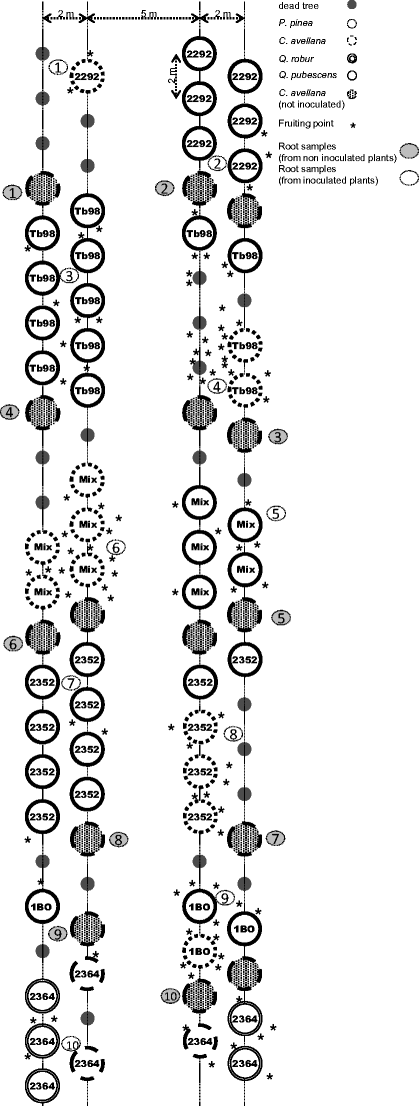
Truffle (Tuber spp.) cultivation is based on raising mycorrhizal trees in greenhouses that have been inoculated with suspensions of ascospores. The problem with this is that pests, pathogens, and other mycorrhizal fungi can contaminate the trees. Furthermore, because ascospores are produced sexually, each plant potentially has a different genetic mycorrhizal makeup from each other so tailoring the mycorrhizal component of plants to suit a particular set of soil and climatic conditions is out of the question. Here, we report on the production of Tuber borchii-mycorrhized plants using pure cultures, establishing a truffière with these and subsequent production of its fruiting bodies. This study opens up the possibility of producing commercial numbers of Tuber-mycorrhized trees for truffle cultivation using mycelial inoculation techniques. It also poses questions about the mechanism of fertilization between the different strains which were located in different parts of the experimental truffière.
|
|
Scooped by
Jean-Michel Ané
April 22, 2016 1:08 PM
|
Additionally, in view of the biological nitrogen fixation capacity most of leguminous species, pulses and legumes are important components of a healthy diet, said Francesco Branca, Director of the Department of Nutrition for Health and Development at the World Health Organization (WHO). Both WHO and FAO recommend that people eat at least 400 g of fruit and vegetables per day. This is equivalent to consuming about 25 g of dietary fibre per day. Pulses are also functional to prevent obesity and type 2 diabetes, to reduce the risk of heart diseases, blood pressure and certain types of cancers.
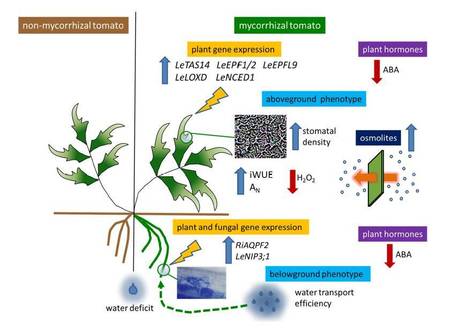
Arbuscular mycorrhizal (AM) fungi, which form symbioses with the roots of the most important crop species, are usually considered bio-fertilizers, whose exploitation could represent a promising avenue for the development in the future of a more sustainable next-generation agriculture. The best understood function in symbiosis is an improvement in plant mineral nutrient acquisition, as exchange for C compounds derived from the photosynthetic process: this can enhance host growth and tolerance to environmental stresses, e.g., water stress (WS). However, physiological and molecular mechanisms occurring in AM-colonized plants and directly involved in the mitigation of water stress effects need to be further investigated. The main goal of this work is to verify the potential impact of the AM symbiosis on the plant response to WS. To this aim, the effect of two AM fungi (Funneliformis mosseae and Rhizophagus intraradices) on tomato under WS condition was studied. A combined approach, involving eco-physiological, morphometric, biochemical and molecular analyses, has been used to highlight the mechanisms involved in plant response to water stress during AM symbiosis. Gene expression analyses focused on a set of target genes putatively involved in the plant response to drought and, in parallel, we considered the expression changes induced by the imposed stress on a group of fungal genes playing a key role in water-transport process. Taken together, results show that AM symbiosis positively affects the tolerance to water stress in tomato with a different plant response depending on the AM fungi species involved.
Via Mary Williams
|
|
Scooped by
Jean-Michel Ané
April 21, 2016 12:09 AM
|
Arbuscular mycorrhizal fungi are known to exhibit high intra-organism genetic variation. However, information about intra- vs interspecific variation among the genes commonly used in diversity surveys is limited.
Here, the nuclear small subunit (SSU) rRNA gene, Internal Transcribed Spacer (ITS) region, and large subunit (LSU) rRNA gene portions were sequenced from three to five individual spores from each of two isolates of Rhizophagus irregularis and Gigaspora margarita. A total of 1482 Sanger sequences (0.5Mb) from 239 clones were obtained, spanning c. 4370 bp of the ribosomal operon when concatenated.
Intra-sporal and intra-isolate sequence variation was high for all three regions even though variant numbers were not exhausted by sequencing 12 to 40 clones per isolate. Intra-isolate nucleotide variation levels followed the expected order of ITS>LSU>SSU, but the values were strongly dependent on isolate identity. SNP densities over 4 SNP/kb in the ribosomal operon were detected in all four isolates. Automated OTU-picking within the sequence set of known identity overestimated species richness with almost all cutoff levels, markers and isolates. Average intraspecific sequence similarity values were 99%, 96% and 94% for amplicons in SSU, LSU and ITS respectively.
The suitability of the central part of the SSU as a marker for arbuscular mycorrhizal fungal community surveys was further supported by its level of nucleotide variation, which is similar to that of the ITS region; its alignability across the entire phylum; its appropriate length for next generation sequencing; and its ease of amplification in single-step PCR.
Arbuscular mycorrhizal fungi are asexual, obligately symbiotic fungi with unique morphology and genomic structure, which occupy a dual niche, that is, the soil and the host root. Consequently, the direct adoption of models for community assembly developed for other organism groups is not evident. In this paper we adapted modern coexistence and assembly theory to arbuscular mycorrhizal fungi. We review research on the elements of community assembly and coexistence of arbuscular mycorrhizal fungi, highlighting recent studies using molecular methods. By addressing several points from the individual to the community level where the application of modern community ecology terms runs into problems when arbuscular mycorrhizal fungi are concerned, we aim to account for these special circumstances from a mycocentric point of view. We suggest that hierarchical spatial structure of arbuscular mycorrhizal fungal communities should be explicitly taken into account in future studies. The conceptual framework we develop here for arbuscular mycorrhizal fungi is also adaptable for other host-associated microbial communities.
Via Francis Martin
|
|
Scooped by
Jean-Michel Ané
April 20, 2016 11:51 PM
|
In 1999, a team of scientists led by Christian Körner did what thousands of people do every Christmas: they wrapped Norway spruce trees in tubes. Except this was in March, not December. And the trees were 40-metre-tall giants in the middle of a Swiss forest, not 2-metre pipsqueaks in a living room. (The team had to use a crane). And the tubes had no lights or baubles on them. Instead, they had a series of tiny holes, which pumped out carbon dioxide.
|