 Your new post is loading...

|
Scooped by
Jean-Michel Ané
June 17, 2016 4:15 PM
|
Arbuscular mycorrhizal fungi are root symbionts that play a key role in crop growth. A systematic quantitative analysis of the response of crops to arbuscular mycorrhizal inoculation, however, remains to be done. Additionally, little is known regarding the role of mycorrhizal specificity and the diversity of the inoculum on crop growth. Therefore, we collected data from 115 inoculation studies, including 435 experiments. We then used meta-analysis to examine the effect of crop identity, arbuscular mycorrhizal fungus identity, and mycorrhizal diversity on crop biomass increase, following inoculation. Our results show that total crop biomass was on average 34.9 % higher in inoculated versus non-inoculated plants. We found that specific combinations of arbuscular mycorrhizal fungus genera and host plant families were more beneficial for growth promotion as compared to other combinations. Moreover, a single-species inoculum increased crop growth response on average by 41.2 % compared to a multi-species inoculum. Overall, our findings show that a broad range of crops highly benefit from the inoculation with arbuscular mycorrhizal fungi. They also strongly suggest that selecting specific arbuscular mycorrhizal taxa for specific crops is the most promising approach to enhance crop growth. There is no “one-size-fits-all” arbuscular mycorrhizal fungus. Finally, and at least in stable and controlled environments, inoculation with a single arbuscular mycorrhizal species is more effective, compared to inoculation with a mixture of different arbuscular mycorrhizal taxa. This may be explained by fungi superior in extraradical growth, but less beneficial to the host, that outcompete the more mutualistic fungi. Therefore, it may be beneficial to maintain a high dominance of one beneficial arbuscular mycorrhizal taxon in simplified agricultural systems.
|
|
Scooped by
Jean-Michel Ané
June 17, 2016 4:10 PM
|
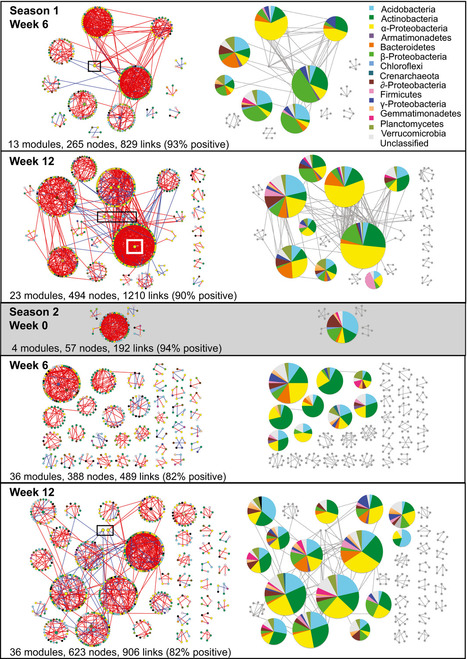
While interactions between roots and microorganisms have been intensively studied, we know little about interactions among root-associated microbes. We used random matrix theory-based network analysis of 16S rRNA genes to identify bacterial networks associated with wild oat (Avena fatua) over two seasons in greenhouse microcosms. Rhizosphere networks were substantially more complex than those in surrounding soils, indicating the rhizosphere has a greater potential for interactions and niche-sharing. Network complexity increased as plants grew, even as diversity decreased, highlighting that community organisation is not captured by univariate diversity. Covariations were predominantly positive (> 80%), suggesting that extensive mutualistic interactions may occur among rhizosphere bacteria; we identified quorum-based signalling as one potential strategy. Putative keystone taxa often had low relative abundances, suggesting low-abundance taxa may significantly contribute to rhizosphere function. Network complexity, a previously undescribed property of the rhizosphere microbiome, appears to be a defining characteristic of this habitat.
|
|
Scooped by
Jean-Michel Ané
June 17, 2016 3:52 PM
|
Spring is in the air and in honor of this, last week we read about geosmin, a molecule produced by soil-dwelling bacteria that gives dirt its distinctive, earthy smell. This smell, combined with the emergence of spring flowers, reminds me of the fascinating relationships that exist between plants and their associated microbes (aka microbiomes). Just as humans have a complex relationship with microorganisms, some make us sick while others aid our health, plants too coexist with a mixture of mostly helpful but sometimes harmful microbes. While geosmin may overwhelm our noses, plants are able to detect a number of compounds produced by their neighboring microorganisms.
|
|
Scooped by
Jean-Michel Ané
June 17, 2016 3:43 PM
|
Opencast mining carried out in the natural forests of Indonesia has resulted in difficulty of reforestation due to soil removal. Arbuscular mycorrhizal (AM) fungi can increase growth of tree species in disturbed fields. The objective of this study was to investigate the effect of inoculating three native AM fungi on the growth of Albizia saman and Paraserianthes falcataria in a nursery and a post-opencast coal mine field. Seeds of A. saman and P. falcataria were inoculated with three native AM fungi, Rhizophagus clarus, Gigaspora decipiens, and Scutellospora sp., and sown in sterilized compost under nursery conditions for six months. Non-inoculated seeds were used as control. Inoculated seedlings were transplanted in a post-opencast coal mine field and grown for seven months. AM colonization, shoot nitrogen (N) and phosphorus (P) concentration, stem diameter, and shoot dry weight were measured both in the nursery and in the field. AM colonization was 3–82% under nursery conditions and increased shoot P content and dry weight. Stem diameter, shoot N content, shoot P content, shoot dry weight, and survival rate under field conditions were higher in inoculated seedlings than in control seven months after transplanting. The results suggest that inoculating tree species with AM fungi promotes reforestation of post-opencast coal mine field.
|
|
Scooped by
Jean-Michel Ané
June 17, 2016 3:39 PM
|
Arbuscular mycorrhizal (AM) fungi and nitrogen-fixing bacteria play important roles in plant growth and recovery in degraded ecosystems. The desertification in karst regions has become more severe in recent decades. Evaluation of the fungal and bacterial diversity of such regions during vegetation restoration is required for effective protection and restoration in these regions. Therefore, we analyzed relationships among AM fungi and nitrogen-fixing bacteria abundances, plant species diversity, and soil properties in four typical ecosystems of vegetation restoration (tussock (TK), shrub (SB), secondary forest (SF), and primary forest (PF)) in a karst region of southwest China. Abundance of AM fungi and nitrogen-fixing bacteria, plant species diversity, and soil nutrient levels increased from the tussock to the primary forest. The AM fungus, nitrogen-fixing bacterium, and plant community composition differed significantly between vegetation types (p < 0.05). Plant richness and pH were linked to the community composition of fungi and nitrogen-fixing bacteria, respectively. Available phosphorus, total nitrogen, and soil organic carbon levels and plant richness were positively correlated with the abundance of AM fungi and nitrogen-fixing bacteria (p < 0.05). The results suggested that abundance of AM fungi and nitrogen-fixing bacteria increased from the tussock to the primary forest and highlight the essentiality of these communities for vegetation restoration.
|
|
Scooped by
Jean-Michel Ané
June 17, 2016 3:30 PM
|
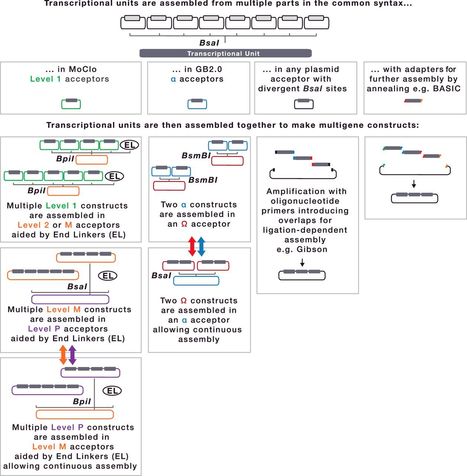
Synthetic biology aims to apply engineering principles to the design and modification of biological systems and to the construction of biological parts and devices. The ability to programme cells by providing new instructions written in DNA is a foundational technology of the field. Large-scale de novo DNA synthesis has accelerated synthetic biology by offering custom-made molecules at ever decreasing costs. However, for large fragments and for experiments in which libraries of DNA sequences are assembled in different combinations, assembly in the laboratory is still desirable. Biological assembly standards allow DNA parts, even those from multiple laboratories and experiments, to be assembled together using the same reagents and protocols. The adoption of such standards for plant synthetic biology has been cohesive for the plant science community, facilitating the application of genome editing technologies to plant systems and streamlining progress in large-scale, multi-laboratory bioengineering projects.
|
|
Scooped by
Jean-Michel Ané
June 17, 2016 3:27 PM
|
Mutualistic interactions between plants and fungi often occur in the rhizosphere, although examples exist where shoot-endophytes support host growth and increase resistance to pathogens and herbivores. Fungal endophytes which colonize their hosts without any visible disease symptoms have been recognized to be fundamental components of various ecosystems. Initial efforts have been taken to decipher the genetic basis of beneficial plant–fungus interactions and of lifestyle transitions. This review gives a short overview on well established experimental systems amenable to genetic manipulation and of known genome sequence for dissecting plant–fungal endophyte interactions with a special focus on Arabidopsis thaliana associations.
|
|
Scooped by
Jean-Michel Ané
June 17, 2016 3:22 PM
|
Phosphorus is one of the most important macronutrients and is indispensable for all organisms as a critical structural component as well as participating in intracellular signalling and energy metabolism. Sensing and signalling of phosphate (Pi) has been extensively studied and is well understood in single-cellular organisms like bacteria (Escherichia coli) and Saccharomyces cerevisiae. In comparison, the mechanism of Pi regulation in plants is less well understood despite recent advances in this area. In most soils the available Pi limits crop yield, therefore a clearer understanding of the molecular basis underlying Pi sensing and signalling is of great importance for the development of plants with improved Pi use efficiency. This mini-review compares some of the main Pi regulation pathways in prokaryotic and eukaryotic cells and identifies similarities and differences among different organisms, as well as providing some insight into future research.
|
|
Scooped by
Jean-Michel Ané
June 14, 2016 1:28 PM
|
The symbiosis between leguminous plants and symbiotic nitrogen-fixing bacteria is a key component of terrestrial ecosystems. Woody legumes are well represented in tropical African forests but despite their ecological and socio-economic importance, they have been little studied for this symbiosis. In this study, we examined the identity and diversity of symbiotic-nitrogen fixing bacteria associated with Acacia xanthophloea, Faidherbia albida and Albizia versicolor in the Gorongosa National Park (GNP) in Mozambique. To the best of our knowledge, this is the first report on the identity of symbiotic-nitrogen fixing bacteria in this region. 166 isolates were obtained and subjected to molecular identification. BOX-A1R PCR was used to discriminate different bacterial isolates and PCR-sequencing of 16S rDNA, and two housekeeping genes, glnII and recA, was used to identify the obtained bacteria. The gene nifH was also analyzed to assess the symbiotic capacity of the obtained bacteria. All isolates from F. albida and Al. versicolor belonged to the Bradyrhizobium genus whereas isolates from Ac. xanthophloea clustered with Mesorhizobium, Rhizobium or Ensifer strains. Soil chemical analysis revealed significant differences between the soils occupied by the three studied species. Thus, we found a clear delimitation in the rhizobial communities and soils associated with Ac. xanthophloea, F. albida and Al. versicolor, and higher rhizobial diversity for Ac. xanthophloea than previously reported.
|
|
Scooped by
Jean-Michel Ané
June 14, 2016 1:28 PM
|
Grapevine downy mildew (Plasmopara viticola), a devastating disease of grapevine, is one of the most important diseases in the grape industry. In this study, 151 actinomycete isolates were obtained from soil and tested for antagonistic activity against P. viticola. A detached leaf assay suggested that 28 isolates displayed antagonistic effects to varying degrees. The greatest reduction in disease severity was observed with isolate PY-1, which reduced disease severity by 92.13% in the detached leaf assay, and by 83% in a field assay. The PY-1 strain was identified as Streptomyces atratus using 16S rDNA sequence analysis. To elucidate the antagonistic mechanism of PY-1 against P. viticola, scanning electron microscopy was performed to observe pathogen morphology following treatment with a PY-1 fermentation culture. Major damage to the pathogens sporangia and sporangiophores was observed, consistent with PY-1 mediated inhibition of P. viticola sexual reproduction. Furthermore, PY-1 showed antagonistic activity against other pathogenic microorganisms, including: Botrytis cinerea, Colletotrichum orbiculare, Fusarium oxysporum, Phytophthora capsici and P. infestans. Two imide compounds were purified from the fermentation liquid using silica gel chromatography and HPLC and identified as 5-acetoxycycloheximide and cycloheximide using NMR. Both compounds showed significant antagonistic activity against P. viticola, determining a reduction of disease severity by 65% and 84%, respectively. In conclusion, 5-acetoxycycloheximide and cycloheximide were identified for the first time in a new Streptomyces atratus strain able to effectively control grapevine downy mildew.
|
|
Scooped by
Jean-Michel Ané
June 14, 2016 1:22 PM
|
Legume plants can establish symbiosis with soil bacteria called rhizobia to obtain nitrogen as a nutrient directly from atmospheric N2 via symbiotic nitrogen fixation. Legumes and rhizobia form nodules, symbiotic organs in which fixed-nitrogen and photosynthetic products are exchanged between rhizobia and plant cells. The photosynthetic products supplied to rhizobia are thought to be dicarboxylates but little is known about the movement of dicarboxylates in the nodules. In terms of dicarboxylate transporters, an aluminum-activated malate transporter (ALMT) family is a strong candidate responsible for the membrane transport of carboxylates in nodules. Among the seven ALMT genes in the Lotus japonicus genome, only one, LjALMT4, shows a high expression in the nodules. LjALMT4 showed transport activity in a Xenopus oocyte system, with LjALMT4 mediating the efflux of dicarboxylates including malate, succinate, and fumarate, but not tricarboxylates such as citrate. LjALMT4 also mediated the influx of several inorganic anions. Organ-specific gene expression analysis showed LjALMT4 mRNA mainly in the parenchyma cells of nodule vascular bundles. These results suggest that LjALMT4 may not be involved in the direct supply of dicarboxylates to rhizobia in infected cells but is responsible for supplying malate as well as several anions necessary for symbiotic nitrogen fixation, via nodule vasculatures.
|
|
Scooped by
Jean-Michel Ané
June 14, 2016 1:15 PM
|
Agricultural management practices can produce changes in soil microbial populations whose functions are crucial to crop production and may be detectable using high-throughput sequencing of bacterial 16S rRNA. To apply sequencing-derived bacterial community structure data to on-farm decision-making will require a better understanding of the complex associations between soil microbial community structure and soil function. Here 16S rRNA sequencing was used to profile soil bacterial communities following application of cover crops and organic fertilizer treatments in certified organic field cropping systems. Amendment treatments were hairy vetch (Vicia villosa), winter rye (Secale cereale), oilseed radish (Raphanus sativus), buckwheat (Fagopyrum esculentum), beef manure, pelleted poultry manure, Sustane® 8-2-4, and a no-amendment control. Enzyme activities, net N mineralization, soil respiration, and soil physicochemical properties including nutrient levels, organic matter (OM) and pH were measured. Relationships between these functional and physicochemical parameters and soil bacterial community structure were assessed using multivariate methods including redundancy analysis, discriminant analysis, and Bayesian inference. Several cover crops and fertilizers affected soil functions including N-acetyl-β-d-glucosaminidase and β-glucosidase activity. Effects, however, were not consistent across locations and sampling timepoints. Correlations were observed among functional parameters and relative abundances of individual bacterial families and phyla. Bayesian analysis inferred no directional relationships between functional activities, bacterial families, and physicochemical parameters. Soil functional profiles were more strongly predicted by location than by treatment, and differences were largely explained by soil physicochemical parameters. Composition of soil bacterial communities was predictive of soil functional profiles. Differences in soil function were better explained using both soil physicochemical test values and bacterial community structure data than using soil tests alone. Pursuing a better understanding of bacterial community composition and how it is affected by farming practices is a promising avenue for increasing our ability to predict the impact of management practices on important soil functions.
|
|
Scooped by
Jean-Michel Ané
June 14, 2016 1:03 PM
|
Background
Local adaptation, the differential success of genotypes in their native versus foreign environment, arises from various evolutionary processes, but the importance of concurrent abiotic and biotic factors as drivers of local adaptation has only recently been investigated. Local adaptation to biotic interactions may be particularly important for plants, as they associate with microbial symbionts that can significantly affect their fitness and may enable rapid evolution. The arbuscular mycorrhizal (AM) symbiosis is ideal for investigations of local adaptation because it is globally widespread among most plant taxa and can significantly affect plant growth and fitness. Using meta-analysis on 1170 studies (from 139 papers), we investigated the potential for local adaptation to shape plant growth responses to arbuscular mycorrhizal inoculation.
Results
The magnitude and direction for mean effect size of mycorrhizal inoculation on host biomass depended on the geographic origin of the soil and symbiotic partners. Sympatric combinations of plants, AM fungi, and soil yielded large increases in host biomass compared to when all three components were allopatric. The origin of either the fungi or the plant relative to the soil was important for explaining the effect of AM inoculation on plant biomass. If plant and soil were sympatric but allopatric to the fungus, the positive effect of AM inoculation was much greater than when all three components were allopatric, suggesting potential local adaptation of the plant to the soil; however, if fungus and soil were sympatric (but allopatric to the plant) the effect of AM inoculation was indistinct from that of any allopatric combinations, indicating maladaptation of the fungus to the soil.
Conclusions
This study underscores the potential to detect local adaptation for mycorrhizal relationships across a broad swath of the literature. Geographic origin of plants relative to the origin of AM fungal communities and soil is important for describing the effect of mycorrhizal inoculation on plant biomass, suggesting that local adaptation represents a powerful factor for the establishment of novel combinations of fungi, plants, and soils. These results highlight the need for subsequent investigations of local adaptation in the mycorrhizal symbiosis and emphasize the importance of routinely considering the origin of plant, soil, and fungal components.
Keywords
Arbuscular mycorrhizal fungi Community ecology Evolution Geographic origin Soil micro-organisms Local adaptation Symbiosis
|
|
|
Scooped by
Jean-Michel Ané
June 17, 2016 4:10 PM
|
We report the isolation and identification of endophytic fungi from Combretum lanceolatum Pohl ex Eichler. Further, we evaluated the relationships of fungi with the host plant and tested bioactivities of isolates. The fungi were isolated from disinfected root fragments and plated onto potato dextrose agar. Root pieces were also used to quantify fungal structures associated with the roots. Identification of fungi was carried out by characterization of morphological features and sequencing of the ITS region. Endophytism was confirmed by inoculation of endophyte-free seedlings followed by microscopic examination. The extract was obtained by maceration of the mycelium in ethyl acetate for antioxidant and antimicrobial evaluations. A total of 112 strains belonging to nine different species were isolated, the major classes were Dothideomycetes and Sordariomycetes. C. lanceolatum is colonized by dark septate endophytes (DSE), evidenced by the presence of microsclerotia and melanized hyphae. There is also co-colonization with mycorrhizal fungi in the same root fragments. Seedling inoculation experiments revealed that C. perangustum-95C and M. phaseolina-46C showed association with the seedlings of C. lanceolatum and differentiated microsclerotia and dark septate hyphae, indicating that these species are DSE. In the antimicrobial test, the D. phaseolorum-92C extract had the highest zones of inhibition against S. aureus and E. coli, respectively. The results showed that 100 % of the extracts have antioxidant activity ranging from low to moderate. All endophyte species had antioxidant and antimicrobial activities that were directly proportional to the dose-responses. Future research will involve chemical characterization and structural elucidation of bioactive compounds.
|
|
Scooped by
Jean-Michel Ané
June 17, 2016 4:09 PM
|
Lichens are complex symbiotic association of mycobionts, photobionts, and bacteriobionts, including chemolithotropic bacteria. In the present study, 46 lichenized bacteria were isolated by conventional and enrichment culture methods on nitrogen-free bromothymol blue (NFb) medium. Only 11 of the 46 isolates fixed nitrogen on NFb and had reduced acetylene. All these 11 isolates had also produced siderophore and 10 of them the IAA. Further, ammonia production was recorded from nine of these nitrogen fixers (NF). On molecular characterization, 16 S rRNA sequencing recorded that, nine NF belonged to Proteobacteria, within Gammaproteobacteria, and were closely related to Enterobacter sp. with a maximum similarity to Enterobacter cloacae. Each one of our NF isolates was aligned closely to Enterobacter pulveris strain E443, Cronobacter sakazakii strain PNP8 and Providencia rettgeri strain ALK058. Notably, a few strains we examined found to possess plant growth promoting properties. This is the first report of Enterobacter sp. from lichens which may be inhabit lichen thalli extrinsically or intrinsically.
|
|
Scooped by
Jean-Michel Ané
June 17, 2016 3:48 PM
|
Experiments were conducted to evaluate the effect of rhizobial inoculums and inorganic fertilizers on NP availability, soil microbial activity, wheat NPK concentration and uptake. These experiments were consisted of two factors, four inoculums (no, lentil, peas, and chickpeas) and two NPK doses (120:90:60 and 96:72:48 kg ha−1). Inoculums significantly increased plant total NPK concentration by 39, 57, and 37%, and their uptake by 66, 86, and 56%, respectively. Peas inoculum was most efficient in wheat NPK concentration and uptake. The interactive effect of inoculums and NPK demonstrated that peas and lentil inoculums with 20% less NPK had statistically better role than full NPK without inoculation. AB-DTPA extractible P and mineral N were progressively increased with incubation periods and exhibited significant differences between inoculated and uninoculated treatments during all incubation intervals for NP except at day 7 for N. Peas inoculum showed maximum mean net NP availability of 131.5 and 3.48 mg kg−1 over 56 d of incubation, respectively. Significantly higher cumulative CO2 of 1429 mg kg−1 with a net increase of 866 mg kg−1 was recorded for pea’s inoculums during 12 d of incubation interval. It is concluded that peas rhizobium could be used as a plant-growth-promoting rhizobacteria for wheat and other cereal crops.
|
|
Scooped by
Jean-Michel Ané
June 17, 2016 3:41 PM
|
PREMISE OF THE STUDY: Mycorrhizal hyphal complexes can connect multiple host plants to form common mycelial networks (CMNs) that may affect plant competitive outcomes and community composition through differential resource allocation. The impacts of CMN interactions on invasive plants are not well understood and could be crucial to the understanding of invasive plant establishment and success.
METHODS: We grew the invasive grass Brachypodium sylvaticum in intra- and interspecific pairings with native grass Bromus vulgaris in a greenhouse and controlled for the effects of CMN and root interactions by manipulating the belowground separation between competitors. Comparison of plant growth in pots that allowed CMN interactions and excluded root competition and vice versa, or both, allowed us to delineate the effects of network formation and root competition on invasive plant establishment and performance.
KEY RESULTS: Brachypodium sylvaticum grown in pots allowing for only hyphal interactions, but no root competition, displayed superior growth compared with conspecifics in other treatments. Invasive performance was poorest when pairs were not separated by a barrier. Shoot nitrogen content in B. sylvaticum was higher in mycorrhizal plants only when connections were allowed between competitors.
CONCLUSIONS: Our results indicate that the presence of CMN networks can have positive effects on B. sylvaticum establishment and nutrient status, which may affect plant competition and invasion success.
|
|
Scooped by
Jean-Michel Ané
June 17, 2016 3:38 PM
|
Identifying key players and their interactions is fundamental for understanding biochemical mechanisms at the molecular level. The ever-increasing number of alternative ways to detect protein-protein interactions (PPIs) speaks volumes about the creativity of scientists in hunting for the optimal technique. PPIs derived from single experiments or high-throughput screens enable the decoding of binary interactions, the building of large-scale interaction maps of single organisms, and the establishment of cross-species networks. This review provides a historical view of the development of PPI technology over the past three decades, particularly focusing on in vivo PPI techniques that are inexpensive to perform and/or easy to implement in a state-of-the-art molecular biology laboratory. Special emphasis is given to their feasibility and application for plant biology as well as recent improvements or additions to these established techniques. The biology behind each method and its advantages and disadvantages are discussed in detail, as are the design, execution, and evaluation of PPI analysis. We also aim to raise awareness about the technological considerations and the inherent flaws of these methods, which may have an impact on the biological interpretation of PPIs. Ultimately, we hope this review serves as a useful reference when choosing the most suitable PPI technique.
|
|
Scooped by
Jean-Michel Ané
June 17, 2016 3:28 PM
|
Plant–microbe interactions are omnipresent in terrestrial ecosystems and central to understand processes of individual growth, community assembly, and biogeochemical cycling. Plants and microbes interact above and below ground, and such interactions could theoretically include all combinations of positive (i.e., mycorrhizal and legume-rhizobia), negative (i.e., pathogenic interactions), or neutral effects. Many plant pathogenic and symbiotic microbes produce specialized structures that invade plant cells, but remain enveloped by plant-derived membranes. These intimate contacts between plant and microbial structures drive either bidirectional flows of nutrients as symbiotic (mycorrhizal or legume-rhizobia) or unidirectional flows as in pathogenic interactions. Whatever the biotrophic context (symbiotic vs. pathogenic), nutrients must pass several membrane barriers and the apoplastic interface before their assimilation by plant or microbial cells. Plant and microbial cells must be “re-programmed,” which includes differentiation and polarization of membrane transport functions to take up, to transfer or to exchange nutrients between partners of the biotrophic interaction. However, the mechanisms underlying the functioning and the dynamics of the transportome (the range of genes of an organism that encode proteins contributing to transport molecules across cellular membranes: membrane transporters, ions exchangers, and ion channels) at the biotrophic interface are still poorly understood. The transportome is a key player in nutrient uptake and exchange mechanisms and its regulation pattern is essential in determining the outcome of plant fungal interactions and in adapting to environmental changes.
|
|
Scooped by
Jean-Michel Ané
June 17, 2016 3:23 PM
|
Background Root clusters are bunches of hairy rootlets produced by >1800 species in nine families. The possible involvement of micro-organisms in root-cluster formation has produced conflicting results over the last 40 years. In addition, any effect of rhizobacteria on overall plant growth of root-cluster-bearing species remains unknown.
Aims To evaluate the effect of seven rhizobacteria on total plant size, and relative cluster production, by three species, and relate outcomes to their indole-3-acetic acid (IAA)-producing ability as part explanation of past disparate results.
Methods We grew Leucadendron salicifolium (from South Africa), Viminaria juncea (Australia) and Lupinus albus (Europe) in gnotobiotic, hydroponic culture at two nitrogen (N) levels and inoculated them with seven bacterial strains and harvested the plants after 13 weeks.
Key Results Following inoculation with all seven bacteria individually, plant growth sometimes greatly exceeded that of the aseptic controls, but, under other conditions, growth was less than the controls. Leucadendron and Lupinus failed to produce root clusters in the –N aseptic controls and Viminaria in the +N controls that was overcome by inoculating them with selected bacteria. Six bacteria were able to induce far more root clusters than those of the aseptic controls, while all bacteria sometimes suppressed cluster production in other treatments. All nine possible combinations of resource (plant size, indirect) and morphogenetic (relative cluster production, direct) effects were represented among the results, especially positive synergism (larger plants with a greater density of clusters). There was no clear relationship with IAA-producing ability of the seven bacteria, but low IAA strains of Pseudomonas putida and Bacillus magetarium were associated with greatest cluster production.
Conclusions While root-cluster formation can sometimes be induced by introducing rhizobacteria to aseptic culture, the growth-promoting properties of apparently beneficial bacteria on general growth and root-cluster production are best described as facultative, as their promotory effects depend on host species, growing conditions and index of plant response used.
|
|
Rescooped by
Jean-Michel Ané
from Plants and Microbes
June 15, 2016 8:01 PM
|
http://aglifesciences.tamu.edu/rootbiome/wp-content/uploads/sites/38/2015/07/2013-Bulgarelli-et-al-Functions-of-Microbiota-of-Plants-Annurev-Plant-Biol-64.pdf
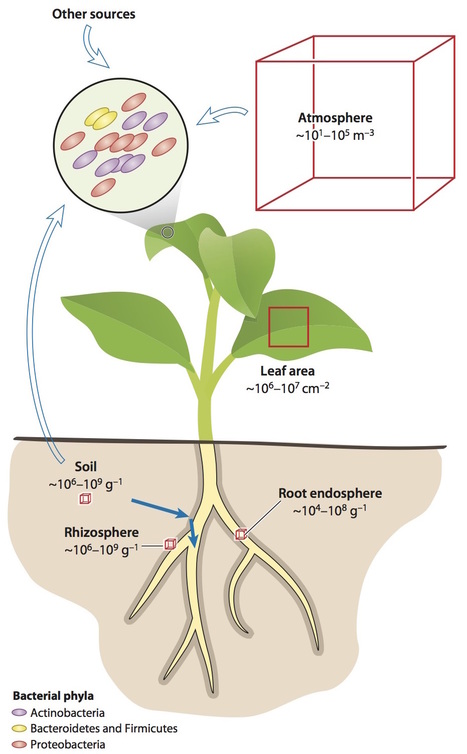
Plants host distinct bacterial communities on and inside various plant organs, of which those associated with roots and the leaf surface are best characterized. The phylogenetic composition of these communities is defined by relatively few bacterial phyla, including Actinobacteria, Bacteroidetes, Firmicutes, and Proteobacteria. A synthesis of available data suggests a two-step selection process by which the bacterial microbiota of roots is differentiated from the surrounding soil biome. Rhizodeposition appears to fuel an initial substrate-driven community shift in the rhizosphere, which converges with host genotype–dependent fine-tuning of microbiota profiles in the selection of root endophyte assemblages. Substrate-driven selection also underlies the establishment of phyllosphere communities but takes place solely at the immediate leaf surface. Both the leaf and root microbiota contain bacteria that provide indirect pathogen protection, but root microbiota members appear to serve additional host functions through the acquisition of nutrients from soil for plant growth. Thus, the plant microbiota emerges as a fundamental trait that includes mutualism enabled through diverse biochemical mechanisms, as revealed by studies on plant growth–promoting and plant health–promoting bacteria.
Via Kamoun Lab @ TSL
|
|
Scooped by
Jean-Michel Ané
June 14, 2016 1:28 PM
|
Both classical isolation methods and new deep-sequencing methods have revealed that Actinobacteria, and specifically Streptomycetaceae, constitute a substantial part of the bacterial communities in and around plant roots. Here we discuss the advantages of the majority of this versatile and diverse group of microorganisms for plant health and growth as demonstrated by their contribution to disease-suppressive soils, their antifungal and antibacterial activities, their ability to produce volatile compounds, and their capacity to enhance plant biomass. Although much is still to be discovered about the colonization strategies and molecular interactions between plant roots and these microorganisms, they are destined to become important players in the field of plant growth-promoting rhizobacteria for agriculture.
|
|
Scooped by
Jean-Michel Ané
June 14, 2016 1:24 PM
|
Arbuscular mycorrhizal (AM) fungi, which form symbioses with the roots of the most important crop species, are usually considered biofertilizers, whose exploitation could represent a promising avenue for the development in the future of a more sustainable next-generation agriculture. The best understood function in symbiosis is an improvement in plant mineral nutrient acquisition, as exchange for carbon compounds derived from the photosynthetic process: this can enhance host growth and tolerance to environmental stresses, such as water stress (WS). However, physiological and molecular mechanisms occurring in arbuscular mycorrhiza-colonized plants and directly involved in the mitigation of WS effects need to be further investigated. The main goal of this work is to verify the potential impact of AM symbiosis on the plant response to WS. To this aim, the effect of two AM fungi (Funneliformis mosseae and Rhizophagus intraradices) on tomato (Solanum lycopersicum) under the WS condition was studied. A combined approach, involving ecophysiological, morphometric, biochemical, and molecular analyses, has been used to highlight the mechanisms involved in plant response to WS during AM symbiosis. Gene expression analyses focused on a set of target genes putatively involved in the plant response to drought, and in parallel, we considered the expression changes induced by the imposed stress on a group of fungal genes playing a key role in the water-transport process. Taken together, the results show that AM symbiosis positively affects the tolerance to WS in tomato, with a different plant response depending on the AM fungi species involved.
|
|
Scooped by
Jean-Michel Ané
June 14, 2016 1:17 PM
|
Among the various functions of roots, nutrient acquisition (via soil uptake or through symbiotic relationships) is one of the most essential for land plants. Soil from natural and agricultural ecosystems may impede plant nutrient acquisition, by many factors such as mineral availabilities either in excess or deficient supply, depletion of organic matter, extreme variations in water supply, and many other physical and chemical features. In order to survive, plants need to undergo developmental and physiological mechanisms to cope with these extreme soil situations. Here we review how plants control nutrient acquisition by dynamically changing root architecture for improved soil space exploration, as well as altering cellular-level function for enhanced nutrient uptake, via apoplastic acidification, exudation of enzymes and metabolites (organic acids, secondary metabolites) and constantly changing the composition of transporters at the plasma membrane. These changes start with environmental cues which induce cell signaling and involve hormones and coordinated regulatory genes networks that drive the root’s developmental plasticity as well as the cell’s biochemical dynamics. Mutualistic root symbioses, such as mycorrhizae and rhizobial-induced nodulation, are also important to provide essential nutrients to the plant, which are tightly regulated in order to only occur at plant’s benefit. We also explore molecular mechanisms which roots have evolved to cope with nutritional, as well as other soil stresses, such as aluminium toxicity and heavy metals. Overall, understanding root dynamics under several environmental variables at different perspectives, from root architecture to biochemistry to genetic levels will allow us to better explore the spatial and temporal relations of roots with their mineral nutrient environment.
|
|
Scooped by
Jean-Michel Ané
June 14, 2016 1:10 PM
|
Legumes improve their mineral nutrition through nitrogen-fixing root nodule symbioses with soil rhizobia. Rhizobial infection of legumes is regulated by a number of transcription factors, including ERF Required for Nodulation1 (ERN1). Medicago truncatula plants defective in ERN1 are unable to nodulate, but still exhibit early symbiotic responses including rhizobial infection. ERN1 has a close homolog, ERN2, which shows partially overlapping expression patterns. Here we show that ern2 mutants exhibit a later nodulation phenotype than ern1, being able to form nodules but with signs of premature senescence. Molecular characterization of the ern2-1 mutation reveals a key role for a conserved threonine for both DNA binding and transcriptional activity. In contrast to either single mutant, the double ern1-1 ern2-1 line is completely unable to initiate infection or nodule development. The strong ern1-1 ern2-1 phenotype demonstrates functional redundancy between these two transcriptional regulators and reveals the essential role of ERN1/ERN2 to coordinately induce rhizobial infection and nodule organogenesis. While ERN1/ERN2 act in concert in the root epidermis, only ERN1 can efficiently allow the development of mature nodules in the cortex, probably through an independent pathway. Together, these findings reveal the key roles that ERN1/ERN2 play at the very earliest stages of root nodule development.
|













I am usually not excited by meta-analyses but this one is very interesting.