Your new post is loading...

|
Scooped by
Jean-Michel Ané
November 8, 2016 12:40 PM
|
The literature review focuses on endophytic bacteria inhabiting woody plants. Endophytic bacteria for genera Pseudomonas, Bacillus, Paenibacillus, Burkholderia, and Erwina are shown to be found in almost all woody tissues. In additional, endophytic bacteria have been found in reproductive plant organs. It is shown that endophytic bacteria have functional properties that are useful for host plants: the ability to fix atmospheric nitrogen, produce growth simulating and biocontrol substances, and to induce systemic resistane of plants to biotic and abiotic stresses. Endophytic bacteria are a major part of the microbiome of woody plants, possess valuable functional properties of host plants, and are a promising biotechnological resource for the development of complex microbial preparations for agriculture and forestry.
|
|
Scooped by
Jean-Michel Ané
November 8, 2016 12:35 PM
|
This article presents a review of current data on genetic mapping of pea (Pisum sativum L.) genes participating in development and regulation of arbuscular-mycorrhizal and legume-Rhizobial symbioses. By means of mutational analysis several regulatory symbiotic genes (Sym-genes) were identified in model and crop legumes, particularly, among them more than 40 pea Sym-genes. Some of them are already cloned and sequenced, and structural and functional similarity was demonstrated for orthologous Sym-genes in different legume species. The functions of these genes are diverse and include the control of perception of the microsymbiont’s signal molecules, activation of the signal cascade (which is common for both legume-rhizobial and arbuscular-mycorrhizal symbioses), and consequent transcriptional changes in root cortex. To identify the sequence of mutated pea genes, an approach is used that is based on comparative genetic mapping and search for candidate gene in the genome of closely related legume plant barrel medic (Medicago truncatula Gaertn.). The web site www.phytozome.net (D.M. Goodstein et al., 2012) presents the current state of the barrel medic’s genome sequencing in the form of genome browser, which facilitates the search for homologous genes and the sequence analysis of candidate genes. Significant similarity of pea and barrel medic genomes allows development of gene-based molecular markers, comparison of obtained pea genetic map with M. truncatula genome, and pea gene cloning after finding mutations with similar phenotypic manifestation. Currently, most of pea Sym-genes are mapped in genome; that resulted in identification of the sequences of 14 symbiotic genes. In particular, authors of the present review were able to sequence the pea genes Sym35 — the homologue of NIN of Lotus japonicus (Regel.) K. Larsen (A.Y. Borisov et al., 2003), Sym37 — the homologue of NFR1 of L. japonicus (V.A. Zhukov et al., 2008), Sym33 — the homologue of IPD3 of barrel medic (E. Ovchinnikova et al., 2011), Cochleata — the homologue of NOOT of barrel medic (J.M. Couzigou et al., 2012). In recent years, considering the development of modern technologies of Next Generation Sequencing and massive genotyping, an avalanche of data on mapping pea gene-based data is being accumulated. Saturation of pea genetic map with markers, undoubtedly, will facilitate mapping of symbiotic genes and identification of their sequences; this will help to broaden the understanding of how the system of genes, which control interactions with beneficial soil microorganisms, functions in pea.
|
|
Scooped by
Jean-Michel Ané
November 8, 2016 12:34 PM
|
Paraburkholderia nodosa CNPSo 1341 is a N2-fixing symbiont of Phaseolus vulgaris isolated from an undisturbed soil of the Brazilian Cerrado. Its draft genome contains 8,614,032 bp and 8,068 coding sequences (CDSs). Nodulation and N2-fixation genes were clustered in the genome that also contains several genes of secretion systems and quorum sensing.
|
|
Scooped by
Jean-Michel Ané
November 8, 2016 12:34 PM
|
A defined balance between the generation and scavenging of reactive oxygen species (ROS) is essential to utilize ROS as an adaptive defense response of plants under biotic and abiotic stress conditions. Moreover, ROS are not only a major determinant of stress response but also act as signaling molecule that regulates various cellular processes including plant-microbe interaction. In particular, rhizosphere constitutes the biologically dynamic zone for plant–microbe interactions which forms a mutual link leading to reciprocal signaling in both the partners. Among plant–microbe interactions, symbiotic associations of arbuscular mycorrhizal fungi (AMF) and arbuscular mycorrhizal-like fungus especially Piriformospora indica with plants are well known to improve plant growth by alleviating the stress-impacts and consequently enhance the plant fitness. AMF and P. indica colonization mainly enhances ROS-metabolism, maintains ROS-homeostasis, and thereby averts higher ROS-level accrued inhibition in plant cellular processes and plant growth and survival under stressful environments. This article summarizes the major outcomes of the recent reports on the ROS-generation, scavenging and signaling in biotic-abiotic stressed plants with AMF and P. indica colonization. Overall, a detailed exploration of ROS-signature kinetics during plant-AMF/P. indica interaction can help in designing innovative strategies for improving plant health and productivity under stress conditions.
|
|
Scooped by
Jean-Michel Ané
November 6, 2016 12:30 AM
|
Abstract: The establishment of legumes crops with phenotypic traits that favour their persistence and competitiveness in mixed swards is a pressing task in sustainable agriculture. However, to fully exploit the potential benefits of introducing pasture-based grass-legume systems, an increased scientific knowledge of legume agronomy for screening of favourable traits is needed. We exploited a short-cut phenotypic screening as a preliminary step to characterize the growth capacity of three different Lotus corniculatus cvs cultivated in different nutritional conditions as well as the evaluation of their nodulation capacities. This experimental scheme, developed for legume species amenable to grow on agar plates conditions, may represent a very preliminary step to achieve phenotypic discrimination on different cultivars.
|
|
Scooped by
Jean-Michel Ané
November 6, 2016 12:27 AM
|
Plants and their associated bacteria have been suggested to play a role in air pollution mitigation, especially in urban areas. Particularly, epiphytic bacteria might be able to degrade atmospheric hydrocarbons. However, phyllospheric bacterial communities are highly variable depending on several factors, e.g. tree species, leaf age and physiology, environmental conditions. In this work, bacterial communities hosted by urban Platanus x acerifolia leaves were taxonomically characterized using high throughput sequencing of 16S rRNA gene, and their temporal and spatial variability was assessed by comparing samples collected from different locations in the city of Milan (Italy) and in different months. The diversity of alkane hydroxylase (alkB) phylotypes harboured by phyllospheric bacteria associated to urban Platanus trees was also evaluated. Results revealed that temporal changes, which are related to seasonality, acted as a stronger driver both on Platanus phyllospheric community structure and on alkB phylotype diversity than sampling location. Biodiversity of bacterial communities decreased along the growing season, leading to a strong dominance by the genus Stenotrophomonas. On the contrary, diversity of hydrocarbon-degrading populations increased over the months, although it resulted lower than that reported for other habitats. It was therefore hypothesized that atmospheric hydrocarbons might play a key role in the selection of phyllospheric populations in urban areas.
|
|
Scooped by
Jean-Michel Ané
November 6, 2016 12:25 AM
|
The rhizosphere microbiome is regulated by plant genotype, root exudates and environment. There is substantial interest in breeding and managing crops that host root microbial communities that increase productivity. The eudicot model species Arabidopsis has been used to investigate these processes, however a model for monocotyledons is also required. We characterized the rhizosphere microbiome and root exudates of Brachypodium distachyon, to develop it as a rhizosphere model for cereal species like wheat. The Brachypodium rhizosphere microbial community was dominated by Burkholderiales. However, these communities were also dependent on how tightly they were bound to roots, the root type they were associated with (nodal or seminal roots), and their location along the roots. Moreover, the functional gene categories detected in microorganisms isolated from around root tips differed from those isolated from bases of roots. The Brachypodium rhizosphere microbiota and root exudate profiles were similar to those reported for wheat rhizospheres, and different to Arabidopsis. The differences in root system development and cell wall chemistry between monocotyledons and eudicots may also influence the microorganism composition of these major plant types. Brachypodium is a promising model for investigating the microbiome of wheat.
|
|
Scooped by
Jean-Michel Ané
November 6, 2016 12:20 AM
|
Density-dependent phenotypic switching in bacteria, the phenomenon of quorum sensing (QS), is instrumental in many pathogenic and mutualistic behaviors. In many Gram-negative bacteria, QS is regulated by N-acylated-l-homoserine lactones (AHLs). Synthetic analogues of these AHLs hold significant promise for regulating QS at the host–symbiont interface. Regulation depends on refined temporal and spatial models of quorums under native conditions. Critical to this is an understanding of how the presence of these signals may affect a prospective host. We screened a library of AHL analogues for their ability to regulate the legume–rhizobia mutualistic symbiosis (nodulation) between Medicago truncatula and Sinorhizobium meliloti. Using an established QS-reporter line of S. meliloti and nodulation assays with wild-type bacteria, we identified compounds capable of increasing either the rate of nodule formation or total nodule number. Most importantly, we identified compounds with activity exclusive to either host or pathogen, underscoring the potential to generate QS modulators selective to bacteria with limited effects on a prospective host.
|
|
Scooped by
Jean-Michel Ané
November 6, 2016 12:18 AM
|
The banana is widely and intensively cultivated in the tropics. Traditional production employs a high input of industrial supplements, the excess of which contaminates the environment, altering existing edaphic populations and their functions. Some producers have incorporated other plant species in polycultures to reduce costs and achieve an alternative production without the high consumption of chemical supplements. With the aim of evaluating the effect of management system (monoculture vs. polyculture) and determining the edaphic factors that influence the richness and diversity of arbuscular mycorrhizal fungi (AMF), an edaphic component of great importance, 17 banana plantations in Colombia with high contents of edaphic phosphorous were sampled in two high production zones managed under a monoculture system and a zone of low production managed under a polyculture system. Between 11 and 18 species of AMF were found on average per plantation, both in intensive agricultural systems and in polyculture, where the diversity índices Simpson, Shannon and Margalef as well as the abundance and richness of AMF did not appear to be influenced by the cultivation system but instead by the dominant species in the communities; pH was the only factor that correlated positively with richness and the Margalef index; the monocultures were the least acidic and for this reason presented higher species richness. It is concluded that, in soils with high Phosphorus content, pH shows a direct relationship with species richness and the Margalef index, the composition of AMF species in the community exists in heterogeneous patches that are little influenced by cultivation management practice (mono or polyculture). Generalization in the development of specific bioinoculants based on mycorrhizae without considering local adaptations of the species is questioned.
|
|
Scooped by
Jean-Michel Ané
November 6, 2016 12:14 AM
|
The bacterium Sinorhizobium meliloti is attracted to seed exudates of its host plant alfalfa (Medicago sativa). Since quaternary ammonium compounds (QACs) are exuded by germinating seeds, we assayed chemotaxis of S. meliloti towards betonicine, choline, glycine betaine, stachydrine, and trigonelline. The wild type displayed a positive response to all QACs. Using LC-MS, we determined that each germinating alfalfa seed exuded QACs in the nanogram range. Compared to the closely related non-host species, spotted medic (Medicago arabica), unique profiles were released. Further assessments of single chemoreceptor deletion strains revealed that an mcpX deletion strain displayed little to no response to these compounds. Differential scanning fluorimetry showed interaction of the isolated periplasmic region of McpX (McpXPR, McpX34-306) with QACs. Isothermal titration calorimetry experiments revealed tight binding to McpXPR with dissociation constants (Kd) in the nanomolar range for choline and glycine betaine, micromolar Kd's for stachydrine and trigonelline, and a Kd in the millimolar range for betonicine. Our discovery of S. meliloti chemotaxis to plant-derived QACs adds another role to this group of compounds, which are known to serve as nutrient sources, osmoprotectants, and cell-to-cell signalling molecules. This is the first report of a chemoreceptor that mediates QACs taxis through direct binding. This article is protected by copyright. All rights reserved.
|
|
Scooped by
Jean-Michel Ané
November 6, 2016 12:02 AM
|
Understanding the chemical basis of rhizobacterial-plant interaction provides immense opportunities for the enhancement of agricultural productivity. In the current study, use of eighteen different rhizosphere samples from Western Ghats has resulted in the isolation of 92 rhizobacteria. All the isolates were screened for plant probiotic potential and found to have varying distribution of plant growth promoting characteristics. IAA production was quantitatively analysed by high performance liquid chromatography (HPLC) and high performance thin layer chromatography (HPTLC) for eight selected isolates with multiple plant beneficial traits. This has resulted in the identification of maximum IAA production (1724.23 µg/mL) by Providencia stuartii. In vivo confirmation of plant growth enhancement effect of selected isolates was carried out using the seedlings of Vigna radiata and Phaseolus vulgaris. The isolates were further analysed for their effect on quantitative enhancement of saponin contents in the medicinal plant Bacopa monnieri. Statistical analysis of the results of the study showed excellent growth promoting and secondary metabolite enhancement effects of selected organisms. The study highlights immense applications of selected isolates in organic farming practices.
|
|
Scooped by
Jean-Michel Ané
November 6, 2016 12:00 AM
|
The freshwater and terrestrial green algal lineages discussed in this chapter include the scaly flagellate Mesostigma, the sarcinoid form Chlorokybus, the unbranched filamentous members of the Klebsormidiophyceae, and the branched filamentous members of the Coleochaetophyceae. The lineages discussed here, together with two other green algal lineages (Charophyceae and Zygnematophyceae) and the land plants (embryophytes), form a monophyletic group known as Streptophyta or Charophyta. The streptophyte algae share cytological and biochemical characteristics with plants and may shed light on the evolution of plant features. Of special interest is the evolution of mechanisms associated with the transition from freshwater to dry land, a topic currently being energized by whole-genome analyses. Metagenomic studies of these organisms have revealed surprising features that might also have characterized the microbiomes of early streptophytes.
|
|
Scooped by
Jean-Michel Ané
November 5, 2016 11:57 PM
|
The MYB family is one of the largest groups of transcription factors in plants. Our previous microarray data revealed that a MYB-related gene (Ljmybr) was induced upon nodule formation in Lotus japonicus. As shown using real-time PCR, the expression of the Ljmybr in L. japonicus was up-regulated after M. loti infection. To determine the role of Ljmybr in the nodulation process, we created transgenic hairy roots in L. japonicus and then performed Ljmybr overexpression (MYBOX) or RNAi-mediated suppression (MYBRNAi). The results of these experiments indicated that overexpressing Ljmybr accelerated L. japonicus nodulation and increased acetylene reduction activity (ARA) in the nodules. Suppressing Ljmybr (MYBRNAi) delayed nodulation and decreased ARA compared to control suppression (GUSRNAi). Seven days post infection, the expression levels of Nin, Enod40-1 and Enod40-2 were higher in MYBOX-treated nodules and lower in MYBRNAi-treated nodules. We propose that the Ljmybr transcription factor plays a role in regulating nitrogen fixation in L. japonicus.
|
|
|
Scooped by
Jean-Michel Ané
November 8, 2016 12:36 PM
|
Soil microbes are a substantial component of soils and are essential for many soil functions and capability. Many recent studies have confirmed the beneficial root-microbe associations for soil and plant health, including root growth, fitness, and stress tolerance of plants under different soil conditions. Roots and rhizosphere microbial communities are in flux with the environment; as a result, root-microbe interactions shift in response to soil conditions. Some soil conditions like moisture stress (transient soil condition) and acidity and alkalinity (inherent soil conditions) are common constraints for many beneficial root-microbe interactions. For example, during drought, the plant microbiome is significantly altered in many crops, and plants may select unique microbes to improve drought tolerance. Studies have shown that the phylogenetic and the physiological adaptations by some microbes in response to moisture stress can benefit plants. Soil constraints such as subsoil acidity and aluminum or salt toxicity can be detrimental to some plant-beneficial microbes like mycorrhizae. As a result, novel root-microbe interactions do occur most likely in subsoil, which may be critical for improving root fitness and soil health in the subsoil. There are opportunities to improve the root-microbe interactions through diversification of cropping systems and sustainable management practices. Further research is needed to clearly outline beneficial root-microbe interactions in response to soil conditions and fill knowledge gaps to effectively integrate belowground interactions with soil and crop management.
|
|
Scooped by
Jean-Michel Ané
November 8, 2016 12:34 PM
|
Thiamine (vitamin B1) is essential for living organisms. Unlike animals, plants can synthesize thiamine. In Lotus japonicus, the expression of two thiamine biosynthesis genes, THI1 and THIC, was enhanced by inoculation with rhizobia but not by inoculation with arbuscular mycorrhizal fungi. THIC and THI2 (a THI1 paralog) were expressed in uninoculated leaves. THI2-knockdown plants and the transposon insertion mutant thiC had chlorotic leaves. This typical phenotype of thiamine deficiency was rescued by an exogenous supply of thiamine. In wild-type plants, THI1 was expressed mainly in roots and nodules, and the thi1 mutant had green leaves even in the absence of exogenous thiamine. THI1 was highly expressed in actively dividing cells of nodule primordia. The thi1 mutant had small nodules, and this phenotype was rescued by exogenous thiamine and by THI1 complementation. Exogenous thiamine increased nodule diameter, but the level of arbuscular mycorrhizal colonization was unaffected in the thi1 mutant or by exogenous thiamine. Expression of symbiotic marker genes was induced normally, implying that mainly nodule growth was delayed in the thi1 mutant. Furthermore, this mutant formed many immature seeds with reduced seed weight. These results indicate that thiamine biosynthesis mediated by THI1 enhances nodule enlargement and is required for seed development in L. japonicus.
|
|
Scooped by
Jean-Michel Ané
November 8, 2016 12:34 PM
|
Virgilia divaricata is an indigenous forest margin legume growing in nutrient richer soils, but it is also known to invade the N and P poorer soils of the mature fynbos, a nutrient-poor ecosystem in the Cape Floristic Region of South Africa. Although this implies that the legume has a wide functional tolerance for variable soil N and P levels, it is not known how the plant utilizes inorganic N under variable P supply. The aim of this experiment was therefore to identify the nodulating bacterial species and their biological N2 fixing (BNF) efficiencies in V. divaricata during P deficiency. Furthermore, the aim was to integrate plants C and N metabolism to the N product exported via xylem to the shoots. Plants were grown at high and low P levels, both the high and low P plants were then supplied with either 500 μM NH4NO3 as soil nitrogen (N) source or exclusively relied on BNF. Although the bacterial composition of nodules remained seemingly unchanged by P and N supply, the nodule function was greatly altered. In this regard, plants reliant on only N2 at both P levels had higher and more efficient BNF, which resulted in greater plant N. This may have resulted from two physiological strategies at high and low P, when plants relied only on N2 fixation. The declines in both sugars and organic acids may imply a reduced energy supply to the bacteroid during P stress. Furthermore altered bacteroid function may be inferred from BNF, and the N compounds synthesized and exported. At high P, plants exported more amino acids relative to inorganic N and ureides in their xylem sap, whereas at low P the plants exported more ureides relative to amino acids and NH4. The bacterial tolerance for changes in P and N via nodule metabolites and xylem export might be a major factor that underpins the growth of V. divaricata under these variable soil conditions.
|
|
Scooped by
Jean-Michel Ané
November 6, 2016 12:49 AM
|
The surface of the aerial parts of the plant, also termed the phyllosphere, is a selective habitat for microbes. The bacterial composition of the phyllosphere depends on host plant species, leaf characteristics, season, climate, and geographic location of the host plant. In this study, we investigated the effect of an urban environment on the bacterial composition of phyllosphere communities. We performed a passive biomonitoring experiment in which leaves were sampled from ivy (Hedera sp.), a common evergreen climber species, in urban and non-urban locations. Exposure to traffic-generated particulate matter was estimated using leaf biomagnetic analyses. The bacterial community composition was determined using 16S rRNA gene sequencing on the Illumina MiSeq. The phyllosphere microbial communities of ivy differed greatly between urban and non-urban locations, as we observed a shift in several of the dominant taxa: Beijerinckia and Methylocystaceae were most abundant in the non-urban phyllosphere, whereas Hymenobacter and Sphingomonadaceae were dominating the urban ivy phyllosphere. The richness, diversity and composition of the communities showed greater variability in the urban than in the non-urban locations, where traffic-generated PM was lower. Interestingly, the relative abundances of eight of the ten most dominant taxa correlated well with leaf magnetism, be it positive or negative. The results of this study indicate that an urban environment can greatly affect the local phyllosphere community composition. Although other urban-related factors cannot be ruled out, the relative abundance of most of the dominant taxa was significantly correlated with exposure to traffic-generated PM.
|
|
Scooped by
Jean-Michel Ané
November 6, 2016 12:28 AM
|
Herbivores, microbial mutualists, and soil nutrients can affect plant survival, growth, and reproduction, demographic parameters that are essential to plant restoration. In this study we ask: 1) whether native plants that form early associations with mycorrhizal fungi are more tolerant of mammalian grazers, and 2) how early plant associations with mycorrhizal fungi influence mammalian grazing across gradients in soil nutrients. In eight grassland sites in California (USA), we transplanted seedlings of a native bunchgrass, Stipa pulchra, that were or were not pretreated with mycorrhizal fungi in exclosures designed to exclude different guilds of vertebrate grazers. Pretreated plants had greater establishment eight months after transplantation than untreated plants. Mycorrhizal inoculation resulted in twofold greater biomass and fourfold greater seed production when plants were protected from herbivores; inoculation with mycorrhizae resulted in twofold greater biomass and seed production when plants were accessible by all herbivores. Soil phosphate and potassium concentrations influenced herbivory: vertebrate grazing had less effect on transplant biomass and seed production at sites with high phosphate – low potassium soils, but the effects of grazing were more severe in low phosphate – high potassium soils. Pretreatment with mycorrhizal fungi can result in greater survival, growth, and reproduction of transplanted seedlings of native bunchgrass S. pulchra. Our results also illustrate that soil conditions may influence the extent to which the vertebrate herbivore community limits restoration of S. pulchra: the effects of some small mammalian herbivores (e.g., voles) was little affected by soil conditions, but grazing by larger herbivores had a greater effect on S. pulchra performance at sites with low phosphate – high potassium soils. In helping identify the contribution of soil nutrients, herbivores, and mycorrhizae to establishment and performance, our work has implications for the restoration of a species that is likely a fundamental component of pristine California grassland ecosystems.
|
|
Scooped by
Jean-Michel Ané
November 6, 2016 12:26 AM
|
Due to land use history, most of the current temperate and boreal forests are developed on nutrient-poor and rocky soils, keeping fertile soils for agriculture. Consequently, the conditions occurring in forest ecosystems strongly differ from those of other terrestrial environments, giving importance to the access of nutritive elements and their recycling for the long-lasting development of forest ecosystems. In this review, we present an overview of the recent findings on the relationships between bacterial and fungal communities and their tree hosts at both the taxonomic and functional levels. We highlighted the common and different deterministic drivers of these microbial communities, focusing on the tree species effect, the different interfaces existing between the trees and their environment, the impact of tree by-products (decaying wood and litter), the impact of soil and seasonal changes, and lastly, the consequences of forestry practices. Depicting both taxonomic and functional diversity based on cultivation-dependent and -independent analyses, we highlight the distribution patterns and the functional traits characterizing bacterial and fungal communities. We also discuss the importance of bridging environmental microbiology to genomics and how to integrate the interactions between microorganisms for a better understanding of tree growth and health.
|
|
Scooped by
Jean-Michel Ané
November 6, 2016 12:22 AM
|
Mycorrhizal symbioses are one of the most ubiquitous inter-organism relationships on the Earth, and particularly so in the terrestrial environment (Smith and Read, 2008). These relationships have major roles in the functioning of ecosystems, and are of large importance for humans via biodiversity maintenance, contribution to biogeochemical cycles, food and timber production, and other benefits (Gianinazzi et al., 2010, van der Heijden et al., 2015 and Bender et al., 2016). Thus, thorough understanding of the diversity of mycorrhizal interactions—diversity of interacting plants, fungi, and diversity of mycorrhizal types—and ultimately on mycorrhizal functioning is timely.
|
|
Scooped by
Jean-Michel Ané
November 6, 2016 12:19 AM
|
Background
The ability to establish root nodule symbioses is restricted to four different plant orders. Soil actinobacteria of the genus Frankia can establish a symbiotic relationship with a diverse group of plants within eight different families from three different orders, the Cucurbitales, Fagales and Rosales. Phylogenetically, Frankia strains can be divided into four clusters, three of which (I, II, III) contain symbiotic strains. Members of Cluster II nodulate the broadest range of host plants with species from four families from two different orders, growing on six continents. Two Cluster II genomes were sequenced thus far, both from Asia.
Results
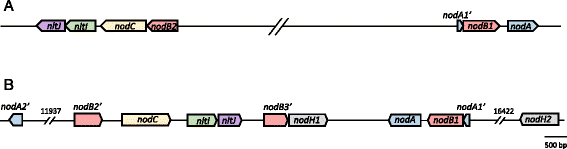
In this paper we present the first Frankia cluster II genome from North America (California), Dg2, which represents a metagenome of two major and one minor strains. A phylogenetic analysis of the core genomes of 16 Frankia strains shows that Cluster II the ancestral group in the genus, also ancestral to the non-symbiotic Cluster IV. Dg2 contains the canonical nod genes nodABC for the production of lipochitooligosaccharide Nod factors, but also two copies of the sulfotransferase gene nodH. In rhizobial systems, sulfation of Nod factors affects their host specificity and their stability.
Conclusions
A comparison with the nod gene region of the previously sequenced Dg1 genome from a Cluster II strain from Pakistan shows that the common ancestor of both strains should have contained nodABC and nodH. Phylogenetically, Dg2 NodH proteins are sister to rhizobial NodH proteins. A glnA-based phylogenetic analysis of all Cluster II strains sampled thus far supports the hypothesis that Cluster II Frankia strains came to North America with Datisca glomerata following the Madrean-Tethyan pattern.
|
|
Scooped by
Jean-Michel Ané
November 6, 2016 12:14 AM
|
Capturing the full growth potential in crops under future elevated CO2 (eCO2) concentrations would be facilitated by improved understanding of eCO2 effects on uptake and use of mineral nutrients. This study investigates interactions of eCO2, soil phosphorus (P), and arbuscular mycorrhizal (AM) symbiosis in Medicago truncatula and Brachypodium distachyon grown under the same conditions. The focus was on eCO2 effects on vegetative growth, efficiency in acquisition and use of P, and expression of phosphate transporter (PT) genes. Growth responses to eCO2 were positive at P sufficiency, but under low-P conditions they ranged from non-significant in M. truncatula to highly significant in B. distachyon. Growth of M. truncatula was increased by AM at low P conditions at both CO2 levels and eCO2×AM interactions were sparse. Elevated CO2 had small effects on P acquisition, but enhanced conversion of tissue P into biomass. Expression of PT genes was influenced by eCO2, but effects were inconsistent across genes and species. The ability of eCO2 to partly mitigate P limitation-induced growth reductions in B. distachyon was associated with enhanced P use efficiency, and requirements for P fertilizers may not increase in such species in future CO2-rich climates.
|
|
Scooped by
Jean-Michel Ané
November 6, 2016 12:13 AM
|
Background/Objectives: Arbuscular Mycorrhizae (AMF) form a symbiotic association with more than 80% terrestrial plants. It is not only important for natural ecosystems, but also for sustainable agricultural production under managed ecosystem. Disturbances produced in managed ecosystem influence mycorrhizal abundance and species composition. Methods/Statistical Analysis: The present study addresses to the constraints of recording abundance and identities, as determined from morphological characters of AM spores, biomarker (fatty acids methyl ester) and largely by ribosomal sequence marker. In order to overcome of these restrictions, the present method is the combined approach based on molecular, biochemical and morphological analysis. Findings: Integrated methodology shift towards holistic methods for define AM biodiversity in agriculture system. Our finding suggested suitable alternative molecular markers for identification of AM fungi up to lower taxon level. Current investigation also identifies the selection pressures that effect AMF diversity in agricultural land and look into induction of AMF diversity by different management practices under sustainable development. Applications/Improvements: Results forecast biodiversity study of AM fungi in complex habitat based on integration of molecular, morphological and biochemical approach. These integrated systematic and ecological researches look forward to the development of powerful and cost effective techniques for AM ecotype selection from complex environmental soil.
|
|
Scooped by
Jean-Michel Ané
November 6, 2016 12:02 AM
|
Ilex paraguariensis St. Hil. (Yerba Mate) is an important crop for which a decrease in yields associated to unsustainable agricultural practices is well documented. The aim of this study is to investigate the diversity of bacteria and fungi inhabiting roots of Yerba Mate. This is an important pre-requisite for the use of microorganisms inhabiting roots to modulate plant nutrition and health as an ecologically friendly agricultural alternative for this crop. The diversity of the root-associated microbiome from eleven plantations with different agricultural practices was analyzed by high throughput sequencing of the 16S rRNA gene as a bacterial marker, whereas the fungal communities were targeted by amplifying the ITS region of the ribosomal RNA gene cluster. A comparison of the bacterial and fungal communities between plantation sites and cultivation practices was made to address the major factors contributing to the structure of the root microbiome of this crop. Operational taxonomic units (OTUs) related to well-known plant growth promoting bacteria such as Burkholderia, Bradyrhizobium, Weissella, Enterobacter and Rhizobium were detected. Those might constitute targets for future enrichment efforts of plant growth promoting clades. The analysis of the fungal community composition demonstrated that arbuscular mycorrhizae colonize Yerba Mate roots, and that the frequency of this group is favored in degraded soils. The detection of other groups harboring potential phytopathogens might help to broaden the understanding of the ailments affecting this crop. This study provides the first description of the root-associated microbiome of Yerba Mate and constitutes a stepping-stone towards harnessing the role of microbes in the sustainable cultivation of this crop.
|
|
Scooped by
Jean-Michel Ané
November 5, 2016 11:59 PM
|
Root colonization by arbuscular mycorrhizal (AM) fungi is a complex and finely tuned process. Previous studies have shown that, among other plant hormones, auxin plays a role in this process but the specific involvement of Aux/IAAs, the key regulators of auxin responses, is still unknown.
In this study, we addressed the role of the tomato Sl-IAA27 during AM symbiosis by using Sl-IAA27-RNAi and pSL-IAA27::GUS stable tomato lines.
The data show that Sl-IAA27 expression is up-regulated by the AM fungus and that silencing of Sl-IAA27 has a negative impact on AM colonization. Sl-IAA27-silencing resulted in down-regulation of three genes involved in strigolactone synthesis, NSP1, D27 and MAX1, and treatment of Sl-IAA27-silenced plants with the strigolactone analog GR24 complemented their mycorrhizal defect phenotype.
Overall, the study identified an Aux/IAA gene as a new component of the signaling pathway controlling AM fungal colonization in tomato. This gene is proposed to control strigolactone biosynthesis via the regulation of NSP1.
|


 Scoop.it!