Your new post is loading...

|
Scooped by
Jean-Michel Ané
March 25, 2017 3:40 PM
|
Many beneficial soil microbes are sensitive to chemical and mechanical disturbances associated with conventional row crop agriculture, including arbuscular mycorrhizal (AM) fungi. AM fungi provide agricultural benefits through multiple mechanisms including increasing crop pathogen resistance, helping with crop nutrient acquisition, and increasing soil carbon storage. Conversion to less intensive row crop agricultural management systems such as biologically-based organic and no-till may reduce the negative effects of conventional management to AM fungi. In this study, AM fungus activity (via glomalin production), spore diversity, community structure, and community stability were surveyed over 20 years in no-till, biologically-based organic, and conventionally managed plots at the W.K. Kellogg Biological Station Long Term Ecological Research Site in Michigan, USA. A complementary greenhouse experiment tested for direct effects of AM fungal inocula from these different agricultural management treatments on growth of corn and wheat plants. Soil glomalin increased in no-till and organic management systems, most likely due to decreases in disturbance associated with tillage and chemical inputs. No-till management slightly increased AM fungus diversity and community stability. AM fungus community structure significantly differed between conventional and no-till treatments, with an indicator species analysis showing that Acaulospora spp. were characteristic of conventional management, while Glomus spp. and Gigaspora spp. were associated with no-till management. AM fungal inocula from organically-managed treatments increased wheat, but not corn, growth. Overall, conversion from long-term conventional row crop agricultural management to no-till or biologically-based organic systems increased soil glomalin, but did not uniformly improve AM fungus diversity or crop plant benefits. In the future, novel agricultural systems combining organic management with conservation tillage may further improve AM fungal benefits to soils and crops.
|
|
Scooped by
Jean-Michel Ané
March 25, 2017 2:08 PM
|
The symbiotic associations between plants, microbes and fungi are examples of living in harmony. The intimate association between the arbuscular mycorrhizal fungi (AMF) and their host plants benefits the latter in nutrient (viz., phosphate, nitrogen etc.) acquisition in exchange of carbohydrates. Arsenic (As) accumulation in rice grains has become a serious issue in some parts of world having high As levels in soil and groundwater. To this end, experiments have demonstrated ameliorative potential of AMF colonization on As stress in rice. AMF colonization not only influences As concentrations in grains but also the speciation of As and reduces the ratios of inorganic/organic As concentrations. Positive influences of AMF colonization have also been linked to alteration in transport of As and phosphate, photosynthetic reactions and improved growth. A role of 14-3-3 proteins in AMF colonization under As stress is also suggested in recent studies. Importantly, grain yield has been found to increase in presence of AMF colonization. In this review, we discuss the molecular intricacies of rice-AMF in the context of As stress.
|
|
Scooped by
Jean-Michel Ané
March 24, 2017 2:50 PM
|
Nowadays the in vitro mycorrhization of plants is a challenge in agricultural biotechnology and it depends of the germination potential of arbuscular mycorrhizal fungal (AMF) propagules, specially the spores, their colonization abilities and the media and systems of culture. The aim of this work was to evaluate the effect of two concentrations (0,05 mg L-1 y 0,07 mg L-1) of the auxin AIA and the cytochinin kinetin riboside on in vitro germination and germinative tube length of G. clarum spores in E medium (modified MS). E and MSR media were used as controls. All culture media had influence on both variables performance. The concentration of kinetin riboside of 0,07 mg L-1 had a positive effect on germination percentage, reaching values of 100% in that medium after 10 days of incubation. Those values were statistically similar to those founded in MSR medium. However, the highest values of germinative tube length were obtained in MSR medium and they were 45% higher to those measured in E medium combined with kinetin riboside (0,07 mg L-1). The AIA concentrations used had an inhibitory effect on spore germination and also on the germinative tubes growth.
|
|
Scooped by
Jean-Michel Ané
March 24, 2017 2:48 PM
|
A change in the contents of endogenous salicylic and jasmonic acids in the roots of the host plant at the preinfectious stage of interaction with symbiotic (Rhizobium leguminosarum) and pathogenic (Agrobacterium rizogenes) bacteria belonging for to the family Rhizobiaceae was studied. It was found that the jasmonic acid content increased 1.5–2 times 5 min after inoculation with these bacterial species. It was shown that dynamics of the change in the JA and SA contents depends on the type of infection. Thus, the JA content decreased in the case of pathogenesis, while the SA content increased. At the same time, an increased JA content was observed during symbiosis. The observed regularities could indicate the presence of different strategies of hormonal regulation for interaction with symbiotic and pathogenic bacteria belonging to the family Rhizobiaceae in peas plants.
|
|
Scooped by
Jean-Michel Ané
March 24, 2017 2:00 PM
|
Background
Agricultural production is challenged by the limitation of non-renewable resources. Alternative fertilizers are promoted but they often have a lower availability of key macronutrients, especially phosphorus (P). Biological inoculants, the so-called bio-effectors (BEs), may be combined with these fertilizers to improve the nutrient use efficiency.
Methods
The goal of this study was to assess the potential of three BEs in combination with alternative fertilizers (e.g., composted manure, biogas digestate, green compost) to promote plant growth and nutrient uptake in soils typical for various European regions. Pot experiments were conducted in Czech Republic, Denmark, Germany, Italy, and Switzerland where the same variety of maize was grown in local soils deficient in P in combination with alternative fertilizers and the same set of BEs (Trichoderma, Pseudomonas, and Bacillus strains). Common guidelines for pot experiment implementation and performance were developed to allow data comparison, and soils were analyzed by the same laboratory.
Results
Efficiency of BEs to improve maize growth and nutrient uptake differed strongly according to soil properties and fertilizer combined. Promising results were mostly obtained with BEs in combination with organic fertilizers such as composted animal manures, fresh digestate of organic wastes, and sewage sludge. In only one experiment, the nutrient use efficiency of mineral recycling fertilizers was improved by BE inoculation.
Conclusions
These BE effects are to a large extent due to improved root growth and P mobilization via accelerated mineralization.
|
|
Scooped by
Jean-Michel Ané
March 24, 2017 1:12 PM
|
Recent papers by Kifle and Laing showed that diazotrophs isolated from Maize tissue and Maize-associated soil have the potential to promote growth of this important crop when used to inoculate seeds prior to planting (Kifle and Laing, 2016a,b). The fact that the authors focused their studies on diazotrophs presumes that the biological nitrogen fixation (BNF) is key to the mechanism of plant growth promotion by the microorganisms they tested. However, numerous other studies (e.g., Khalid et al., 2004) have found plant growth promotion by organisms isolated from the rhizosphere that were not screened for BNF, implying that this trait is not necessarily the key mechanism of plant growth promotion. By conducting additional analysis of their data, we find the striking result that rates of acetylene reduction in pure culture presented by Kifle and Laing (2016a) show a strong positive relationship with two metrics of plant health measured in their greenhouse experiment: chlorophyll content (Figure (Figure1A)1A) and stomatal conductance (Figure (Figure1B).1B). The acetylene reduction assay as conducted by Kifle and Laing (2016a) should serve as a proxy for maximum potential rates of BNF achievable by the diazotrophs they investigated. The relationships shown in Figures 1A,B therefore lend credence to the argument that BNF plays an important role in plant growth promotion by the microbes that Kifle and Laing (2016a) tested.
|
|
Scooped by
Jean-Michel Ané
March 23, 2017 10:44 PM
|
Chromatin modifications, such as cytosine methylation of DNA, play a significant role in mediating gene expression in plants, which affects growth, development, and cell differentiation. As root hairs are single-cell extensions of the root epidermis and the primary organs for water uptake and nutrients, we sought to use root hairs as a single-cell model system to measure the impact of environmental stress.
We measured changes in cytosine DNA methylation in single-cell root hairs as compared with multicellular stripped roots, as well as in response to heat stress.
Differentially methylated regions (DMRs) in each methylation context showed very distinct methylation patterns between cell types and in response to heat stress. Intriguingly, at normal temperature, root hairs were more hypermethylated than were stripped roots. However, in response to heat stress, both root hairs and stripped roots showed hypomethylation in each context, especially in the CHH context. Moreover, expression analysis of mRNA from similar tissues and treatments identified some associations between DMRs, genes and transposons.
Taken together, the data indicate that changes in DNA methylation are directly or indirectly associated with expression of genes and transposons within the context of either specific tissues/cells or stress (heat).
|
|
Scooped by
Jean-Michel Ané
March 23, 2017 10:30 AM
|
The plants belonging to the Ericaceae family are morphologically diverse and widely distributed groups of plants. They are typically found in soil with naturally poor nutrient status. The objective of the current study was to identify cultivable mycobionts from roots of nine species of Ericaceae (Calluna vulgaris, Erica arborea, Erica australis, Erica umbellate, Erica scoparia, Erica multiflora, Arbutus unedo, Vaccinium myrtillus, and Vaccinium corymbosum). The sequencing approach was used to amplify the Internal Transcribed Spacer (ITS) region. Results from the phylogenetic analysis of ITS sequences stored in the Genbank confirmed that most of strains (78) were ascomycetes, 16 of these were closely related to Phialocephala spp, 12 were closely related to Helotiales spp and 6 belonged to various unidentified ericoid mycorrhizal fungal endophytes. Although the isolation frequencies differ sharply according to regions and ericaceous species, Helotiales was the most frequently encountered order from the diverse assemblage of associated fungi (46.15%), especially associated with C. vulgaris (19.23%) and V. myrtillus (6.41%), mostly present in the Loge (L) and Mellousa region (M). Moreover, multiple correspondence analysis (MCA) showed three distinct groups connecting fungal order to ericaceous species in different regions.
|
|
Scooped by
Jean-Michel Ané
March 23, 2017 10:28 AM
|
The productivity of poplar is associated with large nitrogen (N) requirements. Exogenous arbuscular mycorrhizal fungi (AMF) show potential for use as bio-fertilizers. Understanding the interaction between N and exogenous AMF has theoretical and practical significance for poplar plantation. A pot experiment was conducted to assess the effects of N and exogenous Rhizophagus irregularis on plant growth, nutrient uptake, photosynthesis, water status, and leaf anatomical properties of Populus × canadensis ‘Neva’ in natural soil. The results showed that N fertilization increased plant growth, net photosynthesis, water status and the conduit diameter of midribs. The concentrations of carbon (C) and N in leaves were increased, but the phosphorus (P) concentration was decreased by N fertilization. The effectiveness of exogenous R. irregularis varied under different N levels. Under low N levels, exogenous R. irregularis-inoculated plants grew faster and exhibited superior photosynthetic capacity, water status and leaf conduit diameters than non-inoculated plants. Under high N levels, C, N and P concentrations were enhanced by exogenous R. irregularis inoculation. Furthermore, the average conduit diameter of midribs presented a significant positive correlation with plant growth parameters, photosynthesis, relative water content (RWC) and leaf C and N concentrations. It was concluded that exogenous R. irregularis exerted the strongest positive effects under low N levels by promoting plant growth and photosynthesis, and the fungus promoted plant nutrition decoupled from the level of N fertilization. Moreover, the improvement of plant physiological traits due to N fertilization or exogenous R. irregularis inoculation was accompanied by changes in internal anatomical properties.
|
|
Scooped by
Jean-Michel Ané
March 23, 2017 10:20 AM
|
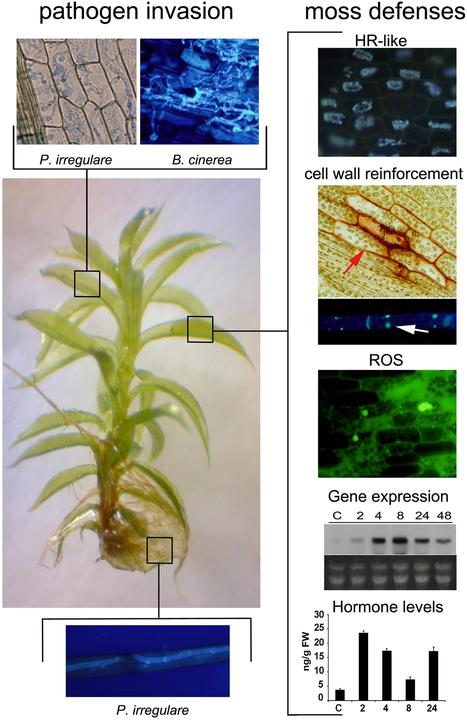
Bryophytes, including mosses, liverworts and hornworts are early land plants that have evolved key adaptation mechanisms to cope with abiotic stresses and microorganisms. Microbial symbioses facilitated plant colonization of land by enhancing nutrient uptake leading to improved plant growth and fitness. In addition, early land plants acquired novel defense mechanisms to protect plant tissues from pre-existing microbial pathogens. Due to its evolutionary stage linking unicellular green algae to vascular plants, the non-vascular moss Physcomitrella patens is an interesting organism to explore the adaptation mechanisms developed in the evolution of plant defenses to microbes. Cellular and biochemical approaches, gene expression profiles, and functional analysis of genes by targeted gene disruption have revealed that several defense mechanisms against microbial pathogens are conserved between mosses and flowering plants. P. patens perceives pathogen associated molecular patterns by plasma membrane receptor(s) and transduces the signal through a MAP kinase (MAPK) cascade leading to the activation of cell wall associated defenses and expression of genes that encode proteins with different roles in plant resistance. After pathogen assault, P. patens also activates the production of ROS, induces a HR-like reaction and increases levels of some hormones. Furthermore, alternative metabolic pathways are present in P. patens leading to the production of a distinct metabolic scenario than flowering plants that could contribute to defense. P. patens has acquired genes by horizontal transfer from prokaryotes and fungi, and some of them could represent adaptive benefits for resistance to biotic stress. In this review, the current knowledge related to the evolution of plant defense responses against pathogens will be discussed, focusing on the latest advances made in the model plant P. patens.
|
|
Rescooped by
Jean-Michel Ané
from Host:microbe Interactions
March 22, 2017 11:54 AM
|
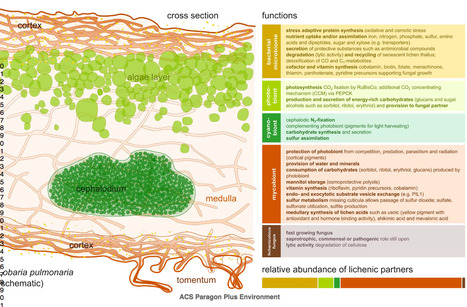
Lichens are recognized by macroscopic structures formed by a heterotrophic fungus, the mycobiont, which hosts internal autotrophic photosynthetic algal and/or cyanobacterial partners, referred to as the photobiont. We analyzed structure and functionality of the entire lung lichen Lobaria pulmonaria L. Hoffm. collected from two different sites by state-of-the-art metaproteomics. In addition to the green algae and the ascomycetous fungus, a lichenicolous fungus, as well as a complex prokaryotic community (different from the cyanobacteria) was found, the latter dominated by methanotrophic Rhizobiales. Various partner-specific proteins could be assigned to the different lichen symbionts, e.g. fungal proteins involved in vesicle transport, algal proteins functioning in photosynthesis, cyanobacterial nitrogenase and GOGAT involved in nitrogen-fixation, and bacterial enzymes responsible for methanol/C1-compounds metabolism as well as CO-detoxification. Structural and functional information on proteins expressed by the lichen community complemented and extended our recent symbiosis model depicting the functional multi-player network of single holobiont partners. Our new metaproteome analysis strongly supports the hypothesis (i) that interactions within the self-supporting association are multifaceted and (ii) that the strategy of functional diversification within the single lichen partners may support the longevity of L. pulmonaria under certain ecological conditions.
Via Jonathan Plett
|
|
Scooped by
Jean-Michel Ané
March 21, 2017 4:18 PM
|
Plants encounter a myriad of microorganisms, particularly at the root–soil interface, that can invade with detrimental or beneficial outcomes. Prevalent beneficial associations between plants and microorganisms include those that promote plant growth by facilitating the acquisition of limiting nutrients such as nitrogen and phosphorus. But while promoting such symbiotic relationships, plants must restrict the formation of pathogenic associations. Achieving this balance requires the perception of potential invading microorganisms through the signals that they produce, followed by the activation of either symbiotic responses that promote microbial colonization or immune responses that limit it.
|
|
Scooped by
Jean-Michel Ané
March 21, 2017 4:10 PM
|
In recent years, the need to reduce reliance on synthetic nitrogen fertilizer has led to extensive research on biological nitrogen fixation, especially on root nodule symbioses. My study focuses on actinorhizal symbioses, the symbiotic interactions between members of nitrogen-fixing soil actinobacteria from the genus Frankia and a diverse group of plants from eight families, collectively called actinorhizal plants. Frankia cluster II has been shown to be sister to all other clusters. Thus, one of my aims was to gain insight into this cluster to get more information about the evolution of actinorhizal symbioses. The first sequenced genome of a member from this cluster Candidatus Frankia datiscae Dg1 originated from Pakistan. This strain contains the canonical nod genes nodABC responsible for the synthesis of lipochitooligosaccharide Nod factors. In this thesis, we obtained three Frankia inocula from North America (USA), one from Europe (France), one from Asia (Japan) and one from Oceania (Papua New Guinea). Thirteen metagenomes were sequenced based on gDNA isolated from root nodules of Datisca glomerata (Datiscaceae), Ceanothus thyrsiflorus (Rhamnaceae), Coriaria myrtifolia and Coriaria arborea (Coriariaceae). This study shows that members of Frankia cluster II come in teams, helping to explain the ability of cluster II to nodulate a wide host range, four families from two orders. The inoculum from Papua New Guinea, the only sequenced strain from the Southern Hemisphere so far, contains a new Frankia species, which was proposed as Candidatus Frankia meridionalis. All cluster II strains in this study contain the canonical nod genes nodABC, with the exception of the strain from Papua New Guinea which contains only nodB’C. All North American metagenomes also contain the sulfotransferase gene nodH. This gene shows host plant-specific expression in that it was expressed in nodules of C. thyrsiflorus but not in D. glomerata. Phylogenetic analysis and transposase frequencies of the new genomes strongly support the hypothesis that the extension of the cluster II host range from Coriaria to Datisca occurred in Eurasia and that cluster II strains came to North America via the Bering Strait. To acquire more information of the influence of the host plant on the behavior of the microsymbionts, the bacterial metabolism in nodules of D. glomerata (Cucurbitales) and C. thyrsiflorus (Rosales) were compared at the level of transcription. The system to protect nitrogenase from oxygen in Ceanothus nodules seems to be more efficient than in Datisca nodules, whereas the bacterial nitrogen metabolism is likely to be similar in both host plants. The amino acid profile of D. glomerata nodules shows that the nitrogenous solutes are dominated by glutamate and arginine, supporting the suggestion that Frankia in D. glomerata nodules exports an assimilated form of nitrogen, most likely arginine. Thus, our data show that cluster II Frankia strains differ from all other Frankia clusters with regard to the presence of the canonical nod genes and their nitrogen metabolism in symbiosis.
|
|
|
Scooped by
Jean-Michel Ané
March 25, 2017 2:08 PM
|
The use of “alpeorujo” (dry olive residue) has been proposed as an organic amendment in order to enhance soil structure and to increase C storage in soils. The aim of this work is to study how aqueous alpeorujo (ADOR) extracts bioremediated with white-rot fungi and three representative phenolic acids present in this extract (protocatechuic, vanillic and caffeic acid) affect the growth of the arbuscular mychorrhizal fungus Rhizophagus custos in monoxenic culture. Our results show that ADOR decreased mycorrhization parameters; however, this negative effect ceased after ADOR bioremediation. Although protocatechuic and vanillic acids have drastic negative effects at high concentrations, these phenols enhance mycorrhization processes at low concentrations and caffeic acid negatively affects symbiosis at low concentrations. Finally, the capacity of root biomass to dissipate individual phenols was also estimated, in which mycorrhized roots improve phenol dissipation in the growth medium in the presence of different phenols. This study highlights the important role played by arbuscular mycorrhiza in protecting plants from phytotoxicity.
|
|
Scooped by
Jean-Michel Ané
March 24, 2017 6:45 PM
|
Potassium (K+) is an essential macronutrient for plants and the most abundant cation in cells. Due to variable K+ availability in the environment, plants must be able to adjust their developmental, physiological and transcriptional responses. The plant development to K+ deprivation was not well studied in legumes thus far. We recently described the first adaptation mechanisms of the model legume Medicago truncatula Jemalong A17 to long-term K+ deprivation and analyzed these responses in the context of arbuscular mycorrhizal symbiosis. Here we report polymorphic growth variations of two genetically very different accessions of M. truncatula to K+-limiting conditions, Jemalong A17, and the Tunisian accession Tn11.1. The faster adaptation of Tn11.1 than A17 to K+ shortage might be due to its greater adaptation to saline soils. Examining in a more systematic way the developmental adaptation of various M. truncatula accessions to K+ deprivation will provide a better understanding of how legume evolved to cope with this stressful condition.
|
|
Scooped by
Jean-Michel Ané
March 24, 2017 2:48 PM
|
Recent studies of the immune system of leguminous plants infected with nodular bacteria (rhizobia) are summarized. The possibility of blocking the invasion of rhizobia into plant organs not affected by the primary infection is discussed. The concept of local and systemic resistance of the leguminous plant to rhizobial infection is introduced. The Nod factors of rhizobia are considered, as well as the plant receptors that interact with these factors upon the formation of symbiosis of the plant and bacteria. The role of bacterial surface exopolysaccharides in the suppression of the protective system of the plants is discussed. The innate immunity of leguminous plant cells is assumed to affect the formation and functioning of the symbiosis of the plant and the bacteria.
|
|
Scooped by
Jean-Michel Ané
March 24, 2017 2:01 PM
|
Background and aims
Plant growth promoting rhizobacteria (PGPR) have been shown to reduce abiotic stress on plants, but these effects have not been quantitatively synthesized. We evaluated the degree to which plant growth promoting rhizobacteria (PGPR) improve plant performance with and without drought stress.
Methods
We used meta-analysis to summarize 52 published articles on the effects of PGPR on root mass, shoot mass and yield under well-watered and drought conditions. We also asked whether fertilization treatments, experimental conditions, inoculum taxonomic complexity, plant functional group, or inoculum delivery method introduce variation in the effect size of PGPR.
Results
Across all treatments, plants were highly responsive to PGPR; under well-watered conditions, root mass increased by 35%, shoot mass increased by 28%, and reproductive yield increased by 19%. Under drought conditions, the effect was even higher: root mass increased by 43%, shoot mass increased by 45%, and reproductive yield increased by 40%. The effect of PGPR was significantly larger under drought for shoot mass (p < 0.05) and reproductive yield (p < 0.05), but not for root mass. PGPR responsiveness also varied according to plant functional group, with C3 grass shoot production responding the least strongly to PGPR.
Conclusions
We demonstrate that PGPR are highly effective for improving plant growth, with a greater effect under drought for above ground traits. While previously known for their bio-control abilities, we show that PGPR may also contribute to drought amelioration and water conservation.
|
|
Scooped by
Jean-Michel Ané
March 24, 2017 1:59 PM
|
Phytostabilisation can benefit from phytostimulatory rhizobacteria. Forty-three bacterial strains were isolated from the roots of the metallicolous legume Anthyllis vulneraria ssp. carpatica grown in a highly contaminated mine tailing (total Cd, Pb and Zn were up to 1200; 34,000; and 170,000 mg kg−1, respectively). We aimed at evaluating their phytostimulatory effects on the development of leguminous metallophytes. Strains were screened for fluorescent siderophores and auxin synthesis, inorganic P solubilisation and 1-amino-cyclopropane-1-carboxylate deaminase (ACCd) activity to define a subset of 11 strains that were inoculated on the leguminous metallophytes A. vulneraria and Lotus corniculatus grown in diluted mine spoil (Zn 34,653; Pb 6842; and Cd 242, all in mg kg−1). All strains were affiliated to Pseudomonas spp. (except two), synthetised auxins and siderophores and solubilised P (except three), and seven of them were ACCd positive. The inoculation effects (shoot-root-nodule biomass, chlorophyll content) depended on legume species and bacterial strain genotype. Phytostimulation scores were unrelated to siderophore/auxin synthesis and P solubilisation rates. Inoculations of the strain nos. 17–43 triggered a 1.2-fold significant increase in the chlorophyll content of A. vulneraria. Chlorophyll content and root biomass of L. corniculatus were significantly increased following the inoculations of the strain nos. 17–22 (1.5–1.4-fold, respectively). The strongest positive effects were related to increases in the nodule biomass of L. corniculatus in the presence of three ACCd-positive strains (1.8-fold), one of which was the highest auxin producer. These data suggest to focus on interactions between ACCd activity and auxin synthesis to enhance nodulation of metallicolous legumes.
|
|
Scooped by
Jean-Michel Ané
March 24, 2017 1:11 PM
|
The role of symbiotic rhizobia in the alleviation of polychlorinated biphenyl (PCB)-induced phytotoxicity in alfalfa and the brassinosteroid (BR) hormone signaling involved were investigated during phytoremediation. The association between alfalfa and Sinorhizobium meliloti was adopted as a remediation model. Phytotoxicity due to PCB 77 (3,3′,4,4′-tetrachlorobiphenyl) exerted adverse impacts on plant performance (biomass accumulation and photosynthesis) and elicited cellular oxidative stress (overproduction of reactive oxygen species, lipid peroxidation, and cell necrosis) which was largely attenuated by pre-inoculation with S. meliloti strain NM. The protective role may have been achieved as a result of strengthening of basic antioxidant defense before stress as evidenced by the augmented activity and gene expression of antioxidative enzymes (peroxidase, glutathione reductase, superoxide dismutase, catalase, and ascorbate peroxidase) of both leaves and roots. In nodulated seedlings peroxidase showed additive increased activity following PCB exposure but the activities of the other four enzymes tended to remain stable after stress. Furthermore, application of strain NM and brassinolide both triggered the accumulation of endogenous BRs and the antioxidant network, while pre-treatment of seedlings with a biosynthetic inhibitor of BRs, brassinazole, abolished the rhizobia-induced activation of detoxification responses towards PCB. These observations indicate that association with S. meliloti NM enhanced the systemic antioxidant defenses of alfalfa to detoxify PCB, at least in part, via BR-dependent signaling pathways. These results contribute to our knowledge of the ‘logistic role’ played by rhizobia in assisting the phytoremediation of PCB-contaminated soils and suggest an optimum manipulation strategy for bioremediation.
|
|
Scooped by
Jean-Michel Ané
March 23, 2017 10:32 AM
|
The theory of island biogeography, which predicts that species richness is a function of island size and distance from the mainland, is well tested with macro-fauna and flora. Yet, in many ways, microbes are more appropriate for testing this and other ecological theories due to their small size and short generation times that translate to an ease of replication. We used a natural experimental system of isolated “host islands” to test the generality of the theory of island biogeography. Specifically, we tested whether ectomycorrhizal fungal (EMF) richness increased with tree size and decreased with distance from forest in a subalpine basin in Yosemite National Park for two congeneric pine species, Pinus albicaulis and Pinus contorta. We determined EMF richness with next-generation sequencing, measured the size and age of each tree island (n = 40), and calculated geographic distances from each tree to the nearest forest edge. We found that EMF richness increased with island size (as measured by tree volume) and tree age for both pine species and decreased with distance from forest edge for P. albicaulis. Thus, we show the applicability of the theory to microbial symbionts in harsh, dry, and likely non-equilibrium systems. In addition, we found that despite the fact that our tree islands had a mean age of 65 yr, a pioneer community of EMF dominated. We interpret this as evidence that water stress interacts with succession to create a sustained period of early-stage fungi even in mature trees.
|
|
Scooped by
Jean-Michel Ané
March 23, 2017 10:28 AM
|
The use of modern agricultural techniques for enhanced production has been advocated, however, its impact on below ground microbial networks is overlooked and adversely affected. The abiotic stresses like temperature (heat, cold chilling/frost), water (drought, flooding/hypoxia), radiation (UV, ionizing radiation), chemicals (mineral deficiency/excess, pollutants heavy metals/pesticides, gaseous toxins), mechanical (wind, soil movement, submergence) are responsible for over 50% reduction in agricultural production. On the other hand, organic farming practices yield fruitful results. This has highlighted the emerging need of switching over to some eco-friendly agricultural practices which can enhance the growth of plant, improve soil quality, mitigate drought without having adverse impacts on environment. Rhizosphere which is the narrow zone surrounding the roots of plant (Hiltner 1904) contains microbial communities which have the potential to benefit plants. Arbuscular mycorrhizal fungi are obligate symbionts which form association with about 90% of the land plant species (Gadkar et al. 2001). However, agricultural practices like tillage, crop rotation, fallowing, organic farming, fertilizers, etc., influence the functioning of AMF in many ways. Soybean is rich in phytochemicals that are beneficial for human beings. The inoculation of soybean and some other crops including cereals, pulses, and other leguminous crops with AMF leads to an enhancement in abiotic stress tolerance, disease resistance, overall growth, soil carbon sequestration, nutrient uptake, etc. This chapter summarizes the overall impact of different agricultural practices on mycorrhiza and other soil microbial communities under soybean-based cropping system.
|
|
Scooped by
Jean-Michel Ané
March 23, 2017 10:27 AM
|
Maximization of biological nitrogen fixation in the common bean (Phaseolus vulgaris L.) crop depends on the genetic characteristics related to the plant, the symbiotic efficiency of rhizobia, and environmental factors. The objective of this study was to evaluate the performance of rhizobia selected beforehand from Cerrado (Brazilian tropical savanna) soils in Mato Grosso do Sul. The experiments were conducted in 2007 in the municipalities of Aquidauana, Anaurilândia, Campo Grande, and Dourados, all located in the state of Mato Grosso do Sul. All procedures established followed the current recommendations of the Brazilian Ministry of Agriculture (Ministério de Agricultura, Pecuária e Abastecimento – MAPA), in accordance with the “official protocol for assessing the feasibility and agronomic efficiency of strains, and inoculant technologies linked to the process of biological nitrogen fixation in legumes”. The program for selection of rhizobia for inoculation in bean plants resulted in identification of different strains with high symbiotic efficiency, competitiveness, and genetic stability, based on the Embrapa Agropecuária Oeste collection of multifunctional microorganism cultures. In previous studies, 630 isolates of Rhizobium were evaluated. They were obtained from nodules of leucaena (380) or dry beans (250) from 87 locations, including 34 municipalities in Mato Grosso do Sul. Three of them stood out from the others: CPAO 12.5 L2, CPAO 17.5 L2, and CPAO 56.4 L2. Inoculation of these strains in bean plants demonstrated economic viability and high potential for obtaining a more effective inoculant suitable for trading purposes.
|
|
Scooped by
Jean-Michel Ané
March 23, 2017 10:15 AM
|
Hollywood movies and horror novels have painted extraterrestrial life as green monsters, scouring the barren grounds of Mars and shooting any intruder with photon lasers. These disturbing imaginations, while far-fetched, do hold some truth about frightening outer space life forms, but not in the ways we imagine. During its orbit as the first modular space station, the satellite Mir experienced attacks from the least suspect extraterrestrial life form: mold. Splotches of fungal hyphae covered windows and control panels and gradually ate away at the hull’s interior during the latter part of the satellite’s life, and with it, any notion of a “sterile spaceship”.1
The discipline of astrobiology attempts to answer the larger mysteries about life: its origin, necessities for survival, and presence in other worlds. But astrobiology also has practical applications in considering how biological organisms may travel through space. In particular, human space travel would greatly benefit from studying a branch of fungal biology known as astromycology: the study of earth-derived fungi in space. Fungi offer both an opportunity and threat to human space travel. Problems arising from fungal intruders are both wide and relevant, ranging from providing food and decomposing biological material to breaking down spacecrafts. Interactions of intense radiation and lack of gravity with fungal growth underlie the opportunities and threats that fungi pose to human space travel.
|
|
Scooped by
Jean-Michel Ané
March 21, 2017 4:20 PM
|
In the present study sweet pepper plants, Capsicum annuum, were planted in greenhouse and open field conditions to test the effect of the arbuscular mycorrhizal fungus (AMF) Rhizophagus irregularis on phytophagous and predatory arthropod populations. Furthermore, we tested the hypothesis that AMF may increase the crop yield (number of fruits and their weight) and activity level of polyphenol oxidase (PPO) and peroxidase (POD), enzymes that seemingly decrease infestation by arthropod pests. The most abundant arthropod species found were the peach-potato aphid, Myzus persicae, western flower thrips, Frankliniella occidentalis, and the seven-spot ladybird, Coccinella septempunctata. Sweet pepper mutualism with AMF significantly reduced colonization by the peach-potato aphid under greenhouse conditions. Aphid density increased, however, on two of four pepper varieties tested under open field conditions. The density of ladybird predators did not appear directly influenced by AMF under greenhouse conditions, whereas a significantly higher predator density was found on three out of four pepper plant varieties with fungal mutualism tested under field conditions. Crop yield was significantly higher on plants with AMF mutualism under greenhouse conditions, but no clear effects were detected under field conditions. Both PPO and POD activity increased significantly and remained higher than controls until day 14 of the experiment under mutualism with AMF, although only in the greenhouse. The results suggest that under greenhouse conditions, pepper plant mutualism with AMF can increase pepper yield by reducing the numbers of the key pest, peach-potato aphid.
|
|
Scooped by
Jean-Michel Ané
March 21, 2017 4:15 PM
|
The industrial production and use of nitrogenous fertilizer involves significant environmental and economic costs. Strategies to reduce fertilizer dependency are required to address the world's increasing demand for sustainable food, fibers, and biofuels. Biological nitrogen fixation, a process unique to diazatrophic bacteria, is catalyzed by the nitrogenase complex, and reconstituting this function in plant cells is an ambitious biotechnological strategy to reduce fertilizer use. Here we establish that the full array of biosynthetic and catalytic nitrogenase (Nif) proteins from the diazotroph Klebsiella pneumoniae can be individually expressed as mitochondrial targeting peptide (MTP)-Nif fusions in Nicotiana benthamiana. We show that these are correctly targeted to the plant mitochondrial matrix, a subcellular location with biochemical and genetic characteristics potentially supportive of nitrogenase function. Although Nif proteins B, D, E, F, H, J, K, M, N, Q, S, U, V, X, Y, and Z were all detectable by Western blot analysis, the NifD catalytic component was the least abundant. To address this problem, a translational fusion between NifD and NifK was designed based on the crystal structure of the nitrogenase MoFe protein heterodimer. This fusion protein enabled equimolar NifD:NifK stoichiometry and improved NifD expression levels in plants. Finally, four MTP-Nif fusion proteins (B, S, H, Y) were successfully co-expressed, demonstrating that multiple components of nitrogenase can be targeted to plant mitochondria. These results establish the feasibility of reconstituting the complete componentry for nitrogenase in plant cells, within an intracellular environment that could support the conversion of nitrogen gas into ammonia.
|