 Your new post is loading...

|
Scooped by
Jean-Michel Ané
May 10, 2020 4:20 PM
|
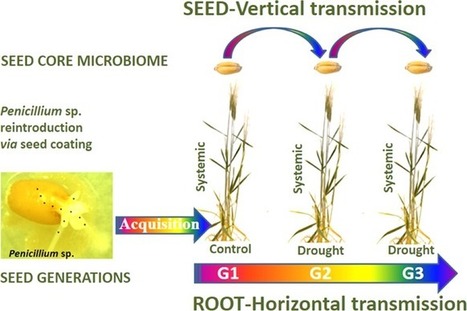
Illumina-MiSeq next-generation sequencing of ITS 5.8S rRNA gene demonstrated the transgenerational transmission of fungal seed-endophytes (mycobiome) across three consecutive wheat host generations under standard-control and drought conditions in the greenhouse. Drought-stressed plants experienced a positive shift in the seed mycobiome’s composition, moderated by the external acquisition of endophytic Penicillium (E+) at the seed level. Untreated (E−) and unstressed plants harbor a maximal fungal diversity of non-equilibrium ecological communities. While fungal composition in drought-stressed E− plants experienced important fluctuation, E+ plants maintained fungal ecological communities in phase equilibrium across generations. E+ plants hosted a relatively higher abundance of Ascomycota in the 2nd and 3rd seed generations of wheat, whereas higher abundance of Basidiomycota was detected in 1st generation seeds. The dynamic response of ecological communities to environmental stress is conducive to E+ plants’ active recruitment of endosymbiotic consortia in seeds, benefiting host stress resilience and phenotype. In contrast, E− plants showed an erratic distribution of detected OTUs with an increased occurrence of phytopathogens and diminished plant performance under stress. The present study gives insight into the understanding of the seed-mycobiome composition and dynamics with the potential to improve plant host traits in an adverse environment.
|
|
Scooped by
Jean-Michel Ané
May 9, 2020 4:32 PM
|
Anthropogenic atmospheric deposition can increase nutrient supply in the most remote ecosystems, potentially affecting soil biodiversity. Arbuscular mycorrhizal fungal (AMF) communities rapidly respond to simulated soil eutrophication in tropical forests. Yet the limited spatio‐temporal extent of such manipulations, together with the often unrealistically high fertilization rates employed, impedes generalization of such responses.
We sequenced mixed root AMF communities within a seven year‐long fully factorial nitrogen (N) and phosphorus (P) addition experiment, replicated at three tropical montane forests in southern Ecuador with differing environmental characteristics. We hypothesized (i) strong shifts in community composition and species richness after long‐term fertilization, (ii) site‐ and (iii) clade‐specific responses to N versus P additions depending on local soil fertility and clade life history traits respectively.
Fertilization consistently shifted AMF community composition across sites, but only reduced richness of Glomeraceae. Compositional changes were mainly driven by increases in P supply while richness reductions were observed only after combined N and P additions.
We conclude that moderate increases of N and P exert a mild but consistent effect on tropical AMF communities. To predict the consequences of these shifts, current results need to be supplemented with experiments that characterize local species‐specific AMF functionality.
|
|
Scooped by
Jean-Michel Ané
May 9, 2020 4:20 PM
|
Understanding how plant-associated microbial communities assemble and the role they play in plant performance are major goals in microbial ecology. For nitrogen-fixing rhizobia, community assembly is generally driven by host plant selection and soil conditions. Here, we aimed to determine the relative importance of neutral and deterministic processes in the assembly of bacterial communities of root nodules of a legume shrub adapted to extreme nutrient limitation, rooibos (Aspalathus linearis Burm. Dahlgren). We grew rooibos seedlings in soil from cultivated land and wild habitats, and mixtures of these soils, sampled from a wide geographic area, and with a fertilization treatment. Bacterial communities were characterized using next generation sequencing of part of the nodA gene (i.e. common to the core rhizobial symbionts of rooibos), and part of the gyrB gene (i.e. common to all bacterial taxa). Ecological drift alone was a major driver of taxonomic turnover in the bacterial communities of root nodules (62.6% of gyrB communities). In contrast, the assembly of core rhizobial communities (genus Mesorhizobium) was driven by dispersal limitation in concert with drift (81.1% of nodA communities). This agrees with a scenario of rooibos-Mesorhizobium specificity in spatially separated subpopulations, and low host filtering of other bacteria colonizing root nodules in a stochastic manner.
|
|
Scooped by
Jean-Michel Ané
May 9, 2020 4:18 PM
|
Since the discovery two decades ago that transgenes are efficiently integrated into the genome of Physcomitrella patens by homologous recombination, this moss has been a premier model system to study evolutionary developmental biology questions, stem cell reprogramming, and the biology of nonvascular plants. P. patens was the first non-seed plant to have its genome sequenced. With this level of genomic information, together with increasing molecular genetic tools, a large number of reverse genetic studies have propelled the use of this model system. A number of technological advances have recently opened the door to forward genetics as well as extremely efficient and precise genome editing in P. patens. Additionally, careful phylogenetic studies with increased resolution have suggested that P. patens emerged from within Physcomitrium. Thus, rather than Physcomitrella patens, the species should be named Physcomitrium patens. Here we review these advances and describe the areas where P. patens has had the most impact on plant biology.
|
|
Scooped by
Jean-Michel Ané
May 5, 2020 7:17 PM
|
Global food production needs to be increased by 70% to meet demands by 2050. Current agricultural practices cannot cope with this pace and furthermore are not ecologically sustainable. Innovative solutions are required to increase productivity and nutritional quality. The interdisciplinary field of synthetic biology implements engineering principles into biological systems and currently revolutionizes fundamental and applied research. We review the diverse spectrum of synthetic biology applications that started impacting plant growth and quality. We focus on latest advances for synthetic carbon-conserving pathways in vitro and in planta to improve crop yield. We highlight strategies improving plant nutrient usage and simultaneously reduce fertilizer demands, exemplified with the engineering of nitrogen fixation in crops or of synthetic plant-microbiota systems. Finally, we address engineering approaches to increase crop nutritional value as well as the use of photoautotrophic organisms as autonomous factories for the production of biopharmaceuticals and other compounds of commercial interest.
|
|
Scooped by
Jean-Michel Ané
May 5, 2020 7:11 PM
|
Coinoculation of plants with mixtures of beneficial microbes sometimes produces synergistic effects. In this study, the effect of soybean coinoculation with the N2-fixing Bradyrhizobium japonicum E109 and the biocontrol fungus Trichoderma harzianum Th5cc was analyzed. Nodulation by E109 was not hampered by Th5cc, which antagonized five out of seven soybean pathogens tested. Furthermore, Th5cc relieved nitrate-inhibition of nodulation, enabling the formation of nodules containing infected cells with bacteroids in the presence of the otherwise inhibitory 10 mM KNO3. Th5cc released micromolar amounts of auxin, and addition of 11 µM indoleacetic acid to soybean plants inoculated with E109 in the absence of Th5cc also induced nodulation in the presence of 10 mM KNO3. Thus, Th5cc may release auxins into the soybean rhizosphere, which hormones might participate in overcoming the nitrate-inhibition of nodulation. Our results suggest that soybean plants coinoculated with these microorganisms might benefit from biocontrol while contributing to soil-nitrogen preservation.
|
|
Scooped by
Jean-Michel Ané
May 5, 2020 6:38 PM
|
As the only enzyme currently known to reduce dinitrogen (N2) to ammonia (NH3), nitrogenase is of significant interest for bio-inspired catalyst design and for new biotechnologies aiming to produce NH3 from N2. In order to reduce N2, nitrogenase must also hydrolyze at least 16 equivalents of adenosine triphosphate (MgATP), representing the consumption of a significant quantity of energy available to biological systems. Here, we review natural and engineered electron transfer pathways to nitrogenase, including strategies to redirect or redistribute electron flow in vivo towards NH3 production. Further, we also review strategies to artificially reduce nitrogenase in vitro, where MgATP hydrolysis is necessary for turnover, in addition to strategies that are capable of bypassing the requirement of MgATP hydrolysis to achieve MgATP-independent N2 reduction.
|
|
Scooped by
Jean-Michel Ané
May 5, 2020 6:35 PM
|
Minutes of the closed meeting of the ICSP Subcommittee on the Taxonomy of Rhizobia and Agrobacteria held by videoconference on 17 July 2019, and list of recent species.
|
|
Scooped by
Jean-Michel Ané
May 5, 2020 6:26 PM
|
A recent study by Sugiura and coworkers reported the non‐symbiotic growth and spore production of an arbuscular mycorrhizal (AM) fungus, Rhizophagus irregularis, when the fungus received an external supply of certain fatty acids, myristates (C:14). This discovery follows the insight that AM fungi receive fatty acids from their hosts when in symbiosis. If this result holds up and can be repeated under nonsterile conditions and with a broader range of fungi, it has numerous consequences for our understanding of AM fungal ecology, from the level of the fungus, at the plant community level, and to functional consequences in ecosystems. In addition, myristate may open up several avenues from a more applied perspective, including improved fungal culture and supplementation of AM fungi or inoculum in the field. We here map these potential opportunities, and additionally offer thoughts on potential risks of this potentially new technology. Lastly, we discuss the specific research challenges that need to be overcome to come to an understanding of the potential role of myristate in AM ecology.
|
|
Scooped by
Jean-Michel Ané
May 5, 2020 6:18 PM
|
Biological nitrogen fixation (BNF), a key reaction of the nitrogen cycle, is catalyzed by the enzyme nitrogenase. The best studied isoform of this metalloenzyme requires molybdenum (Mo) at its active center to reduce atmospheric dinitrogen (N2) into bioavailable ammonium. The Mo-dependent nitrogenase is found in all diazotrophs and is the only nitrogenase reported in diazotrophs that form N2-fixing symbioses with higher plants. In addition to the canonical Mo nitrogenase, two alternative nitrogenases, which use either vanadium (V) or iron (Fe) instead of Mo are known to fix nitrogen. They have been identified in ecologically important groups including free-living bacteria in soils and freshwaters and as symbionts of certain cryptogamic covers. Despite the discovery of these alternative isoforms more than 40 years ago, BNF is still believed to primarily rely on Mo. Here, we review existing studies on alternative nitrogenases in terrestrial settings, spanning inland forests to coastal ecosystems. These studies show frequent Mo limitation of BNF, ubiquitous distribution of alternative nitrogenase genes and significant contributions of alternative nitrogenases to N2 fixation in ecosystems ranging from the tropics to the subarctic. The effect of temperature on nitrogenase isoform activity and regulation is also discussed. We present recently developed methods for measuring alternative nitrogenase activity in the field and discuss the associated analytical challenges. Finally, we discuss how the enzymatic diversity of nitrogenase forces a re-examination of existing knowledge gaps and our understanding of BNF in nature.
|
|
Scooped by
Jean-Michel Ané
May 5, 2020 6:05 PM
|
Cytokinin is an important regulator of symbiotic nodule development. Recently, KNOTTED1-LIKE HOMEOBOX 3 transcription factor (TF) was shown to regulate symbiotic nodule development possibly via the activation of cytokinin biosynthesis genes. However, the direct interaction between the KNOX3 TF and its target genes has not been investigated up to date. Here, using EMSA analysis and SPR-based assay, we found that MtKNOX3 homeodomain directly binds to the regulatory sequences of the MtLOG1, MtLOG2, and MtIPT3 genes involved in nodulation in Medicago truncatula. Moreover, we showed that MtLOG2 and MtIPT3 expression patterns partially overlap with MtKNOX3 expression in developing nodules as it was shown by promoter:GUS analysis. Our data suggest that MtKNOX3 TF may directly activate the MtLOG1, MtLOG2, and MtIPT3 genes during nodulation thereby increasing cytokinin biosynthesis in developing nodules.
|
|
Scooped by
Jean-Michel Ané
May 5, 2020 5:55 PM
|
Lotus japonicus is an important model legume for studying symbiotic nitrogen fixation as well as plant development. A genomic sequence of L. japonicus (MG20) has been available for more than ten years. However, the low quality of the genome limits its application in functional genomic studies. Therefore, it is necessary to assemble high-quality chromosome sequences of L. japonicus using new sequencing technology to facilitate the study of functional genomics. In this report, we used the third-generation sequencing combined with the Illumina HiSeq platform to sequence the genome of L. japonicus (MG20). We obtained 544 Mb of genomic sequence using third-generation assembly. Based on sequence analysis, 357 Mb of repeats, 28,251 genes, 626 tRNAs, 1409 rRNAs, and 1233 pseudogenes were predicted in the genome. A total of 27,991 genes were annotated into databases. Compared to the previously published data, the new genome database contains complete L. japonicus sequences in the proper order and orientation with a contig N50 2.81Mb and an excellent genome coverage, which provides more accurate genome information and more precise assembly for functional genomic study.
|
|
Scooped by
Jean-Michel Ané
May 3, 2020 3:34 PM
|
Plants employ a diverse set of defense mechanisms to mediate interactions with insects and fungi. These relationships can leave lasting impacts on host plant genome structure such as rapid expansion of gene families through tandem duplication. These genomic signatures provide important clues about the complexities of plant/biotic stress interactions and evolution. We used a pseudo‐backcross hybrid family to identify quantitative trait loci (QTL) controlling associations between Populus trees and several common Populus diseases and insects. Using whole‐genome sequences from each parent, we identified candidate genes that may mediate these interactions. Candidates were partially validated using mass spectrometry to identify corresponding QTL for defensive compounds. We detected significant QTL for two interacting fungal pathogens and three insects. The QTL intervals contained candidate genes potentially involved in physical and chemical mechanisms of host–plant resistance and susceptibility. In particular, we identified adjoining QTLs for a phenolic glycoside and Phyllocolpa sawfly abundance. There was also significant enrichment of recent tandem duplications in the genomic intervals of the native parent, but not the exotic parent. Tandem gene duplication may be an important mechanism for rapid response to biotic stressors, enabling trees with long juvenile periods to reach maturity despite many coevolving biotic stressors.
|
|
|
Scooped by
Jean-Michel Ané
May 9, 2020 4:34 PM
|
The possible effects of climate change on species interactions remain a very complex and challenging subject in community ecology. Here, we comparatively examine the interactions between maize (Zea mays) and an endophytic fungal entomopathogen (Beauveria bassiana) in a typical agroecosystem under both ambient and elevated air temperatures. We found that under ambient temperature certain key biological characteristics in maize (i.e., height, relative growth rate, biomass, and defense enzymes) and B. bassiana (i.e., conidia yield, germination rate of conidia, and virulence) were positively related to each other. Under elevated air temperature, however, we only detected positive effects of maize on B. bassiana (i.e., conidia yield, germination rate of conidia, and virulence), but little effect of B. bassiana on maize. These observations suggest that elevated air temperature could shift the interactions between plants and the endophytic fungal entomopathogens, possibly even from mutualism to commensalism. Both the nature and strength of species interactions are important for better understanding and predicting structure and stability of ecological communities in agroecosystems under climate change.
|
|
Scooped by
Jean-Michel Ané
May 9, 2020 4:30 PM
|
Crop rotation, the successive cultivation of different crops on the same field, has been practiced for centuries, and it is often associated with increased crop yields. Cover cropping is a less ubiquitous farming practice that also increases plant biodiversity over time. Cover crops are a soil conservation tool; they are grown between harvest and planting of the main crop to protect and enrich the soil. Increasing crop diversity with crop rotation and cover cropping may contribute to shifts in soil bacterial communities. Our first objective was to investigate the soil bacterial communities associated with growing corn (Zea mays L.) or soybean (Glycine max L.) continuously versus annually rotating these crops. Our second objective was to determine if the first season of cover cropping had an impact on soil bacteria in a corn-soybean system. Soil was collected from a long-term crop rotational study with continuous corn, continuous soybean, and annually rotated corn-soybean treatments. These rotation treatments had various cover crops established within each plot, which were sampled individually. Bacterial communities were estimated in each sample by extracting DNA and sequencing the V3-V4 region of the 16S rRNA gene. We found that soil pH, organic matter, and certain macronutrients were essential drivers in determining the composition of bulk soil bacterial communities. Continuously cropped corn and soybean had distinct bacterial communities, while annually rotated communities were similar in both crop phases. The incorporation of cover crops into the rotation system did not result in significant changes to the bulk soil bacterial community. This result was probably due to limited cover crop growth in the first year of establishment, and a limited amount of time for soil communities to respond to this change.
|
|
Scooped by
Jean-Michel Ané
May 9, 2020 4:19 PM
|
Pick up just a pinch of healthy soil, and you could be holding as many as 2,500 different species of microbes in your hand. These are the stuff of life.
Without the microbes, plant growth stymies, relative to its potential. Even our most ingeniously designed soil-fertilization efforts cannot totally make up for their loss.
“Soil ecosystems have many members, each filling a necessary niche to ensure proper operation,” says David C. Johnson, a New Mexico State University molecular biologist. “All members have to be present and functioning for the system to work efficiently and correctly.
|
|
Scooped by
Jean-Michel Ané
May 8, 2020 11:22 AM
|
A geographically isolated maize landrace cultivated on nitrogen-depleted fields without synthetic fertilizer in the Sierra Mixe region of Oaxaca, Mexico utilizes nitrogen derived from the atmosphere and develops an extensive network of mucilage-secreting aerial roots that harbors a diazotrophic microbiota. Targeting these diazotrophs, we selected nearly 600 microbes from a collection isolated from these plants and confirmed their ability to incorporate heavy nitrogen (15N2) metabolites in vitro. Sequencing their genomes and conducting comparative bioinformatic analyses showed that these genomes had substantial phylogenetic diversity. We examined each diazotroph genome for the presence of nif genes essential to nitrogen fixation (nifHDKENB) and carbohydrate utilization genes relevant to the mucilage polysaccharide digestion. These analyses identified diazotrophs that possessed canonical nif gene operons, as well as many other operon configurations with concomitant fixation and release of >700 different 15N labeled metabolites. We further demonstrated that many diazotrophs possessed alternative nif gene operons and confirmed their genomic potential to derive chemical energy from mucilage polysaccharide to fuel nitrogen fixation. These results confirm that some diazotrophic bacteria associated with Sierra Mixe maize were capable of incorporating atmospheric nitrogen into their small molecule extracellular metabolites through multiple nif gene configurations while others were able to fix nitrogen without the canonical (nifHDKENB) genes.
|
|
Scooped by
Jean-Michel Ané
May 5, 2020 7:16 PM
|
Phytohormones regulate the mutualistic symbiotic interaction between legumes and rhizobia, nitrogen-fixing soil bacteria, notably by controlling the formation of the infection thread in the root hair (RH). At the cellular level, the formation of the infection thread is promoted by the translocation of plasma membrane microdomains at the tip of the RH. We hypothesize that phytohormones regulate the translocation of plasma membrane microdomains to regulate infection thread formation. Accordingly, we treated with hormone and hormone inhibitors transgenic soybean roots expressing fusions between the Green Fluorescent Protein (GFP) and GmFWL1 or GmFLOT2/4, two microdomain-associated proteins translocated at the tip of the soybean RH in response to rhizobia. Auxin and cytokinin treatments are sufficient to trigger or inhibit the translocation of GmFWL1 and GmFLOT2/4 to the RH tip independently of the presence of rhizobia, respectively. Unexpectedly, the application of salicylic acid, a phytohormone regulating the plant defense system, also promotes the translocation of GmFWL1 and GmFLOT2/4 to the RH tip regardless of the presence of rhizobia. These results suggest that phytohormones are playing a central role in controlling the early stages of rhizobia infection by regulating the translocation of plasma membrane microdomains. They also support the concept of crosstalk of phytohormones to control nodulation.
|
|
Scooped by
Jean-Michel Ané
May 5, 2020 6:59 PM
|
Arbuscular mycorrhizal fungi (AMF) harbor thousands of nuclei in a large syncytium at all times. Although mating processes have not been observed in AMF, their cells and genomes show many signatures of sexual reproduction. Here, we describe how some of these signatures could also arise from parasexual processes in these widespread plant symbionts. As such, parasexual and sexual evolution could both be at play in generating nuclear diversity in AMF.
|
|
Scooped by
Jean-Michel Ané
May 5, 2020 6:37 PM
|
Plants in nature are constantly exposed to a variety of abiotic and biotic stresses which limits their growth and production. Enhancing crop yield and production to feed exponentially growing global population in sustainable manner by reduced chemical fertilization and agrochemicals will be a big challenge. Recently, the targeted application of beneficial plant microbiome and their cocktails to counteract abiotic and biotic stress is gaining momentum and becomes an exciting frontier of research. Advances in next generation sequencing (NGS) platform, gene editing technologies, metagenomics and bioinformatics approaches allows us to unravel the entangled webs of interactions of holobionts and core microbiomes for efficiently deploying the microbiome to increase crops nutrient acquisition and resistant to abiotic and biotic stress. In this review, we focused on shaping rhizosphere microbiome of susceptible host plant from resistant plant which comprises of specific type of microbial community with multiple potential benefits and targeted CRISPR/Cas9 based strategies for manipulation of susceptibility genes in crop plants for improving plant health. .This review is significant in providing first-hand information to improve fundamental understanding of the process which helps in shaping rhizosphere microbiome.
|
|
Scooped by
Jean-Michel Ané
May 5, 2020 6:26 PM
|
Bradyrhizobium elkanii USDA61 possesses a functional type III secretion system (T3SS) that controls host-specific symbioses with legumes. Here, we demonstrated that B. elkanii T3SS is essential for the nodulation of several southern Asiatic Vigna mungo cultivars. Strikingly, inactivation of either Nod factor synthesis or T3SS in B. elkanii abolished nodulation of the V. mungo plants. Among the effectors, NopL was identified as a key determinant for T3SS-dependent symbiosis. Mutations of other effector genes, such as innB, nopP2, and bel2-5, also impacted symbiotic effectiveness, depending on host genotypes. The nopL deletion mutant formed no nodules on V. mungo, but infection thread formation was still maintained, thereby suggesting its pivotal role in nodule organogenesis. Phylogenetic analyses revealed that NopL was exclusively conserved among Bradyrhizobium and Sinorhizobium (Ensifer) species and showed a different phylogenetic lineage from T3SS. These findings suggest that V. mungo evolved a unique symbiotic signaling cascade that requires both NFs and T3Es (NopL).
|
|
Scooped by
Jean-Michel Ané
May 5, 2020 6:21 PM
|
microRNAs (miRNAs) are non-coding small RNAs that regulate gene expression at post-transcriptional level. Thousands of miRNAs have been identified in legumes, but studies about miRNAs linked to peanut nodule functionality are scarce. In this work we analyzed transcriptional changes in peanut nodules to identify miRNAs involved in functional processes of these organs. We found 32 miRNAs precursors differentially expressed in nodules compared with roots, and predicted the potential targets of their corresponding mature miRNAs. Among them, 20 belong to 14 conserved miRNAs families and 12 are Arachis hypogaea-specific miRNAs. Expression levels of 3 miRNAs (ahy-miR399, ahy-miR159 and ahy-miR3508) were confirmed experimentally by qPCR. We also demonstrated that the expression of these miRNAs was not affected by inoculation of a biocontrol bacterium or a fungal pathogen. The catalogue of differentially expressed miRNA precursors and the expression of the corresponding mature miRNA potential targets in the nodules of A. hypogaea obtained in this work is a database of strong candidates, including A. hypogaea-specific miRNAs, for the regulation of the nodule functionality. The analysis of their role in this process will certainly lead to the characterization of essential regulators in these particular aeschynomenoid nodules.
|
|
Scooped by
Jean-Michel Ané
May 5, 2020 6:12 PM
|
Agricultural manipulation of potentially beneficial rhizosphere microbes is increasing rapidly due to their multi-functional plant-protective and growth related benefits. Plant growth promoting rhizobacteria (PGPR) are mostly non-pathogenic microbes which exert direct benefits on plants while there are rhizosphere bacteria which indirectly help plant by ameliorating the biotic and/or abiotic stress or induction of defense response in plant. Regulation of these direct or indirect effect takes place via highly specialized communication system induced at multiple levels of interaction i.e., inter-species, intra-species, and inter-kingdom. Studies have provided insights into the functioning of signaling molecules involved in communication and induction of defense responses. Activation of host immune responses upon bacterial infection or rhizobacteria perception requires comprehensive and precise gene expression reprogramming and communication between hosts and microbes. Majority of studies have focused on signaling of host pattern recognition receptors (PRR) and nod-like receptor (NLR) and microbial effector proteins under mining the role of other components such as mitogen activated protein kinase (MAPK), microRNA, histone deacytylases. The later ones are important regulators of gene expression reprogramming in plant immune responses, pathogen virulence and communications in plant-microbe interactions. During the past decade, inoculation of PGPR has emerged as potential strategy to induce biotic and abiotic stress tolerance in plants; hence, it is imperative to expose the basis of these interactions. This review discusses microbes and plants derived signaling molecules for their communication, regulatory and signaling networks of PGPR and their different products that are involved in inducing resistance and tolerance in plants against environmental stresses and the effect of defense signaling on root microbiome. We expect that it will lead to the development and exploitation of beneficial microbes as source of crop biofertilizers in climate changing scenario enabling more sustainable agriculture.
|
|
Scooped by
Jean-Michel Ané
May 5, 2020 5:57 PM
|
Most plants associate with beneficial arbuscular mycorrhizal (AM) fungi that facilitate soil nutrient acquisition. Prior to contact, partner recognition triggers reciprocal genetic remodelling to enable colonisation. The plant Dwarf14-Like (D14L) receptor conditions pre-symbiotic perception of AM fungi, and also detects the smoke constituent karrikin. D14L-dependent signalling mechanisms, underpinning AM symbiosis are unknown. Here, we present the identification of a negative regulator from rice, which operates downstream of the D14L receptor, corresponding to the homologue of the Arabidopsis thaliana Suppressor of MAX2-1 (AtSMAX1) that functions in karrikin signalling. We demonstrate that rice SMAX1 is a suppressor of AM symbiosis, negatively regulating fungal colonisation and transcription of crucial signalling components and conserved symbiosis genes. Similarly, rice SMAX1 negatively controls strigolactone biosynthesis, demonstrating an unexpected crosstalk between the strigolactone and karrikin signalling pathways. We conclude that removal of SMAX1, resulting from D14L signalling activation, de-represses essential symbiotic programmes and increases strigolactone hormone production. Signaling via the D14L karrikin receptor conditions rice roots for association with arbuscular mycorrhizal fungi. Here, Choi et al. show that SMAX1, a rice homolog of an Arabidopsis repressor of karrikin signaling, acts downstream of D14L to suppress mycorrhizal symbiosis and strigolactone biosynthesis.
|
|
Scooped by
Jean-Michel Ané
May 4, 2020 10:56 PM
|
Nitrogen is essential for life on Earth, mainly because it is a key component of amino acids, the building blocks of proteins. Plants are no exception to this and must obtain usable nitrogen to survive. Some plants famously form symbiotic relationships with soil bacteria that are capable of fixing gaseous nitrogen into a form usable by the plant. Agriculturally-important legumes are a significant proportion of the plants known to enter these symbiotic relationships. The efficiency of this relationship can vary depending on factors including environment conditions and the type of bacteria involved. Maximising this efficiency is of interest both in terms of getting the best yield possible out of leguminous crops, and for returning nitrogen to the soil for use by other crops. In a recent paper published in PNAS, Marcela Mendoza-Suárez and colleagues develop a method for measuring the efficiency of this relationship from the bacterial perspective. An exciting possible use of this method will be selecting the best bacteria to get the most out of this symbiosis in agricultural scenarios.
|









Keep in mind that these are greenhouse experiments