Your new post is loading...

|
Scooped by
Jean-Michel Ané
June 4, 2020 5:02 PM
|
The specific mechanisms by which nitrogen affects the nodulation and nitrogen fixation of soybean plants are unclear. Investigating the relationship between nitrogen, nodulation and nitrogen fixation can provide new insights for the rational and proper use of nitrogen fertilizer in soybean plants. In this study, we grafted soybean roots to construct a dual-root system with a single nodulated side. Experiment I was performed at the third trifoliate leaf to initial seed filling (V3-R3) growth stages (for 30 days) for long-term nitrogen supply, and Experiment II was performed at the third trifoliate leaf to fourth trifoliate leaf (V3-V4) growth stages (for 5 days) for short-term nitrogen supply. For the two experiments, a nutrient solution providing 15NH415NO3 or NH4NO3 as the nitrogen source was added to the non-nodulated side, while a nitrogen-free nutrient solution was added to the nodulated side. The concentrations of nitrogen supplied were 0 mg/L, 25 mg/L, 50 mg/L, 75 mg/L, and 100 mg/L. The results showed the following: (1) Short-term nitrogen supply systematically regulated the specific nitrogenase activity (SNA), thereby inhibiting the acetylene reduction activity (ARA). Under long-term nitrogen supply, the recovery of SNA was generally consistent across treatments, and the concentration of nitrogen supplied systematically regulated the growth of root nodules, thereby inhibiting the ARA. (2) Using the 15N tracer method, the concentration of fertilizer nitrogen was positively correlated with the amount of nitrogen redistributed to other organs. Although the percentage of nitrogen derived from the atmosphere (Ndfa%) decreased significantly with increasing concentrations of nitrogen supplied, the effect on the accumulation of nitrogen fixed by nodules (Naccumulation of nodules) was not significant. By establishing the relationships between the ARA (measured by the acetylene reduction method), Ndfa% (based on 15N calculations), and Naccumulation nodules (based on 15N calculations), it was found that the ARA reliably reflected the Ndfa% but not the Naccumulation of nodules.
|
|
Scooped by
Jean-Michel Ané
June 4, 2020 5:00 PM
|
Nitrogen fixation is an important metabolic process carried out by microorganisms, which converts molecular nitrogen into inorganic nitrogenous compounds such as ammonia (NH3). These nitrogenous compounds are crucial for biogeochemical cycles and for the synthesis of essential biomolecules, i.e. nucleic acids, amino acids and proteins. Azotobacter vinelandii is a bacterial non-photosynthetic model organism to study aerobic nitrogen fixation (diazotrophy) and hydrogen production. Moreover, the diazotroph can produce biopolymers like alginate and polyhydroxybutyrate (PHB) that have important industrial applications. However, many metabolic processes such as partitioning of carbon and nitrogen metabolism in A. vinelandii remain unknown to date.
|
|
Scooped by
Jean-Michel Ané
June 4, 2020 4:51 PM
|
Minimally processed or fresh fruits and vegetables are unfortunately linked to an increasing number of food-borne diseases, such as salmonellosis. One of the relevant virulence factors during the initial phases of the infection process is the bacterial flagellum. Although its function is well studied in animal systems, contradictory results have been published regarding its role during plant colonization. In this study, we tested the hypothesis that Salmonella’s flagellin plays a versatile function during the colonization of tomato plants. We have assessed the persistence in plant tissues of a Salmonella enterica wild type strain, and of a strain lacking the two flagellins, FljB and FliC. We detected no differences between these strains concerning their respective abilities to reach distal, non-inoculated parts of the plant. Analysis of flagellin expression inside the plant, at both the population and single cell levels, shows that the majority of bacteria down-regulate flagellin production, however, a small fraction of the population continues to express flagellin at a very high level inside the plant. This heterogeneous expression of flagellin might be an adaptive strategy to the plant environment. In summary, our study provides new insights on Salmonella adaption to the plant environment through the regulation of flagellin expression.
|
|
Scooped by
Jean-Michel Ané
June 4, 2020 4:40 PM
|
AZC_2928 gene (GenBank accession no. BAF88926.1) of Azorhizobium caulinodans ORS571 has sequence homology to 2,3-aminomutases. However, its function is unknown. In this study, we are for the first time to knock out the gene completely in A. caulinodans ORS571 using the current advanced genome editing tool, CRISPR/Cas9. Our results show that the editing efficiency is 34% and AZC_2928 plays an extremely important role in regulating the formation of chemotaxis and biofilm. CRISPR/Cas9 knockout of AZC_2928 (△AZC_2928) significantly enhanced chemotaxis and biofilm formation. Both chemotaxis and biofilm formation play an important role in nitrogen-fixing bacteria and their interaction with their host plants. Interestingly, AZC_2928 did not affect the motility of A. caulinodans ORS571 and the nodulation formation in their natural host plant, Sesbania rostrata. Due to rhizobia needing to form bacteroids for symbiotic nitrogen fixation in mature nodules, AZC_2928 might have a direct influence on nitrogen fixation efficiency rather than the number of nodulations.
|
|
Scooped by
Jean-Michel Ané
May 31, 2020 6:21 PM
|
Rhizobial infection of legume roots during development of nitrogen fixing root nodules occurs either intracellularly though plant derived infection threads traversing the epidermal and cortical cell layers to deliver the bacteria or intercellularly via bacterial entry between epidermal plant cells. Although, around 25% of all legume genera are postulated to be intercellularly infected, the pathways and mechanisms supporting this process has remained virtually unexplored due to lack of genetically amenable legumes that have this infection mode. In this study, we report that the model legume Lotus japonicus is infected intercellularly by Rhizobium sp. IRBG74 and demonstrate that the resources available in Lotus enable insight into the genetic requirements and the fine-tuning of the pathway governing intercellular infection. Inoculation of Lotus mutants shows that Ern1 and RinRK1 are dispensable for intercellular infection in contrast to intracellular infection. Other symbiotic genes, including Nfr5, SymRK, CCaMK, Epr3, Cyclops, Nin, Nsp1, Nsp2, Cbs and Vpy1 are equally important for both entry modes. Comparative RNAseq analysis of roots inoculated with IRBG74 revealed a distinctive transcriptome response compared to intracellular colonization. In particular, a number of cytokinin-related genes were differentially regulated. Corroborating this observation cyp735A and ipt4 cytokinin biosynthesis mutants were significantly affected in their nodulation with IRBG74 while lhk1 cytokinin receptor mutants did not form any nodules. These results indicate that a differential requirement for cytokinin signalling conditions intercellular rhizobial entry and highlight the distinct modalities of the inter- and intra-cellular infection mechanisms.
|
|
Scooped by
Jean-Michel Ané
May 30, 2020 11:42 AM
|
Biological nitrogen fixation in rhizobia occurs primarily in root or stem nodules and is induced by the bacteria present in legume plants. This symbiotic process has fascinated researchers for over a century, and the positive effects of legumes on soils and their food and feed value have been recognized for thousands of years. Symbiotic nitrogen fixation uses solar energy to reduce the inert N2 gas to ammonia at normal temperature and pressure, and is thus today, especially, important for sustainable food production. Increased productivity through improved effectiveness of the process is seen as a major research and development goal. The interaction between rhizobia and their legume hosts has thus been dissected at agronomic, plant physiological, microbiological and molecular levels to produce ample information about processes involved, but identification of major bottlenecks regarding efficiency of nitrogen fixation has proven to be complex. We review processes and results that contributed to the current understanding of this fascinating system, with focus on effectiveness of nitrogen fixation in rhizobia.
|
|
Scooped by
Jean-Michel Ané
May 26, 2020 12:42 PM
|
Arbuscular mycorrhizas (AMs) are divided into two types according to morphology: Arum- and Paris-type AMs. Gibberellins (GAs) mainly inhibit the establishment of Arum-type AM symbiosis in most model plants, whereas the effects of GAs on Paris-type AM symbiosis are unclear. To provide insight into the mechanism underlying this type of symbiosis, the roles of GAs were investigated in Eustoma grandiflorum when used as the host plant for Paris-type AM establishment. Eustoma grandiflorum seedlings were inoculated with the model AM fungus, Rhizophagus irregularis, and the effects of GA and the GA biosynthesis inhibitor uniconazole-P on the symbiosis were quantitatively evaluated. Exogenous GA significantly increased hyphopodium formation at the epidermis, thus leading to the promotion of fungal colonization and arbuscule formation in the root cortex. By contrast, the suppression of GA biosynthesis and signaling attenuated fungal entry to E. grandiflorum roots. Moreover, the exudates from GA-treated roots strongly induced the hyphal branching of R. irregularis. Our results show that GA has an contrasting effect on Paris-type AM symbiosis in E. grandiflorum compared with Arum-type AM symbiosis. This finding could be explained by the differential regulation of the early colonization stage, where fungal hyphae make contact with and penetrate the epidermis.
|
|
Scooped by
Jean-Michel Ané
May 26, 2020 12:34 PM
|
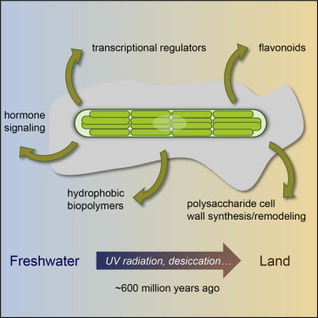
The evolutionary features and molecular innovations that enabled plants to first colonize land are not well understood. Here, insights are provided through our report of the genome sequence of the unicellular alga Penium margaritaceum, a member of the Zygnematophyceae, the sister lineage to land plants. The genome has a high proportion of repeat sequences that are associated with massive segmental gene duplications, likely facilitating neofunctionalization. Compared with representatives of earlier diverging algal lineages, P. margaritaceum has expanded repertoires of gene families, signaling networks, and adaptive responses that highlight the evolutionary trajectory toward terrestrialization. These encompass a broad range of physiological processes and protective cellular features, such as flavonoid compounds and large families of modifying enzymes involved in cell wall biosynthesis, assembly, and remodeling. Transcriptome profiling further elucidated adaptations, responses, and selective pressures associated with the semi-terrestrial ecosystems of P. margaritaceum, where a simple body plan would be an advantage.
|
|
Scooped by
Jean-Michel Ané
May 26, 2020 10:36 AM
|
The mutualistic association between leguminous plants and endosymbiotic rhizobial bacteria is a paradigmatic example of a symbiosis driven by metabolic exchanges. Here, we report the reconstruction and modelling of a genome-scale metabolic network of Medicago truncatula (plant) nodulated by Sinorhizobium meliloti (bacterium). The reconstructed nodule tissue contains five spatially distinct developmental zones and encompasses the metabolism of both the plant and the bacterium. Flux balance analysis (FBA) suggests that the metabolic costs associated with symbiotic nitrogen fixation are primarily related to supporting nitrogenase activity, and increasing N2-fixation efficiency is associated with diminishing returns in terms of plant growth. Our analyses support that differentiating bacteroids have access to sugars as major carbon sources, ammonium is the main nitrogen export product of N2-fixing bacteria, and N2 fixation depends on proton transfer from the plant cytoplasm to the bacteria through acidification of the peribacteroid space. We expect that our model, called ‘Virtual Nodule Environment’ (ViNE), will contribute to a better understanding of the functioning of legume nodules, and may guide experimental studies and engineering of symbiotic nitrogen fixation.
|
|
Scooped by
Jean-Michel Ané
May 25, 2020 9:29 PM
|
Testing of ecological, biogeographical and phylogenetic hypotheses of mycorrhizal traits requires a comprehensive reference dataset about plant mycorrhizal associations.
Here we present a database, FungalRoot, which summarizes publicly available data about vascular plant mycorrhizal type and intensity of root colonization by mycorrhizal fungi, accompanied with rich metadata. We compiled and digitized data about plant mycorrhizal colonization in nine widespread languages.
The present version of the FungalRoot database contains 36 303 species‐by‐site observations for 14 870 plant species, tripling the previously available compiled information about plant mycorrhizal associations. Based on these data, we provide a recommended list of genus‐level plant mycorrhizal associations, based on the majority of data for species and careful analysis of conflicting data. The majority of ectomycorrhizal and ericoid mycorrhizal plants are trees (92%) and shrubs (85%), respectively. The majority of arbuscular and nonmycorrhizal plant species are herbaceous (50% and 70%, respectively).
Our publicly available database is a powerful resource for mycorrhizal scientists and ecologists. It features possibilities for dynamic updating and addition of data about plant mycorrhizal associations. The new database will promote research on plant and fungal biogeography and evolution, and on links between above‐ and belowground biodiversity and ecosystem functioning.
|
|
Scooped by
Jean-Michel Ané
May 25, 2020 10:16 AM
|
On legume crops, formation of developmentally mature nodules is a prerequisite to efficient nitrogen fixation by populations of rhizobial bacteroids established inside nodule cells. Development of root nodules and concomitant microbial colonisation of plant cells are constrained by sets of recognition signals exchanged by infecting rhizobia and their legume hosts, with much of the specificity of symbiotic interactions being determined by the flavonoid cocktails released by legume roots and the strain-specific nodulation factors (NFs) secreted by rhizobia. Hence, much of Sinorhizobium fredii strain NGR234 symbiotic promiscuity was thought to stem from a family of >80 structurally diverse NFs and associated nodulation keys in the form of secreted effector proteins and rhamnose-rich surface polysaccharides. Here, we show instead that a mini-symbiotic plasmid (pMiniSym2) carrying only the nodABCIJ, nodS and nodD1 genes of NGR234 conferred promiscuous nodulation to ANU265, a derivative strain cured of the large symbiotic plasmid pNGR234a. The ANU265::pMiniSym2 transconjugant triggered nodulation responses on 12 of the 17 legumes we tested. On roots of Macroptilium atropurpureum, Leucaena leucocephala and Vigna unguiculata, ANU265::pMiniSym2 formed mature-like nodule and successfully infected nodule cells. While cowpea and siratro responded to nodule colonisation with defence responses that eventually eliminated bacteria, L. leucocephala formed leghemoglobin-containing mature-like nodules inside which the pMiniSym2 transconjugant established persistent intracellular colonies. This data shows seven nodulation genes of NGR234 suffice to trigger nodule formation on roots of many hosts and to establish chronic infections in Leucaena cells. View Full-Text
|
|
Scooped by
Jean-Michel Ané
May 23, 2020 7:59 PM
|
|
|
Scooped by
Jean-Michel Ané
May 23, 2020 7:57 PM
|
The mutualistic symbiosis of most land plants with arbuscular mycorrhizal (AM) fungi has been shown to favor mineral and water nutrition and to increase resistance to abiotic and biotic stresses. The main mechanisms involved in the control of the disease symptoms and intraradical proliferation of soilborne phytopathogens are due to root colonization with AM fungi. The role of the rhizobacteria is shown to be specifically associated with extraradical network of the AM and mycorrhizosphere. The mycorrhizosphere can form a favorable environment for microorganisms which have potentiality to act antagonistic to pathogen abundance. It makes an additional advantage in identifying rhizobacteria from AM fungi structures or mycorrhizosphere, which often lead to the isolation of organisms having strong properties of antagonism on various soilborne pathogens. The ability of AM fungi to control soilborne diseases is mainly related to their capacity to stimulate the establishment of rhizobacteria against the favorable environment of pathogen within the mycorrhizosphere prior to the root infection. Recent advancement in scientific research has provided more clear picture in understanding the mechanisms involved in AM fungi/rhizobacteria interactions. Herein, this chapter includes the mechanisms of the AM fungi-mediated biocontrol, interactions between AM-associated bacteria and AM fungus extraradical network, AM-associated bacteria and biocontrol activities and unfavorable zone to pathogen development: the mycorrhizosphere.
|
|
|
Scooped by
Jean-Michel Ané
June 4, 2020 5:02 PM
|
Nodulation process in legume plants is essential for biological nitrogen fixation during which process a large amount of phosphorus (P) is required. Under P deficiency, nodule formation is greatly affected, and induction of purple acid phosphatases (PAPs) is an adaptive strategy for nodules to acquire more P. However, regulation roles of PAPs in nodules remain largely understood. In this study, by transcriptome sequencing technology, five PAP genes were found to be differentially expressed, which led to the greatly increased acid phosphatase (APase) and phytase activities in soybean mature nodules under P starvation conditions; and among the five PAP genes, GmPAP12 had the highest transcript level, and RT-PCR indicated expression of GmPAP12 was gradually increasing during nodule development. GUS activity driven by GmPAP12 promoter was also significantly induced in low phosphorus conditions. Further functional analysis showed that under low phosphorus stress, overexpression of GmPAP12 resulted in higher nodule number, fresh weight, and nitrogenase activity as well as the APase activity than those of control plant nodules, whereas the growth performance and APase activity of nodules on hairy roots were greatly lower when GmPAP12 was suppressed, indicating that GmPAP12 may promote P utilization in soybean nodules under low P stress, which thus played an important role in nodulation and biological nitrogen fixation. Moreover, P1BS elements were found in the promoter of GmPAP12, and yeast one-hybrid experiment further proved the binding of P1BS by transcription factor GmPHR1 in the promoter of GmPAP12. At last, overexpression and suppression of GmPHR1 in nodules indeed caused highly increased and decreased expression of GmPAP12, respectively, indicating that GmPAP12 is regulated by GmPHR1 in soybean nodules. Taken together, these data suggested that GmPAP12 was a novel soybean PAP involved in the P utilization and metabolism in soybean root nodules and played an important role in the growth and development of root nodules and biological nitrogen fixation.
|
|
Scooped by
Jean-Michel Ané
June 4, 2020 4:58 PM
|
An increase in nutrient dose leads to proportional increases in crop biomass and agricultural yield. However, the molecular underpinnings of this nutrient dose–response are largely unknown. To investigate, we assayed changes in the Arabidopsis root transcriptome to different doses of nitrogen (N)—a key plant nutrient—as a function of time. By these means, we found that rate changes of genome-wide transcript levels in response to N-dose could be explained by a simple kinetic principle: the Michaelis–Menten (MM) model. Fitting the MM model allowed us to estimate the maximum rate of transcript change (Vmax), as well as the N-dose at which one-half of Vmax was achieved (Km) for 1,153 N-dose–responsive genes. Since transcription factors (TFs) can act in part as the catalytic agents that determine the rates of transcript change, we investigated their role in regulating N-dose–responsive MM-modeled genes. We found that altering the abundance of TGA1, an early N-responsive TF, perturbed the maximum rates of N-dose transcriptomic responses (Vmax), Km, as well as the rate of N-dose–responsive plant growth. We experimentally validated that MM-modeled N-dose–responsive genes included both direct and indirect TGA1 targets, using a root cell TF assay to detect TF binding and/or TF regulation genome-wide. Taken together, our results support a molecular mechanism of transcriptional control that allows an increase in N-dose to lead to a proportional change in the rate of genome-wide expression and plant growth.
|
|
Scooped by
Jean-Michel Ané
June 4, 2020 4:43 PM
|
The increasing interest and demand of Ocimum tenuiflorum L. and its products in different industrial sectors necessitate appropriate cultural practices for cultivation of the plant with increased herbage and essential oil yield. Studies on O. tenuiflorum in relation to arbuscular mycorrhiza are restricted to evaluation of diversity of the mycorrhizal fungi in its rhizosphere or assessment of the ability of different species to colonize its roots. Hence, the present study aimed to assess the effect of arbuscular mycorrhizal fungus (Rhizophagus intraradices) inoculation on the pharmaceutically desired parameters of two high yielding genotypes of O. tenuiflorum. Colonization by R. intraradices fungus resulted in significant increase in the leaf biomass and concentration of essential oil in both the genotypes. Formation of arbuscular mycorrhiza resulted in up to 59.01 % and 86.95 % increase in essential oil concentration in mycorrhizal genotype A and B plants, respectively, in comparison with control. The characterization of essential oils by Gas Chromatography-Mass Spectrometry showed significant effect of arbuscular mycorrhiza on their chemical profile. A total of 23 and 37 compounds were identified in essential oils of control genotype A and B, respectively, while 21 and 34 compounds were detected in essential oils of their respective mycorrhizal counterparts. Concentration of eugenol (a valued phenylpropanoid), and other medicinally important terpenoids (β-elemene, β-caryophyllene, germacrene A, and germacrene D) increased in essential oils of mycorrhizal plants.While genotype and mycorrhizal interaction significantly influenced biomass and essential oil concentration in leaves, the effect of R. intraradices on concentration of eugenol, β-elemene, and β-caryophyllene did not vary between the two genotypes. Additionally, principal component analysis also highlighted that the volatiles common in the essential oil of the four treatments contributed significantly to the variation in the essential oil composition. Phenol, flavonoid, and polyphenol contents in the leaves were also enhanced on formation of arbuscular mycorrhiza. The study also aimed to evaluate the ability of leaves (fresh and processed) to scavenge reactive oxygen and nitrogen species. Arbuscular mycorrhiza augmented the antioxidant capacity of fresh and processed leaves of both the genotypes. Thus, findings of the study demonstrate that R. intraradices inoculation enhances productivity of O. tenuiflorum and also improves the quality of the products.
|
|
Scooped by
Jean-Michel Ané
June 4, 2020 4:36 PM
|
The present study aimed to investigate the effects of arbuscular mycorrhizal (AM) fungal communities originating from organic and conventional agriculture on wheat growth and yield. Six different spring wheat cultivars released in different years in north and central European countries were considered. We hypothesised that AM fungal inoculum collected from organic agricultural fields would elicit a greater positive growth response than inoculum collected from conventional agricultural fields; and that older cultivars, which were developed under conditions of low fertilizer input, would exhibit overall greater growth responses to the presence of AM fungi, compared with more recent cultivars, and that AM fungal inoculum from conventional fields might have the most beneficial effect on the growth and yield of recent cultivars. The results showed that the overall effects on the growth and yield of spring wheat grown with organic and conventional AM fungal inocula did not differ greatly. However, the inoculation growth response, showing the difference of the effects of organic and conventional inocula, varied between particular wheat cultivars. Inoculation growth response of the cultivar Pikker (released in 1959) was the most positive, while that of the cultivar Arabella (released in 2012) was the most negative. The use of AM fungal inoculum from organic fields resulted in slightly taller plant individuals. Pikker showed relatively higher yield and stronger growth when the organic AM fungal inoculum was used. Arabella exhibited relatively lower yield and weaker growth when the organic inoculum was used. Whether the positive response of Pikker to Estonian organic inoculation reflects adaptation to the locally occurring AM fungal community needs to be established by further studies of the communities of AM fungi colonizing wheat roots.
|
|
Scooped by
Jean-Michel Ané
May 30, 2020 11:48 AM
|
Transcription factors (TFs) are essential for plant growth and development. Several legumes (e.g. soybean) are rich sources of protein and oil and have great economic importance. Here we report a phylogenomic analysis of TF families in legumes and their potential association with important traits (e.g. nitrogen fixation). We used TF DNA‐binding domains to systematically screen the genomes of 15 leguminous and five non‐leguminous species. Transcription factor orthologous groups (OGs) were used to estimate OG sizes in ancestral nodes using a gene birth–death model, which allowed the identification of lineage‐specific expansions. The OG analysis and rate of synonymous substitutions show that major TF expansions are strongly associated with whole‐genome duplication (WGD) events in the legume (approximately 58 million years ago) and Glycine (approximately 13 million years ago) lineages, which account for a large fraction of the Phaseolus vulgaris and Glycine max TF repertoires. Of the 3407 G. max TFs, 1808 and 676 have homeologs within single syntenic regions in Phaseolus vulgaris and Vitis vinifera , respectively. We found a trend for TFs expanded in legumes to be preferentially transcribed in roots and nodules, supporting their recruitment early in the evolution of nodulation in the legume clade. Some families also showed count differences between G. max and the wild soybean Glycine soja, including genes located within important quantitative trait loci. Our findings strongly support the roles of two WGDs in shaping the TF repertoires in the legume and Glycine lineages, and these are probably related to important aspects of legume and soybean biology.
|
|
Scooped by
Jean-Michel Ané
May 29, 2020 9:54 AM
|
Synchronous and timely regulation of multiple genes result in an effective defense response that decide the fate of the host when challenged with pathogens or unexpected changes in environmental conditions. One such gene, which is downregulated in response to multiple bacterial pathogens, is a putative nonspecific lipid transfer protein (nsLTP) of unknown function that we have named DISEASE RELATED NONSPECIFIC LIPID TRANSFER PROTEIN 1 (DRN1). We show that upon pathogen challenge, DRN1 is strongly downregulated, while a putative DRN1 targeting novel microRNA (miRNA) named DRN1 Regulating miRNA (DmiR) is reciprocally upregulated. Furthermore, we provide evidence that DRN1 is required for defense against bacterial and fungal pathogens as well as for normal seedling growth under salinity stress. Although nsLTP family members from different plant species are known to be a significant source of food allergens and are often associated with antimicrobial properties, our knowledge on the biological functions and regulation of this gene family is limited. Our current work not only sheds light on the mechanism of regulation but also helps in the functional characterization of DRN1, a putative nsLTP family member of hitherto unknown function.
|
|
Scooped by
Jean-Michel Ané
May 26, 2020 12:39 PM
|
The aim of this work was to summarize the most recent research focused on the study of plant–arbuscular mycorrhizal fungi (AMF) symbiosis, both in a generic context and in the specific context of wheat cultivation. Taking into account the last 20 years, the most significant studies on the main plant advantages taken from this association are reviewed herein. Positive advances that have been reported stem from the mutualistic relationship between the plant and the mycorrhizal fungus, revealing better performance for the host in terms of nutrient uptake and protection from salinity, lack of water, and excess phytotoxic elements. Mycorrhiza studies and the recent progress in research in this sector have shown a possible solution for environmental sustainability: AMF represent a valid alternative to overcome the loss of biological fertility of soils, reduce chemical inputs, and alleviate the effects of biotic and abiotic stress.
|
|
Scooped by
Jean-Michel Ané
May 26, 2020 12:15 PM
|
Most plants are usually colonized with arbuscular mycorrhiza fungi (AMF) in the fields. AMF absorb mineral nutrients, especially phosphate, from the soil and transfer them to the host plants. Inoculation with exotic AMF is thought to be effective when indigenous AMF performance is low; however, there is no method for evaluating the performance of indigenous AMF. In this study, we developed a method to investigate the performance of indigenous AMF in promoting plant growth. As Lotus japonicus mutant (str) that are unable to form functional mycorrhizal roots were considered to be symbiosis negative for indigenous mycorrhizal performance, we examined the growth ratios of wild-type and str mycorrhizal mutant using 24 soils. Each soil had its own unique indigenous mycorrhizal performance, which was not directly related to the colonization level of indigenous AMF or soil phosphate level. The low indigenous mycorrhizal performance could not be compensated by the inoculation of exotic AMF. Importantly, indigenous mycorrhizal performance was never negative; however, the inoculation of exotic AMF into the same soil led to both positive and negative performances. These results suggest that indigenous mycorrhizal performance is affected by soil management history and is basically harmless to the plant.
|
|
Scooped by
Jean-Michel Ané
May 26, 2020 10:23 AM
|
Legume nodules have two types of hemoglobins: symbiotic or leghemoglobins (Lbs) and nonsymbiotic or phytoglobins (Glbs). The latter are categorized into three phylogenetic classes differing in heme coordination and O2 affinity. This review is focused on the roles of Lbs and Glbs in the symbiosis of rhizobia with crop legumes and the model legumes for indeterminate (Medicago truncatula ) and determinate (Lotus japonicus ) nodulation. Only two hemoglobin functions are well established in nodules: Lbs deliver O2 to the bacteroids and act as O2 buffers, preventing nitrogenase inactivation; and Glb1‐1 modulates nitric oxide concentration during symbiosis, from the early stage, avoiding the plant's defense response, to nodule senescence. Here, we critically examine early and recent results, update and correct the information on Lbs and Glbs with the latest genome versions, provide novel expression data, and identify targets for future research. Crucial unresolved questions include the expression of multiple Lbs in nodules, their presence in the nuclei and in uninfected nodule cells, and, intriguingly, their expression in nonsymbiotic tissues. RNA‐sequencing data analysis show that Lbs are expressed as early as a few hours after inoculation and that their mRNAs are also detectable in roots and pods, which clearly suggests that these heme proteins play additional roles unrelated to nitrogen fixation. Likewise, issues awaiting investigation are the functions of other Glbs in nodules, the spatiotemporal expression profiles of Lbs and Glbs at the mRNA and protein levels, and the molecular mechanisms underlying their regulation during nodule development and in response to stress and hormones.
|
|
Scooped by
Jean-Michel Ané
May 25, 2020 10:22 AM
|
Azospirillum is one of the most studied plant growth-promoting bacteria (PGPB); it represents a common model for plant-bacterial interactions. While Azospirillum brasilense is the species that is most widely known, at least 22 species, including 17 firmly validated species, have been identified, isolated from agricultural soils as well as habitats as diverse as contaminated soils, fermented products, sulfide springs, and microbial fuel cells. Over the last 40 years, studies on Azospirillum-plant interactions have introduced a wide array of mechanisms to demonstrate the beneficial impacts of this bacterium on plant growth. Multiple phytohormones, plant regulators, nitrogen fixation, phosphate solubilization, a variety of small-sized molecules and enzymes, enhanced membrane activity, proliferation of the root system, enhanced water and mineral uptake, mitigation of environmental stressors, and competition against pathogens have been studied, leading to the concept of the Multiple Mechanisms Hypothesis. This hypothesis is based on the assumption that no single mechanism is involved in the promotion of plant growth; it posits that each case of inoculation entails a combination of a few or many mechanisms. Looking specifically at the vast amount of information about the stimulatory effect of phytohormones on root development and biological nitrogen fixation, the Efficient Nutrients Acquisition Hypothesis model is proposed. Due to the existence of extensive agriculture that covers an area of more than 60 million hectares of crops, such as soybeans, corn, and wheat, for which the bacterium has proven to have some agronomic efficiency, the commercial use of Azospirillum is widespread in South America, with over 100 products already in the market in Argentina, Brazil, and Uruguay. Studies on Azospirillum inoculation in several crops have shown positive and variable results, due in part to crop management practices and environmental conditions. The combined inoculation of legumes with rhizobia and Azospirillum (co-inoculation) has become an emerging agriculture practice in the last several years, mainly for soybeans, showing high reproducibility and efficiency under field conditions. This review also addresses the use of Azospirillum for purposes other than agriculture, such as the recovery of eroded soils or the bioremediation of contaminated soils. Furthermore, the synthetic mutualistic interaction of Azospirillum with green microalgae has been developed as a new and promising biotechnological application, extending its use beyond agriculture.
|
|
Scooped by
Jean-Michel Ané
May 23, 2020 8:08 PM
|
Mycorrhizal fungi are critical components of terrestrial habitats and agroecosystems. Recently, Mucoromycotina fine root endophyte (MucFRE) fungi were found to engage in nutritional mutualism with the rare plant Lycopodiella inundata (‘marsh clubmoss’), one of the earliest vascular plant lineages known to associate with MucFRE. The extent to which this mutualism plays a role in resilient plant populations can only be understood by examining its occurrence rate and phenological patterns.
To test for prevalence and seasonality in colonization, we examined 1,297 individual L. inundata roots collected during spring and autumn 2019 from 11 semi-natural heathlands in Britain and the Netherlands. We quantified presence/absence of MucFRE-like hyphae and vesicles and explored possible relationships between temperature and precipitation in the months immediately before sampling.
MucFRE-like hyphae were the dominant mycorrhizal fungi observed in all of the examined heathlands. However, we found significant differences in colonization between the two seasons at every site. Overall, 14% of L. inundata roots were colonised in spring (2.4% with vesicles) compared with 86% in autumn (7.6% with vesicles). Colonization levels between populations were also significantly different, and correlated with temperature and precipitation, suggesting some local environments may be more conducive to hyphal growth.
These marked seasonal differences in host-plant colonization suggest that results about mycorrhizal status - typically drawn from single time point collections - should be carefully interpreted. Our findings are directly relevant to habitat restoration, species conservation plans, agricultural bio-inoculation nutrient enhancement treatments, microbial diversity and functional studies of host plants and symbionts.
|
|
Scooped by
Jean-Michel Ané
May 23, 2020 7:57 PM
|
Plants are surrounded by microbes, but only a small number of microbes have evolved an intimate, endosymbiotic association, in which they live inside host cells. Root symbioses are important sources of nutrition for plants and microbes alike, with over 80% of all terrestrial plants forming intracellular symbioses with arbuscular mycorrhizal fungi. This Research Topic explores the evolutionary links between different plant root endosymbioses, focusing specifically on the evolution of signaling in four: the very ancient arbuscular mycorrhizae, the more recent ericoid mycorrhizae, and root nodules formed with nitrogen-fixing soil bacteria, either with Frankia (in actinorhizal nodulation) or rhizobia (in rhizobium-legume nodulation) (Genre and Russo, 2016). In each case, symbiosis is initiated after signal exchange between the two partners that ultimately leads to the plant hosting the microbes inside plant cells, requiring changes in plant host development and physiology (Geurts et al., 2016; MacLean et al., 2017). During establishment of the endosymbiosis, continued signal exchange between host and microbe functions to fine-tune the interaction.
|