 Your new post is loading...

|
Scooped by
Jean-Michel Ané
October 20, 2020 9:35 PM
|
In both animals and plants, the perception of bacterial flagella by immune receptors elicits the activation of defence responses. Most plants are able to perceive the highly conserved epitope flg22 from flagellin, the main flagellar protein, from most bacterial species. However, flagellin from Ralstonia solanacearum, the causal agent of the bacterial wilt disease, presents a polymorphic flg22 sequence (flg22Rso) that avoids perception by all plants studied to date. In this work, we show that soybean has developed polymorphic versions of the flg22 receptors that are able to perceive flg22Rso. Furthermore, we identify key residues responsible for both the evasion of perception by flg22Rso in Arabidopsis and the gain of perception by the soybean receptors. Heterologous expression of the soybean flg22 receptors in susceptible plant species, such as tomato, enhances resistance to bacterial wilt disease, demonstrating the potential of these receptors to enhance disease resistance in crop plants.
|
|
Scooped by
Jean-Michel Ané
October 20, 2020 4:00 PM
|
Nitrogen is an essential nutrient required by all plants. Although the earth’s atmosphere consists of approximately 78% nitrogen, it exists in an unusable form for plants. Current agricultural practices rely on industrial nitrogen fixation to produce fertilizers that improve crop productivity. However, this method requires the use of precious natural resources and can cause a variety of negative impacts on the environment and human health. Biologically fixed nitrogen is a favorable alternative accessible to leguminous plants through their symbiotic relationship with soil bacteria called rhizobia. Genetic studies aimed at identifying plant genes related to successful nodulation and nitrogen fixation are underway to help better understand this infection process and improve the performance of legumes in agriculture. To date, over 21,000 Tnt1 mutant lines of Medicago truncatula, a model legume used for genetic research, have been created. Several lines displaying defects in symbiotic nitrogen fixation (SNF) have been identified and are referred to as Fix- mutants. In this research, segregation analysis of the Fix- mutant NF18598 indicated loss of SNF function could be governed by a dominant mutation. A total of 114 Tnt1 insertions were identified in the NF18598 genome using three different sequencing methods. Tnt1-capture sequencing (SC) found the largest number of insertions (70) while the other two methods, thermal asymmetric interlaced PCR (TAIL-PCR) and whole genome sequencing (WGS), found a similar number of insertions (40 and 41, respectively). It was found that 50% of the insertions were located in coding regions. One of the Tnt1 insertions located on chromosome 5 is found within the exon of a phosphatase 2C family protein gene (Medtr5g009370) and is upregulated in nodules. While there was a significant SNF association with Medtr5g009370 in the R1 generation, this association was not detected in the R2 generation. Light microscopy analysis of nodules displayed clear differences between mutant samples identified as either Fix+ or Fix-. The Fix- mutant nodules displayed some cellular organization but distinct developmental zones could not be identified. Infection threads were observed in Fix- nodules that appeared to contain bacteria that had not been released; however, further microscopy analysis must be conducted to verify the presence of rhizobia. In addition, further research involving a larger sample population would help verify if the insertion located in Medtr5g009370 is responsible for the defective nodule phenotype observed and if the phosphatase gene is involved in symbiotic nitrogen fixation.
|
|
Scooped by
Jean-Michel Ané
October 20, 2020 3:56 PM
|
Legumes utilize a shoot-mediated signaling system to maintain a mutualistic relationship with nitrogen-fixing bacteria in root nodules. In Lotus japonicus, shoot-to-root transfer of microRNA miR2111 that targets TOO MUCH LOVE, a nodulation suppressor in roots, has been proposed to explain the mechanism underlying nodulation control from shoots. However, the role of shoot-accumulating miR2111s for the systemic regulation of nodulation was not clearly shown. Here, we find L. japonicus has seven miR2111 loci, including those mapped through RNA-seq. MIR2111-5 expression in leaves is the highest among miR2111 loci and repressed after rhizobial infection depending on a shoot-acting HYPERNODULATION ABERRANT ROOT FORMATION1 (HAR1) receptor. MIR2111-5 knockout mutants show significantly decreased nodule numbers and miR2111 levels. Furthermore, grafting experiments using transformants demonstrate scions with altered miR2111 levels influence nodule numbers in rootstocks in a dose-dependent manner. Therefore, miR2111 accumulation in leaves through MIR2111-5 expression is required for HAR1-dependent systemic optimization of nodule number.
|
|
Scooped by
Jean-Michel Ané
October 20, 2020 3:49 PM
|
Arbuscular mycorrhizal fungi (AMF) is the most common type of AMF association colonizing the rhizosphere of soybean [Glycine max (L.) Merrill] plants. However, the extent of AMF formation, AMF species composition and diversity at different stages of soybean penology have not yet studied. The current study was aimed to determine AMF species community composition, species distribution and its affinity in the rhizosphere soil of soybean at the different growth stages of soybean. Root and rhizosphere soil samples were collected at different growth stage pre-sowing, nodulation, maturation and harvesting stage from soybean (cultivar JS-335) and were analysed for AMF root colonization, spore diversity, species richness, and relative occurrence of AMF species. The AMF species principally contributing to the crop growth stage was also examined through principal component analysis (PCA). The extent of root length colonized by native AMF (mainly formed arbuscules) in soybean roots was higher at maturation (79.76%) and lowest (25.33%) at nodulation stages, whereas the spore density showed opposite trend. Irrespective of growth stages, a total of 40 AMF morphotypes were observed from which species, viz. Glomus aggregatum, Rhizophagus fasciculatum, Glomus coronatum, Glomus etunicatum, Glomus sp (76.92%), were found to be the most frequent and abundant species followed by species of Acaulospora (12.82%) and Gigaspora (10.25%). The Shannon–Weaver index was the range of 3.22, whereas Simpson’s index was 0.95, which indicates the higher diversity of AMF at pre-sowing. The PCA explains the maximum contribution of all AMF species observed at pre-sowing followed by harvesting concludes that AMF diversity and colonization pattern are greatly affected with the soybean phenological growth stages where rhizosphere was found to be mainly dominated by Glomus morphotypes than the Acaulospora and Gigaspora; hence these can be selected for further exploitation in soybean.
|
|
Scooped by
Jean-Michel Ané
October 20, 2020 3:43 PM
|
Symbiotic nitrogen fixation requires the transfer of fixed organic nitrogen compounds from the symbiotic bacteria to a host plant, yet the chemical nature of the compounds is in question. Bradyrhizobium diazoefficiens bacteroids were isolated anaerobically from soybean nodules and assayed at varying densities, varying partial pressures of oxygen, and varying levels of l-malate. Ammonium was released at low bacteroid densities and high partial pressures of oxygen, but was apparently taken up at high bacteroid densities and low partial pressures of oxygen in the presence of l-malate; these later conditions were optimal for amino acid excretion. The ratio of partial pressure of oxygen/bacteroid density of apparent ammonium uptake and of alanine excretion displayed an inverse relationship. Ammonium uptake, alanine and branch chain amino acid release were all dependent on the concentration of l-malate displaying similar K0.5 values of 0.5 mM demonstrating concerted regulation. The hyperbolic kinetics of ammonium uptake and amino acid excretion suggests transport via a membrane carrier and also suggested that transport was rate limiting. Glutamate uptake displayed exponential kinetics implying transport via a channel. The chemical nature of the compounds released were dependent upon bacteroid density, partial pressure of oxygen and concentration of l-malate demonstrating an integrated metabolism.
|
|
Scooped by
Jean-Michel Ané
October 17, 2020 9:54 PM
|
Environmental change as result of urbanisation can influence soil microbial communities in green areas. In cities, forests are among the most frequent types of green areas and provide a wide variety of ecosystem services for the residents, such as air cleaning, nutrient cycling and area for recreational activities. Mycorrhizal fungi play an important role for the establishment of trees and therefore for the natural regeneration of forests. We examined the effect of urbanisation on the arbuscular mycorrhizal (AM) fungal symbiosis and performance of Acer pseudoplatanus saplings in a controlled field experiment in forests situated in the city of Basel and its suburbs in Switzerland. A total of 660 one-year-old A. pseudoplatanus saplings were planted in plots in 11 forests, which differed in degree of urbanisation in the surroundings and size. Saplings including their full root systems were harvested after 4, 6 and 13 months. AM fungal colonisation was 15–45% lower on roots of saplings growing in forests located in areas with a high degree of urbanisation than that on sapling roots in forests in less urbanised areas. Furthermore, AM fungal colonisation of saplings decreased with decreasing forest size. Sapling survival was not influenced by urbanisation, but by forest size. In particular, sapling survival was reduced in small and medium-sized forests. Sapling survival also increased with increasing percentage of AM fungal colonisation after 13 months. These urbanisation- and forest-size induced changes became more pronounced with the time elapsed since the saplings were planted. Our findings demonstrate the negative impact of urbanisation on AM fungal symbiosis and the performance of A. pseudoplatanus saplings and indicate that urbanisation is a threat for the long-term maintenance of intact small urban forests.
|
|
Scooped by
Jean-Michel Ané
October 17, 2020 9:51 PM
|
NifB is an essential radical SAM enzyme for the assembly of an 8Fe core of the nitrogenase cofactor. Here we report the crystal structures of Methanobacterium thermoautotrophicum NifB without (apo Mt NifB) and with (holo Mt NifB) a full complement of three [Fe4S4] clusters. Both apo and holo Mt NifB contain a partial TIM barrel core; yet, unlike apo Mt NifB that is structurally disordered outside the TIM barrel, holo Mt NifB is fully assembled and competent in cofactor biosynthesis. Of the three [Fe4S4] clusters in holo Mt NifB, the canonical radical SAM (RS)‐cluster, like those in other radical SAM enzymes, is coordinated by three Cys ligands; whereas the adjacently positioned K1‐ and K2‐clusters, representing the precursor to an 8Fe cofactor core, are each coordinated by one His and two Cys ligands. Prediction of substrate channels, combined with in silico docking of SAM in holo Mt NifB, suggests plausible binding of SAM between the RS‐ and K2‐clusters and putative paths for entry of SAM and exit of products of SAM cleavage, thereby providing important mechanistic insights into the radical SAM‐dependent carbide insertion concomitant with cofactor core formation.
|
|
Scooped by
Jean-Michel Ané
October 17, 2020 8:28 PM
|
This study investigates the impact of Glomus mosseae on heavy metal(loid) (HM) uptake efficiency of pea (Pisum sativum L.) plants along with physiological and biochemical parameters. Plants were grown in soil spiked with HMs (Pb and As: 50 and 100 mg kg−1; Cd: 25 and 50 mg kg−1) and a multi-metal(loid) (Mm: Pb + Cd + As) combination, inoculated/non-inoculated with G. mosseae. A dose-dependent increase in HM accumulation was observed in plants upon harvest at 60 days. Plant growth, concentration of photosynthetic pigments, total nitrogen, and carbohydrates reduced, whereas enzymatic [catalase (CAT), superoxide dismutase (SOD), and ascorbate peroxidase (APX)] and non-enzymatic (proline and total phenolics) antioxidants increased upon HM stress. Inoculation with G. mosseae led to an increase in plant growth, concentration of photosynthetic pigments, carbohydrate, nitrogen, and defence antioxidants (whereas proline decreased) which was statistically significant (p ≤ 0.05). This symbiosis can be applied for onsite remediation of Pb and Cd contaminated soil by virtue of accumulation efficiency and adaptive response of pea plants inoculated with G. mosseae. Since the amount of HMs in edible parts exceeded the maximum permissible limits recommended by FAO/WHO, pea must not be cultivated in HM-contaminated soil for agricultural purpose due to associated toxicity.
|
|
Scooped by
Jean-Michel Ané
October 17, 2020 8:18 PM
|
The bacterial communities inhabiting the rhizosphere play an important role in plant development and health. Here we studied the effect of inoculation with Pseudomonas fluorescens LBUM677, a plant growth promoting rhizobacterium that promotes seed oil accumulation, on the rhizosphere microbiome of three oilseed crops (Brassica napus, Buglossoides arvensis, and Glycine max) over time. Next-Generation high-throughput sequencing targeting the V4 region of 16S rDNA was used to characterize the microbial communities associated with the three different crops, inoculated or not with LBUM677, over a time period of up to 90 days post-inoculation. A total of 1,627,231 amplicon sequence variants were obtained and were taxonomically grouped into 39 different phyla. LBUM677 inoculation and sampling date were found to significantly influence the rhizosphere microbiome of the three oil-producing crops under study. Specifically, inoculation with LBUM677 and sampling date, but not the plant species, were found to significantly alter the alpha- and the beta-diversity of the rhizosphere microbial communities. Differential abundance analyses found that 29 taxonomical bacterial groups were significantly more abundant in the LBUM677 treatments while 30 were significantly more abundant in the control treatments. Predicted functions of the microorganisms were also enriched, including 47 enzymatic pathways in LBUM677 treatments. These non-targeted effects on rhizosphere bacterial communities are discussed in the context of oilseed crops.
|
|
Scooped by
Jean-Michel Ané
October 17, 2020 6:07 PM
|
Chitooligosaccharides has attracted increasing attention due to their diverse bioactivities and potential application. Previous studies on the bioactivity of chitooligosaccharides were mostly carried out using a mixture. The structure-function relationship of chitooligosaccharides is not clear. Recently, it is confirmed that chitooligosaccharides with different degrees of polymerization play different roles in many bioactivities. However, heterogeneous chitooligosaccharides with a single degree of polymerization is still a mixture of many uncertain sequences and it is difficult to determine which structure is responsible for biological effects. Therefore, an interesting and challenging field of studying chitooligosaccharides with heterogeneous sequences has emerged. Herein, we reviewed the current methods for preparing heterogeneous chitooligosaccharides, including chemical synthesis, separation techniques and enzymatic methods. Advances in the bioactivities of chitooligosaccharides with heterogeneous sequences are also reviewed.
|
|
Scooped by
Jean-Michel Ané
October 17, 2020 6:02 PM
|
Mycorrhizal fungi are mutualists that play crucial roles in nutrient acquisition in terrestrial ecosystems. Mycorrhizal symbioses arose repeatedly across multiple lineages of Mucoromycotina, Ascomycota, and Basidiomycota. Considerable variation exists in the capacity of mycorrhizal fungi to acquire carbon from soil organic matter. Here, we present a combined analysis of 135 fungal genomes from 73 saprotrophic, endophytic and pathogenic species, and 62 mycorrhizal species, including 29 new mycorrhizal genomes. This study samples ecologically dominant fungal guilds for which there were previously no symbiotic genomes available, including ectomycorrhizal Russulales, Thelephorales and Cantharellales. Our analyses show that transitions from saprotrophy to symbiosis involve (1) widespread losses of degrading enzymes acting on lignin and cellulose, (2) co-option of genes present in saprotrophic ancestors to fulfill new symbiotic functions, (3) diversification of novel, lineage-specific symbiosis-induced genes, (4) proliferation of transposable elements and (5) divergent genetic innovations underlying the convergent origins of the ectomycorrhizal guild.
|
|
Scooped by
Jean-Michel Ané
October 15, 2020 9:47 PM
|
Cellulosic bioenergy crops, like switchgrass (Panicum virgatum), have potential for growth on lands unsuitable for food production coupled with potential for climate mitigation. Sustainability of these systems lies in identifying conditions that promote high biomass yields on marginal lands under low-input agricultural practices. Associative nitrogen fixation (ANF) is a potentially important nitrogen (N) source for these crops, yet ANF contributions to plant N, especially under fertilizer N addition are unclear. In this study, we assess structure (nifH) and function (ANF) of switchgrass root-associated diazotrophic communities to long-term and short-term N additions using soil from three marginal land sites. ANF rates were variable and often unexpectedly high, sometimes 10x greater than reported in the literature, and did not respond in repeatable ways to long-term or short-term N. We found few impacts of N addition on root-associated diazotrophic community structure or membership. Instead, we found a very consistent root-associated diazotrophic community even though switchgrass seeds were germinated in soil from field sites with distinct diazotrophic communities. Ultimately, this work demonstrates that root-associated diazotrophic communities have the potential to contribute to switchgrass N demands, independent of N addition, and this may be driven by selection of the diazotrophic community by switchgrass roots.
|
|
Scooped by
Jean-Michel Ané
October 15, 2020 6:18 PM
|
In legumes, rhizobia attach to root hair tips and secrete nodulation factor to activate rhizobial infection and nodule organogenesis. Endosymbiotic rhizobia enter nodule primordia via a specialized transcellular compartment known as the infection thread (IT). The IT elongates by polar tip growth, following the path of the migrating nucleus along and within the root hair cell. Rho-family ROP GTPases are known to regulate the polarized growth of cells, but their role in regulating polarized IT growth is poorly understood. Here we show that LjSPK1, a DOCK family guanine nucleotide exchange factor (GEF), interacts with three type I ROP GTPases. Genetic analyses showed that these three ROP GTPases are involved in root hair development, but only LjROP6 is required for IT formation after rhizobia inoculation. Misdirected ITs formed in the root hairs of Ljspk1 and Ljrop6 mutants. We show that LjSPK1 functions as a GEF that activates LjROP6. LjROP6 enhanced the plasma membrane localization LjSPK1 in Nicotiana benthamiana leaf cells and Lotus japonicus root hairs, and LjSPK1 and LjROP6 interact at the plasma membrane. Taken together, these results shed light on how the LjROP6-LjSPK1 module mediates the polarized growth of ITs in L. japonicus.
|
|
|
Scooped by
Jean-Michel Ané
October 20, 2020 5:38 PM
|
The bacterial endophytic communities residing within roots of maize (Zea mays L.) plants cultivated by a sustainable management in soils from the Quechua maize belt (Peruvian Andes) were examined using tags pyrosequencing spanning the V4 and V5 hypervariable regions of the 16S rRNA. Across four replicate libraries, two corresponding to sequences of endophytic bacteria from long time maize-cultivated soils and the other two obtained from fallow soils, 793 bacterial sequences were found that grouped into 188 bacterial operational taxonomic units (OTUs, 97% genetic similarity). The numbers of OTUs in the libraries from the maize-cultivated soils were significantly higher than those found in the libraries from fallow soils. A mean of 30 genera were found in the fallow soil libraries and 47 were in those from the maize-cultivated soils. Both alpha and beta diversity indexes showed clear differences between bacterial endophytic populations from plants with different soil cultivation history and that the soils cultivated for long time requires a higher diversity of endophytes. The number of sequences corresponding to main genera Sphingomonas, Herbaspirillum, Bradyrhizobium and Methylophilus in the maize-cultivated libraries were statistically more abundant than those from the fallow soils. Sequences of genera Dyella and Sreptococcus were significantly more abundant in the libraries from the fallow soils. Relative abundance of genera Burkholderia, candidatus Glomeribacter, Staphylococcus, Variovorax, Bacillus and Chitinophaga were similar among libraries. A canonical correspondence analysis of the relative abundance of the main genera showed that the four libraries distributed in two clearly separated groups. Our results suggest that cultivation history is an important driver of endophytic colonization of maize and that after a long time of cultivation of the soil the maize plants need to increase the richness of the bacterial endophytes communities.
|
|
Scooped by
Jean-Michel Ané
October 20, 2020 3:57 PM
|
Legumes form a symbiosis with N2‐fixing soil rhizobia, resulting in new root organs called nodules that enable N2‐fixation. Nodulation is a costly process that is tightly regulated by the host through Autoregulation of Nodulation (AON) and nitrate‐dependent regulation of nodulation. Both pathways require legume‐specific CLAVATA/ESR‐related (CLE) peptides.
Nitrogen‐induced nodulation‐suppressing CLE peptides have not previously been investigated in Medicago truncatula, with only rhizobia‐induced MtCLE12 and MtCLE13 characterised. Here, we report on novel peptides MtCLE34 and MtCLE35 in nodulation control.
The nodulation‐suppressing CLE peptides of five legume species were classified into three clades based on sequence homology and phylogeny. This approached identified MtCLE34 and MtCLE35 and four new CLE peptide orthologues of Pisum sativum. Whereas MtCLE12 and MtCLE13 are induced by rhizobia, MtCLE34 and MtCLE35 respond to both rhizobia and nitrate. MtCLE34 was identified as a pseudogene lacking a functional CLE‐domain. MtCLE35 was found to inhibit nodulation in a SUNN‐ and RDN1‐dependent manner via overexpression analysis.
Together, our findings indicate that MtCLE12 and MtCLE13 have a specific role in AON, while MtCLE35 regulates nodule numbers in response to both rhizobia and nitrate. MtCLE34 likely had a similar role to MtCLE35 but its function was lost due to a premature nonsense mutation.
|
|
Scooped by
Jean-Michel Ané
October 20, 2020 3:53 PM
|
Rhizobia are bacteria which can either live as free organisms in the soil or interact with plants of the legume family with, as a result, the formation of root organs called nodules in which differentiated endosymbiotic bacteria fix atmospheric nitrogen to the plant's benefit. In both lifestyles, rhizobia are exposed to nitric oxide (NO) which can be perceived as a signaling or toxic molecule. NO can act at the transcriptional level but can also modify proteins by S-nitrosylation of cysteine or nitration of tyrosine residues. However, only few molecular targets of NO have been described in bacteria and none of them have been characterized in rhizobia. Here we examined tyrosine nitration of Sinorhizobium meliloti proteins induced by NO. We found three tyrosine nitrated proteins in S. meliloti grown in free-living conditions, in response to an NO donor. Two nitroproteins were identified by mass spectrometry and correspond to flagellins A and B. We showed that one of the nitratable tyrosines is essential to flagellin function in motility.
|
|
Scooped by
Jean-Michel Ané
October 20, 2020 3:47 PM
|
Bacteria belonging to the genus Paraburkholderia are capable of establishing symbiotic relationships with plants belonging to the Fabaceae (=Leguminosae) family and fixing the atmospheric nitrogen in specialized structures in the roots called nodules, in a process known as biological nitrogen fixation (BNF). In the nodulation and BNF processes several bacterial symbiotic genes are involved, but the relations between symbiotic, core genes and host specificity are still poorly studied and understood in Paraburkholderia. In this study, eight strains of nodulating nitrogen-fixing Paraburkholderia isolated in Brazil, together with described species and other reference strains were used to infer the relatedness between core (16S rDNA, recA) and symbiotic (nod, nif, fix) genes. The diversity of genes involved in the nodulation (nodAC) and nitrogen fixation (nifH) abilities was investigated. Only two groups, one containing three Paraburkholderia species symbionts of Mimosa, and another one with P. ribeironis strains presented similar phylogenetic patterns in the analysis of core and symbiotic genes. In three other groups events of horizontal gene transfer of symbiotic genes were detected. Paraburkholderia strains with available genomes were used in the complementary analysis of nifHDK and fixABC and confirmed well-defined phylogenetic positions of symbiotic genes. In all analyses of nod, nif and fix genes the strains were distributed into five clades with high bootstrap support, allowing the proposal of five symbiovars in nodulating nitrogen-fixing Paraburkholderia, designated as mimosae, africana, tropicalis, atlantica and piptadeniae. Phylogenetic inferences within each symbiovar are discussed.
|
|
Scooped by
Jean-Michel Ané
October 17, 2020 10:09 PM
|
This study was designed to investigate the cultivable actinobacteria associated with bryophytes and their plant growth promoting ability. Thirteen actinobacteria were isolated and tested for their ability to promote growth of plant in vitro and in planta. All isolates were able to produce IAA and siderophores. Six isolates were identified as members of the genus Micromonospora. Five isolates belonged to the genus Streptomyces and one each of Microbispora and Mycobacterium. Micromonospora sp. CMU55-4 was inoculated to rare moss [Physcomitrium sphaericum (C. Ludw.) Fürnr.] and could increase the amount of carotenoid, fresh weight, and dry weight of this moss. In addition, this strain promoted capsule production, and rescued P. sphaericum’s gametophytes during acclimatization to land. Strain CMU55-4 was identified as Micromonospora chalcea based on whole genome sequence analysis. Its plant growth promoting potential was further characterized through genome mining. The draft genome size was 6.6 Mb (73% GC). The genome contained 5,933 coding sequences. Functional annotation predicted encoded genes essential for siderophore production, phosphate solubilization that enable bacteria to survive under nutrient limited environment. Glycine-betaine accumulation and trehalose biosynthesis also aid plants under drought stress. M. chalcea CMU55-4 also exhibited genes for various carbohydrate metabolic pathways indicating those for efficient utilization of carbohydrates inside plant cells. Additionally, predictive genes for heat shock proteins, cold shock proteins, and oxidative stress such as glutathione biosynthesis were identified. In conclusion, our results demonstrate that bryophytes harbor plant growth promoting actinobacteria. A representative isolate, M. chalcea CMU55-4 promotes the growth of P. sphaericum moss and contains protein coding sequences related to plant growth promoting activities in its genome.
|
|
Scooped by
Jean-Michel Ané
October 17, 2020 9:53 PM
|
Despite the ubiquity and importance of mutualistic interactions, we know little about the evolutionary genetics underlying their long‐term persistence. As in antagonistic interactions, mutualistic symbioses are characterized by substantial levels of phenotypic and genetic diversity. In contrast to antagonistic interactions, however, we, by and large, do not understand how this variation arises, how it is maintained, nor its implications for future evolutionary change. Currently, we rely on phenotypic models to address the persistence of mutualistic symbioses, but the success of an interaction almost certainly depends heavily on genetic interactions. In this review, we argue that evolutionary genetic models could provide a framework for understanding the causes and consequences of diversity and why selection may favor processes that maintain variation in mutualistic interactions.
|
|
Scooped by
Jean-Michel Ané
October 17, 2020 9:51 PM
|
Free-living bacteria that actively colonize plant roots and provide positive effects on plant development are called plant-growth promoting. Plant growth-promoting bacteria can promote plant growth and use their own metabolism to solubilize phosphates, produce hormones and fix nitrogen, and they can directly affect plant metabolism. PGPR also increase plant absorption of water and nutrients, improving root development and increasing plant enzymatic activity; moreover, PGPR can promote other microorganisms as part of a synergistic effect to improve their effects on plants, promoting plant growth or suppressing pathogens. Many studies have shown several benefits of the use of PGPR in maize and sugarcane crops. These bacteria are an excellent alternative to farmers to reduce chemical fertilization and pesticide input without promoting the environment impact and yield-reducing. The present review is an effort to elucidate the concept of rhizobacteria in the current scenario and their underlying mechanisms of plant growth promotion with recent updates. The latest paradigms of a wide range of applications of these beneficial rhizobacteria in both crops maize and sugarcane have been presented explicitly to garner broad perspectives regarding their functioning and applicability. The results from several studies have shown that the utilization of PGPR in maize and sugarcane is the great alternative to farmers face the challenge the modern agriculture.
|
|
Scooped by
Jean-Michel Ané
October 17, 2020 8:25 PM
|
Despite decades of intensive research (especially from 1970s to 1990s), the ericoid mycorrhizal (ErM) hair root is still largely terra incognita and this simplified guide is intended to revive and promote the study of its mycobiota. Basic theoretical knowledge on the ErM symbiosis is summarized, followed by practical advices on Ericaceae root sample collection and handling, microscopic observations and photo-documentation of root fungal colonization, mycobiont isolation, maintenance and identification and resynthesis experiments with ericoid plants. The necessity of a proper selection of the root material and its surface sterilization prior to mycobiont isolation is stressed, together with the need of including suitable control treatments in inoculation experiments. The culture-dependent approach employing plating of single short (~ 2 mm) hair root segments on nutrient media is substantiated as a useful tool for characterization of Ericaceae root-associated fungal communities; it targets living mycelium and provides metabolically active cultures that can be used in physiological experiments and taxonomic studies, thus providing essential reference material for culture-independent approaches. On the other hand, it is stressed that not every mycobiont isolated from an ericoid hair root necessarily represent an ErM fungus. Likewise, not every intracellular hyphal coil formed in the Ericaceae rhizodermis necessarily represents the ErM symbiosis. Taxonomy of the most important ericoid mycobionts is updated, mutualism in the ErM symbiosis is briefly discussed from the mycobiont perspective, and some interesting lines of possible future research are highlighted.
|
|
Scooped by
Jean-Michel Ané
October 17, 2020 6:10 PM
|
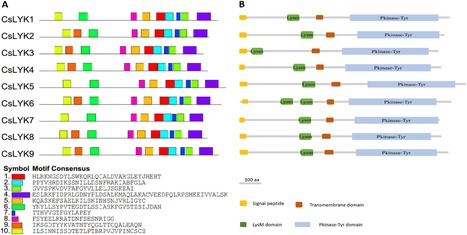
Lysin motif receptor-like kinases (LYKs) plays a crucial role in plant-microbe interaction. During microbial infection, LYK recognizes the microbial entry into the host cell and triggers plant defense responses against pathogens. The citrus LYK family and its roles in the citrus bacterial canker (CBC) caused by Xanthomonas citri subsp. citri (Xcc) remains uncertain. In this study, we have performed a systematic annotation of CsLYK family and analyzed the altered expression patterns of genes induced by Xcc and biotic stress-related phytohormones (abscisic acid, methyl-jasmonate, and salicylic acid). We found that the Citrus sinensis genome harbors 9 LYK genes, which were further divided into 3 subgroups, and localized on 5 chromosomes and the unassembled scaffolds. They were characterized by the classic lysM and a Pkinase domain, and were found to be primarily localized on the plasma membrane. Most of the CsLYK family members were involved in a putative protein-protein interaction network. Expression profiles showed that CsLYKs could be induced by Xcc infection and some phytohormones. This highlights the correlation between the LYKs and the CBC resistance. These findings extend our understanding of LYKs in citrus, notably their roles in CBC studies. Besides, this study highlights the potential role of plant LYKs involved in pathogen resistance.
|
|
Scooped by
Jean-Michel Ané
October 17, 2020 6:05 PM
|
Background
The CLV3/ESR-RELATED (CLE) gene family encodes small secreted peptides (SSPs) and plays vital roles in plant growth and development by promoting cell-to-cell communication. The prediction and classification of CLE genes is challenging because of their low sequence similarity.
Results
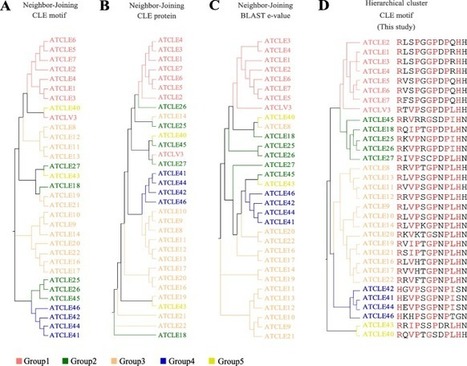
We developed a machine learning-aided method for predicting CLE genes by using a CLE motif-specific residual score matrix and a novel clustering method based on the Euclidean distance of 12 amino acid residues from the CLE motif in a site-weight dependent manner. In total, 2156 CLE candidates—including 627 novel candidates—were predicted from 69 plant species. The results from our CLE motif-based clustering are consistent with previous reports using the entire pre-propeptide. Characterization of CLE candidates provided systematic statistics on protein lengths, signal peptides, relative motif positions, amino acid compositions of different parts of the CLE precursor proteins, and decisive factors of CLE prediction. The approach taken here provides information on the evolution of the CLE gene family and provides evidence that the CLE and IDA/IDL genes share a common ancestor.
Conclusions
Our new approach is applicable to SSPs or other proteins with short conserved domains and hence, provides a useful tool for gene prediction, classification and evolutionary analysis.
|
|
Scooped by
Jean-Michel Ané
October 15, 2020 9:48 PM
|
Soil micro-organisms play a pivotal role in food production through their significant effects on nutrient transformation and release, soil organic matter and carbon dynamics, and biotic and abiotic stress tolerance to plants. The microbial consortia (MC) are mixtures of two or more microbial species/strains, living together symbiotically. Generally, a consortium of micro-organisms performs better than the inoculum of single microbial species. The MC, specifically plant growth-promoting rhizobacteria and biofilm biofertilizers can be used in non-legume cereal crops grown in a large area of the world. The MC may help in solubilization of plant nutrients from the soil native pool, production of beneficial substances (siderophores, hormones, etc.) for better root growth of non-legume crops and reduction in plant growth retarding hormone(s). The MC research focuses/encompasses, mainly legume crops, although there are prospect and substantial evidences of their use in non-legume crops. Reports indicate that the use of MC can enhance micronutrients, total organic carbon and N in soil. They could fix N, solubilize P and K, improve soil physico-chemical properties and act as phyto-stimulator. Globally, almost 50% of the total N, P and K used in crops are consumed by cereal crops, which are heavy feeder with high yield potential. Integration of MC with chemical fertilizers provides enormous scope for increasing nutrient-use efficiency in accordance with harmonious improvement in crop yield and soil health. The MC as a component of integrated nutrient management in non-legume cereal crops would considerably reduce the demand and use of mineral fertilizers and cost of cultivation and save nutrient for use in other crops of economic importance. They are low-cost and eco-friendly options and can improve soil health vis-a-vis enhancing productivity of non-legume crops.
|
|
Scooped by
Jean-Michel Ané
October 15, 2020 9:43 PM
|
Ecosystem stability is threatened by multiple global change factors such as drought and elevated nitrogen deposition. Yet, it is still poorly understood whether soil organisms can buffer against such perturbations. Here we focus on arbuscular mycorrhizal fungi (AMF), a common and widespread group of soil fungi. AMF form symbiotic associations with the majority of terrestrial land plants and promote a range of ecosystem services including plant production, diversity and nutrient cycling.
We tested whether AMF have the ability to enhance the resistance and resilience of plant communities under soil moisture deficit (hereby drought) and nitrogen deposition. Grassland microcosms with 11 different plant species were established with and without AMF and exposed to elevated nitrogen levels and to an intermittent period of drought.
Drought strongly reduced plant productivity and nitrogen cycling, but had limited effects on plant diversity. Nitrogen enrichment reduced plant diversity and increased nitrogen leaching and N2O emissions. The presence of AMF enhanced plant productivity, plant diversity, and reduced nitrogen losses. AMF facilitated the resistance of plant productivity and nitrogen cycling to drought and the recovery of the plant community structure back to its pre drought state. Furthermore, AMF also mitigated the adverse effects of nitrogen enrichment on the resistance of multiple ecosystem functions to drought.
Synthesis. Our work highlights the integral role of AMF for the stability of ecosystem functioning; AMF are not only able to promote resistance to harsh conditions of global change, but also improve resilience by enabling plant communities to recover. These findings underline AMF’s insurance capacity to buffer ecosystems against global change.
|







So cool... @AlbertoPMacho