Introduction: In the nursery, controlled-release fertilization and inoculation with mycorrhizal fungi promote the quality of plant material reproduced in containers. Objective: To evaluate the effect of two commercial mycorrhizal inoculants and one controlledrelease fertilizer on the development of Pinus engelmannii Carr. in nursery. Materials and methods: Two commercial inoculants (fungi native to Mexico [1 mL·plant-1 with 1.05 x 10⁷ spores·mL-1] and exotics [1.5 mL·plant-1 with 6.5 x 10⁶ spores·mL-1]), two doses of a controlled-release fertilizer (11-28-11 NPK [3 and 6 g·L-1]) and a control were evaluated; in total, nine treatments were used. The variables analyzed were: survival, stem height, root collar diameter, wet and dry biomass, ratio of dry biomass of the aerial part/dry biomass of the root part, lignification index, Dickson's quality index and mycorrhizal colonization. Results and discussion: Survival (80 to 96%) was similar between treatments. Eight months after sowing, seedlings showed significant differences (P = 0.05) in morphological variables; combined treatments gave better results. Plants with commercial inoculum of native fungi (1 mL·plant-1 [Amanita rubescens Pers., Amanita sp., Lactarius indigo [Schwein] Fr., Ramaria sp. and Boletus sp.]) and fertilization of 3 g·L-1 had higher Dickson quality index. It was observed that the higher the fertilization dose, the lower the percentage of mycorrhizal colonization. Conclusion: The combination of ectomycorrhizal inoculum of native fungi and low-dose fertilization showed that both components are complementary in the plant development of P. engelmannii.
Interactions between plants and soil affect plant–plant interactions and community composition by modifying soils conditions in plant-soil feedback, where associated microbes have the most crucial role. Both arbuscular mycorrhizal fungi (AMF) and microbial seed endophytes have been demonstrated to influence, directly or indirectly, biotic or abiotic soil properties, thus affecting subsequent plant growth, and community structure. However, little is known about how plant endophyte communities, individually or in interaction with AMF, affect plant-soil feedback processes. Here, we investigated, through a manipulative experiment, the behavior of endophyte-free and endophyte-associated Trifolium repens plants grown in soils previously conditioned by conspecific endophyte-free and endophyte-associated plants, inoculated or not by Rhizophagus intraradices. Furthermore, we identified microbial endophytes directly from the inner tissues of seeds by high-throughput sequencing, to compare seed fungal and bacterial endophyte composition. Results demonstrated that the outcome of simultaneous occurrence of seed endophytes and AMF on plant behavior depended on matching the endophytic status, i.e., either the presence or absence of seed microbial endophytes, of the conditioning and response phase. Seed fungal endophytes generated strong conspecific negative feedback, while seed bacterial endophytes proved to shift the feedback from negative to positive. Moreover, the simultaneous occurrence of both seed endophytes with AMF could either generate or expand negative plant-soil feedback effects. Our results show that seed and root symbionts can play a significant role on setting conspecific plant-soil feedback.
Ectomycorrhizal (ECM) fungi are integral to boreal and temperate forest ecosystem functioning and nutrient cycling. ECM fungi, however, originate from diverse saprotrophic lineages and the impacts of genetic variation across species, and especially within a given ECM species, on function and interactions with the environment is not well understood. Here we explore the extent of intra-species variation between four isolates of the ECM fungus Pisolithus microcarpus, in terms of gene regulation, carbon metabolism and growth, and interactions with a host, Eucalyptus grandis. We demonstrate that, while a core response to the host is maintained by all of the isolates tested, they have distinct patterns of gene expression and carbon metabolism, resulting in the differential expression of isolate-specific response pathways in the host plant. Together, these results highlight the importance of using a wider range of individuals within a species to understand the broader ecological roles of ECM fungi and their host interactions. This article is protected by copyright. All rights reserved.
Background Plant papain-like cysteine proteases (PLCPs) are a large class of proteolytic enzymes and play important roles in root nodule symbiosis (RNS), while the whole-genome studies of PLCP family genes in legume are quite limited, and the roles of Glycine max PLCPs (GmPLCPs) in nodulation, nodule development and senescence are not fully understood.
Results In the present study, we identified 97 GmPLCPs and performed a genome-wide survey to explore the expansion of soybean PLCP family genes and their relationships to RNS. Nineteen paralogous pairs of genomic segments, consisting of 77 GmPLCPs, formed by whole-genome duplication (WGD) events were identified, showing a high degree of complexity in duplication. Phylogenetic analysis among different species showed that the lineage differentiation of GmPLCPs occurred after family expansion, and large tandem repeat segment were specifically in soybean. The expression patterns of GmPLCPs in symbiosis-related tissues and nodules identified RNS-related GmPLCPs and provided insights into their putative symbiotic functions in soybean. The symbiotic function analyses showed that a RNS-related GmPLCP gene (Glyma.04G190700) really participate in nodulation and nodule development.
Conclusions Our findings improved our understanding of the functional diversity of legume PLCP family genes, and provided insights into the putative roles of the legume PLCPs in nodulation, nodule development and senescence.
Arbuscular mycorrhizal fungi (AMF) are an important component of a sustainable crop cultivation system, which may considerably enhance the health of soil and plant. Application of mycorrhizal fungi has obviated various abiotic stresses such as water, nutrient, drought and enhanced the crop produce. The nutrient-deprived soil showed good performance in the presence of AM fungi. To check the soil erosion and land degradation, and protection of plants from various plant diseases is other services being offered effectively by the AMF. In brief, inoculation of AMF may reduce the damaging potential of various plant pathogens (fungi and nematode) and eventually improve the plant growth and yield. Application of AMF accelerates the production of plant growth-promoting molecules (plant hormones), which eventually ameliorate the plant health considerably. These root symbionts have also the ability to fulfill the demand of nutrients (especially phosphorus) to the plants and make it available to the root of plants. The mycorrhizal fungi also work with other beneficial microorganisms and enhance ecological services. Generally, it has been seen that plant symbionts along with other microorganisms showed better performance in terms of improved plant growth and yield. This coexistence suggests that AMF can easily develop a compatible relationship with other beneficial microorganisms. Thus the application of AMF with other microbial agents can be used in sustainable agriculture.
In this study, six vertical flow constructed wetlands (VFCWs) planted with Phragmites australis were operated at different aeration times (4 h day−1 and 8 h day−1), aeration modes (continuous and intermittent), and arbuscular mycorrhizal fungi (AMF) inoculation treatments (inoculation with Rhizophagus intraradices and no inoculation) to explore the effects of different aeration strategies on the formation of arbuscular mycorrhiza under a flooded state in VFCWs. In addition, these VFCWs were further used to treat copper oxide nanoparticle (CuO-NP) wastewater to evaluate the correlations among aeration, colonization, growth, and CuO-NP removal. The highest AMF 28S copy number (1.99×10⁵) and colonization in reed roots, with values of 67%, 21%, and 1% for frequency (F%), intensity (M%), and arbuscule abundance (A%), were observed in the treatment with intermittent aeration for 4 h day−1. Aeration significantly increased the dissolved oxygen (DO) concentration and AMF colonization in VFCWs, thereby promoting plant growth and the purification of the CuO-NPs. However, excessive and continuous aeration had little positive effect on AMF colonization. This study provides a theoretical basis for the application of AMF for improving pollutant removal performance in constructed wetlands.
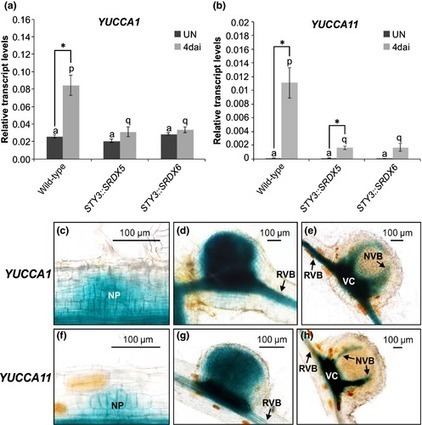
Organogenesis of legume root nodules begins with the nodulation factor‐dependent stimulation of compatible root cells to initiate divisions, signifying an early nodule primordium formation event. This is followed by cellular differentiation, including cell expansion and vascular bundle formation, and we previously showed that Lotus japonicus NF‐YA1 is essential for this process, presumably by regulating three members of the SHORT INTERNODES/STYLISH (STY) transcription factor gene family. In this study, we used combined genetics, genomics and cell biology approaches to characterize the role of STY genes during root nodule formation and to test a hypothesis that they mediate nodule development by stimulating auxin signalling. We show here that L. japonicus STYs are required for nodule emergence. This is attributed to the NF‐YA1‐dependent regulatory cascade, comprising STY genes and their downstream targets, YUCCA1 and YUCCA11, involved in a local auxin biosynthesis at the post‐initial cell division stage. An analogous NF‐YA1/STY regulatory module seems to operate in Medicago truncatula in association with the indeterminate nodule patterning. Our data define L. japonicus and M. truncatula NF‐YA1 genes as important nodule emergence stage‐specific regulators of auxin signalling while indicating that the inductive stage and subsequent formation of early nodule primordia are mediated through an independent mechanism(s).
Legumes have unique features, such as compound inflorescences and a complex floral ontogeny. Thus, the study of regulatory genes in these species during inflorescence and floral development is essential to understand their role in the evolutionary origin of developmental novelties. The SUPERMAN (SUP) gene encodes a C2H2 zinc‐finger transcriptional repressor that regulates the floral organ number in the third and fourth floral whorls of Arabidopsis thaliana. In this work, we present the functional characterization of the Medicago truncatula SUPERMAN (MtSUP) gene based on gene expression analysis, complementation and overexpression assays, and reverse genetic approaches. Our findings provide evidence that MtSUP is the orthologous gene of SUP in M. truncatula. We have unveiled novel functions for a SUP‐like gene in eudicots. MtSUP controls not only the number of floral organs in the inner two whorls, but also in the second whorl of the flower. Furthermore, MtSUP regulates the activity of the secondary inflorescence meristem, thus controlling the number of flowers produced. Our work provides insight into the regulatory network behind the compound inflorescence and flower development in this angiosperm family.
In α-proteobacteria, the CtrA signaling pathway regulates cell cycle progression. A species whose cell duplication is associated with CtrA stability is affected by the response regulator NtrX. However, the function of NtrX acting on the cell cycle regulation in bacteria remains unclear. Here, we report that NtrX controls transcription of the CtrA system genes involved in cell cycle regulation in a legume symbiont, Sinorhizobium meliloti. Three groups of ntrX mutants showed the similar cell cycle defects, such as slow growth, abnormal shapes, and irregular genomic DNA accumulation. Expression of the CtrA signaling pathway genes including ctrA, gcrA, dnaA, divL and cpdR1, is differentially regulated by the phosphorylated NtrX protein. The regulation is achieved through direct protein-DNA interactions. The 53rd aspartate residue known as the conserved phosporylation site and located in the receiver domain of NtrX, is required for S. meliloti cell cycle regulation. Interestingly, expression of S. meliloti ntrX derivatives in Caulobacter and Agrobacterium strains showed distinct defects of cell duplication and growth, suggesting that NtrX plays different roles in cell cycle regulation in these bacteria. Our findings demonstrate that NtrX is an upstream transcriptional regulator of the CtrA signaling pathway in S. meliloti, which could be associated with nitrogen nutrient response.
Berseem clover (T. alexandrinum) is the main forage legume crop used as animal feed in Egypt. Here, eighty rhizobial isolates were isolated from root nodules of berseem clover grown in different regions in Egypt and were grouped by RFLP-16S rRNA ribotyping. Representative isolates were characterized using phylogenetic analyses of the 16S rRNA, rpoB, glnA, pgi, and nodC genes. We also investigated the performance of these isolates using phenotypic tests and nitrogen fixation efficiency assays. The majority of strains (<90%) were closely related to Rhizobium aegyptiacum and Rhizobium aethiopicum and of the remaining strains, six belonged to the Rhizobium leguminosarum genospecies complex and only one strain was assigned to Agrobacterium fabacearum. Despite their heterogeneous chromosomal background, most of the strains shared nodC gene alleles corresponding to symbiovar trifolii. Some of the strains closely affiliated to R. aegyptiacum and R. aethiopicum had superior nodulation and nitrogen fixation capabilities in berseem clover, compared to the commercial inoculant (Okadein®) and N-added treatments. R. leguminosarum strain NGB-CR 17 that harbored a nodC allele typical of symbiovar viciae, was also able to form an effective symbiosis with clover. Two strains with nodC alleles of symbiovar trifolii, R. aegyptiacum strains NGB-CR 129 and 136, were capable of forming effective nodules in Phaseolus vulgaris in axenic greenhouse conditions. This adds the symbiovar trifolii which is well-established in the Egyptian soils to the list of symbiovars that form nodules in P. vulgaris.
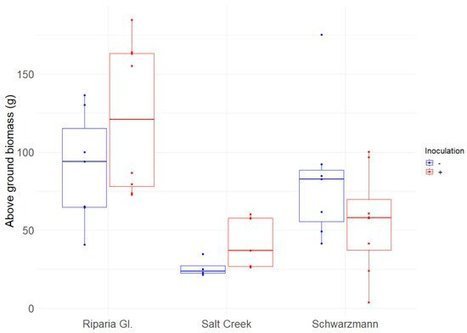
(1) Background: Arbuscular mycorrhizal (AM) fungi are symbiotic organisms that help plants acquire nutrients from the soil in exchange for photosynthetic carbon. Commercial AM fungal inoculants are widely available and are used extensively in agriculture including wine grape production. However, positive growth responses from inoculants are more consistent in the greenhouse compared to the field. (2) Methods: We grew three grapevine rootstocks with and without an AM fungal inoculant in the greenhouse for one year, then they were transplanted to the field for two years. To quantify the establishment of the inoculant, we analyzed root samples with a digital PCR assay. (3) Results: We show that AM fungal inoculation increased biomass production only in the greenhouse. After two growing seasons in the field, the commercial inoculant colonized roots but did not increase biomass production compared to uninoculated rootstocks. (4) Conclusions: This study highlights that AM fungal inoculants do not always promote growth of grapevines in the field. Future research should focus on inoculant strains designed for viticulture applications and take rootstock into consideration to maximize their efficacy.
Italy is one of the most important countries in Europe for truffles gathering and trade. The socio-economic potential of truffles has been recently investigated in Sicily, an unexplored region for hypogeous fungi until 1990. This paper provides an updated report on the distribution of truffles in a regional park, located in the inner part of Sicily. Topics covered include the methods of collection of Tuber aestivum and T. borchii, the periods of collection of truffles, the procedure for preservation before marketing, and the percentage of truffle buyers in Sicily. Besides, a map of the investigated area integrating the presence of the truffle with all other ecological elements is provided. There are currently ∼278 truffle gatherers in Sicily, distributed in the different provinces. In the investigated area, it is estimated that average of about 190 kg/year of T. aestivum and T. borchii are collected per truffle gatherer. The truffle market in Sicily is not regulated as in other Italian Administrative regions. The selling price varies from 80 to 200 €/kg, depending on the truffle species. The collection and marketing of truffles is an important source of income. It promotes tourism by encouraging the creation of gastronomic routes of quality products.
The arbuscular mycorrhizal (AM) symbiosis has long been projected as one of the sustainable saviors for achieving food security for mankind. However, there exist conflicting views regarding recommending AM fungi as inocula to farmers. Fungal, host, soil and climatic factors affect AM efficacy in the field. The process of identifying, calculating and comparing the costs and benefits of AM symbioses in economic terms is of international interest from both farmer and industry perspectives. It has not yet been possible to economically quantify the benefits of AM fungi in agroecosystems. Some potential benefits such as increased yield, lower fertilizer consumption and better disease tolerance can be measured quantitatively by cost-benefit analyses, but others such as reductions in soil erosion and nutrient leaching, soil carbon sequestration, phytoremediation, renaturation and landscaping are mainly qualitative and cannot be assessed by conventional cost-benefit methodologies. We identify and explore approaches to assessing economic benefits of inoculation with AM fungi and the risks and limitations involved. To ensure that all potential benefits of AM symbioses are given due cognizance, we propose any economic evaluation should also use contingent methods as applied to economic assessment of biodiversity and afforestation. Development of a framework involving systematic measurements of factors involved in establishment and function of AM symbioses should address risks in mismeasurement and resolve issues related to incomplete knowledge and potential conflicts.
In Southeast Mexico, deforestation in tropical forests is considered an environmental concern. Deforestation favours the growth of plants that compete with species of interest, which generally present slow growth. In order to promote greater growth in less time of the forest species used in reforestation and two crops of regional interest, the effect of including Rhizophagus intraradices in the seed or the root system of seedlings were investigated to evaluate its influence on growth and allocation of dry matter in the aerial and radical part, in addition to the concentration of N, P and Ca. Also, two additional collections with morphological characteristics of Glomus sps were included in T. donnell-smithii. The results indicate that biofertilisation with R. intraradices induces increased growth and is differential in stem and root dry matter allocation over time, in addition to increasing nutrient content in plant tissue.
The effectiveness of Rhizobium inoculation is largely determined by soil properties. In this study, the symbiotic efficiency of seventeen Rhizobium/Agrobacterium local strains were screened in greenhouse experiments. Subsequently, the combined effects of selected five rhizobial strains plus a starting N-dose (48 kg N ha−1) on nodulation and yield of faba bean were evaluated in two-year field trials. The field experiments were conducted in multiple locations which represent fertile, alkaline-calcareous and salt-affected soils. Regardless of soil type, rhizobial inoculation overwhelmingly improved the nodulation of faba beans compared to the non-inoculated control and N-fertilized (48 and 96 kg N ha−1) treatments. In all of the sites, inoculated faba beans, with at least two strains, produced grain yield and grain N yield significantly greater, or comparable to N-fertilized (96 kg N ha−1) treatment. The maximum response of faba bean to inoculation was identified in the salt-affected soil, whereas faba bean inoculated with Rlv strain NGB-FR 126 showed significant increases in the averages of grain yield (50%) and grain N-yield (56%) compared to N-fertilized (96 kg N ha−1) treatment, over the two cropping seasons. Besides enhancing nodulation, application of rhizobial inoculants effectively improved production and plant response in alkaline-calcareous and salt-affected soil conditions.
Since the advent of agriculture, humans have been working to improve the growth of crop plants. Historically, a major focus of research has been plant genetics and using traditional breeding methods to improve crop yields and adapt crops to demanding environmental conditions. More recently, the role of microorganisms living in and on plants, referred to as the plant microbiome, has been a target of investigation for its role in plant growth and development. Many factors have been found to influence the plant microbiome: host genetics, geography, agricultural practices, and soil chemistry, to name a few. One other significant factor is water availability; when plants are subjected to drought stress, the root microbiome displays a pattern of enrichment of Actinobacteria. The work presented herein seeks to understand the mechanism behind the enrichment of this phylum, as well as the effect of the microbial community shift on the growth of the host plant.
This research begins by investigating the effect of drought stress on the root microbiome of different species of millets and honing in on the spatial distribution of enriched Actinobacteria within the root endosphere. By using 16S rRNA amplicon sequencing to explore the bacterial communities, we established that different degrees of drought are correlated with the level of Actinobacteria enrichment in four species of millet. To narrow down the plant signal that might be responsible for the enrichment, we asked whether this pattern was dependent upon root age. We found that the enrichment occurs along the length of plant roots, which suggests that Actinobacteria are proliferating within roots, since the majority of colonization has been shown to occur in the youngest part of the roots (at the root tip). Additionally, to determine whether the plant signal driving enrichment was one that is localized to the area of drought stress or if it is spread throughout the root system, we set up a split-pot experiment to expose only a portion of a plant’s roots to drought. In this case, only the drought-stressed portion shows enrichment, suggesting the driving mechanism is not spread throughout the root system. Finally, we sought to establish whether the mechanism for enrichment was death of the stressed roots selecting for saprophytic microbes, which include Actinobacteria. By profiling living and dead roots from the same host plant grown in a greenhouse setting, we show that Actinobacteria are depleted in dead root tissue, suggesting saprophytic activity is not the driving cause behind the shift in the microbial community structure. Overall, these results show that enrichment of Actinobacteria in drought-stressed roots is dependent on localized drought responses but not root age or death.
To investigate how Actinobacteria impact the growth of the host plant, the next goal was to develop a diverse strain collection by isolating bacteria from the roots of drought-stressed sorghum. For downstream experiments, it is best, in our case, to use microbes isolated from the environmental background that is being studied, rather than obtaining isolates from a strain collection with an unknown or different background. Using two isolation workflows, we collected nearly 2000 strains of bacteria. We showed that, while it may be beneficial in some cases to build an isolate library by selecting colonies from agar plates, using high-throughput isolation technologies can yield a much larger library of a comparable diversity in much less time. Additionally, we show that selection of media type is important when building a specialized library, and differs between the two isolation workflows.
Finally, using the specialized strain collection, we investigated the efficacy of Synthetic Communities (SynComs) containing Actinobacteria on improving the growth of plants in an otherwise sterile environment. We used a co-occurrence network built using SparCC to hypothesize interactions between bacteria in drought-stressed root endophyte communities, and from this network selected closely-related strains from our collection to compile into SynComs. Seven SynComs were designed: five of them ranged from 100% to 0% Actinobacteria in intervals of 25%, one contained only Gram-negative bacteria, and one contained only Streptomyces, a known plant growth promoting taxa. After applying these communities to plants, we found that they were able to colonize the roots and persist over time. Additionally, we found the SynCom containing only Streptomyces to be most beneficial to plant growth, suggesting that interspecies interactions within the 100% Actinobacteria (which consisted of the same Streptomyces plus additional Actinobacteria genera) may inhibit the plant growth promoting activity of certain microbes.
Altogether, the studies presented herein contribute to our understanding of the root microbiome during drought and the ecological principles governing the microbial communities of the endosphere. We provide clues as to what host plant mechanism may be driving the enrichment of Actinobacteria during drought, and begin to uncover the community dynamics that could lead to the design of a synthetic community that would effectively protect a host plant from drought stress.
Vascular plant pathogens travel long distances through host veins, leading to life-threatening, systemic infections. In contrast, nonvascular pathogens remain restricted to infection sites, triggering localized symptom development. The contrasting features of vascular and nonvascular diseases suggest distinct etiologies, but the basis for each remains unclear. Here, we show that the hydrolase CbsA acts as a phenotypic switch between vascular and nonvascular plant pathogenesis. cbsA was enriched in genomes of vascular phytopathogenic bacteria in the family Xanthomonadaceae and absent in most nonvascular species. CbsA expression allowed nonvascular Xanthomonas to cause vascular blight, while cbsA mutagenesis resulted in reduction of vascular or enhanced nonvascular symptom development. Phylogenetic hypothesis testing further revealed that cbsA was lost in multiple nonvascular lineages and more recently gained by some vascular subgroups, suggesting that vascular pathogenesis is ancestral. Our results overall demonstrate how the gain and loss of single loci can facilitate the evolution of complex ecological traits.
This is the dance featured in the Symbiosis music video. Learn it ☝️ record it �� and post it to Facebook, Instagram, or Youtube with the hashtag #symbiosismovement to be featured on symbiosismovement.org or in a future re-release of the music video!
Arbuscular mycorrhizal fungi (AMF) are beneficial soil microorganisms establishing mutualistic symbioses with the roots of the most important food crops and playing key roles in the maintenance of long-term soil fertility and health. The great inter- and intra-specific AMF diversity can be fully exploited by selecting AMF inocula on the basis of their colonization ability and efficiency, which are affected by fungal and plant genotypes and diverse environmental variables. The multiple services provided by AMF are the result of the synergistic activities of the bacterial communities living in the mycorrhizosphere, encompassing nitrogen fixation, P solubilization, and the production of phytohormones, siderophores, and antibiotics. The tripartite association among host plants, mycorrhizal symbionts, and associated bacteria show beneficial emerging properties which could be efficiently exploited in sustainable agriculture. Further in-depth studies, both in microcosms and in the field, performed on different AMF species and isolates, should evaluate their colonization ability, efficiency, and resilience. Transcriptomic studies can reveal the expression levels of nutrient transporter genes in fungal absorbing hyphae in the presence of selected bacterial strains. Eventually, newly designed multifunctional microbial consortia can be utilized as biofertilizers and biostimulants in sustainable and innovative production systems. View Full-Text
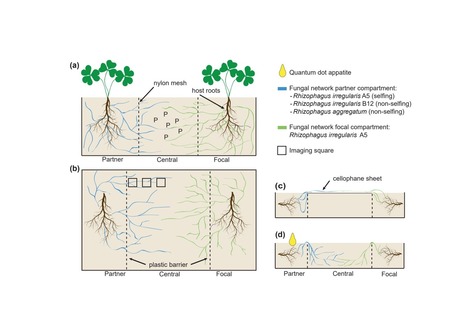
Relatives are expected to cooperate more and compete less. In symbiotic partnerships, hosts may benefit from interacting with highly-related symbionts because there is less conflict. This has been difficult to test empirically. We used the arbuscular mycorrhizal symbiosis to study the effects of fungal relatedness on host and fungal benefits, creating fungal networks varying in relatedness (self vs. non-self) between two host plants, in both soil and in-vitro systems. To determine how fungal relatedness affected overall transfer of nutrients to host roots, we fluorescently tagged phosphorus and quantified resource distribution. We imaged fungal networks, and related fractal dimension to fungal growth strategies. We found that decreased relatedness was associated with increased fungal growth and complexity, lower transport of nutrients across the fungal network, and lower plant benefit, likely an outcome of increased fungal competition. More generally, we demonstrate how relatedness among symbionts can mediate the overall benefits of symbiotic partnerships.
Symbiotic nitrogen fixation carried out in legume root nodules requires transition metals. These nutrients are delivered by the host plant to the endosymbiotic nitrogen-fixing bacteria living within the nodule cells, a process in which vascular transport is essential. As members of the Yellow Stripe-Like (YSL) family of metal transporters are involved in root to shoot transport, they should also be required for root to nodule metal delivery. The genome of the model legume Medicago truncatula encodes eight YSL proteins, four of them with a high degree of similarity to Arabidopsis thaliana YSLs involved in long-distance metal trafficking. Among them, MtYSL3 is a plasma membrane protein expressed by vascular cells in roots and nodules and by cortical nodule cells. Reducing the expression level of this gene had no major effect on plant physiology when assimilable nitrogen was provided in the nutrient solution. However, nodule functioning was severely impaired, with a significant reduction of nitrogen fixation capabilities. Further, iron and zinc accumulation and distribution changed. Iron was retained in the apical region of the nodule, while zinc became strongly accumulated in the nodule veins in the ysl3 mutant. These data suggest a role for MtYSL3 in vascular delivery of iron and zinc to symbiotic nitrogen fixation.
The spread of invasive species can be limited or promoted by the distributions of mutualists, which presents an opportunity for managing biological invasions. However, the ways in which the geographical distributions of mutualists shape the range limits and invasion dynamics of introduced species remains unclear. Legumes include noxious invaders whose success is tied to their mutualism with nitrogen-fixing rhizobium bacteria. We examine whether the availability of compatible rhizobia limits the spread of an invasive legume at both small (50 m) and large (United States) spatial scales across natural invasion fronts. Using greenhouse experiments we simulated the dispersal of Medicago polymorpha into soils at increasing distances from a host patch. We find that rhizobial mutualist availability rapidly declines to almost zero within 20 m of established legume patches and legume fitness and the percentage of leaf nitrogen derived from symbiotic nitrogen fixation show a concomitant decline. The decline of fitness due to the lack of rhizobium mutualists differs among M. polymorpha genotypes. Our findings support the missed mutualist hypothesis whereby mutualist limitation reduces invasiveness. As M. polymorpha colonizes novel areas, seeds following either short- (50 m) or long-range seed dispersal will be mutualist-limited and exhibit low fitness and nitrogen fixation. Without co-introduction via transport of soil containing both mutualists, the patchy distribution of E. medicae may limit M. polymorpha invasion. Plant lineages exhibit genetic variation upon which selection could act to reduce dependence on rhizobia, thus a scarcity of symbionts could cause plant symbiosis traits to evolve during invasion.
To get content containing either thought or leadership enter:
To get content containing both thought and leadership enter:
To get content containing the expression thought leadership enter:
You can enter several keywords and you can refine them whenever you want. Our suggestion engine uses more signals but entering a few keywords here will rapidly give you great content to curate.


 Your new post is loading...


 Scoop.it!