Your new post is loading...

|
Scooped by
Jean-Michel Ané
February 13, 2021 9:54 PM
|
BACKGROUND
Inoculation of arbuscular mycorrhizal (AM) fungi in soil can promote the uptake of nutrients and xenobiotics by plants. In this study, the effects of arbuscular mycorrhizal fungi (including Glomus itraradices and Glomus mossea) on the growth of maize, the uptake of carbosulfan and the control efficacy on S. frugiperda were investigated through maize seed coating.
RESULTS
Results from the pot experiment showed that carbofuran reduced the mycorrhizal colonization of AM fungi in the early stage of the experiment. The inhibiting effect disappeared in 21−49 days, while the mycorrhizal colonization rate in the Glomus itraradices (G. itraradices) treatment was maintained at about 90%. Compared with non‐inoculated treatment, the fresh weights of roots in G. itraradices and Glomus mosseae (G. mosseae) treatments increased by 20−41% and 10−23%, respectively. Mycorrhizal treatment could significantly increase the transmission rates (root/soil and leaf/stem) and the carbosulfan accumulation in maize. During the harvest period, the control efficacy against Spodoptera frugiperda (S. frugiperda) in mycorrhizal treatment was significantly higher than that in non‐inoculated treatments (p < 0.05) in both Guangzhou and Nanning.
CONCLUSIONS
AM inoculation could accelerate the degradation process of carbofuran in soil and the propagation of carbofuran from soil to plants. G. intraradices showed more pronounced effects than G. mosseae on both plant growth and carbosulfan content in plants and soil. The experimental results showed that inoculation of AM fungi has increased the accumulation of carbofuran in plants, improved the effective utilization rate, and enhanced the control efficacy against S. frugiperda.
|
|
Scooped by
Jean-Michel Ané
February 13, 2021 9:51 PM
|
Laser microdissection (LMD) is a microscopy technique that, through the collection of specific cell-type populations from sections of heterogeneous tissues, allows the subsequent extraction of nucleic acids as well as primary and secondary metabolites. In plants, LMD was widely used to study cell-specific gene expression during symbiotic interactions with other organisms, including mycorrhizal fungi. In particular, LMD was extensively used to study cell-specificity in gene expression profiles in arbuscular mycorrhizal (AM) and orchid mycorrhizal (ORM) interactions. These earlier studies were mainly focused on the identification of functional markers in plant cells containing intracellular fungal structures, i.e. arbuscules, the typical structures in AM, and coils, typical of ORM. Several plant and fungal genes coding for nutrient transporters were identified in these cells thanks to LMD, suggesting that symbiotic nutrient exchange is cell specific. In the absence of a stable transformation protocol for the expression of tagged genes in the mycorrhizal fungal partner, LMD protocols represent a useful tool to study fungal gene expression in specific cell-type populations inside symbiotic plant tissues.
|
|
Scooped by
Jean-Michel Ané
February 13, 2021 4:49 PM
|
Microbial volatile organic compounds (mVOCs) have great potential in plant ecophysiology, yet the role of belowground VOCs in plant stress management remains largely obscure. Analysis of biocontrol producing VOCs into the soil allow detailed insight into their interaction with soil borne pathogens for plant disease management. A root interaction trial was set up to evaluate the effects of VOCs released from Trichoderma viride BHU-V2 on soil-inhabiting fungal pathogen and okra plant growth. VOCs released into soil by T. viride BHU-V2 inhibited the growth of collar rot pathogen, Sclerotium rolfsii. Okra plants responded to VOCs by increasing the root growth (lateral roots) and total biomass content. VOCs exposure increased defense mechanism in okra plants by inducing different enzyme activities i.e. chitinase (0.89 fold), β-1,3-glucanase (0.42 fold), peroxidase (0.29 fold), polyphenol oxidase (0.33 fold) and phenylalanine lyase (0.7 fold) when inoculated with S. rolfsii. In addition, T. viride BHU-V2 secreted VOCs reduced lipid peroxidation and cell death in okra plants under pathogen inoculated condition. GC/MS analysis of VOCs blend revealed that T. viride BHU-V2 produced more number of antifungal compounds in soil medium as compared to standard medium. Based on the above observations it is concluded that okra plant roots perceive VOCs secreted by T. viride BHU-V2 into soil that involved in induction of plant defense system against S. rolfsii. In an ecological context, the findings reveal that belowground microbial VOCs may play an important role in stress signaling mechanism to interact with plants.
|
|
Scooped by
Jean-Michel Ané
February 11, 2021 11:21 PM
|
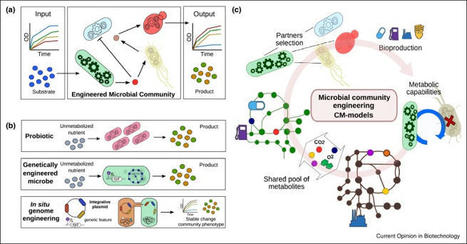
Multi-species microbial communities are ubiquitous in nature. The widespread prevalence of these communities is due to highly elaborated interactions among their members thereby accomplishing metabolic functions that are unattainable by individual members alone. Harnessing these communal capabilities is an emerging field in biotechnology. The rational intervention of microbial communities for the purpose of improved function has been facilitated in part by developments in multi-omics approaches, synthetic biology, and computational methods. Recent studies have demonstrated the benefits of rational interventions to human and animal health as well as agricultural productivity. Emergent technologies, such as in situ modification of complex microbial community and community metabolic modeling, represent an avenue to engineer sustainable microbial communities. In this opinion, we review relevant computational and experimental approaches to study and engineer microbial communities and discuss their potential for biotechnological applications.
|
|
Scooped by
Jean-Michel Ané
February 11, 2021 6:39 PM
|
Regulation by oxygen (O2) in rhizobia is essential for their symbioses with plants and involves multiple O2 sensing proteins. Three sensors exist in the pea microsymbiont Rhizobium leguminosarum Rlv3841: hFixL, FnrN and NifA. At low O2 concentrations (1%) hFixL signals via FxkR to induce expression of the FixK transcription factor, which activates transcription of downstream genes. These include fixNOQP, encoding the high-affinity cbb3-type terminal oxidase used in symbiosis. In free-living Rlv3841, the hFixL-FxkR-FixK pathway was active at 1% O2, and confocal microscopy showed hFixL-FxkR-FixK activity in the earliest stages of Rlv3841 differentiation in nodules (zones I and II). Work on Rlv3841 inside and outside nodules showed that the hFixL-FxkR-FixK pathway also induces transcription of fnrN at 1% O2 and in the earliest stages of Rlv3841 differentiation in nodules. We confirmed past findings suggesting a role for FnrN in fixNOQP expression. However, unlike hFixL-FxkR-FixK, Rlv3841 FnrN was only active in the near-anaerobic zones III and IV of pea nodules. Quantification of fixNOQP expression in nodules showed this was driven primarily by FnrN, with minimal direct hFixL-FxkR-FixK induction. Thus, FnrN is key for full symbiotic expression of fixNOQP. Without FnrN, nitrogen fixation was reduced by 85% in Rlv3841, while eliminating hFixL only reduced fixation by 25%. The hFixL-FxkR-FixK pathway effectively primes the O2 response by increasing fnrN expression in early differentiation (zones I-II). In zone III of mature nodules, near-anaerobic conditions activate FnrN, which induces fixNOQP transcription to the level required for wild-type nitrogen fixation activity. Modelling and transcriptional analysis indicates that the different O2 sensitivities of hFixL and FnrN lead to a nuanced spatiotemporal pattern of gene regulation in different nodule zones in response to changing O2 concentration. Multi-sensor O2 regulation is prevalent in rhizobia, suggesting the fine-tuned control this enables is common and maximizes the effectiveness of the symbioses.
|
|
Scooped by
Jean-Michel Ané
February 11, 2021 6:27 PM
|
The alphaproteobacterial genus Bradyrhizobium has been best known as N2-fixing members that nodulate legumes, supported by the nif and nod gene clusters. Recent environmental surveys show that Bradyrhizobium represents one of the most abundant free-living bacterial lineages in the world’s soils. However, our understanding of Bradyrhizobium comes largely from symbiotic members, biasing the current knowledge of their ecology and evolution. Here, we report the genomes of 88 Bradyrhizobium strains derived from diverse soil samples, including both nif-carrying and non-nif-carrying free-living (nod free) members. Phylogenomic analyses of these and 252 publicly available Bradyrhizobium genomes indicate that nif-carrying free-living members independently evolved from symbiotic ancestors (carrying both nif and nod) multiple times. Intriguingly, the nif phylogeny shows that all nif-carrying free-living members comprise a cluster which branches off earlier than most symbiotic lineages. These results indicate that horizontal gene transfer (HGT) promotes nif expansion among the free-living Bradyrhizobium and that the free-living nif cluster represents a more ancestral version compared to that in symbiotic lineages. Further evidence for this rampant HGT is that the nif in free-living members consistently co-locate with several important genes involved in coping with oxygen tension which are missing from symbiotic members, and that while in free-living Bradyrhizobium nif and the co-locating genes show a highly conserved gene order, they each have distinct genomic context. Given the dominance of Bradyrhizobium in world’s soils, our findings have implications for global nitrogen cycles and agricultural research.
|
|
Scooped by
Jean-Michel Ané
February 11, 2021 6:21 PM
|
Terrestrial plants have developed symbiotic association with mycorrhizal fungi and other endophytic fungi to cope up with nutrient limitations. Nutrient exchange especially carbon transport from the host plant is the fundamental aspect of these associations. This chapter summarizes the sugar transporters which are regulated by symbiotic association and are involved in symbiotic sugar uptake in various symbiotic fungi. Further, the role of sugar transport in the regulation of fungal development during symbiosis and proteins related to transport of soil minerals such as phosphate and nitrate are also discussed. We have also explained the molecular mechanism underlying the arbuscular mycorrhizal symbiosis establishment. Overall, this chapter provides an insight into symbiotic nutrient exchange and sugar transporters.
|
|
Scooped by
Jean-Michel Ané
February 11, 2021 6:05 PM
|
At the existing growth rate of population, the necessity of agriculture-based commodities is far outstripping the yields owing to approaches employed in the Green Revolution. Moreover, current agricultural practices are excessively exploiting non-renewable energy inputs leading to global climate change and degradation of natural resources. Exploitation of modern biotechnology techniques for the developing crops that are better acclimatized to the adverse environment is significant for sustainable cultivation and harvesting a sufficient amount of food. The disparity between the use of inputs and proficient production drives the emerging influx of innovation in the field of plant biology to integrate knowledge from diverse fields spanning from molecular to ecological scales. To address these global challenges, Synthetic Biology (SynBio) has come into the forefront as an engineering discipline for the next generation of crops. SynBio potency to converge with bio- and nanotechnology, plant genetics, biochemistry, microbiology and systems biology upsurges its transformative ascendancy on the agriculture and food industry. The implementation of SynBio within agriculture promises to deliver benefits that judiciously utilize the inputs for growth thus limiting negative impacts on the environment. In this chapter, we present recent applications of SynBio in enhancing carbon fixation competence of crops, plant–microbiome interactions for efficient nutrient uptake, sustainable fertilization, bioremediation and stress mitigation, the nutritional value of crops, integrated pest management, food safety, developing green sensors, bio-manufacturing of commercially important products, and production of valuable plant metabolites in microbes. Progress and innovation of SynBio approaches in these areas promise to unlock the masked beneficial traits in crop plants to set forth an unprecedented leap in productivity and sustainability across primary industries.
|
|
Scooped by
Jean-Michel Ané
February 10, 2021 1:02 PM
|
Plant growth-promoting bacteria (PGPB) stimulate plant growth through diverse mechanisms. Besides biological nitrogen fixation, diazotrophic PGPB can improve nutrient uptake efficiency from the soil, produce and release phytohormones to the host, and confer resistance against pathogens. The genetic determinants that drive the success of biological nitrogen fixation in non-legume plants are understudied. These determinants include recognition and signaling pathways, bacterial colonization, and genotype specificity between host and bacteria. This review presents recent discoveries of how nitrogen-fixing PGPB interacts with cereals and promotes plant growth. We suggest adopting an experimental model system, such as the Setaria-diazotrophic bacteria association, as a reliable way to better understand the associated mechanisms and, ultimately, increase the use of PGPB inoculants for sustainable agriculture.
|
|
Scooped by
Jean-Michel Ané
February 6, 2021 6:46 PM
|
Background and aims
Plants can minimize the adverse effects of salinity by modifying morphological and anatomical features. Previous studies showed that endophytic Epichloë bromicola play an important role in improving wild barley (Hordeum brevisubulatum) salinity tolerance. The aim of this work is to understand whether Epichloë endophyte affects the anatomical structures of host H. brevisubulatum under salinity environments.
Methods
Seedlings of E. bromicola infected (E+) and E. bromicola free (E-) H. brevisubulatum were treated with different NaCl concentrations, with the control seedlings being grown without NaCl. Anatomical structures of roots, stems and leaves were observed by making paraffin sections with double staining dehydration methods (safranin and fast green).
Results
NaCl treatments significantly affected the anatomical structure of H. brevisubulatum. Vascular tissue area throughout the leaf, stem and root decreased as the NaCl concentration increased. Thickness of epidermis in stems and leaves, and the cortex in roots also decreased with salt level increases. Endodermis thickness, epidermis thickness and stele area in roots were increased under salinity stress. The presence of Epichloë endophyte regulated some anatomical structure modifications. Epichloë infection was associated with significant higher conducting tissues (including leaf xylem, leaf phloem, stem vascular bundles, stem xylem vessels and root meta-xylem area). The increased thickness of leaf veins, epidermis in stems, cortex and endodermis in roots were also associated with Epichloë endophyte infection under NaCl stress.
Conclusions
The presence of Epichloë endophyte ameliorated adverse effects of salinity on H. brevisubulatum. We observed specific changes of anatomical structures that may help in inhibiting water loss and inhibiting decrease of transport capacity for better conduction of water, nutrients, photosynthates and re-translocation of assimilates to suppress negative effects of salinity and enhance the tolerance of H. brevisubulatum to salt stress.
|
|
Scooped by
Jean-Michel Ané
February 6, 2021 6:43 PM
|
Symbiotic nitrogen fixation (SNF) inside root-nodules is a primary and sustainable source of soil nitrogen. Understanding nodule development and metabolism in crop legumes may lead to more effective SNF in agriculture. Peanut (Arachis hypogaea) is an economically important allotetraploid legume with non-canonical nodule developmental features. Recent genome sequencing of peanut has opened the possibility of making peanut a model for studying atypical nodule development. To help the community of nodule biologists, we have developed a database called AhNGE (Arachis hypogaea Nodule Developmental Gene Expression: http://nipgr.ac.in/AhNGE/index.php). AhNGE contains RNAseq data from six data points of nodule development in A. hypogagea cv. Tifrunner. This data represents a dynamic view of gene expression during peanut nodule development. Research in model legumes has generated a huge knowledgebase in the last twenty years. To streamline comparative genomics among legumes, we performed ortholog analysis among four legumes (Cicer, Glycine, Lotus, and Medicago) and one non-legume (Arabidopsis). This will facilitate the integration of existing knowledge in nodule development with the Arachis transcriptome. The available data can be retrieved using a single or batch query or searching using gene ID, from above mentioned five species. The output displays the gene expression pattern in graphical as well as tabular form, along with further options to download the sequence data. The database is linked with PeanutBase, the main genomic resource of peanut. Additionally, the expression level of different splicing variants can be retrieved from the database. In summary, AhNGE serves as an important resource for the scientific community working on nodule development.
|
|
Scooped by
Jean-Michel Ané
February 6, 2021 6:38 PM
|
La planta Lippia origanoides ha sido ampliamente estudiada debido al efecto antimicrobiano y antifúngico que poseen sus extractos y aceites esenciales, los cuales han sido probados contra un gran número de microorganismos patógenos. Sin embargo, es escasa la literatura que registra la diversidad de bacterias endófitas asociadas a esta especie de plantas. El objetivo del trabajo fue evaluar in vitro la capacidad de promoción de crecimiento vegetal de bacterias endófitas de Lippia origanoides en el municipio de Sincelejo-Sucre, Colombia. En este estudio se aislaron bacterias endófitas en medio de cultivo agar R2A a partir de diferentes tejidos, se evaluó la densidad poblacional (UFC/g de tejido) por conteo en superficie y la promoción de crecimiento vegetal de forma cualitativa en medios selectivos específicos. Se observaron diferencias significativas para la densidad poblacional de bacterias endófitas respecto al tipo de tejido, con mayores valores en la raíz (2,0 x 10¹⁰/g raíz), seguido del tallo (1,3 x 10¹⁰/g tallo) y hojas (9,2 x 10⁹/g hoja). Se obtuvieron un total de 20 bacterias endófitas, los cuales dos mostraron capacidad solubilizadora de fosfato, fijación biológica de nitrógeno, producción de sideróforos y ACC desaminasa. Los morfotipos TLO5 y RLO4 fueron identificados molecularmente como Bacillus cereus, mostrando buenos resultados de promoción de crecimiento vegetal.
|
|
Scooped by
Jean-Michel Ané
February 6, 2021 6:34 PM
|
The present study aims to elucidate the impact of arbuscular mycorrhizal fungi (AMF) inoculation and partial root drying (PRD), or regulated deficit irrigation (RDI) techniques on the growth, physiology and biochemistry of melon plants under three water regimes: control (100% of field capacity (FC) (C100%)), 75% of FC (PRD75%) and 50% of FC (PRD50% and RDI50%). The experiment was carried out under semi-controlled greenhouse conditions and the AMF inoculum used was a field-sourced native Aoufous consortium. Obtained results show an increase in shoot dry weight in inoculated plantss under PRD75% and PRD50% by 12 and 9% respectively, compared to C100%. Mycorrhizal plants under PRD75%, PRD50% and RDI50% maintained the highest relative water content, leaf water potential (Ψleaf) and stomatal conductance, as well as photosynthetic pigments, compared to their respective control plants. In addition, PRD75%+AMF and RDI50%+AMF recorded the highest values of evapotranspiration. AMF increased total soluble sugars, proteins, and proline contents in response to PRD and RDI. Our results demonstrate that PRD75%, PRD50% and RDI50% in combination with AMF were the most effective treatments for improving growth, physiological and biochemical traits of melon under water stress.
|
|
|
Scooped by
Jean-Michel Ané
February 13, 2021 9:54 PM
|
Arbuscular mycorrhizal fungi (AMF) are suggested to be important for invasions by many exotic plants. However, it is not yet known how associations between AMF and invasive plant populations change in mountains ranges and how changed associations affect further expansion of different populations in new habitats. We conducted a field survey to detect AMF colonization rate of the invasive Galinsoga quadriradiata along an elevational gradient ranging from 223 to 1947 masl in the Qinling and Bashan Mountains, China. Additionally, a greenhouse experiment was conducted to compare plant growth performance among five elevational populations. In the field, total plant mass and seed production, as well as root AMF colonization rate, significantly decreased with elevation. When populations were grown in a novel soil environment in the greenhouse, the high-altitude populations achieved higher seed and total mass at lower AMF colonization rate than the low-altitude populations. Moreover, high AMF association was related to high intraspecific competition within low-altitude populations and limited seed production. Our results revealed that the associations between AMF and G. quadriradiata decrease with altitude in mountain ranges, and this may indicate that differentiation of association between AMF and elevational populations occurs during range expansion of G. quadriradiata. The results of the greenhouse experiment suggest that the high-altitude populations are more aggressive than the low-altitude populations in a non-stressful environment.
|
|
Scooped by
Jean-Michel Ané
February 13, 2021 9:51 PM
|
Jasmonate ZIM domain (JAZ) proteins are the key negative regulators of jasmonate signaling, an important integrator of plant–microbe relationships. Versatility of jasmonate signaling outcomes are maintained through the multiplicity of JAZ proteins and their definitive functionalities. How jasmonate signaling influences the legume-Rhizobium symbiotic relationship is still unclear. In Arachis hypogaea (peanut), a legume plant, one JAZ sub-family (JAZ1) gene and one TIFY sequence containing protein family member (TIFY8) gene show enhanced expression in the early stage and late stage of root nodule symbiosis (RNS) respectively. In plants, JAZ sub-family proteins belong to a larger TIFY family. Here, this study denotes the first attempt to reveal in planta interactions of downstream jasmonate signaling regulators through proteomics and mass spectrometry to find out the mode of jasmonate signaling participation in the RNS process of A. hypogaea. From 4-day old Bradyrhizobium-infected peanut roots, the JAZ1-protein complex shows its contribution towards the rhizobial entry, nodule development, autoregulation of nodulation and photo-morphogenesis during the early stage of symbiosis. From 30-day old Bradyrhizobium infected roots, the TIFY8-protein complex reveals repressor functionality of TIFY8, suppression of root jasmonate signaling, modulation of root circadian rhythm and nodule development. Cellular localization and expression level of the interaction partners during the nodulation process further substantiate the in planta interaction pairs. This study provides a comprehensive insight into the jasmonate functionality in RNS through modulation of nodule number and development, during the early stage and root circadian rhythm during the late stage of nodulation, through the protein complexes of JAZ1 and TIFY8 respectively in A. hypogaea.
|
|
Scooped by
Jean-Michel Ané
February 12, 2021 11:51 AM
|
Whether too small, slow or concealed, the majority of species on Earth go unseen by humans. One such rather unobservable group of organisms are the arbuscular mycorrhizal (AM) fungi, who form beneficial symbioses with plants. AM symbiosis is ubiquitous and vitally important globally in ecosystem functioning, but partly as a consequence of its invisibility, it receives disproportionally little attention and appreciation. Yet AM fungi, and other unseen organisms, need not remain overlooked: from decades of scientific research there exists a goldmine of visual data, which if shared effectively we believe can alleviate the issues of low awareness. Here, we use examples from our experience of public engagement with AM symbiosis as well as evidence from the literature to outline the diverse ways in which invisible organisms can be visualised for a broad audience. We highlight outcomes and knock‐on consequences of this visualisation, ranging from improved human mental health to environmental protection, making the case for researchers to share their images more widely for the benefit of plants (and fungi and other overlooked organisms), people and planet.
|
|
Scooped by
Jean-Michel Ané
February 11, 2021 11:18 PM
|
The interaction between rhizobia and their legume host plants conduces to the formation of specialized root organs called nodules where rhizobia differentiate into bacteroids which fix atmospheric nitrogen to the benefit of the plant. This beneficial symbiosis is of importance in the context of sustainable agriculture as legumes do not require the addition of nitrogen fertilizer to grow. Interestingly, nitric oxide (NO) has been detected at various steps of the rhizobium–legume symbiosis where it has been shown to play multifaceted roles. Both bacterial and plant partners are involved in NO synthesis in nodules. To better understand the role of NO, and in particular the role of bacterial NO, at all steps of rhizobia–legumes interaction, the enzymatic sources of NO have to be elucidated. In this review, we discuss different enzymatic reactions by which rhizobia may potentially produce NO. We argue that there is most probably no NO synthase activity in rhizobia, and that instead the NO−2NO2− reductase nirK, which is part of the denitrification pathway, is the main bacterial source of NO. The nitrate assimilation pathway might contribute to NO production but only when denitrification is active. The different approaches to measure NO in rhizobia are also addressed.
|
|
Scooped by
Jean-Michel Ané
February 11, 2021 6:34 PM
|
In legumes, symbiotic nitrogen (N) fixation (SNF) occurs in specialized organs called nodules after successful interactions between legume hosts and rhizobia. In a nodule, N-fixing rhizobia are surrounded by symbiosome membranes, through which the exchange of nutrients and ammonium occurs between bacteria and the host legume. Phosphorus (P) is an essential macronutrient, and N2-fixing legumes have a higher requirement for P than legumes grown on mineral N. As in the previous studies, in P deficiency, barrel medic (Medicago truncatula) plants had impaired SNF activity, reduced growth, and accumulated less phosphate in leaves, roots, and nodules compared with the plants grown in P sufficient conditions. Membrane lipids in M. truncatula tissues were assessed using electrospray ionization–mass spectrometry. Galactolipids were found to increase in P deficiency, with declines in phospholipids (PL), especially in leaves. Lower PL losses were found in roots and nodules. Subsequently, matrix-assisted laser desorption/ionization–mass spectrometry imaging was used to spatially map the distribution of the positively charged phosphatidylcholine (PC) species in nodules in both P-replete and P-deficient conditions. Our results reveal heterogeneous distribution of several PC species in nodules, with homogeneous distribution of other PC classes. In P poor conditions, some PC species distributions were observed to change. The results suggest that specific PC species may be differentially important in diverse nodule zones and cell types, and that membrane lipid remodeling during P stress is not uniform across the nodule.
|
|
Scooped by
Jean-Michel Ané
February 11, 2021 6:23 PM
|
Legumes form a symbiosis with rhizobia that convert atmospheric nitrogen (N2) to ammonia and provide it to the plant in return for a carbon and nutrient supply. Nodules, developed as part of the symbiosis, harbor rhizobia that are enclosed in a plant-derived symbiosome membrane (SM) to form an organelle-like structure called the symbiosome. In mature nodules exchanges between the symbionts occur across the SM. Here we characterize Yellow Stripe-like 7 (GmYSL7), a Yellow stripe-like family member localized on the SM in soybean (Glycine max) nodules. It is expressed specifically in infected cells with expression peaking soon after nitrogenase becomes active. Unlike most YSL family members, GmYSL7 does not transport metals complexed with phytosiderophores. Rather, it transports oligopeptides of between four and 12 amino acids. Silencing GmYSL7 reduces nitrogenase activity and blocks infected cell development so that symbiosomes contain only a single bacteroid. This indicates the substrate of YSL7 is required for proper nodule development, either by promoting symbiosome development directly or by preventing inhibition of development by the plant. RNAseq of nodules where GmYSL7 was silenced suggests that the plant initiates a defense response against rhizobia with genes encoding proteins involved in amino acid export down-regulated and some transcripts associated with metal homeostasis altered. These changes may result from the decrease in nitrogen fixation upon GmYSL7 silencing and suggest that the peptide(s) transported by GmYSL7 monitor the functional state of the bacteroids and regulate nodule metabolism and transport processes accordingly. Further work to identify the physiological substrate for GmYSL7 will allow clarification of this role.
|
|
Scooped by
Jean-Michel Ané
February 11, 2021 6:21 PM
|
Aims
Arbuscular Mycorrhizal Fungi (AMF) are ubiquitous soil microorganisms playing a vital role in the functioning of agricultural ecosystems. Although AMF are generally considered to have a low host specificity, it has been suggested that modern plant breeding has selected crop genotypes that are more selectively associated with AMF, possibly resulting in modern high yielding varieties (HYV) having a lower AMF diversity than traditional crop varieties. Whether this is true for paddy rice varieties under field conditions is not known so far. Here, we aimed at comparing differences of AMF communities among modern HYV and traditional rice varieties.
Methods
We collected root and soil samples of five Bangladeshi rice varieties (two traditional and three modern HYV) from 40 different rice fields and quantified AMF richness, diversity and community composition through high throughput amplicon sequencing of the small subunit (SSU) of the ribosomal RNA cistron.
Results
Overall, 75 AMF OTUs, distributed over six AMF families with Glomeraceae as predominant family were found. After accounting for differences in soil conditions, we found that AMF diversity significantly differed among the five varieties and was higher in the traditional than modern varieties. The composition and structure of the AMF communities were distinct between the traditional and modern varieties. An indicator species analysis detected 9 OTUs significantly associated with traditional rice varieties, whereas no indicator OTUs were found for the modern HYV.
Conclusions
We conclude that modern breeding coupled with high fertilizer application rates provide a plausible explanation for the reduced AMF diversity and the different AMF community composition between Bangladeshi modern HYV and traditional varieties.
|
|
Scooped by
Jean-Michel Ané
February 11, 2021 11:40 AM
|
Bacteria, fungi, and other microorganisms communicate with each other using small molecules that play an important role in cell-to-cell communication. Among the life regulatory systems, information transfer between individual microorganisms is one of the most important mechanisms for promoting the survival of a species and its interactions with other organisms. This built-up information network relies mainly on the chemical signals between individual cells of the same species. This information network is not limited to the same species, but may be extended to different species or even different kingdoms. One major class of bacterial signaling molecules is known as the autoinducers or quorum-sensing (QS) pheromones.(1) Notably, QS is a cell density-responsive transcriptional system that regulates a variety of life events, such as pathogenicity control, biofilm formation, pigment and antibiotic biosynthesis, and interbacterial competence acquisition. N-Acylhomoserine lactones (AHLs, Figure 1), which regulate a wide variety of bacterial activities, are known as one of the major classes of QS signaling molecules, and most Gram-negative bacteria produce AHL(s) to control an internal QS circuit.(2) As represented by AHLs, microbial signaling molecules are often relatively simple in structure. This may be because it is not evolutionarily advantageous to have a complex biosynthetic system for a signaling molecule. Although they are likely to be simple compounds, elucidating the structure of microbial signaling molecules is often difficult because their production levels are extremely low and several physical properties, such as NMR spectra, may not be adequately measured.(3) Consequently, research on the identification of microbial signaling molecules has not been sufficiently advanced, and it is likely that there are still undiscovered types of signaling molecules. However, structurally orphaned (rare and very unusual) compounds, which are interesting from the perspective of natural product chemistry, have been reported. Herein, we discuss the structural disproof of two structurally orphaned microbial signaling molecules, bradyoxetin and 2-hydroxy-4-((methylamino)(phenyl)methyl)cyclopentanone (HMCP).
|
|
Scooped by
Jean-Michel Ané
February 9, 2021 3:34 PM
|
The arbuscular mycorrhizal fungi (AMF) are involved in one of the most ecologically important symbioses on the planet, occurring within the roots of most land plants.1 Knowledge of even basic elements of AM fungal biology is still poor, with the discovery that AMF may in fact have a sexual life cycle being only very recently reported.2, 3, 4, 5 AMF produce asexual spores that contain up to several thousand individual haploid nuclei6 of either largely uniform genotypes (AMF homokaryons) or nuclei originating from two parental genotypes2, 3, 4, 5 (AMF dikaryons or heterokaryons). In contrast to the sexual dikaryons in the phyla Ascomycota and Basidiomycota,7,8 in which pairs of nuclei coexist in single hyphal compartments, AMF dikaryons carry several thousand nuclei in a coenocytic mycelium. Here, we set out to better understand the dynamics of this unique multinucleate condition by combining molecular analyses with advanced microscopy and modeling. Herein, we report that select AMF dikaryotic strains carry the distinct nucleotypes in equal proportions to one another, whereas others show an unequal distribution of parental nucleotypes. In both cases, the relative proportions within a given strain are inherently stable. Simulation models suggest that AMF dikaryons may be maintained through nuclear cooperation dynamics. Remarkably, we report that these nuclear ratios shift dramatically in response to plant host identity, revealing a previously unknown layer of genetic complexity and dynamism within the intimate interactions that occur between the partners of a prominent terrestrial symbiosis.
|
|
Scooped by
Jean-Michel Ané
February 6, 2021 6:45 PM
|
A profound need to explore eco-friendly methods to practice sustainable agriculture leads to the research and exploration of plant growth-promoting rhizobacteria (PGPRs). Biofilms are assemblages of microbial communities within a self-secreted exopolymeric matrix, adhering to different biotic and abiotic surfaces and performing a variety of desired and undesired functions. Biofilm formation by PGPRs is governed by effective root colonization of the host plant in providing plant growth promotion and stress management. Biofilms can also provide a suitable environment for the synthesis and entrapment of nanoparticles. Together, nanoparticles and PGPRs may contribute towards biocontrol and crop management. This review discusses the significance of biofilms in agriculture and their confluence with different types of nanoparticles for plant protection and improved crop production.
|
|
Scooped by
Jean-Michel Ané
February 6, 2021 6:38 PM
|
Plant growth-promoting rhizobacteria (PGPR) are root endophytic bacteria used for growth promotion, and they have broader applications in enhancing specific crop yield as a whole. In the present study, we have explored the potential of Rhizobium pusense MB-17a as an endophytic bacterium isolated from the roots of the mung bean (Vigna radiata) plant. Furthermore, this bacterium was sequenced and assembled to reveal its genomic potential associated with plant growth-promoting traits. Interestingly, the root endophyte R. pusense MB-17a showed all essential PGPR traits which were determined by biochemical and PGPR tests. It was noted that this root endophytic bacterium significantly produced siderophores, indole acetic acid (IAA), ammonia, and ACC deaminase and efficiently solubilized phosphate. The maximum IAA and ammonia produced were observed to be 110.5 and 81 μg/ml, respectively. Moreover, the PGPR potential of this endophytic bacterium was also confirmed by a pot experiment for mung bean (V. radiata), whose results show a substantial increase in the plant's fresh weight by 76.1% and dry weight by 76.5% on the 60th day after inoculation of R. pusense MB-17a. Also, there is a significant enhancement in the nodule number by 66.1% and nodule fresh weight by 162% at 45th day after inoculation with 100% field capacity after the inoculation of R. pusense MB-17a. Besides this, the functional genomic annotation of R. pusense MB-17a determined the presence of different proteins and transporters that are responsible for its stress tolerance and its plant growth-promoting properties. It was concluded that the unique presence of genes like rpoH, otsAB, and clpB enhances the symbiosis process during adverse conditions in this endophyte. Through Rapid Annotation using Subsystem Technology (RAST) analysis, the key genes involved in the production of siderophores, volatile compounds, indoles, nitrogenases, and amino acids were also predicted. In conclusion, the strain described in this study gives a novel idea of using such type of endophytes for improving plant growth-promoting traits under different stress conditions for sustainable agriculture.
|
|
Scooped by
Jean-Michel Ané
February 6, 2021 6:36 PM
|
Background
The relationship between biodiversity and soil microbiome stability remains poorly understood. Here, we investigated the impacts of bacterial phylogenetic diversity on the functional traits and the stability of the soil microbiome. Communities differing in phylogenetic diversity were generated by inoculating serially diluted soil suspensions into sterilized soil, and the stability of the microbiome was assessed by detecting community variations under various pH levels. The taxonomic features and potential functional traits were detected by DNA sequencing.
Results
We found that bacterial communities with higher phylogenetic diversity tended to be more stable, implying that microbiomes with higher biodiversity are more resistant to perturbation. Functional gene co-occurrence network and machine learning classification analyses identified specialized metabolic functions, especially “nitrogen metabolism” and “phosphonate and phosphinate metabolism,” as keystone functions. Further taxonomic annotation found that keystone functions are carried out by specific bacterial taxa, including Nitrospira and Gemmatimonas, among others.
Conclusions
This study provides new insights into our understanding of the relationships between soil microbiome biodiversity and ecosystem stability and highlights specialized metabolic functions embedded in keystone taxa that may be essential for soil microbiome stability.
|


 Scoop.it!