Your new post is loading...

|
Scooped by
Jean-Michel Ané
Today, 11:36 AM
|
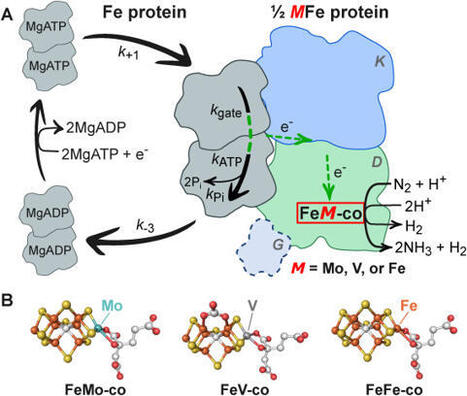
Nitrogenase catalyzes the ATP-dependent reduction of dinitrogen to ammonia, a key step in the global nitrogen cycle. The Mo- and V-dependent nitrogenase isozymes are expressed under different environmental conditions, including temperature, yet little is known about how their catalytic behavior changes with temperature. Here, we examine the temperature dependence of total electron flux, electron partitioning into the products NH3 and H2, and estimate ATP energy costs per N2 fixed for purified Mo- and V-nitrogenases from Azotobacter vinelandii over a 10-50 ˚C temperature range. Both isozymes exhibit similar temperature-dependent scaling of total electron flux to all products across the temperature range, but with significantly different distributions of electrons to H2 or NH3 formation. As temperature increases, V-nitrogenase diverts an increasing fraction of electron flux into H2 formation, whereas Mo-nitrogenase maintains a nearly constant electron partitioning to N2 reduction. The estimated ATP molecules hydrolyzed per N2 reduced change little for the Mo-nitrogenase across this temperature range, but rises significantly for the V-nitrogenase with increasing temperature, reaching over 200 ATP per N2 fixed at 50 ˚C. These results demonstrate that, in A. vinelandii, the Mo- and V-nitrogenases exhibit significantly different responses of electron partitioning to products and ATP hydrolyzed per N2 reduced to changes in temperature. These findings suggest environmental conditions under which each isozyme would be optimal, with V- and Mo-nitrogenase both being favorable at low temperatures and Mo-nitrogenase being the only energetically reasonable enzyme at higher temperatures.
|
|
Scooped by
Jean-Michel Ané
Today, 11:11 AM
|
Plants function as integral components of soil ecosystems, embedded within diverse microbial consortia that engage in continuous chemical and informational exchange. This molecular dialog governs how plants distinguish harmful, neutral, and beneficial microbes, transforming the rhizosphere into a dynamic signaling interface. Microbial interactions operate along a chemical continuum in which metabolites, volatiles, peptides, and other small molecules act across aqueous, lipidic, and chemically heterogeneous microenvironments to shape recognition and response. The physicochemical organization of rhizosphere metabolites may influence their diffusion, stability, and accessibility, although direct evidence for these effects remains limited. Within this framework, plant recognition is reinterpreted as a fluid, context-dependent communication process rather than a binary separation of immunity and symbiosis. This review synthesizes recent advances in the molecular architecture of this continuum, from receptor-mediated signaling to metabolite-driven ecological filtering, and examines how these overlapping systems determine host specificity, community stability, and adaptive resilience. Special attention is given to the regulatory roles of reactive oxygen species (ROS), phytohormones, and redox metabolites as both stress indicators and inter-organismal communicators. By integrating biochemical, ecological, and systems perspectives, this review highlights implications for developing microbiome-based, climate-smart, and sustainable agricultural practices.
|
|
Scooped by
Jean-Michel Ané
Today, 11:07 AM
|
Generating crops that utilize atmospheric nitrogen rather than soil nitrogen requires the transfer of nitrogenase structural genes together with genes required for the biosynthesis of nitrogenase iron−sulfur cofactors. Scaffold proteins, such as NifU, are the starting point of nitrogenase cofactor assembly. While NifU has been successfully produced in plants, its optimal production was achieved with iron supplementation in the nutrient solution. This suggests a faulty connection with the endogenous iron trafficking network, indicating the need for specific elements targeting iron to NifU. Here, we identify bacterioferritin A (BfrA) as an iron donor to NifU. Co-expression with BfrA increases NifU production in Nicotiana benthamiana, leading to doubling the production of NifH, a nitrogenase structural protein that is also required for the synthesis of more complex nitrogenase cofactors. This work underscores the importance of transferring metal delivery systems alongside metalloproteins when engineering heterologous systems.
|
|
Scooped by
Jean-Michel Ané
October 24, 11:41 AM
|
Atmospheric dinitrogen (N2) is far more abundant than carbon dioxide (CO2), yet photosynthesis has been studied and harnessed predominantly for photosynthetic carbon fixation (PCF), underpinning the global biocarbon economy. In contrast, biological N2 fixation—the natural gateway for atmospheric nitrogen into the biosphere—remains comparatively underexploited. Modern agriculture and industry consequently depend heavily on the fossil-fuel-intensive Haber–Bosch process, with substantial energy and environmental costs. Diazotrophic cyanobacteria offer a fundamentally different paradigm by coupling oxygenic photosynthesis to nitrogenase-mediated N2 fixation. We term this process photosynthetic nitrogen fixation (PNF), which uses solar energy to convert water and atmospheric N2 into bioavailable nitrogen.
Beyond its ecological significance, PNF expands the functional scope of photosynthesis beyond carbon fixation and provides a biological foundation for sustainable nitrogen production, biofertilization, and N2-based biosolar manufacturing. Recent advances in cyanobacterial physiology, ecology, evolution, synthetic biology, and AI-enabled multi-omics are accelerating efforts to harness this potential. This review examines the diversity of diazotrophic cyanobacteria, their strategies for protecting oxygen-sensitive nitrogenase, and emerging approaches for genetic engineering cyanobacteria as programmable platforms for nitrogen production and crop-associated nitrogen delivery. We further propose a roadmap toward a solar-powered BioNitrogen Economy encompassing bioprospecting, synthetic biology, genomic engineering, crop integration, and scalable agricultural and industrial deployment. By expanding photosynthesis from carbon fixation to the solar-powered capture of both carbon and atmospheric nitrogen, PNF could help drive the transition from a fossil-fuel-dependent chemo-nitrogen economy toward a sustainable BioNitrogen Civilization.
|
|
Scooped by
Jean-Michel Ané
October 21, 10:53 AM
|
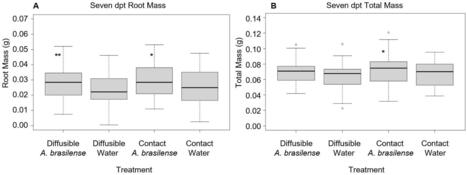
Plants form associations with diverse beneficial microbes, including arbuscular mycorrhizal (AM) fungi, rhizobia, and plant growth-promoting bacteria (PGPB). Research on legume-rhizobia symbiosis (LRS) and AM symbiosis has demonstrated that molecular communication between symbiotic partners is essential for initiating these interactions. Genetic and biochemical studies have further identified both plant and microbial signals, as well as host genetic pathways, that regulate these interactions. However, most studies on plant-PGPB interactions have focused on direct application of PGPB to plant roots, leaving the early signaling mechanisms underlying these interactions poorly understood. In this study, we report that diffusible signals from A. brasilense can promote rice growth without direct contact between bacteria and plant roots, 7 days post-treatment (dpt). Using RNA sequencing, we identified 2,516 differentially expressed genes (DEGs) in rice roots in response to diffusible signals from A. brasilense at 1 dpt. We identified differential expression of genes involved in flavonoid synthesis, defense responses, receptor activity, transcription factors, and hormone pathways. Comparative transcriptomic analysis of rice roots with or without contact with A. brasilense revealed both shared and unique gene expression patterns. We observed upregulation of certain defense-response genes (PAL, chitinase, thionin), transcription factors (AP2/ERFs, MYBs, WRKYs, and GRAS), and hormone-related (auxin and ethylene) genes without bacterial contact, but downregulation or no differential expression of these genes upon bacterial contact. This pattern suggests that initial induction followed by subsequent suppression of these genes may be crucial for establishing the interaction with A. brasilense. Our transcriptomic analysis also suggests that flavonoids may be required throughout the interaction, whereas nitrate transporters appear to be involved at later stages and likely require contact between plant roots and bacteria. Collectively, our findings reveal that diffusible signals from A. brasilense can promote rice growth and induce distinct gene expression changes in plant roots. These results provide novel insights into the early phase of rice-A. brasilense interaction and highlight the potential for leveraging plant-PGPB signaling mechanisms to enhance crop growth under adverse environmental conditions.
|
|
Scooped by
Jean-Michel Ané
October 18, 7:13 PM
|
Fungi have repeatedly delivered transformative advances across industries, from medicine to food to materials, yet these breakthroughs have emerged from a narrow base of organisms and well-studied systems. Although mycology has taken a big leap forward in the past decades because of advances in genomics, multi-omics, engineering, phenotyping and environmental monitoring, much fungal diversity remains taxonomically and functionally under-characterised, and many sustainability-relevant innovations remain limited by lack of investment, sparse infrastructure, and fragmented governance. We now have technologies that make previously inaccessible fungal questions tractable, which can help unlock the next generation of fungal breakthroughs. Informed by a workshop held in December 2025 that convened 20 leading experts across fungal disciplines, here we lay out key bottlenecks to fungal research and innovation through three lenses: functional mycology, human and institutional capacity, and governance. We identify selected sustainability-relevant fungal frontiers and use these to surface the recurrent gaps that cut across domains. We propose four elements of coordinated action across research and development, governance, and advocacy that could contribute to unlocking the full potential of fungi for sustainability transitions.
|
|
Scooped by
Jean-Michel Ané
October 15, 4:06 PM
|
Fungal metabarcoding is a vital tool for understanding plant-microbiome dynamics and assessing how natural and anthropogenic drivers influence the diversity of plant-associated fungal communities across environments. Commonly used fungal ITS primers have inherent biases, often co-amplifying off-target plant host DNA while underrepresenting ecologically important groups (such as the mycorrhizal-containing phyla Glomeromycota and Mucoromycota). Here, we conducted both in silico and experimental comparisons of commonly used fungal primer combinations against a newly designed primer developed to reduce plant host binding and provide a more balanced fungal taxonomic coverage. Primer performance was evaluated across diverse habitat types, using plant root tissue and soil samples. Metrics for species richness and community diversity varied significantly depending on the primer pair used, with performance influenced by both habitat and sample type. Despite this variability, our novel primer demonstrated the most consistent, reliable, and balanced performance. This makes it a suitable option for capturing a wide portion of the fungal community (including mycorrhizal fungi) without having to employ multiple primer pairs.
|
|
Scooped by
Jean-Michel Ané
October 12, 8:57 PM
|
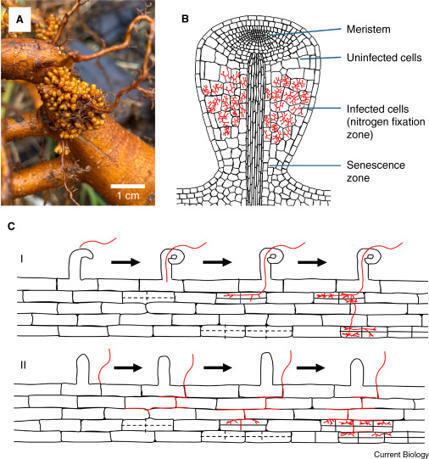
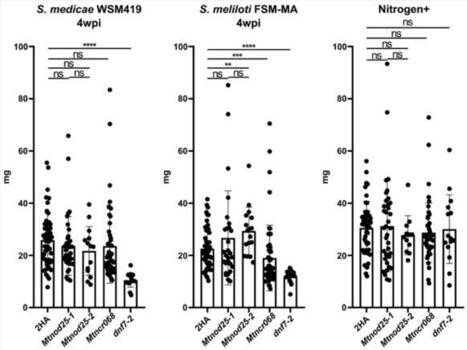
The formation of nitrogen-fixing symbiotic nodules is a complex process that involves extensive transcriptional reprogramming of legume roots to enable intracellular accommodation of host compatible rhizobia. This process requires coordinated regulation of hundreds to thousands of genes, including the induction of highly expressed genes, traditionally referred to as nodulin genes. While the functions of many nodulins have been elucidated, a substantial number remained poorly characterized, or their functions are still unclear. One such gene, NOD25, was originally identified based on differential hybridization between roots and nodules and is expressed at exceptionally high levels in Medicago nodules. MtNOD25-like proteins in IRLC legumes exhibit a repetitive modular structure flanked by conserved N- and C-terminal regions, with clade-specific repeat organization. To understand the role of NOD25 in symbiotic nitrogen fixation, we generated loss-of-function mutants in Medicago truncatula using CRISPR/Cas9-mediated genome editing. Four independent Mtnod25 mutant lines displayed normal growth under symbiotic conditions and showed no detectable defects in nodule colonization, symbiosome formation, or bacteroid differentiation. These results indicate that MtNOD25 is not essential for symbiosis in M. truncatula under the conditions tested. However, the biological function of MtNOD25 has not yet been elucidated, and its highly specialized evolutionary conservation suggests that it may have a specific, non-essential role in modulating or fine-tuning symbiotic processes under particular environmental or physiological conditions that remain to be defined.
|
|
Scooped by
Jean-Michel Ané
October 12, 8:28 PM
|
Rhizobia are soil bacteria that establish nitrogen-fixing symbioses with legumes. While many rhizobia use a Type III Secretion System to deliver “Nodulation Outer Protein” (Nop) effectors, some uniquely use these proteins to initiate nodule organogenesis, bypassing classical signalling. The molecular functions of these effectors remain largely unknown due to extreme sequence divergence. Using AlphaFold2-mediated structural proteomics, we identified a modular architecture in rhizobial effectors composed of 22 distinct structural units. We reveal that many Nop effectors are cryptic transcriptional or post-transcriptional regulators, harbouring unrecognised nucleic acid–binding modules and RNA-dependent RNA polymerase domains. Crucially, these modules are conserved in specific plant pathogens, such as gall-inducing Pantoea, where our predicted structural units align with experimentally validated DNA-binding domains. Furthermore, we discovered the BPN (B3 and PUA-like nucleic acid binding) domain as a structural mimic of plant B3-domain transcription factors, pointing to a direct mechanism for hijacking legume development. Our findings strongly suggest that rhizobia employ a modular domain-fusion strategy to act as direct genetic modulators, uncovering a conserved mechanism used by both symbionts and pathogens to hijack host developmental programmes.
|
|
Scooped by
Jean-Michel Ané
October 11, 8:15 PM
|
How the functional innovations that enabled plants to first colonize land 450 million years ago evolved remains puzzling. Here, we show that the gain of a single family of enzymes was pivotal in the evolution of two of these innovations, the cuticle that protect plants from dehydration and UV light, and the Arbuscular Mycorrhizal symbiosis promoting water and nutrient uptake. We show that functional phosphatase domain Glycerol-3-Phosphate Acyl Transferase (p-GPATs) evolved in the first land plants, concomitantly with the cuticle and symbiosis. Mutation of two p-GPATs from the liverwort Marchantia paleacea is sufficient to abolish both cuticle formation and AM symbiosis, leading to major developmental defects. We propose that the evolution of p-GPATs in land plants acted as a two birds-one stone innovation, diverting intracellular lipids to the extracellular space and providing a simple path to the evolution of two traits essential for the colonization of land.
|
|
Scooped by
Jean-Michel Ané
October 11, 8:12 PM
|
In many host-microbe symbioses, hosts develop specialized organs that house microbial symbionts. In legume-rhizobium symbiosis, these organs are called root nodules. While many studies have focused on host traits like plant growth, nodule number, and their structural changes, nodule morphology may influence rhizobial benefits (e.g., bacterial population size). Here, we investigated how variation in alfalfa nodule morphologies influences the fitness outcome of both partners. We used 117 strains and 3 alfalfa varieties to test how genetic variation influenced 1) nodule branch number, area, and rhizobial fitness at the individual nodule level and 2) the proportion of branched nodules, nodule number, and plant benefits at the whole plant level. In all tested hosts, larger or more branched nodules tend to release more rhizobia regardless of rhizobial strain, although baseline rhizobial fitness values differed across hosts. From the host perspective, the proportion of branched nodules was strongly negatively correlated with total nodule number and positively correlated with host benefit. Both host and strain genetic variation contributed to the proportion of branched nodules on a plant. Together, these results provide insight into host and rhizobial genetic contributions to nodule morphology and symbiotic outcomes, suggesting a novel direction for research in legume-rhizobium mutualism.
|
|
Scooped by
Jean-Michel Ané
October 11, 8:06 PM
|
Background and Aims
Actinorhizal root nodule symbioses are formed between a diverse group of mostly woody dicotyledonous plants and nitrogen-fixing soil Actinomycetota of the genus Frankia. Some of the most ecologically relevant actinorhizal plants are Casuarina species, used widely in shelter belts and phytoremediation due to their high tolerance to abiotic stresses and ability to thrive on marginal soils. All sequenced Frankia strains isolated from Casuarina nodules using standard culture techniques show high sequence identity and belong to a single species, Frankia casuarinae. This lack of diversity in nodules is unusual in actinorhizal symbioses. We hypothesized that Casuarina nodules are colonized by Frankia strains that could not be cultivated and exhibit genome erosion.
Methods
To test this, we directly sequenced nodule metagenomes from four countries, followed by reconstruction of metagenome-assembled genomes (MAGs).
Results
Our findings show that the dominant Frankia genotypes in field samples were far more diverse than the isolated strains and included MAGs with substantial genome reduction – one having over 25% reduction compared to F. casuarinae. Notably, we observed erosion of two types of [NiFe] hydrogenases, a phenomenon linked to evolution toward obligate symbiosis in other Frankia groups.
Conclusion
These results indicate that potentially obligate symbionts may dominate nodules in nature but had gone undetected by conventional approaches. For applications such as reforestation or tsunami shelter belts, crushed, nodule-derived strains may offer superior ecological compatibility. We speculate that Frankia strains followed two different evolutionary trajectories; one, towards obligate symbiosis accompanied by strong genome erosion, and two, towards rhizosphere colonization involving limited genome erosion.
|
|
Scooped by
Jean-Michel Ané
October 10, 8:54 PM
|
The symbiotic relationship between the legume Medicago sativa and the soil bacteria Sinorhizobium meliloti results in the formation of nitrogen-fixing root nodules. Traditional destructive methods, including paraffin sectioning, vibratome sectioning, and cryosectioning, have been applied to visualize how bacteria occupy the nodule, making it extremely difficult to obtain reliable three-dimensional information. These approaches are often combined with fluorescent labeling or staining, which can introduce additional stress affecting plant growth and nodule formation. MicroCT has emerged as a relatively quick, easy, and robust tool for plant biology that can non-destructively visualize plant histological features in three dimensions (3D), thereby avoiding destructive artifacts during sample preparation and ensuring high-fidelity 3D reconstruction. While microCT has been applied to legume root nodules, a detailed established protocol that documents the process from plant harvest and sample preparation to scanning and software visualization is lacking.
|
|
|
Scooped by
Jean-Michel Ané
Today, 11:12 AM
|
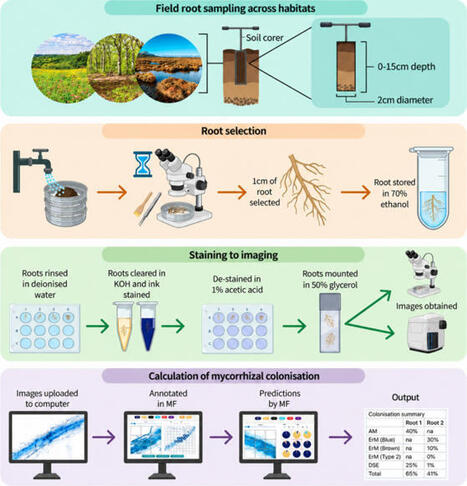
Root colonisation by endomycorrhizal fungi has long been a widely used metric in mycorrhizal studies. However, due to the significant time required to assess colonisation using traditional microscopy techniques, studies of colonisation at large scales are impractical. Machine-learning-based approaches may increase output and facilitate ecosystem assessments. We trained a machine-learning-based tool (MycorrhizaFinder) on 42 field roots (132 unique 1 cm sections, with > 100,000 tiles) and validated on a further 37 sections from grasslands and heathlands hosting common Northern European plants with arbuscular (AM) and ericoid mycorrhizal (ErM) fungal structures, and dark septate endophytes (DSE), also common in field-sourced roots. We incorporated a user-customized confidence threshold to encourage engagement with morphological ambiguities, in e.g. ErM and DSE. A Macro F1 statistic was used to assess the tool’s development performance. We provide a sample workflow from root processing and microscope slide scanning to semi-automated model training and performance evaluation. Our model performance combining all classes, the Macro F1, is conservatively 66% for arbuscular and 57% for ericoid mycorrhizal colonisation assessment. MycorrhizaFinder is user-friendly, requires no programming skills and offers flexibility for advanced agronomists or ecologists to train the tool using their own labelled mycorrhizal root datasets, including images acquired from different instruments or staining protocols. This adaptability allows users to customize the model for specific ecosystems or experimental designs. Leveraged with molecular identification and/or functional traits of fungi (e.g. arbuscules), MycorrhizaFinder supports scalable and repeatable nursery experiments and monitoring across ecosystems to assess mycorrhizal status and track land-use changes over time.
|
|
Scooped by
Jean-Michel Ané
Today, 11:08 AM
|
Symbiotic nitrogen fixation efficiency in soybean can be compromised by nodule senescence; however, the mechanisms by which rhizobial type III effectors NopL and NopP─which disrupt plant immune signaling pathways and promote symbiotic compatibility─regulate nodule senescence in soybean remain unclear. Therefore, we investigated this aspect and identified GmPRLP as a key host gene responsive to NopL and NopP, via quantitative trait locus mapping and whole-genome resequencing. Functional analysis using hairy root transformation showed that GmPRLP overexpression accelerated nodule senescence, as evidenced by increased bacteroid degradation and membrane lipid peroxidation, whereas GmPRLP silencing delayed senescence. Transcriptomic profiling and weighted gene coexpression network analysis indicated that GmPRLP promotes nodule senescence by activating ethylene signaling genes, including GmACS7, GmACO, and GmERFs. To conclude, GmPRLP mediates soybean responses to rhizobial effectors and regulates nodule senescence through the ethylene signaling pathway, providing a potential target for improving nitrogen fixation efficiency in soybean breeding.
|
|
Scooped by
Jean-Michel Ané
Today, 11:05 AM
|
Nitrogenase requires low-potential electrons to reduce N2 to produce ammonia. The direct electron donors to nitrogenase are reduced ferredoxin (Fd) and flavodoxin (Fld). The enzymes that reduce Fd or Fld for N2 fixation mainly include pyruvate-flavodoxin (ferredoxin) oxidoreductase (PFOR), ferredoxin-NADP+ reductase (FNR), Rhodobacter nitrogen fixation protein complex (Rnf), and bifurcating electron transfer flavoprotein complex (Fix). Paenibacillus polymyxa is a model for studies of nitrogen fixation, but the pathways of electron transport to nitrogenase are unknown. In this study, we characterized the electron transport pathway to nitrogenase in P. polymyxa. Deletion analysis showed that among 15 genes encoding Fds, Fld, and Fd-/Fld-reducing enzymes, only cbiW gene and pfoAB operon decreased nitrogenase activity (31% and 37% relative to wild type, respectively). Triple deletion of cbiW and pfoAB led to a reduction of nitrogenase activity by 61%. Elemental analysis and ultraviolet-visible absorption spectroscopy revealed that the purified Fd protein encoded by cbiW is a [2Fe-2S] Fd. The purified Fd protein was able to substitute for Klebsiella NifF (Fld) to transfer electrons from pyruvate to Klebsiella nitrogenase in vitro. The pfoAB operon encodes PFOR, which is composed of two subunits. Klebsiella oxytoca NifJ (PFOR) was able to support nitrogen fixation in the ΔpfoAB mutant. These findings suggest that [2Fe-2S] Fd encoded by cbiW and PFOR encoded by the pfoAB operon constitute an electron transport pathway to Paenibacillus nitrogenase.
|
|
Scooped by
Jean-Michel Ané
October 22, 8:50 PM
|
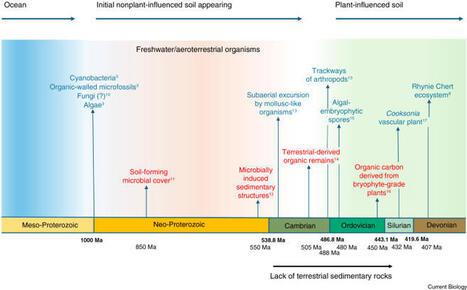
For a large community of ecosystem ecologists, plant–soil interactions have moved center stage in the understanding of both plant and soil ecology. Frequently, plants are deemed to be the main drivers of these interactions. However, soils existed before the evolution of land plants (i.e., embryophytes), and terrestrial communities were already highly diverse around 400 million years ago (Ma), reflecting an earlier origin of the organisms that populated them. But which organisms were contemporaneous at the origin of soil and in what type of environment they lived is not well established. Here, we trace the development of soil and its biotic components from the beginnings, about one billion years ago (Ga), by using the fossil record and geochemical data. We show that the first terrestrial ecosystems were probably situated near the ocean, where organisms were already adapted to high oxygen pressures and where plants were not yet present. Drawing on this, we discuss the need to rethink the primacy of plants in modern terrestrial ecosystems, considering that persistence of the soil system over deep time could help explain the enormous current biodiversity found in soil. We advocate for a shift in perspective by embracing a vision of terrestrial ecosystems with interdependent and equally important above- and below-ground system compartments. Finally, we highlight the importance of ‘bending the curve’ on the increasing rate of soil degradation and loss of soil health, and we discuss the outlook for the future of soils and their interactions with plants.
|
|
Scooped by
Jean-Michel Ané
October 19, 3:22 PM
|
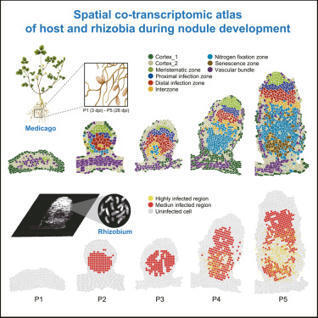
Rhizobial nitrogen fixation in legume nodules requires precise spatial and temporal coordination between host and bacterial gene expression. Here, we applied spatial enhanced resolution omics sequencing (Stereo-seq) to profile Medicago nodules across five developmental stages, generating a co-transcriptomic atlas of nodule development. Using a mixed-probe capture strategy, we simultaneously detected host and rhizobial transcripts within the same tissue sections, enabling analysis of host-microbe transcriptional coordination during symbiosis. We identified dynamic changes in host cell composition and developmental trajectories and uncovered two transcription factors, MtERF82 and MtDOF53, required for maintenance of the indeterminate nodule meristem. Rhizobial and host genes exhibited stage- and zone-specific expression patterns along the nodule apex-to-base axis. Notably, reactive oxygen species (ROS)-associated stress responses in both host cells and rhizobia were linked to symbiotic nitrogen fixation. Functional analyses further showed that MtERF71 and MtCBF1 promote nitrogen fixation by regulating ROS homeostasis and activating key symbiotic genes, highlighting stress signaling as an integral component of mutualistic symbiosis.
|
|
Scooped by
Jean-Michel Ané
October 17, 2:33 PM
|
Plants detect microbes through pattern recognition receptors that perceive conserved microbial surface motifs known as microbe-associated molecular patterns (MAMPs). Lysin motif (LysM) receptors recognize and mediate downstream responses to chitinous MAMPs. In this study, we elucidated the mechanism for the specific recognition of long-chain chitin oligomers and identified a hallmark bridge domain characteristic of the CHITIN PERCEPTION (CHIP) receptor class. Structural analysis of receptor-ligand complexes, biochemistry, and in planta functional studies of inhibitory nanobodies revealed the mechanism of size-selective, high-affinity chitin perception in Lotus japonicus and Medicago truncatula. Additionally, we identified the CHITIN ELICITOR RECEPTOR KINASE (CERK) class as low-affinity, yet essential, co-receptors and propose a mechanistic model for a ligand-induced core signaling heterocomplex. Our findings establish the structural and mechanistic basis of differential chitin perception and receptor complex assembly in chitin-elicited plant immune signaling.
|
|
Scooped by
Jean-Michel Ané
October 12, 9:00 PM
|
Rhizobial genera could benefit cropping systems tremendously because of its biological nitrogen fixation (BNF) ability. It offers several functional benefits to agro-ecosystems. We investigated BNF services by Rhizobial genera bacteria in modern agro-ecosystems with desktop research. Following a comprehensive literature review, we addressed some specific points, i.e., what services and benefits do Rhizobial genera bacteria perform throughout the process of BNF?” and “How much is the value of these services?“. To accomplish our research goals, we reviewed the literature and analyzed the ecosystem services (ESs) assessment related to BNF. Initially, a global inventory of the leguminous plants cultivated in agro-ecosystems was collected and documented. Next, each plant’s BNF content was measured and divided into four groups, ranging from extremely high to low. The roles, impacts, and services that BNF provides to agro-ecosystems were all gathered and categorized in the subsequent stage. In this work, we used the updated MEA (BNF-MEA) as the basis of developing a new framework for BNF services (ES). The replacement cost method was used to value the BNF services. Results showed that alfalfa, red clover, and white clover had the highest capacity for BNF. These plants were classified in the “very high’ class. However, three plants, including common bean, mung-bean, and bladder clover, had the lowest ability to produce BNF. According to our findings, BNF can have a significant impact on the provision of 31 services, goods, functions and benefits, both directly and indirectly. The economic value of nitrogen fixation based on approximate estimates varied between 29.10 and 248.60 $/ha. Additionally, South Africa, Australia, and Brazil had far higher economic values of BNF than other chosen nations. Utilizing the BNF service can help farmers in these countries reduce their agricultural production expenses.
|
|
Scooped by
Jean-Michel Ané
October 12, 8:32 PM
|
Plant-associated bacteria offer a sustainable alternative to chemical inputs in agriculture, yet the field performance of microbial inoculants remains inconsistent. A central but frequently overlooked cause is that bioprospecting pipelines still select strains on the basis of plant-growth-promoting activities, while the bacterial genetic traits that determine whether a strain can reach, colonise and persist in a given root compartment are rarely assessed. Previous reviews have largely catalogued growth-promoting functions or described root microbiome assembly from the plant's perspective, here we take the bacterium's. We trace the journey of a bacterium from bulk soil to its final niche and, at each stage, identify the genes and pathways (genetic determinants) that encode key bacterial traits involved, such as chemotaxis and motility, nutrient acquisition and metabolic independence, competitive and defensive arsenals, attachment and biofilm formation, evasion of plant immunity, and endophytic entry and persistence. Throughout, we use evidence from comparative genomics and metagenomics, (meta)transcriptomics, targeted mutagenesis and genome-wide screens such as Tn-seq, obtained in systems ranging from binary interactions to synthetic communities and natural soils. For each stage we examine the current state of knowledge, identify critical gaps, and propose avenues to deepen our mechanistic understanding of the bacterial traits involved in plant colonisation. We argue that this mechanistic understanding is the missing foundation for developing inoculants with more consistent and robust performance across diverse agroecosystems.
|
|
Scooped by
Jean-Michel Ané
October 12, 8:26 PM
|
In many host-microbe symbioses, hosts develop specialized organs that house microbial symbionts. In legume-rhizobium symbiosis, these organs are called root nodules. While many studies have focused on host traits like plant growth, nodule number, and their structural changes, nodule morphology may influence rhizobial benefits (e.g., bacterial population size). Here, we investigated how variation in alfalfa nodule morphologies influences the fitness outcome of both partners. We used 117 strains and 3 alfalfa varieties to test how genetic variation influenced 1) nodule branch number, area, and rhizobial fitness at the individual nodule level and 2) the proportion of branched nodules, nodule number, and plant benefits at the whole plant level. In all tested hosts, larger or more branched nodules tend to release more rhizobia regardless of rhizobial strain, although baseline rhizobial fitness values differed across hosts. From the host perspective, the proportion of branched nodules was strongly negatively correlated with total nodule number and positively correlated with host benefit. Both host and strain genetic variation contributed to the proportion of branched nodules on a plant. Together, these results provide insight into host and rhizobial genetic contributions to nodule morphology and symbiotic outcomes, suggesting a novel direction for research in legume-rhizobium mutualism.
|
|
Scooped by
Jean-Michel Ané
October 11, 8:12 PM
|
Legumes have developed a symbiotic relationship with soil bacteria known collectively as rhizobia, which when present in root nodules fix atmospheric nitrogen into a form usable by the plant. The functioning unit of symbiotic nitrogen fixation is referred to as the symbiosome and the membrane separating symbionts acts to regulate the metabolite exchange within the root nodule cells. The efflux of fixed nitrogen from the symbiosome is through an unidentified non-selective cation channel, which is inwardly rectified by cytosolic Mg2+ and has a preference for ammonium. Expression of Nodulin 26 (NOD26), a major component of the soybean symbiosome membrane, in Xenopus laevis oocytes reveals monovalent cation-induced currents. These currents display time- and voltage dependent characteristic similar to those previously observed in patch-clamp studies of the symbiosome membrane and exhibited an apparent monovalent cation preference of NH4+ > methylammonium (MeA+) ≥ K+ > Na+ ≥ C5H15NO+. GmNOD26-mediated currents in X. laevis oocytes were inhibited by divalent cations and inhibited by phosphorylation at serine 262. Together, these findings demonstrate that GmNOD26 functions as a non-selective cation channel capable of facilitating ammonium transport in nitrogen-fixing soybean nodules. Furthermore, pronounced inhibition of GmNOD26 by divalent cations provides as likely explanation for why monovalent cation-induced currents have not previously been characterised in GmNOD26-expressing X. laevis oocytes.
|
|
Scooped by
Jean-Michel Ané
October 11, 8:10 PM
|
In bacteria, the auxiliary complex SecDF–YajC participates in the Sec system, facilitating post-translational translocation of preproteins across the membrane through the SecYEG channel. Although YajC homologs are strongly conserved in rhizobial strains and may play important roles in many processes, the functions and mechanisms by which they are involved in the interaction between rhizobia and host legumes are unknown. By constructing Mesorhizobium huakuii yajC mutant, we observed an increase in the strain growth rate, but a reduction in both the biomass and average thickness of the biofilm in the yajC gene mutant compared to the wild type. Deletion of yajC gene results in severe suppression of competitive ability in the plant rhizosphere, alongside a substantial reduction in root hair curling and infection thread initiation during the early infection stages. The yajC-deficient mutant formed more numerous but smaller root nodules, with a 77% decrease in nitrogen-fixing capacity. Scanning electron microscopy analysis revealed that yajC mutant bacteroids displayed, alongside clear hallmarks of cellular deformation, dissociation, and premature senescence. From nodule bacteroid proteomic analysis, we further identified 210 differentially expressed proteins, including 32 transport-related proteins, and 10 associated with nitrogen fixation. Altogether, our findings reveal the importance of YajC-mediated transport and biofilm formation in rhizobial infection and nodule development during M. huakuii-Astragalus sinicus symbiosis.
|
|
Scooped by
Jean-Michel Ané
October 10, 8:57 PM
|
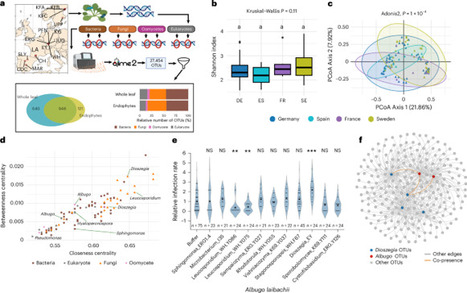
Microbiome homeostasis is crucial for host health and ecosystem function, yet the molecular and ecological mechanisms underlying community assembly and stability remain elusive. Here we uncover a conserved yeast–oomycete association that promotes their coexistence in the leaf microbiome. Using a continental-scale microbiome survey, we identified an asymmetric mutualistic interaction between two eukaryotic hub microbes: the yeast Dioszegia hungarica and the obligate oomycete Albugo laibachii. We show that Dioszegia facilitates Albugo colonization by supplying thiamine via a dedicated membrane permease, alleviating Albugo’s auxotrophy. Genomic and transcriptomic analyses indicate that natural selection has acted on thiamine production in Dioszegia, shaping this metabolic complementation. In planta assays further suggest that Albugo presence supports Dioszegia persistence under glasshouse conditions. Our study illustrates how the evolution of nutrient cross-feeding mediates microbial coexistence and microbiome stability. Targeting microbial nutrient flows offers new strategies for engineering microbiomes and enhancing plant resilience in natural and agricultural systems. Evolution of nutrient cross-feeding between a yeast and oomycete mediates microbial coexistence and leaf microbiome stability.
|