 Your new post is loading...

|
Scooped by
Jean-Michel Ané
Today, 10:21 AM
|
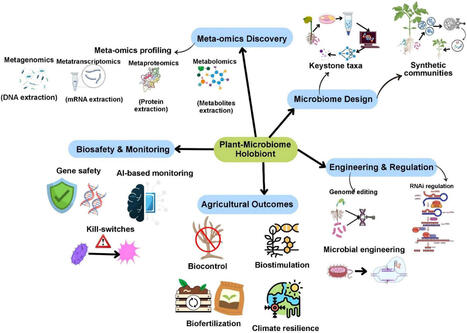
Plant-associated microbiomes are central to crop productivity, nutrient efficiency, and stress resilience, yet conventional microbiome manipulatio
|
|
Scooped by
Jean-Michel Ané
May 5, 8:55 PM
|
Background
Phosphate (Pi) is essential for plant growth, but its bioavailability in soil is often limited. Forming symbiotic associations with arbuscular mycorrhizal fungi can significantly enhance the host plant’s root Pi acquisition ability. PHT1 transporters, such as MtPT4, are involved in Pi uptake from arbuscules. It is unknown how Pi is exported from the mycorrhizal root to the vascular bundle.
Results
Here, we found the medicago vascular apoplastic Pi exporter PHO1 proteins not only mediate Pi transport in the direct Pi uptake pathway but also influence arbuscular mycorrhizal symbiosis. MtPHO1s showed Pi export activities when expressed in nicotiana leaves. The MtPHO1.3 tnt1 insertion mutant displayed significant growth inhibition and reduced shoot Pi content. Moreover, AM colonization was lower in the Mtpho1.3 mutant compared to the wild type. Consistent with this, the expression level of the strigolactone biosynthesis gene DWARF27 was suppressed in Mtpho1.3 mutant, and root exudates from the mutant induced less fungal hyphal branching. Furthermore, the Mtpho1.3 mutant exhibited increased arbuscule degeneration, suggesting that Pi levels in the plant are key to regulating arbuscule lifespan.
Conclusion
Our analysis shows that MtPHO1.3 also exerts function in mediating Pi translocation during arbuscular mycorrhizal symbiosis.
|
|
Scooped by
Jean-Michel Ané
May 4, 3:59 PM
|
Symbiotic nitrogen fixation (SNF) relies on aerobic respiration, yet the key enzyme, nitrogenase, is extremely oxygen labile. Leghemoglobin (Lb) resolves this “oxygen paradox” by buffering and facilitating O2 transport. However, the dynamic regulation of Lb during nodule development remains poorly understood. Earlier results from our laboratory demonstrated that site-specific serine phosphorylation of Lb reduces its oxygen sequestration capacity. Here, we investigated the spatio-temporal regulation of Lb with the progress of rhizobial load during SNF. Fluorescence immunohistochemistry (FIHC) using anti-Lb antibody revealed that its localization gradually shifted from the plasma membrane to the cytoplasm of infected cells as nodules mature. Using phospho-peptide (Lb) specific antibodies, we found that serine phosphorylation triggers this translocation. Furthermore, FIHC in conjunction with immunoprecipitation followed by immunoblotting with phospho- and non-phospho-peptide specific antibodies demonstrated that the non-phosphorylated form is detectable as early as 9 dpi, whereas the phosphorylated forms were first detected at 11 dpi and progressively accumulated during nodule maturation. This spatio-temporal transition coincides with increasing rhizobial colonization and is accompanied by a decline in the non-phosphorylated pool. Therefore, the increased cytoplasmic pool of phosphorylated Lb, which exhibits reduced oxygen sequestration capacity, likely functions in promoting oxygen transport to sustain elevated rhizobial respiration. Together, these findings demonstrate that site-specific serine phosphorylation represents one of the key regulatory mechanisms linking Lb localization dynamics with progression of rhizobial infection, thereby contributing to the maintenance of oxygen homeostasis during SNF.
|
|
Scooped by
Jean-Michel Ané
May 1, 11:55 AM
|
As the global population continues to rise and resources become increasingly limited, hunger remains a critical challenge, projected to worsen by 2050. Ensuring a sustainable and sufficient food supply requires innovative solutions, with microbiology playing a key role in enhancing food production, quality, safety, and nutrition, contributing to the United Nations Zero Hunger goal. Microorganisms are essential to agriculture, food processing, and health, offering ecofriendly alternatives to chemical-intensive methods. Beneficial microbes such as nitrogen-fixing bacteria, mycorrhizal fungi, and phosphate-solubilizing bacteria improve soil fertility, increasing crop yield and sustainability. Biopesticides and biofertilizers reduce reliance on synthetic chemicals, promoting healthier ecosystems. This chapter explores the diversity and applications of microorganisms in agriculture, food, and health, emphasizing their immense potential in solving global food challenges. By harnessing microbial breakthroughs, we can develop sustainable solutions to combat hunger and create a resilient global food system.
|
|
Scooped by
Jean-Michel Ané
April 28, 11:37 AM
|
Root nodule symbiosis and pathogen fungi infection represent contrasting biotic interactions that affect plant growth and demand precise cellular reprogramming in Phaseolus vulgaris. Inoculation with Rhizobium tropici promoted progressive nodule organogenesis, reaching their maximum nodule number and diameter at 21 and 30 days post-inoculation, respectively. This developmental progression was accompanied by significant reductions in plant height, leaf and root weight, alongside an increase in photosynthetic pigment content, consistent with the energetic requirements of symbiosis establishment. In contrast, infection by the necrotrophic fungus Sclerotinia sclerotiorum caused extensive foliar necrosis and high infection disease, confirming the susceptibility of P. vulgaris. To explore the molecular regulators associated with these processes, 11 ROP (Rho of Plants) GTPase genes were characterized in the P. vulgaris genome based on the Ras superfamily domain (PF00071) and the Rho-specific motif (PS51420). Structural and phylogenetic analyses grouped PvROPs into five conserved subfamilies, while promoter inspection revealed cis-regulatory elements associated with nodulation (OSE1ROOTNODULE and OSE2ROOTNODULE) and immune signaling (WRKY710S), suggesting context-dependent transcriptional control. Expression analyses demonstrated that PvROPs respond dynamically to both interactions. During early symbiosis, PvROP5, PvROP8, and PvROP10 were significantly upregulated at 7 dpi, indicating roles in infection thread formation and initial nodulation signaling, whereas PvROP1, PvROP7, and PvROP9 were upregulated at 21 dpi, likely contributing to nodule maturation and functionality. Conversely, PvROP1, PvROP3, PvROP7, and PvROP10 were strongly induced in leaves infected with S. sclerotiorum, suggesting a potential role in the plant defense response. Our results provide valuable insight into the role of PvROPs to understand how legumes balance both pathogenic and symbiotic interactions in P. vulgaris.
|
|
Scooped by
Jean-Michel Ané
April 28, 11:30 AM
|
Transcription factors play essential roles modulating gene expression during plant development and the adaptation to environmental cues through the control of morphogenetic programs. In the root nodule symbiosis between legumes and rhizobia, two coordinated morphogenetic programs are activated by the perception of bacterial signals: the organogenesis of the nodule, a lateral root organ specialized in nitrogen fixation, and the infection process that allows the bacteria to colonize the nodule. These programs are influenced by the action of phytohormones, mainly auxin, cytokinin, ethylene, gibberellin, and brassinosteroid, which act modulating the activity of different families of transcription factors. In the past years, significant advancements have been made in understanding how transcription factors of the NIN (Nodule Inception), GRAS (GIBBERELLIN-ACID INSENSITIVE (GAI), REPRESSOR of GA1 (RGA), and SCARECROW (SCR)), ERF (Ethylene Response Factor), ARF (Auxin Response Factor), LBD (Lateral Organ Boundaries Domain), and SHI/STY (SHORT INTERNODES/STYLISH) families function at different developmental stages of bacterial infection and nodule formation and differentiation. Here, we review recent advances of this hormonal-mediated modulation of transcription factors with key roles in the root nodule symbiosis and their evolutionary origin from other developmental programs, as well as their post-transcriptional regulation by small RNAs. We also provide a perspective on how epigenomic approaches can shed light on how these transcription factors influence chromatin remodeling at loci containing key symbiotic genes.
|
|
Scooped by
Jean-Michel Ané
April 26, 4:50 PM
|
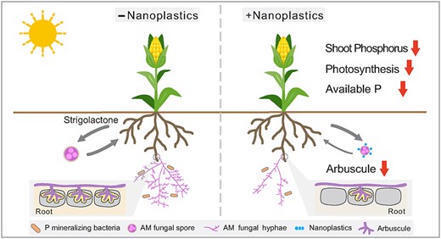
More than 80% of land plants form symbiotic relationships with arbuscular mycorrhizal (AM) fungi for nutrient uptake. As emerging soil pollutants, nanoplastics (NPs) accumulate in both crop and AM fungal tissue, posing non-negligible toxicity and health risks. However, whether and how NPs can impact plant-AM fungal partnership throughout the symbiotic process remains poorly understood. Here, using axenic root-fungal culture, fluorescence NP tracking, and real-time symbiotic signal monitoring, we show that during pre-colonization phase, NPs reduced spore germination rates (−48%) due to the NP accumulation on spore surface, hindering symbiotic signal perception. During the colonization phase, NPs entered fungal cells, disrupted organelles, and accelerated hyphal senescence, consequently reducing hyphal branching length (−22%) and secondary spore production (−32%). In real-world soil, inoculation of secondary spores (reproduced under NPs) formed fewer arbuscule structures (−46%) within maize roots with reduced carbon allocation to AM fungus, leading to lower hyphal length density (HLD) (−24%). During the post-colonization phase, lower HLD impaired the well-known function of phosphorus (P) mineralization by hyphae-enriched bacteria, reduced soil available P (−5.7%) and maize shoot P (−20%), eventually resulting in compromised plant performance. Our findings reveal an integrated yet largely underexplored mechanism of how NPs hinder plant performance by disrupting the dynamic relationship between plants and their symbiotic partners. In a broader context, understanding the alteration of plant-microbial interaction (rather than separately) under emerging stress can provide ecologically relevant implications for sustaining agricultural and terrestrial ecosystems.
|
|
Scooped by
Jean-Michel Ané
April 25, 4:47 PM
|
Mutualism in the symbiosis between arbuscular mycorrhizal fungi and plants is based upon the exchange of carbon for soil minerals, with phosphate being of central importance. The exchange of nutrients occurs when the fungus transiently colonises root cells, producing hyphal structures called arbuscules. The movement of phosphate from fungus to plant is well established, however its coordination and regulation at the ephemeral arbuscules remains elusive. Here, non-invasive imaging captures the complete growth and collapse of the arbuscules in unprecedented resolution, revealing heterogeneity in arbuscule development. Tracking the dynamics of rice PHosphate Transporter 1;11 (OsPHT1;11/ PT11) as a proxy for symbiotic phosphate transport shows consistent localisation across diverse arbuscules. However, we uncover phosphate-responsive variability in PT11 abundance, representing an essential, cellular-level layer of nutrient regulation. Such plasticity in arbuscule phosphate uptake capacity evidences uncoupling of arbuscule presence and arbuscule function, thereby demonstrating that arbuscules are not identical units of nutrient exchange.
|
|
Scooped by
Jean-Michel Ané
April 24, 5:05 PM
|
The search for life now extends beyond the traditional habitable zone to include the icy moons of Jupiter and Saturn. These moons feature ice-covered surfaces overlying substantial oceans formed primarily of liquid water and other potential constituents, such as ammonia. On Earth, ammonia supports biochemistry at low concentrations by providing nitrogen but becomes disruptive at higher concentrations. Ammonia could therefore influence the habitability of extraterrestrial oceans, yet this topic has received limited attention in the literature. This review synthesises current research on ammonia in Saturn’s icy moons, Enceladus and Titan, and its effects on terrestrial life. We summarize the celestial incorporation, speciation, and phase behaviour of ammonia and review data on its occurrence and concentration in icy moon oceans. We examine the role of ammonia in prebiotic chemistry, biochemistry, and toxicity. Focusing on bacteria, we compare known survival limits in ammonia to estimated ammonia concentrations on Enceladus and Titan. We find that bacterial survival limits exceed concentrations estimated on Enceladus, but are below those estimated on Titan, and propose that ammonia measurements are crucial for assessing extraterrestrial habitability. Finally, we highlight outstanding knowledge gaps and challenges that influence our understanding of how ammonia shapes the potential for life beyond Earth.
|
|
Scooped by
Jean-Michel Ané
April 21, 10:12 AM
|
Root exudation mediates the delivery of plant primary and secondary metabolites into soil, where they regulate plant–microbe interactions and terrestrial carbon cycling. Conventional exudate analyses quantify total root-released carbon yet obscure the spatial origin and rhizosphere influence of individual compounds. Here, we develop a rhizobacterial biosensor platform, named Suc-MAPP, to map local exudate profiles along the surface of colonized root tissues. Focusing on sucrose, we engineered sfGFP-based, sucrose-responsive gene circuits in Pseudomonas putida KT2440 for live imaging of exudate concentrations in the micromolar range. These biosensors reveal spatially structured sucrose exudation patterns across eudicots and monocots and implicate photoassimilated source–sink dynamics as a major determinant. We further apply this platform to phenotype exudation modulated by synthetic gene circuitry in Arabidopsis thaliana, identifying genetic design rules for graded sucrose release and quantifying how engineered export sculpts rhizosphere assembly of a defined bacterial community. Together, these results establish programmable rhizobacterial biosensors as tools to spatially resolve plant–environment carbon exchange in situ and provide a framework for extending this approach to diverse exudate targets.
|
|
Scooped by
Jean-Michel Ané
April 21, 10:05 AM
|
Legumes host nitrogen-fixing bacteria, called rhizobia, within specialised root structures called nodules, where carbon from the plant is exchanged for ammonia fixed from N2 by the bacteria. Legumes can host multiple bacterial strains at the same time, that vary in their fixation effectiveness, but legumes sanction nodules containing less effectively fixing strains by reducing the provision of nutrients. Understanding how sanctions are applied by plants and how bacteria may try to avoid them is important for understanding the stability of legume-rhizobial symbioses. Using near isogenic Rhizobium leguminosarum strains, on pea, we demonstrate that sanctions are sensitive to the proportion of nodules occupied by a less effective strain and by using split roots show that sanctions are applied based on a global comparison of nodules across the plant’s root system. By using several rhizobia with different levels of fixation, but all derived from the same parent, we show that pea plants can differentiate between bacteria with relatively small variations in fixation effectiveness. We demonstrate that peas integrate global signals to determine whether individual nodules are sanctioned. At the same time these results show that poorly fixing strains can avoid sanctions if they dominate nodulation.
|
|
Scooped by
Jean-Michel Ané
April 19, 11:07 AM
|
Desert ecosystems in Kuwait are increasingly affected by land degradation, resulting in nutrient-limited soils that constrain native plant establishment. Harnessing indigenous diazotrophic bacteria adapted to arid environments may provide a sustainable strategy to improve plant growth and nutrient acquisition. Free-living and root-associated nitrogen-fixing bacteria contribute substantially to nitrogen inputs in arid ecosystems and may enhance plant growth, performance and nutrient acquisition under nutrient-poor conditions. This study evaluated the growth performance and nutrient uptake ability of four native plant species of Kuwait following inoculation with a consortium of selected indigenous putative diazotrophs isolated from the Kuwait desert soils. The seedlings of Vachellia pachyceras were inoculated with both indigenous root-nodule bacteria isolated from Kuwait desert and a commercial inoculum to evaluate their symbiotic efficiency. The seedlings were cultivated under greenhouse conditions using either native desert soils or a potting mix substrate to assess the influence of growth medium or inoculation response. Across species, inoculation significantly enhanced plant dry mass and nutrient uptake compared to the non-inoculated controls. The magnitude of improvement varied among bacterial density, host plants, and growth substrate. These findings support the potential use of indigenous diazotrophs as biofertilizers to enhance plant growth and nutrient uptake of native plant species, and for restoration and revegetation efforts in arid environments. However, direct measurements of nitrogen fixation were not conducted and should be addressed in future field-based studies. This study represents the first evaluation of Kuwait’s native seedlings inoculated with indigenous diazotrophs, highlighting their potential for sustainable ecosystem restoration.
|
|
Scooped by
Jean-Michel Ané
April 17, 2:17 PM
|
Calreticulins are multifunctional proteins involved in calcium homeostasis, protein folding, and cellular signaling. In common bean (Phaseolus vulgaris), the molecular mechanisms that regulate infection and nodule development remain incompletely understood. The main objective of this study was to characterize the role of the calreticulin gene PvCRT08 during infection and nodulation processes. We first analyzed the calreticulin gene family in the P. vulgaris genome and identified three members, with PvCRT08 showing the highest transcript accumulation in roots and after inoculation with rhizobia. Spatial and temporal promoter analyses in transgenic composite bean roots revealed PvCRT08 activity in root hairs and in infected cells and vascular bundles of mature nodules. RNA interference (RNAi)-mediated PvCRT08 down-regulation in transgenic roots increased the number of infection threads and enhanced nitrogen fixation efficiency, leading to the formation of larger and more functional nodules, although total nodule number was unaffected. In contrast, overexpression of PvCRT08 impaired infection thread progression, reduced the expression of key nodulation marker genes (PvCyclin and PvNIN), decreased nodule number, and diminished nitrogen fixation capacity. These findings identify PvCRT08 as a key regulatory component of early infection events and nodule development in common bean. Furthermore, the study provides new insights into the molecular control of symbiotic efficiency and highlights PvCRT08 expression is critical to optimize the equilibrium between infection efficiency and nodule functionality.
|
|
|
Scooped by
Jean-Michel Ané
Today, 10:16 AM
|
Arbuscular mycorrhizal fungi (AMF) represent a key biological strategy for enhancing agricultural resilience under extreme climatic events such as drought
|
|
Scooped by
Jean-Michel Ané
May 5, 1:47 PM
|
Improving the effectiveness of microbial inoculants for soybean is essential to enhance biological nitrogen fixation and reduce fertilizer dependence; however, inoculated Bradyrhizobium strains frequently display inconsistent field performance. Inoculation is usually carried out with single-strain formulations, overlooking the possible influence of the native soil microbiota on nodulation success. This limitation may be addressed by formulating inoculants with consortia that include selected members of the soil microbiota. To this end, a synthetic microbial community (SynCom) was developed through a host-mediated microbiome engineering approach guided by leaf chlorophyll content as a rapid, non-destructive plant trait. The experiment was initiated by inoculating soybean plants with a consortium of 9 Bradyrhizobium spp. and 14 non-rhizobial soil isolates. Across eight consecutive selection rounds under gnotobiotic conditions, rhizosphere communities associated with superior plant performance were pooled and propagated. Recurrent selection induced significant shifts in community composition, consistently favoring Bradyrhizobium diazoefficiens as the dominant nodulating member and enriching taxa from Pseudomonadales, Burkholderiales, and Sphingomonadales. Sequencing-based profiling and network analysis suggested the emergence of a cohesive and functionally enriched community, with increased potential for nitrogen transformations and organic matter turnover. When evaluated in non-sterile soil, the SynCom derived from the sixth selection round increased nodule number and biomass relative to an uninoculated control and a commercial inoculant strain. These results suggest that plant-guided selection can steer rhizosphere community assembly toward beneficial configurations and support the development of improved soybean bioinoculants.
|
|
Scooped by
Jean-Michel Ané
May 4, 3:56 PM
|
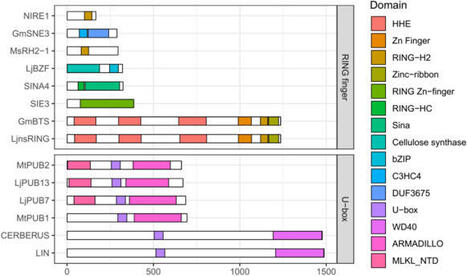
Symbiotic nitrogen fixation (SNF) by legumes is essential for sustainable agriculture, providing plant-available nitrogen while reducing reliance on synthetic fertilizers. The establishment of legume-rhizobium symbiosis requires tightly regulated host signaling to coordinate rhizobia infection, nodule development, and nitrogen fixation, while preventing excessive colonization or immune activation. Accumulating evidence indicates that ubiquitination, mediated by E1, E2, E3 ubiquitin ligases and deubiquitinating enzymes, plays a central role in controlling multiple stages of this process. In this review, we summarize current knowledge on ubiquitination-mediated regulation of symbiotic nitrogen fixation, with a focus on early symbiotic signaling and nodule development. We highlight key E3 ligases that modulate Nod factor receptor homeostasis, receptor-associated kinases, transcription factors, and infection thread growth, and discuss how ubiquitination interfaces with nutrient and stress signaling pathways. Finally, we outline key knowledge gaps and discuss the potential of manipulating ubiquitination pathways to improve nodulation efficiency and nitrogen use efficiency in crops.
|
|
Scooped by
Jean-Michel Ané
April 30, 5:32 PM
|
The rhizobia-legume symbiosis involves nodulation and nitrogen fixation, which are vital bioprocesses for the sustenance of agriculture, land and ecosystem, and the global nitrogen cycle. Legume plants and rhizobia interact intricately, resulting in the formation of specialized structures known as root nodules. Root nodules enhance soil fertility and promote more vigorous plant growth by converting atmospheric nitrogen into a form that plants can utilize. This symbiosis is regulated by complex and finely tuned molecular pathways that involve signal exchange during host recognition, nodulation, and nitrogen fixation, ensuring the successful initiation and maintenance of the symbiosis. This interaction comes with specific difficulties. This review explores the intricate dynamics of the symbiotic relationship between legumes and rhizobia. It involves the molecular, genetic, and ecological factors that govern this connection, providing a thorough understanding of its advantages and disadvantages. By examining these facets, this review aims to illuminate rhizobia’s potential to enhance legume yields and promote more environmentally conscious farming practices, while acknowledging the obstacles that must be overcome to maximize this mutualistic association.
|
|
Scooped by
Jean-Michel Ané
April 28, 11:32 AM
|
Plant–microbe interactions shape key agronomic traits, yet breeding strategies to harness them remain unclear.
We propose distinguishing the varying population, which supplies heritable variation, from the carrying population, where the selected property is expressed.
In traditional breeding, the varying and carrying populations coincide within a single organism, whereas in novel strategies, they are distributed among plants and microorganisms, with one partner varying and the other carrying the selected property.
This distinction defines holobiont breeding as a strategy in which both plants and microorganisms are combined to form a varying population, enabling the selection of interspecific indirect genetic effects.
Our framework builds on the replicator–interactor distinction by localizing these roles within plant–microorganism associations, thereby making it operational for breeding program design.
|
|
Scooped by
Jean-Michel Ané
April 26, 4:52 PM
|
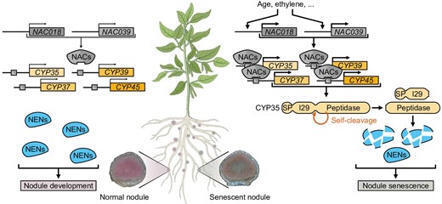
In legumes, symbiotic root nodules undergo senescence in response to developmental or environmental cues. This process determines the maintenance and nitrogen-fixing capacity of the root nodules, but the molecular mechanisms underlying its initiation are poorly understood. The cysteine protease CYP35 is a positive regulator of nodule senescence in soybean (Glycine max), but its substrates remain unknown. Here, we demonstrate that CYP35 promotes nodule senescence by cleaving a subset of Nodule-Enriched Nodulin proteins (NENs). Sequence and phylogenetic analyses indicate that CYP35 is a cathepsin L-like cysteine protease, with Cys149 as a key catalytic residue. CYP35 physically interacts with a distinct subfamily of eight NENs, NEN1–8. Soybean quadruple and quintuple nen mutants obtained by multiplex gene editing develop nodules with accelerated senescence and reduced nitrogenase activity, whereas over-expression of NEN2 or NEN5 delays senescence and enhances nodule function. CYP35 proteolyzes NEN2, NEN5, NEN6, and NEN7 in vitro and cleaves NEN2 in vivo in a Cys149-dependent manner. Our findings establish a direct molecular link between cysteine protease–mediated Nodulin cleavage and the onset of nodule senescence in soybean, providing insights into the regulation of nodule lifespan and nitrogen fixation.
|
|
Scooped by
Jean-Michel Ané
April 26, 4:43 PM
|
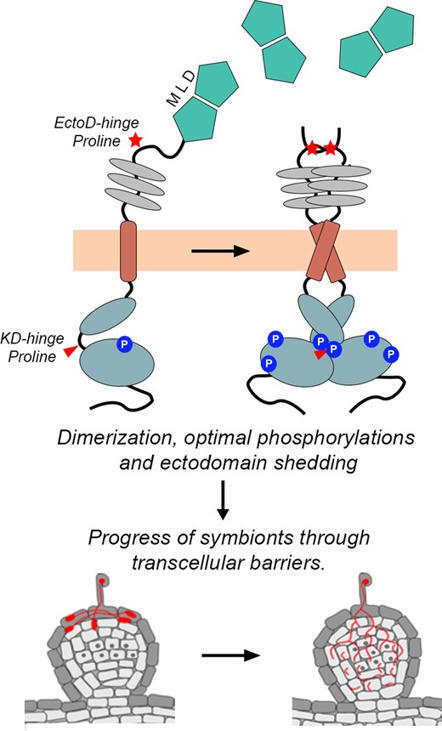
Symbiosis receptor kinase (SYMRK), a malectin-like-domain/leucine-rich-repeat receptor-like-kinase (MLD-LRR-RLK), is the upstream-most component in the common-symbiosis-signaling-pathway. We highlight 2 proline residues that were distinctly acquired by SYMRK orthologs in its hinge regions to constitute a signaling module for allowing progress of symbionts across transcellular barriers during rhizobia-legume symbiosis. Within the ectodomain hinge (EctoD-hinge), all MLD-LRR-RLKs have a conserved W1xnGDPCxnW2×4C motif, where SYMRK orthologs within legumes have a distinct signature with a proline preceding W2 enabling cleavage of SYMRK ectodomain for releasing MLD. Within the kinase hinge (KD-hinge) at gatekeeper + 1 position, a conserved glutamate in MLD-LRR-RLKs is replaced by proline in all SYMRK orthologs that enabled its dual-specific kinase activity for ensuring ectodomain cleavage. Substitution of either proline restricted cortical progression of symbionts, forming infection patches in the nodule apex without affecting epidermal invasion and nodule organogenesis. This halt was entirely overcome by ectopic expression of free MLD, demonstrating the released MLD has an active role in progress of symbionts. Overall, we show that conservation of distinct prolines in hinge regions of SYMRK orthologs in legumes generates a signaling module involving dimerization and optimal phosphorylation of SYMRK for releasing MLD as an active transducer of symbiosis signaling.
|
|
Scooped by
Jean-Michel Ané
April 25, 12:36 PM
|
Legume-rhizobial symbiosis, involving the intracellular accommodation of rhizobia within host cells for nitrogen fixation, represents a unique model among plant-microbe interactions. While this symbiosis requires sophisticated regulatory networks, direct host control over symbiont proteins remains largely elusive. Here, we demonstrate that soybean Nodulation Receptor Kinase (GmNORK) interacts with and directly phosphorylates the Sinorhizobium fredii HH103 effector NopZ. This host-mediated phosphorylation promotes NopZ nuclear/perinuclear enrichment and is associated with enhanced NopZ interaction with the nucleoporin GmNENA at the nuclear envelope/nuclear pore complex, establishing a key signaling step that links membrane-proximal symbiotic signaling to the nuclear pore. Expression of phosphomimetic NopZ variants enhances soybean nodulation, whereas GmNENA-silencing in soybean roots reduces nodule numbers. Our findings reveal a previously unknown model for plant-microbe interactions, where the direct phosphorylation of a bacterial effector by a host receptor kinase provides an essential regulatory mechanism to direct effector localization and promote the symbiotic program.
|
|
Scooped by
Jean-Michel Ané
April 21, 10:21 AM
|
Plants exist as complex holobionts, whose health and productivity depend on dynamic interactions with diverse microbial partners. This chapter explores the ecological, molecular, and biotechnological dimensions of plant-microbe relationships, tracing the continuum from natural symbioses to their translation into microbe-based agricultural applications. It examines how plants actively structure their microbial communities across distinct yet interconnected compartments, such as the rhizosphere, phyllosphere, and endosphere, and how these microorganisms in turn modulate plant physiology, nutrient acquisition, and defense. Moving beyond the study of individual strains, we discuss the growing relevance of community-level approaches and synthetic microbial consortia as frameworks to decipher and replicate the ecological principles that sustain beneficial interactions. Finally, this chapter reflects on how the integration of ecological knowledge with emerging technologies such as synthetic biology, systems modeling, and artificial intelligence offers new opportunities to design resilient, predictable, and sustainable microbe-based solutions. By learning from these naturally optimized alliances, we can guide the transition to more adaptive and sustainable agricultural systems while sustaining plant health and productivity.
|
|
Scooped by
Jean-Michel Ané
April 21, 10:11 AM
|
Soybean plays a crucial role in meeting nitrogen demands through biological nitrogen fixation (BNF), a process highly dependent on phosphorus availability. Low-phosphorus (LP) stress significantly impairs nodule development, thereby affecting soybean growth and productivity. Genome-wide association study (GWAS) was conducted using the ratio of the nodule numbers (RNNs) under normal phosphorus condition and low-phosphorus condition in a natural population with 272 soybean accessions grown in three environments. A total of 21 novel single nucleotide polymorphisms (SNPs) related to nodule-related traits located on soybean chromosome 5 and chromosome 6 were repeatedly detected in two environments. Among them, 18 SNPs related to the ratio of the nodule number to the total plant weight under the normal phosphorus (NP) condition to that under the LP condition (RNP) formed a SNP cluster, and one SNP (AX-94275075) in this SNP cluster was detected simultaneously for multiple traits. A candidate gene, named GmbHLH135, which encodes a member of the basic helix-loop-helix (bHLH) family of transcription factors, was functionally characterized. The expression of GmbHLH135 was affected by low-phosphorus stress. Overexpressing and suppressing GmbHLH135 in soybean hairy roots resulted in a decreased and increased nodule number, respectively. GmbHLH135-overexpressing transgenic soybean lines presented decreased nodule number, brassinosteroids (BR) contents, plant biomass and yields. These findings could highlight the role of identified significant SNPs and the candidate gene GmbHLH135 in regulating nodule development under LP stress, provide valuable insights into the molecular mechanisms underlying phosphorus-mediated nodule growth and offer potential targets for soybean breeding.
|
|
Scooped by
Jean-Michel Ané
April 20, 3:46 PM
|
Root nodule symbiosis (RNS) is found in approximately 16-18 widely-separated lineages within the "nitrogen-fixing nodulation clade (NFNC)". Although modeling of trait gain and loss across approximately 13,000 species within the rosid group indicates multiple gains and losses, there is no consensus about whether RNS had a single or multiple origins; and our understanding is fragmentary regarding the molecular mechanisms underlying those changes. Evolution of a new organ and functions involves many thousands of genes; but the evolutionary histories for many of these genes may be uninformative regarding RNS evolution. A portion of the genes, however, are likely to be derived from prior gene duplications and to have acquired new functions or to have come under new regulatory patterns. Whole genome duplications (WGDs) could conceivably enable the necessary neo-or sub-functionalization for new roles in the nodule. All species that exhibit RNS share a history of several ancient WGDs; but the last such common WGD for these species was the "gamma" paleohexaploidy that occurred early in the core eudicot lineage, ~120 Mya. This presents a puzzle: If legume RNS within the NFNC only arose in the Late Cretaceous, several tens of millions of years after the gamma event, what explains the long, seemingly quiescent interval and the many eudicot lineages without RNS? This study focuses on a collection of gene superfamilies with additional independent WGDs that appear to have occurred in the interim period, after the gamma triplication and prior to the evolution of RNS, identifying several that are both essential for RNS and that show evidence of critical roles of both ancient WGDs and more recent local duplications.
|
|
Scooped by
Jean-Michel Ané
April 17, 2:18 PM
|
Legumes establish symbiotic partnerships with soil bacteria that convert atmospheric nitrogen into plant-available forms. Symbiotic bacteria enter through root hairs following recognition by cell surface receptors that help identify compatible symbionts. However, many root hairs express these receptors, and it has long remained unclear why only a small fraction become infected. Here, we use single-cell transcriptomics to show that legumes pre-specify a rare root hair population for infection before bacterial contact. These susceptible root hairs represent less than one percent of the total, express infection-associated genes prior to encountering symbionts and are conserved in distantly related legumes. Their abundance is regulated by the hormone ethylene and correlates with infection capacity. Our findings reveal that root hair cells do not respond uniformly to symbionts but are instead transcriptionally specialised in advance to control infection entry points. This pre-specification provides a mechanism to balance symbiotic benefits against pathogen infection risks and may exemplify a more general strategy used by multicellular hosts to spatially restrict microbial access.
|














Mycorrhizal "nodules"