E-SANTÉ : COMPRENDRE. RELIER. TRANSFORMER.
315.6K views | +5 today
E-SANTÉ : COMPRENDRE. RELIER. TRANSFORMER.

Une veille sur la santé numérique en France et à l’international : politiques publiques, données, infrastructures, IA, services et usages. Études, rapports et retours de terrain sélectionnés par Lionel Reichardt, Pharmageek, pour comprendre les transformations et éclairer les décisions.

ESSAI
Your new post is loading...
Rescooped by Lionel Reichardt / le Pharmageek from Health3.0- Migration towards Health as a Service
December 11, 2012 11:45 AM
Scoop.it!

Utah hospital system first to publish physician reviews online - EHRIntelligence.com

Utah hospital system first to publish physician reviews online - EHRIntelligence.com | E-SANTÉ : COMPRENDRE. RELIER. TRANSFORMER. | Scoop.it
Utah hospital system first to publish physician reviews onlineEHRIntelligence.comPatients and consumers at the University of Utah Health Care are the first beneficiaries of online physician reviews and comments, according to a public statement by...

Via Gilles Jourquin
No comment yet.
Scooped by Lionel Reichardt / le Pharmageek
December 11, 2012 11:20 AM
Scoop.it!

Two Simple Ways Pharma Can Use the New Facebook Features

Two Simple Ways Pharma Can Use the New Facebook Features | E-SANTÉ : COMPRENDRE. RELIER. TRANSFORMER. | Scoop.it
New features from Facebook, including Open Graph, might open up new ways for pharma to interact with people on Facebook
No comment yet.
Rescooped by Lionel Reichardt / le Pharmageek from Santé-pharma : digital, mobile & réseaux sociaux
December 11, 2012 9:48 AM
Scoop.it!

La pharma et le digital – Episode3

La pharma et le digital – Episode3 | E-SANTÉ : COMPRENDRE. RELIER. TRANSFORMER. | Scoop.it
Cet article est le troisième et dernier d’une série consacrée à l’utilisation du digital au sein de l’industrie pharmaceutique au cours des dernières années. Mon le premier billet sur la pharma et ...

Via Isabelle Delignière-Léglise
No comment yet.
Rescooped by Lionel Reichardt / le Pharmageek from DMP DP e-prescription
December 11, 2012 9:45 AM
Scoop.it!

L’Asip santé lance une nouvelle version du site DMP

L’Asip santé lance une nouvelle version du site DMP | E-SANTÉ : COMPRENDRE. RELIER. TRANSFORMER. | Scoop.it
L’Asip Santé (Agence des systèmes d’information partagés de santé) a lancé au mois de novembre une nouvelle version du site Internet DMP. Présentation. Le site web dmp.gouv.fr, développé par l&rsqu...

Via Hi_Camille_
No comment yet.
Rescooped by Lionel Reichardt / le Pharmageek from #DigitalHealth
December 11, 2012 12:48 AM
Scoop.it!

Catching two waves: Digital healthcare and smartphones

Catching two waves: Digital healthcare and smartphones | E-SANTÉ : COMPRENDRE. RELIER. TRANSFORMER. | Scoop.it
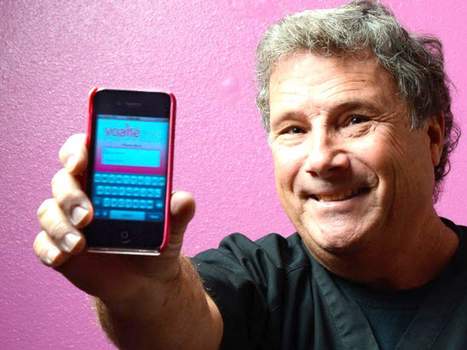
As chief executive of the company that turned the iPhone into a portable nursing station, Voalte Inc.'s Rob Campbell now faces the happy -- but hectic -- consequences of being in the right place at the right time.  
Via Sam Stern, dbtmobile, Thibaud Guymard, Denise Silber
No comment yet.
Scooped by Lionel Reichardt / le Pharmageek
December 11, 2012 12:46 AM
Scoop.it!

Where can brand teams get real insights into how to engage with their audience?

"After surveying 250 marketing executives and over 2,000 consumers, it’s clear that what marketers consider to be high-value engagement is not always thought of in the same way by consumers."...


Interesting article on a recent Forbes report about the disconnect between brands and consumers when it comes to social media.


Key findings of the report:

Marketers view consumers’ proactivity via social media as more engaging then consumers do. The inflation of “engagement” in this case has been caused by the ease of social media use and equating online followers with successful marketing. Measurement of social media engagement is an area where CMOs often don’t know what they don’t know.
Fundamental disconnects in how marketers and consumers understand and value engagement tactics may cost marketers great opportunities. The biggest schisms are found in approach to redemption rates, discount codes and loyalty programs. Additionally, marketers’ attempts at personalization and customization engage few consumers. This finding may stem from consumers’ high expectations of what true customization and personalization stands for.
Consumers identify strongly with brands, particularly younger consumers, who view their relationship with brands as a reflection of self. And they approach and interact with them in a variety of ways, from social media to traditional advertising. They don’t necessarily view this as engagement, however. Rather, their view of how they interact with and relate to brands is much more holistic.

No comment yet.
Rescooped by Lionel Reichardt / le Pharmageek from Healthy society
December 10, 2012 1:12 PM
Scoop.it!

Europe wants to smash 'barriers' to digital health

Europe wants to smash 'barriers' to digital health | E-SANTÉ : COMPRENDRE. RELIER. TRANSFORMER. | Scoop.it
As the rise in mobile, connected health management services creates an ehealth boom in the US, Europe launches a strategy to upgrade health systems it concedes are stuck in the 20th century.
Via Alex Butler, Bernard Strée
No comment yet.
Rescooped by Lionel Reichardt / le Pharmageek from MarketingHits
December 10, 2012 7:09 AM
Scoop.it!

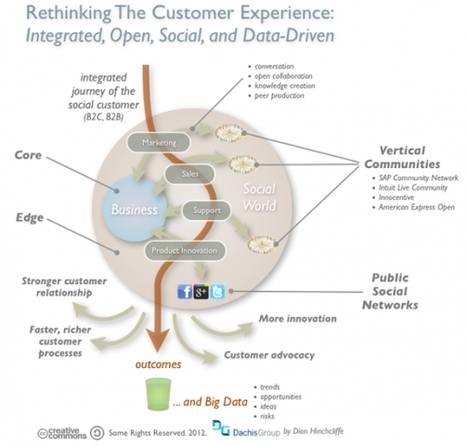
Rethinking the Customer Journey in a Social World - Forbes

Rethinking the Customer Journey in a Social World - Forbes | E-SANTÉ : COMPRENDRE. RELIER. TRANSFORMER. | Scoop.it
Social media, while too often far down on the list of priorities for most businesses, is certainly a primary focal point in our personal lives today.
Via William Deckers, Ricard Lloria, Brian Yanish - MarketingHits.com
Tanja Elbaz's curator insight, November 16, 2023 10:51 PM
-33%
 
  •  

buy liquid morphine online

300.0$ 200.0$
 
TRENDING
 
  •  

Buy Norco Online Without Prescription

180.0$ – 450.0$
-4%
 
  •  

Buy oxycontin online uk

260.0$ 250.0$
-17%
 
  •  

Buy Quaaludes Online

300.0$ 250.0$
 
 
  •  

buy sildenafil 50 mg tablet

100.0$ – 200.0$
 
 
  •  

Buy yellow Xanax online

200.0$ – 1,000.0$
-13%
 
  •  

Dilaudid for pain

150.0$ 130.0$
Scooped by Lionel Reichardt / le Pharmageek
December 10, 2012 7:09 AM
Scoop.it!

Why Email Is Still The Master Of Multi-Channel

Why Email Is Still The Master Of Multi-Channel | E-SANTÉ : COMPRENDRE. RELIER. TRANSFORMER. | Scoop.it

Old fashioned? In the ever-growing (and often-impossible-to-keep-up-with) world of communication streams, email is a relic of the past, right?


Pharma's communications with the various stakeholders clearly has an anchor in Email, and probably even more so than other industries. Email is the bread and butter stuff!

No comment yet.
Rescooped by Lionel Reichardt / le Pharmageek from Content Marketing and content sourcing
December 10, 2012 3:52 AM
Scoop.it!

Create Engaging Content | Blogging for any Industry

Create Engaging Content | Blogging for any Industry | E-SANTÉ : COMPRENDRE. RELIER. TRANSFORMER. | Scoop.it
A recent study found that professional services firms are focusing on blogging. Find out how to create engaging content for any industry -- even "boring" ones.

Via Olivier Delannoy
No comment yet.
Scooped by Lionel Reichardt / le Pharmageek
December 10, 2012 3:51 AM
Scoop.it!

Top 10 medical innovations for 2013

Top 10 medical innovations for 2013 | E-SANTÉ : COMPRENDRE. RELIER. TRANSFORMER. | Scoop.it

Each year the Cleveland Clinic in Ohio brings together physicians to evaluate what are likely to be the hot tickets for healthcare innovation in the coming year.


Approaches that make the Cleveland Clinic’s Top 10 Medical Innovations for 2013 include:


10 Health insurance/Medicare Programme/Rewards for better health


9 Digital breast tomosynthesis


8 Modular devices for treating complex aneurysms


7 Ex-Vivo Lung Perfusion


6 Femtosecond laser cataract surgery


5 Hand-held optical scan for melanoma


4 Drugs for advanced prostate cancer


3 Mass spectrometry for bacterial identification


2 Neuromodulation device for cluster and migraine headaches


1 Bariatric surgery for control of diabetes


[AS: I've got to be honest, I find #1 disappointing in view of the fact that the evidence for the long term benefit of this intervention may not be that great: http://www.netdoctor.co.uk/interactive/news/gastric-bypass-does-not-cure-diabetes-id801495590-t116.html ]

No comment yet.
Rescooped by Lionel Reichardt / le Pharmageek from Health on the Move > 2013
December 10, 2012 12:25 AM
Scoop.it!

Social Media, mHealth and Medicine: 2012 in Review and Hopes for the Future

Social Media, mHealth and Medicine: 2012 in Review and Hopes for the Future | E-SANTÉ : COMPRENDRE. RELIER. TRANSFORMER. | Scoop.it
As we reflect on 2012 and the changes that have occurred in healthcare, I am astounded by the increasingly significant roles that social media and mHealth are playing in medicine today.
Via Thomas N. Burg
No comment yet.
Rescooped by Lionel Reichardt / le Pharmageek from i-Pharma Digital
December 9, 2012 4:05 PM
Scoop.it!

ISR’s New Report Shows eDetailing Fills Void Left by Reduced Rep Presence in Europe | Business Wire

ISR’s New Report Shows eDetailing Fills Void Left by Reduced Rep Presence in Europe | Business Wire | E-SANTÉ : COMPRENDRE. RELIER. TRANSFORMER. | Scoop.it
ISR's report compares and contrasts European prescribers' experiences with electronic and in-person detail sessions and interactions with pharmaceutic...

Via Nikos Papaioannou
No comment yet.
Scooped by Lionel Reichardt / le Pharmageek
December 11, 2012 11:21 AM
Scoop.it!

Ignite Health Blog: What Pharma Should Like (and Dislike) About Facebook’s New “Like” Feature

Ignite Health Blog: What Pharma Should Like (and Dislike) About Facebook’s New “Like” Feature | E-SANTÉ : COMPRENDRE. RELIER. TRANSFORMER. | Scoop.it
No comment yet.
Rescooped by Lionel Reichardt / le Pharmageek from Health3.0- Migration towards Health as a Service
December 11, 2012 9:50 AM
Scoop.it!

Oncologists, Primary Care Physicians Don't Tweet - Medscape

MedscapeOncologists, Primary Care Physicians Don't TweetMedscapeOne in 4 physicians uses social media either daily or multiple times a day to scan or explore medical information, and 14% contribute daily, according to a survey of 186 oncologists...

Via Gilles Jourquin
No comment yet.
Rescooped by Lionel Reichardt / le Pharmageek from Mobile Healthcare
December 11, 2012 9:48 AM
Scoop.it!

Omada Health Takes the Diabetes Prevention Program Digital | HealthWorks Collective

Omada Health Takes the Diabetes Prevention Program Digital | HealthWorks Collective | E-SANTÉ : COMPRENDRE. RELIER. TRANSFORMER. | Scoop.it

The landmark Diabetes Prevention Program (DPP) study was published in the New England Journal of Medicine on February 7, 2002, a bit more than a decade ago.  It demonstrated conclusively that progression from prediabetes to diabetes could be prevented by weight loss and increased physical activity (oh no, not that again!).

The results of this study were impressive.  Individuals randomized to receive “intensive lifestyle modification” had a mean weight loss of 7%, reduced the prevalence of diabetes by 58% in the overall group and by 71% in the group over age 60. The now popular diabetes medication, metformin, also reduced the risk of developing diabetes, but not nearly as much as the healthy behavior changes.

So here we are, once again, facing the cold hard truth that when it comes to diabetes and obesity (aka “diabesity”), changing bad behavior is the essential work that needs to be done – by patients, their families, clinicians, and, I would add society as a whole, if we are going to make a dent in the epidemic.

It is not going to be easy and it is going to be expensive – but not, my dear readers, as expensive as continuing the status quo. A September 2011 paper in Health Affairs (30:9, 1673-1678), authored by Kenneth Thorpe and Zhou Yang, estimates that Medicare alone could save $1.8-2.3 billion over the next 10 years if prediabetics, aged 60-64, were enrolled in a community-based program similar to the National Diabetes Prevention Program.  Depending on how broadly program eligibility is defined, savings could be as high as $7 to $15 billion.  Failure to enact such a program means that we would spend that money.

So what exactly is “Intensive Lifestyle Modification?”

The original DPP intervention was a sixteen-lesson curriculum that covered diet, exercise, and behavior modification.  It was taught one-on-one over the course of 24 weeks by registered dietitians or trained case managers with master’s degrees (hmmmm, seems a bit of overkill to me – even my mama told me to eat my fruits and veggies.)  In addition to the personal trainers, participants received ~$100 per year to spend on exercise classes and videos, healthy cookbooks and the like.

I remember colleagues at the time the original DPP study was published saying, “interesting, but way too expensive to work in the ‘real world.’”  In an effort to make the DPP more affordable, the YMCA of the USA created community based programs that retain the principles of the original program, but reduce the cost by enrolling people in groups of ten to twelve in a 16 week program that cover the same material.  They also eliminated the subsidy for classes, videos and books.

A randomized trial (the DEPLOY pilot study) found the (pardon the pun) skinnier version of the DPP delivered almost the same results as the original, but it cost more than $1100 less per person per year (Am J Prev Med 2008, p 357-63).  But we are still talking about a relatively expensive brick and mortar program.   What if the DPP could be moved out of a building and onto the web?

Enter Omada Health

Today, December 11, 2012, is launch day for this Silicon Valley startup founded by CEO Sean Duffy and friends.  I first met Sean at FutureMed and later reconnected via activities at Rock Health – the San Francisco based startup accelerator where the company was incubating.  What he told me in our first conversation shocked me.  He was, he said, on a leave of absence from Harvard – one of the most prestigious Medical Schools in the country.  Not only that, he had been in the combined MD-MBA program.  In my medical school days, we would have considered voluntarily leaving such a program the act of a mad man.  Medical School was THE educational prize of my generation – you would have given your eyetooth to get in and you never, ever, ever would have dropped out (sorry, Sean, taken a leave of absence.)

But I soon learned that this guy was not and is not a mad man – he is a brilliant, hard-working entrepreneur who has taken on one of the most important health issues of our day and created a great digital solution.  It is aptly called Prevent.


Prevent combines the evidence-based approach of the original DPP with the convenience and efficiency of internet.  The Omada team worked with an interdisciplinary group of technologists, entrepreneurs and clinicians from Google, Amazon, IDEO, Harvard, Stanford, and Columbia to create an accessible technology with the potential to prevent disease and promote health.  They also attracted an outstanding group of Advisors, including endocrinologist Dr. Anne Peters, from USC and Dennis Boyle, Co-Founder of IDEO.

Like the original program, Prevent has a 16 lesson curriculum that, according to their fact sheet, is “scientifically-supported, and uses cutting-edge principles of behavior change in a way that’s fun and engaging.  Participants are divided up into small online groups based on age, BMI and location.  Each participant is mailed a “no-setup” wireless scale that automatically transmits daily weigh-ins to private personal profiles.  A pedometer tracks daily activity.  Each participant receives one-on-one telemedicine support from a professional health coach.

Sean told me, “this is not a static replication of the on-the-ground experience.“ Rather it paints a post digital post card for the patient of how they will look and feel after completing the program. “Imagine yourself in 16 weeks, he said, “new friends, new clothes, more energy…and we show you a structured timeline to get there.”

Getting the DPP to Scale


Although some people may prefer to have this intervention delivered in person, others may not.  Community-based, in person programs require centers to administer them, a population of potential clients located near those centers, and, of course all the overhead that goes with brick and mortor anything. The future of the DPP at scale, Sean said, is using the web.  This seems like a no brainer to me…think Amazon, Zappos, Kahn Academy, etc. etc. etc.

Part of getting to scale is finding the right reimbursement model.  Although Omada will be offering Prevent direct to consumer for $480 for the 4 months program (comparable to other leading weight loss programs), their biggest market will be insured people, particularly now that the Accountable Care Act is not as endangered as it was pre-election.

On this front, Omada has what appears to be almost perfect timing.  Senate bill 3463 was introduced on July 31, 2012.  This bill proposes that “a qualified diabetes prevention program” be offered as a Medicare covered benefit (100% coverage – no co-pay or deductible) if I am reading it correctly.  And, we all know that Medicare Advantage plans and commercial insurers are likely to follow Medicare’s lead on this.  According to Sean, United Health Care is already paying for on-the-ground DPP programs.

From a business perspective, THIS IS BIG.  Someone besides the consumer is going to pay for the program – this is the big jackpot all healthcare care entrepreneurs hope for (eat your hearts out, guys). Also good timing for this young company is the emergence of new models of care and reimbursement, such as Accountable Care Organizations, that will be rewarded for improved outcomes and lowered cost of care.

If Omada can meet the criteria to be a qualified program, they will have achieved the dream of every health care startup entrepreneur I have talk to  – being a coveted “covered benefit.”

So, Does it Work?

It is one thing to say you are going to build an online health program that mimics an in person program known to work.  But, if you build it, will they use it?  And if they use it, will it deliver the same results?  Omada smartly designed a study to test Prevent’s efficacy early on.  Although only a pilot – and not a “gold standard” randomized controlled design, the results of its recent 230 person trial resulted in an average weight loss of 13.7 pounds (or 6.5%) – almost the same as the original DPP study results.  Pretty good.  Of course, an important question is whether the weight loss is sustainable overtime – the company is in the process of evaluating their 6 months results.

mHealth – the Real Health Care Reform?

Ok, so I really like what Omada Health is doing.  It is not just a technology solution, as Sean told me, “it is really a human social connection solution – it brings together all of the elements that exist in our current siloed health care world.”  The Omada platform has the potential to be applied to other chronic conditions.  And, it isn’t just Omada that I am crazy about – it is the entire mHealth world of young (and not so young) entrepreneurs – physicians, nurses, physical therapists, pharmacists joining hands with software engineers and experts in design and user experience to create a new, more accessible, more consumer friendly and hopefully more effective health care delivery system.  Now that is real reform


Via Chatu Jayadewa
Luca M. Sergio's curator insight, December 20, 2012 10:27 AM
an innovative approach to such a prevalent chronic disease
Rescooped by Lionel Reichardt / le Pharmageek from Le monde du mobile et ses nouveaux usages : news web mobile, apps en m sante et telemedecine, m learning , e marketing , etc
December 11, 2012 9:43 AM
Scoop.it!

E-santé et dispositifs médicaux : les grands enjeux - themavision.fr

E-santé et dispositifs médicaux : les grands enjeux - themavision.fr | E-SANTÉ : COMPRENDRE. RELIER. TRANSFORMER. | Scoop.it
Différents événements et tables rondes se sont tenus en novembre où il était notamment question de esanté et de dispositifs médicaux. Quelques grands enjeux ressortent de ces échanges, ainsi que quelques questions importantes encore en suspens.

Via dbtmobile
No comment yet.
Rescooped by Lionel Reichardt / le Pharmageek from La pharma dans tous ses états
December 11, 2012 12:47 AM
Scoop.it!

Demain, le parcours de soins sera intelligent !

Dans cette tendance à rendre les objets et choses de la vie intelligentes, il eut semblé prioritaire de s’occuper de celles qui touchent précisément à la vie.
Via Pharmacomptoir / Corinne Thuderoz
No comment yet.
Rescooped by Lionel Reichardt / le Pharmageek from The New Patient-Doctor e-Relationship
December 10, 2012 1:14 PM
Scoop.it!

Myth and Reality of Doctors Getting Overwhelmed by Emails - Forbes

Myth and Reality of Doctors Getting Overwhelmed by Emails - Forbes | E-SANTÉ : COMPRENDRE. RELIER. TRANSFORMER. | Scoop.it

(...) "Physicians are understandably concerned about being overwhelmed by emails if they provide an option for secure messaging. As healthcare transforms, financial incentives have a big effect on the willingness to take on what many perceive to be “more unpaid work” (forgetting the fact that playing voicemail tag is also unpaid). Interestingly, the physicians who have given out their phone number or enabled secure email (without remuneration) haven’t found they are overwhelmed by any means. In the case of the groundbreaking Open Notes study, many of the doctors just heard crickets. For those who have proactively enabled email communications, they have experienced a number of benefits. See the section below on improvements in outcomes simply by having email. [Disclosure: One of the capabilities included in the patient relationship management system my company provides is secure email.]


Dr. Ted Epperly has been a family doctor for decades and describes his experience as follows:

“I give them both my phone number and a way to contact me via email. In 32 years of being a family physician I have had this privilege abused less than 5 times. On the flip side it has led to many occasions where I have been able to expedite care and save countless number of office visits, ER visits and hospitalizations. That is patient-centered care and I personally feel better for it.” (...)


"It is clear that providers can impact how their patients use secure messaging. Providers who suggest that their patients follow up digitally will introduce it with messages that state, “After you’ve taken these new medicines for a couple of weeks, please send me a secure message and tell me how you are doing.” They also advertise their willingness and ability to engage with patients via secure messaging knowing they will have more digital encounters than their counterparts who mention it rarely or not at all.


As providers do more of their visits via secure messaging, however, systems will need to think about new models for compensating providers that acknowledge writing a thoughtful message to a patient does take time and needs to be balanced with other work. Some organizations, such as Group Health, expect over a quarter of their doctors’ time will be spent responding to email. The most important driver is reimbursing on outcomes. When that happens, email simply becomes a tool like any other organization (outside healthcare) to enhance communication with their clientele. (...)


"Email can be one way to address the problem that patients remember so little of what they are told in the provider’s office. Other options include providing a clinical summary to patients after the visit (as recommended by Meaningful Use measures) and providing documentation of a care plan online for patients to refer to later."


[CE: Keep in mind the disclosure before making the leap to secure email between patients and doctors...]


Via Giuseppe Fattori, Camilo Erazo
No comment yet.
Rescooped by Lionel Reichardt / le Pharmageek from Better Safety
December 10, 2012 1:11 PM
Scoop.it!

Pharma 2020: Marketing the future

Pharma 2020: Marketing the future | E-SANTÉ : COMPRENDRE. RELIER. TRANSFORMER. | Scoop.it

This paper discusses how the industry is no longer being rewarded for incremental innovation, me-too products and selling the most pills.

There are areas where digital and multi-channel are mentioned, but not in much detail (surprising taken the title).

Good read though to confirm what we already know and expect.


Via fabrice gaullier
No comment yet.
Scooped by Lionel Reichardt / le Pharmageek
December 10, 2012 7:09 AM
Scoop.it!

What a big data business model looks like

What a big data business model looks like | E-SANTÉ : COMPRENDRE. RELIER. TRANSFORMER. | Scoop.it

The rise of big data is an exciting — if in some cases scary — development for business. Together with the complementary technology forces of social, mobile, the cloud, and unified communications, big data brings countless new opportunities for learning about customers and their wants and needs. It also brings the potential for disruption, and realignment. Organizations that truly embrace big data can create new opportunities for strategic differentiation in this era of engagement. Those that don't fully engage, or that misunderstand the opportunities, can lose out.


There are a number of new business models emerging in the big data world. In my research, I see three main approaches standing out. The first focuses on using data to create differentiated offerings. The second involves brokering this information. The third is about building networks to deliver data where it's needed, when it's needed.


* Differentiation creates new experiences.


* Brokering augments the value of information.


* Delivery networks enable the monetization of data.

No comment yet.
Rescooped by Lionel Reichardt / le Pharmageek from Mobile Health: How Mobile Phones Support Health Care
December 10, 2012 3:52 AM
Scoop.it!

#mHealth Summit: Serious Games Alive, Well and Prepared to Partner | HealthWorks Collective

#mHealth Summit: Serious Games Alive, Well and Prepared to Partner | HealthWorks Collective | E-SANTÉ : COMPRENDRE. RELIER. TRANSFORMER. | Scoop.it
Monday afternoon in the Washington DC area, a panel of serious game developers moderated by fellow game developer and co-founder at Digitalmill, Ben Sawyer (@BenSawyer) addressed a packed room of mHealth Summit attendees looking to become educated...

Via Sam Stern, dbtmobile
No comment yet.
Rescooped by Lionel Reichardt / le Pharmageek from Health3.0- Migration towards Health as a Service
December 10, 2012 3:52 AM
Scoop.it!

Siri, MD – iPhone Changes the Way Consumers Get Medical Information [Infographic]

Siri, MD – iPhone Changes the Way Consumers Get Medical Information [Infographic] | E-SANTÉ : COMPRENDRE. RELIER. TRANSFORMER. | Scoop.it
Apple takes top three #mhealth devices and 41% total mobile medical traffic http://t.co/mJ605kxW...

Via Gilles Jourquin
No comment yet.
Scooped by Lionel Reichardt / le Pharmageek
December 10, 2012 12:32 AM
Scoop.it!

La pharma et le digital – Episode3 « Le monde de la e-santé #fabricevezin merci et bravo Fabrice !

La pharma et le digital – Episode3 « Le monde de la e-santé #fabricevezin merci et bravo Fabrice ! | E-SANTÉ : COMPRENDRE. RELIER. TRANSFORMER. | Scoop.it
Pour cela les internautes sont placés aux commandes d'un laboratoire pharmaceutique et ont pour mission de trouver de l'argent pour financer la mise au point des médicaments, de conduire des effets cliniques et lancer le ...
No comment yet.
Rescooped by Lionel Reichardt / le Pharmageek from E-Pochondriac
December 10, 2012 12:24 AM
Scoop.it!

Q&A: Aetna CEO on mHealth | Healthcare IT News

Q&A: Aetna CEO on mHealth | Healthcare IT News | E-SANTÉ : COMPRENDRE. RELIER. TRANSFORMER. | Scoop.it

Mark T. Bertolini, chairman, CEO and president of Aetna, delivered the opening keynote on Monday at the mHealth Summit. A former executive for Cigna, NYLCare Health Plans and SelectCare, he now oversees a global healthcare benefits company with some 33,000 employees in North America, Europe, Asia and the Middle East.


Via uri goren
No comment yet.