E-SANTÉ : COMPRENDRE. RELIER. TRANSFORMER.
316.0K views | +19 today
E-SANTÉ : COMPRENDRE. RELIER. TRANSFORMER.

Une veille sur la santé numérique en France et à l’international : politiques publiques, données, infrastructures, IA, services et usages. Études, rapports et retours de terrain sélectionnés par Lionel Reichardt, Pharmageek, pour comprendre les transformations et éclairer les décisions.

ESSAI
Your new post is loading...
Rescooped by Lionel Reichardt / le Pharmageek from mHealth: Patient Centered Care-Clinical Tools-Targeting Chronic Diseases
June 24, 2013 3:57 AM
Scoop.it!

How mHealth Technologies Are Benefitting Patients

How mHealth Technologies Are Benefitting Patients | E-SANTÉ : COMPRENDRE. RELIER. TRANSFORMER. | Scoop.it
by Amanda Guerrero | shared from MedCityNewsIt used to be that a patient visiting the doctor’s office might come away with a drug prescription, care instructions for how and when to take their meds, and a paper handout explaining their condition or...

Via ET Russell
No comment yet.
Rescooped by Lionel Reichardt / le Pharmageek from Arobasenet.com
June 24, 2013 3:53 AM
Scoop.it!

54% des internautes ont recours aux moteurs de recherche contre 38% aux réseaux sociaux

54% des internautes ont recours aux moteurs de recherche contre 38% aux réseaux sociaux | E-SANTÉ : COMPRENDRE. RELIER. TRANSFORMER. | Scoop.it
Chaque année, Forrester Research publie une étude détaillée sur comment s'effectue la recherche sur internet.

Via Arobasenet
Agence SEO.fr's curator insight, June 25, 2013 2:31 AM

Chaque année, Forrester Research publie une étude détaillée sur comment s'effectue la recherche sur internet.

Rescooped by Lionel Reichardt / le Pharmageek from iPhone Marketing
June 24, 2013 3:51 AM
Scoop.it!

Mobile is eating the World

MOBILE IS EATINGTHEWORLDPresented at BEA, May 2013Benedict Evans@benedictevansEnders Analysis

Via Matt Vaidis
No comment yet.
Rescooped by Lionel Reichardt / le Pharmageek from E-Pochondriac
June 23, 2013 12:37 PM
Scoop.it!

Here are 9 voices in and around the diabetes community to follow on Twitter

Here are 9 voices in and around the diabetes community to follow on Twitter | E-SANTÉ : COMPRENDRE. RELIER. TRANSFORMER. | Scoop.it
if you want to follow the Twitter chatter around the annual American Diabetes Association conference #2013ADA and beyond, here are nine people to follow on Twitter.

Via uri goren
No comment yet.
Rescooped by Lionel Reichardt / le Pharmageek from Pharmabook
June 23, 2013 12:35 PM
Scoop.it!

TactioHealth RPM Mobile Health System Introduces Diabetes Add-on for Education, Management and Control of Type 1, Type 2, and Gestational Diabetes | SYS-CON MEDIA #mHealth #diabetes

SYS-CON Media, NJ, The world's leading i-technology media company on breaking technology news. #mHealth #diabetes


Via Philippe Loizon
No comment yet.
Rescooped by Lionel Reichardt / le Pharmageek from Hopital 2.0
June 23, 2013 4:34 AM
Scoop.it!

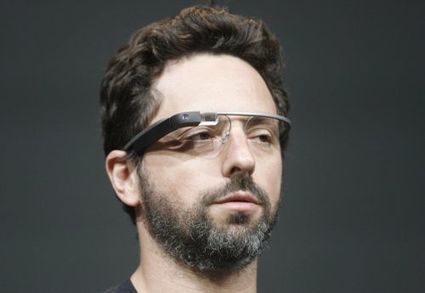
Google Glass : les Cnil mondiales s'en inquiètent

Google Glass : les Cnil mondiales s'en inquiètent | E-SANTÉ : COMPRENDRE. RELIER. TRANSFORMER. | Scoop.it

Les autorités internationales de protection de la vie privée ont adressé à Larry Page, le cofondateur de Google, un courrier pour que le géant d’Internet fasse le point sur l’exploitation qu’il compte...


Via Chanfimao
No comment yet.
Rescooped by Lionel Reichardt / le Pharmageek from Le Monde de la pharma & de la santé connectée
June 23, 2013 3:17 AM
Scoop.it!

Un diagnostic santé via un Smartphone ? les Américains disent oui ! - Le Parisien

Un diagnostic santé via un Smartphone ? les Américains disent oui ! - Le Parisien | E-SANTÉ : COMPRENDRE. RELIER. TRANSFORMER. | Scoop.it

Le Parisien Un diagnostic santé via un Smartphone ? les Américains disent oui !


Via Esposito Christelle
No comment yet.
Rescooped by Lionel Reichardt / le Pharmageek from La pharma dans tous ses états
June 23, 2013 3:13 AM
Scoop.it!

La biotechisation suffira-t-elle à sauver les Big pharmas ?

La biotechisation suffira-t-elle à sauver les Big pharmas ? | E-SANTÉ : COMPRENDRE. RELIER. TRANSFORMER. | Scoop.it

L'industrie pharmaceutique est contrainte de revisiter son Business model Le cap est mis aujourd'hui sur le développement du portefeuille de molécules vers la médecine de spécialité et les pathologies complexes


Via Pharmacomptoir / Corinne Thuderoz
No comment yet.
Rescooped by Lionel Reichardt / le Pharmageek from Pharma: Trends and Uses Of Mobile Apps and Digital Marketing
June 23, 2013 3:12 AM
Scoop.it!

Example Of Doing It Right For Pfizer

Human Care Systems Inc., April 2013
PharmaLive (press release) (subscription)
The microsite was recognized in the “Creative/Web Interactive Capabilities” category of the 2013 AVA Digital Awards.

Via eMedToday
eMedToday's curator insight, June 22, 2013 9:31 PM

This is what Pharma should do for patient engagement. Provide helpul powerful advise for patients. This is branding at its bes.


" HCS started the year with the launch of MyKidneyTransplant.com, an English and Spanish website created for Pfizer that guides patients through the process of preparing for and undergoing kidney transplant, and promotes adherence to the critical post-op treatment regimen. The program provides interactive exercises and practical tips based in behavioral science. It also incorporates system-generated emails and personalized text messaging services to create a cohesive experience for the patient".

eMedToday's curator insight, June 22, 2013 9:33 PM


A Pharma could develop a focused, highly useful content on any disease of interest and deliver it via a mobile app or e detailing program.

Rescooped by Lionel Reichardt / le Pharmageek from #eHealthPromotion, #SaluteSocial
June 23, 2013 3:08 AM
Scoop.it!

Dr. iPhone: How Will the Smartphone Physical Change Healthcare?

Dr. iPhone: How Will the Smartphone Physical Change Healthcare? | E-SANTÉ : COMPRENDRE. RELIER. TRANSFORMER. | Scoop.it

Mobile health applications represent the next stage of patient empowerment. 30 years ago, patients received information and procedures from their physicians, often without instruction. Now, the smartphone physical empowers patients to identify, understand, and manage their own health on a completely new level. This offers critical implications for the future of medicine:


1. Patient Engagement: It’s probable that the physical act of regularly checking blood pressure or measuring blood sugar levels can make a patient more conscious about their health. It’s also hopeful that such self-tracking can inspire self-education and positive behavior change. This is difficult to measure experimentally (have you ever noticed that the most avid quantified self-ers are the fittest and healthiest people?) but it offers reason to be optimistic about mHealth.


2. Remote Care: A critical challenge of hospital readmissions is that, once the patient walks out the door, it’s no easy endeavor to reconnect with them. If physicians could remotely monitor patients, it’s possible they could identify early signs of a complication and intervene. As a readmissions researcher, I’ve spoken with patients who waited for three weeks of not being able to eat before returning to the hospital 30 pounds lighter. The smartphone physical could have flagged that—and someday, it will.


Via nrip, Kirrina, Giuseppe Fattori
No comment yet.
Scooped by Lionel Reichardt / le Pharmageek
June 22, 2013 10:24 AM
Scoop.it!

Le visiteur Médical Connecté - Nouvelle enquête EuroStaf

Le visiteur Médical Connecté - Nouvelle enquête EuroStaf | E-SANTÉ : COMPRENDRE. RELIER. TRANSFORMER. | Scoop.it
Le visiteur médical connecté Dans un contexte inédit de retournement du marché et de contraintes réglementaires croissantes, les laboratoires pharmaceutiques doivent repenser leur stratégie produit et faire évoluer en profondeur les modes de communication...
No comment yet.
Scooped by Lionel Reichardt / le Pharmageek
June 22, 2013 4:28 AM
Scoop.it!

Can digital health help crack one of healthcare's hardest nuts? - mobihealthnews

Can digital health help crack one of healthcare's hardest nuts?
mobihealthnews
But just because its patients who don't take their drugs, does that make medication adherence a patient problem?
No comment yet.
Rescooped by Lionel Reichardt / le Pharmageek from Quantified Self, Data Science, Digital Health, Personal Analytics, Big Data
June 22, 2013 4:16 AM
Scoop.it!

Withings taking pre-orders for new Pulse activity tracker

Withings taking pre-orders for new Pulse activity tracker | E-SANTÉ : COMPRENDRE. RELIER. TRANSFORMER. | Scoop.it
When it comes to the \"connected health device\" market, the leader has been Withings. The company started selling its first WiFi-connected scale back in

Via JP DOUMENG
No comment yet.
Rescooped by Lionel Reichardt / le Pharmageek from Mobile Health: How Mobile Phones Support Health Care
June 24, 2013 3:53 AM
Scoop.it!

Disruptions: Medicine That Monitors You

Disruptions: Medicine That Monitors You | E-SANTÉ : COMPRENDRE. RELIER. TRANSFORMER. | Scoop.it

SAN FRANCISCO — They look like normal pills, oblong and a little smaller than a daily vitamin. But if your doctor writes a prescription for these pills in the not-too-distant future, you might hear a new twist on an old cliché: “Take two of these ingestible computers, and they will e-mail me in the morning.”

As society struggles with the privacy implications of wearable computers like Google Glass, scientists, researchers and some start-ups are already preparing the next, even more intrusive wave of computing: ingestible computers and minuscule sensors stuffed inside pills.HQ, Inc. The CorTemp pill, from HQ Inc., has a built-in battery and wirelessly transmits real-time body temperature.

Although these tiny devices are not yet mainstream, some people on the cutting edge are already swallowing them to monitor a range of health data and wirelessly share this information with a doctor. And there are prototypes of tiny, ingestible devices that can do things like automatically open car doors or fill in passwords.

For people in extreme professions, like space travel, various versions of these pills have been used for some time. But in the next year, your family doctor — at least if he’s technologically adept — could also have them in his medicinal tool kit.

Inside these pills are tiny sensors and transmitters. You swallow them with water, or milk if you’d prefer. After that, the devices make their way to the stomach and stay intact as they travel through the intestinal tract.

“You will — voluntarily, I might add — take a pill, which you think of as a pill but is in fact a microscopic robot, which will monitor your systems” and wirelessly transmit what is happening, Eric E. Schmidt, the executive chairman of Google, said last fall at a company conference. “If it makes the difference between health and death, you’re going to want this thing.”

One of the pills, made by Proteus Digital Health, a small company in Redwood City, Calif., does not need a battery. Instead, the body is the power source. Just as a potato can power a light bulb, Proteus has added magnesium and copper on each side of its tiny sensor, which generates just enough electricity from stomach acids.

As a Proteus pill hits the bottom of the stomach, it sends information to a cellphone app through a patch worn on the body. The tiny computer can track medication-taking behaviors — “did Grandma take her pills today, and what time?” — and monitor how a patient’s body is responding to medicine. It also detects the person’s movements and rest patterns.

Executives at the company, which recently raised $62.5 million from investors, say they believe that these pills will help patients with physical and neurological problems. People with heart failure-related difficulties could monitor blood flow and body temperature; those with central nervous system issues, including schizophrenia and Alzheimer’s disease, could take the pills to monitor vital signs in real time. The Food and Drug Administration approved the Proteus pill last year.

A pill called the CorTemp Ingestible Core Body Temperature Sensor, made by HQ Inc. in Palmetto, Fla., has a built-in battery and wirelessly transmits real-time body temperature as it travels through a patient.

Firefighters, football players, soldiers and astronauts have used the device so their employers can monitor them and ensure they do not overheat in high temperatures. CorTemp began in 2006 as a research collaboration from the Johns Hopkins University Applied Physics Laboratory and the National Oceanic and Atmospheric Administration.

Lee Carbonelli, HQ’s marketing director, said the company hoped, in the next year, to have a consumer version that would wirelessly communicate to a smartphone app.

Future generations of these pills could even be convenience tools.

Last month, Regina Dugan, senior vice president for Motorola Mobility’s advanced technology and projects group, showed off an example, along with wearable radio frequency identification tattoos that attach to the skin like a sticker, at the D: All Things Digital technology conference.

Once that pill is in your body, you could pick up your smartphone and not have to type in a password. Instead, you are the password. Sit in the car and it will start. Touch the handle to your home door and it will automatically unlock. “Essentially, your entire body becomes your authentication token,” Ms. Dugan said.

But if people are worried about the privacy implications of wearable computing devices, just wait until they try to wrap their heads around ingestible computing.

“This is yet another one of these technologies where there are wonderful options and terrible options, simultaneously,” said John Perry Barlow, a founder of the Electronic Frontier Foundation, a privacy advocacy group. “The wonderful is that there are a great number of things you want to know about yourself on a continual basis, especially if you’re diabetic or suffer from another disease. The terrible is that health insurance companies could know about the inner workings of your body.”

And the implications of a tiny computer inside your body being hacked? Let’s say they are troubling.

There is, of course, one last question for this little pill. After it has done its job, flowing down around the stomach and through the intestinal tract, what happens next?

“It passes naturally thought the body in about 24 hours,” Ms. Carbonelli said, but since each pill costs $46, “some people choose to recover and recycle it.”

E-mail: bilton@nytimes.com


Via Alex Butler, dbtmobile
No comment yet.
Scooped by Lionel Reichardt / le Pharmageek
June 24, 2013 3:52 AM
Scoop.it!

Le visiteur médical connecté - Nouvelle enquête EuroStaf Juin 2013

Dans un contexte inédit de retournement du marché et de contraintes réglementaires croissantes, les laboratoires pharmaceutiques doivent repenser leur stratégie produit et faire évoluer en profondeur les modes de communication et d’information à destination des professionnels de santé.


Les visiteurs médicaux sont les premiers exposés à ces mutations.
Pour faire la différence sur ce marché hautement concurrentiel, les laboratoires déploient actuellement de nouveaux outils digitaux qui ont vocation à optimiser l’efficacité commerciale de la visite médicale. Le Remote detailing, les e-ADV ou le Close Loop Marketing sont quelques-uns des leviers digitaux choisis au service du « visiteur médical connecté ».

No comment yet.
Rescooped by Lionel Reichardt / le Pharmageek from Le numérique au service de la santé à domicile et de l’autonomie
June 24, 2013 3:49 AM
Scoop.it!

Infographie : baromètre des réseaux sociaux dans la pharma

Infographie : baromètre des réseaux sociaux dans la pharma | E-SANTÉ : COMPRENDRE. RELIER. TRANSFORMER. | Scoop.it
L'Institut Novamétrie a réalisé un baromètre des réseaux sociaux dans l'industrie pharmaceutique afin d'évaluer la place du web social dans les stratégies de communication des laboratoires. Les chi...

Via France Silver Eco
No comment yet.
Scooped by Lionel Reichardt / le Pharmageek
June 23, 2013 12:37 PM
Scoop.it!

Rupture de tendance : l'espérance de vie en bonne santé diminue pour la première fois. Dans quel état vivons-nous la grande vieillesse ?

Rupture de tendance : l'espérance de vie en bonne santé diminue pour la première fois. Dans quel état vivons-nous la grande vieillesse ? | E-SANTÉ : COMPRENDRE. RELIER. TRANSFORMER. | Scoop.it
Avec l'augmentation de l'espérance de vie, le temps passé en situation de dépendance s'allonge également. Une réalité qui oblige les pouvoirs publics à s'organiser en conséquence, alors que l'argent manque.
Astelos_Sante's curator insight, June 24, 2013 3:21 AM

On sait que l’on est en train d’atteindre une sorte de sommet en termes d’espérance de vie. On est habitué depuis des dizaines d’années à entendre que l’espérance de vie augmente... Donc c'est quoi qui a changé maintenant?

Scooped by Lionel Reichardt / le Pharmageek
June 23, 2013 5:47 AM
Scoop.it!

Streaming Pharma Talents: Jornada e-marketing en la industria farmacéutica | Agoranews

Pharma Talents, la red social de profesionales de la industria farmacéutica y del sector sanitario en España, junto a Across Health, consultora de marketing digital, organizan el próximo 20 de junio una jornada sobre e-marketing.El modelo de promoción...
No comment yet.
Rescooped by Lionel Reichardt / le Pharmageek from Latest mHealth News
June 23, 2013 3:17 AM
Scoop.it!

Partners Healthcare links mHealth data to its EMR | mHIMSS

Partners Healthcare links mHealth data to its EMR | mHIMSS | E-SANTÉ : COMPRENDRE. RELIER. TRANSFORMER. | Scoop.it

Via Sam Stern
No comment yet.
Rescooped by Lionel Reichardt / le Pharmageek from Objets connectés santé
June 23, 2013 3:17 AM
Scoop.it!

Les objets connectés font leur entrée dans les hôpitaux - Se coacher - 20minutes.fr

Les objets connectés font leur entrée dans les hôpitaux - Se coacher - 20minutes.fr | E-SANTÉ : COMPRENDRE. RELIER. TRANSFORMER. | Scoop.it
RT @LeemFrance: Les objets connectés font leur entrée dans les hôpitaux http://t.co/tzkgyH3q7H #esante #hcsmeufr par @VirginieTz @20Minutes

Via Festival Communication Santé
No comment yet.
Rescooped by Lionel Reichardt / le Pharmageek from mHealth- Advances, Knowledge and Patient Engagement
June 23, 2013 3:12 AM
Scoop.it!

New survey : mobile services desired by US patients from their doctors

New survey : mobile services desired by US patients from their doctors | E-SANTÉ : COMPRENDRE. RELIER. TRANSFORMER. | Scoop.it

 more than one-third of respondents who are online said they were "very" or "extremely" interested in using smartphones or tablets to ask their doctors questions, make appointments or get medical test results.


Via Olivier Delannoy, eMedToday
No comment yet.
Rescooped by Lionel Reichardt / le Pharmageek from Pharma Hub
June 23, 2013 3:09 AM
Scoop.it!

More Consumers Want To Monitor Health Via Mobile Applications

More Consumers Want To Monitor Health Via Mobile Applications | E-SANTÉ : COMPRENDRE. RELIER. TRANSFORMER. | Scoop.it

One-third of adult Internet users want to use smartphones or tablets to monitor health conditions, according to a survey from Harris Interactive and HealthDay, Healthcare IT News reports.


Via Philippe Marchal
eMedToday's curator insight, June 23, 2013 7:33 PM

These are examples of application most wanted.


Survey respondents were interested in using mobile devices for:

Monitoring blood pressure (38%); andMonitoring blood sugar (32%).


Rescooped by Lionel Reichardt / le Pharmageek from Social media & health - Médias sociaux & santé
June 23, 2013 3:08 AM
Scoop.it!

Attitudes on the use of Social Media in Healthcare Communications | MarketSMITH Services™

Attitudes on the use of Social Media in Healthcare Communications | MarketSMITH Services™ | E-SANTÉ : COMPRENDRE. RELIER. TRANSFORMER. | Scoop.it

Via Thierry Le Magny
No comment yet.
Rescooped by Lionel Reichardt / le Pharmageek from healthcare technology
June 22, 2013 4:32 AM
Scoop.it!

Infographic: See how eHealth aids in home health care

Infographic: See how eHealth aids in home health care | E-SANTÉ : COMPRENDRE. RELIER. TRANSFORMER. | Scoop.it

In the US, 70 percent of residents over age 65 will need long-term care in their lifetimes. The good news is that eHealth can help in monitoring health conditions. The bad news is that home-based-care staffing and turnover issues jeopardize the care these patients need—things such as help bathing, dressing, eating, using the bathroom.


Via nrip
eMedToday's curator insight, June 22, 2013 7:39 PM

There a huge over hang of health care needs and costs with the babyboomers. Clearly, mhealth can have a major impact in this area. Hosptials need to organize a support function that connects to the home for the old population

rob halkes's curator insight, July 15, 2013 3:29 PM

..


Scooped by Lionel Reichardt / le Pharmageek
June 22, 2013 4:27 AM
Scoop.it!

Presse médicale : la HAS propose des bonnes pratiques éditoriales et des critères de qualité

Dans le cadre de son rôle d'information des professionnels de santé, la Haute Autorité de Santé (HAS) a publié mercredi le résultat de sa réflexion sur la qualité de la presse médicale française, reposant sur l'identification de bonnes pratiques et...
No comment yet.