


|
Rescooped by
Lionel Reichardt / le Pharmageek
from Pharma: Trends and Uses Of Mobile Apps and Digital Marketing
June 28, 2013 3:03 AM
|


Une veille sur la santé numérique en France et à l’international : politiques publiques, données, infrastructures, IA, services et usages. Études, rapports et retours de terrain sélectionnés par Lionel Reichardt, Pharmageek, pour comprendre les transformations et éclairer les décisions.
 Your new post is loading...
 Scoop.it!
From
gigaom

In the future, patients and doctors will monitor health with data collected constantly inside the body and beamed directly to their mobile device or computer. Via Alex Butler, Philippe Trebaul

Dan Baxter's curator insight,
July 2, 2013 4:55 AM
Simply an amazing insight into the future of possible medical advances made possible by implantable sensors.
Scoop.it!
SlideShare is the world’s largest community for sharing presentations. Discover great content and connect with like-minded individuals. Via Alexandre Stopnicki

Alexandre Stopnicki's curator insight,
June 26, 2013 8:48 PM
Une superbe présentation qui démontre une fois de plus que les Start-ups jouent un role majeur pour l'économie mondiale.
Scoop.it!

Although many physicians report they use smartphones for work more than ever before, they actually notice ads for medicines least often on their mobile devices, which also includes tablets. Via Olivier Delannoy, eMedToday

eMedToday's curator insight,
June 26, 2013 10:49 PM
The answer for now is print. However, mobile ads are increasing greatly
"As more physicians use them, I think pharma companies need to know that one out of three is starting to recall seeing an ad (on devices), because it’s a big tactical number,” says Susan Dorfman, CMI’s chief marketing and innovation officer. “So they need to start exploring how to create more awareness and have more presence in the mobile channels and understand how doctors use their devices.”
eMedToday's curator insight,
June 26, 2013 10:52 PM
An interesting inisght here is that part of an e detailing solution might be the creation of short ads that could deliver via a mobiel app.
Scoop.it!

Santé... vous avez dit 2.0 ? Enfin une conférence pour comprendre comment les technologies du Web révolutionnent le secteur de la santé. Via Rémy TESTON
Scoop.it!

La m-santé gagne sans cesse du terrain mais se voit freinée par le manque d'adaptabilité des centres médicaux, dont les outils technologiques ne correspondent pas à ceux des patients. Via Cecile Chelim

dbtsante's curator insight,
June 28, 2013 12:45 PM
Plusieurs problematiques sont evoquées ici: - le type d'informations que les patients souhaitent transmettre ne sont pas toujours celles utiles en pratique clinique (quantified self et donnees cliniques ne se superposent pas toujours...) - l'interoperabilité des systemes d'informations des medecins/hopitaux avec des messageries de patients non securisées limitée par les normes de securité des SIS - Quel traitement des données ? Qui ? le temps medical est limité ... et avec quelle responsabilité ? cela dit, les choses bougent ... et vite
Scoop.it!

Test de d'accessoire iiHealt pour surveiller sa tension sur iPhone et iPad. L'iHealth s'utilise avec une l'application gratuite iHealth BPM Via Rémy TESTON
Scoop.it!

21 juin 2013 - Selon une récente étude de Chitika, les trois premiers résultats renvoyés par Google représentent 61,5% des clics des internautes et un tiers des clic par Actualité Abondance...
Scoop.it!

From
www
Scoop.it!

Le plan 2014 visant l'assurance-maladie va à nouveau peser lourdement sur l'industrie pharmaceutique. Le chiffre...
Scoop.it!

Les bracelets santé sont la dernière marotte de l'industrie du gadget, et visiblement les consommateurs en redemandent. Les Up de Jawbone, Fuelband de Nike et Fitbit de Flex ont été bien reçus par ... Via Pharmacomptoir / Corinne Thuderoz
Scoop.it!

Une application mobile proposant des référentiels de bonne pratiques pour la prise en charge des patients atteints de Cancer a été lancée il y a quelques semaines : Oncologik. Découverte. L'applica... Via nathalie Bissot-Campos
|
Scoop.it!

Smart, Human-Centric Platform Helps Pharmaceutical Companies Better Listen to, Learn from and Talk to Customers | Virtual Strategy Magazine is an online publication devoted entirely to virtualization technologies. Via eMedToday
eMedToday's curator insight,
June 27, 2013 7:52 PM
Interesting new e detialing platform
"f Pharma Next, a smart, human-centric digital marketing platform that empowers pharmaceutical companies to better listen to, learn from and act on the voice of customers and healthcare practitioners. Pharma Next finds patterns and extracts relevant data from customers’ multi-channel digital journeys to bring the right information, to the right stakeholders, at the right time – allowing pharmaceutical companies to provide more dynamic content, interact in real-time with customers and prospects and uncover new market opportunities".
Scoop.it!

Xavier Bouhet's curator insight,
June 27, 2013 10:37 AM
Les mesures de compressions de coûts sur les médicaments en Grèce, Espagne, Irlande, Italie et Portugal, ont ainsi contribué à générer 7 milliards d'euros d'économies ! La France devrait suivre le pas.
Scoop.it!

A new report from Markets and Markets says that between 2013-2018 the mobile health market will increase from $6.21 billion to $23.49 billion, a compound annual growth rate of 30.5%. The projected gain is due to the boost ... Via eMedToday
eMedToday's curator insight,
June 26, 2013 10:26 PM
The key points:
A new report from Markets and Markets says that between 2013-2018 the mobile health market will increase from $6.21 billion to $23.49 billion, a compound annual growth rate of 30.5%.
Two major chronic health problems mentioned in the report are heart disease and diabetes, which account for $272 billion and $245 billion (2010 data) in healthcare costs in the U.S., respectively. The burgeoning mobile health market will be directed toward persistent diseases like these, which account for 75% of national healthcare spending.
Scoop.it!
The iPad vs. the Surface Pro. iOS vs. Windows 8. Apple vs. Microsoft. Have these two tech heavyweights elicited an internal debate within pharma companies over which device is better for their sales teams or is the choice a foregone conclusion? After all, pharma has already heavily adopted the iPad and they are not alone. According to preliminary data from the International Data Corporation (IDC) Worldwide Quarterly Tablet Tracker, worldwide tablet shipments have increased 142.4% year over year in the first quarter of 2013 with Apple capturing 39.6% of the market share of tablet operating systems compared to Microsoft’s 3.3%—however Android comes out on top with 56.5%. Of course, Microsoft has only recently ramped up its presence in this market with its release of the Surface RT and Surface Pro in the beginning of this year and we wouldn’t be having this discussion if pharma didn’t have some reservations over the iPad. Via Olivier Delannoy, Jérôme Buisson
eMedToday's curator insight,
June 26, 2013 10:57 PM
The answer:
“Right now the iPad has no competition within the healthcare market,” says Richard Meyer, Director at Online Strategic Solutions. “While the Windows 8 Surface does have some advantages, such as the ability to integrate with people using the Windows operating system, the very slow adoption of Windows 8 and the problems with the interface are going to continue to ensure that Apple is the first choice for healthcare professionals.”
Scoop.it!

Issue du CEP (Contrat d’Etude Prospective) conduit par les partenaires sociaux des industries de santé et le ministère de l...
Scoop.it!
Webdoc : Essais cliniques Ce webdocumentaire a pour objectif de : - Replacer les essais cliniques dans le cycle de développement du médicament po...
Scoop.it!

[hopital.fr] - Sur son site, esante.gouv.fr, l’Agence des systèmes d’information partagés de santé, l’Asip, note comme une « particularité nationale, la forte présence de la santé dans les secteurs demandeurs de serious games ». Via Festival Communication Santé
Scoop.it!
Dépenses de santé: 9,5% du PIB dans l'OCDE en 2060 L'Express PARIS, 25 juin 2013 - Même maîtrisées, les dépenses de santé des grands pays industrialisés, devraient continuer à croître, pour atteindre 9,5% du PIB au sein de l'OCDE en 2060, contre 6%... Via Pharmacomptoir / Corinne Thuderoz
Scoop.it!

According the the Journal of Medical Internet Research “OHCs are a powerful tool to address some of the challenges chronic care faces today. OHCs help to facilitate communication among... [[ This is a content summary only. Via Olivier Delannoy
eMedToday's curator insight,
July 5, 2013 8:37 PM
OHC are powerful tools for Pharmas, however, few are involved.
Scoop.it!
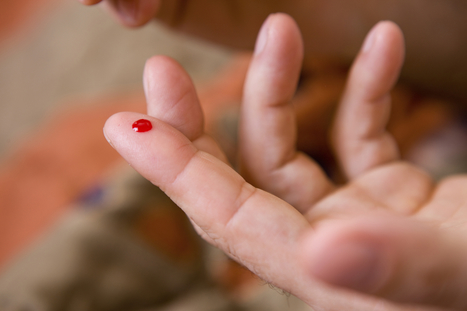
Researchers have created a sensor chip using nanotechnology to possibly detect diseases by examining a drop of blood. Via marianne vennitti
Scoop.it!

Malgré la forte médiatisation de scandales qui ont touché les professionnels du médicament, les Français gardent confiance dans une industrie française de pointe qui surnage dans le marasme économique ambiant.
Scoop.it!

One of the key findings of the MDigitalLife Social Oncology Report 2013 was that cancer conversations have become increasingly fragmented, specific and specific and sophisticated. The number of journal articles posted to PubMed has increased 349% since 1999 – and the number of cancer-related conversations has exploded in similar fashion. As those cancer-specific conversations continue to grow, we wanted to take a closer look at the physicians who are driving them. This is the first in a series of 4 posts on the subject, which will hone in on doctors’ conversations about breast cancer, gynecological cancers, prostate cancer, skin cancer, and lung cancer. Via Marie Ennis-O'Connor, Lionel Reichardt / le Pharmageek, Henry Gazay

Henry Gazay's curator insight,
June 25, 2013 3:56 PM
Cancer by definition is very fragemented. as many cancers as we have organs, and even more. Pharma companies are beginning to understand the concept of Key Online Influencers (KOI), as opposed to the classic KOLs |







As has been said. It is no longer abut " The Pill" but sharing information about health problems to patients.Great example here