E-SANTÉ : COMPRENDRE. RELIER. TRANSFORMER.
315.6K views | +1 today
E-SANTÉ : COMPRENDRE. RELIER. TRANSFORMER.

Une veille sur la santé numérique en France et à l’international : politiques publiques, données, infrastructures, IA, services et usages. Études, rapports et retours de terrain sélectionnés par Lionel Reichardt, Pharmageek, pour comprendre les transformations et éclairer les décisions.

ESSAI
Your new post is loading...
Scooped by Lionel Reichardt / le Pharmageek
November 16, 2014 3:22 AM
Scoop.it!

La peau humaine pourra bientôt être fabriquée en 3D - La Tribune.fr

La peau humaine pourra bientôt être fabriquée en 3D - La Tribune.fr | E-SANTÉ : COMPRENDRE. RELIER. TRANSFORMER. | Scoop.it
Des chercheurs français viennent de créer près de Bordeaux une société spécialisée dans la fabrication de tissus par bio-impression: une technique qui pourrait aboutir à d'importantes applications en cosmétique et en chirurgie.
No comment yet.
Rescooped by Lionel Reichardt / le Pharmageek from Santé, eSanté, mSanté, santé numérique, Quantified Self et télémédecine... Toute l'actualité sur la santé de demain (en français)
November 14, 2014 12:57 AM
Scoop.it!

[ITW] Jacques Lucas "les médecins doivent accompagner l'innovation"

[ITW] Jacques Lucas "les médecins doivent accompagner l'innovation" | E-SANTÉ : COMPRENDRE. RELIER. TRANSFORMER. | Scoop.it
Entretien avec @Jcqslucas "Les Médecins doivent accompagner l'innovation"- #TLM n° 97 #objetconnecté #santéconnectée pic.twitter.com/XvGT3PO26h

Via Emmanuel Capitaine , Celine Sportisse
No comment yet.
Rescooped by Lionel Reichardt / le Pharmageek from Doctors Hub
November 14, 2014 12:54 AM
Scoop.it!

Intelligence artificielle: «Watson» en médecin de poche?

Intelligence artificielle: «Watson» en médecin de poche? | E-SANTÉ : COMPRENDRE. RELIER. TRANSFORMER. | Scoop.it
Et si une application mobile analysait en temps réel votre ADN pour rendre votre vie plus saine ? Le laboratoire d'analyse génétique Pathway Genomics parie sur le super-ordinateur Watson pour pouvoir l'élaborer. L'application utilisera l'intelligence artificielle cognitive développée par IBM, pour répondre aux questions de santé et de bien-être de son utilisateur. Combien de cafés puis-je boire aujourd'hui ? Combien de calories ai-je déjà ingérées ? Faut-il que je fasse de l'exercice ? Autant de

Via Philippe Marchal
No comment yet.
Rescooped by Lionel Reichardt / le Pharmageek from Buzz e-sante
November 13, 2014 10:06 AM
Scoop.it!

Axa France va consacrer 180 M€ au digital ces trois prochaines années

Axa France va consacrer 180 M€ au digital ces trois prochaines années | E-SANTÉ : COMPRENDRE. RELIER. TRANSFORMER. | Scoop.it
Acteurs : Axa France, qui a déjà investi près de 100 M€ depuis 2012 pour adapter son offre et son organisation aux nouveaux usages en... Contexte Axa France, Transformation digitale, investissement, Internet - Presse en ligne Argus de l'Assurance

Via Rémy TESTON
No comment yet.
Scooped by Lionel Reichardt / le Pharmageek
November 12, 2014 11:23 AM
Scoop.it!

HEALTH 2.0 EUROPE 2014 in 5 video trailers #health2eu #hcsmeu

No comment yet.
Scooped by Lionel Reichardt / le Pharmageek
November 12, 2014 11:22 AM
Scoop.it!

HEALTH 2.0 EUROPE - DAY 1 #health2eu #hcsmeu

#health2eu - tweets & pics - november 10th
No comment yet.
Scooped by Lionel Reichardt / le Pharmageek
November 12, 2014 6:43 AM
Scoop.it!

Exponential Medicine ..SEEMS GREAT ! I WISH I COULD HAVE BEEN THERE ..next year maybe.. Thanks @daniel_kraft

Seems great 

No comment yet.
Rescooped by Lionel Reichardt / le Pharmageek from Transformation digitale, Management, Stratégie digitale, Knowledge Management, eLearning
November 10, 2014 5:32 PM
Scoop.it!

Dans le secret des GAFAs : qu’est-ce qu’un business model asymétrique ?

Dans le secret des GAFAs : qu’est-ce qu’un business model asymétrique ? | E-SANTÉ : COMPRENDRE. RELIER. TRANSFORMER. | Scoop.it
Qu’est-ce qui pousse Google à rentrer successivement et avec des produit disruptifs dans les systèmes d’exploitation mobiles (Android), La TV [...]

Via Emmanuel Capitaine , Celine Sportisse
No comment yet.
Rescooped by Lionel Reichardt / le Pharmageek from innovation & e-health
November 10, 2014 5:26 PM
Scoop.it!

Comment réussir le lancement d'une solution de e-santé ?

Dans un environnement concurrentiel et extrêmement réglementé, la mise sur le marché d'une solution de e-santé est un véritable challenge. Pourtant certains facteurs, s'ils sont bien...

Via Hervé Denudt, Jerome Leleu
No comment yet.
Rescooped by Lionel Reichardt / le Pharmageek from E-sante, web 2.0, 3.0, M-sante, télémedecine, serious games
November 10, 2014 5:20 PM
Scoop.it!

Apple, Google, Microsoft, IBM... tous ont montré leur intérêt pour l'e-santé

Apple, Google, Microsoft, IBM... tous ont montré leur intérêt pour l'e-santé | E-SANTÉ : COMPRENDRE. RELIER. TRANSFORMER. | Scoop.it
L’afflux de données rebat les cartes dans le domaine de la santé. Et les premiers bénéficiaires pourraient bien être les géants de la...

Via Festival Communication Santé
No comment yet.
Rescooped by Lionel Reichardt / le Pharmageek from 360 medical
November 7, 2014 6:20 AM
Scoop.it!

Tiers payant : un site Internet pour traquer les retards de paiement

Tiers payant : un site Internet pour traquer les retards de paiement | E-SANTÉ : COMPRENDRE. RELIER. TRANSFORMER. | Scoop.it
Deux médecins lancent un Observatoire du tiers payant pour étudier les délais de remboursement pratiqués par la Sécurité sociale lorsqu'elle rembourse directement les généralistes. Ils entendent lutter ainsi contre les longs délais pratiqués aujourd'hui.

Via 360 medical
No comment yet.
Scooped by Lionel Reichardt / le Pharmageek
November 7, 2014 1:46 AM
Scoop.it!

Comment les seniors appréhendent-ils les nouvelles technologies ? #silvereconomie

Comment les seniors appréhendent-ils les nouvelles technologies ? #silvereconomie | E-SANTÉ : COMPRENDRE. RELIER. TRANSFORMER. | Scoop.it
L'étude de CCM Benchmark Institute sur "Les seniors et les nouvelles technologies" identifie les tendances qui se dégagent en matière de surf, téléchargement d'applications ou m-commerce.
No comment yet.
Rescooped by Lionel Reichardt / le Pharmageek from Digitized Health
November 7, 2014 1:37 AM
Scoop.it!

Low-cost 3D-printed prosthetic hand to be tested on amputees in Ecuador

Low-cost 3D-printed prosthetic hand to be tested on amputees in Ecuador | E-SANTÉ : COMPRENDRE. RELIER. TRANSFORMER. | Scoop.it
SOURCE November 5, 2014 A US$270 programmable, 3D-printed electromyographic prosthetic hand may soon change the lives of amputees in Ecuador and elsewhere around the world (Photo: University of Illinois at Urbana-Champaign) A PhD candidate and six...

Via Emmanuel Capitaine
No comment yet.
Rescooped by Lionel Reichardt / le Pharmageek from Marketing et Communication Innovante
November 14, 2014 7:24 AM
Scoop.it!

Un rapport pour mettre la santé à l’heure du numérique

Un rapport pour mettre la santé à l’heure du numérique | E-SANTÉ : COMPRENDRE. RELIER. TRANSFORMER. | Scoop.it
Parmi les 180 propositions du rapport Lemoine, 14 concernent la santé. Le but, réduire les dépenses et faciliter l'accès aux médecins.

Via Rémy TESTON, Christian NEFF
No comment yet.
Rescooped by Lionel Reichardt / le Pharmageek from Digitized Health
November 14, 2014 12:57 AM
Scoop.it!

Exponential Medicine Day 4: The Reality of Innovation

Exponential Medicine Day 4: The Reality of Innovation | E-SANTÉ : COMPRENDRE. RELIER. TRANSFORMER. | Scoop.it
Our last day here in sunny California began with the last “Patient Included” talk by the original Executive Producer of the FutureMed program, Robin Farmanfarmian.

Via Emmanuel Capitaine
No comment yet.
Scooped by Lionel Reichardt / le Pharmageek
November 13, 2014 12:11 PM
Scoop.it!

Who Will Be The Netflix Of Healthcare? - InformationWeek

Who Will Be The Netflix Of Healthcare? - InformationWeek | E-SANTÉ : COMPRENDRE. RELIER. TRANSFORMER. | Scoop.it
Healthcare disruption is real, the MediFuture event showed. How you react determines whether it's a threat or an opportunity.
Laurent FLOURET's curator insight, November 14, 2014 10:39 AM

I could see myself going there... "HealthSpot, creator of a walk-in kiosk intended to replace many primary care and follow-up care doctor's office visits, working with organizations like Cleveland Clinic, Miami Children's Hospital, and GuideWell, the parent company of Florida Blue."

Scooped by Lionel Reichardt / le Pharmageek
November 13, 2014 3:55 AM
Scoop.it!

E-santé : l'âge de maturité ? / Health 2.0 Europe - morceaux choisis -Tribune du Club Digital Santé par Pharmageek #hcsmeufr

E-santé : l'âge de maturité ? / Health 2.0 Europe - morceaux choisis -Tribune du Club Digital Santé par Pharmageek #hcsmeufr | E-SANTÉ : COMPRENDRE. RELIER. TRANSFORMER. | Scoop.it
E-santé : l'âge de maturité ? / Health 2.0 Europe - morceaux choisis
No comment yet.
Scooped by Lionel Reichardt / le Pharmageek
November 12, 2014 11:22 AM
Scoop.it!

HEALTH 2.0 EUROPE 2014 - DAY 2 #health2eu #hcsmeu

#health2eu - tweets & pics & video - 11th of November 2014 LONDON
No comment yet.
Scooped by Lionel Reichardt / le Pharmageek
November 12, 2014 11:21 AM
Scoop.it!

Connected Health, then and now - The real futur of Health #health2eu #hcsmeu

#health2eu#health2eu - tweets, pics and video - november the 10th -London
iHealth Labs Europe at Health 2.0 EUROPE

No comment yet.
Rescooped by Lionel Reichardt / le Pharmageek from Le numérique au service de la santé à domicile et de l’autonomie
November 10, 2014 5:34 PM
Scoop.it!

«Les innovations développées ici ont besoin de débouchés» - Hacking Health

«Les innovations développées ici ont besoin de débouchés» - Hacking Health | E-SANTÉ : COMPRENDRE. RELIER. TRANSFORMER. | Scoop.it

Au programme du Sommet de Montréal sur l'innovation (SMI), le 6 novembre, figurait un hackathon, ou marathon de programmation, tenu avec l'organisation montréalaise Hacking Health.

Depuis bientôt trois ans, Hacking Health fait collaborer programmeurs informatiques et professionnels de la santé. Son cofondateur et directeur principal,

Luc Sirois, nous explique comment cette approche de l'innovation bénéficie non seulement à la santé, mais aussi à l'économie québécoise.


Via France Silver Eco
No comment yet.
Rescooped by Lionel Reichardt / le Pharmageek from Claranet e-Santé, Hébergement Agréé Données de Santé
November 10, 2014 5:27 PM
Scoop.it!

L'E-santé au chevet du système de santé français

L'E-santé au chevet du système de santé français | E-SANTÉ : COMPRENDRE. RELIER. TRANSFORMER. | Scoop.it

« Le marché de l'E-santé, soit « l'application des technologies de l'information et de la communication (TIC) à l'ensemble des activités en rapport avec la santé » selon Bruxelles, s'annonce prometteur. Estimé en 2014 à 2,7 milliards d'euros par Precepta, il se décompose entre le segment mature et dominant des systèmes d'information de santé (SIS à hauteur de 2,36 milliards d'euros)*, celui fourmillant et mouvant de la télésanté (200 millions d'euros hors télémédecine) et celui réglementé de la télémédecine (140 millions d'euros). Et ce marché dynamique poursuivra sa montée en puissance à moyen terme. Il progressera ainsi de 4% à 7% par an pour atteindre 3,5 à 4 milliards d'euros à l'horizon 2020, selon les deux scénarios extrêmes établis par les experts de Precepta. »


Via Claranet
No comment yet.
Rescooped by Lionel Reichardt / le Pharmageek from Analytics & Social media impact on Healthcare
November 10, 2014 5:24 PM
Scoop.it!

Preparing for the digital health revolution

Preparing for the digital health revolution | E-SANTÉ : COMPRENDRE. RELIER. TRANSFORMER. | Scoop.it

The convergence of life sciences and technology has the potential to reshape consumption of healthcare services, transform government policy and minimise disease risk by enabling health-focused lifestyle choices.

The healthcare industry has long understood that a ‘one-pill-fits-all’ approach is an inadequate way to treat billions of individual patients across a multitude of genetic, cultural and environmental backgrounds. It has therefore attempted to work towards an idealised vision of personalised medicine, whereby the right drug is delivered to the right patient, at the right time, in the right dose. However, the ability to derive and collate the individualised data necessary to deliver on this vision has, to date, been a limiting factor.

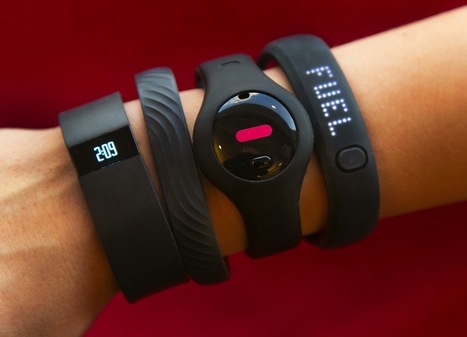
The advent of personal genomics provided a significant step towards enabling personalised medicine, but it is innovation in wearable and implantable devices capable of measuring a multitude of personal biochemical and physiological parameters that will deliver on genomics’ promise.

Wearable technologies such as the Samsung Gear and the Apple Watch are marketed largely as lifestyle products, with apps aimed at measuring and improving health and sport-related activities. However, these products are also part of a new category of medical devices capable of monitoring all the vital bodily functions in real time and transmitting this data via wireless networks and mobile phone technology to a cloud storage facility for diagnostic purposes.

Devices are now available that can, in a non-hospital environment, measure and transmit all of the same categories of health markers that would currently be measured in an intensive-care facility. These products include earphones that can check blood oxygenation levels, edible microchips that can capture food intake and rest patterns, and even nanotechnology-enabled sensors, or ‘nanobots’, which can be injected into the bloodstream; there, they wirelessly transmit data regarding the presence of markers that can help to predict diseases such as cancer or heart failure.

Advertisement

The benefits of harnessing device technology in this way are beginning to influence the collaborative and acquisition strategies of the major pharmaceutical companies, which are looking at complementary diagnostic partners that have the technology to transform their therapeutic innovations. These companies’ ultimate commercial goal is to deliver integrated diagnostic and therapeutic products under a single brand.

The connectivity of wearable devices is relevant not only to the uploading of data for diagnostic purposes, but also to delivering information to the user to improve their use of healthcare services and products. A vast amount of public money is wasted as a result of patient non-compliance with medication regimens. The impact of medication-reminder apps, for example, which prompt patients to take their pills and connect to a pharmacy to refill prescriptions, could have a sizeable impact on reimbursement arrangements and the strategies of pharmaceutical companies.

Among the health apps in the NHS library is Sleepio, a program that delivers personalised cognitive behavioural therapy for insomniacs, which won the Wired Health Bupa Startup competition.

At a recent event in Berlin, where healthcare startups pitched their ideas to the industry and prospective investors, innovations included web applications that allow patients to obtain early-stage medical advice, help them perform exercises tailored by doctors, and support doctors and labs in managing their workflows and data.

In developing countries, the ability of smartphones to capture patient data could also have a powerful impact on national vaccination programmes. Tracking each vaccinated individual via a barcode scan can facilitate an understanding of the stage at which sufficient individuals have been vaccinated, which can help to create effective immunity for the whole population.

Detecting, reporting and collating vast amounts of individuals’ biological and physiological data also provides great opportunities for the biopharmaceutical industry to improve the efficiency of its clinical trial and post-approval surveillance procedures. Many therapeutically effective drugs are not presently available because of serious negative side effects in a relatively small number of patients. The use of devices to constantly monitor for markers of the onset of such side effects will change the entire regulatory environment - and should ensure that many more important drugs reach and remain in the market.

Data privacy

The ability to sync wearable technology to a smartphone will allow people to create a hub of personal healthcare data that they, their GP and even their personal trainer can access.

Here, the issues of data protection and purpose become acute - individuals will want to use the data for their personal benefit, but what are the legal and ethical parameters guiding what employers or insurers can do with it? What happens when the line is crossed between information about wellbeing and information concerning matters of life and death?

This concern - of private medical records becoming a commercial proposition - goes to the heart of the debate over the UK’s NHS data programme to share and link patient data in order to improve research and “transform health services”. In February 2014, the scheme was delayed by six months in order to “ensure stronger safeguards around the uses of the data [and] clarity about the rights people have to opt out”.

Such gathering of data raises fundamental questions about privacy and ethics. The price of genetic information has fallen dramatically - from $10m (£6.27m) per genome in 2001 to close to $1,000 (£627.76) - but the much publicised shutdown of 23andMe’s home DNA-testing service by the US Food and Drug Administration demonstrates the difficulty of regulating consumer-driven medical research.

It is little wonder that legislators do not have the answers. The convergence between technology, life sciences and data is fast-moving, making categorisation and enforcement difficult. The world of wearable technology is not yet regulated. And with very little precedent, legal and commercial departments need experts with degrees in computing and biology. Engineering in the life sciences field is not new, but the internet has brought discovery much closer to the individual - and, with it, the need for doctors (and lawyers) who understand data algorithms.


Via Chatu Jayadewa
No comment yet.
Rescooped by Lionel Reichardt / le Pharmageek from eHEALTH, eSANTE, QUANTIFIED SELF, MSANTE, eSTARTUP, CROWDFUNDING.. ici toute l'actualité sur "le digital qui révolutionne la santé !"
November 10, 2014 5:09 PM
Scoop.it!

L'indice de confiance numérique et santé montre la morosité du milieu de l'e-santé

L'indice de confiance numérique et santé montre la morosité du milieu de l'e-santé | E-SANTÉ : COMPRENDRE. RELIER. TRANSFORMER. | Scoop.it
Premier site français d’information en continu sur les technologies de l’information et de la communication (TIC, NTIC) dans la santé - TIC santé

Via e-Santé Bretagne, Santé Digitale
No comment yet.
Rescooped by Lionel Reichardt / le Pharmageek from e-patient et e-santé
November 7, 2014 5:38 AM
Scoop.it!

Les acteurs de santé ont une confiance mitigée dans la e-santé

Les acteurs de santé ont une confiance mitigée dans la e-santé | E-SANTÉ : COMPRENDRE. RELIER. TRANSFORMER. | Scoop.it
Toutes les dimensions de la e-santé ne font pas le plein de confiance. Pour la troisième année consécutive, le Cercle des décideurs

Via Marie Françoise de Roulhac
Marc DESCHAMPS's curator insight, November 12, 2014 4:55 PM

ajouter votre point de vue ...

Rescooped by Lionel Reichardt / le Pharmageek from Festival de la Communication Santé
November 7, 2014 1:44 AM
Scoop.it!

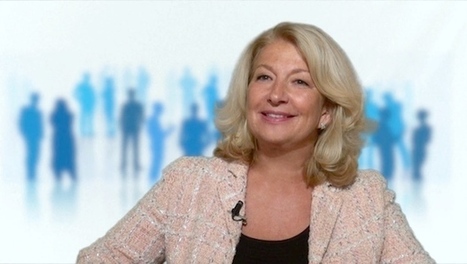
Interview vidéo de Dominique Noel, présidente du Festival de la Communication Santé : "Mettre en lumière la communication santé". Réalisée par Acteurs de Santé.

Interview vidéo de Dominique Noel, présidente du Festival de la Communication Santé : "Mettre en lumière la communication santé". Réalisée par Acteurs de Santé. | E-SANTÉ : COMPRENDRE. RELIER. TRANSFORMER. | Scoop.it
Dominique NOËL, Présidente du Festival de la Communication Santé

Via Festival Communication Santé
No comment yet.