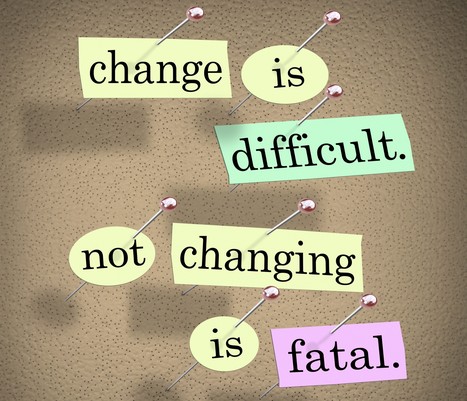
Leadership in the 21st century not only requires the ability to continuously manage crisis and change – but also the circular vision to see around, beneath and beyond the obvious in order to anticipate the unexpected before circumstances force your hand. As you embark upon your change management journey, here are ten things that will challenge your capabilities as a change agent and potentially become defining moments along your leadership success path.
As Darwin said, “It is not the strongest species that survive, nor the most intelligent, but the ones most responsive to change.”
Instead of asking questions like why are they doing this to me or who decided this change....better questions are:
"What can I do to proactively respond to the change, How can I understand what the company hopes to achieve as a result of this change, and What can I do to help my team adapt to these changes."
Hope you enjoyed this article. Until next time...PS - Live on Purpose!
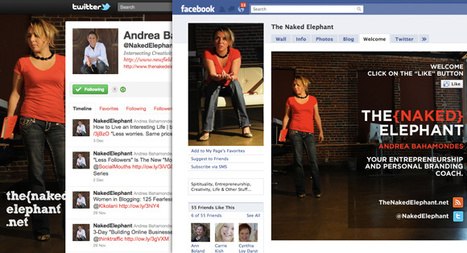
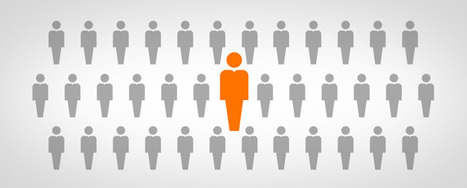
In today’s world of social media, personal branding, personal marketing and finding your niche, you need find a way to be remembered. What's your slogan?
As organizations ramp up their talent management efforts amid the improving global economy, there are four stages they should follow to properly evaluate talent.
Core areas of influence — recruitment, development and progression of talent — have been brought to the forefront, and with the unemployment rate continuing to dip in the United States, many organizations are propelling talent management to the top of the agenda.
here are 'personal branding' quotes from 12 industry professionals.What is personal branding? There are many different definitions, examples and explanations of personal branding. To help shed the mystery, here are 'personal branding' quotes from 12 industry professionals.
Personal Branding is all about your unique promise of value and what you bring to the table. It's [also] about getting your potential clients to choose you as the only solution to their problem.
The packaging of yourself on different formats includes good design, good photography (a family photo with your dog doesn’t cut it, that’s just weaksauce), good copy on your key messages or well produced videos.
What do people see when they Google you? Building your personal brand online will determine the business you get - and don't get - for many years to come.
Everyone wants their business to succeed. You want your business to be around next year and the following year, don’t you? The question is, how many customers do you need to be successful and, more importantly, sustainable?
Here are four tips for preparing your business for growth.
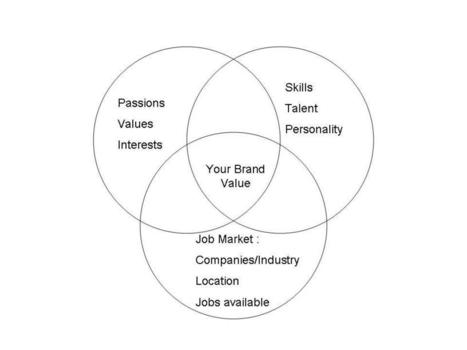
You probably already have a personal leadership brand. But do you have the right one? The question is not trivial. A leadership brand conveys your identity and distinctiveness as a leader. It communicates the value you offer. If you have the wrong leadership brand for the position you have, or the position you want, then your work is not having the impact it could. A strong personal leadership brand allows all that’s powerful and effective about your leadership to become known to your colleagues, enabling you to generate maximum value.
Mr. Anand Pillai is the Sr. Executive Vice President & Chief Learning Officer at Reliance Industries Ltd. He has been recently appointed to become a Member of the World Economic Forum's Global Agenda Council on New Models of Leadership 2011, given his thought leadership in the field of Leadership & Innovation.
So successful managers today are no longer supervisors, nor are they deciders, but formulators of strategic intent and their function is not one of the enterprise’s operation—most of which is rapidly being automated—but its purpose. It’s is no longer enough to organize work, we must facilitate belief.
Is transformational leadership simply “expert” leadership in action or is it different in some way? Do transformational leadership traits add significant value?
Successful transformational leadership frequently demonstrates why change is necessary, promotes a common vision, leads change in an organised manner and successfully integrates the change.
Transformational leaders see “The big picture”, but not all the details. This can create significant implementation and operational problems. If they do not have competent people to assist with the information/data side, failure can quickly follow.
Your personal brand statement … should connect you with whoever reads it. It must be unique to you and only you. It should also be consistent with what you actually do.
What is a personal branding statement? It is a statement that communicates who you are in the workplace. Borrowed from the marketing world, it reflects your professional reputation.
On your resume, the statement is used to summarize, in just a few words, who you are.
So which formula could you use to create your own?
1. Consider Your Outlook On The World.
2. Think About Your Individual Goals.
3. Look At Your Attributes And Professional History.
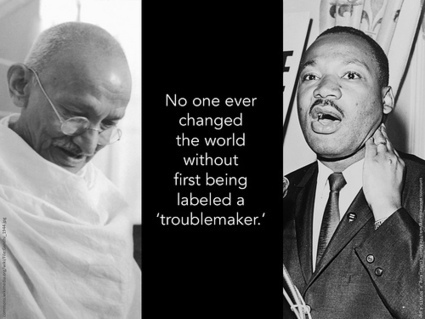
When most people think of leaders, they think of famous people like Martin Luther King, John F. Kennedy, or (when talking about toxic leaders), Adolf Hitler. But why not think about ourselves in term of a leader?
The founding father of self-leadership, Charles Manz, defines self-leadership as “leading oneself toward performance of naturally motivating tasks as well as managing oneself to do work that must be done but is not naturally motivating”
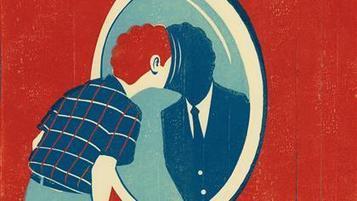
Developing your personal brand is essential for the advancement of your career and development as a leader. Unfortunately, personal branding has become a “commoditized” term that has lost its intention as people have irresponsibly used social media as a platform to build their personal brand and increase their relevancy.
They believe social media can immediately increase their market value for their personal brand rather than recognizing that the process of developing their personal brand is a much bigger responsibility; a never-ending journey that extends well beyond social media.
View your personal brand as a trademark; an asset that you must protect while continuously molding and shaping it.
Your personal brand is an asset that must be managed with the intention of helping others benefit from having a relationship with you and / or by being associated with your work and the industry you serve.
Personal branding is not just about you, it is about being able to best help and lead others in ways that are authentic to who you (and they) are as a person.
To get content containing either thought or leadership enter:
To get content containing both thought and leadership enter:
To get content containing the expression thought leadership enter:
You can enter several keywords and you can refine them whenever you want. Our suggestion engine uses more signals but entering a few keywords here will rapidly give you great content to curate.


 Your new post is loading...






















Great article!
As Darwin said, “It is not the strongest species that survive, nor the most intelligent, but the ones most responsive to change.”
Instead of asking questions like why are they doing this to me or who decided this change....better questions are:
"What can I do to proactively respond to the change, How can I understand what the company hopes to achieve as a result of this change, and What can I do to help my team adapt to these changes."
Hope you enjoyed this article. Until next time...PS - Live on Purpose!