Your new post is loading...

|
Scooped by
ulcriv
July 24, 2025 10:04 AM
|
Efficient and consistent DNA extraction is crucial for genotyping but often hindered by the limitations of traditional manual processes, which are labour-intensive, error-prone, and costly. We introduce a semi-automated, robotic-assisted DNA extraction (RoboCTAB) tailored for large-scale plant genotyping, leveraging advanced yet affordable liquid-handling robotic systems. The protocol/workflow integrates a CTAB extraction protocol specifically adapted for a robotic liquid-handling system, making it compatible with high-throughput genotyping techniques such as SNP genotyping and sequencing. Various plant parts (leaves, roots, manual seed chip) were explored as the source material for DNA extractions, with the aim of identifying the tissue best suited for collection on a large scale. Young roots (radicle) proved the easiest to harvest at scale, while the harvest of leaves and seed chips were more laborious and error-prone. DNA yield and quality from both leaves and roots (but not seed chips) were similar and sufficient for downstream analysis. Interestingly, root tissue could still be extracted from imbibed seeds, even if the seeds failed to germinate, thus proving useful for DNA extraction. Cost analysis indicates significant savings in labour costs, highlighting the approach’s suitability for large-scale projects. Quality assessments demonstrate that the robotic process yields high-quality DNA, maintaining integrity for downstream applications. This semi-automated DNA extraction system represents a scalable, reliable solution for large-scale genotyping that is accessible to many users who cannot implement highly sophisticated and costly systems as are known to exist in large multinational seed companies. RoboCTAB, a low-cost, optimized method for high-throughput DNA extraction, minimizes the risk of cross-contamination. RoboCTAB is capable of processing up to four 96-well plates (384 samples) simultaneously in a single run, improving cost-efficiency and providing seamless integration with laboratory workflows, potentially setting new standards for efficiency and quality in DNA processing and sequencing at scale.
|
|
Scooped by
ulcriv
July 23, 2025 3:15 PM
|
Exploitation of disease resistance genes in soybean (Glycine max (L.) Merr.), as an effective method for management of Phytophthora sojae (Kauf. & Gerd.), is on the verge of an impasse. Few of the known resistance genes are commercially exploited, and even fewer have been precisely identified. Therefore, little is known about the identities or relationships between those genes, a hindrance preventing optimal introgression of new sources of resistance into elite soybean lines. In this study, we have applied state-of-the-art nucleotide-binding and leucine-rich repeat gene capture (RenSeq) using a set of approximately 80,000 unique baits on near-isogenic lines, whole-genome resequencing, and bulked segregant analysis to uncover a resistance gene that has remained elusive for 40 years. This work highlights the reassessment of the Rps3b locus from Chr13 to Chr7 and the description of two alleles, from Turkish and Chinese landraces, of a sole candidate gene. We have identified Rps3b in four, fully resequenced, genetic backgrounds, including the original PI from 1985, in which the resistance gene was originally described. Specificity of the resistant alleles was achieved through phenotypic characterization with field isolates carrying virulent and avirulent forms of the corresponding effector, Avr3b. Surprisingly, these alleles showed extremely high synteny and sequence identity with Rps11 consistent with allelism, and conferred a resistance phenotype indistinguishable from that of the recently cloned Rps11. These results offer new sources of resistance for breeders that are effective against the current P. sojae pathotypes in the field.
|
|
Scooped by
ulcriv
July 23, 2025 3:07 PM
|
Lawns are ubiquitous in North American urban environments and constitute a simplified ecosystem with low plant diversity compared to natural ecosystems. Given their prevalence, these areas have great potential to enhance biodiversity, for example by increasing their attractiveness to pollinators. However, scientific data on the use of alternative groundcovers in established lawns is scarce. The goal of this two-year project was to monitor the attraction of pollinators and resilience of four different groundcover species (Fragaria virginiana Miller, Bellis perennis L., Trifolium repens L., and Thymus serpyllum L.) incorporated into existing lawns in Québec City and Montréal (Canada). A total of nine experimental sites were established in June 2021. A conventionally mowed lawn as well as an unmowed lawn were included as controls at each site. Plant survival, growth, and flowering data were collected at 21-day intervals in 2021 and monthly in 2022. Sweep net sampling was performed to assess pollinator diversity and abundance. Our results showed that all four species can be successfully introduced into established lawns. Fragaria virginiana and T. serpyllum had the highest survival, T. repens and T. serpyllum showed the highest cover, and B. perennis consistently produced the most flowers despite having a lower survival. Established lawns at all sites already had significant floral diversity, which resulted in minimal impact of groundcover introduction on pollinator abundance and diversity. However, a total of 2,389 bees and hover flies were captured, which highlights the positive effects of diversified lawns on pollinators.
|
|
Scooped by
ulcriv
July 23, 2025 2:40 PM
|
Cannabis (Cannabis sativa L.), once sidelined by decades of prohibition, has now gained recognition as a multifaceted and promising plant in both medical research and commercial applications following its recent legalization. This study leverages a genome-wide association study (GWAS) on 174 drug-type Cannabis accessions from the legal Canadian market, focusing on identifying quantitative trait loci (QTL) and candidate genes associated with eleven cannabinoid traits using 282K common single-nucleotide polymorphisms. This approach aims to transform our understanding of Cannabis genetics. We have pinpointed 33 significant markers that significantly influence cannabinoid production, promising to drive the development of Cannabis varieties with specific cannabinoid profiles. Among the notable findings is a massive haplotype of ∼60 Mb on chromosome 7 in Type I (i.e., tetrahydrocannabinol [THC]-dominant) accessions, highlighting a major genetic influence on cannabinoid profiles. These insights offer valuable guidance for Cannabis breeding programs, enabling the use of precise genetic markers to select and refine promising Cannabis varieties. This approach promises to speed up the breeding process, reduce costs significantly compared to traditional methods, and ensure that the resulting Cannabis varieties are optimized for specific medical and recreational needs. This study marks a significant stride toward fully integrating Cannabis into modern agricultural practices and genetic research, paving the way for future innovations.
|
|
Scooped by
ulcriv
July 23, 2025 12:20 PM
|
Background and aims Benefits for soil health associated with crop rotations can improve plant aboveground biomass, although the effect on root traits is unclear. The aim of this study was to measure the legacy effect of crop rotations typical of dairy farms on root traits of subsequent forage corn (Zea mays L.) and soybean (Glycine max [L.] Merr.). Methods On a silty clay in eastern Canada, six rotations were compared, varying in crop species (perennials and/or annuals) and fertilizer sources (dairy cattle slurry and/or mineral fertilizer) for 5 years. Roots of subsequent corn and soybean were sampled by coring (0–45 cm), washed, and digitized for image analysis. Results Crop rotations including perennial crops rather than only annual crops resulted in greater total net annual productivity in corn (+ 20%) and soybean (+ 21%), corn root biomass (+ 31%) and length density (+ 106%), and proportion of fine roots. Compared to the alfalfa-grass mixture, grass-only mixtures resulted in a greater corn root biomass (+ 23%) and length density (+ 54%). A longer duration (5 vs. 3 years) of the alfalfa-grass mixture improved corn root length density (+ 37%) and corn and soybean fine root proportion at depth, suggesting benefits from maintaining perennial forage stands over time. Mineral fertilizer versus slurry improved root traits of subsequent corn and soybean when applied to perennial but not annual crops. Conclusion Our results highlight the positive response of corn and soybean root traits to the presence, species composition, and duration of perennial forage crops, extending further their benefits within rotations.
|
|
Scooped by
ulcriv
July 23, 2025 12:01 PM
|
Field experiments were conducted to determine the establishment and the effectiveness of certain predatory mites in controlling spider mites in raspberry grown under high tunnels. First, the efficacy of Neoseiulus fallacis and N. californicus releases combined with Phytoseiulus persimilis was compared to an acaricide (clofentezine). Weather and low release rates being unfavourable to predator establishment, release strategies were not as effective as the acaricide. Second, the effect of adding an artificial mist on the establishment of P. persimilis was measured. Control was achieved more rapidly by treatment with artificial mist, but the difference in prey and predator density was not significant. Third, a population dynamics model was developed and calibrated with the aim of better understanding spider mite dynamics under tunnel production. The model fits the field data well, is useful for sizing up the impact of different parameters on the population dynamic and shows that temperature is a critical parameter in the management of spider mites.
|
|
Scooped by
ulcriv
July 10, 2025 1:13 PM
|
Phenolic compounds have been proposed to influence decomposition by inhibiting extracellular enzyme activities, as described in the enzymic latch mechanism (ELM). This study examined the effects of phenolic treatments on Sphagnum decomposition, productivity, and biomass accumulation within a Sphagnum farming system. A split-plot experiment with three phenolic treatments was implemented in two cultivation basins established with mosses dominated by the Acutifolia or Sphagnum subgenus. Phenolic treatments were wood pellets (wood), old roots from peat harrowing (root), and no addition (control). Phenolic additions did not result in a measurable reduction in decomposition rates nor was Sphagnum productivity or biomass affected by the experimental treatments. Both subgenera functioned as approximately similar small carbon dioxide (CO2) sinks, with values such as −2 ± 1 g CO2 m−2 d−1 (Acutifolia) and −0.2 ± 0.8 g CO2 m−2 d−1 (Sphagnum). Phenolic additions in both subgenera resulted in higher CO2 values as net ecosystem exchange compared to the control, which could be linked to emissions resulting from wood and root decomposition. In both subgenera, phenolic additions neither increased peat phenolic concentrations nor inhibited enzyme activities compared to the control. The current study did not validate the potential of phenolics in limiting decomposition as theorized in the ELM. The short duration of the experiment may have restricted the effect of phenolic products applied at the surface from reaching the ∼10 cm depth where peat was sampled. This could explain the absence of an inhibitory effect of phenolic products on enzyme activities. Therefore, it is recommended to conduct various sample analyses at different depths to better understand phenolic–enzyme interactions in a Sphagnum farming system.
|
|
Scooped by
ulcriv
July 10, 2025 12:31 PM
|
Background Pharmaceutical safety is an increasing global priority, particularly as the demand for therapeutic compounds rises alongside population growth. Phytocannabinoids, a class of bioactive polyketide molecules derived from plants, have garnered significant attention due to their interaction with the human endocannabinoid system, offering potential benefits for managing a range of symptoms and conditions. Traditional extraction from cannabis plants poses regulatory, environmental, and yield-related challenges. Consequently, microbial biosynthesis has emerged as a promising biotechnological alternative to produce cannabinoids in a controlled, scalable, and sustainable manner. Developing diatom-based biofactories represent a crucial step in advancing this biotechnology, enabling the efficient production of high-valued compounds such as cannabinoids. Results We engineered the diatom Phaeodactylum tricornutum, a unicellular photosynthetic model organism prized for its naturally high lipid content, to produce olivetolic acid (OA), a key metabolic precursor to most cannabinoids. The genes encoding tetraketide synthase and olivetolic acid cyclase from cannabis were cloned onto episomal vectors and introduced using bacterial conjugation in two separate P. tricornutum transconjugant lines to evaluate enzyme activity and OA production in vivo. Both genes were successfully expressed, and the corresponding enzymes accumulated within the transconjugant lines. However, despite testing the cell extracts individually and in combination, OA accumulation was not detected suggesting potential conversion or utilization of OA by endogenous metabolic pathways within the diatoms. To investigate this further, we analyzed the impact of CsTKS expression on the diatom’s metabolome, revealing significant alterations that may indicate metabolic flux redirection or novel pathway interactions. Conclusions Our study demonstrates the successful expression of cannabinoid biosynthetic genes in P. tricornutum but highlights challenges in OA accumulation, likely due to endogenous metabolic interactions. These findings underscore the complexity of metabolic engineering in diatoms and suggest the need for further pathway optimization and metabolic flux analysis to achieve efficient cannabinoid biosynthesis. This research contributes to advancing sustainable biotechnological approaches for cannabinoid production. Graphical abstract
|
|
Scooped by
ulcriv
July 3, 2025 5:16 PM
|
The different steps of alternative splicing (AS) in plants and its regulatory mechanisms have already been studied extensively. Its broader impact on cell identity, plant immunity-related genes, and their study as a whole remains to be investigated. Using transgenic plants, we sorted 11 different Arabidopsis thaliana cell types ranging from root to aerial organs using fluorescence-activated cell sorting. RNA-seq data were analyzed with vast-tools and enabled us to generate a high-resolution AS landscape across multiple cell types, all collected through the same experimental procedure. The analysis of cell type-specific gene expression and alternative splicing events highlights the importance of AS on transcription and AS regulation itself. AS is also shown to be tightly linked to cell identity. By using closely related cell types, we captured alternative splicing events involved in specific stages of plant development. The columella cells, among others, show intensified AS regulation and an interesting splicing profile, especially regarding immunity-related genes. Overall, our analysis brings a valuable tool in the study of cell type identity, plant immunity, and AS.
|
|
Scooped by
ulcriv
July 3, 2025 4:35 PM
|
Advancements in sequencing technologies have dramatically transformed genomics research by enabling the analysis of genetic information with unprecedented scale and efficiency. Next-generation sequencing, renowned for its high-throughput capabilities, has significantly reduced costs and expanded the scope of sequencing applications. Among these, sequencing by synthesis on Illumina systems is predominant, favored for its accuracy and cost-effectiveness. However, emerging technologies like Element Biosciences’ sequencing by Avidity (AVITI) are beginning to challenge this dominance. In this study, we sequenced and genotyped a library of 40 Cannabis samples using both the AVITI and Illumina NovaSeq systems. After filtering out low-quality variants, both technologies showed an 81.2% overlap with 98.9% concordance in genotype calls. AVITI stands out for its flexibility and reduced per-base costs, presenting a viable option particularly for mid-sized laboratories. As the scientific community continues to seek ways to lower genotyping expenses, the combination of the AVITI system with NanoGBS library preparation offers a cost-effective solution adaptable to a wide range of project sizes.
|
|
Scooped by
ulcriv
July 2, 2025 5:22 PM
|
Amaryllidaceae alkaloids (AAs) are diverse bioactive metabolites with significant pharmaceutical potential, derived from 4′-O-methylnorbelladine (4′OM). The biosynthesis of these compounds involves the condensation of tyramine and 3,4-dihydroxybenzaldehyde by norbelladine synthase (NBS) and/or noroxomaritidine/norcraugsodine reductase (NR), followed by O-methylation. Cytochrome P450 enzymes, particularly the CYP96T family, introduce further structural diversity through C–C couplings, resulting in lycorine, galanthamine and crinine cores. Despite their importance, the exact biosynthetic pathways remain poorly defined. In this study, we describe key enzymes from Leucojum aestivum (La), providing crucial insight into AA biosynthesis. Transient expression in Nicotiana benthamiana demonstrated that LaNBS and LaNRII catalyse the conversion of tyramine and 3,4-dihydroxybenzaldehyde to norbelladine, which is subsequently O-methylated by a norbelladine-4′-O-methyltransferase (LaN4′OMT) in planta. Co-agroinfiltration of LaNBS, LaNRII, LaN4′OMT and LaCYP96T1 resulted in the production of various phenol-coupled products, with lycorine as the predominant compound, alongside haemanthamine, crinine/vittatine and norgalanthamine. This study identifies LaCYP96T1 and LaCYP96T2 as the first monocot enzymes capable of catalysing all three regioselective C-C phenol couplings and also highlights the substrate promiscuity of LaNRII. The findings not only elucidate critical steps in AA biosynthesis but also open new avenues for biotechnological application in producing valuable alkaloids, offering potential for novel drug development.
|
|
Scooped by
ulcriv
July 2, 2025 5:06 PM
|
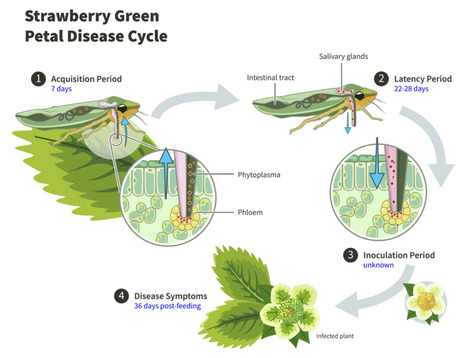
The emergence and re-emergence of pathosystems are expected to increase with ongoing climate change. Strawberry green petal disease (SbGP) is caused by phytoplasmas transmitted by two leafhopper species, Aphrodes bicinctus and Macrosteles quadrilineatus, in strawberry crops. In Québec, SbGP was frequently reported between 1950 and 1970. However, recent surveys (2012–2022) indicate an increased disease incidence in strawberry fields. While it is unclear whether this increase indicates a re-emergence or underreporting, understanding these pathosystem components can help clarify the underlying causes. This case study reviews the SbGP pathosystem, historical reports, and existing control measures, emphasizing the importance of ongoing and future research to address identified gaps. Although SbGP currently poses a limited economic threat, the interactions within the pathosystem could be exacerbated by warming temperatures, potentially leading to increased vector populations, altered phytoplasma development, susceptibility of strawberry plants, and consequently, severe outbreaks and a broader geographic distribution of the disease.
|
|
Scooped by
ulcriv
July 2, 2025 4:54 PM
|
Due to its persistence, glyphosate contamination in soil poses environmental and health risks. Plant growth-promoting bacteria (PGPB) offer a potential solution for mitigating glyphosate pollution. This study assessed the glyphosate degradation capacity of three airborne PGPB isolates (Exiguobacterium indicum AS03, Kocuria sediminis AS04, and Rhodococcus rhodochrous AS33) individually and in a consortium (CS) compared to natural attenuation in microcosms as the control (CTL), where soil autochthonous microorganisms (MS) were present. AS03 exhibited the highest glyphosate degradation (86.3%), followed by AS04 and AS33 at 14 days (61.6% and 64.7%). The consortium accelerated glyphosate removal, reaching 99.7%, while the control treatment removal was 94% at 60 days. Aminomethylphosphonic acid (AMPA) is the main metabolite in glyphosate degradation, and it had a maximum peak in concentration at 28 days in the CS + MS (1072 mg kg−1) and CTL (990 mg kg−1) treatments. Subsequently, a decrease in AMPA concentration was observed at 60 days up to 349 mg kg−1 and 390 mg kg−1, respectively. These results suggested that soil autochthonous microorganisms and their interactions with a consortium have similar biotransformation of glyphosate, but the AMPA conversion to other intermedium metabolites through degradation was slow. A minimum AMPA concentration of 15–45 mg kg−1 over time was detected with the consortium. The microbiome analysis revealed shifts in microbial composition, with an increase in glyphosate-degrading genera like Psychrobacter and Lyzobacter. These changes enhance soil resilience and fertility, demonstrating the potential of airborne PGPB for bioremediation and environmental sustainability.
|
|
|
Scooped by
ulcriv
July 23, 2025 3:44 PM
|
Plant essential oils (EOs) represent a potentially effective, safe, and eco-friendly alternative to synthetic pesticides that cause negative effects for human health and the environment. While numerous studies have been conducted with EOs from tropical and temperate plants, very few studies have investigated the toxicity of EOs from Nordic plants against plant pathogenic organisms and pests. The present study evaluated in airtight glass chambers the toxicity of vapours produced by EOs obtained from sweet gale, balsam poplar, Labrador tea, jack pine, and black spruce against different pathogenic organisms and pests of cultivated plants. Vapours of Labrador tea EO strongly or completely inhibited the mycelial growth of Alternaria solani, Phytophthora capsici, and Sclerotinia sclerotiorum, while vapours of sweet gale, black spruce, and jack pine EOs inhibited the mycelial growth to a lesser extent. Vapours of all tested EOs were shown to have bactericidal activity against Clavibacter michiganensis subsp. michiganensis, insecticidal activity against bird cherry-oat aphids, acaricidal activity against spider mites, and phytotoxicity against Powell's amaranth. The study reveals the toxicity of EOs from Nordic plants against various pathogens and pests affecting crops, opening new avenues of research for the development of low-risk alternatives to synthetic pesticides in agriculture, with minimal impact on the environment and human health.
|
|
Scooped by
ulcriv
July 23, 2025 3:12 PM
|
Viral diseases are an important threat to crop yield, as they are responsible for losses greater than US$30 billion annually. Thus, understanding the dynamics of virus propagation within plant cells is essential for devising effective control strategies. However, viruses are complex to propagate and quantify. Existing methodologies for viral quantification tend to be expensive and time-consuming. Here, we present a rapid cost-effective approach to quantify viral propagation using an engineered virus expressing a fluorescent reporter. Using a microplate reader, we measured viral protein levels and we validated our findings through comparison by western blot analysis of viral coat protein, the most common approach to quantify viral titer. Our proposed methodology provides a practical and accessible approach to studying virus-host interactions and could contribute to enhancing our understanding of plant virology.
|
|
Scooped by
ulcriv
July 23, 2025 3:05 PM
|
In the Global North, alternative livestock farms are sometimes considered preferable to large-scale specialized farms, which are largely preeminent in current livestock supply chains. In this study, we aimed to determine if alternative livestock farms respected the socioeconomic principles of agroecology. A qualitative thematic analysis and a multivariate quantitative analysis were conducted based on data gathered from a sample of 15 farms over the course of three years. All farms raised multiple species and marketed their products through multiple different outlets, most of them directly to the end consumer, ensuring high economic diversification and connectivity. High levels of work satisfaction were commonplace, as farmers’ values were aligned with their work. Even though their sales prices were much higher than those obtained by large-scale specialized livestock farms, average net incomes and employee wages were low. Most farms operated at a small scale, but farms with higher gross incomes had higher net incomes, suggesting a certain level of economic performance due to economies of scale. Most farm characteristics were found to be in line with locally accepted social values such as gender equity, animal welfare, and providing ingredients for meat-forward diets, which are the local norm. Farmers deplored the fact that they did not have the institutional leverage to take part in territorial and food system governance. While alternative livestock farms cannot readily replace large scale specialized farms in terms of production volume, their socioeconomic characteristics were found to align with the agroecological ideal.
|
|
Scooped by
ulcriv
July 23, 2025 2:13 PM
|
With increasing demand for crops resilient to environmental variability, haskap (Lonicera caerulea) emerges as a promising berry for northern climates due to its rich bioactive content and distinct flavor. Nevertheless, its fragility presents major challenges for maintaining postharvest quality. This study evaluated the effect of storage conditions on haskap quality using two experimental approaches. The first experiment monitored quality attributes (color, firmness, total soluble solids, titratable acidity, weight loss, and antioxidant capacity) at temperatures (0°C, 4°C, and 8°C) over 28 days. Storage at 0°C most effectively preserved antioxidant capacity, with peak levels observed on Day 21 (1.04 ± 0.2 mM TE g−1 D.W), alongside maximal phenolic (37.38 ± 1.59 mg GAE g−1 D.W) and flavonoid (26.99 ± 0.99 mg rutin eq g−1 D.W) content. The second experiment, employing a factorial design, assessed the interactive effects of relative humidity (RH) (90% and 95%), temperature (0°C, 4°C, and 8°C), and time (1, 10, and 20 days) on haskap quality. Optimal conditions for quality preservation were identified as 0°C and 90% RH for 10 days of storage. These findings establish key storage requirements for haskap, informing postharvest practices aimed at maximizing shelf life and bioactive retention.
|
|
Scooped by
ulcriv
July 23, 2025 12:04 PM
|
Galanthamine, an isoquinoline alkaloid used to treat symptoms of Alzheimer's disease, is predominantly extracted from Amaryllidaceae plants, yet its supply remains limited. In this study, we identified, isolated, and characterized N-methyltransferases (NMTs) from three galanthamine-producing species: Leucojum aestivum, Lycoris radiata, and Hippeastrum papilio. The transcriptomic analysis identified five unique NMT isoforms, among which LaLrHpNMT1, an isoform highly conserved across all three species, exhibited the highest catalytic activity. Phylogenetic and structural analyses revealed that these enzymes share high sequence conservation and maintain the class I methyltransferase Rossmann fold with key catalytic residues, paralleling known NMTs from benzylisoquinoline alkaloid pathways. Flexible docking simulations confirmed that norgalanthamine, a crucial precursor, fits within the enzyme's active site and interacts with conserved residues Glu204 and His208. In vitro and in planta assays demonstrated that LaLrHpNMT1 efficiently catalyzes the N-methylation of norgalanthamine to galanthamine. Site-directed mutagenesis confirmed the key role of Glu204 and the participation of Phe residues in substrate stabilization. Additional enzyme assays revealed that LaLrHpNMT1 is promiscuous towards various alkaloid intermediates, while subcellular localization using eGFP-tagged constructs exposed a dual distribution in the cytosol and endoplasmic reticulum, suggesting that NMT activity occurs at the cytosol–ER interface where other biosynthetic enzymes reside. Environmental stress experiments in H. papilio shoots culture showed significant upregulation of NMT expression under heat and other stress conditions associated with AA levels modulation, indicating a potential link between stress responses and alkaloid biosynthesis. These findings deepen our understanding of galanthamine biosynthesis and provide a foundation for metabolic engineering strategies aimed at improving production yields.
|
|
Scooped by
ulcriv
July 10, 2025 1:17 PM
|
Protected crops like greenhouses and indoor farms using light-emitting diodes (LEDs) allow precise control of light spectrum, intensity, and photoperiod for agronomic purposes. These artificial light conditions also influence insects and arachnids, including predators used in biological control. Despite growing interest, the effects of LEDs on predator behavior and control efficacy remain poorly understood. In microcosm experiments, we studied the locomotion and predation behaviors of the generalist predator Orius insidiosus against thrips (Frankliniella occidentalis) under different light spectra and intensities. We tested narrowband blue, green, and red spectra, 3 blue-red ratios, and a spectrum combining all 3 colors across a light-intensity gradient. Predators attacked prey under all lighting conditions, with 70% of individuals showing predatory behavior during observations. Spectral composition significantly influenced behaviors of interest, while light intensity had negligible effects. Narrowband spectra elicited the highest attack probabilities, but the mixed blue-red spectrum with a higher proportion of red light yielded the highest prey capture rates. The spectrum combining all 3 colors showed intermediate prey capture success. In complex environments with cucumber plants and 24-h artificial light sequences, prey capture probabilities followed similar trends to microcosm experiments. However, thrips survival rates remained similar across all lighting treatments. Our findings suggest that while lighting influences O. insidiosus behavior, this predator remains effective under various conditions, providing a foundation for lighting strategies that balance plant productivity with biological control.
|
|
Scooped by
ulcriv
July 10, 2025 12:40 PM
|
In February 2023, potato (Solanum tuberosum L.) plants (cv. Fianna) exhibiting symptoms of aerial stem rot (water-soaked and brown lesions on the stem) were observed in a field in the Guasave Valley, northern Sinaloa, Mexico with an incidence of approximately 40%. Ten symptomatic stem fragments from five diseased plants were disinfected, plated on crystal violet pectate (CVP) medium, and incubated at 28°C for 24 h (Hélias, 2012). Single colonies that formed cavities were selected for further analysis. Five representative isolates, showing biochemical and morphological characteristics consistent with Pectobacterium spp. (Palafox et al., 2024), were chosen. These characteristics included catalase activity, pectinolytic activity, Gram-negative bacilli morphology, absence of oxidase activity, and non-fluorescence on King’s B medium.
|
|
Scooped by
ulcriv
July 10, 2025 12:19 PM
|
The production of coronavirus disease 2019 vaccines can be achieved by transient expression of the spike (S) protein of severe acute respiratory syndrome coronavirus 2 in agroinfiltrated leaves of Nicotiana benthamiana. Relying on bacterial vector Agrobacterium tumefaciens, this process is favoured by co-expression of viral silencing suppressor P19. Upon expression, the S protein enters the cell secretory pathway, before being trafficked to the plasma membrane where formation of coronavirus-like particles (CoVLPs) occurs. We previously characterized the effects of influenza virus hemagglutinin forming VLPs through similar processes. However, leaf samples were only collected after 6 days of expression, and it is unknown whether influenza VLPs (HA-VLPs) and CoVLPs induce similar responses. Here, time course sampling was used to profile responses of N. benthamiana leaf cells expressing P19 only, or P19 and the S protein. The latter triggered early but transient activation of the unfolded protein response and waves of transcription factor genes involved in immunity. Accordingly, defence genes were induced with different expression kinetics, including those promoting lignification, terpene biosynthesis, and oxidative stress. Cross-talk between stress hormone pathways also occurred, including repression of jasmonic acid biosynthesis genes after agroinfiltration, and dampening of salicylic acid responses upon S protein accumulation. Overall, HA-VLP- and CoVLP-induced responses broadly overlapped, suggesting nanoparticle production to have the most effects on plant immunity, regardless of the virus surface proteins expressed. Taking advantage of RNAseq inferences, we finally show the co-expression of Kunitz trypsin inhibitors to reduce CoVLP-induced defence and leaf symptoms, with no adverse effect on plant productivity.
|
|
Scooped by
ulcriv
July 3, 2025 4:41 PM
|
The study investigated the effect of 17 synthetic fungicides used in strawberry fields in Québec (Canada) on the in vitro growth of Hirsutella sp., an entomopathogenic fungus. Isolates collected from cyclamen mites from farms with a conventional growing system (Hirsutella sp. H94 and Hirsutella nodulosa H98) and from a farm with an organic growing system (H. nodulosa H0) were selected for the study. All the fungicides tested strongly inhibited the mycelial growth of the three isolates, although slight differences in sensitivity were observed. Fullback® 125 SC (A.I.: flutriafol), Mettle® 125 ME (A.I.: tetraconazole), NovaTM (A.I.: myclobutanil), and Quadris top® (A.I.: azoxystrobin and difenoconazole) were the most effective at inhibiting the growth of the three isolates. Property® 300SC (A.I.: pyriofenone) was the fungicide with the lowest inhibiting effect on the growth of the three isolates. Isolates H94 and H98 obtained from farms with a conventional growing system, and thus frequently exposed to synthetic fungicides, did not show resistance to the fungicides tested. The study suggests that fungicides might negatively impact the natural populations of the entomopathogenic fungi of the genus Hirsutella on strawberry plants.
|
|
Scooped by
ulcriv
July 2, 2025 5:44 PM
|
Angular leaf spot (ALS) caused by Pseudomonas syringae is an important seedborne bacterial disease in cucurbits. Currently, growers have very few alternatives to copper-based pesticides for the control of the disease in both conventional and organic growing systems. Recent work performed by our group revealed that sugar maple and silver maple leaf extracts show potential as alternatives to the use of copper-based pesticides for the control of plant-pathogenic bacteria. This study investigated the antibacterial and prophylactic activity of ethanolic sugar maple/silver maple autumn-shed leaf extracts against P. syringae. Silver maple and sugar maple leaf extracts showed antibacterial activity under in vitro conditions against P. syringae with minimum inhibitory concentration (MIC) values of 0.39 and 0.78 mg/mL, respectively. The extracts were also very effective as seed treatments at concentrations of 50 or 100 mg/mL. Foliar applications of sugar maple leaf extracts at concentrations of 14.1 mg/mL (corresponding to phytotoxic dose 5% [PD5] value) and 28.2 mg/mL (corresponding to 2 × PD5 value) were either as effective (PD5) or more effective (2 × PD5) than copper octanoate to control ALS on cucumber plants. Silver maple leaf extracts used at a concentration corresponding to PD5 value were as effective as copper octanoate to control ALS on cucumber. Foliar applications of the extracts also showed efficacy in reducing the severity of ALS on butternut squash plants. This study opens new avenues for the management of ALS in cucurbits using silver maple and sugar maple leaf extracts as alternatives to the use of copper-based pesticides.
|
|
Scooped by
ulcriv
July 2, 2025 5:19 PM
|
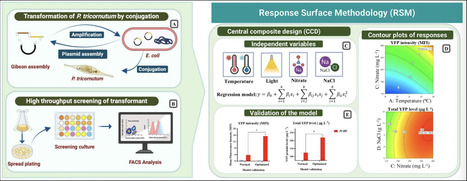
Phaeodactylum tricornutum is a promising host for light-driven synthesis of heterologous proteins. However, the marine cold-water environment and alkaline-acidic pH shifts in the culture, necessitated by the diatom’s growth requirements. In this study, we analyzed the influence of growth condition on maturation and dynamics of the yellow fluorescent protein (YFP) in episomal-transformant P. tricornutum. A mathematical model was developed to detect the parameters that affect biomass and YFP production. Optimized conditions increased YFP mean fluorescence intensity (MFI) per cell by 4.2-fold (3.6 ± 0.6 to 15.4 ± 1.1) and total protein levels in the culture by 1.8-fold (123 ± 4 to 219 ± 9 µg L−1), without affecting biomass. YFP stability studies in P. tricornutum showed that the ubiquitin–proteasome system contributes the degradation of the recombinant protein, whereas newly synthesized YFP remains stable for up to 12 h. This optimization provides insights into the fluorescent protein-based heterologous production in diatoms.
|
|
Scooped by
ulcriv
July 2, 2025 5:00 PM
|
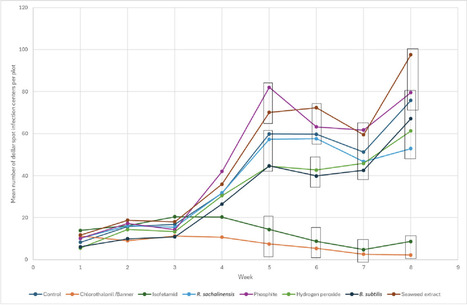
The widespread use of pesticides on golf courses, essential for maintaining healthy turfgrass, has raised significant environmental and health concerns as perceived by many well-intentioned members of society. In response to regulatory pressures, this study aimed to evaluate reduced-risk approaches to managing two prevalent turf diseases, dollar spot (Clarireedia spp.) and snow molds (Typhula sp. and Microdochium nivale (Fr.) Samuels & I.C. Hallett), at two experimental sites in Quebec, Canada. A variety of treatments, including synthetic fungicides, reduced-risk fungicides, biofungicides, and fertilizers, were assessed in 2021 and 2022. For dollar spot, the reduced-risk fungicide isofetamid achieved similar disease control comparable to the synthetic standard (chlorothalonil/propiconazole); however, biofungicides and fertilizers did not provide significant disease reduction. For snow mold, a reducedrisk treatment (fluoxastrobin + mefentrifluconazole) was effective but less so than the synthetic standard. Overall, reduced-risk fungicides demonstrated potential for controlling these diseases while significantly reducing human health and environmental risks, although efficacy varied among those fungicides. This study supports the viability of integrating reduced-risk or lower-toxicity pesticides into golf course pest management strategies and programs, contributing to more sustainable turfgrass management practices.
|