Your new post is loading...
In a strategic move to strengthen the competitiveness of Europe’s industry and leverage the Union market towards more security of supply, diversification and decarbonisation, the Commission launched the Hydrogen Mechanism under the EU Energy and Raw Materials Platform. The online platform will host different mechanisms covering hydrogen, raw materials, natural gas and biomethane, with the possibility to cover other products in the future. It aims to empower European companies to efficiently source energy and raw materials.
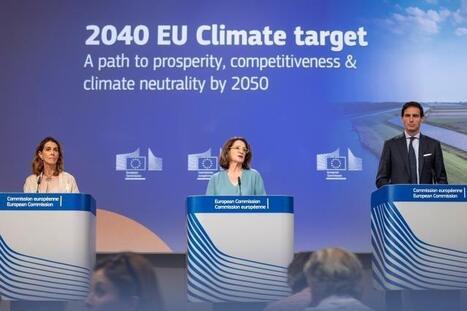
The European Commission has proposed an amendment to the EU Climate Law, setting a 2040 EU climate target of 90% reduction in net greenhouse gas (GHG) emissions, compared to 1990 levels, as requested by the Commission Political Guidelines for 2024-2029. The proposal sets out a way to reach the 2040 goal in a different way that has been done in the past. One central element is flexibilities that the Commission will consider in designing the future legislative instruments to achieve this 2040 climate target. These include a limited role for high-quality international credits starting from 2036, the use of domestic permanent removals in the EU Emissions Trading System (EU ETS), and greater flexibilities across sectors to help achieve targets in a cost-effective and socially fair way. The Commission proposal emphasises the importance of accelerating and strengthening the right enabling conditions to support this 90% target. These include a competitive European industry, a fair transition that leaves no one behind, and a level playing field with our international partners. In addition, the proposal sets a clear frame for our post-2030 climate and energy legislation. National specificities will be taken into account. Cost-effectiveness, simplicity and efficiency will be guiding principles, together with ensuring technological neutrality and a transition that is fair and just for everybody.
La Comisión Europea y el Banco Europeo de Inversiones han anunciado hoy que se han desembolsado 3 660 millones de euros del Fondo de Modernización para apoyar 34 proyectos relacionados con la energía en nueve Estados miembros de la UE. Estas inversiones apoyarán la modernización de los sistemas energéticos en la UE. Reducirán las emisiones de gases de efecto invernadero (GEI) en los sectores de la energía, la industria y el transporte, y mejorarán la eficiencia energética.
La Asociación Española de Normalización, UNE, ha publicado el Informe “Normas de apoyo a la economía circular 2025", que actualiza la relación de normas españolas UNE, europeas EN e internacionales ISO e IEC que dan apoyo en la transición hacia una economía circular. Pretende ser de utilidad para los agentes privados y públicos que busquen referencias para la implementación de medidas circulares y visibiliza la contribución de la normalización a estos objetivos.
The Council has adopted its negotiating position (general approach) on one of the proposals of the so-called ‘Omnibus I’ legislative package, which simplifies and strengthens the EU’s carbon border adjustment mechanism (CBAM). The proposal seeks to provide simplification and cost-efficient compliance improvements to the CBAM regulation, without compromising its climate goals, as about 99% of embedded emissions in the imported CBAM goods would remain covered. The overall aim is to reduce the regulatory and administrative burden, as well as compliance costs for EU companies, especially SMEs. The Commission proposes, as the main simplification of CBAM rules, a broader ‘de minimis’ exemption from CBAM obligations by exempting importers, which do not exceed a single mass-based threshold set at a level of 50 tonnes of imported goods per importer per year. Furthermore, the proposal contains several simplifications for all importers of CBAM goods above the threshold. This concerns particularly the authorisation procedure, the data collection processes, the calculation of embedded emissions, the emission verification rules, the calculation of the authorised CBAM declarants’ (parties wishing to import goods subject to the CBAM) financial liability during the year of imports into the EU, and the claim by authorised CBAM declarants for carbon prices paid in third countries.
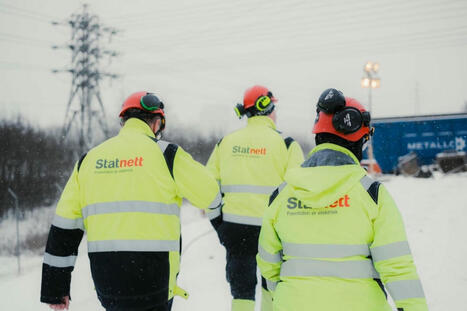
Statnett is in the process of building the new 420kV substations Hyggevatn and Skaidi in Hammerfest municipality, as well as Liåsen and Ulven in Oslo. These four stations are being built with technology that is one hundred percent free of SF6, both in passive and active components, including circuit breakers.
The energy transition’s Achilles’ heel isn’t generation—it’s the electricity grid. Without a seismic shift in grid investment, the promise of clean, secure, and affordable energy is in danger of stalling. The International Energy Agency estimates that a total global grid investment of $25 trillion—equivalent to one-quarter of the world's annual economic output today—will be required from now to 2050 to achieve net zero. The cost of the build-out could jeopardize public support for the transition, and associated capital requirements pose significant financing difficulties for many companies. Congestion, supply chain and workforce constraints, and regulatory and planning hurdles create additional hurdles for players. To address these challenges, Boston Consulting Group's report shows that companies must adopt a paradigm shift in four areas: modifying their network planning practices, creating new capabilities and workforce models in project execution, altering their approach to supply chain management, and accelerating their efforts to engage stakeholders.
A 178 tonne supergrid transformer and specialist SF6-free technology arrived at National Grid’s new 400kV Bengeworth Road substation, which is being built by National Grid and construction partner Linxon as part of the £1 billion London Power Tunnels 2 project to reinforce the capital’s electricity network.
As part of this partnership, Nuventura will provide dry-air GIS core modules, technical support, and training to enable WESCOSA to integrate this technology into their product portfolio. In turn, WESCOSA will bring their extensive local market knowledge, manufacturing excellence, and commitment to customer satisfaction to deliver environmentally friendly switchgear solutions across Saudi Arabia and beyond. This collaboration marks a significant step forward in the medium-voltage switchgear market by combining WESCOSA’s expertise in delivering high-quality electrical solutions with Nuventura’s F-Gas-free GIS technology.
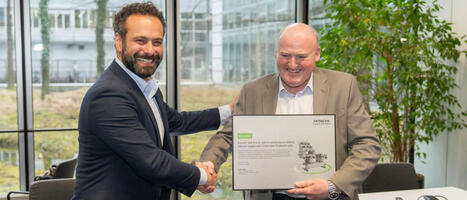
Hitachi Energy has announced it will deliver the world's first sulfur hexafluoride (SF6)-free 550 kV gas-insulated switchgear (GIS) to the Central China Branch of the State Grid Corporation of China (SGCC). This achievement marks a significant step toward decarbonizing the power grid and contributes to China's target of achieving carbon neutrality by 2060. The SF6-free 550 kV GIS is part of EconiQ, Hitachi Energy's eco-efficient portfolio for sustainability, where products, services, and solutions are scientifically proven to deliver exceptional environmental performance. This technology strengthens critical infrastructure while significantly reducing the environmental impact of the power system.
This study provides a comprehensive scientometric analysis of global research trends at the intersection of Circular Economy (CE) and Renewable Energy (RE) from 2014 to 2024, addressing the critical need for a systematic understanding of this rapidly expanding field.
This article will delve into the definition of Product Circularity and its targets specially focusing on HV equipment, with emphasis on Power Transformers (PTs) and Gas-Insulated Switchgears (GIS).
In a first step, the CSR concept is introduced to propose a full picture of Product Circularity actions, benefits and implementation challenges. In this regard, while “Closing the loop” represents the common vision of Circularity (recyclability), “Slowing the loop” represents extending a product’s useful life; and “Reducing the loop” regards increasing the product’s mass efficiency. In a second steps, PTs and GIS will be described with a focus on their various materials and their environmental impacts. Then, in a third part, product circularity actions with CSR concept will be proposed and discussed. The last part will be focused on how to quantify the benefits of recycling.
España ha reducido en un 73,76% las emisiones vinculadas a la generación de electricidad desde 2011, lo que situaría a nuestro país entre los líderes europeos de la descarbonización del sistema eléctrico, según un informe elaborado por Papernest (startup francesa dedicada a gestionar contratos energía). El informe detalla que las emisiones totales han caído desde los 80,09 millones de toneladas de CO2 equivalente registradas en 2011 hasta los 21,02 en 2024. Ahora el reto pasa por aumentar la inversión en redes, almacenamiento y flexibilidad para consolidar la metamorfosis energética.
|
Hitachi Energy's 765 kV natural ester-filled transformer is the world's largest at this voltage and power level, setting the benchmark for biodegradable and safety-by-design solutions for high-voltage AC transmission
Greenhouse gas emission intensity of power generation in the European Union has returned to the overall decreasing trend of the past decades. This follows a slight increase in use of fossil fuels during 2021 and 2022, linked to post-COVID recovery and the war in Ukraine. Generating one kilowatt hour emitted, on average, 20% less CO 2 in 2023 than in 2022 and 36% less than a decade ago. Climate and energy policies have effectively lowered carbon-intensive electricity supply over time, resulting in less coal use, more renewables and a more efficient EU generation mix.
Se han publicado en el Boletín Oficial del Estado (BOE) las bases reguladoras del Programa Renocicla, el nuevo PERTE de Economía Circular de bienes de equipo para energías renovables. El objetivo del programa es promover la realización de inversiones en instalaciones de reciclaje, de reutilización, de preparación para la reutilización y/o segunda vida y de innovación en el ecodiseño de bienes de equipo para energías renovables. Para ello, se definen dos programas de actuación. Programa 1: Instalaciones de reciclaje y/o segunda vida de bienes de equipo para energías renovables. Subprograma 1.1.: Instalaciones de reciclaje y/o segunda vida de paneles solares fotovoltaicos. La instalación deberá valorizar un porcentaje superior al 85 % en peso y preparará para la reutilización y reciclará un porcentaje superior al 80 % en peso, en ambas actividades, en su caso. Subprograma 1.2.: Instalaciones de reciclaje y/o segunda vida de palas de aerogeneradores. La instalación de reciclaje, en su caso, deberá recuperar al menos el 65 % en peso de las palas y/u otros materiales compuestos de los aerogeneradores y transformarlos en materias primas secundarias. Subprograma 1.3.: Instalaciones de reciclaje y/o segunda vida de baterías. La instalación de reciclaje, en su caso, deberá reciclar un porcentaje superior al 65 % en peso de las pilas y acumuladores. Programa 2: Proyectos de innovación en el ecodiseño de bienes de equipo para energías renovables. Las convocatorias específicas para la solicitud de ayudas serán publicadas próximamente en la sede electrónica del IDAE.
The decarbonisation of EU energy systems is critical to reach climate objectives in 2030 and 2050 as announced in the European Green Deal and, in this context, photovoltaics (PV) is called to have a prominent contribution, according to the REPowerEU plan. In this direction, it is crucial to ensure that newly installed PV panel capacities in the EU are affordable and competitive, but also that they are manufactured in a sustainable manner. The aim of this Science for Policy Report is to outline a set of harmonized rules for accounting the carbon footprint of PV panels, designed to be applicable in the regulatory context and in particular for the potential development of Ecodesign requirements (as in line with Directive 2009/125/EC for the Ecodesign of energy related products). The harmonized rules proposed in the present report are based on the Environmental Footprint method developed by the European Commission (EC Recommendations 2279/2021) and the Product Environmental Footprint Category Rules (PEFCR) for PV. In particular, the PEFCR for PV have been used as pillar for building these harmonized rules with adaptations due to the application in a regulatory context. The method has been the outcome of a consensus building process based on various positions from different stakeholders received at different stages.
Implementing and controlling large energy projects are complex processes requiring integrated engineering, project management, and collaboration across various sectors. These projects include renewable energy facilities, power transmission and distribution networks, and large-scale fossil fuel production facilities, which have been developed over several years and with many billions of investment dollars. Success in these ventures depends on proper planning, engagement of various stakeholders, risk analysis, and flexibility to change course in the light of changing circumstances. Conversely, energy projects are associated with regulatory, cost, environmental, and public risks. That’s where proper planning comes in. If the following best practices are adopted, the latest technology is used, and cooperation between industry and government is encouraged, organizations can successfully implement projects that will help to meet energy needs and promote sustainability and economic development.
The introduction and adoption of SF6 Insulating Gas Alternatives will affect all stakeholders in the industry, from Asset Managers to Supply Chain Managers to in-field Maintenance Teams. EMT, a specialist in insulating gas technologies outlines below the key breakthrough SF6 Alternatives on the market today: C4-FN Mixtures, Dry Air Mixtures and Natural Origin Gas Mixtures (N.O.G).
Hitachi Energy and SP Energy Networks (SPEN) have signed a Memorandum of Understanding (MoU) which formalises both companies’ commitment to Scotland’s energy transition by deploying sustainable critical energy infrastructure. The agreement will see Hitachi Energy provide switchgear from its EconiQ portfolio. Unlike traditional equipment, the EconiQ equipment does not use sulfur hexafluoride (SF6). This ensures Hitachi Energy’s SF6-free technology will support SPEN in its critical role to help Scotland achieve net zero by 2045. The first installations of the EconiQ 420 kV GIS will take place in two new planned substations on SPEN’s network, critical to the UK’s energy transition. These will effectively remove the equivalent of the CO2 emissions produced from around 27,600 passenger vehicles from the road in a year. The agreement builds on a long-term collaboration between the two companies to facilitate the connection of renewable energy for use by electricity consumers across the country.
Schneider Electric has launched its Environmental Data Program, an initiative, which provides customers with access to information on the environmental impact of its products, enabling them to make better informed, data-based decisions and meet evolving regulatory requirements with confidence. By providing critical information, like carbon footprint, energy efficiency, packaging, recycled content… Schneider Electric helps customers make choices that align with their sustainability goals, enabling them to better track, understand, and reduce their own environmental impact. Schneider Electric shares information on 14 environmental data attributes up from the 5 previously disclosed by the company’s legacy Green Premium Label, offering a more comprehensive understanding of a product’s environmental impact. Those 14 attributes are available online for 110,000 commercial references. Schneider Electric aims to provide the same coverage for 155,000 commercial references by the end of the year, covering 80% of product turnover – up from 70% today.
Site selection is a critical phase in the development of renewable energy projects. To make a sound decision, it’s not only necessary to consider technical and economic feasibility, but also the degree of environmental impact of the project. The Environmental Impact Assessment (EIA) is, therefore, the central axis of this phase, and satellite data has become an indispensable tool to carry it out efficiently and rigorously. This article delves into how these data allow for the acceleration of environmental impact studies, strengthening the reliability of diagnoses and advancing towards a more agile execution of energy projects.
This study examines the integration of Circular Economy (CE) principles with Smart Energy Grids (SEG) as a strategy to advance sustainable, low-carbon energy systems. The CE emphasizes minimizing waste, recovering resources, and prolonging material lifecycles, while SEG focuses on improving energy efficiency, supporting renewable energy integration, and enhancing grid resilience. These frameworks offer significant potential for optimizing resource use and reducing environmental impacts in the energy sector. However, several challenges hinder their full integration, such as technological barriers, regulatory constraints, and the lack of market incentives. Technological obstacles include the need for advanced recycling and energy storage solutions, particularly for renewable energy systems and electric vehicles. Regulatory frameworks are often insufficiently adaptable to the decentralized energy systems central to both CE and SEG.
La Unión Europea (UE) necesita invertir más y mejor en la red eléctrica para conseguir competitividad y autonomía y para alcanzar sus objetivos energéticos y climáticos, según un informe publicado este martes por el Tribunal de Cuentas de la UE, que propone almacenamiento, interconexiones y eficiencia.
|