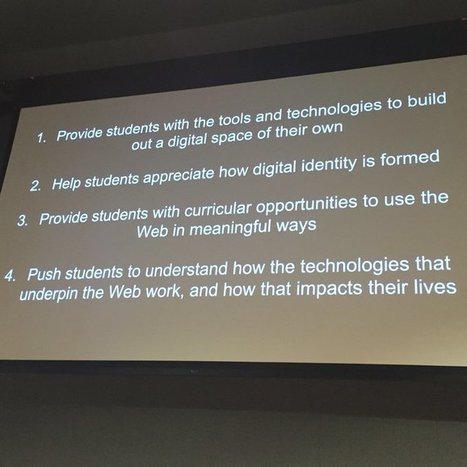
Apologies for missing International Literacy Day on September 8th. This was the 50th anniversary of the day and information about it i


 Your new post is loading...
 Scoop.it! Apologies for missing International Literacy Day on September 8th. This was the 50th anniversary of the day and information about it i 
No comment yet.
Sign up to comment
Scoop.it!
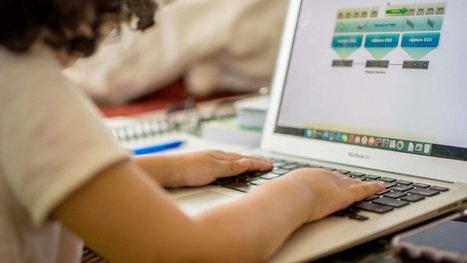
Studies suggest that many U.S. students are too trusting of information found on the internet and rarely evaluate the credibility of a website’s information. For example, a survey found that only 4 percent of middle school students reported checking the accuracy of information found on the web at school, and even fewer did so at home (New Literacies Research Team & Internet Reading Research Group, 2006). At the same time, the web is often used as a source of information in school projects, even in early schooling, and sites with inaccurate information can come up high in search rankings. Via Elizabeth E Charles
Scoop.it!
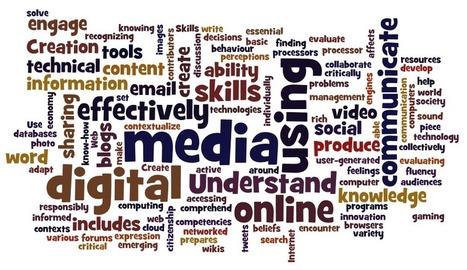
Digital literacy is like any other core curricular subject. It is no longer an option, just as reading and math are not. Students must be digitally competent if they are to be successful in school and in their professional and personal lives as adults. Indeed, 3 out of 4 of the best jobs for many years to come will involve digital expertise. Via Elizabeth E Charles
Scoop.it!

With so much information readily available in a range of multimodal formats, from text to multimedia, apps and social networking, we need to blend technological learning and critical literacy together so that students can critically appraise the information that they are accessing. Via Nik Peachey

Nik Peachey's curator insight,
July 22, 2016 4:14 AM
For sure. This is why I wrote my Digital Literacy lesson plans: http://peacheypublications.com/products 
Heidi Hutchison's curator insight,
July 22, 2016 8:06 AM
Administrators need to lead the way in modeling this for their communities!
Scoop.it!
Dan Russell writes: "There’s a difference between knowing that something exists, being able to find it rapidly with a moment’s worth of research, and then being able to pull together multiple sources of information into a coherent analysis. Via Mary Reilley Clark, Elizabeth E Charles

Mary Reilley Clark's curator insight,
June 17, 2016 11:33 AM
I learn so much reading Dan's blog! I'll be sharing this with teachers and students. Being able to Google a fact and being able to dig deeper to find the best resources and increase understanding is like the difference between knowing a tomato is a fruit, and knowing not to put it in a fruit salad. (Or better yet, knowing that in the United States we don't do that. In South Korea, cherry tomatoes in bingsu are a real treat!)
Scoop.it!
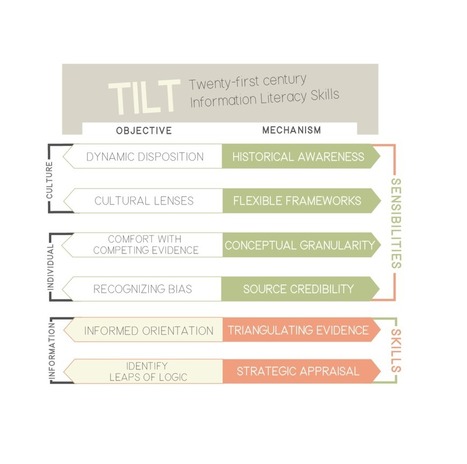
Information Literacy started out as library skills. How do we update these essential tools to help us navigate the digital age? Via Elizabeth E Charles
Scoop.it!
Author(s): Trudi Jacobson, Greg Bobish, Deborah Bernnard, Daryl Bullis, Jenna Hecker, Irina Holden, Allison Hosier and Tor Loney
Good researchers have a host of tools at their disposal that make navigating today’s complex information ecosystem much more manageable. Gaining the knowledge, abilities, and self-reflection necessary to be a good researcher helps not only in academic settings, but is invaluable in any career, and throughout one’s life. The Information Literacy User’s Guide will start you on this route to success. The Information Literacy User’s Guide is based on two current models in information literacy: The 2011 version of The Seven Pillars Model, developed by the Society of College, National and University Libraries in the United Kingdom and the conception of information literacy as a metaliteracy, a model developed by one of this book’s authors in conjunction with Thomas Mackey, Dean of the Center for Distance Learning at SUNY Empire State College. These core foundations ensure that the material will be relevant to today’s students. Via Elizabeth E Charles
Scoop.it!
Presentation given at Session 4 Best Practice "Information literacy Instruction" Tuesday October 20, 2015 at the 3rd European Conference on Information Literacy
Scoop.it!
From
medium

Gilbert C FAURE's insight:
Robin Good has great insight into why focused curation matters. Reading this right after Dan Russell's post about syntopical reading made me think about how I curate. In an ideal experience of curating for learning Robin states: "...each student becomes not just a learner, but, as it should be, he becomes also a reviewer, an investigator, an explorer and a contributor to the ideas and understanding surrounding that subject."
Let's make sure we're teaching students curation as a literacy skill. It's not just bookmarking or Pinning or Scooping links, but engaging with them, directing their own learning, and maybe even adding something that helps others learn.
Mary Reilley Clark's curator insight,
March 10, 2016 11:27 AM
Robin Good has great insight into why focused curation matters. Reading this right after Dan Russell's post about syntopical reading made me think about how I curate. In an ideal experience of curating for learning Robin states: "...each student becomes not just a learner, but, as it should be, he becomes also a reviewer, an investigator, an explorer and a contributor to the ideas and understanding surrounding that subject."
Let's make sure we're teaching students curation as a literacy skill. It's not just bookmarking or Pinning or Scooping links, but engaging with them, directing their own learning, and maybe even adding something that helps others learn. 
Stephania Savva, Ph.D's curator insight,
March 11, 2016 12:36 AM
Robin Good has great insight into why focused curation matters. Reading this right after Dan Russell's post about syntopical reading made me think about how I curate. In an ideal experience of curating for learning Robin states: "...each student becomes not just a learner, but, as it should be, he becomes also a reviewer, an investigator, an explorer and a contributor to the ideas and understanding surrounding that subject."
Let's make sure we're teaching students curation as a literacy skill. It's not just bookmarking or Pinning or Scooping links, but engaging with them, directing their own learning, and maybe even adding something that helps others learn. 
Leslie Haas's curator insight,
March 13, 2016 12:47 AM
Robin Good has great insight into why focused curation matters. Reading this right after Dan Russell's post about syntopical reading made me think about how I curate. In an ideal experience of curating for learning Robin states: "...each student becomes not just a learner, but, as it should be, he becomes also a reviewer, an investigator, an explorer and a contributor to the ideas and understanding surrounding that subject."
Let's make sure we're teaching students curation as a literacy skill. It's not just bookmarking or Pinning or Scooping links, but engaging with them, directing their own learning, and maybe even adding something that helps others learn.
Scoop.it!

‘Digital literacy’ is one of those buzz words floated by experts as being granular to 21st century students. It’s everywhere, on everyone’s tongue, but figuring out what it … Via Elizabeth E Charles
Scoop.it!
Teaching research competencies and information literacy is an integral part of the academic librarian’s role. There has long been debate among librarians over what are the most effective methods of instruction for college students. Library Faculty at a large urban University System were surveyed to determine their perceptions of the effectiveness of common information literacy instruction techniques. The system includes both two-year and four-year programs, as well as degree granting institutions. This research was undertaken for the purpose of better prioritizing institutional teaching activities in the current academic climate. The research shows that librarians within the University System believed that instructional models which give librarians more time with students, particularly highly-engaged students, are the most effective. Via Elizabeth E Charles
Scoop.it!

(2013). Information Literacy for Health Professionals: Teaching Essential Information Skills with the Big6 Information Literacy Model. Community & Junior College Libraries: Vol. 19, No. 3-4, pp. 77-91. doi: 10.1080/02763915.2014.953435 Health professionals frequently do not possess the necessary information-seeking abilities to conduct an effective search in databases and Internet sources. Reference librarians may teach health professionals these information and technology skills through the Big6 information literacy model (Big6). This article aims to address this issue. It also exposes the possibilities of applying the Big6 model in health sciences libraries and other informational contexts, based on several instances of successful integration of this model into information literacy programs in health sciences environments as well as several instances of using the model for solving diverse information problems within this context. This model promises to be practical for reference librarians and information professionals who are interested in a different approach to instructional and information literacy work in health sciences libraries, thus the paper suggests to take a closer look at Big6. Via Elizabeth E Charles
|
Scoop.it!
Most college students have been exposed to more technology than students of previous generations. This does not make them technology experts. Students do a lot of searching online for information. This does not make them expert, or even good, searchers. Thanks to Google, students can always find information on any topic. This does not mean that they have found true, accurate, useful information and does not make them expert finders of information.
Scoop.it!
Scoop.it!
From
jisc
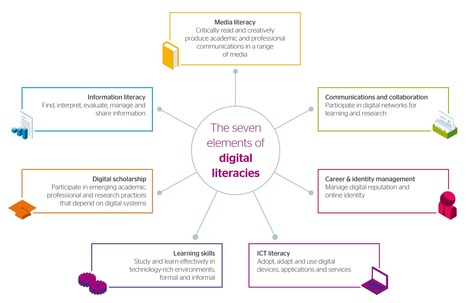
Provides ideas and resources to inspire the strategic development of digital literacies - those capabilities which support living, learning and working in a digital society Via Elizabeth E Charles
Scoop.it!
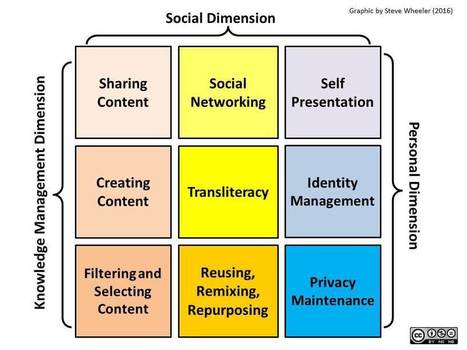
What does digital literacy mean in 2016? I'm currently working with the New Media Consortium (NMC) on a research project (supported by Adobe) aimed at answering that question, and you can play a part. We're surveying people to see what they currently think is in digital literacy: technical skills, human skills, policies, platforms, and definitions.… Via Elizabeth E Charles
Scoop.it!

From
upplysing
The programme and abstracts for the conference - links to abstracts
Gilbert C FAURE's insight:
literacy
Scoop.it!

Another free e-book arising from an information literacy class: Alison Hicks has edited a volume of essays from her class of library students (at the University of Denver), to form an engaging book aimed at librarians teaching information literacy. Hicks, A. (Ed.) (2016). Got a minute? Instruction tune-up for time pressed librarians. Pressbooks. http://gotaminute.pressbooks.com/
Via Elizabeth E Charles
Scoop.it!

So what is literacy? The “traditional definition” is the ability to read and write, but you will see that definition is a little different according to some sources. The definition of literacy has changed over time, and there are many different perspectives on the topic. Via Nik Peachey
Scoop.it!
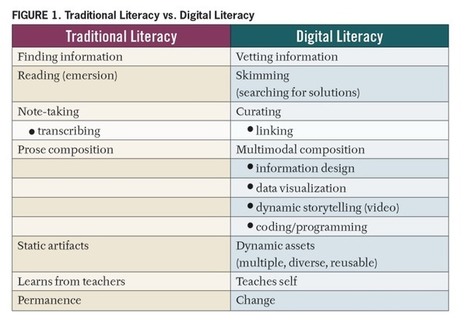
Both the 21st-century economy and the careers needed to fuel it are changing at an unprecedented rate. Students must be prepared for nonlinear careers, pivoting to match the ever-changing work landscape. We thus need to rethink not just how we teach our students but what we teach our students. Via Peter Mellow, Elizabeth E Charles
Scoop.it!

On November 12, 2014, ACRL released the third draft of the Framework for Information Literacy for Higher Education and called upon the community to provide additional feedback. Against this backdrop, this issue brief is particularly timely. In "Information Literacy and Research Practices," Nancy Fried Foster, Ithaka S+R's senior anthropologist, demonstrates how "researchers in the wild" are adhering to many of the goals described in the draft Framework. Via Elizabeth E Charles

Gilbert C FAURE's comment,
March 1, 2016 8:03 AM
any discussion of content curation, ie scoop.it usage for information literacy in research?
Scoop.it!

The World Wide Web is this generation’s defining technology for literacy. It facilitates access to an unlimited amount of information in a participatory learning space. Via Elizabeth E Charles
Scoop.it!
Need a good search engine? Here is a comprehensive list of the top search engines on the Web. Via Elizabeth E Charles
|