Notebook or My Personal Learning Network
21.0K views | +45 today
Notebook or My Personal Learning Network
a personal notebook since summer 2013, a virtual scrapbook
Your new post is loading...
Scooped by Gilbert C FAURE
December 28, 2023 4:43 AM
Scoop.it!

Financial Times, Sorbonne Univ and Open Alex

Paris university’s ‘radical decision’ to join OpenAlex challenges for-profit providers
No comment yet.
Scooped by Gilbert C FAURE
December 20, 2023 8:16 AM
Scoop.it!

2023 in Review - The end of academic social media as we know it?

2023 in Review - The end of academic social media as we know it? | Notebook or My Personal Learning Network | Scoop.it
Following the acquisition of Twitter by Elon Musk academic social media has undergone a period of change and fragmentation. This review highlights the range of responses featured on the blog this y…
No comment yet.
Scooped by Gilbert C FAURE
December 20, 2023 4:44 AM
Scoop.it!

Paul Storm on LinkedIn: #google #chatgpt #drstorm #technology #digital #future #chatgpt…

Paul Storm on LinkedIn: #google #chatgpt #drstorm #technology #digital #future #chatgpt… | Notebook or My Personal Learning Network | Scoop.it
#Google is so powerful that it hides other search engines from us.

We simply do not know about the existence of most of them.

Meanwhile, there are still a…
No comment yet.
Scooped by Gilbert C FAURE
December 18, 2023 10:48 AM
Scoop.it!

Frontiers | Dealing with information overload: a comprehensive review

Frontiers | Dealing with information overload: a comprehensive review | Notebook or My Personal Learning Network | Scoop.it
Information overload is a problem that is being exacerbated by the ongoing digitalization of the world of work and the growing use of information and communication technologies. Therefore, the aim of this systematic literature review is to provide an insight into existing measures for prevention and intervention related to information overload. The methodological approach of the systematic review is based on the PRISMA standards. A keyword search in three interdisciplinary scientific databases and other more practice-oriented databases resulted in the identification of 87 studies, field reports, and conceptual papers that were included in the review. The results show that a considerable number of papers have been published on interventions on the behavioral prevention level. At the level of structural prevention, there are also many proposals on how to design work to reduce information overload. A further distinction can be made between work design approaches at the level of information and communication technology and at the level of teamwork and organizational regulations. Although the identified studies cover a wide range of possible interventions and design approaches to address information overload, the strength of the evidence from these studies is mixed.
No comment yet.
Scooped by Gilbert C FAURE
December 18, 2023 5:10 AM
Scoop.it!

Directory of Open Access Journals – DOAJ

Directory of Open Access Journals – DOAJ | Notebook or My Personal Learning Network | Scoop.it
DOAJ is a unique and extensive index of diverse open access journals from around the world, driven by a growing community, committed to ensuring quality content is freely available online for everyone.
Gilbert C FAURE's insight:

not new

https://www.scoop.it/topic/notebook-by-gilbertcfaure?q=doaj


No comment yet.
Scooped by Gilbert C FAURE
December 15, 2023 5:05 AM
Scoop.it!

ChatGPT dans la rédaction scientifique : des perspectives prometteuses, des préoccupations légitimes

ChatGPT dans la rédaction scientifique : des perspectives prometteuses, des préoccupations légitimes | Notebook or My Personal Learning Network | Scoop.it
ChatGPT est une application d'intelligence artificielle conçue pour générer des réponses textuelles à la demande d’utilisateurs. Cependant, le phénomène est nouveau et controversé. Des inquiétudes émergent de toute part depuis le début de sa spectaculaire médiatisation en 2022. Dans le paysage de l’enseignement supérieur, l’une des plus grandes inquiétudes porte sur l’appropriation par les étudiants, voire par les enseignants-chercheurs, de la paternité d’un texte généré par ChatGPT. Des revues prestigieuses se sont d’ailleurs très vite préoccupées des implications de ChatGPT dans la littérature scientifique, y compris la prise en compte de ChatGPT comme co-auteur. Dans cette contribution, fruit d’un recensement de la littérature universitaire, nous discutons de l'état actuel des connaissances sur l’utilisation de ChatGPT dans la recherche scientifique, en soulignant les tendances et les développements récents dans ce domaine. Nous discutons des implications possibles en faveur de ChatGPT, mais aussi des limites potentielles. L'article s'ajoute au débat public en cours sur les impacts de ChaptGPT dans notre société. En comprenant le potentiel et les limites de cet outil, nous pouvons prendre des décisions éclairées sur la façon de l’utiliser de manière vertueuse et responsable.
No comment yet.
Scooped by Gilbert C FAURE
December 13, 2023 2:42 AM
Scoop.it!

Metaliteracy or content curation

  Metaliteracy.org Development of a Metaliteracy Course for Online Ed.D. Students and Beyond  

mackeyt

Dec 12

We welcome this guest essay by Dr. Melissa Atkinson, Director of Distance & Online Library Services at Abilene Christian University (ACU) Brown Library.

Metaliteracy, as introduced by Mackey and Jacobson in 2011, has been instrumental in developing metaliterate learners in a variety of contexts. The ACRL Framework for Information Literacy for Higher Education, published in 2016, transformed the previous Information Literacy Competency Standards for Higher Education (ACRL, 2000) into frames that build upon each other and were not prescriptive in how to assess students’ learning. Many librarians turn to the Framework as a guideline for developing information literacy courses, tutorials, guided studies, and assessments. Libraries and librarians create assessments of the Framework that are varied and individualized.

Using the Framework in conjunction with metaliteracy goals and learning objectives can enhance the student experience as well as give librarians a standard to follow that ensures development of skills needed in a participatory, connected environment (Mackey & Jacobson, 2011). Notes that reference metaliteracy and metacognition can be found in the Framework (2016). The Framework does have its strengths, but incorporating metaliteracy goals and learning objectives into the frames can aid in assessment and add to the knowledge and skills students should develop throughout their lifetime, not just when they are participating in higher education.

Using the original set of metaliteracy goals and learning objectives found on metaliteracy.org (Forte, et al, 2014), a metaliteracy course was developed in the Learning Management System (LMS) Canvas, specifically for fully online Ed.D. students, preparing them for research-related content encountered in their courses (Atkinson, 2019). The original course by Atkinson (2019) compared pretest, posttest, and metacognitive skills, using the Metacognitive Strategies for Library Research Skills Scale (MS-LRSS) developed by Catalano (2017). 

The course was designed using backward design methods (Wiggins & McTighe, 2006) to introduce online doctoral students to common library terminology, metaliteracy, and metacognitive concepts. The metaliteracy course was not intended to take the place of library tutorials, individualized instruction, or research consultations–all of which are critical to meet the needs of doctoral students in an online environment.

The metaliteracy course consists of five modules, four of which are directly related to the metaliteracy goals and learning objectives from 2014 (Forte, et. al., 2014). The fifth module relates to specific skills students need to be successful, particularly in the Ed.D. program such as requesting materials through InterLibrary Loan, identifying research methods, and recognizing specific library databases. Each module consists of a pretest, an overview and videos (most of which are three minutes or less), and a posttest. Each module name, the video titles, and learning objectives are listed below.

Module 1: Evaluate Content Critically
Two Videos: Scholarly Resources; Peer Review

Objective: Metaliterate learners evaluate information critically by determining authority, relevancy, accuracy, and validity of each source regardless of the information's delivery method.

By the end of this module, learners will be able to:

1) Recognize the criteria for evaluating authority, relevancy, accuracy, and validity of information sources

2) Determine context of an information source by considering purpose and format

3) Distinguish between scholarly and non-scholarly sources

4) Understand the process of peer review and its purpose in scholarly research

Module 2: Information Ethics

Two Videos: Academic Integrity, Copyright, and Plagiarism; APA Style

Objective: Metaliterate learners understand and differentiate between their own intellectual property and others' intellectual property, and give credit to others' work using proper citation style methods.

By the end of this module, learners will be able to:

1) Understand the concepts of academic integrity, copyright, and plagiarism

2) Differentiate between various forms of attribution

3) Identify parts of a citation in APA style

4) Recognize elements of APA style in context

Module 3: Information Creation, Sharing, and Collaboration

Three videos: Social Media; Digital and Visual Literacy; Creating Original Content

Objective: Metaliterate learners are aware of their online environments, participate collaboratively, transfer information from one format to another, and produce and share original content.

By the end of this module, learners will be able to:

1) Understand the various ways of sharing original content

2) Consciously participate in social media environments

3) Describe digital and visual literacy and their importance to metaliterate learning

4) Identify digital and media formats and the uses and purposes of each

Module 4: Lifelong Learning Research Strategies

Two videos: Information Needs; Metacognition

Objective: Metaliterate learners connect learning with personal, professional, and lifelong goals using their experiences. Metaliterate learners recognize metacognitive principles of learning by acknowledging that learning is a process and can reflect on research difficulties to improve strategies.

By the end of this module, learners will be able to:

1) Know which search strategies are appropriate for the information needs

2) Determine tasks involved to develop research questions

3) Reflect on one's own knowledge and determine ways to increase metacognition skills

4) Recognize the process of critical thinking that leads to metaliterate learning

Module 5: Research Skills Proficiency

Three videos: Types of Sources; Requesting Materials and ILL; Research Methods

Objective: Metaliterate learners are proficient in distinguishing between types of sources, describing research methods, and understanding how to request materials to find relevant, scholarly, and authoritative information sources.

By the end of this module, learners will be able to:

1) Describe research methods, including quantitative, qualitative, and mixed methods

2) Distinguish between primary, secondary, and tertiary sources

3) Recognize ACU library's databases, authentication process, and InterLibrary Loan procedures

4) Understand how to request physical materials

The original course has been modified to reach other fully online student audiences such as undergraduate students and Doctor of Nursing Practice (DNP) students. The undergraduate metaliteracy course is embedded in a critical thinking course that is taken by all online undergraduates. The program directors for the Ed.D. and DNP programs encourage students to self-enroll in the Canvas metaliteracy course specifically designed for those students in each program. Currently, a LibGuide is being developed to bring the metaliteracy course to a wider audience than is currently reached in Canvas. The full metaliteracy course will be available at this link (forthcoming), https://guides.acu.edu/metaliteracy, and currently includes all of the learning objectives and videos for each module.

A mapping of the ACRL Framework to the metaliteracy course objectives can help expand the knowledge and skills students need to succeed in their courses and beyond. The concept of metaliteracy is important for either an introduction for undergraduate students to library and research terminology or for graduate and doctoral students who already have these concepts developed as well as students who have not been to school for a long time and need a refresher on these concepts. Future plans include updating the metaliteracy course to incorporate the updated metaliteracy goals and learning objectives from 2018 (Jacobson, et al, 2018) as well as an update to the mapping of the Framework.

References

Association of College and Research Libraries. (2000). Information literacy competency standards for higher education. Retrieved September 29, 2023, from https://alair.ala.org/handle/11213/7668

Association of College and Research Libraries. (2016). Framework for information literacy for higher education. Retrieved September 29, 2023, from https://www.ala.org/acrl/standards/ilframework

Atkinson, M. D. (2019). The relationship between metaliteracy pretest, posttest, and Metacognitive Strategies for Library Research Skills Scale: Creating a metaliteracy course for online Ed.D. students [Doctoral dissertation, Regent University]. https://digitalcommons.acu.edu/library_pub/32

Catalano, A. A. (2017). Development and validation of the Metacognitive Strategies for Library Research Skills Scale (MS-LRSS). Journal of Academic Librarianship, 43(3), 178–183. https://doi.org/10.1016/j.acalib.2017.02.017

Forte, M., Jacobson, T., Mackey, T.,  O’Keeffe, E., & Stone, K. (2014). 2014 Metaliteracy Goals and Learning Objectives. Retrieved September 29, 2023, from https://metaliteracy.org/learning-objectives/2014-metaliteracy-goals-and-learning-objectives/.

Fulkerson, D. M., Ariew, S. A., & Jacobson, T. E. (2017). Revisiting metacognition and metaliteracy in the ACRL Framework. Communications in Information Literacy, 11(1), 21-41. https://doi.org/10.15760/ comminfolit.2017.11.1.45

Jacobson, T., Mackey, T., O’Brien, K., Forte, M., & O’Keeffe, E. (2018). 2018 Metaliteracy Goals and Learning Objectives. Retrieved September 29, 2023, from https://metaliteracy.org/learning-objectives/2018-metaliteracy-goals-and-learning-objectives/. 

Mackey, T. P., & Jacobson, T. E. (2011). Reframing information literacy as a metaliteracy. College & Research Libraries, 72(1), 62–78. https://doi.org/10.5860/crl76r1
Wiggins, G., & McTighe, J. (2006). Understanding by design (2nd ed.). Pearson.

Dr. Melissa Atkinson is the Director of Distance & Online Library Services at Abilene Christian University (ACU) Brown Library. In her 23-year career as a librarian at ACU, she has served as Online Learning Librarian, E-Collections & Web Services Librarian, Serials & Assessment Librarian, Electronic Services & Serials Librarian, and Reference Librarian. She is currently a dissertation chair for five dissertation students, one of whom recently  successfully defended their prospectus. She earned a Ph.D. from Regent University in Education (Distance Education concentration) in May 2019. Her research interests include metaliteracy, information literacy, online pedagogy, andragogy, and instructional design methods for library instruction. Her dissertation titled, "The Relationship Between Metaliteracy Pretest, Posttest, and Metacognitive Strategies for Library Research Skills Scale: Creating a Metaliteracy Course for Online Ed.D. Students," is available in Proquest and ACU's institutional repository (Digital Commons). In 2020, an article based on her dissertation was published called, “To Frame or Not to Frame: Creating a Metaliteracy Course for Online Ed.D. Students” in Library Hi Tech News (https://digitalcommons.acu.edu/library_pub/41/).


Gilbert C FAURE's insight:

https://metaliteracy.org/2023/12/12/development-of-a-metaliteracy-course-for-online-ed-d-students-and-beyond/

No comment yet.
Scooped by Gilbert C FAURE
December 12, 2023 4:24 AM
Scoop.it!

AI for literature search in hepatology

Collaborating with AI in literature search—An important frontier

Enomoto, Masaru1; Tseng, Cheng-Hao2; Hsu, Yao-Chun2; Thuy, Le Thi Thanh1; Nguyen, Mindie H.3,4

Author Information
Hepatology Communications 7(12):e0336, December 2023. | DOI: 10.1097/HC9.0000000000000336
Metrics

To the editor,

The growth of large language models in artificial intelligence (AI), exemplified by OpenAI’s Generative Pre-trained Transformers, is remarkable1 and can potentially aid in the systematic review of the ever-expanding medical literature. In fact, professional society guidelines are generally based on such data, but they are labor intensive.

In a 2020 Lancet Gastroenterology and Hepatology issue, we published a meta-analysis regarding HCC incidence with tenofovir disoproxil fumarate (TDF) versus entecavir in chronic hepatitis B.2 We spent hundreds of hours to screen >5000 studies to identify 31 studies eligible for further data extraction and synthesis2 (briefly, studies published between January 2006 and April 2020 with time-to-event data for incident HCC in TDF-treated or entecavir-treated patients).

Simulating the literature search for this study,2 we asked Generative Pre-trained Transformer-4, “Please find relevant studies with time-to-event data for incident HCC occurring in patients with chronic hepatitis B who received TDF or entecavir to know whether TDF and entecavir differ in their association with HCC risk in chronic hepatitis B patients.” Generative Pre-trained Transformers listed the titles, authors, journal names, and even PMIDs of “likely” papers that were mere hallucinations (Supplemental Table, https://links.lww.com/HC9/A698). Next, we asked the same question to another AI-generated research assistant, “Elicit.”3 After we clicked “show more” several times, in 10 minutes, Elicit showed 70 papers, with 48 of these published during the study period and 22 thereafter. At the end, of the 48 studies from the Elicit search that were published during the study period, 11 papers overlapped with those found by the traditional search, and 37 were newly identified (Supplemental Figure, https://links.lww.com/HC9/A699). In other words, 20 from the traditional search were missed by Elicit, and 37 were gained. Among the 20 missed papers, 5 were meeting abstracts, and 8 were published before 2018 and included only entecavir patients without a comparative arm. Thus, although 50,027/119,053 (42.0%) patients in the meta-analysis were missed in the Elicit search, only 1 (596 patients) out of 9 comparative studies was missed.4 Of the 37 additional papers “gained,” only 1 was an original research article (303 patients)5, which would have met our study criteria.

In summary, despite errors and miss rates with the current platform, systematic literature search using AI appears very promising, eliminating hours of human labor while improving search quality. As AI technology continuously evolves, efforts to refine and improve AI-based literature search platforms should be continued.

No comment yet.
Scooped by Gilbert C FAURE
December 12, 2023 4:13 AM
Scoop.it!

Surge in number of ‘extremely productive’ authors concerns scientists

Surge in number of ‘extremely productive’ authors concerns scientists | Notebook or My Personal Learning Network | Scoop.it
Some researchers publish a new paper every five days, on average. Data trackers suspect not all their manuscripts were produced through honest labour.
No comment yet.
Scooped by Gilbert C FAURE
December 9, 2023 2:47 AM
Scoop.it!

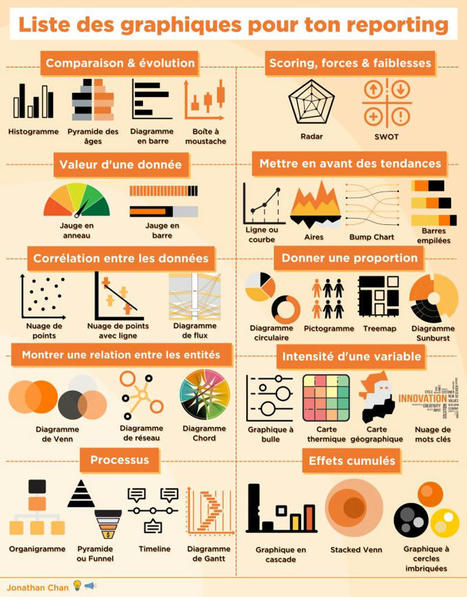
Jonathan Chan 💡📣 on LinkedIn: #dataviz #data #datavisualisation #graphique #data #charts #chart | 85 comments

Jonathan Chan 💡📣 on LinkedIn: #dataviz #data #datavisualisation #graphique #data #charts #chart | 85 comments | Notebook or My Personal Learning Network | Scoop.it
📊🤩 Une infographie hyper utile pour toi ! J'ai listé une grosse liste d'une trentaine de graphiques que tu peux utiliser pour les rapports, présentation ou… | 85 comments on LinkedIn
No comment yet.
Rescooped by Gilbert C FAURE from Creative teaching and learning
December 6, 2023 4:44 AM
Scoop.it!

The screen inferiority effect: How screens affect reading comprehension | Tech & Learning

The screen inferiority effect: How screens affect reading comprehension | Tech & Learning | Notebook or My Personal Learning Network | Scoop.it

'Researchers have long noted an advantage for print texts versus digital ones, but many questions remain about why the screen inferiority effect occurs ..."


Via Leona Ungerer
Gilbert C FAURE's insight:

metaanalysis of a sensitive topic

No comment yet.
Scooped by Gilbert C FAURE
December 5, 2023 10:04 AM
Scoop.it!

Search: The DART-Europe E-theses Portal

Portal for open access research theses. DART-Europe is a partnership of research libraries and library consortia who are working together to improve global access to European research theses. The DART-Europe partners help to provide researchers with a single European Portal for the discovery of...
No comment yet.
Scooped by Gilbert C FAURE
December 27, 2023 3:52 AM
Scoop.it!

https://www.linkedin.com/pulse/14-services-pour-exploiter-des-publications-via-lia-deschamps-aryze%3FtrackingId=o2EZ3NBLHEC5DyiVulHt8Q%253D%253D/?trackingId=o2EZ3NBLHEC5DyiVulHt8Q%3D%3D

No comment yet.
Scooped by Gilbert C FAURE
December 23, 2023 9:40 AM
Scoop.it!

Online and Distance Education for a Connected World –

Online and Distance Education for a Connected World – | Notebook or My Personal Learning Network | Scoop.it
Learning at a distance and learning online are growing in scale and importance in higher education, presenting opportunities for large scale, inclusive, flexible and engaging learning. These modes of learning swept the world in response to the Covid-19 pandemic. The many challenges of providing effective education onli
No comment yet.
Scooped by Gilbert C FAURE
December 18, 2023 12:52 PM
Scoop.it!

can we use content curation for teaching and learning? - Consensus

can we use content curation for teaching and learning? - Consensus | Notebook or My Personal Learning Network | Scoop.it
Find out what the research says about 'can we use content curation for teaching and learning?'
No comment yet.
Scooped by Gilbert C FAURE
December 18, 2023 5:20 AM
Scoop.it!

Patents plus

Patents plus | Notebook or My Personal Learning Network | Scoop.it
Chrome Extension Simplify Your Patent Reading Experience! Get text summary, ask questions from patent text and much more absolutely free! Install Extension Simplify Complex Patents Understand the innovation behind legal jargon. 0 K Hrs SAVED PER PERSON PER YEAR​ 0 + Active Users 1 Star Rating Install Extension Features Key Product Features Patent Plus Summary […]
No comment yet.
Scooped by Gilbert C FAURE
December 18, 2023 4:24 AM
Scoop.it!

Pierre Lepagnol on LinkedIn: #emnlp #papermage #innovationtechnologique #opensource #toolkit #python…

Pierre Lepagnol on LinkedIn: #emnlp #papermage #innovationtechnologique #opensource #toolkit #python… | Notebook or My Personal Learning Network | Scoop.it
Cet outil est ENORME. 🌟
Vous ne voulez pas passer à coté ! ❤️


✨ PaperMage : Arsenal pour les scientifiques 📚
Un toolkit python conçu pour analyser…
No comment yet.
Rescooped by Gilbert C FAURE from Veille et Intelligence Economique
December 14, 2023 2:28 AM
Scoop.it!

Utiliser la fonction data analysis de Chatgpt 4

Utiliser la fonction data analysis de Chatgpt 4 | Notebook or My Personal Learning Network | Scoop.it
Voici quelques exemples d’utilisation de la fonction data analysis de Chatgpt 4 pour faire de l’analyse de données

Via Jerome Bondu
No comment yet.
Scooped by Gilbert C FAURE
December 12, 2023 5:47 AM
Scoop.it!

Welcome - Companion Document to the ACRL Framework for Information Literacy for Higher Education: Instruction for Educators - LibGuides at ACRL

Welcome - Companion Document to the ACRL Framework for Information Literacy for Higher Education: Instruction for Educators - LibGuides at ACRL | Notebook or My Personal Learning Network | Scoop.it
LibGuides: Companion Document to the ACRL Framework for Information Literacy for Higher Education: Instruction for Educators: Welcome
Scooped by Gilbert C FAURE
December 12, 2023 4:18 AM
Scoop.it!

61 | 2023 Les pratiques informationnelles : dynamiques conceptuelles, questionnements méthodologiques

61 | 2023 Les pratiques informationnelles : dynamiques conceptuelles, questionnements méthodologiques | Notebook or My Personal Learning Network | Scoop.it
Études de communication est une revue en sciences de l’information et de la communication diffusée en versions papier et électronique. Elle accueille des travaux inscrits dans différents domaines
No comment yet.
Scooped by Gilbert C FAURE
December 11, 2023 4:12 AM
Scoop.it!

Suivre le trafic mondial en temps réel des avions, bateaux et trains

Suivre le trafic mondial en temps réel des avions, bateaux et trains | Notebook or My Personal Learning Network | Scoop.it
3 sites qui montrent le trafic mondial en temps réel des personnes et des marchandises. Trains, avions, bateaux, tout, vous saurez tout et en direct.
No comment yet.
Scooped by Gilbert C FAURE
December 8, 2023 6:12 AM
Scoop.it!

Create. Share. Engage.

Create. Share. Engage. | Notebook or My Personal Learning Network | Scoop.it
Portfolios for learning and more brought to you by the Mahara team at Catalyst IT. Host Kristina Hoeppner talks with portfolio practitioners, researchers, learning designers, students, and others about their portfolio story.
No comment yet.
Rescooped by Gilbert C FAURE from E-Learning-Inclusivo (Mashup)
December 6, 2023 4:39 AM
Scoop.it!

Designing Futures: Personalization in Higher Education

Designing Futures: Personalization in Higher Education | Notebook or My Personal Learning Network | Scoop.it

"The landscape of education is rapidly evolving, and students today have become more demanding in terms of the experiences they expect from their learning journey. With advancements in technology, the traditional classroom model is being reimagined to offer more personalized and engaging educational experiences. To stay relevant, institutions need to adapt to these changing expectations and provide a learning environment that caters to individual needs and preferences."


Via EDTECH@UTRGV, juandoming
EDTECH@UTRGV's curator insight, December 5, 2023 11:24 AM

"A quality digital experience in higher education is no longer an option—it’s a requirement, having significant benefits for both students and the broader institution."

Gilbert C FAURE's comment, December 6, 2023 4:41 AM
using content curation and scoop.it to offer personalized and actualized learning resources to students, and initiate them to scientific information for clinical research!