



Notebook or My Personal Learning Network
21.2K views |
+54 today

a personal notebook since summer 2013, a virtual scrapbook
Curated by
Gilbert C FAURE
 Your new post is loading...
 Scoop.it! 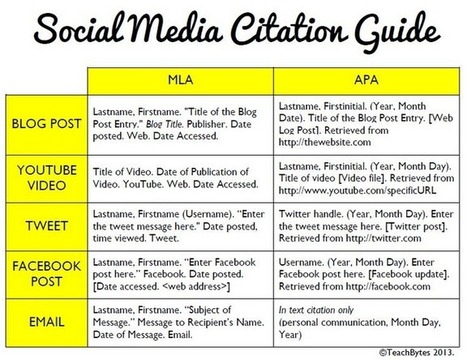
Of course, citation style matters, and the two most popular are the APA and MLA. The APA (American Psychological Association) has their rules for citing social media in academic writing. They even have a thorough ($12) guide to clarify the process, while the MLA (Modern Language Association), as far as we can tell, has yet to expressly address apps and social media as anything other than “software.” And to an extent, this makes sense. As media becomes more nuanced, new modalities emerge, authors use new channels to distribute their thinking–and even as the “crowd” becomes a legitimate source of information (see wikipedia, twitter, erc.), new rules for governing that reality will continue to emerge. The more general those rules are, the less reactive governing bodies will have to be moment by moment.
Via Edumorfosis, juandoming 
Scoop.it!
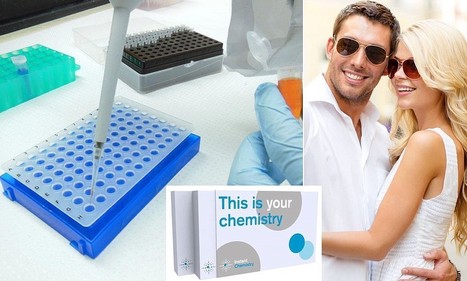
Using DNA to find a perfect mate? New dating site uses DNA tests to gauge ...
Gilbert C FAURE's insight:
excellent marketing idea!!
Scoop.it!

Here is the list some of the most helpful Maths apps and extensions for your Chromebook.
Scoop.it!

A new study investigated how quickly 32 animals urinate. It turns out that it’s all about the same. Even though an elephant’s bladder is 3,600 times larger than a cat’s (18 liters vs.
Gilbert C FAURE's insight:
major importance for firefighters, and more
Scoop.it!

“ PLOS Biology is an open-access, peer-reviewed journal that features works of exceptional significance in all areas of biological science, from molecules to ecosystems, including works at the interface with other disciplines.” Via Mel Melendrez-Vallard, Yurii Aulchenko
Gilbert C FAURE's insight:
n the age of the internet, social media tools offer a powerful way for scientists to boost their professional profile and act as a public voice for science. Although the type of online conversations and shared content can vary widely, scientists are increasingly using social media as a way to share journal articles, advertise their thoughts and scientific opinions, post updates from conferences and meetings, and circulate information about professional opportunities and upcoming events. Google searches now represent the standard approach for discovering information about a topic or person—whether it be search committees collecting information about faculty candidates, graduate students searching out prospective labs, or journalists on the hunt for an expert source. Consequently, in today's technology-driven world, lack of an online presence can severely limit a researcher's visibility, and runs the risk that undesirable search results appear before desirable ones (however, this scenario is easily rectified; see Box 2). A growing body of evidence suggests that public visibility and constructive conversation on social media networks can be beneficial for scientists, impacting research in a number of key ways.
Scoop.it!
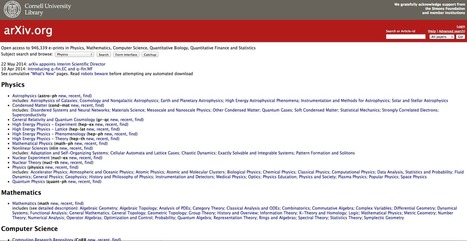
This summer, scholars will use the break from teaching to submit manuscripts, review papers and develop new ideas. But even as the major functions of scholarly publishing march on, scholars, publishers and librarians start to ask, “What does the future of the scholarly journal look like?” (...) - by Bonnie Swoger, Blog ' Information Culture', Scientific American, June 18, 2014 Via Julien Hering, PhD

Julien Hering, PhD's curator insight,
July 6, 2014 2:35 PM
Science 2.0, open acces archives of pre-print articles, social media measurement of impact of these article... is there a future for traditional publication pathways ?
Scoop.it!
L'information Grise : qu'est-ce donc ? (slide3) L'information grise est définie par l'ADBS comme une "information licitement accessible mais caractérisée par d…
Scoop.it!
Gilbert C FAURE's insight:
funny and/or interesting 11 months ago
Scoop.it!

Pour le libre accès et contre la bibliométrie : convergeance des ...
Gilbert C FAURE's insight:
long artcile documenté sur l'édition scientifique la bibliométrie n'est pas approfondie, mais le message du titre est argumenté
Scoop.it!
"... Le séminaire « Questionner l’évaluation dans l’enseignement supérieur et la recherche » se donne pour objectif d’analyser le vaste écosystème de l’évaluation dans l’enseignement supérieur et l... Via LaLIST
Gilbert C FAURE's insight:
mars 2014 Ce séminaire est organisé par Julie Bouchard, chercheuse en délégation à l’ISCC, maîtresse de conférences à l’université Paris 13, chercheuse au LabSic (…) - Le multidimensionnel, nouvelle frontière du quantitatif ? L’exemple de U-Multirank - Les effets paradoxaux du développement des financements sur projets et de l’évaluation sur les universités et la profession universitaire - Les dérives de l’évaluation de la recherche. Du bon usage de la bibliométrie - Généalogie de la co-construction médiatique du “classement de Shanghai” en France. Corpus de presse et entretiens compréhensifs - Manufacture bibliométrique et évaluation scientifique - De l’évaluation à la reconnaissance : les relations sciences-industrie - L’évaluation muséale : logiques de médiation et de marketing - Programme 2014“
Scoop.it!

An early death constitutes a serious loss that should imply compensation to the deceased person. But how – when the person is dead? A team of economists argues that a 'life well spent' might entail consuming more and working less earlier in life.
Scoop.it!
"... L'objectif de cet ouvrage est ainsi de proposer, à l'attention aussi bien des profanes qui n'auraient pas encore investi le territoire de la veille, que des praticiens plus aguerris en quête d... Via LaLIST

DespagneBetty's curator insight,
September 16, 2014 8:55 AM
La veille ne sera un outil performant que si elle est soutenue par une stratégie.. |
Scoop.it!
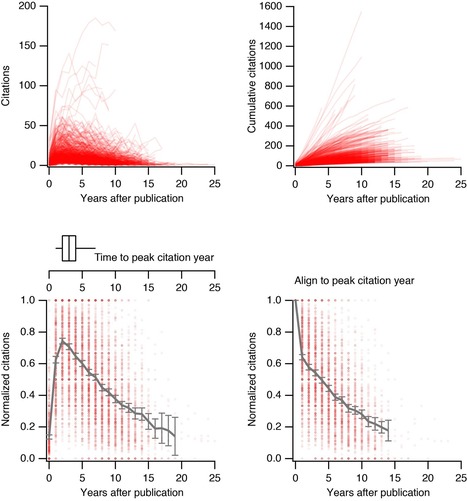
What does the life cycle of a scientific paper look like? It stands to reason that after a paper is published, people download and read the paper and then if it generates sufficient interest, it wi...
Scoop.it!

Voici une présentation faite par Charles Biberson sur la curation de contenu : Charles Biberson - thèse professionnelle - curation et création de valeur - novembre 2013 from Charles Bib &nb...
Scoop.it!

USA TODAY Survey shows life regrets can shape later years USA TODAY The survey, a joint effort by the National Association of Area Agencies on Aging, the National Council on Aging, UnitedHealthcare and USA TODAY, included responses from 1,000...
Scoop.it!

Despite having lived in Japan for eight years now, I’ve never actually been to Tokyo Disneyland.
Scoop.it!

Hundreds of shopping malls across the U.S. have been forced to shut down following years of debilitating declines in consumer traffic.
Gilbert C FAURE's insight:
american dream goodbye
Scoop.it!

Robin Good's comment,
July 8, 2014 1:31 PM
@Gilbert C FAURE: a few are, many not yet. But don't worry, if they are investing in planning for a sustainable future, not created only at the expense of paying students, they'll figure it out by themselves pretty soon.

Jeroen Boon's curator insight,
July 12, 2014 10:39 AM
Exciting article about the future of our universities! 
Olga Senognoeva's curator insight,
August 12, 2014 4:39 AM
"... Как будет выглядеть будущее образования?
Scoop.it!

We are living in an era of information overload. So much content is shared online that curation is needed as a way to get value out of the information flood. Content curation is the process of shi...
Gilbert C FAURE's insight:
curation for education
Scoop.it!
Gilbert C FAURE's insight:
updated 4sec ago
Scoop.it!
"Des chercheurs de l'Université Ben Gourion du Néguev ont créé SUMMY, un outil de synthèse automatique d'articles scientifiques. L'objectif : aider les chercheurs et le grand public à accéder plus ... Via LaLIST
Gilbert C FAURE's insight:
un peu décourageant pour ceux qui passent des mois à écrire et à corriger et à soumettre...
Scoop.it!
From
www

RT @CellSymposia: Interesting article @CurrentBiology http://t.co/HN6gfkGRTE predicts potential in securing PI position. Link: http://t.co/…
Gilbert C FAURE's insight:
The number of applicants vastly outnumbers the available academic faculty positions. What makes a successful academic job market candidate is the subject of much current discussion [1–4] . Yet, so far there has been no quantitative analysis of who becomes a principal investigator (PI). We here use a machine-learning approach to predict who becomes a PI, based on data from over 25,000 scientists in PubMed. We show that success in academia is predictable. It depends on the number of publications, the impact factor (IF) of the journals in which those papers are published, and the number of papers that receive more citations than average for the journal in which they were published (citations/IF). However, both the scientist’s gender and the rank of their university are also of importance, suggesting that non-publication features play a statistically significant role in the academic hiring process. Our model (www.pipredictor.com) allows anyone to calculate their likelihood of becoming a PI.
Scoop.it!

Gilbert C FAURE's comment,
June 20, 2014 7:58 AM
nice move to circulate this blogpost! Open knowledge will not change very much usage of information, but for curious people. And the challenge for university teachers will remain to stimulate curiosity of potential innovators...
Scoop.it!
En écho à notre chronique « De quoi l'innovation est-elle le nom ? », David Rottmann, consultant en innovation et développement économique chez CMI, nous donne sa vision sur ce concept vieux de 700 ans. Une note très détaillée où l'on apprend que l'innovation serait sans doute la descendante de l'imitation et de l'invention. Passionnant ! Via Lockall
|








am I doing manual curation? or mixed one