Your new post is loading...

|
Scooped by
Gilbert C FAURE
December 24, 2025 4:17 AM
|
Les propositions pédagogiques autour de l’intelligence artificielle se multiplient : des enseignants partagent des séquences sur les deepfakes, sur les stéréotypes de genre, sur les biais de données…
Cela peut sembler anecdotique, mais c’est en réalité le début d’un mouvement de fond.
Sans attendre un cadre officiel, un corpus commun est en train de se constituer, fait de scénarios, d’expérimentations, de pratiques concrètes.
Autrement dit : une littératie de l’IA en train de s’écrire, collectivement, par la pratique.
Former les élèves à interroger les images manipulées, à repérer les biais, à débattre des usages de l’IA… C’est former des citoyens capables d’exercer leur esprit critique dans un monde où cette compétence sera probablement encore plus indispensable qu’aujourd’hui.
🔗 Kit IA “Développer l’esprit critique” – DRANE PACA
https://lnkd.in/ea5rBdM9
#Éducation #IA #Pédagogie #EspritCritique #LittératieNumérique
|
|
Scooped by
Gilbert C FAURE
December 5, 2025 7:35 AM
|
I’m grateful and proud to witness the Rome Coalition on health literacy and human rights building trust through inclusion be brought to live.
Today’s conference, hosted by Italy’s National Office Against Racial Discrimination in cooperation with the Council of Europe, and supported by the Ministers for Health and Family, Natality and Equal Opportunities, emphasized the vital role of health literacy as a human right.
The opening statements featured influential voices:
🔹Eugenia Maria Roccella, Minister for Family, Natality and Equal Opportunities, Italy
🔹Orazio Schillaci, Minister of Health, Italy
🔹Rafael Benitez, Director of Social Rights, Health and Environment, Council of Europe
The Rome Coalition is a result of dedicated efforts by the Council of Europe, the Italian government and a wide range of stakeholders from the European health literacy community and human rights stakeholders with a strong vision that health literacy is not just an individual skill. It is a societal responsibility, requiring systemic commitment from governments, institutions, and communities.
Thanks to all for your dedication!
Mattia Peradotto Rafael Benitez Laurence Lwoff Lorenzo Montrasio Lee Hibbard Guglielmo Bonaccorsi Chiara Lorini Assunta Morresi Luigi Palmieri Miguel Arriaga Cristina Vaz de Almeida stephan Van den Broucke Saskia Maria De Gani Vassiliki Karaouli Elvis Sala
and many more.
#HealthLiteracy #HumanRights #Equity #Inclusion #PublicHealth #TrustInHealthSystems
|
|
Scooped by
Gilbert C FAURE
November 27, 2025 7:02 AM
|
The website for Lifelong Information Literacy (LILi)
|
|
Scooped by
Gilbert C FAURE
October 27, 2025 6:42 AM
|
We talk about health literacy as if it lives inside people — as if the solution is to hand individuals better tools, clearer brochures, simpler language, and hope they can “navigate” the system. But that framing is fundamentally wrong.
Health literacy is not an individual skill problem. It is a system design problem.
If a person struggles to understand, act, or make informed decisions, that is not a sign of their failure. It is a sign that the environment was not built to support them. It is an organizational failure, a policy failure, a leadership failure — a failure of design.
Health literacy is not about teaching people to try harder.
It is about building systems that make health understanding, access, and action natural — not heroic.
It is a matter of equity and power, not worksheets and pamphlets.
The true measure of a health-literate society is not how well individuals adapt to complexity — but how well institutions remove the complexity in the first place.
Until we shift the responsibility from people to systems, from coping to designing, from deficit to empowerment — we will keep treating symptoms while ignoring the root cause. | 11 comments on LinkedIn
|
|
Scooped by
Gilbert C FAURE
September 9, 2025 12:04 PM
|
Five Laws of Media and Information Literacy
|
|
Scooped by
Gilbert C FAURE
August 9, 2025 8:14 AM
|
|
|
Scooped by
Gilbert C FAURE
June 3, 2025 2:19 AM
|
The Information Literacy Handbook will showcase works that collectively support the case that information literacy is a maturing soft applied discipline. The recognition of information literacy as a discipline will provide substantial outcomes, including nurturing new research and education.
|
|
Scooped by
Gilbert C FAURE
March 24, 2025 7:42 AM
|
Thank you to Facet Publishing for contributing this blog post. Information Literacy is a critical skill in today’s fast-paced digital world. CILIP defines it as “the ability to think critically and make balanced judgments about any information we find and use.
|
|
Scooped by
Gilbert C FAURE
January 30, 2025 4:09 AM
|
HandbookAiming to extend the scholarly conversation, the ILIAD group is producing a book that will make the argument that information literacy is a discipline. Co-edited by Karen Kaufmann and Clarence Maybee, the book is titled, Information Literacy Handbook: Charting the Discipline.
|
|
Scooped by
Gilbert C FAURE
August 18, 2024 5:19 AM
|
Intercultural Perspectives on Information Literacy and Metaliteracy (IPILM) is a discourse- oriented learning environment that engages students from diverse cultural backgrounds to participate in collaborative knowledge construction. The objective is to evolve a thematic approach to course design that includes elements of open pedagogy, information literacy, and metaliteracy. IPILM invites participation from educators and learners from around the world and has witnessed an increase in participating countries. This paper describes the concept of IPILM and demonstrates the implementation of this approach in practice. The initiative was well received by students and is both feasible and sustainable as an intercultural learning endeavor. IPILM is an ongoing project and a work in progress that is an adaptable model which may be transferred to disparate fields of teaching and learning or adopted by international communities of instructors.
|
|
Scooped by
Gilbert C FAURE
January 3, 2024 10:39 AM
|
Content curation by HPE-Bot
Content curation can be a valuable tool for teaching and learning, as it allows educators to gather and organize relevant resources that enhance the learning experience. By curating content, you can provide students with access to a wide range of materials that support their understanding of the topic at hand.
Here are some ways in which content curation can be used for teaching and learning:
1. Building a comprehensive resource library: As an educator, you can curate resources such as articles, videos, podcasts, and websites that cover various aspects of a subject. This library can serve as a go-to place for students to explore additional information and deepen their understanding.
2. Tailoring content to different learning styles: By curating content from diverse sources, you can cater to different learning styles and preferences. This allows students to engage with the material in a way that resonates with them, leading to a more effective learning experience.
3. Promoting critical thinking: Content curation enables you to select resources that challenge students' thinking and encourage critical analysis. By curating a mix of perspectives and viewpoints, you can foster lively discussions and help students develop their own informed opinions.
4. Keeping up with emerging trends: In fast-paced fields, like health professions, content curation can help you stay updated with the latest research, techniques, and developments. By regularly curating new content, you can ensure that your teaching remains current and relevant.
When curating content, it is important to evaluate the credibility and reliability of each resource. Ensure that the sources are reputable and trustworthy, as this will help students develop good research practices.
Remember, content curation should supplement your teaching and not replace it. As an educator, your role is to guide students through the curated materials and facilitate their understanding. Why is not much in use While content curation can be a valuable tool for teaching and learning in the health professions, it may not be as widely used as in other fields. There are a few reasons for this:
1. Limited awareness: Many health professionals may not be aware of the concept of content curation or its potential benefits for teaching and learning. Education in the health professions traditionally focuses on clinical skills and knowledge acquisition, with less emphasis on digital literacy and instructional strategies.
2. Time constraints: Health professionals, including educators, often have busy schedules and heavy workloads. Finding, evaluating, and organizing relevant content can be a time-consuming process. This may discourage some from engaging in content curation for teaching purposes.
3. Accessing credible resources: In healthcare, it is crucial to rely on accurate and evidence-based information. However, finding reliable resources can be challenging, especially with the abundance of information available online. Some health professionals may feel overwhelmed by the task of curating content that meets the highest standards of accuracy and relevance.
4. Confidence in traditional teaching methods: Many health professionals have been trained in traditional teaching methods and may be more comfortable with familiar approaches, such as lectures or textbook-based learning. This can make it harder for them to adopt new methods, such as content curation, without adequate support and training.
Despite these challenges, it is important to recognize the potential benefits that content curation can offer in the health professions. With increased awareness, training, and support, more health professionals can embrace content curation as a valuable teaching and learning tool, enhancing the educational experiences of both educators and students. There are several content curation tools that can be used for teaching and learning immunology. Here are a few popular ones:
1. Pocket: Pocket is a tool that allows you to save articles, videos, and web pages for future reference. It is user-friendly and can be accessed across multiple devices. You can curate a collection of resources related to immunology using Pocket, organizing them into relevant categories for easy access.
2. Padlet: Padlet is an online bulletin board where you can collect and collaborate on various types of content. With Padlet, you can create an interactive board where students and educators can share immunology-related resources, ask questions, and engage in discussions.
3. Flipboard: Flipboard is a personalized content curation tool that allows you to create your own digital magazine. You can curate articles, blogs, videos, and other resources on immunology and share them with your students. Flipboard also offers the option to collaborate with others, making it a useful tool for team-based learning.
4. Wakelet: Wakelet is a versatile content curation platform that lets you gather resources, such as articles, images, and tweets, into organized collections. It allows you to present information in an attractive and user-friendly format. You can curate a collection of immunology resources using Wakelet and share it with your students.
These are just a few examples of content curation tools that can be used for teaching and learning immunology. When choosing a tool, consider factors such as ease of use, accessibility, collaboration features, and the preferences of your students. Experiment with different tools to find one that best suits your teaching style and the needs of your learners. scuba_divingquiz How can I encourage student engagement in content curation? HPE-Bot Encouraging student engagement in content curation can be achieved through various strategies that foster active participation, critical thinking, and collaboration. Here are some approaches to consider:
1. Provide clear expectations: Clearly communicate the purpose and expectations of the content curation activity to students. Explain why it is valuable and how it relates to their learning goals. This helps students understand the significance of their engagement and motivates them to actively participate.
2. Foster ownership and choice: Give students ownership over their content curation by allowing them to choose topics or themes of personal interest within the scope of the curriculum. This fosters intrinsic motivation and investment in the task. Encourage students to explore diverse perspectives and resources to promote critical thinking.
3. Scaffold the process: Break down the content curation process into manageable steps and provide students with guidance and resources to support them. This can include instruction on how to evaluate the credibility of sources, organize curated content effectively, and reflect on their choices. Scaffolded support helps students feel more confident and empowered in their curation.
4. Promote collaboration: Encourage students to collaborate and share their curated content with their peers. This can be done through group projects, discussions, or online platforms. Collaborative curation activities allow students to learn from each other, exchange ideas, and build their collective knowledge. Consider creating opportunities for students to provide feedback and peer review on each other's curated resources.
5. Reflect on the curation process: Provide opportunities for students to reflect on their curation experience. Encourage them to articulate their rationale for selecting specific resources, discuss challenges faced, and evaluate the effectiveness of the curated content in supporting their learning. Reflection promotes metacognition and helps students develop critical evaluation skills.
6. Showcase student work: Celebrate student engagement by showcasing and sharing exemplary curated content. This can be done through class presentations, online platforms, or exhibitions. Recognizing and valuing students' efforts encourages further engagement and motivates others to actively participate.
Remember, each learner is unique, so it is essential to provide multiple avenues for engagement. Creating a supportive and inclusive learning environment where students feel valued, empowered, and heard is crucial for promoting their active engagement in content curation.
|
|
Scooped by
Gilbert C FAURE
December 12, 2023 5:47 AM
|
LibGuides: Companion Document to the ACRL Framework for Information Literacy for Higher Education: Instruction for Educators: Welcome
|
|
Scooped by
Gilbert C FAURE
July 23, 2023 1:47 PM
|
There is a new campaign launched by UNESCO, for people to declare themselves lifelong learners. Since in the past UNESCO has declare
|
|
|
Scooped by
Gilbert C FAURE
December 9, 2025 4:02 AM
|
Just sent my views on Ofcom's consultation on media literacy, here are some of the key points I've made:
1. Social media platform are profit driven organisations and have been the main source for online harms. Therefore, expecting them to develop media literacy programmes will not work. Citizens of all ages, and not just children and young adults, should have access to non-commercial orgnisations who can support them on media literacy.
2. As a society, we are beyond the point of hoping that social media companies will adopt recommendations, because these companies have been failing people and democracies for over a decade. Therefore, in order for social media companies to change how they currently operate, we need stricter rules and enforcement.
3. Many of the recommendations offered have been issues that platforms have promised to tackle but haven’t - from the failed Ad Library project and onto transparency, ‘privacy by design’, clearer terms of use or meaningful choices such as the consent mechanism – all have not been respected or applied by these companies, so why repeat recipes that do not work?
4. The current enforcement of big platform is inefficient because financial penalties for companies who earn potential fines within days is not deterring them.
5. Improving media literacy MUST come hand in hand with a better media ecosystem where journalists and trusted organisations have enough resources and trust so that people can use them. This also means that social media platforms must give trusted news sources and organisations prioritisation on their feeds.
6. Ofcom should set-up an independent audit organisation that will consist of academics, journalists, librarians, and other literacy organisations who will have unrestricted access to social media platforms data and execute quarterly audits. The organisation will pay these people through the tax taken from social media platforms.
7. But, this also means that the current business model of social media platforms of surveillance ad-tech needs to change as that is the main cause of most online harms. When the business model is built on spying on people over time and platforms, extracting their data and trading it while increasing engagement and attention - then there is no incentive for meaningful engagement online and we will see more disinformation, conspiracy theories and hate online – because it sells.
https://lnkd.in/eCGrzXGC
|
|
Rescooped by
Gilbert C FAURE
from Nik Peachey
December 5, 2025 2:42 AM
|
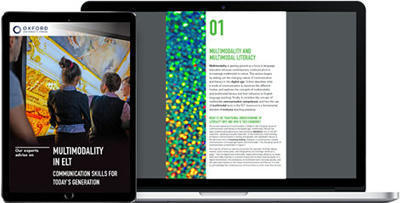
Traditionally, we have thought of literacy as the ability to communicate through reading, writing, listening, and speaking. But in our digital age, we are as likely to use video, images audio and even gestures as modes of communication. The ability to understand and share information through a combination of these modes is known as multimodal literacy.
Via Nik Peachey
|
|
Scooped by
Gilbert C FAURE
November 19, 2025 10:24 AM
|
This article is part of an ongoing series looking at AI in KM, and KM in AI. The Dunning-Kruger Effect (DKE)[1. Kruger, J., & Dunning, D. (1999).
|
|
Scooped by
Gilbert C FAURE
September 25, 2025 4:45 AM
|
Nicolas Kusser , Gemeinsame Kommission Informationskompetenz von dbv und VDB and Sabine Rauchmann from Universitätsbibliothek Augsburg spo...
|
|
Scooped by
Gilbert C FAURE
September 8, 2025 12:00 PM
|
🚨Publication alert : "Automated Media: Challenges and Opportunities for Media Literacy Education", published in the Journal of Media Literacy Education.
Thank you, Arnaud Claes, Jerry Jacques, and Victor Wiard, for this adventure together. It's been a long journey (which began in the pre-chatGPT era!), with absolutely fascinating discussions and, I hope, the prospect of more fruitful research. Automated media are reconfiguring (and being reconfigured by...) our practices and our imaginations: it's an exciting field to explore.
I'd also like to remind you that the call for papers (in French) on this topic is still open for a future issue of "Recherches en Communication", which we are also coordinating with our colleague Florent Michelot. Don't hesitate to submit your research!
👉 link to the call for papers : https://lnkd.in/eazWZ6mJ
|
|
Scooped by
Gilbert C FAURE
July 24, 2025 3:27 AM
|
Identifiez-vous ou inscrivez-vous pour voir des posts tels que celui-ci et plus encore.
|
|
Scooped by
Gilbert C FAURE
May 23, 2025 3:32 AM
|
What is Media Literacy? Definition of Media Literacy: Media literacy, by its widely accepted definition, is of various types (visual, auditory, printed, etc.) to be able to access media messages, to analyze and evaluate the accessed media from a critical point of view and to produce their own media messages.
|
|
Scooped by
Gilbert C FAURE
March 21, 2025 5:54 AM
|
👇This. LLMs were not built for infornation search/access.
|
|
Rescooped by
Gilbert C FAURE
from Educational Technology News
October 8, 2024 4:04 AM
|
Digital literacy skills are too important to relegate to the margins of the curriculum, Tahneer Oksman writes. “Write a brief history of your relationship to digital technologies, including social media.”
Via EDTECH@UTRGV
|
|
Scooped by
Gilbert C FAURE
January 15, 2024 4:42 AM
|
Recognizing information literacy as a discipline: Reflections on an ACRL 2023 panel discussion
|
|
Scooped by
Gilbert C FAURE
December 13, 2023 2:42 AM
|
Metaliteracy or content curation
Metaliteracy.org Development of a Metaliteracy Course for Online Ed.D. Students and Beyond mackeyt Dec 12 We welcome this guest essay by Dr. Melissa Atkinson, Director of Distance & Online Library Services at Abilene Christian University (ACU) Brown Library. Metaliteracy, as introduced by Mackey and Jacobson in 2011, has been instrumental in developing metaliterate learners in a variety of contexts. The ACRL Framework for Information Literacy for Higher Education, published in 2016, transformed the previous Information Literacy Competency Standards for Higher Education (ACRL, 2000) into frames that build upon each other and were not prescriptive in how to assess students’ learning. Many librarians turn to the Framework as a guideline for developing information literacy courses, tutorials, guided studies, and assessments. Libraries and librarians create assessments of the Framework that are varied and individualized. Using the Framework in conjunction with metaliteracy goals and learning objectives can enhance the student experience as well as give librarians a standard to follow that ensures development of skills needed in a participatory, connected environment (Mackey & Jacobson, 2011). Notes that reference metaliteracy and metacognition can be found in the Framework (2016). The Framework does have its strengths, but incorporating metaliteracy goals and learning objectives into the frames can aid in assessment and add to the knowledge and skills students should develop throughout their lifetime, not just when they are participating in higher education. Using the original set of metaliteracy goals and learning objectives found on metaliteracy.org (Forte, et al, 2014), a metaliteracy course was developed in the Learning Management System (LMS) Canvas, specifically for fully online Ed.D. students, preparing them for research-related content encountered in their courses (Atkinson, 2019). The original course by Atkinson (2019) compared pretest, posttest, and metacognitive skills, using the Metacognitive Strategies for Library Research Skills Scale (MS-LRSS) developed by Catalano (2017). The course was designed using backward design methods (Wiggins & McTighe, 2006) to introduce online doctoral students to common library terminology, metaliteracy, and metacognitive concepts. The metaliteracy course was not intended to take the place of library tutorials, individualized instruction, or research consultations–all of which are critical to meet the needs of doctoral students in an online environment. The metaliteracy course consists of five modules, four of which are directly related to the metaliteracy goals and learning objectives from 2014 (Forte, et. al., 2014). The fifth module relates to specific skills students need to be successful, particularly in the Ed.D. program such as requesting materials through InterLibrary Loan, identifying research methods, and recognizing specific library databases. Each module consists of a pretest, an overview and videos (most of which are three minutes or less), and a posttest. Each module name, the video titles, and learning objectives are listed below. Module 1: Evaluate Content Critically
Two Videos: Scholarly Resources; Peer Review Objective: Metaliterate learners evaluate information critically by determining authority, relevancy, accuracy, and validity of each source regardless of the information's delivery method. By the end of this module, learners will be able to: 1) Recognize the criteria for evaluating authority, relevancy, accuracy, and validity of information sources 2) Determine context of an information source by considering purpose and format 3) Distinguish between scholarly and non-scholarly sources 4) Understand the process of peer review and its purpose in scholarly research Module 2: Information Ethics Two Videos: Academic Integrity, Copyright, and Plagiarism; APA Style Objective: Metaliterate learners understand and differentiate between their own intellectual property and others' intellectual property, and give credit to others' work using proper citation style methods. By the end of this module, learners will be able to: 1) Understand the concepts of academic integrity, copyright, and plagiarism 2) Differentiate between various forms of attribution 3) Identify parts of a citation in APA style 4) Recognize elements of APA style in context Module 3: Information Creation, Sharing, and Collaboration Three videos: Social Media; Digital and Visual Literacy; Creating Original Content Objective: Metaliterate learners are aware of their online environments, participate collaboratively, transfer information from one format to another, and produce and share original content. By the end of this module, learners will be able to: 1) Understand the various ways of sharing original content 2) Consciously participate in social media environments 3) Describe digital and visual literacy and their importance to metaliterate learning 4) Identify digital and media formats and the uses and purposes of each Module 4: Lifelong Learning Research Strategies Two videos: Information Needs; Metacognition Objective: Metaliterate learners connect learning with personal, professional, and lifelong goals using their experiences. Metaliterate learners recognize metacognitive principles of learning by acknowledging that learning is a process and can reflect on research difficulties to improve strategies. By the end of this module, learners will be able to: 1) Know which search strategies are appropriate for the information needs 2) Determine tasks involved to develop research questions 3) Reflect on one's own knowledge and determine ways to increase metacognition skills 4) Recognize the process of critical thinking that leads to metaliterate learning Module 5: Research Skills Proficiency Three videos: Types of Sources; Requesting Materials and ILL; Research Methods Objective: Metaliterate learners are proficient in distinguishing between types of sources, describing research methods, and understanding how to request materials to find relevant, scholarly, and authoritative information sources. By the end of this module, learners will be able to: 1) Describe research methods, including quantitative, qualitative, and mixed methods 2) Distinguish between primary, secondary, and tertiary sources 3) Recognize ACU library's databases, authentication process, and InterLibrary Loan procedures 4) Understand how to request physical materials The original course has been modified to reach other fully online student audiences such as undergraduate students and Doctor of Nursing Practice (DNP) students. The undergraduate metaliteracy course is embedded in a critical thinking course that is taken by all online undergraduates. The program directors for the Ed.D. and DNP programs encourage students to self-enroll in the Canvas metaliteracy course specifically designed for those students in each program. Currently, a LibGuide is being developed to bring the metaliteracy course to a wider audience than is currently reached in Canvas. The full metaliteracy course will be available at this link (forthcoming), https://guides.acu.edu/metaliteracy, and currently includes all of the learning objectives and videos for each module. A mapping of the ACRL Framework to the metaliteracy course objectives can help expand the knowledge and skills students need to succeed in their courses and beyond. The concept of metaliteracy is important for either an introduction for undergraduate students to library and research terminology or for graduate and doctoral students who already have these concepts developed as well as students who have not been to school for a long time and need a refresher on these concepts. Future plans include updating the metaliteracy course to incorporate the updated metaliteracy goals and learning objectives from 2018 (Jacobson, et al, 2018) as well as an update to the mapping of the Framework. References Association of College and Research Libraries. (2000). Information literacy competency standards for higher education. Retrieved September 29, 2023, from https://alair.ala.org/handle/11213/7668 Association of College and Research Libraries. (2016). Framework for information literacy for higher education. Retrieved September 29, 2023, from https://www.ala.org/acrl/standards/ilframework Atkinson, M. D. (2019). The relationship between metaliteracy pretest, posttest, and Metacognitive Strategies for Library Research Skills Scale: Creating a metaliteracy course for online Ed.D. students [Doctoral dissertation, Regent University]. https://digitalcommons.acu.edu/library_pub/32 Catalano, A. A. (2017). Development and validation of the Metacognitive Strategies for Library Research Skills Scale (MS-LRSS). Journal of Academic Librarianship, 43(3), 178–183. https://doi.org/10.1016/j.acalib.2017.02.017 Forte, M., Jacobson, T., Mackey, T., O’Keeffe, E., & Stone, K. (2014). 2014 Metaliteracy Goals and Learning Objectives. Retrieved September 29, 2023, from https://metaliteracy.org/learning-objectives/2014-metaliteracy-goals-and-learning-objectives/. Fulkerson, D. M., Ariew, S. A., & Jacobson, T. E. (2017). Revisiting metacognition and metaliteracy in the ACRL Framework. Communications in Information Literacy, 11(1), 21-41. https://doi.org/10.15760/ comminfolit.2017.11.1.45 Jacobson, T., Mackey, T., O’Brien, K., Forte, M., & O’Keeffe, E. (2018). 2018 Metaliteracy Goals and Learning Objectives. Retrieved September 29, 2023, from https://metaliteracy.org/learning-objectives/2018-metaliteracy-goals-and-learning-objectives/. Mackey, T. P., & Jacobson, T. E. (2011). Reframing information literacy as a metaliteracy. College & Research Libraries, 72(1), 62–78. https://doi.org/10.5860/crl76r1
Wiggins, G., & McTighe, J. (2006). Understanding by design (2nd ed.). Pearson. Dr. Melissa Atkinson is the Director of Distance & Online Library Services at Abilene Christian University (ACU) Brown Library. In her 23-year career as a librarian at ACU, she has served as Online Learning Librarian, E-Collections & Web Services Librarian, Serials & Assessment Librarian, Electronic Services & Serials Librarian, and Reference Librarian. She is currently a dissertation chair for five dissertation students, one of whom recently successfully defended their prospectus. She earned a Ph.D. from Regent University in Education (Distance Education concentration) in May 2019. Her research interests include metaliteracy, information literacy, online pedagogy, andragogy, and instructional design methods for library instruction. Her dissertation titled, "The Relationship Between Metaliteracy Pretest, Posttest, and Metacognitive Strategies for Library Research Skills Scale: Creating a Metaliteracy Course for Online Ed.D. Students," is available in Proquest and ACU's institutional repository (Digital Commons). In 2020, an article based on her dissertation was published called, “To Frame or Not to Frame: Creating a Metaliteracy Course for Online Ed.D. Students” in Library Hi Tech News (https://digitalcommons.acu.edu/library_pub/41/).
|
|
Scooped by
Gilbert C FAURE
November 14, 2023 11:01 AM
|
In this post, Jane Secker reflects on Paul Zurkowski’s legacy in the world of Information literacy, and how we can look forward to the future. In 1974 Paul Zurkowski the president of the American Information Industry Association coined the term ‘information literacy’ in a report he wrote entitled ‘The Information Service Environment: Services and Priorities‘. His report was focused on how the rapid growth in information, in all its forms was changing the workplace. Zurkowski made reference to an ‘overabundance of information that exceeds our capacity to evaluate it.’ He believed the population needed to be retrained to deal with this and called for a public campaign that he hoped would be complete by 1984. Of course the campaign never happened and 1984 came and went. I sometimes wonder if the world would be a different place if this initiative had taken place? When I was at library school in the 1990s we talked about ‘information overload’ recognising then that the growing volume of information and data in the world. However, I didn’t come across the term ‘information literacy’ until I was working at LSE library in the early 2000s. A good friend, Gwyneth Price, who was a librarian at the Institute of Education talked to me about how IL differed from what I had been calling ‘information skills’. In fact when I joined LSE in 2001, the team I was part of was still called the ‘user education team.’ So much has changed in 20 years, and not just terminology. In this blog post I would like to reflect on what I’ve learnt about information literacy practice and research. It’s also timely as I have just returned from the European Conference on Information Literacy, which was held this year in Krakow, Poland. ECIL, founded in 2013, is a great opportunity to meet librarians, educators and researchers from Europe and beyond to share insights into both practice and research in IL (you can read some of Sheila Webber’s reflections on the conference on her website). Paul Zurkowski and the “Information Literates” But back to Zurkowski, who almost 50 years ago predicted that we could end up with two tiers of people: the ‘information literates’ who knew how to deal with the abundance of information and all the tools associated with its use and the ‘illiterates’ who did not. While he pointed out these ‘illiterates’ could read and write, they would not be able to full exploit the information environment. He believed that a relatively small percentage of the population had information literacy abilities and these were likely to be people working in medicine, government, business etc. He estimated that this might be around a 6th of the total US population. This year at ECIL many of the papers were still concerned with equipping people with information, media and digital literacies. Current researchers and librarians recognise that there is something lacking in the abilities of much of the population, whether they are students, school librarians, older adults or the wider public at large. Despite decades of research and teaching, we, the ‘information literates’ (as Zurkowski would call us) are probably still a relatively small minority of the population. But is this deficit model helpful? Many of the frameworks of information literacy have moved away from viewing it as a check list of competencies. IL researchers such as Annemaree Lloyd view IL as a social practice and something we need to understand in context, rather than seeing some people as having the skills and others as lacking. Zurkowski predicted many of the issues associated with the proliferation of information resources in 1970s. These challenges accelerated rapidly in the 1990s with the development of the world wide web and it was the web and search engines that led to a resurgence of interest in information literacy mainly in higher education. In 1999 SCONUL developed the 7 pillars of information literacy and other models were developed around this time (ACRL, Big 6 etc). I have always enjoyed reading papers like Zurkowski’s, which seem to be a prophetic voice from the past. He was writing about what we now know is a significant problem, but one which sadly remains a concern of the few. Those of us working in universities see that it is the librarians and information professionals who champion information literacy, providing support and guidance to our staff and students and trying to embed this in our curriculums. Yet in many institutions it remains ‘invisible’ as a concept, or wrapped up in other more pressing concerns about developing digital skills or graduate attributes. What I have learnt is that IL is all these things and much more, but I think that’s what at times makes it so nebulous as a concept. Just this week when running a training session about information literacy in the workplace, one new librarian said “I recognise the issues, I just didn’t have a name for it until now.” Where are we now? So what have we learnt in 50 years of information literacy and what have I learnt over the past 20 years of working in this field? Here are just a few reflections from sessions I attended at last week’s conference. Firstly, I sensed that there has never been a greater urgency to develop information literacy capabilities, to help protect people from the growing tide of mis and dis-information, fake news, and the rapid developments in AI. There were a lot of papers that recognise without information literacy abilities, the foundations of democracy are threatened as people’s abilities to judge what is true becomes increasingly challenged. Michael Flierl from Ohio State University, presenting on AI, rallied us with a call for action as information professionals, to join in the debate about the ethics of AI and to regulate its use before we are swamped in a tide of misinformation created by algorithms that perpetuate online biases. It made me realise that information literacy is more critical than ever before and yet continues to be overlooked because of other priorities. Earlier this year at a workshop I was attending about AI, one senior academic felt that AI needed a new literacy and hit on this idea that perhaps it was about how to deal with information in all its forms! ‘Hmm yes I said politely, I think you’ll find that’s information literacy, and it’s been around for quite some time!’ Meanwhile in a panel session with Sheila Webber, Bill Johnson, Karen Kaufmann and Clarence Maybee we found ourselves discussing (once again) the discipline of information literacy. In some ways I was wondering if we need to go around this circle again. Surely IL is a discipline, or a sub-discipline – but I guess that is where the problem might also lie, because if we view it as a sub-discipline of Library and Information Science, in the hierarchy of disciplines LIS often sits somewhere similar to Education or Media Studies. Perhaps as one of the conference delegates said, it’s a ‘meta-discipline’ – it’s definitely a thing – attracting conferences, journals, academic papers and people who are devoting their careers to furthering its cause. I remember Sheila and Bill led a lively panel discussion on this topic at ECIL in 2014 in Dubrovnik. However, this time it feels like the foundations of the discipline are more solid and I look forward to the forthcoming Facet book on this topic coming out in 2024. Perhaps it might give greater confidence and assurances to those of us who often feel they need to explain their work using other terms, rather than information literacy (and yes I realise at times I am just as guilty of this!) Information literacy as a global issue I guess one important reflection I had was that IL is clearly a global issue, largely down to UNESCO’s work to recognise the importance of Media and Information Literacy. I had the fortune of attending papers from researchers and librarians in the Philippines, South Africa, Kazakhstan as well as across Europe. Mainly what these papers showed is that IL is primarily a concern for people in libraries and education and only starting to be seen as something that impacts on people’s daily lives, for example when searching for health information or trying to find employment. In my opinion we need more research and projects to link information literacy and lifelong learning in order to support the information literacy needs of the wider public. This leads me to conclude that attempts such as the initiative led by Stephane Goldstein in the UK to establish the Media and Information Literacy Alliance in the UK, are vital, to try and mainstream IL and to advocate for its importance to funders, policy makers and governments in the world. This remains a priority for the CILIP Information Literacy Group in 2024 and something I hope to devote more time to next year. But I have also learnt that Information literacy is not going to save us from the problems of misinformation or information overload – it is one way of helping build resilience in the population and in our staff and students, but it requires action on their part. And it’s increasingly challenging for people to fact check all their sources, or work out who to trust online. A strong theme coming through the conference (as ever!) is the need for collaboration and the need for librarians to work with educators and policy makers and those in third sector organisations. Librarians need to advocate clearly about the risks of people not having these abilities, but also the need for regulation to stop the relentless tide of mis and dis-information. IL needs to start early and it needs to be something that is reinforced and supported at all stages of people’s lives. But what strikes me is that IL needs to be viewed as something positive to empower people, not as simply a way of preventing online harms. Fifty years on, and looking forward Fifty years of information literacy is a milestone, but it’s also a time for action and advocacy rather than resting on our laurels. The CILIP Information Literacy Group plan to spend 2024 promoting and advocating for information literacy in a year-long celebration and campaign. We are planning a series of events including webinars and in-person events. We have commissioned a special commemorative logo and have produced a limited supply of sustainable badges. We hope you can join us at LILAC this year (the 19th conference, so next year LILAC will be celebrating a big birthday too and the call for papers is out). And for those who didn’t know so am I too am reaching the half century in 2024. They say 50 is the new 40, but like information literacy, this is no time for resting on my laurels, I have big plans for my next 50 years to be at least as productive and fun as the last! As information professionals we must try to adapt to the fast changing world. This means information literacy will need to evolve, but also as the first keynote speaker at ECIL 2023, Tim Gorichanaz, told us, we also need to be grounded in ethics and principles which should provide us with a compass for navigating both the increasingly complex information environment and our daily lives. I loved his observation that the original motto above a library was that it was a ‘house for healing the soul.’ But in particular I loved his idea that we learn morals and ethics through living, and he urged us to interview the people that we admire to find out what makes them tick. I was reminded how fortunate I am to have met Paul Zurkowski in 2013 at ECIL I wish he was still with us to help us with the next 50 years. We need some powerful allies and a strong message to work towards his vision of an information literate population. Perhaps we might get there by 2074? With this in mind I would really like ILG to carry out some short interviews that we can publish on this blog or release as part of our Chatting InfoLit podcast, with the champions of information literacy in our world, to share their insights into what 2024 and 50 years of IL means to them. Perhaps, through these conversations we might be able to capture insights and achieve that goal sooner? Who knows, but I do know as a historian at heart, the importance of understanding the past and where we come from before we move forward with any initiative.
|