


Batiki has no running water and no electricity.


 Your new post is loading...
 Scoop.it! Batiki has no running water and no electricity. 
No comment yet.
Sign up to comment
Scoop.it!

La révolution du web 2.0, qui vit internet passer d'une dynamique de diffusion à une dynamique d'interaction où chaque internaute peut exister et être reconnu par les conversations auxquelles il participe sur diverses plateformes et réseaux sociaux numériques, n'a pas épargné la communauté scientifique. En particulier, le format « blog » (terme formé par aphérèse de l'expression « web log », pour journal en ligne), initialement utilisé pour des journaux intimes, s'est développé comme un outil de publication et de conversation répondant aux besoins variés de cette communauté. D'abord isolés, puis regroupés en communautés, les blogueurs de science (expression qui inclut les scientifiques professionnels mais aussi les étudiants, journalistes scientifiques, amateurs de science, musées et centres de science, groupes concernés… qui tiennent un blog à teneur scientifique) ont démontré leur capacité à influencer la manière dont la recherche avance, dont les résultats sont communiqués et dont les publics sont touchés. Parmi les nombreux sujets dont les blogs discutent, je me concentrerai ici sur les sujets proprement scientifiques ou liés au monde de la recherche, délimitant ainsi une sous-catégorie du « blogging scientifique » qui fait du numérique académique (« digital scholarship ») une conversation (« conversational scholarship »). En quoi cela consiste-t-il concrètement ? Où cette évolution nous entraine-t-elle ? Je tenterai de faire la lumière sur ce phénomène dans ce chapitre.
Scoop.it!

A Great New Technology Integration Matrix for Teachers ~ Educational Technology and Mobile Learning Source by shine58
Scoop.it!

The legendary Le Drugstore on the Champs Elysees gets a clever reboot with a striking redesign by Tom Dixon and a tempting comfort food menu by Eric Frechon
Scoop.it!
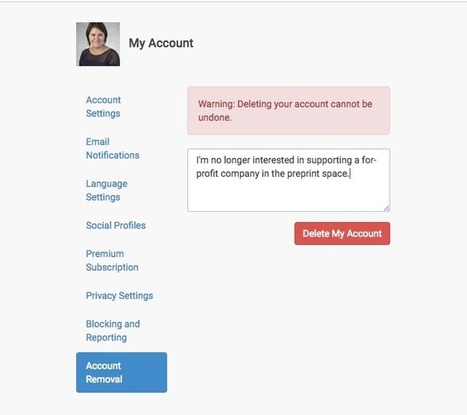
There's lots of stuff I should be doing right now (most imminently, preparing syllabi), but I've been meaning to do this for a while. Specifically: I want for-profit companies academia.edu and ResearchGate.com out of my life. Luckily, psychology now has a robust, not-for-profit alternative allowing us to share both pre-prints and post-prints*, a service called…
Scoop.it!

Previously we discussed 5 of the 10 ways that Artificial Intelligence is shaking up healthcare. Now is the time for the second set!
Scoop.it!

Avec un flux de contenu de plus en plus conséquent, il faut réadapter les usages. Pourquoi la veille d'entreprise en 2017 doit-elle être collaborative ?
Scoop.it!

An insider's guide to the best country house hotels in Britain, featuring the top places to stay for elegant interiors, country walks, roaring fires, Michelin-starred dining, walled gardens and rural tranquillity in the Cotswolds, Hampshire, Devon, Somerset and West Sussex.
Scoop.it!

Emojis, smartphone technologies and revamped guidelines would boost transparency at scientific meetings, say Shai D. Silberberg and colleagues.
Scoop.it!

There is a free online self-paced course Design for Learning: 21st Century Online Teaching and Learning Skills for Library Workers (D4L
Scoop.it!

Discover 22 hidden attractions, cool sights, and unusual things to do in Beijing, China from The Forbidden City to China's Wonderland.
|
Scoop.it!

Introducing ReFigure, an open-source browser extension for linking, curating and sharing scientific insights across publishers.
Scoop.it!
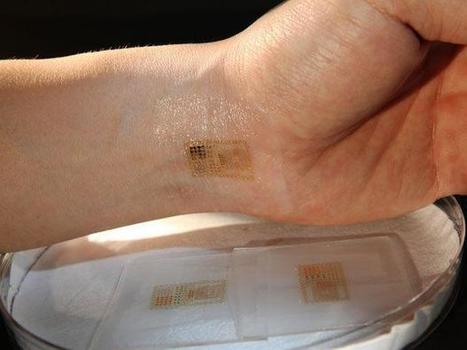
A new type of wearable thermometer allows researchers to gather data to make predictions of seasonal influenza outbreaks. The device sends data to the Thermia online health educational tool. Via Richard Platt

Richard Platt's curator insight,
August 20, 2017 4:53 AM
The new way of tracking and predicting flu outbreaks is an example of how hospitals create with technology which can be commercialized. With the new development – a wearable thermometer - the Thermia online health educational tool was developed at Boston Children's Hospital. The system, when tested out, predicted seasonal influenza outbreaks in China one month earlier than ahead of conventional epidemiological tracking. The development is one of the first examples where an integrated wearable device and online tool has been used to successfully predict a disease outbreak. This type of data is of benefit to health services and governments in terms of planning for and responding to major health emergencies. According to lead researcher Yulin Hswen: "The fact that we were able to predict influenza outbreaks faster than China's national surveillance programs really shows the capacity for everyday, wearable digital health devices to track the spread of disease at the population level.” With the technology, the Thermia platform is a fever educational tool which can operate as a standalone digital application or it can collect temperature data via a wearable device called the iThermonitor. This is a type of patch-like medical device affixed under the arm. Bluetooth technology links the iThermonitor to a smartphone or tablet, allowing the user to continuously and quietly monitor the wearer’s temperature via an iOS or Android App.
Scoop.it!

This infographic gives a snapshot of the decline of the textbook empire and a vision for the future of educational publishing.
Scoop.it!

"The real enemy is the man who tries to mold the human spirit so that it will not dare to spread its wings."
Gilbert C FAURE's insight:
curiosity inside Curiosity, which may or may not eventuate in something useful, is probably the outstanding characteristic of modern thinking. It is not new. It goes back to Galileo, Bacon, and to Sir Isaac Newton, and it must be absolutely unhampered. Institutions of learning should be devoted to the cultivation of curiosity and the less they are deflected by considerations of immediacy of application, the more likely they are to contribute not only to human welfare but to the equally important satisfaction of intellectual interest which may indeed be said to have become the ruling passion of intellectual life in modern times.
Scoop.it!

Londoners love nothing more than a good brunch, be they brilliantly boozy or vibrant and virtuous. Ok, we’ll admit the former are particularly popular. More restaurants across London are getting their brunch on than ever before, but while that means we are all spoilt for choice it also presents the need to prioritise finding the most pitch-perfect of them all. After all, no one wants to see in the weekend with a hard yolk or waste their cash on a watery Bloody Mary.
Scoop.it!

Is elearning effective? As effective as classroom instruction -- more or less effective? What about blended learning -- when elearning and classroom learning are combined? These critical questions have now been answered and are available in the research report
Scoop.it!
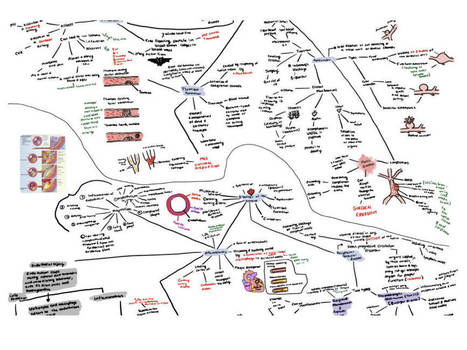
Debates over note taking tend to focus on whether devices are helpful or harmful, rather than on strategies students can use to make connections between ideas
Scoop.it!

. . Creativity Creativity: Often I get asked from people if "Creativity" can get learned and even some say that it can't get learned (BTW: that are the people who don't have creativity). Well, my teaching experience shows me that it can get learned, slowly but surely. Even lazy people are creative to find…
Scoop.it!
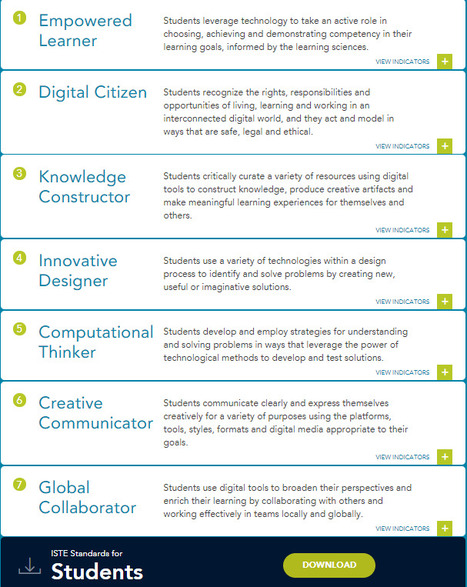
Promote future-ready learning with the ISTE Standards for Students
Today’s students must be prepared to thrive in a constantly evolving technological landscape. The ISTE Standards for Students are designed to empower student voice and ensure that learning is a student-driven process. Connect with other educators in the ISTE Standards Community and learn how to use the standards in the classroom with the ISTE Standards for Students ebook.
Learn more / En savoir plus / Mehr erfahren:
http://www.scoop.it/t/21st-century-learning-and-teaching/?&tag=ISTE
Via Gust MEES

Gust MEES's curator insight,
August 15, 2017 8:52 AM
Promote future-ready learning with the ISTE Standards for StudentsToday’s students must be prepared to thrive in a constantly evolving technological landscape. The ISTE Standards for Students are designed to empower student voice and ensure that learning is a student-driven process. Connect with other educators in the ISTE Standards Community and learn how to use the standards in the classroom with the ISTE Standards for Students ebook.
Learn more / En savoir plus / Mehr erfahren:
http://www.scoop.it/t/21st-century-learning-and-teaching/?&tag=ISTE
Scoop.it!


Gilbert C FAURE's comment,
August 16, 2017 3:42 AM
learning to read.. media and information literacy, not only memorizing data
Scoop.it!

Avec le numérique, ne peut-on pas générer ces « révolutions minuscules » ou ces « petits moments magiques », qui bousculent les certitudes et qui « boostent » la réflexion des élèves comme le disait si bien Jean Pierre Astolfi, et qui permettent aussi une réflexion des enseignants sur les différentes façons d’apprendre? Ces moments de manipulation via les interfaces numérique et en liaison avec l’apprenant directement concerné, ne sont-ils pas une façon de faire vivre concrètement dans l’action, l’expérience de ce qu’un savoir en construction produit comme surprise et inspiration ? Nous pouvons repenser ici à ce que Louis Legrand appelait une « pédagogie de l’étonnement » et Georges Snyders « la joie à l’école » !
|






