


Reviews how the Open Syllabus Project can help academics to understand their impact on teaching and find the best textbook for their course


 Your new post is loading...
 Scoop.it! Reviews how the Open Syllabus Project can help academics to understand their impact on teaching and find the best textbook for their course 
No comment yet.
Sign up to comment
Scoop.it!

From
harzing

Reports on my presentation at Manchester Metropolitan University
Scoop.it!

Distance education (DE) is a constantly evolving and advancing field, and as such, its intellectual network and dynamics need to be investigated and explored. In this regard, this study reviewed
Scoop.it!

Travail collaboratif, curation de contenu ou gestion personnelle de l’information, veille numérique collaborative, toutes ces pratiques qui résultent de l’usage actuel des outils numériques, ont été investies dans le cadre d’expériences d’apprentissage coactifs orientées par problème et menées avec des étudiants en information et communication. Nous tentons de comprendre en quoi le partage des ressources numériques entre les apprenants et enseignants et la contribution à l’enrichissement des enseignements par les étudiants, peuvent favoriser le renforcement des compétences numériques des apprenants, ainsi que le développement de leur esprit critique, en situation d’apprentissage par problème et plus largement d’apprentissage coactif en mode hybride. Nous interrogeons également l’intérêt du recours à des dispositifs numériques innovants issus du monde académique – voire portés par des enseignants-chercheurs en charge des enseignements eux-mêmes – par rapport à l’appui sur les dispositifs grand public tels que ceux proposés par les GAFA, aujourd’hui sous le feu de la critique pour l’opacité de leurs algorithmes autant que pour les effets pervers de leurs modèles économiques. Les dimensions sociales et ubiquitaires qui résultent de ces expériences d’apprentissage et qui allient numérique, espaces augmentés et repensés, nous font aussi envisager autrement l’enseignement. Ainsi, en tant qu’acteur de ces dispositifs, l’apprenant participe à co-construire des savoirs, à l’aide notamment, d’appareils mobiles et connectés.
Scoop.it!

On a cru longtemps – après Aristote, Nicolas Oresme (Traité des monnaies, 1370), Guillaume Budé – que la monnaie, sous forme métallique, avait peu à peu remplacé le simple troc, et cela à une date assez récente (viiie-viie s.
Scoop.it!
Gigablast, l'annuaire,Fagan Finder, le moteur des moteurs,Banana Slug, le sérendipien,Boardreader, le social,apprivoisez LES MOTEURS DE RECHERCHE,Carrot², le sémantique,Baidu, le chinois,en 1 coup d'oeil,MillionShort, le farfouilleur,Swisscows, le suisse,SearX, le métamoteur open source,Veille @ttitude,par,Michèle ORBAN,2020,La recherche d'information sur Internet est devenue une compétence clé au sein des organisations.
Pour devenir un PRO des moteurs de recherche
Scoop.it!

Free resource of educational web tools, 21st century skills, tips and tutorials on how teachers and students integrate technology into education Via Dr. Tom D'Amico (@TDOttawa)
Scoop.it!
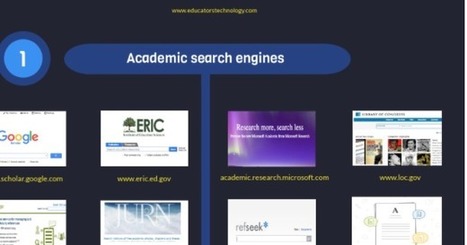
Free resource of educational web tools, 21st century skills, tips and tutorials on how teachers and students integrate technology into education
Scoop.it!

The reading app introduces a way to bundle up a few related articles into an approachable one-time package.
Scoop.it!
Le confinement aidera à faire connaître la curation?
Scoop.it!

OnTRAIN "Online training: the treasure within"
Scoop.it!
Scoop.it!

Break through writing blocks with highly-rated, free creative writing exercises and prompts. Via Nik Peachey

Nik Peachey's curator insight,
June 6, 2020 1:20 AM
A great collection of prompts to help students get started with creative writing/speaking exercises. 
Claudia Cabrera's curator insight,
January 4, 2021 7:01 PM
Excellent resources to boost students' writing and speaking skills. Creative and fun ideas! Don´t miss the Children's Section, for younger students. |
Scoop.it!

ENLIGHT - The 9 European Universities network initiates an online lecture itinerary...
Scoop.it!
This is the slide deck from my webinar on 27th June. The slides include some of the background to the talk, some examples of materials I have created for PeacheyPublications and links to some of the tools I use to create the materials. There is also a discount coupon code that is valid until the end of June. Via Nik Peachey
Nik Peachey's curator insight,
June 29, 2020 5:31 AM
The interactive slides from my recent webinar - Adapting Materials for the Virtual Classroom 
Jacopo Giorgi's curator insight,
June 29, 2020 1:47 PM
Impressive presentation of various options available to convert learning materials to virtual modalities.
Scoop.it!
Michael Sankey, Learning Futures, Griffith University This article was originally published in Chinese, as a peer reviewed article in the Journal of Distance Education in China. Citation: Sankey, M. (2020). Putting the pedagogic horse in front of the technology cart. Journal of Distance Education in China. 5, pp .46-53. DOI:10.13541/j.cnki.chinade.2020.05.006 Both the original Chinese version and an English…
Scoop.it!

La crise du Covid-19 a ramené à l’avant-scène des débats publics la question essentielle de la solidarité entre les Etats membres au sein de l’Union européenne (UE). Lors des premiers signes de la pandémie en Europe au début de l’année 2020, le réflexe de ces derniers a été de se tourner d’abord...
Scoop.it!

Médiations instrumentées et design de l’expérience La place des dispositifs interactifs numériques devient de plus en plus forte dans les musées et les expositions. Comprendre la dynamique de l’exp...
Scoop.it!

Convince & Convert strategist Lauren Teague explains what content curation in social media is and why you should curate content for your audience.
Scoop.it!

What makes top microlearning LMS software stand out? Check our carefully curated LMS list to decide on what features you should focus before purchasing!
Scoop.it!

From
medium
“El aprendizaje permanente es una necesidad. Tenemos que mejorar nuestras aptitudes y competencias a lo largo de la vida para realizarnos en lo personal, participar en la sociedad y tener éxito en el… Via juandoming
Scoop.it!

Future Skills has contributed to a decisive change of the public discussion about higher education, which we refer to as the Future Skills Turn. To examine this turnand its implications for the future of higher education is the purpose of this book. As a concept, Future Skills has gained an importance similar to that which emerged in the seventies of the last century from ideas such as equal opportunities or science orientation in European education. Such guiding principles usually do not appear as precisely tailored and empirically operationalized concepts, but rather as conceptual condensations of broadly diversified bundles of arguments and objectives – equally in the public, the political and the scientific discourse.
The starting point for the enormous career of the Future Skills concept is the insight that current concepts of higher education do not meet the urgent needs of our societies with convincing future concepts. Neither they are fit to help sus-tain our environment nor associated social or economic challenges. While social challenges are exacerbated by an accelerating process of globalization and digital advancement, at the same time these are the very forces that enable a multitude of new options for human development. In this situation of digital acceleration, the characteristic feature is that of uncertainty and the inevitable necessity is that of creative responsibility. It is a platitude that the future is unpredictable, however we must be prepared to shape it.
In ten to twelve years’ time, children who attend primary school next year will be entering vocational training or higher education, and in fifteen years’ time they will be the new professionals who as young citizens take over the responsibility in our society. We know little about this future. In the year 2060-2065 they are likely to retire, end their employment and/ or cease working. About this future we do not know anything. Our schools must prepare them for jobs that do not yet exist, for technologies and applications that have not yet been invented, for living in a society 2I Future Skills – The Key to Changing Higher Educationwhose social structures we cannot foresee today, and for dealing with challenges that are not yet discernible. It is our shared responsibility to make the most of the opportunities and find ways to deal with this uncertain future. It is about nothing more and nothing less than the preservation of our planet and our livelihoods. Via Edumorfosis, juandoming
|






