


Practical Networked Leadership Skills
8.8K views |
+3 today
The soft skills you need to lead and succeed in a networked world. This includes: professional learning network, content curation for self-directed learning and professional development, professional learning networks, personal branding, training your attention, self-care and management, managing up and down.
Curated by
Beth Kanter
 Your new post is loading...
 Your new post is loading...
Your new post is loading...
 Scoop.it!
![How To Build A Professional Facebook Profile You Can Be Proud Of [Weekly Facebook Tips] | Practical Networked Leadership Skills | Scoop.it](https://img.scoop.it/DUg4nIekU8DKNspxbReiuDl72eJkfbmt4t8yenImKBVvK0kTmF0xjctABnaLJIm9)
How can you build a professional Facebook profile you can be proud of? Here's what everyone ought to know about creating professional Facebook presences. If you're out and about in your professional world, you probably meet a lot of folk you'd like to stay friendly with, at least for an occasional coffee or potential career… 

Gayle Samuelson Carpentier's curator insight,
June 17, 2014 7:56 PM
Honestly, I normally just say "yes Beth" when she offers advice (always a good idea from my POV)
Scoop.it!

Lisa McCarthy's curator insight,
June 23, 2014 6:39 AM
The challenge of engaging everybody at work is becoming more and more pressing. This is a great article giving some good, practical ideas. Ultimately, people looking for meaning in the work they do is nothing new (reference the works of Marx and the Industrial Revolution). However, in the age of Information Technology and social media, the need is becoming more and more pressing. Organisations cannot afford to ignore this phenomenon. 
Lee Jones's curator insight,
June 27, 2014 9:57 AM
I too am an independent spirit who entered the workforce at a time of great recession. Maybe that is why I identify with the millenials...
Scoop.it!

Which are the really important things that one needs to learn in order to survive and live a successful life on this planet? Whether in Manhattan, lost in the jungle, on a remote island or on an extraterrestrial planet, what are
Beth Kanter's insight:
11) How to Ask Good Questions 12) How to Curate 13) How to Focus
Scoop.it!

From
mashable

SomeDay in and day out, I see cases of B2B marketing blindness. The cure? Widely available social marketing medication. Sufferers should liberally apply emotional storytelling, and ...
Beth Kanter's insight:
accidental narcissism. Some good tips on how to decide what to share on your "personal account" Nonetheless, here are my top tips on how to avoid social marketing narcissism:
Scoop.it!

3. Finally, take the time to brainstorm with trusted peers or an insightful manager on a weekly basis to stimulate different ways of thinking and allow for problems to be approached with fresh, creative perspectives. This is a great way to learn from others and strengthen work networks, which everyone needs, wants and likes. Some work involves simple task completion; other projects require strategic thinking by an unfettered brain. Here's how to do both.
Beth Kanter's insight:
. Recognize two types of functions and classify work life according to the “get work done” bucket and the “think strategically” bucket. 2. Block off at least two to three hours on a weekly basis that are completely free from distractions and interruptions. This will allow the brain time to slow down and become immersed in the problem at hand, something very important and quite effective for engendering creativity. The hard part is having the strength to stick to this type of a schedule for two to three months to realize deeply satisfying, reinforcing results. 3. Finally, take the time to brainstorm with trusted peers or an insightful manager on a weekly basis to stimulate different ways of thinking and allow for problems to be approached with fresh, creative perspectives. This is a great way to learn from others and strengthen work networks, which everyone needs, wants and likes.

Beth Kanter's curator insight,
May 8, 2014 3:28 PM
1. Recognize two types of functions and classify work life according to the “get work done” bucket and the “think strategically” bucket. 2. Block off at least two to three hours on a weekly basis that are completely free from distractions and interruptions. This will allow the brain time to slow down and become immersed in the problem at hand, something very important and quite effective for engendering creativity. The hard part is having the strength to stick to this type of a schedule for two to three months to realize deeply satisfying, reinforcing results. 3. Finally, take the time to brainstorm with trusted peers or an insightful manager on a weekly basis to stimulate different ways of thinking and allow for problems to be approached with fresh, creative perspectives. This is a great way to learn from others and strengthen work networks, which everyone needs, wants and likes.
Scoop.it!

From
artpetty
This isn’t down time, it’s different time. Instead of unproductive busyness, it’s productive un-busyness. It’s the root source of ideas and connections between ideas. It’s the time when we see our way forward through complex problems and toward solutions that have been otherwise elusive.What we fail to do in our workdays is find time to think deeply. From unstructured conversations to reflective time, the time spent thinking is valuable
Beth Kanter's insight:
This isn’t down time, it’s different time. Instead of unproductive busyness, it’s productive un-busyness. It’s the root source of ideas and connections between ideas. It’s the time when we see our way forward through complex problems and toward solutions that have been otherwise elusive.
Scoop.it!

Building your personal brand and expanding career success takes only nine minutes a day. Learn how to create a nine-minute career success habit.
Beth Kanter's insight:
Some tips on how to be efficient while working on personal branding on linkedin.
Scoop.it!

You’ve read plenty about the challenges presented by the multi-generational workforce.
Scoop.it!
Beth Kanter's insight:
Popplet is a tool for the iPad and web to capture and organize your ideas.
You could create a map of your network with it.
Scoop.it!

Whatever your field of endeavor, the story of networks is bound to play a part.
Beth Kanter's insight:
Good summary of network theories in plain english
Scoop.it!
Beth Kanter's insight:
Terms and jargon for SNA defined
Scoop.it!
Social Networks & Social Capital Social Media – Dr. Giorgos Cheliotis (gcheliotis@nus.edu.sg) Communications and New Media, National University...
|
Scoop.it!
Beth Kanter's insight:
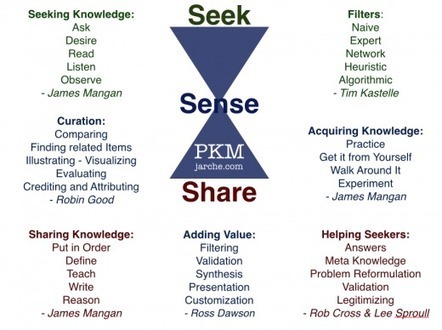
Great break out of skills for Seek, Sense, Share
Scoop.it!
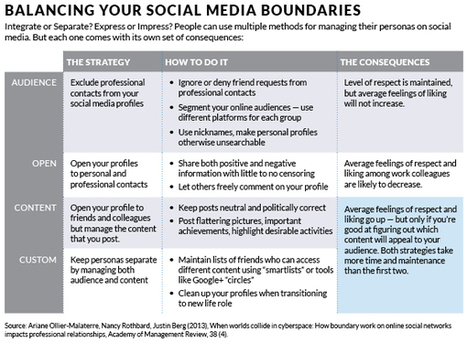
Social media has made it easy to connect with others on many different levels -- but it’s also opened us up to a host of unintended consequences.
Beth Kanter's insight:
“The custom strategy is the one that we would argue has the highest ability to both maximize respect and liking, but it’s hard to do.”
Scoop.it!

Young people today want to do work with purpose. If you're having a hard time finding that, these lessons can help.
Beth Kanter's insight:
Young people aren’t waiting for retirement. They’re asking what their purpose is now, and they’re determined to find the opportunities, organizations, and companies that share their purpose. A recent study by Net Impact showed that the millennial generation expects to make a difference in the world through their work, and more than half of millennials would take a 15% pay cut to do work for an organization that matches their values.
Scoop.it!
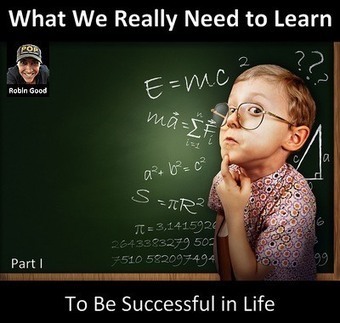
ractIf there were no schools and traditional academic curriculums, and one had the option to question and rethink a human being learning curriculum what would be in it? If we suspend momentarily the reasoning and goals that went into
Beth Kanter's insight:
connected skills ...
Scoop.it!
![Joho the Blog » [2b2k] “In Over Our Heads” – My Simmons commencement address | Practical Networked Leadership Skills | Scoop.it](https://img.scoop.it/50winahZ3jb1pnpU1Z7IsTl72eJkfbmt4t8yenImKBVvK0kTmF0xjctABnaLJIm9)
But here’s why it’s good to get comfortable with always having a little lack of confidence. First, if you admit no self-doubt, you lose your impulse to learn. Second, you become a smug, know-it-all and no one likes you. Third, what’s even worse, is that you become a soldier in the army of ignorance. Your body language tells everyone else that their questions are a sign of weakness, which shuts down what should have been a space for learning. The one skill I’ve truly mastered is asking stupid questions. And I don’t mean questions that I pretend are stupid but then, like Socrates, they show the folly of all those around me. No, they’re just dumb questions. Things I really should know by now. And quite often it turns out that I’m not the only one in the room with those questions. I’ve learned far more by being in over my head than by knowing what I’m talking about. And, as I’ll get to, we happen to be in the greatest time for being in over our heads in all of human history.
Beth Kanter's insight:
But here’s why it’s good to get comfortable with always having a little lack of confidence. First, if you admit no self-doubt, you lose your impulse to learn. Second, you become a smug, know-it-all and no one likes you. Third, what’s even worse, is that you become a soldier in the army of ignorance. Your body language tells everyone else that their questions are a sign of weakness, which shuts down what should have been a space for learning. The one skill I’ve truly mastered is asking stupid questions. And I don’t mean questions that I pretend are stupid but then, like Socrates, they show the folly of all those around me. No, they’re just dumb questions. Things I really should know by now. And quite often it turns out that I’m not the only one in the room with those questions. I’ve learned far more by being in over my head than by knowing what I’m talking about. And, as I’ll get to, we happen to be in the greatest time for being in over our heads in all of human history. So that’s two million vista photos. 1.3 million apple pie recipes. 7.6 million cute cat photos. We’re constantly warned about information overload, yet we never hear one word single word about the dangers of Vista Overload, Apple Pie Overload, or Cute Kitten overload. How have the media missed these overloads! It’s a scandal! I think there’s actually a pretty clear reason why we pay no attention to these overloads. We only feel overloaded by that which we feel responsible for mastering. There’s no expectation that we’ll master vista photos, apple pie recipes, or photos of cute cats, so we feel no overload. But with information it’s different because we used to have so much less of it that back then mastery seemed possible. For example, in the old days if you watched the daily half hour broadcast news or spent twenty minutes with a newspaper, you had done your civic duty: you had kept up with The News. Now we can see before our eyes what an illusion that sense of mastery was. There’s too much happening on our diverse and too-interesting planet to master it, and we can see it all happening within our browsers. The concept of Information Overload comes from that prior age, before we accepted what the Internet makes so clear: There is too, too much to know. As we accept that, the idea of mastery will lose its grip, We’ll stop feeling overloaded even though we’re confronted with exactly the same amount of information.
Scoop.it!
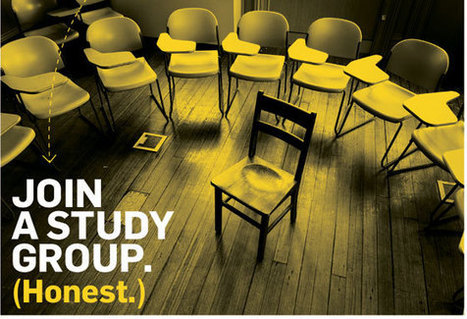
Executive learning strategies are critical amid rapid technological innovation and globalization, and group collaboration helps new lessons stick best with mid-sized company leaders.
Beth Kanter's insight:
You need to become a learner, and the current era demands that you develop learning strategies for keeping yourself in the game. Merely reading a good book or two won’t cut it — because reading won’t really put you in touch with the latest, real-world experiences and tools you could be privy to. So what’s it take to become a 21st-century learner? - See more at: http://thebuildnetwork.com/leadership/management/executive-learning-strategies/#sthash.TiCc9vbd.dpuf A study group is akin to a customized DIY social innovation: It uses a self-created infrastructure of relationships to produce and retain knowledge that, importantly, does so not in the static, dry way of, say, a textbook, but in an interactive, experiential, personal, ever-evolving-and-adapting format — one that is exclusive to conversation and the relationships from whence it’s created. Study groups predicted college success because, in other words, it’s the variable that most clearly indicated someone had learned the most powerful and effective way to learn. -
Scoop.it!

Ask yourself these 7 questions so you can be clear about your personal brand and expand your success and happiness at work.
Beth Kanter's insight:
Because branding is based in authenticity, you need to understand who you are and what makes you compelling to your target audience – the people who are making decisions about you. As you think about what makes you YOU, ponder these questions:
Scoop.it!

Ari Sahagún's curator insight,
May 5, 2014 2:43 PM
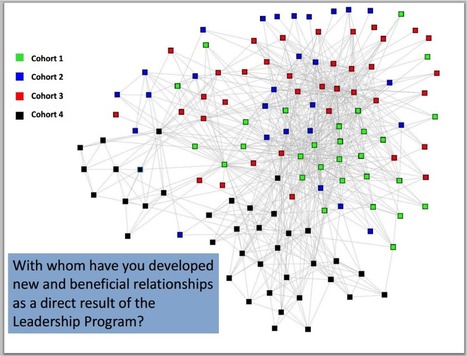
Great use case for social network analysis to demonstrate new leadership!
Scoop.it!
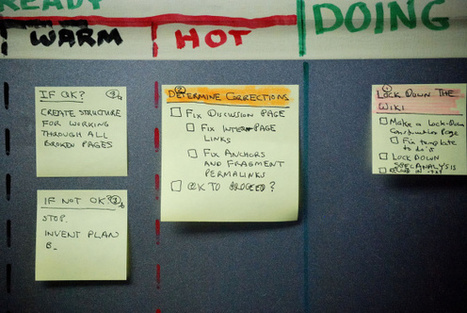
Being productive is really a battle. It’s the worst kind of battle: a battle against yourself. Via Alessandro Rea
Scoop.it!

The concept of not knowing what you don't know has gotten its fair share of attention. Here are three practices that can lead to crucial discoveries. Via John Michel, june holley
Beth Kanter's insight:
"The important and difficult job is never to find the right answers, it is to find the right question." Peter Drucker, The Practice of Management (1954) 3. Set aside time every day to sit, think, and write down better questions--about yourself and your organization. Gregersen's 4-24 Project is an attempt to start a movement among leaders to ask better questions. Specifically, Gregersen is urging leaders to take four minutes every day to write out all the questions they have about anything personal or professional. While there are potential business ROIs in the activity--including, but not limited to, articulating disruptive questions for your company--there are also personal benefits. First and foremost, there's the meditative practice of simply sitting and thinking. For at least four minutes a day, you will (ostensibly) remove your mind from your immediate to-do list, and think only of questions. On more stressful days, these questions will, of course, pertain to your to-do list, as opposed to long-term, big-picture, high-concept thoughts. But even then, you'll at least gain the benefit of venting. Over time, says Gregersen, you'll be able to do what Christensen did as an HBS student: Review your lists of questions, and notice the patterns.

John Michel's curator insight,
April 26, 2014 10:49 AM
Business leaders are blind to the questions they should be asking for two reasons. 1. In most organizations, you get promoted not for asking questions but for providing answers. You advance by voicing the glib sound bites, not the edgy hypotheticals. 2. Once you ascend to the CEO seat, there are barriers precluding your interaction with anyone who might nag you with those hypotheticals. 
Dave Wood's curator insight,
April 28, 2014 3:09 AM
As a coach you get to ask the disruptive questions that uncover leadership blind spots. Some key ideas here which can be enhanced by visually recording your coaching sessions.
Scoop.it!
Networks are everywhere, but the tools for end users to access, analyze, visualize and share insights into connected structures have been absent. NodeXL, th...
Scoop.it!
Community and Ties Social Media – Dr. Giorgos Cheliotis (gcheliotis@nus.edu.sg) Communications and New Media, National University of Singapore
|








Software is part of the solution. Hardware is part of the solution. People are the other part. Humans can connect complex things together better than any software or hardware system.