Your new post is loading...

|
Scooped by
Mickael Ruau
October 12, 2021 8:59 AM
|
Ce tutoriel identifie quelques domaines où les Big Data font déjà une différence et quelques domaines où ils feront, bientôt, une différence. Bien entendu, l'élément clé de ce tutoriel est de vous apprendre le potentiel énorme des Big Data qui est actuellement surestimé, et à court terme, massivement surévalué.
Ce tutoriel est inspiré du livre de Nate Silver, The Signal and the Noise, probablement le plus complet credo des Big Data créé ces dernières années — un livre que je recommande à tous les analystes de marché et acteurs du Big Data.
|
|
Scooped by
Mickael Ruau
October 11, 2021 8:57 AM
|
Cet article est le premier d'une série d'articles rédigés par Chris Travers. Il présente le modèle de conception SOLID de bases de données. L'auteur essaye de par ces articles de comparer l'application des principes SOLID aux applications orientées objet et l'application de ces mêmes principes aux bases de données relationnelles. Chris Travers est un blogueur très actif et nous avons souhaité partager avec la communauté francophone ses contributions afin que chacun en tire profit.
|
|
Scooped by
Mickael Ruau
October 11, 2021 1:48 AM
|
Il y a quelques temps, l’un de mes collègues me posa cette question: Saurais tu me rappeler le principe des trois lois des systèmes distribués ? Il y a la cohérence mais je ne sais plus quels sont les autres…. Et la je dois avouer que si ça me disait bien quelque chose, j’ai été incapable de l’aider. J’ai bien pensé aux 3V du Big Data (Vitesse,Volume, Variété) [1] mais ce n’était pas ça et finalement ça s’est fini en blague autour des trois lois de la robotique [2]. (Nous reviendrons sur ces deux concepts) Du coup je n’ai pas pu beaucoup aidé mon collègue qui finalement a trouvé tout seul (comme un grand)! C’était le théorème de CAP (ou de Brewer [3])! Ça me disait bien quelques chose mais quoi? Regardons cela ensemble.
|
|
Scooped by
Mickael Ruau
October 8, 2021 8:52 AM
|
Many applications that use a database to store the persistent state of the application also use stored procedures and triggers to improve performance and to do common processing on updates. A Stored Procedure Test is a way to apply automated testing practices to this code that lives inside the database. How It Works We write unit tests for the stored procedures independent of the client application software. These tests may be layer-crossing tests or round trip tests depending on the nature of the store procedure(s) being tested. When To Use It We should write Stored Procedure Tests whenever we have non-trivial logic in stored procedures. This will help us verify that the stored procedures (our system under test (SUT) for the purposes of these tests) is working properly independently of the client application. This is particularly important when the stored procedures are likely to be used by more than one application and we cannot ensure they are tested adequately simply by exercising the application software (a form of Indirect Testing (see Obscure Test on page X).) Using Stored Procedure Tests also helps us to enumerate all the conditions under which the stored procedure could be called and what should happen in each circumstance. The very act of thinking about these circumstances is likely to improve the design (a common result of doing test-first development.) Implementation Notes There are two fundamentally different ways to implement Stored Procedure Tests. We can write the tests in the same programming language as the stored procedure and run them in the database or we can write them in our application programming language and access the stored procedure via a Remote Proxy[GOF]. We might even write tests both ways; the stored procedure developers might write unit tests in the database programming language and the application developers might prepare some acceptance tests in the application programming language to run as part of the application build. Either way, we also need to decide how the test will set up the fixture (the "before" state of the database) and verify the expected outcome (the "after" state of the database as well as any expected actions such as cascading deletes.) The test may interact directly with the database to insert/verify the data (a form of Back Door Manipulation (page X)) or it could use another stored procedure (a form of round trip test.)
|
|
Scooped by
Mickael Ruau
October 8, 2021 8:49 AM
|
Hard-to-Test Code Category: Test Smells 11 June 2007 Code is difficult to test. Production Bugs Category: Test Smells 18 February 2007 We find too many bugs during formal test or in production. Fragile Test Category: Test Smells 18 February 2007 A test fails to compile or run when the SUT is changed in ways that do not affect the part the test is exercising. Test Code Duplication Category: Test Smells 18 February 2007 The same test code is repeated many times. Test Logic in Production Category: Test Smells 18 February 2007 The code that is put into production contains logic that should be exercised only during tests. Erratic Test Category: Test Smells 4 February 2007 One or more tests are behaving erratically; sometimes they pass and sometimes they fail. Obscure Test Category: Test Smells 20 December 2006 It is difficult to understand the test at a glance. Assertion Roulette Category: Test Smells 31 October 2006 It is hard to tell which of several assertions within the same test method caused a test failure. Conditional Test Logic Category: Test Smells 31 October 2006 A test contains code that may or may not be executed Slow Tests Category: Test Smells 11 October 2006 The tests take too long to run. Developers Not Writing Tests Category: Test Smells 9 October 2006 Developers aren't writing automated tests.
|
|
Scooped by
Mickael Ruau
October 8, 2021 8:48 AM
|
Utility Method Location: Category: Test Organization 6 November 2006 Test Code Reuse: Category: Test Organization 6 October 2006 Testcase Class Structure: Category: Test Organization 18 December 2005 Test Helper Category: Test Organization 4 March 2004 We define a helper class to hold any Test Utility Methods we want to reuse in several tests. Testcase Superclass Category: Test Organization 4 March 2004 We inherit reusable test-specific logic from an abstract . Testcase Class per Fixture Category: Test Organization 4 March 2004 We organize Test Methods into Testcase Classes based on commonality of the test fixture. Test Utility Method Category: Test Organization 4 March 2004 We encapsulate the test logic we want to reuse behind a suitably named utility method. Testcase Class per Feature Category: Test Organization 4 March 2004 We group the Test Methods onto Testcase Classes based on which testable feature of the SUT they exercise. Testcase Class per Class Category: Test Organization 4 March 2004 We put all the Test Methods for one SUT class onto a single Testcase Class. Parameterized Test Category: Test Organization 26 January 2004 We pass the information needed to do fixture setup and result verification to a utility method that implements the entire test lifecycle. Named Test Suite Category: Test Organization 12 January 2004 Define a test suite, suitably named, that contains a set of tests that we wish to be able to run as a group.
|
|
Scooped by
Mickael Ruau
October 8, 2021 8:31 AM
|
Après avoir utilisé DbSetup pendant quelques semaines, j'en suis particulièrement satisfait. Voici les avantages et inconvénients que j'en retire : Avantages Faiblesses - Un DbUnit like dopé aux bonnes pratiques contemporaines
- Intégration possible à Spring Test
- Prise en main rapide
- Factorisation des jeux de données rendue possible
- Qualité de la documentation, de la javadoc et du code source
- Disponible sur le repo maven central
- Légèreté, aucune dépendance tierce
- Équipe ouverte aux améliorations
- Fonctionnalité restreinte au chargement
- Aucun log pour le débogage
- Quid de la pérennité ?
Pour les intéressés qui souhaiteraient migrer de DbUnit vers DbSetup, voici les fonctionnalités proposées par DbUnit, mais non couvertes par DbSetup : - chargement de jeux de données depuis les formats XML et CSV (à nuancer, car DbSetup propose une alternative en Java, ce qui en fait son principal intérêt) ;
- création d'une XSD à partir du schéma de la base de données pour une validation stricte des jeux de données ;
- export de données depuis une base de données source ;
- assertion des données présentes en base après l'exécution d'un test ;
- récupération du graphe de dépendances des tables (TablesDependencyHelper).
|
|
Scooped by
Mickael Ruau
October 8, 2021 5:23 AM
|
Save time and effort as you rummage through large quantities of data.
|
|
Scooped by
Mickael Ruau
October 7, 2021 5:09 AM
|
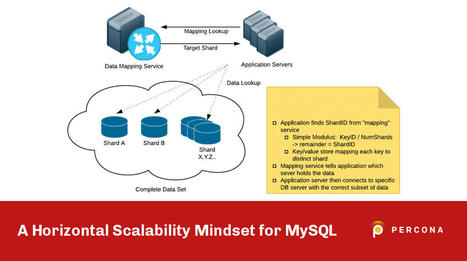
One way to deal with massive data sets in MySQL is splitting the data horizontally and spreading it across multiple equally sized instances.
|
|
Scooped by
Mickael Ruau
October 5, 2021 11:10 AM
|
How to synchronize data between two different tables on the same MySQL server using pt-table-sync.
|
|
Scooped by
Mickael Ruau
October 4, 2021 9:18 AM
|
The Altova XBRL Taxonomy Manager provides a centralized way to install and manage XBRL taxonomies for use across all Altova XBRL-enabled applications. You may access the XBRL Taxonomy Manager from within your installed Altova products or via this page. Altova will update available taxonomy versions frequently when they are released from standards bodies - you may download them here independent of any product release cycle. Please select the taxonomies you would like to download from the list below. Any required dependencies will be selected automatically.
|
|
Scooped by
Mickael Ruau
October 4, 2021 1:31 AM
|
|
|
Scooped by
Mickael Ruau
September 29, 2021 11:30 AM
|
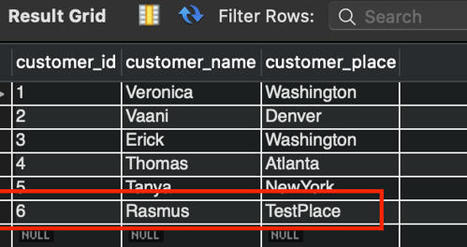
This article will update columns in a MySQL table with values from another table using different methods. Table of Contents:-
|
|
|
Scooped by
Mickael Ruau
October 12, 2021 3:47 AM
|
Theory and considerations around horizontal sharding, along with a lightweight ProxySQL sample implementation.
|
|
Scooped by
Mickael Ruau
October 11, 2021 8:53 AM
|
Notre experte Data vous explique comment gérer le droit à l'oubli pour les données de production et les backups.
|
|
Scooped by
Mickael Ruau
October 8, 2021 9:20 AM
|
Altova XMLSpy, StyleVision, and Authentic include a comprehensive spell checker that provides support for numerous languages, as well as extended support for language peculiarities. This is the same highly acclaimed spell checker that is also used by Google Chrome, Mozilla Firefox, OpenOffice, and MacOS X. The spell checker is also compatible with the OpenOffice dictionaries.
|
|
Scooped by
Mickael Ruau
October 8, 2021 8:50 AM
|
Test Automation Framework Category: Test Strategy 18 February 2007 We use a framework that provides all the mechanisms needed to run the test logic so the test writer only needs to provide the test-specific logic. Recorded Test Category: Test Strategy 18 February 2007 We automate tests by recording interactions with the application and playing them back using a test tool. Shared Fixture Category: Test Strategy 18 February 2007 We reuse the same instance of the test fixture across many tests. Back Door Manipulation Category: Test Strategy 18 February 2007 We set up the test fixture or verify the outcome by going through a back door (such as direct database access.) Scripted Test Category: Test Strategy 20 January 2007 We automate the tests by writing test programs by hand. Test Fixture Strategy: Category: Test Strategy 6 November 2006 Pick an appropriate strategy for organizing the test fixture - xUnit. Test Automation Strategy: Category: Test Strategy 6 November 2006 Pick an appropriate strategy for automating various kinds tests. Standard Fixture Category: Test Strategy 6 November 2006 The same design of test fixture is used in several tests. SUT Interaction Strategy: Category: Test Strategy 6 November 2006 Pick an appropriate strategy for having the automated tests interact with the SUT. Minimal Fixture Category: Test Strategy 5 November 2006 Use the smallest and simplest fixture possible for each test. Layer Test Category: Test Strategy 25 March 2004 We write separate tests for each layer of the Layered Architecture.
|
|
Scooped by
Mickael Ruau
October 8, 2021 8:49 AM
|
Minimize Data Category: Test Refactorings 12 November 2004 We remove things from the fixture until we have a Minimal Fixture. Inline Resource Category: Test Refactorings 12 November 2004 Move the contents of an external resource into the fixture setup logic of the test. Make Resource Unique Category: Test Refactorings 12 November 2004 Make the name of any resources used by a test unique. Replace Dependency with Test Double Category: Test Refactorings 12 November 2004 Break the dependency by replacing a depended-on component with a Test Double. Extract Testable Component Category: Test Refactorings 14 April 2004 Extract the logic you want to test into a separate component that is designed for testability and is independent of the context in which it is run. Setup External Resource Category: Test Refactorings 14 April 2004 Create an external resource within the fixture setup logic of the test rather than using a predefined resource.
|
|
Scooped by
Mickael Ruau
October 8, 2021 8:47 AM
|
Database Patterns Recent Changes Transaction Rollback Teardown Category: Database Patterns 18 February 2007 We rollback the uncommitted test transaction as part of the teardown. Stored Procedure Test Category: Database Patterns 16 October 2006 We write Fully Automated Tests for each stored procedure. Database Sandbox Category: Database Patterns 16 October 2006 We provide a separate test database for each developer or tester. Table Truncation Teardown Category: Database Patterns 14 October 2006 Truncate the tables modified during the test to tear down the fixture.
|
|
Scooped by
Mickael Ruau
October 8, 2021 5:48 AM
|
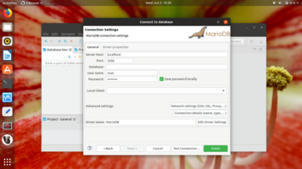
DBeaver est un outil de base de données universel gratuit à code source ouvert publié sous la licence Apache version 2. Publié pour la première fois en 2010, l’outil possède de multiples caractéristiques à savoir : une interface utilisateur conviviale permet l’écriture de diverses extensions, prend en charge toutes les bases de données partageant le pilote JDBC ou encore, gère n’importe quelle source de données avec ou sans pilote JDBC.
DBeaver est exécutable sur la plupart des systèmes d’exploitation notamment Windows(2000, XP, Vista, 7, 8, 10), Mac OS, Linux et Solaris(x86). Il est publié en deux éditions : DBeaver Enterprise Edition et DBeaver Community Edition. La version Community est un produit libre et gratuit à code source ouvert, alors vous pouvez le télécharger et l’utiliser à votre guise. Cependant, cette dernière ne contient que les fonctionnalités de base. La version Enterprise Edition, en plus des fonctionnalités de base, elle prend en charge les bases de données NoSQL et BigData, et intègre d’autres outils tels que Visual Query Builder, les cartes analytiques et un outil pour garder les historiques des requêtes.
|
|
Scooped by
Mickael Ruau
October 7, 2021 8:37 AM
|
Vingt fausses idées que se font les développeurs au sujet des numéros de téléphone Quelles sont les plus courantes ?
|
|
Scooped by
Mickael Ruau
October 5, 2021 11:10 AM
|
Today saw the launch of PostgreSQL14, so let's look at what the community has done to improve performance for heavy transactional workloads and additional support for distributed data.
|
|
Scooped by
Mickael Ruau
October 5, 2021 11:10 AM
|
MySQL 8 Account Locking is one of the more security-focused changes first introduced in MySQL 8.0.19. Database administrators can now configure user accounts so that too many consecutive login failures can temporarily lock the account.
|
|
Scooped by
Mickael Ruau
October 4, 2021 1:46 AM
|
Nous voici sur un nouveau sujet: les bases de données NoSql. Pour introduire doucement ce sujet, nous allons nous intéresser au pourquoi ce type de base en nous intéressant aux propriétés de celles-ci: les propriété BASE. Les propriétés BASE sont pour les bases de données NoSql, ce qu’est ACID pour les bases de données relationnelles.…
|
|
Scooped by
Mickael Ruau
September 30, 2021 8:57 AM
|
Open source XMLSpy alternatives Serna Free 4.2Available for: windows mac linux unix java Serna Free is an open source, powerful XML editor. It is geared toward those with no experience and uses WYSIWYG (What You See Is What You Get) for ease of use. Its appearance is a lot like a word... Read more XML Copy Editor 1.2Available for: windows mac linux unix java XML Copy Editor is a versatile XML editor primarily focused on text editing with XML files. However, XML Copy Editor provides many other features including validation of DTD and XML schemas - as well... Read more
|