


Open ModelSphere est un outil de modélisation et de gestion de modèles, unique en son genre, qui combine les fonctionnalités de modélisation de processus (diagramme de flux de données), de données et UML, tout en offrant un environnement de gestion de modèles des plus flexibles. Parce qu'il a été conçu en Java, et qu'il s'appuie sur une machine virtuelle standard, Open ModelSphere peut être installé sur la plupart des plateformes, soit Windows, Linux et Unix.

FrenchTech SAAS
33.5K views |
+3 today
 Your new post is loading...
 Scoop.it! 
Open ModelSphere can run on a Macintosh computer
Mickael Ruau's insight:
Q: How can I do to run Open ModelSphere on Macintosh?

Scoop.it!
Gestionnaire d'accès pour des utilisateurs pour PHP/MySQL
Scoop.it!
Interface de Gestion des Sauvegardes et des Restaurations pour MySQL
Scoop.it!
Quick review of Native JSON Data Type and generated columns in MySQL 5.7
Scoop.it!

Someone will probably tell me that this is an elementary-level topic, but I got some good questions regarding joins from my most recent ZCE class students, so I thought I’d put down the examp…
Scoop.it!

The UML is a good notation for conceptual data modeling. The representation stands apart from implementation choices, be it a relational database, object oriented database, files, or some other mechanism. Q2. What are the main weaknesses of UML for database design? And how do you cope with them in practice? Now consider relational databases. Relational database tools do not support the UML. There is no technical reason for this, but several cultural reasons. One is that there is a divide between the programming and database communities; each has their own jargon, style, and history and pay little attention to the other.
Scoop.it!

From
www

Entity Relationship Modeling (ER) defines the methodology often used by database designers to gather requirements and define the architecture of database systems. This white paper defines the core concepts of ER modeling and explains how UML can be used by development teams to develop ER models.
Scoop.it!

Table of Contents
Scoop.it!

Mickael Ruau's insight:
Notations anglo-saxonnes pour la modélisation des bases de données.
Scoop.it!

From
www
Why is mapping objects to relational databases an issue for modern developers? For one thing, object technology, such as Java technology, is the most common environment applied for the development of new software systems. Also, relational databases are still the preferred approach for storage of persistent information and are likely to remain so for quite some time. Read on to see how you'll put this skill to use.
Scoop.it!

Database Modeling Tool DB-UML is an open source modeling tool for creating, updating and visualizing relational database schemas.
|
Scoop.it!

Des BCR « responsable de traitement » et « sous-traitant » Jusqu’à fin 2012, les BCR (dites « responsable de traitement) ne permettaient d’encadrer que des transferts effectués au sein d’un groupe agissant en qualité de responsable de traitement. Fort de ce succès et constatant que les outils d’encadrement des transferts existants ne sont pas suffisamment adaptés à des situations d’externalisation ou de cloud computing, le Groupe des CNIL européennes («G29») a officiellement lancé les BCR «sous-traitant» le 1er janvier 2013.
Scoop.it!

Récemment, un hacker éthique du nom de Dawid Golunski a découvert un
Scoop.it!

Adminer (formerly phpMinAdmin) is a full-featured database management tool written in PHP. Conversely to phpMyAdmin, it consist of a single file ready to deploy to the target server. Adminer is available for MySQL, PostgreSQL, SQLite, MS SQL, Oracle, Firebird, SimpleDB, Elasticsearch and MongoDB.
Scoop.it!
Scoop.it!
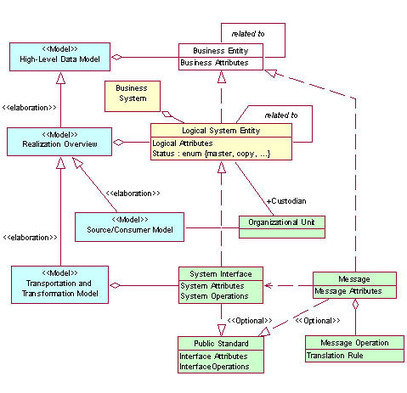
from The Rational Edge: This article describes a new approach, based on the Unified Modeling Language (UML), which the authors believe meets the real requirements for modeling an enterprise data architecture.
Scoop.it!

The MySQL explain plan is a great tool to help developers and database administrators to improve the performance of specific queries happening against a database. It is very easy to use, but its ou…
Scoop.it!

By IBM Rational authors, Eric J. Naiburg and Robert A. Maksimchuk. This book introduces the Unified Modeling Language (UML) and how it can be applied to database modeling and design. Read an excerpt.
Mickael Ruau's insight:
Read the following excerpts (in PDF format):
Scoop.it!
Developing Object-Relational Database Applications, Part 1: database analysis and design methodology
From
www
The following article was previously published in the Informix Tech Notes quarterly journal. The Tech Notes archive covers the years 1991 to 2001. This is the first article in a two-part series on developing object-relational database applications.
Scoop.it!

DatabaseToUML download. DatabaseToUML 2013-04-29 16:42:42 free download. DatabaseToUML The goal is to generate UML classes from an existing database. Connect to a database, read its schema and produce UML 2 classes
Scoop.it!

Table of Contents
Scoop.it!

When it comes to providing reliable, flexible, and efficient object persistence for software systems, today's designers and architects are faced with many choices. From the technological perspective, the choice is usually between pure Object-Oriented, Object-Relational hybrids, pure Relational, and custom solutions based on open or proprietary file formats.
Mickael Ruau's insight:
This article is about only one of those choices, that is the layering of an object-oriented class model on top of a purely relational database. This is not to imply this is the only, best, or simplest solution, but pragmatically it is one of the most common, and one that has the potential for the most misuse.
|







Open ModelSphere permet aux utilisateurs de construire leurs modèles plus facilement, à partir de zéro ou via rétro-ingénierie provenant d'une variété de sources (SGBDR ou autres sources non-relationnelles comme Java). Les utilisateurs peuvent choisir entre plusieurs systèmes cibles SQL, comme Oracle, Informix, SQL Server de Microsoft, Sybase et DB2 UDB. Ensuite, ils peuvent facilement employer le processus de génération pour mettre leurs bases de données à jour. Open ModelSphere propose également une fonction de génération de rapport en format HTML améliorée, permettant une personnalisation du contenu et du format.