Your new post is loading...

|
Scooped by
Gilbert C FAURE
June 14, 2017 11:49 AM
|
The mounting of an appropriate host innate immune response in the lungs requires the rapid establishment of a complex cellular and molecular networking that allows the containment and clearance of pathogens during respiratory infections. Both neutrophils and γδT cells are central players in the host response during mucosal infections. Using a model of invasive pneumococcal disease, we illustrated a role for Interleukin-17A in controlling neutrophil recruitment, bacterial loads and survival. Following Streptococcus pneumoniae infection, we defined pulmonary γδT cells, especially the lung resident Vγ6Vδ1+ subset, as the primary source of IL-17A in an IL-23/IL- 1β-dependent manner. Using gene-targeted mice, we demonstrated that γδT cells largely contributed to neutrophilia and to the control of the pathology. Furthermore, we now defined a second and unexpected early role for neutrophils as accessory cells in γδT17 cell activation through IL-1β secretion. Neutrophil-derived IL-1β was dependent on NLRP3 inflammasome activity and required alveolar macrophage-secreted TNF-α for priming and bacterial pneumolysin for NLRP3- dependent caspase-1 activation. This report thus brings to light the sequential molecular/cellular events leading to γδT17 cell activation and highlights the existence of a biologically relevant and fully functional NLRP3 inflammasome in pulmonary neutrophils that regulates a key immune axis in the development of protective innate response to respiratory bacterial infection.Based on these observations, we hypothesized that an increase in the pool of IL-17A-producing innate-like T lymphocytes might play a protective role during pneumococcal infection. As recently suggested, we demonstrated that intranasal IL-7/M25 complex administration into naïve mice allowed the expansion of the cellular pool of innate immune cells presenting a Th17-like phenotype in the lungs especially T cells. Moreover, we showed during S. pneumoniae infection that prophylactic IL-7/M25 treatment increased the capacity of Vγ6Vδ1+ T cells to produce IL-17A. Interestingly, this phenotype led to higher neutrophil recruitment and a better control of bacterial burden in the lungs as well as systemic dissemination. Thus, we report a critical role of IL-7 in creating an IL-17-enriched microenvironment which improves the early development of host innate immune response to respiratory bacterial infection. This observation might pave the way to the development of future innovative cytokine/cell-based strategies against Streptococcus pneumoniae.

|
Suggested by
Société Francaise d'Immunologie
June 14, 2017 11:47 AM
|
Human oral squamous cell carcinoma (OSCC) constitutes an inflammatory microenvironment enriched with chemokines such as CCL20, which promote cancer cell invasion and tumor progression. We found that in OSCC there is a correlation between the expression of CCL20 and FOXP3 mRNA. Therefore, we hypothesized that OSCC may favor the recruitment and retention of regulatory T (Treg) cells that express the CCL20 receptor, CCR6. Interestingly, most (∼60%) peripheral blood Treg cells express CCR6, and CCR6+ Treg cells exhibit an activated effector/memory phenotype. In contrast, a significant portion (>30%) of CCR6− Treg cells were found to be CD45RA+ naive Treg cells. Compared to CCR6− naive or memory Treg cells, CCR6+ Treg cells exhibit stronger suppressive activity and display higher FOXP3 expression along with lower methylation at the Treg-specific demethylated region of the FOXP3 gene. This predominance of CCR6+ Treg cells was also found in the draining lymph nodes and tumor-infiltrating lymphocytes of OSCC patients with early or late clinical staging. Moreover, CCR6+ Treg cells isolated from tumor-infiltrating lymphocytes or draining lymph nodes maintained similar phenotypic and suppressive characteristics ex vivo as did their counterparts isolated from peripheral blood. These results suggest that CCR6 marks activated effector or memory Treg phenotypes with superior suppressive activity in humans.
|
|
Scooped by
Gilbert C FAURE
June 14, 2017 4:27 AM
|
Tenofovir is a preexposure drug used to prevent HIV infection. In clinical trials, tenofovir was effective for men, but not women. Klatt et al. now show that tenofovir efficacy in women depends on the composition of the vaginal microbiome (see the Perspective by Tuddenham and Ghanem). In a clinical trial of 688 women, tenofovir was three times as effective among those with a Lactobacillus -dominant vaginal microbiome as it was among other women. Gardnerella vaginalis tended to predominate in the women for whom tenofovir was less effective, and the authors found that the organism could rapidly metabolize and thereby inactivate the drug.
Science , this issue p. [938][1]; see also p. [907][2]
[1]: /lookup/doi/10.1126/science.aai9383
[2]: /lookup/doi/10.1126/science.aan6103
|
|
Scooped by
Gilbert C FAURE
June 8, 2017 9:30 AM
|
|
|
Scooped by
Gilbert C FAURE
June 6, 2017 1:03 PM
|
In this issue of JEM, Taylor et al. (<https://doi.org/10.1084/jem.20161653>;) describe PD-1 as a critical negative regulator of group 2 innate lymphoid cells (ILC-2s). PD-1 intrinsically controls proliferation and cytokine production of both mouse and human ILC-2s. PD-1 signaling inhibits STAT5 phosphorylation and the removal of this brake by knocking down PD-1 expression or by using anti–PD-1 blocking antibodies, translated in vivo into better clearance of helminth worm infection in mice.
|
|
Scooped by
Gilbert C FAURE
June 5, 2017 1:35 PM
|
Streptococcus pneumoniae is responsible for a variety of invasive and non-invasive human infections. There are over 90 serotypes of S. pneumoniae differing in their ability to adapt to the different niches within the host. Two-dimensional gel electrophoresis was used to discriminate clinical S. pneumoniae isolates recovered from either blood cultures (invasive site isolates) or other sites, including sputum, tracheal aspirate, ear, eye and skin swabs (non-invasive site isolates). Global protein expression profiles for five invasive site and six non-invasive site isolates representing five different serotypes (serotypes 4, 6, 9, 14 and 23) were obtained for each isolate and combined into a single data set using Progenesis SameSpots™ software. One-hundred and eighty six protein spots (39% of the protein spots in the dataset) differed significantly (ANOVA, p<0.05) in abundance between the invasive site (101 upregulated protein spots) and non-invasive site (85 upregulated protein spots) isolates. Correlations between the bacterial proteomes and their sites of isolation were determined by Principal Component Analysis (PCA) using the significantly different protein spots. Out of the 186 variable protein spots, 105 exhibited a serotype-associated pattern of variability. The expression of the remaining 81 protein spots was concluded to be uniquely linked to the site of bacterial isolation. Mass spectrometry was used to identify selected protein spots that showed either constant or differential abundance levels. The identified proteins had a diverse range of functions including, capsule biogenesis, DNA repair, protein deglycation, translation, stress response and virulence as well as amino acid, carbohydrate, lipid and nucleotide metabolism. These findings provide insight on the proteins that contribute towards the adaptation of the bacteria to different sites within the host.
|
|
Scooped by
Gilbert C FAURE
June 5, 2017 10:56 AM
|
In contrast to conventional T lymphocytes, which carry an αβ T-cell receptor and recognize antigens as peptides presented by major histocompatibility complex class I or class II molecules, human γδ T cells recognize different metabolites such as non-peptidic pyrophosphate molecules that are secreted by microbes or overproduced by tumor cells. Hence, γδ T cells play a role in immunosurveillance of infection and cellular transformation. Until recently, it has been unknown how the γδ T-cell receptor senses such pyrophosphates in the absence of known antigen-presenting molecules. Recent studies from several groups have identified a unique role of butyrophilin (BTN) protein family members in this process, notably of BTN3A1. BTNs are a large family of transmembrane proteins with diverse functions in lipid secretion and innate and adaptive immunity. Here we discuss current models of how BTN molecules regulate γδ T-cell activation. We also address the implications of these recent findings o
|
|
Suggested by
Société Francaise d'Immunologie
June 5, 2017 10:55 AM
|
Surviving the treacherous journey through the human body from the mouth to the colon takes a special kind of bacterial pathogen. Shigella – a group of bacteria responsible for much of the diarrheal disease affecting children in the developing world – travels unimpeded from the mouth to the colon, where they unleash powerful machinery to …
|
|
Scooped by
Gilbert C FAURE
June 1, 2017 9:09 AM
|
Experimental & Molecular Medicine is an open access journal that publishes the highest quality articles in translational research and biomedical studies.
|
|
Scooped by
Gilbert C FAURE
May 31, 2017 2:52 PM
|
T helper 17 (Th17) cells can be pathogenic, but what controls this phenotype is unclear.
|
|
Scooped by
Gilbert C FAURE
May 31, 2017 1:12 AM
|
The absent in melanoma 2 (AIM2) inflammasome plays an important role in many viral and bacterial infections, but very little is known about its role in RNA virus infection, including influenza A virus (IAV). In this study, we have designed in vivo and in vitro studies to determine the role of AIM2 in infections with lethal doses of IAVs A/PR8/34 and A/California/07/09. In wild-type mice, IAV infection enhanced AIM2 expression, induced dsDNA release, and stimulated caspase-1 activation and release of cleaved IL-1β in the lung, which was significantly reduced in AIM2-deficient mice. Interestingly, AIM2 deficiency did not affect the transcription of caspase-1 and IL-1β. In addition, AIM2-deficient mice exhibited attenuated lung injury and significantly improved survival against IAV challenges, but did not alter viral burden in the lung. However, AIM2 deficiency did not seem to affect adaptive immune response against IAV infections. Furthermore, experiments with AIM2-specific small interfering RNA–treated and AIM2-deficient human and mouse lung alveolar macrophages and type II cells indicated a macrophage-specific function of AIM2 in regulation of IAV-stimulated proinflammatory response. Collectively, our results demonstrate that influenza infection activates the AIM2 inflammasome, which plays a critical role in IAV-induced lung injury and mortality. AIM2 might serve as a therapeutic target for combating influenza-associated morbidity and mortality without compromising the host antiviral responses.
|
|
Scooped by
Gilbert C FAURE
May 30, 2017 1:55 AM
|
The formation of dental caries involves the interaction between the tooth, the microbial biofilm at the tooth surface and dietary sugars.
|
|
Suggested by
Société Francaise d'Immunologie
May 27, 2017 2:29 PM
|
Gut homeostasis is a tightly regulated process requiring finely tuned complex interactions between different cell types, growth factors, or cytokines and their receptors. Previous work has implicated a role for IL-6 and mucosal immune cells in intestinal regeneration following injury and in promoting inflammation and cancer. We hypothesized that IL-6 signaling could also modulate crypt homeostasis. Using mouse in vitro crypt organoid and in vivo models, this study first demonstrated that exogenous IL-6 promoted crypt organoid proliferation and increased stem cell numbers through pSTAT3 activation in Paneth cells. Immunolabeling studies showed that the IL-6 receptor was restricted to the basal membrane of Paneth cells both in vitro and in vivo and that the crypt epithelium also expressed IL-6. Either a blocking Ab to the IL-6 receptor or a neutralizing Ab to IL-6 significantly reduced in vitro basal crypt organoid proliferation and budding, and in vivo significantly reduced the number of nuclei and the number of Lgr5EGFP-positive stem cells per crypt compared with IgG-treated mice, with the number of Paneth cells per crypt also significantly reduced. Functional studies demonstrated that IL-6–induced in vitro crypt organoid proliferation and crypt budding was abrogated by the Wnt inhibitor IWP2. This work demonstrates that autocrine IL-6 signaling in the gut epithelium regulates crypt homeostasis through the Paneth cells and the Wnt signaling pathway.
|
|
|
Scooped by
Gilbert C FAURE
June 14, 2017 11:48 AM
|
A family of cells key to the immune system's frontline defenses has been described in greater detail than ever before. A*STAR researchers hope their analysis will help those seeking to target them to treat disease.
|
|
Scooped by
Gilbert C FAURE
June 14, 2017 9:28 AM
|
Citrobacter rodentium: a model enteropathogen for understanding the interplay of innate and adaptive components of type 3 immunity D J Silberger, C L Zindl and C T Weaver
|
|
Scooped by
Gilbert C FAURE
June 13, 2017 8:20 AM
|
Fungal dysbiosis: immunity and interactions at mucosal barriers
Iliyan D. Iliev & Irina Leonardi AffiliationsCorresponding author Nature Reviews Immunology (2017) doi:10.1038/nri.2017.55 Published online 12 June 2017
|
|
Scooped by
Gilbert C FAURE
June 6, 2017 1:51 PM
|
Breast milk bacteria influence the establishment and development of the infant gut microbiome with continued impact after solid food introduction.

|
Suggested by
LIGHTING
June 6, 2017 2:23 AM
|
Mast cells are supposed to contribute to protection against helminthic infection in
the later phase. Shimokawa and colleagues demonstrate that mast cells play a critical
role for activation of ILC2 responsible for parasite expulsion in the early phase.
|
|
Scooped by
Gilbert C FAURE
June 5, 2017 10:59 AM
|
Learn about the influenza virus with this online course that covers flu biology, epidemiology and history, as well as looking at bird flu and pig flu.
|
|
Suggested by
Société Francaise d'Immunologie
June 5, 2017 10:55 AM
|
Author Summary Immunity genes can evolve rapidly in response to antagonism by microbial pathogens, but how the emergence of new protein functions impacts such evolutionary conflicts remains unclear. Here we have traced the evolutionary history of the lactoferrin gene in primates, which in addition to an ancient iron-binding function, acquired antimicrobial peptide activity in mammals. We show that, in contrast to the related gene transferrin, lactoferrin has rapidly evolved at protein domains that mediate iron-independent antimicrobial functions. We also pinpoint signatures of natural selection acting on lactoferrin in human populations, suggesting that lactoferrin genetic diversity has impacted the evolutionary success of both ancient primates and humans. Our work demonstrates how the emergence of new host immune protein functions can drastically alter evolutionary and molecular interactions with microbes.
|
|
Scooped by
Gilbert C FAURE
June 2, 2017 2:54 PM
|
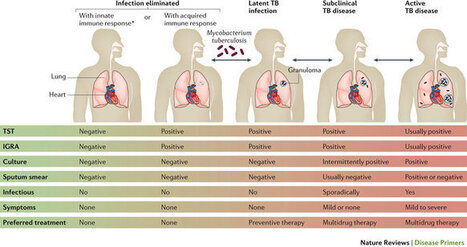
Tuberculosis (TB) is an airborne infectious disease with high morbidity and mortality rates, especially in low-income countries.
|
|
Scooped by
Gilbert C FAURE
May 31, 2017 2:53 PM
|
Journal of Proteome ResearchDOI: 10.1021/acs.jproteome.7b00121
|
|
Scooped by
Gilbert C FAURE
May 31, 2017 1:14 AM
|
Immune cells are exposed to distinct environments and nutrients that influence metabolism
that, in turn, instruct their effector functions, differentiation, and gene expression.
|
|
Scooped by
Gilbert C FAURE
May 30, 2017 2:18 AM
|
What are the changes suffered gut bacteria throughout our lives? The entire evolution of the intestinal microbiota in this article.
|
|
Scooped by
Gilbert C FAURE
May 29, 2017 4:58 AM
|
Accumulating data show that the phenotypes and functions of distinctive mucosal dendritic cells (DCs) in the gut are regulated by retinoic acid (RA). Unfortunately, the exact role of butyrate in R
|


 Scoop.it!