Your new post is loading...

|
Scooped by
Gilbert C FAURE
January 8, 2019 1:17 PM
|
![Figure][1]
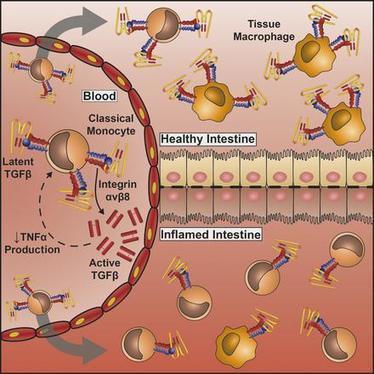
Monocytes are crucial immune cells involved in regulation of inflammation either directly or via differentiation into macrophages in tissues. However, many aspects of how their function is controlled in health and disease are not understood. Here we show that human blood monocytes activate high levels of the cytokine TGFβ, a pathway that is not evident in mouse monocytes. Human CD14+, but not CD16+, monocytes activate TGFβ via expression of the integrin αvβ8 and matrix metalloproteinase 14, which dampens their production of TNFα in response to LPS. Additionally, when monocytes differentiate into macrophages, integrin expression and TGFβ-activating ability are maintained in anti-inflammatory macrophages but down-regulated in pro-inflammatory macrophages. In the healthy human intestine, integrin αvβ8 is highly expressed on mature tissue macrophages, with these cells and their integrin expression being significantly reduced in active inflammatory bowel disease. Thus, our data suggest that integrin αvβ8–mediated TGFβ activation plays a key role in regulation of monocyte inflammatory responses and intestinal macrophage homeostasis.
[1]: pending:yes
|
|
Scooped by
Gilbert C FAURE
January 7, 2019 1:44 PM
|
Cancers (Basel). 2019 Jan 3;11(1). pii: E38. doi: 10.3390/cancers11010038.Review...
|
|
Scooped by
Gilbert C FAURE
January 6, 2019 2:51 PM
|
The NIMML tackles unsolved challenges in complex human diseases with unmet clinical needs. We combine advanced computational technologies with pre-clinical and clinical experimentation to catalyze translation of scientific discoveries into commercial applications that address unmet clinical or...

|
Suggested by
Société Francaise d'Immunologie
January 4, 2019 2:46 PM
|
The description of protective immunity in the lung has been among the harder stories of mucosal immunology to narrate. The challenge is one of how to accurately describe the distinct correlates of protection that should be promoted to ensure defence against any one of the countless pathogens faced as a consequence of a gaseous exchange that involves 2000 exchanges per day of 0·5 l or so of air. Part of the research challenge comes from the diversity of threats contained within that inhaled 1000 l: viruses, bacteria, fungal spores, particulate pollutants, smoke from cigarettes or from burning of biomass fuels.1-3 This has to be coupled to the knowledge that for an exquisitely sensitive and fragile tissue such as the lung, virtually any pathway that has been implicated in host protection, including T helper type 1 (Th1), Th2, Th9 or Th17 immunity, has equally been implicated as a mediator of pathogenic lung damage. Furthermore, there is the potential for pathogenic cytokine‐driven damage from other cell‐types including invariant natural killer T cells, γδ T cells, and type 2 and 3 innate lymphoid cells.2, 4 Uncertainty as to the nuanced calibration needed to promote lung defence versus lung immune pathogenesis necessarily imposes a note of caution in any new respiratory therapeutics or vaccination programmes. Iwanaga and Kolls have recently considered the specific example of Th17 immunity in the lung.1 They describe the evidence for a beneficial role of interleukin‐17 (IL‐17) in contexts such as infection by Mycobacterium tuberculosis, Pseudomonas aeruginosa and Aspergillus fumigatus, and hence, the potential benefits of protocols that seek to promote local immunity of this type. However, the key caveat – a major one – is, as they put it, that ‘lessons from CF [cystic fibrosis], asthma, and COPD [chronic obstructive pulmonary disease] suggest that individuals with epithelial defects due to genetic loss of ion transport or injury due to viral infection or smoking may have adverse effects from such an approach’. Another recent review has focused on the specific case of fungal infections of the lung.2 McDermott and Klein considered evidence from murine and human studies for protective and pathogenic mechanisms in response to fungi including Aspergillus fumigatus, Histoplasma capsulatum, Cryptococcus neoformans, Pneumocystis jiroveci, Blastomyces dermatitidis and Coccidioides species. Key messages that come through are, first, the diversity of different T‐cell programmes activated in these different contexts and second, the potential for immunopathology. The example of allergic bronchopulmonary aspergillosis speaks to the complexities of pulmonary protection. This is a pathology in which damage from inhalation of fungal spores is due, not to the fungal infection itself, but to an allergic pathway that has been associated with Th2, Th1 and Th17 involvement. Contemporary understanding of the pathogenic pathways driven by chemokines and cytokines such as CXCL13 and IL‐17 in chronic diseases including COPD and bronchiectasis is helping to reinterpret classic observations from histopathology, such as the concept of ‘follicular disease’ as a marker of severity.5, 6 We now see the IL‐17‐driven formation of tertiary lymphoid follicles in lung tissue as a programmatic, structural change with potential to both focus local antimicrobial protection7 yet also, enhance local inflammatory or autoimmune disease.5, 6 Some manifestations of lung inflammatory disease may be seen as examples of the autoinflammatory disease spectrum, as recently reviewed by Scambler et al.8 In this context, small molecule and biological therapies such as recombinant IL‐1 receptor antagonists, that can target inflammasome‐driven, innate pathways are likely be of benefit. Interleukin‐8 similarly offers a double‐edged sword to lung defence, both critical for a speedy neutrophilic response to pathogen presence, yet now appreciated to exhort a price of progressive lung remodelling, mucus hyper‐secretion and fibrosis with impacts on lung function and bronchial hyper‐reactivity.9 Another piece that is being slotted into this jigsaw puzzle is the competitive interplay between exogenous pathogens and the lung microbiome. For some time, functional analysis of the lung microbiome had been relatively intractable compared with the gut, due to the much lower biomass present. As more comprehensive lung microbiota analysis has become possible, both in health and in disease, the extent to which infectious and inflammatory disease processes perturb the status quo, often greatly simplifying and contracting the species diversity present, has become clear.10 While there are many unknowns, the good news is that there have never been so many therapeutic biologics on the shelf available for intelligent, hypothesis‐driven resolution of this conundrum of maintaining lung health in the face of a daily onslaught from our environment.
|
|
Scooped by
Gilbert C FAURE
January 4, 2019 2:11 AM
|
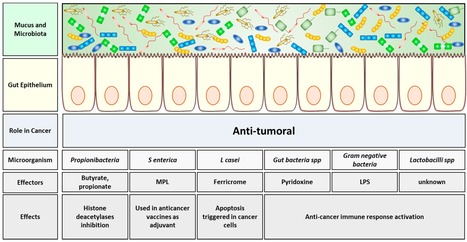
Cancer is a multifactorial pathology and it represents the second leading cause of death worldwide. In the recent years, numerous studies highlighted the dual role of the gut microbiota in preserving host’s health.
|
|
Suggested by
Société Francaise d'Immunologie
January 3, 2019 2:53 PM
|
Innate lymphoid cells (ILCs) guard epithelial tissue integrity during homeostasis, but can be potent immune effector cells during inflammation. Precursors to all ILC subsets (ILC precursors [ILCP]) have been identified in human peripheral blood (PB).
|
|
Scooped by
Gilbert C FAURE
January 2, 2019 8:55 AM
|
Non-small cell lung cancer (NSCLC) is the leading cause of cancer-related death in the world. Immunological analysis of the tumor microenvironment (immunoscore) shows great promise for improved prognosis and prediction of response to immunotherapy.
|
|
Suggested by
Société Francaise d'Immunologie
December 31, 2018 8:21 AM
|
We aimed to investigate mucosal immunity related to forkhead box P3 (FOXP3) regulatory T (Treg) cells, T helper 17 (Th17) cells and cytokines in pediatric infla...
|
|
Scooped by
Gilbert C FAURE
December 29, 2018 1:51 PM
|
J Morphol. 2018 Dec 20. doi: 10.1002/jmor.20933.[Epub ahead of print]...
|
|
Scooped by
Gilbert C FAURE
December 29, 2018 12:26 PM
|
|
|
Scooped by
Gilbert C FAURE
December 28, 2018 2:22 AM
|
|
|
Scooped by
Gilbert C FAURE
December 27, 2018 12:10 PM
|
AbstractObjectives. We report four new cases of natural killer–cell enteropathy (NKCE) and similar lymphoproliferative disorders (LPDs), as well as review the
|
|
Scooped by
Gilbert C FAURE
December 24, 2018 8:45 AM
|
![Figure][1]
Klebsiella pneumoniae , Escherichia coli , and other members of the Enterobacteriaceae family are common human pathogens that have acquired broad antibiotic resistance, rendering infection by some strains virtually untreatable. Enterobacteriaceae are intestinal residents, but generally represent <1% of the adult colonic microbiota. Antibiotic-mediated destruction of the microbiota enables Enterobacteriaceae to expand to high densities in the colon, markedly increasing the risk of bloodstream invasion, sepsis, and death. Here, we demonstrate that an antibiotic-naive microbiota suppresses growth of antibiotic-resistant clinical isolates of Klebsiella pneumoniae , Escherichia coli , and Proteus mirabilis by acidifying the proximal colon and triggering short chain fatty acid (SCFA)–mediated intracellular acidification. High concentrations of SCFAs and the acidic environment counter the competitive edge that O2 and NO3 respiration confer upon Enterobacteriaceae during expansion. Reestablishment of a microbiota that produces SCFAs enhances clearance of Klebsiella pneumoniae , Escherichia coli , and Proteus mirabilis from the intestinal lumen and represents a potential therapeutic approach to enhance clearance of antibiotic-resistant pathogens.
[1]: pending:yes
|
|
|
Scooped by
Gilbert C FAURE
January 8, 2019 6:39 AM
|
|
|
Scooped by
Gilbert C FAURE
January 6, 2019 2:52 PM
|
J Transl Med. 2019 Jan 3;17(1):3. doi: 10.1186/s12967-018-1760-8.Review...
|
|
Scooped by
Gilbert C FAURE
January 6, 2019 11:21 AM
|
Innate lymphoid cells (ILCs) guard epithelial tissue integrity during homeostasis, but can be potent immune effector cells during inflammation. Precursors to all ILC subsets (ILC precursors [ILCP]) have been identified in human peripheral blood (PB). We found that during homeostasis, ILCP in PB of mouse and human expressed homing receptors for secondary lymphoid organs, mainly CD62L. These ILCP entered mouse lymph nodes in a CD62L-dependent way and relied on S1P receptors for their exit. Importantly, CD62L expression was absent on human ILCs expressing NKp44 in tonsils and PB of Crohn disease patients, and relatively fewer CD62L+ ILCP were present in PB of Crohn disease patients. These data are in agreement with selective expression of CD62L on nonactivated ILCP. As such, we conclude that CD62L not only serves as a functional marker of ILCP, but has potential to be used in the clinic as a diagnostic marker in inflammatory disorders.
|
|
Scooped by
Gilbert C FAURE
January 4, 2019 1:45 PM
|
Author summary SIgAs exist as mainly dimers and tetramers and play critical roles in mucosal immune responses against influenza. Detailed characterization of these anti-viral SIgA is important for better understanding of the mechanisms underlying anti-viral immunity.
|
|
Suggested by
Société Francaise d'Immunologie
January 3, 2019 2:53 PM
|
![Figure][1]</img> [1]: pending:yes...
|
|
Scooped by
Gilbert C FAURE
January 3, 2019 1:34 PM
|
A comprehensive single-cell analysis of the lung cancer microenvironment reveals marked heterogeneity of transcriptional networks that defines novel clinically relevant stromal cell populations.
|
|
Scooped by
Gilbert C FAURE
January 2, 2019 8:54 AM
|
Objective Genetic susceptibility for sarcoidosis and LS has been associated with prognosis. HLA‐DRB1*03 is overrepresented in LS, and is associated with a good prognosis, whereas HLA‐DRB1*15 positive patients have a more chronical course of sarcoidosis. These HLA‐DRB1 types can be easily tagged by single nucleotide polymorphisms (SNPs). Our aim was to evaluate the association between these tag SNPs and BAL characteristics. Methods In 29 patients both complete HLA‐DRB1* locus genotyping and SNP tagging was performed in parallel. HLA‐DRB1 type was inferred from the presence of *03 tag rs2040410 allele A and reffered to as *03. HLA‐DRB1*15 was inferred from the presence of tag SNP rs3135388 allele A and referred to as*15. For BAL analysis, 122 patients with LS and 165 patients with non‐LS sarcoidosis were included. BAL lymphocyte subsets were analyzed by flow cytometry. Results The presence of tag SNPs completely corresponded with HLA‐DRB1*03/*15 genotypes in all 29 patients in whom both HLA‐DRB1* genotyping and SNP tagging was performed. In all patients together, *03+/*15‐ patients showed higher CD4+/CD8+ ratio than *03‐/*15+ (p=0.004) and *03‐/*15‐ (p=0.001). LS patients with *03+/*15‐ had lower BAL lymphocyte count compared to *03‐/*15+ patients (p=0.011). Non‐LS sarcoidosis patients with *03+/*15‐ patients showed a decreased CD103+CD4+/CD4+ ratio compared to *03‐/*15+ patients (p=0.045) and *03‐/*15‐ patients (p=0.018). Conclusion We found that HLA‐DRB1*03 and HLA‐DRB1*15 can be approximated by genotyping of tag SNPs and corresponds with the degree of lymphocytosis and cell phenotypes in BAL in both LS and non‐LS sarcoidosis patients. This article is protected by copyright. All rights reserved.
|
|
Scooped by
Gilbert C FAURE
December 30, 2018 4:11 AM
|
|
|
Scooped by
Gilbert C FAURE
December 29, 2018 1:48 PM
|
Small bowel carcinomas (SBC) are uncommon neoplasms, whose predisposing conditions include hereditary syndromes and immune-mediated intestinal disorders including coeliac disease (CD) and Crohn’s disease (CrD).
|
|
Suggested by
Société Francaise d'Immunologie
December 29, 2018 6:09 AM
|
Severe inflammation in tissues is often associated with the occurrence of cancer. The mechanism linking both these conditions is not clearly understood. Furthermore, inflamed and cancerous tissues contain a heterogenous mix of damaged and protective cells.
|
|
Scooped by
Gilbert C FAURE
December 27, 2018 3:01 PM
|
The human body is host to large numbers of bacteriophages (phages)–a diverse group of bacterial viruses that infect bacteria. Phage were previously regarded as bystanders that only impacted immunity indirectly via effects on the mammalian microbiome.
|
|
Scooped by
Gilbert C FAURE
December 26, 2018 6:46 AM
|
Cystic fibrosis (CF) is a rare disease most commonly seen in Caucasians. Only a few Chinese CF patients have been described in literature, taking into account the large population of China. In this systematic review, we collected the clinical and genetic information of 71 Chinese CF patients based...
|