Your new post is loading...

|
Scooped by
Gilbert C FAURE
September 12, 2025 4:38 AM
|
|
|
Scooped by
Gilbert C FAURE
September 9, 2025 7:38 AM
|
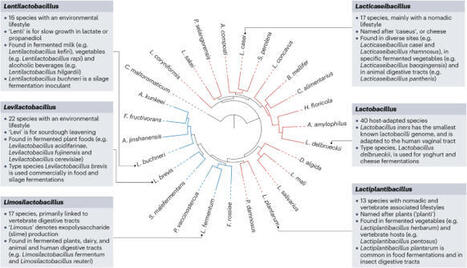
Lactobacilli encompass more than 300 species, spanning 25 genera, found in the microbiomes of humans, animals and plants with relevance in agriculture, foods and medicine. Lactobacilli comprise all bacteria previously assigned to the Lactobacillus genus and, similar to other lactic acid bacteria, are characterized by their saccharolytic, fermentation-energy metabolism and diverse enzymatic pathways that support redox balance and maintain intracellular pH. Some lactobacilli are pervasive in dairy, meat and plant foods, where they either contribute to spoilage and food waste or are desired and necessary for the production of fermented foods and animal feed. Strains of lactobacilli are the most applied probiotics tested in clinical studies. The study of host-associated intestinal and vaginal microbiomes has demonstrated that lactobacilli drive epithelial and immune cell responses, resulting in mainly beneficial effects on host health. This Review explores both established and emerging concepts related to this group of microorganisms. It highlights central tenants of their genetic diversity, metabolism, stress tolerance and distribution across host-associated microbiomes, as well as their importance in fermented foods and in health modulation as probiotics. With this accumulated knowledge, there remain substantial opportunities for expanded application of lactobacilli across different domains relevant to food production and health. Lactobacilli are important members of human, animal and insect microbiomes and are prominent in food fermentations. In this Review, Mejía-Caballero and Marco explore the diversity of lactobacilli, focusing on their fundamental traits and their applications in foods and medicine.
|
|
Scooped by
Gilbert C FAURE
August 21, 2025 8:37 AM
|
|
|
Scooped by
Gilbert C FAURE
August 12, 2025 10:12 AM
|
|
|
Scooped by
Gilbert C FAURE
August 11, 2025 2:18 PM
|
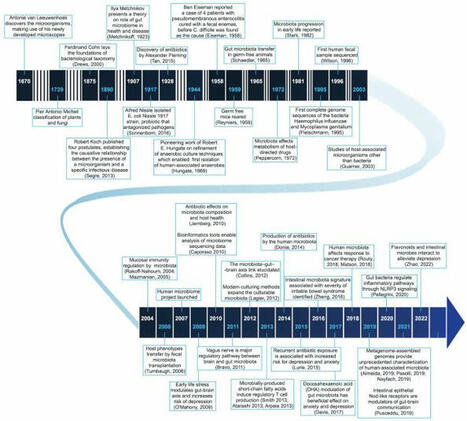
Timeline of major research and development milestones related to the microbiome
Here’s a snapshot of how we got from Antonie van Leeuwenhoek’s first look at microbes to the "multi-omics era" shaping personalized medicine today:
📜 1670s – Antonie van Leeuwenhoek observes microorganisms for the first time.
🌱 1729 – Pier Antonio Micheli pioneers fungal classification.
🦠 1880s–1900s – Robert Koch formalizes germ theory; Alfred Nissle isolates the first probiotic E. coli strain.
💊 1928 – Alexander Fleming discovers antibiotics.
🧫 1958 – Ben Eiseman reports success with fecal microbiota transplants (FMT) in treating C. difficile.
🧪 1972 – First germ-free mice raised to study host–microbe interactions.
🧬 1995 – First complete bacterial genome sequenced (Haemophilus influenzae).
🌍 2007 – Human Microbiome Project launched.
🔄 2013 – FMT enters modern clinical practice for recurrent C. difficile.
🧠 2016–2020 – Studies link microbiota to cancer therapy response, depression, and gut–brain signaling.
🧷 2022 – Metagenome-assembled genomes expand our catalog of microbial diversity; dietary flavonoids shown to alleviate depressive symptoms.
https://lnkd.in/gqrz3nUD
|
|
Scooped by
Gilbert C FAURE
August 7, 2025 1:49 PM
|
|
|
Scooped by
Gilbert C FAURE
August 4, 2025 11:07 AM
|
|
|
Scooped by
Gilbert C FAURE
July 28, 2025 3:27 AM
|
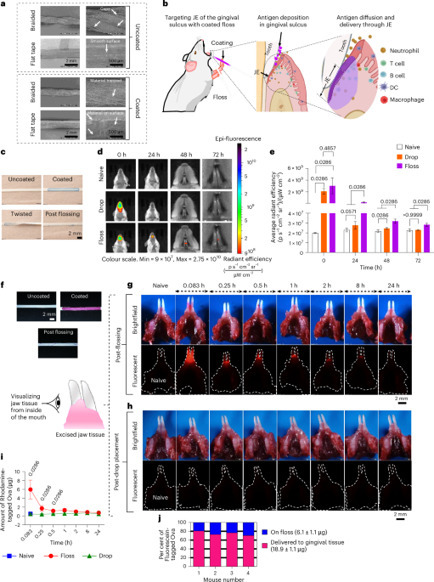
Floss-based vaccination targets the gingival sulcus for mucosal and systemic immunization - Nature Biomedical Engineering
|
|
Scooped by
Gilbert C FAURE
July 18, 2025 10:24 AM
|
|
|
Scooped by
Gilbert C FAURE
July 7, 2025 1:11 PM
|
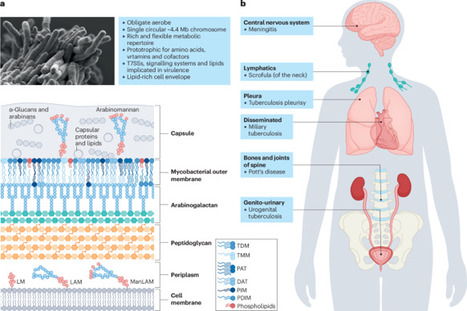
Since the release of the first Mycobacterium tuberculosis genome in 1998, major advances have been made in understanding the biology of this pathogen, the leading infectious cause of death in modern human history. In this Review, we outline the physiological and metabolic features thought to underpin the survival, evasion and subversion strategies employed by M. tuberculosis as it drives a cycle of transmission, infection and disease in its obligate human host. We also consider adaptations to key host innate immune effectors, including the roles of granulocytes, phagosomal damage and repair, autophagy and cell death in determining host–mycobacterium outcomes. Given the increasing awareness of the importance of asymptomatic M. tuberculosis infection and transmission, we advocate for the need to ensure greater intersection between laboratory and clinical research, taking into account the environmental context in which natural infection and disease occur. We identify knowledge gaps in the field and reflect on the opportunities and challenges for integrating host, bacterium and environment into future investigations to inform intervention strategies to control tuberculosis disease. In this Review, Warner, Barczak, Gutierrez and Mizrahi explore essential aspects of Mycobacterium tuberculosis physiology and biology, present recent advances related to its pathogenesis, metabolism and immune evasion mechanisms, and propose future directions for research.
|
|
Scooped by
Gilbert C FAURE
June 30, 2025 8:01 AM
|
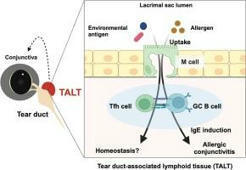
Tear duct M cells exacerbate allergic conjunctivitis by facilitating germinal-center reactions
|
|
Scooped by
Gilbert C FAURE
June 29, 2025 12:04 PM
|
|
|
Scooped by
Gilbert C FAURE
June 26, 2025 8:10 AM
|
Distal airway epithelial progenitors mediate TGF-β release to drive lung CD8+ TRM induction following mucosal BCG vaccination
|
|
|
Scooped by
Gilbert C FAURE
September 11, 2025 1:06 PM
|
🚰🐔 Drinking Water Vaccination in Poultry – Proper SOPs for Success
Mass vaccination of a flock via drinking water is one of the most practical, less stressful, and commonly used methods in poultry farms. But to achieve protection against diseases, strict SOPs must be followed.
Here’s a complete overview 👇
---
1️⃣ Drinking Water Vaccination
The goal is simple: every bird in the flock must receive the correct vaccine dose.
✅ Calculate water intake based on bird age (see standard tables).
✅ Vaccine water should be consumed within 1.5–2 hours.
✅ Withhold water for 1 hour before vaccination to encourage uniform drinking.
✅ Neutralize chlorine/heavy metals in water (using skimmed milk powder or vaccine stabilizer).
2️⃣ Storage & Transportation of Vaccine
📦 Vaccines must be handled with extreme care:
Store at 2–8°C (35–46°F) in a dedicated fridge.
Transport in a cool box with ice packs, keeping 4–8°C constant.
Only transport the required doses.
🛠️ Equipment Needed:
Clean container (80L approx.)
Vaccination can/water proportioner (5–10L)
Measuring jug, bucket, stirrer
Skimmed milk (stabilizer)
💡 Administration Steps:
1. Prepare vaccines on a clean surface using disposable gloves.
2. Neutralize chlorine (stock solution, 20 min wait).
3. Mix vaccine gently in water and distribute evenly.
4. Ensure all drinkers/nipples are filled before lowering.
5. Walk the flock to encourage uniform drinking.
6. Vaccine water must be consumed within 2 hours.
---
3️⃣ Evaluation of Drinking Water Vaccination
After vaccination, it’s critical to check how well the flock received the vaccine:
🔹 Dye Test: Add dye tablets with vaccine water. Birds’ tongues should stain blue. At least 90% of sampled birds should show staining.
🔹 Serology (ELISA/HI): Take blood samples from 20 random birds after ~3 weeks to measure antibody titers.
📊 Good Response Indicators:
High antibody titers
Coefficient of variation (CV) < 50%
Uniform flock immunity
---
✅ Conclusion
Drinking water vaccination is simple, quick, and flock-friendly. When SOPs are followed properly—from storage → preparation → administration → evaluation—the benefits are clear:
✔️ Better growth & weight gain
✔️ Higher egg production
✔️ Improved uniformity
✔️ Stronger disease resistance
---
💬 What’s your experience with drinking water vaccination in poultry?
#Poultry #AnimalHealth #Vaccination #Veterinary #SOPs #PoultryFarming
|
|
Scooped by
Gilbert C FAURE
September 4, 2025 11:54 AM
|
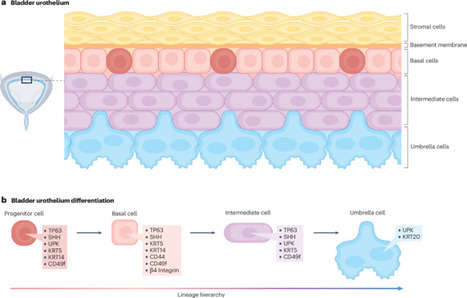
Cellular plasticity, the ability of cells to reprogramme and alter their fate, has a pivotal role in maintaining homeostasis and facilitating tissue regeneration after injury. The bladder urothelium, a dynamic transitional epithelial layer, displays a highly plastic phenotype that enables its remarkable regenerative capacity in response to wounding. During both development and repair, urothelial cells exhibit considerable plasticity through processes such as dedifferentiation, transdifferentiation and epithelial-to-mesenchymal transition. Urothelial plasticity is not only crucial for healthy tissue repair but is also involved in pathological conditions, including cancer. In bladder tumorigenesis, urothelial cells exploit plasticity to acquire new phenotypic and functional characteristics, transitioning between distinct cellular states. This plasticity contributes to tumour heterogeneity, subtype switching, progression, metastasis and resistance to therapies. These dynamic cellular transitions are regulated by intrinsic and extrinsic factors, including transcriptional and epigenetic mechanisms, as well as microenvironmental influences. Targeting urothelial plasticity could offer novel therapeutic strategies for bladder-related diseases. In this Review the authors describe current knowledge on cellular plasticity in the bladder urothelium, emphasizing its role in bladder repair and tumorigenesis, and explore the molecular mechanisms of urothelial plasticity and discuss its potential as a novel therapeutic target for bladder-related diseases.
|
|
Scooped by
Gilbert C FAURE
August 14, 2025 3:35 AM
|
|
|
Scooped by
Gilbert C FAURE
August 12, 2025 3:25 AM
|
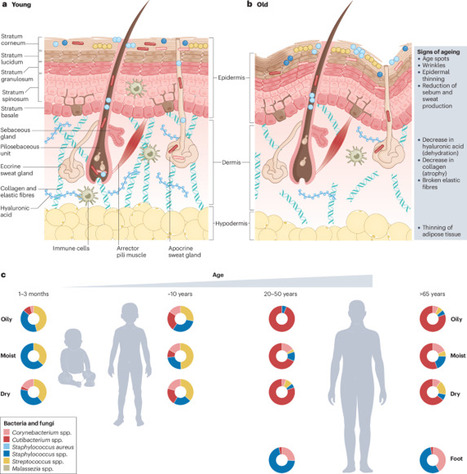
The skin microbiome is composed of a diverse community of microorganisms, including bacteria, fungi, viruses and mites. These microorganisms have a crucial role in maintaining skin health, protecting against pathogens and modulating immune responses. In recent years, our understanding of the skin microbiome has expanded substantially with the deployment of metagenomic sequencing. This technology, by reconstructing microbial species, strains and gene pathways in the microbiomes of different cohorts, has led to identification of numerous therapeutic targets and thus propelled the development of therapeutic approaches that are aimed at leveraging these microorganisms to treat skin conditions and to improve skin health. In this Review, we discuss the composition, ecology, functions and therapeutic horizons of the human skin microbiome, presenting examples of studies that highlight potential therapeutic targets in the skin microbiome, ongoing progress in the development of skin microbiome-based therapeutics and challenges. In this Review, Oh and Voigt explore the major characteristics and functions of the skin microbiome, and they highlight potential therapeutic targets in the skin microbiome and ongoing progress in the development of skin microbiome-based therapeutics.
|
|
Scooped by
Gilbert C FAURE
August 8, 2025 3:38 AM
|
|
|
Scooped by
Gilbert C FAURE
August 5, 2025 5:05 AM
|
STI Vaccines at #STIHIV2025 #IUSTI #ISSTDR
Professor Helen Rees
- HPV Vaccine uptakes rising with move to 1-dose and the pipeline of therapeutic HPV vaccines promising
- Syphilis vaccine candidates but all preclinical phase
- Herpes simplex vaccine candidates - preclinical phase
- Gonorrhoea - 4CMenB may be useful (~30-40% effective)
- Chlamydia - preclinical phase.
- Trichomoniasis - preclinical phase.
- Mpox - 3 licensed vaccines (originally for small pox) - access remains an issue
- Vaccine hesitancy needs to be addressed. Convenience. Complacency. Convenience. Context.
Professor Sanjay Ram
- Chlamydia: "bacteria that thinks it is a virus".
majority would generate antibodies against chlamydia but does not affect chance of reinfection.
high titres of antibodies may be associated with greater complications (PID).
Mice model - CD4 cells are important for clearing genital infection.
- Syphilis
previous syphilis can alter course of subsequent episode of syphilis
- Gono
No immunity following gonococcal infection.
Intravacc (intranasal) vaccine, LimmaTech Biologics "6-in-1" vaccine might be promising.
|
|
Scooped by
Gilbert C FAURE
July 28, 2025 9:55 AM
|
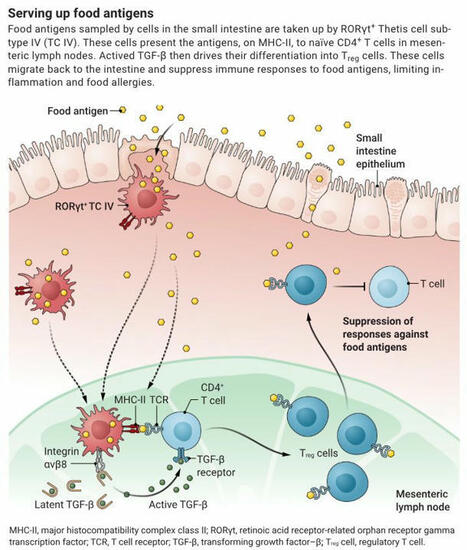
Throughout life, everyone is exposed to foreign antigens that enter the body through the skin, lungs, and gut. In particular, early life sees the ingestion of many new types of food and encounters with microbes that colonize mucosal tissues. How immune systems learn to “tolerate” foreign antigens, yet remain quickly responsive to other threats such as pathogenic viruses and bacteria, remains an unsolved problem in immunology.
In a new Science study, researchers describe a key piece of the puzzle. The authors identify a subtype of antigen-presenting cells (APCs) in the mesenteric lymph nodes in mice that help train regulatory T cells (Treg cells) to suppress inflammatory responses to food antigens in the period around weaning. The identification of this APC subtype potentially opens the door to the development of therapies for food-associated allergies and inflammatory diseases.
Learn more in a new #SciencePerspective: https://scim.ag/44zUUSK | 10 comments on LinkedIn
|
|
Scooped by
Gilbert C FAURE
July 25, 2025 3:31 AM
|
|
|
Scooped by
Gilbert C FAURE
July 11, 2025 8:32 AM
|
|
|
Scooped by
Gilbert C FAURE
June 30, 2025 8:04 AM
|
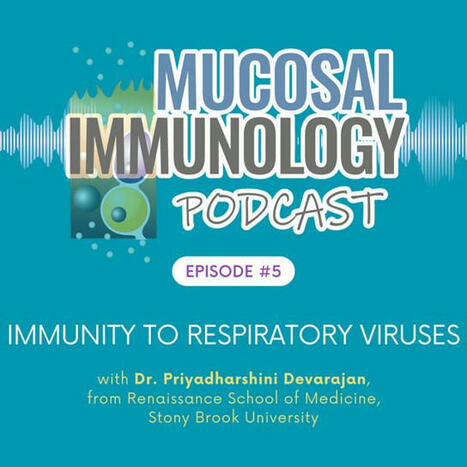
Immunity to respiratory viruses
|
|
Scooped by
Gilbert C FAURE
June 30, 2025 7:55 AM
|
|
|
Scooped by
Gilbert C FAURE
June 29, 2025 7:30 AM
|
A review of currently licensed mucosal COVID-19 vaccines
|


 Scoop.it!