by Stacey M. Hartwig, Kaitlyn M. Holman, Steven M. Varga Coronaviruses cause respiratory disease in humans that can range from mild to severe. However, the pathogenesis of pulmonary coronavirus infections is poorly understood.
Chronic rhinosinusitis with nasal polyps more severe in women Family Practice News Digital Network "We thought we would find that CRSwNP was more prevalent and severe in women, especially because these patients have asthma and some features of...
by Patrick Kaiser, Roland R. Regoes, Tamas Dolowschiak, Sandra Y. Wotzka, Jette Lengefeld, Emma Slack, Andrew J. Grant, Martin Ackermann, Wolf-Dietrich Hardt In vivo, antibiotics are often much less efficient than ex vivo and relapses can occur.
by Young-Wook Kim, Young-Ju Jeong, Ah-Young Kim, Hyun-Hee Son, Jong-Am Lee, Cheong-Hwan Jung, Chae-Hyun Kim, Jaeman Kim Five novel Lactobacillus brevis strains were isolated from naturally fermented Aloe vera leaf flesh.
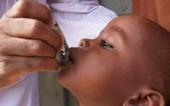
CIDRAP UNICEF, WHO push for inactivated polio vaccine CIDRAP "Adding an IPV dose will boost both humoral and mucosal immunity against poliovirus type 1 and 3, which may also hasten the eradication of these WPVs." For polio-endemic countries and...
The United Nations Children's Fund (UNICEF) recently announced that inactivated polio vaccine (IPV) will be available to low-income countries for as little as $1 a dose, as global health groups push for introducing the vaccine into routine immunization programs by the end of next year.
The Feb 28 announcement was made the same day the World Health Organization (WHO) issued an updated position paper on polio vaccines, calling for using IPV to guard against the possible risk of re-emergence of type 2 polio after the withdrawal of oral type 2 vaccines.
The European Centre for Disease Prevention and Control (ECDC) chimed in on the same day with recommendations for detecting and controlling polio in Europe, in response to the recent detection of wild-type polio viruses in Israel and an outbreak of the disease in war-torn Syria.
At the 'Autoimmunity Congress Asia' in Hong Kong on 21 Nov 2013, Professor Trevor Marshall's plenary presentation was "The Interactome lies at the heart of t...
$8.4 Million Grant for Studying Sinus Infection WIFR CHICAGO (AP) -- Research on a type of long-lasting sinus infection is getting a boost at Northwestern Medicine in Chicago.
PubMed comprises more than 23 million citations for biomedical literature from MEDLINE, life science journals, and online books. Citations may include links to full-text content from PubMed Central and publisher web sites.
Sweet taste receptors in nose tell immune system when to kick in, Penn team finds Newsworks.org One implication of this finding is that more mucosal sugar might prevent this critical immune response from occurring -- and protecting the nose.
Fine-tuning Salmonella-based Vaccines Lab Manager Magazine Salmonella-based vaccines are capable of powerfully stimulating mucosal, humoral and cellular immunity against invasive pathogens, but to be effective, the vaccine cargo ships – the...
Merck introduces Once PMH® IN Dairy Herd Management “The intranasal administration of Once PMH® IN stimulates a strong immune response because vaccine antigens are delivered directly to mucosal surfaces in the nose – the major sites of immune...
The literature indicated that many bacterial species can become tolerant to antibiotics by switching to slow rates of growth. To find out whether S. Tm. also acquires tolerance through slow growth rates, Kaiser et al. constructed a population dynamics–based simulation for cLN bacterial growth and compared its predictions to data from actual infections. This approach, and subsequent experiments tracking plasmid retention in S. Tm., demonstrated the existence of a slow-growing subpopulation of S. Tm. cells in the cLN. Ultimately, the authors concluded that such slow-growing cells, living within classical dendritic cells, are responsible for relapses in complicated S. Tm. infections.
PLOS Biology is an open-access, peer-reviewed journal that features works of exceptional significance in all areas of biological science, from molecules to ecosystems, including works at the interface with other disciplines.
An intricate network of innate and immune cells and their derived mediators function in unison to protect us from toxic elements and infectious microbial diseases that are encountered in our environment. This vast network operates efficiently by use of a single cell epithelium in, for example, the gastrointestinal (GI) and upper respiratory (UR) tracts, fortified by adjoining cells and lymphoid tissues that protect its integrity. Perturbations certainly occur, sometimes resulting in inflammatory diseases or infections that can be debilitating and life threatening. For example, allergies in the eyes, skin, nose, and the UR or digestive tracts are common. Likewise, genetic background and environmental microbial encounters can lead to inflammatory bowel diseases (IBDs). This mucosal immune system (MIS) in both health and disease is currently under intense investigation worldwide by scientists with diverse expertise and interests. Despite this activity, there are numerous questions remaining that will require detailed answers in order to use the MIS to our advantage.
by Achraf Al Faraj, Asma Sultana Shaik, Mary Angeline Pureza, Mohammad Alnafea, Rabih Halwani Noninvasive imaging of macrophages activity has raised increasing interest for diagnosis of chronic obstructive respiratory diseases (COPD), which make...
PLOS ONE: an inclusive, peer-reviewed, open-access resource from the PUBLIC LIBRARY OF SCIENCE. Reports of well-performed scientific studies from all disciplines freely available to the whole world.
Epithelial barrier dysfunction in the lower airway contributes to disease Healio SAN DIEGO — The dysregulation of bronchial epithelium tissue homeostasis can contribute to disease pathologies, according to data presented here at the American...
Extracellular cysteine proteases cleave immune secretory IgA (facilitating adhesion of the organism (pathogen) to mucosal surfaces), degrade the extracellular matrix, activate complement, and degrade IgG to circumvent the ...
The significance of low secretory IgA (SIgA) has always been of great interest to clinicians, but we have never seen such consistently low sIgA reported as we do now with the Diagnostic Research Group (DRG) GI pathogen profile.
by Hannah K. Bayes, Stephen Bicknell, Gordon MacGregor, Tom J. Evans Background We set out to determine the magnitude of antigen-specific memory T helper cell responses to Pseudomonas aeruginosa in healthy humans and patients with cystic fibrosis.
Investigational nasal pertussis vaccine shows promise Healio Nasal aspirates also were collected at days 4, 7, 11, 14, 28 and, if needed, 45 after vaccination, to evaluate colonization by BPZE 1 of the nasopharyngeal mucosa.
To get content containing either thought or leadership enter:
To get content containing both thought and leadership enter:
To get content containing the expression thought leadership enter:
You can enter several keywords and you can refine them whenever you want. Our suggestion engine uses more signals but entering a few keywords here will rapidly give you great content to curate.


 Your new post is loading...
 Scoop.it!