Your new post is loading...

|
Scooped by
Gilbert C FAURE
October 24, 2023 11:46 AM
|
Inflammatory bowel disease (IBD) is a chronic inflammatory intestinal disease that affects more than 3.5 million people, with rising prevalence. It deeply affects patients’ daily life, increasing the burden on patients, families, and society.
|
|
Scooped by
Gilbert C FAURE
October 24, 2023 2:00 AM
|
Five Bacteria You Should Know About Their Role In Human Cancer
1- Helicobacter pylori binds to gastric epithelial cells and injects a virulence factor, which… | 42 comments on LinkedIn
|
|
Scooped by
Gilbert C FAURE
October 12, 2023 3:57 AM
|
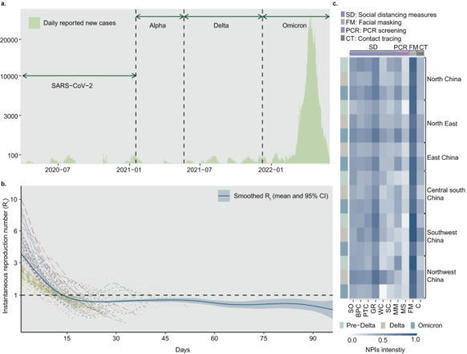
Targeted public health interventions for an emerging epidemic are essential for preventing pandemics. During 2020-2022, China invested significant efforts in strict zero-COVID measures to contain outbreaks of varying scales caused by different SARS-CoV-2 variants. Based on a multi-year empirical dataset containing 131 outbreaks observed in China from April 2020 to May 2022 and simulated scenarios, we ranked the relative intervention effectiveness by their reduction in instantaneous reproduction number. We found that, overall, social distancing measures (38% reduction, 95% prediction interval 31-45%), face masks (30%, 17-42%) and close contact tracing (28%, 24-31%) were most effective. Contact tracing was crucial in containing outbreaks during the initial phases, while social distancing measures became increasingly prominent as the spread persisted. In addition, infections with higher transmissibility and a shorter latent period posed more challenges for these measures. Our findings provide quantitative evidence on the effects of public-health measures for zeroing out emerging contagions in different contexts. China maintained a ‘zero-COVID’ policy from early in the pandemic until late 2022 that employed various public health interventions with the aim of COVID-19 containment. Here, the authors use data from 131 outbreaks in China to estimate the effects of a range of interventions against different SARS-CoV-2 variants in diverse settings.
|
|
Scooped by
Gilbert C FAURE
October 6, 2023 5:57 AM
|
|
|
Scooped by
Gilbert C FAURE
September 25, 2023 11:50 AM
|
|
|
Scooped by
Gilbert C FAURE
September 24, 2023 11:16 AM
|
|
|
Scooped by
Gilbert C FAURE
September 11, 2023 6:18 AM
|
Researchers have mapped the complex structures of secretory immunoglobulin A (sIgA) in interaction with human CD89 and Streptococcus pyogenes M4, offering new insights into how our first line of mucosal defense operates.

|
Suggested by
LIGHTING
August 19, 2023 5:11 AM
|
One of the most preferable characteristics for a COVID-19 vaccine candidate is the ability to reduce transmission and infection of SARS-CoV-2, in addition to disease prevention. Unlike intramuscular vaccines, intranasal COVID-19 vaccines may offer this by generating mucosal immunity. In this open-label, randomised, multicentre, phase 3 clinical trial (CTRI/2022/02/40065; ClinicalTrials.gov: NCT05522335), healthy adults were randomised to receive two doses, 28 days apart, of either intranasal adenoviral vectored SARS-CoV-2 vaccine (BBV154) or licensed intramuscular vaccine, Covaxin®. Between April 16 and June 4, 2022, we enrolled 3160 subjects of whom, 2971 received 2 doses of BBV154 and 161 received Covaxin. On Day 42, 14 days after the second dose, BBV154 induced significant serum neutralization antibody titers against the ancestral (Wuhan) virus, which met the pre-defined superiority criterion for BBV154 over Covaxin®. Further, both vaccines showed cross protection against Omicron BA.5 variant. Salivary IgA titers were found to be higher in BBV154. In addition, extensive evaluation of T cell immunity revealed comparable responses in both cohorts due to prior infection. However, BBV154 showed significantly more ancestral specific IgA-secreting plasmablasts, post vaccination, whereas Covaxin recipients showed significant Omicron specific IgA-secreting plasmablasts only at day 42. Both vaccines were well tolerated. Overall reported solicited reactions were 6.9% and 25.5% and unsolicited reactions were 1.2% and 3.1% in BBV154 and Covaxin® participants respectively.
|
|
Scooped by
Gilbert C FAURE
August 8, 2023 10:37 AM
|
Abstract. Mucosal-associated invariant T (MAIT) cells are unconventional T cells with innate-like antimicrobial responsiveness.MAIT cells are known for MR1 (MH...
|
|
Scooped by
Gilbert C FAURE
July 30, 2023 6:37 AM
|
New mapping effort, using spatial technology, reveals the organization of the human intestine at single-cell resolution for the first time.
|
|
Scooped by
Gilbert C FAURE
July 27, 2023 11:57 AM
|
|
|
Scooped by
Gilbert C FAURE
July 26, 2023 10:05 AM
|
We analyze the ability of breast milk–derived immunoglobulin A (IgA) antibodies to bind bacteria commonly found within the preterm infant intestinal microbiota.
|
|
Scooped by
Gilbert C FAURE
July 24, 2023 2:44 AM
|
medRxiv - The Preprint Server for Health Sciences
|
|
|
Scooped by
Gilbert C FAURE
October 24, 2023 11:43 AM
|
Article Text Article menu PDF Recent advances in clinical practice Different levels of healing in inflammatory bowel diseases: mucosal, histological, transmural, barrier and complete healing http://orcid.org/0000-0003-4344-1474Markus F Neurath1, Michael Vieth2 Medical Clinic 1 & Deutsches Zentrum Immuntherapie DZI, Friedrich-Alexander-Universität Erlangen-Nürnberg, Erlangen, Germany Pathology Clinic, Klinikum Bayreuth GmbH, Friedrich-Alexander-Universität Erlangen-Nürnberg, Bayreuth, Germany Correspondence to Professor Markus F Neurath, First Department of Medicine, Friedrich-Alexander-Universität Erlangen-Nürnberg, Erlangen, D-91054, Germany; markus.neurath{at}uk-erlangen.de Abstract Mucosal healing on endoscopy has emerged as a key prognostic parameter in the management of patients with IBD (Crohn’s disease, ulcerative colitis/UC) and can predict sustained clinical remission and resection-free survival. The structural basis for this type of mucosal healing is a progressive resolution of intestinal inflammation with associated healing of ulcers and improved epithelial barrier function. However, in some cases with mucosal healing on endoscopy, evidence of histological activity in mucosal biopsies has been observed. Subsequently, in UC, a second, deeper type of mucosal healing, denoted histological healing, was defined which requires the absence of active inflammation in mucosal biopsies. Both levels of mucosal healing should be considered as initial events in the resolution of gut inflammation in IBD rather than as indicators of complete transmural healing. In this review, the effects of anti-inflammatory, biological or immunosuppressive agents as well as small molecules on mucosal healing in clinical studies are highlighted. In addition, we focus on the implications of mucosal healing for clinical management of patients with IBD. Moreover, emerging techniques for the analysis of mucosal healing as well as potentially deeper levels of mucosal healing such as transmural healing and functional barrier healing of the mucosa are discussed. Although none of these new levels of healing indicate a definitive cure of the diseases, they make an important contribution to the assessment of patients’ prognosis. The ultimate level of healing in IBD would be a resolution of all aspects of intestinal and extraintestinal inflammation (complete healing). http://dx.doi.org/10.1136/gutjnl-2023-329964 Statistics from Altmetric.com Request Permissions If you wish to reuse any or all of this article please use the link below which will take you to the Copyright Clearance Center’s RightsLink service. You will be able to get a quick price and instant permission to reuse the content in many different ways. View Full Text FootnotesContributors MFN wrote the draft of the paper, designed figures and performed literature searches. MV provided histological images, discussed findings and wrote parts of the manuscript.Funding The research of MFN has been supported by the DFG SFB1181 and TRR241.Competing interests MFN served as an advisor to Pentax, PPM, Janssen, Takeda, AbbVie, Boehringer and Pfizer.Provenance and peer review Commissioned; externally peer reviewed. Read the full text or download the PDF: Subscribe Log in
|
|
Scooped by
Gilbert C FAURE
October 12, 2023 11:46 AM
|
HIV-1 infection causes severe alterations of gut mucosa, microbiota and immune system, which can be curbed by early antiretroviral therapy. Here, we investigate how treatment timing affects intestinal memory B-cell and plasmablast repertoires of HIV-1-infected humans. We show that only class-switched memory B cells markedly differ between subjects treated during the acute and chronic phases of infection. Intestinal memory B-cell monoclonal antibodies show more prevalent polyreactive and commensal bacteria-reactive clones in late- compared to early-treated individuals. Mirroring this, serum IgA polyreactivity and commensal-reactivity are strongly increased in late-treated individuals and correlate with intestinal permeability and systemic inflammatory markers. Polyreactive blood IgA memory B cells, many of which egressed from the gut, are also substantially enriched in late-treated individuals. Our data establish gut and systemic B-cell polyreactivity to commensal bacteria as hallmarks of chronic HIV-1 infection and suggest that initiating treatment early may limit intestinal B-cell abnormalities compromising HIV-1 humoral response. HIV-1 infection is known to impact the gut mucosa, effecting the microbiota and immune system, but early antiretroviral therapy is linked to partial reversal of this phenomena. Here the authors explore the impact of early commencement of antiretroviral therapy and show this can limit the abnormal responses of intestinal B cells associated with HIV-1 infection.
|
|
Scooped by
Gilbert C FAURE
October 7, 2023 1:32 PM
|
|
|
Scooped by
Gilbert C FAURE
September 30, 2023 5:07 AM
|
Biopharmaceuticals, including proteins and peptides, have revolutionized the treatment of a wide range of diseases, from diabetes and cardiovascular disorders to virus infections and cancer.Despite their efficacy, most of these macromolecular drugs require parenteral administration because of their...
|
|
Scooped by
Gilbert C FAURE
September 25, 2023 11:38 AM
|
The human oral microbiota is highly diverse and has a complex ecology, comprising bacteria, microeukaryotes, archaea and viruses. These communities have elaborate and highly structured biogeography that shapes metabolic exchange on a local scale and results from the diverse microenvironments present in the oral cavity. The oral microbiota also interfaces with the immune system of the human host and has an important role in not only the health of the oral cavity but also systemic health. In this Review, we highlight recent advances including novel insights into the biogeography of several oral niches at the species level, as well as the ecological role of candidate phyla radiation bacteria and non-bacterial members of the oral microbiome. In addition, we summarize the relationship between the oral microbiota and the pathology of oral diseases and systemic diseases. Together, these advances move the field towards a more holistic understanding of the oral microbiota and its role in health, which in turn opens the door to the study of novel preventive and therapeutic strategies. In this Review, He and co-workers explore the structure and diversity of the oral microbiota, and they discuss the role of the oral microbiota in the pathology of both oral and systemic diseases.
|
|
Scooped by
Gilbert C FAURE
September 21, 2023 1:25 PM
|
Article Text Article menu PDF Commentary New insights into an old paradigm: why IgA accumulates in alcoholic liver disease and what could be its role Dragos Ciocan1, http://orcid.org/0000-0001-9364-5868Williams Turpin2 Systems Immunology Department, Weizmann Institute of Science, Rehovot, Israel Zane Cohen Centre for Digestive Diseases, Mount Sinai Hospital, Toronto, Ontario, Canada Correspondence to Dr Williams Turpin, Zane Cohen Centre for Digestive Diseases, Mount Sinai Hospital, Toronto, Ontario, Canada; williams.turpin{at}utoronto.ca http://dx.doi.org/10.1136/gutjnl-2022-329415 Statistics from Altmetric.com Request Permissions If you wish to reuse any or all of this article please use the link below which will take you to the Copyright Clearance Center’s RightsLink service. You will be able to get a quick price and instant permission to reuse the content in many different ways. Alcoholic liver disease (ALD) is the most prevalent cause of chronic liver disease in western countries with highly morbid complications, such as alcohol-associated hepatitis and limited therapeutic options.1 The pathogenesis of ALD is highly influenced by the gut-liver axis1 and some of the key features of ALD include dysbiosis (bacterial, fungal and viral), increased intestinal permeability and translocation of bacterial ligands that activate inflammatory pathways in the liver (figure 1). In this context, the defence mechanism especially at the intestinal level are essential for the control of bacterial translocation. Among these mechanisms, secretory immunoglobulins are essential for the protection of the mucosal surface by binding and neutralising harmful pathogens. However, patients with ALD have increased systemic IgA levels2 and IgA deposits in hepatic sinusoids. While these observations were made decades ago, their cause and role in ALD pathogenesis remained unknown.Figure 1 Red indicates mechanisms involved in alcoholic liver disease pathogenesis. Blue indicates an unknown mechanism involved in regulation of pIgR. Green indicates potential therapeutic tool to modulate disease severity or onset. pIgR, polymeric immunoglobulin receptor. Created with BioRender.com.In this context, we read with great interest the article by Hendrikx et al 3 who deeply characterised the function of polymeric immunoglobulin … View Full Text FootnotesDC and WT contributed equally.Contributors DC and WT contributed equaly.Funding DC is a recipient of European Union’s Horizon 2020 research and innovation programme under Marie Sklodowska‐Curie grant agreement no. 101068605.Competing interests None declared.Provenance and peer review Commissioned; internally peer reviewed. Linked Articles HepatologyHepatic pIgR-mediated secretion of IgA limits bacterial translocation and prevents ethanol-induced liver disease in mice Tim Hendrikx Sonja Lang Dragana Rajcic Yanhan Wang Sara McArdle Kenneth Kim Zbigniew Mikulski Bernd Schnabl Gut 2023; 72 1959-1970 Published Online First: 23 Jan 2023. doi: 10.1136/gutjnl-2022-328265 Read the full text or download the PDF: Subscribe Log in
|
|
Scooped by
Gilbert C FAURE
September 11, 2023 2:52 AM
|
Tissue-resident memory lymphocytes at mucosal surfaces have been shown to be critical in long-term protection following mucosal infection. Tissue-resident memory T cells (Trm) have been well characterized in animal models and in humans, while knowledge about tissue-resident memory B cells (Brm) is currently more limited. Due to specific features of tissue-resident memory lymphocytes such as cross-reactivity and polyfunctionality, Trm and Brm have been demonstrated to be an ideal target for vaccine strategies aiming to induce protection at mucosal surfaces. The route of vaccine administration, the choice of antigenic epitopes and the impact of microenvironment appeared to be crucial parameters in the development of vaccine-induced mucosal tissue-resident memory responses in animal models. However, it remains significant gaps in understanding systemic and local signals needed to establish and maintain protective mucosal Trm subsets without inducing pathogenic populations. In addition, the development of Brm is currently not well understood. Discovery of innovative recombinant antigens and identification of safe mucosal adjuvants will be crucial in the development of vaccine formulations efficient to induce Trm and Brm at mucosal surfaces. This Opinion article will describe current knowledge about mucosal Trm and Brm and vaccine approaches already tested to induce tissue-resident memory lymphocytes at mucosal surfaces. It will pinpoint gaps in knowledge. It will sugges
|
|
Scooped by
Gilbert C FAURE
August 13, 2023 5:25 AM
|
#CancerImmunotherapy, #Immunooncology, #cancer, #Personalizedmedicine, #Tumorimmunology, #immunesystem…
|
|
Scooped by
Gilbert C FAURE
July 30, 2023 9:55 AM
|
A discovery by Stanford Medicine researchers and colleagues may pave the way for a “morning after” or prophylactic nasal spray to prevent infection.
|
|
Scooped by
Gilbert C FAURE
July 28, 2023 4:03 AM
|
Torres A, et al. Pneumonia. Nat Rev Dis Primers. 2021;7(1):25. View this article via: CrossRef PubMed Google Scholar Gao CA, et al. Gearing up for battle: harnessing adaptive T cell immunity against gram-negative pneumonia. Front Cell Infect Microbiol. 2022;12:934671.
|
|
Scooped by
Gilbert C FAURE
July 26, 2023 1:36 PM
|
This report identifies a central role for type I interferons in governing the activation and effector functions of murine and human MAIT cells during pulmonary
|
|
Scooped by
Gilbert C FAURE
July 24, 2023 4:33 AM
|
|


 Scoop.it!