Your new post is loading...

|
Scooped by
Gilbert C FAURE
February 15, 2017 8:23 AM
|
IgA nephropathy (IgAN) is the most common primary glomerulonephritis worldwide. Lifelong mesangial deposition of IgA1 complexes subsist inflammation and nephron loss, but the complex pathogenesis i
|
|
Scooped by
Gilbert C FAURE
February 14, 2017 8:56 AM
|
Microbial biofilms are generally constituted by distinct subpopulations of specialized cells. Single-cell analysis o
|
|
Scooped by
Gilbert C FAURE
February 13, 2017 1:33 PM
|
IgA nephropathy is the most common progressive glomerular disease to end stage renal failure worldwide. Calcineurin inhibitors (CNIs) is a selective immunosuppressant widely used in organ transplantation. The efficacy and safety of calcineurin inhibitors for the treatment of IgA nephropathy remain uncertain. We performed a systematic literature search using the PubMed, Embase, Science Citation Index, Ovid evidence-based medicine, Chinese Biomedical Literature (CBM) and Chinese science and technology periodicals (CNKI, VIP, and Wan Fang) for randomized, controlled trials of CNIs therapy of IgA nephropathy. Complete remission rate (CR) was defined as proteinuria less than 0.5 or 0.3 g/d. Partial remission rate (PR) was defined as proteinuria reduced to at least half of the baseline measurement and an absolute value of >0.5 or 0.3 g/d. Seven relevant trials were conducted with 374 patients enrolled. CNIs plus medium/low-dose steroid had a higher CR (RR = 2.51 [95% CI,1.25 to 5.04], P = 0.02) compared to therapy with steroid alone or placebo, but were not significant on PR (RR = 0.87 [95% CI,0.32 to 2.38]; P = 0.78). Also, significant alterations were observed in proteinuria (weighted mean difference, −0.46 g/d,[95% CI:-0.55 to −0.24], P < 0.01) with no differences were found in serum creatinine (SCr) (weighted mean difference, 0.57,95% CI:-4.05 to 5.19; P = 0.78) and estimated glomerular filtration rate (eGFR) (weighted mean difference, 1.13,95% CI:-4.05 to 6.32; P = 0.34) level between the two groups. CNI therapy was associated with an increased risk for adverse events (RR = 2.21,95% CI:1.52 to 3.21, P < 0.01), such as gastrointestinal and neurological symptoms or hirsutism. CNIs might provide renal protection in patients with IgAN, but at an increased risk of adverse events. Reliably defining the efficacy and safety of CNIs in IgAN requires a high-quality trial with a large sample size.
|
|
Scooped by
Gilbert C FAURE
February 13, 2017 9:42 AM
|
Nature Reviews Gastroenterology and Hepatology | doi:10.1038/nrgastro.2014.200
|
|
Scooped by
Gilbert C FAURE
February 13, 2017 7:05 AM
|
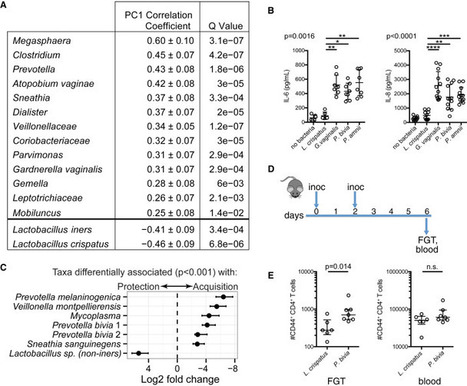
The potential impact of cervicovaginal bacteria on HIV susceptibility is not well-defined.
Gosmann et al. (2017) identify anaerobic cervicovaginal bacterial communities and
specific taxa highly prevalent in young healthy South African women that increase
their HIV risk. These findings might be leveraged to reduce HIV acquisition in women.
|
|
Scooped by
Gilbert C FAURE
February 12, 2017 11:28 AM
|
Mucosal‐associated invariant T (MAIT) cells are donor‐unrestricted lymphocytes that are surprisingly abundant in humans, representing 1–10% of circulating T cells and further enriched in mucosa
|
|
Scooped by
Gilbert C FAURE
February 11, 2017 1:27 PM
|
Author summary Research to date has identified many genetic variants that are more common in people with a particular disease. However, in conditions that reflect multiple genetic and environmental factors, it is difficult to know with certainty if and why any particular genetic variant is causative and the mechanism that may underlie this. Such variants are often outside of protein-coding exons, instead falling in regions that regulate gene expression. In these cases, the genetic variation may alter transcription factor binding and subsequent gene expression. In this study, we have examined how genetic variation affects T-bet binding to DNA, as a key transcriptional regulatory mechanism in the immune response. An inability to mount this response effectively can result in increased susceptibility to infections or cancer, while a response that is too strong, or wrongly targeted, can result in uncontrolled/chronic inflammatory and autoimmune conditions. We have found that T-bet binding sites are specifically enriched in genetic variants associated with the mucosal autoinflammatory diseases UC, Crohn’s disease and celiac disease. We also identify genetic variants that alter T-bet binding and gene expression. This discovery thus identifies a molecular mechanism through which genetic variants can be associated with increased risk of mucosal autoimmune disease.
|
|
Scooped by
Gilbert C FAURE
February 11, 2017 1:26 PM
|
Author summary O-glycosylation is a common type of post-translational modification of proteins; specific abnormalities in the mechanism of O-glycosylation have been implicated in cancer, inflammatory and blood diseases. However, the molecular basis of abnormal O-glycosylation in these complex disorders is not known. We studied the genetic basis of defective O-glycosylation of serum immunoglobulin A1 (IgA1), that represents the key pathogenic defect in IgA nephropathy, the most common form of primary glomerulonephritis worldwide. We report our results of the first genome-wide association study for this trait using serum assays in 2,633 individuals of European and East-Asian ancestry. In our genome scan, we observed two significant signals with large effects, on chromosomes 7p21.3 and Xq24, jointly explaining about 7% of trait variability. These signals implicate two genes that encode molecular partners essential for enzymatic O-glycosylation of IgA1 and mucins, and represent potential new targets for therapy.
|
|
Scooped by
Gilbert C FAURE
February 11, 2017 12:23 PM
|
Publication date: February 2017
Source:Drug Discovery Today, Volume 22, Issue 2
Author(s): Nicolau B. da Cunha, Nicole B. Cobacho, Juliane F.C. Viana, Loiane A. Lima, Kamila B.O. Sampaio, Stephan S.M. Dohms, Arthur C.R. Ferreira, César de la Fuente-Núñez, Fabrício F. Costa, Octávio L. Franco, Simoni C. Dias
Anti-infective drugs have had a key role in the contemporary world, contributing to dramatically decrease mortality rates caused by infectious diseases worldwide. Antimicrobial peptides (AMPs) are multifunctional effectors of the innate immune system of mucosal surfaces and present antimicrobial activity against a range of pathogenic viruses, bacteria, and fungi. However, the discovery and development of new antibacterial drugs is a crucial step to overcome the great challenge posed by the emergence of antibiotic resistance. In this review, we outline recent advances in the development of novel AMPs with improved antimicrobial activities that were achieved through characteristic structural design. In addition, we describe recent progress made to overcome some of the major limitations that have hindered peptide biosynthesis.
Teaser This review provides an integrated scenario of the most relevant aspects in the development of useful drugs provided by natural sources and recent advances in the biosynthesis and structural design of antimicrobial peptides.
|
|
Scooped by
Gilbert C FAURE
February 9, 2017 6:48 AM
|
Adv Otorhinolaryngol. 2016;77:119-24. doi: 10.1159/000441902. Epub 2016 Apr 26. Review
|
|
Scooped by
Gilbert C FAURE
February 9, 2017 5:01 AM
|
Med Sci Monit. 2017 Feb 6;23:673-681.
|
|
Scooped by
Gilbert C FAURE
February 7, 2017 5:17 AM
|
National Academy of Sciences
|
|
Scooped by
Gilbert C FAURE
February 7, 2017 5:15 AM
|
Australian researchers are a step closer to understanding immune sensitivities to well-known, and commonly prescribed, medications.
|
|
|
Scooped by
Gilbert C FAURE
February 15, 2017 4:33 AM
|
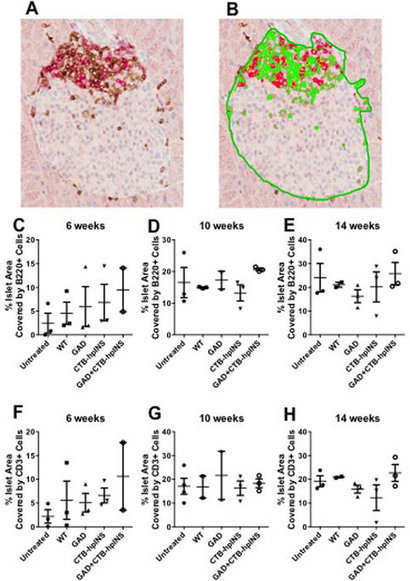
Autoantigen-specific immunological tolerance represents a central objective for prevention of type 1 diabetes (T1D).
|
|
Scooped by
Gilbert C FAURE
February 14, 2017 8:55 AM
|
Sampling various compartments within the lower airways to examine human bronchial epithelial cells (HBEC) is essential for understanding numerous lung diseases.
|
|
Scooped by
Gilbert C FAURE
February 13, 2017 1:33 PM
|
J Vis Exp. 2017 Jan 20;(119). doi: 10.3791/55222.
|
|
Scooped by
Gilbert C FAURE
February 13, 2017 9:39 AM
|
|
|
Scooped by
Gilbert C FAURE
February 13, 2017 6:56 AM
|
National Academy of Sciences
|
|
Scooped by
Gilbert C FAURE
February 12, 2017 3:49 AM
|
Cystic Fibrosis (CF) is characterised by prolonged and exaggerated airways inflammation. Despite recent developments to overcome the underlying functional defect in CFTR ..
|
|
Scooped by
Gilbert C FAURE
February 11, 2017 1:27 PM
|
Arch Toxicol. 2017 Feb 8. doi: 10.1007/s00204-016-1916-3. [Epub ahead of print] Review
|
|
Scooped by
Gilbert C FAURE
February 11, 2017 12:23 PM
|
Publication date: December 2016
Source:Medical Hypotheses, Volume 97
Author(s): Elham Sadat Mirfazeli, Sayed-Amir Marashi, Shiva Kalantari
IgA nephropathy is one of the most common forms of primary glomerulonephritis worldwide leading to end-stage renal disease. Proliferation of mesangial cells, i.e., the multifunctional cells located in the intracapillary region of glomeruli, after IgA- dominant immune deposition is the major histologic feature in IgA nephropathy. In spite of several studies on molecular basis of proliferation in these cells, specific pathways responsible for regulation of proliferation are still to be discovered. In this study, we predicted a specific signaling pathway started from transferrin receptor (TFRC), a specific IgA1 receptor on mesangial cells, toward a set of proliferation-related proteins. The final constructed subnetwork was presented after filtration and evaluation. The results suggest that estrogen receptor (ESR1) as a hub protein in the significant subnetwork has an important role in the mesangial cell proliferation and is a potential target for IgA nephropathy therapy. In conclusion, this study suggests a novel hypothesis for the mechanism of pathogenesis in IgA nephropathy and is a reasonable start point for the future experimental studies on mesangial proliferation process in this disease.
Mucosal Immunology is the official publication of the Society of Mucosal Immunology (SMI). It aims to provide a forum for both basic and clinical scientists to discuss all aspects of immunity and inflammation involving mucosal tissues. The journal reflects the interests of scientists studying gastrointestinal, pulmonary, nasopharyngeal, oral, ocular, and genitourinary immunology through the publication of original research articles, scholarly reviews, and timely commentaries, editorials and letters.
Via Denis Hudrisier
|
|
Scooped by
Gilbert C FAURE
February 9, 2017 5:05 AM
|
Nick Powell, Marjorie M. Walker & Nicholas J. Talley AffiliationsContributionsCorresponding author Nature Reviews Gastroenterology & Hepatology (2017) doi:10.1038/nrgastro.2016.191 Published online 18 January 2017
|
|
Scooped by
Gilbert C FAURE
February 9, 2017 4:56 AM
|
Doctors have long understood that antibiotics that protect infants from infection also can disrupt the normal growth of their gut bacteria. However, a new study reveals that the consequences of routine antibiotic use may be deeper and longer lasting than expected. The study, published Feb. 8 in Science Translational Medicine, shows that short-term disruption of gut bacteria makes infant mice more likely to develop pneumonia. It also makes them more likely to die from it.
|
|
Scooped by
Gilbert C FAURE
February 7, 2017 5:17 AM
|
Congenital tufting enteropathy (CTE) is a severe autosomal recessive human diarrheal disorder with characteristic intestinal epithelial dysplasia. CTE can be caused by mutations in genes encoding EpCAM, a putative adhesion molecule, and HAI-2, a cell surface protease inhibitor. A similar phenotype occurs in mice whose intestinal epithelial cells (IECs) fail to express the tight junction–associated protein claudin-7. EpCAM stabilizes claudin-7 in IECs, and HAI-2 regulates the cell surface serine protease matriptase, a known modifier of intestinal epithelial physiology. Therefore, we hypothesized that HAI-2, matriptase, EpCAM, and claudin-7 were functionally linked. Herein we have demonstrated that active matriptase cleaves EpCAM after Arg80 and that loss of HAI-2 in IECs led to unrestrained matriptase activity and efficient cleavage of EpCAM. Cleavage of EpCAM decreased its ability to associate with claudin-7 and targeted it for internalization and lysosomal degradation in conjunction with claudin-7. CTE-associated HAI-2 mutant proteins exhibited reduced ability to inhibit matriptase and also failed to efficiently stabilize claudin-7 in IECs. These results identify EpCAM as a substrate of matriptase and link HAI-2, matriptase, EpCAM, and claudin-7 in a functionally important pathway that causes disease when it is dysregulated.
|


 Scoop.it!