Your new post is loading...

|
Scooped by
Gilbert C FAURE
January 14, 2025 3:58 AM
|
Helicobacter pylori (H.p.) is a Gram-negative bacterium endowed with gastric tropism. H.p. infection is widely spread throughout the world, accounting for various pathologies, such as peptic ulcer, gastric cancer, mucosa-associated lymphoid tissue lymphoma, and extra-gastric manifestations.
|
|
Scooped by
Gilbert C FAURE
January 6, 2025 1:06 PM
|
As plant-based diets gain traction, interest in their impacts on the gut microbiome is growing. However, little is known about diet-pattern-specific metagenomic profiles across populations. Here we considered 21,561 individuals spanning 5 independent, multinational, human cohorts to map how differences in diet pattern (omnivore, vegetarian and vegan) are reflected in gut microbiomes. Microbial profiles distinguished these common diet patterns well (mean AUC = 0.85). Red meat was a strong driver of omnivore microbiomes, with corresponding signature microbes (for example, Ruminococcus torques, Bilophila wadsworthia and Alistipes putredinis) negatively correlated with host cardiometabolic health. Conversely, vegan signature microbes were correlated with favourable cardiometabolic markers and were enriched in omnivores consuming more plant-based foods. Diet-specific gut microbes partially overlapped with food microbiomes, especially with dairy microbes, for example, Streptococcus thermophilus, and typical soil microbes in vegans. The signatures of common western diet patterns can support future nutritional interventions and epidemiology. Using 21,561 individuals, the authors present a cross-sectional study of how gut microbiome signatures are associated with dietary intake patterns and with host health outcomes.
|
|
Scooped by
Gilbert C FAURE
December 31, 2024 10:55 AM
|
|
|
Scooped by
Gilbert C FAURE
December 23, 2024 3:41 AM
|
|
|
Scooped by
Gilbert C FAURE
December 12, 2024 4:34 AM
|
Stanford University scientists’ findings in mice could translate into a radical, needle-free vaccination approach that would also eliminate reactions including fever, swelling and pain.
|
|
Scooped by
Gilbert C FAURE
December 5, 2024 4:06 AM
|
NOD-like receptors (NLRs) are a family of cytosolic pattern recognition receptors (PRRs) implicated in the innate immune sensing of pathogens and damage signals. NLRs act as sensors in multi-protein complexes called inflammasomes.
|
|
Scooped by
Gilbert C FAURE
November 29, 2024 10:54 AM
|
LRRK2 polymorphisms (G2019S/N2081D) that increase susceptibility to Parkinson’s disease and Crohn’s disease (CD) lead to LRRK2 kinase hyperactivity and suppress autophagy. This connection suggests that LRRK2 kinase inhibition, a therapeutic strategy being explored for Parkinson’s disease, may also benefit patients with CD. Paneth cell homeostasis is tightly regulated by autophagy, and their dysfunction is a precursor to gut inflammation in CD. Here, we found that patients with CD and mice carrying hyperactive LRRK2 polymorphisms developed Paneth cell dysfunction. We also found that LRRK2 kinase can be activated in the context of interactions between genes (genetic autophagy deficiency) and the environment (cigarette smoking). Unexpectedly, lamina propria immune cells were the main intestinal cell types that express LRRK2, instead of Paneth cells as previously suggested. We showed that LRRK2-mediated pro-inflammatory cytokine release from phagocytes impaired Paneth cell function, which was rescued by LRRK2 kinase inhibition through activation of autophagy. Together, these data suggest that LRRK2 kinase inhibitors maintain Paneth cell homeostasis by restoring autophagy and may represent a therapeutic strategy for CD.
|
|
Scooped by
Gilbert C FAURE
November 27, 2024 1:08 PM
|
The growing role of aquaculture in global food security has underscored the need for advanced immunological insights to protect fish health and boost productivity. As aquaculture’s importance rises, understanding fish immunity is crucial for developing effective vaccination strategies. Fish possess a specialized immune system with unique mucosal structures that enable resilience in aquatic environments. This review examines critical advances in fish mucosal immunity, particularly focusing on mucosal vaccines that target infection at primary entry points, such as the gills, skin, and gastrointestinal tract. Mucosal vaccination has demonstrated a compelling capacity to stimulate localized and systemic immune responses, offering enhanced protection against waterborne pathogens. Additionally, this review addresses knowledge gaps from previous research on the global aquaculture vaccines market by offering a regional perspective on industry developments, recent trends, and innovative vaccine formulations. In doing so, it highlights the role of mucosal vaccines in overcoming the specific challenges of fish farming and supporting sustainable aquaculture. This synthesis of current methodologies, industry practices, and future directions contributes to a deeper understanding of fish immunology, ultimately informing strategies to achieve optimal disease management and bolster global aquaculture resilience.
|
|
Scooped by
Gilbert C FAURE
November 23, 2024 7:51 AM
|
Very proud of our recent systematic review of the 'seminovaginal' microbiome - how couples influence each other's microbial composition in health and disease!
|
|
Scooped by
Gilbert C FAURE
November 19, 2024 8:43 AM
|
Individual tissues have distinct antiviral properties garnered through various mechanisms, including physical characteristics, tissue-resident immune cells and commensal organisms. Although the oral mucosa has long been appreciated as a critical barrier tissue that is exposed to a continuous barrage of pathogens, many fundamental aspects of the antiviral immune response in this tissue remain unknown. Several viral pathogens, such as herpesviruses and human papillomaviruses, have been acknowledged both historically and at present for infections in the oral cavity that result in substantial clinical burden. However, recent viral outbreaks, including those with SARS-CoV-2 and mpox, featured oral symptoms even though these viruses are not generally considered oral pathogens. Ensuing studies have shown that the oral cavity is an important locale for viral infection and potential transmission of newly emergent or re-emergent pathogens, highlighting the need for an increased understanding of the mechanisms of antiviral immunity at this site. In this Review, we provide a broad overview of antiviral immune responses in the oral cavity and discuss common viral infections and their manifestations in the oral mucosa. In addition, we present current mouse models for the study of oral viral infections. The oral mucosa is a critical barrier tissue that is continually exposed to pathogens, but antiviral immune responses in this tissue are poorly understood. Moreover, recent viral outbreaks, including SARS-CoV-2 and mpox, feature oral symptoms. This Review discusses antiviral immunity in the oral cavity and presents current mouse models for the study of oral viral infections.
|
|
Scooped by
Gilbert C FAURE
November 11, 2024 12:48 PM
|
|
|
Scooped by
Gilbert C FAURE
October 17, 2024 4:47 AM
|
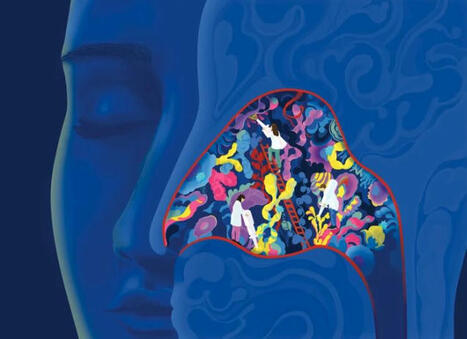
An excellent article in Scientific American discusses recent advances in the development of nasal vaccines against respiratory viral infections, including…
|
|
Scooped by
Gilbert C FAURE
September 29, 2024 4:06 AM
|
|
|
|
Scooped by
Gilbert C FAURE
January 9, 2025 11:18 AM
|
|
|
Scooped by
Gilbert C FAURE
January 5, 2025 5:00 AM
|
"Advancing Respiratory Medicine: Navigating Human Metapneumovirus #hMPV Challenges with Innovative Vaccine Research".
Before reading further ✔️…
|
|
Scooped by
Gilbert C FAURE
December 25, 2024 4:44 AM
|
|
|
Scooped by
Gilbert C FAURE
December 18, 2024 1:14 PM
|
The microbiota colonizes each barrier site and broadly controls host physiology1. However, when uncontrolled, microbial colonists can also promote inflammation and induce systemic infection2. The unique strategies employed at each barrier tissue to control the coexistence of the host with its microbiota remain largely elusive. Here we uncover that, within the skin, host-microbiota symbiosis depends on the remarkable ability of the skin to act as an autonomous lymphoid organ. Notably, an encounter with a new skin commensal promotes two parallel responses, both under the control of Langerhans cells. On one hand, skin commensals induce the formation of classical germinal centers within the lymph node associated with IgG1 and IgG3 antibody responses. On the other hand, microbial colonization also leads to the development of tertiary lymphoid organs within the skin that can locally sustain IgG2b and IgG2c responses. These phenomena are supported by the ability of regulatory T cells to convert into T follicular helper cells. Skin autonomous production of antibodies is sufficient to control local microbial biomass, as well as subsequent systemic infection with the same microbe. Collectively, these results reveal a striking compartmentalization of humoral responses to the microbiota allowing for control of both microbial symbiosis and potential pathogenesis.
|
|
Scooped by
Gilbert C FAURE
December 7, 2024 2:56 AM
|
This project has been a dream come true. We are proud to present the first comprehensive atlas of the adult oral cavity, created using cutting-edge single-cell… | 23 comments on LinkedIn
|
|
Scooped by
Gilbert C FAURE
December 3, 2024 9:07 AM
|
|
|
Scooped by
Gilbert C FAURE
November 27, 2024 1:09 PM
|
The recent discovery by Lu and colleagues of Tomasiella immunophila, a bacterium that degrades IgA, offers insights into microbial influences on mucosal immunity and evolutionary immune trade-offs. By modulating IgA titers, T. immunophila influences the dynamic interactions and balance between the host and pathogen. This has implications for immune health, microbiome research, and therapeutics.
|
|
Scooped by
Gilbert C FAURE
November 24, 2024 11:18 AM
|
This medicine was designated as an orphan medicine for the treatment of primary IgA nephropathy in the European Union on 11 November 2024. This means that the developer will receive scientific and regulatory support from EMA to advance their medicine to the stage where they can apply for a...
|
|
Scooped by
Gilbert C FAURE
November 19, 2024 9:41 AM
|
|
|
Scooped by
Gilbert C FAURE
November 14, 2024 4:06 AM
|
|
|
Scooped by
Gilbert C FAURE
November 5, 2024 6:56 AM
|
|
|
Scooped by
Gilbert C FAURE
October 14, 2024 1:35 PM
|
Early exposure to mother’s own milk (MOM) promotes intestinal barrier maturation in preterm infants. We hypothesized (1) donor human milk (DHM) supplementation reduces intestinal permeability (IP) similar to exclusive MOM and (2) early HM exposure and low IP at 7–10 days postnatal age (PNA) are...
|