Your new post is loading...

|
Scooped by
Kamoun Lab @ TSL
February 13, 2018 2:29 AM
|
Host resistance and fungicide treatments are cornerstones of plant-disease control. Here, we show that these treatments allow sex and modulate parenthood in the fungal wheat pathogen Zymoseptoria tritici. We demonstrate that the Z. tritici–wheat interaction complies with the gene-for-gene model by identifying the effector AvrStb6, which is recognized by the wheat resistance protein Stb6. Recognition triggers host resistance, thus implying removal of avirulent strains from pathogen populations. However, Z. tritici crosses on wheat show that sex occurs even with an avirulent parent, and avirulence alleles are thereby retained in subsequent populations. Crossing fungicide-sensitive and fungicide-resistant isolates under fungicide pressure results in a rapid increase in resistance-allele frequency. Isolates under selection always act as male donors, and thus disease control modulates parenthood. Modeling these observations for agricultural and natural environments reveals extended durability of host resistance and rapid emergence of fungicide resistance. Therefore, fungal sex has major implications for disease control.
|
|
Scooped by
Kamoun Lab @ TSL
February 9, 2018 4:28 AM
|
In plants, defence-associated genes including the NLR gene family are under constant evolutionary pressure to adapt to pathogens. It is still unknown how many NLRs contribute to adaptation, and if the involved loci vary within a species across habitats. We use a three-pronged approach to reveal and quantify selection signatures at over 90 NLR genes over 14 populations of Solanum chilense a wild tomato species endemic to Peru and Chile found in different habitats. First, we generated a de novo genome of S. chilense. Second, by whole genome resequencing of three geographically distant individuals we infer the species past demographic history of habitat colonisation. Finally, using targeted resequencing we show that a small subset of NLRs, 7%, show signs of positive or balancing selection. We demonstrate that 13 NLRs change direction of selection during the colonisation of new habitats and form a mosaic pattern of adaptation to pathogens. We estimate that the turn over time of selection (birth-and-death rate) on NLRs is 18,000 years. Finally, our work identifies new NLRs under strong selective pressure between habitats, thus providing novel opportunities for R-gene identification.
|
|
Scooped by
Kamoun Lab @ TSL
February 8, 2018 11:12 AM
|
New strains of stem rust threaten huge cultivation areas of the essential crop in Africa, Asia and Europe. - Spread of ‘black rust’ through Yemen a risk for wheat crops in Africa, Asia, Europe
- North African country is key to tracking, containing strains of the fungus
- FAO and local authorities intensify control with coordination, training
|
|
Scooped by
Kamoun Lab @ TSL
February 8, 2018 8:56 AM
|
By combining high-throughput sequencing (HTS) with experimental evolution, we can observe the within-host dynamics of pathogen variants of biomedical or ecological interest. We studied the evolutionary dynamics of five variants of Potato virus Y (PVY) in 15 doubled-haploid lines of pepper. All plants were inoculated with the same mixture of virus variants and variant frequencies were determined by HTS in eight plants of each pepper line at each of six sampling dates. We developed a method for estimating the intensities of selection and genetic drift in a multi-allelic Wright-Fisher model, applicable whether these forces are strong or weak, and in the absence of neutral markers. This method requires variant frequency determination at several time points, in independent hosts. The parameters are the selection coefficients for each PVY variant and four effective population sizes Ne at different time-points of the experiment. Numerical simulations of asexual haploid Wright-Fisher populations subjected to contrasting genetic drift (Ne ∈ [10, 2000]) and selection (|s| ∈ [0, 0.15]) regimes were used to validate the method proposed. The experiment in closely related pepper host genotypes revealed that viruses experienced a considerable diversity of selection and genetic drift regimes. The resulting variant dynamics were accurately described by Wright-Fisher models. The fitness ranks of the variants were almost identical between host genotypes. By contrast, the dynamics of Ne were highly variable, although a bottleneck was often identified during the systemic movement of the virus. We demonstrated that, for a fixed initial PVY population, virus effective population size is a heritable trait in plants. These findings pave the way for the breeding of plant varieties exposing viruses to stronger genetic drift, thereby slowing virus adaptation.
|
|
Scooped by
Kamoun Lab @ TSL
February 8, 2018 4:50 AM
|
Schaefer et al. 2004. The soil-borne plant pathogen Fusarium oxysporum causes life-threatening invasive fusariosis in immunocompromised individuals. The mechanism of infection in mammalian hosts is largely unknown. In the present study we show that the symptoms of disseminated fusariosis caused by F. oxysporum in immunosuppressed mice are remarkably similar to those reported in humans. Distinct fungal structures were observed inside the host, depending on the infected organ. Invasive hyphae developed in the heart and kidney, causing massive colonization of the organs. By contrast, chlamydospore-like survival structures were found in lung, spleen and liver. Systemically infected mice also developed skin and eye infections, as well as thrombosis and necrosis in the tail. We further show that F. oxysporum can disseminate and persist in the organs of immunocompetent animals, and that these latent infections can lead to lethal systemic fusariosis if the host is later subjected to immunosuppressive treatment.
|
|
Scooped by
Kamoun Lab @ TSL
February 2, 2018 12:31 PM
|
Plants display extensive genetic variation at resistance (R) gene loci for resistance to a variety of pathogens. The first R gene, Hm1, was cloned over 25 years ago, and many different R genes have since been identified and isolated. The encoded proteins have provided clues to diverse molecular mechanisms underlying immunity. The majority encode either cell-surface or intracellular receptors, and we present here a meta- analysis of 314 cloned R genes. We distinguish nine molecular mechanisms by which R proteins can elevate or trigger disease resistance. These mechanisms include direct (1) and indirect (2) perception of pathogen-derived molecules on the cell surface by receptor-like proteins and -kinases; intracellular detection of pathogen-derived molecules by nucleotide-binding, leucine-rich repeat receptors (NLRs), either directly (3), indirectly (4) or through integrated domains (5); perception of Transcription Activator-like (TAL) effectors through activation of Executor genes (6); and loss-of-susceptibility, either active (7), passive (8), or by host reprogramming (9). Although the molecular mechanisms underlying the function of R genes are only understood for a small proportion of these, a clearer understanding of mechanisms is emerging and will be crucial for rational engineering and deployment of novel R genes.
|
|
Scooped by
Kamoun Lab @ TSL
February 2, 2018 5:20 AM
|
The rice blast fungus, Magnaporthe oryzae, causes one of the most destructive diseases of cultivated rice in the world. Infections caused by this recalcitrant pathogen lead to the annual destruction of approximately 10–30% of the rice harvested globally. The fungus undergoes extensive developmental changes to be able to break into plant cells, build elaborate infection structures, and proliferate inside host cells without causing visible disease symptoms. From a molecular standpoint, we are still in the infancy of understanding how M. oryzae manipulates the host during this complex multifaceted infection. Here, we describe recent advances in our understanding of the cell biology of M. oryzae biotrophic interaction and key molecular factors required for the disease establishment in rice cells.
|
|
Scooped by
Kamoun Lab @ TSL
January 29, 2018 8:46 AM
|
The Toll/interleukin-1 receptor (TIR) domain is the signature signaling domain of Toll-like receptors (TLRs) and their adaptors, serving as a scaffold for the assembly of protein complexes for innate immune signaling [ 1, 2 ]. TIR domain proteins are also expressed in plants, where they mediate disease resistance [ 3, 4 ], and in bacteria, where they have been associated with virulence [ 5–9 ]. In pursuing our work on axon degeneration [ 10 ], we made the surprising discovery that the TIR domain of SARM1 (sterile alpha and TIR motif containing 1), a TLR adaptor protein, has enzymatic activity [ 11 ]. Upon axon injury, the SARM1 TIR domain cleaves nicotinamide adenine dinucleotide (NAD+), destroying this essential metabolic co-factor to trigger axon destruction [ 11, 12 ]. Whereas current studies of TIR domains focus on their scaffolding function, our findings with SARM1 inspired us to ask whether this enzymatic activity is the primordial function of the TIR domain. Here we show that ancestral prokaryotic TIR domains constitute a new family of NADase enzymes. Using purified proteins from a cell-free translation system, we find that TIR domain proteins from both bacteria and archaea cleave NAD+ into nicotinamide and ADP-ribose (ADPR), with catalytic cleavage executed by a conserved glutamic acid. A subset of bacterial and archaeal TIR domains generates a non-canonical variant cyclic ADPR (cADPR) molecule, and the full-length TIR domain protein from pathogenic Staphylococcus aureus induces NAD+ loss in mammalian cells. These findings suggest that the primordial function of the TIR domain is the enzymatic cleavage of NAD+ and establish TIR domain proteins as a new class of metabolic regulatory enzymes.
|
|
Scooped by
Kamoun Lab @ TSL
January 28, 2018 2:52 PM
|
Plant-microbe interactions are great model systems to study co-evolutionary dynamics across multiple timescales, ranging from multimillion year macroevolution to extremely rapid evolutionary adaptations. However, mechanistic research on plant-microbe interactions has often been conducted with little consideration of the insights that can be gained from evolutionary concepts and methods. Conversely, evolutionary research has rarely integrated the diverse range of molecular mechanisms and models that continue to emerge from the molecular plant-microbe interactions field. These trends are changing. In recent years, the incipient field of evolutionary molecular plant-microbe interactions (EvoMPMI) has emerged to bridge the gap between mechanistic molecular research and evolutionary approaches. Here, we report on recent advances in EvoMPMI. In particular, we highlight new systems to study microbe interactions with early diverging land plants, and new findings from studies of adaptive evolution in pathogens and plants. By linking mechanistic and evolutionary research, EvoMPMI promises to add a new dimension to our understanding of plant-microbe interactions.
|
|
Rescooped by
Kamoun Lab @ TSL
from Publications
January 24, 2018 1:02 PM
|
A subset of plant nucleotide-binding domain and leucine-rich repeat-containing (NLR) proteins carry extraneous integrated domains that have been proposed to mediate pathogen effector recognition. The current view is that these unconventional domains function by directly binding or serving as substrates for pathogen effectors, yet only a few domains have been functionally characterized to date. Here we report that the integrated NOI domain of the rice NLR protein Pii-2, together with its partner Pii-1, mediates immunity to the rice blast fungus Magnaporthe oryzae by indirect recognition of the AVR-Pii effector. We discovered that the Pii-2 NOI domain does not physically interact with the effector itself but instead binds the host protein OsExo70-F3, which is a target of AVR-Pii. We further identified mutations within the NOI core motif (PxFGxW) of Pii-2 that abolish both OsExo70-F3 binding and Pii-mediated resistance to M. oryzae expressing AVR-Pii. This led us to propose a novel conceptual model in which an NLR-integrated domain functions to detect host proteins targeted by pathogen effectors, in a framework that extends classical indirect recognition models.
|
|
Scooped by
Kamoun Lab @ TSL
January 12, 2018 8:38 PM
|
Background. CRISPR/Cas systems confer immunity against invading nucleic acids and phages in bacteria and archaea. CRISPR/Cas13a (known previously as C2c2) is a class 2 type VI-A ribonuclease capable of targeting and cleaving single-stranded RNA (ssRNA) molecules of the phage genome. Here, we employ CRISPR/Cas13a to engineer interference with an RNA virus, Turnip Mosaic Virus (TuMV), in plants. Results. CRISPR/Cas13a produces interference against green fluorescent protein (GFP)-expressing TuMV in transient assays and stable overexpression lines of Nicotiana benthamiana. CRISPR RNA (crRNAs) targeting the HC-Pro and GFP sequences exhibit better interference than those targeting other regions such as coat protein (CP) sequence. Cas13a can also process pre-crRNAs into functional crRNAs. Conclusions. Our data indicate that CRISPR/Cas13a can be used for engineering interference against RNA viruses, providing a potential novel mechanism for RNA-guided immunity against RNA viruses and for other RNA manipulations in plants.
|
|
Scooped by
Kamoun Lab @ TSL
December 21, 2017 5:14 AM
|
- Plant pathogens employ effector proteins to manipulate their hosts. Fusarium oxysporumf. sp. lycopersici (Fol), the causal agent of tomato wilt disease, produces effector protein Avr2. Besides being a virulence factor, Avr2 triggers immunity in I-2 carrying tomato (Solanum lycopersicum). Fol strains that evade I-2 recognition carry point mutations in Avr2 (e.g. Avr2R45H), but retain full virulence.
- Here we investigate the virulence function of Avr2 and determine its crystal structure. Transgenic tomato and Arabidopsis expressing either wild-type ΔspAvr2 (deleted signal-peptide) or the ΔspAvr2R45H variant become hypersusceptible to fungal, and even bacterial infections, suggesting that Avr2 targets a conserved defense mechanism. Indeed, Avr2 transgenic plants are attenuated in immunity-related readouts, including flg22-induced growth inhibition, ROS production and callose deposition.
- The crystal structure of Avr2 reveals that the protein shares intriguing structural similarity to ToxA from the wheat pathogen Pyrenophora tritici-repentis and to TRAF proteins. The I-2 resistance-breaking Avr2V41M, Avr2R45H and Avr2R46P variants cluster on a surface-presented loop. Structure-guided mutagenesis enabled uncoupling of virulence from I-2-mediated recognition.
- We conclude that I-2-mediated recognition is not based on monitoring Avr2 virulence activity, which includes suppression of immune responses via an evolutionarily conserved effector target, but by recognition of a distinct epitope.
|
|
Scooped by
Kamoun Lab @ TSL
December 9, 2017 6:38 AM
|
- The fungus Zymoseptoria tritici is the causal agent of Septoria Tritici Blotch (STB) disease of wheat leaves. Zymoseptoria tritici secretes many functionally uncharacterized effector proteins during infection. Here, we characterized a secreted ribonuclease (Zt6) with an unusual biphasic expression pattern.
- Transient expression systems were used to characterize Zt6, and mutants thereof, in both host and non-host plants. Cell-free protein expression systems monitored the impact of Zt6 protein on functional ribosomes, and in vitroassays of cells treated with recombinant Zt6 determined toxicity against bacteria, yeasts and filamentous fungi.
- We demonstrated that Zt6 is a functional ribonuclease and that phytotoxicity is dependent on both the presence of a 22-amino-acid N-terminal ‘loop’ region and its catalytic activity. Zt6 selectively cleaves both plant and animal rRNA species, and is toxic to wheat, tobacco, bacterial and yeast cells, but not to Z. tritici itself.
- Zt6 is the first Z. tritici effector demonstrated to have a likely dual functionality. The expression pattern of Zt6 and potent toxicity towards microorganisms suggest that, although it may contribute to the execution of wheat cell death, it is also likely to have an important secondary function in antimicrobial competition and niche protection.
|
|
|
Scooped by
Kamoun Lab @ TSL
February 13, 2018 2:26 AM
|
Over the past few years, symptoms akin to late blight disease have been reported on a variety of crop plants in South America. Despite the economic importance of these crops, the causal agents of the diseases belonging to the genus Phytophthora have not been completely characterized. In this study, a new Phytophthora species was described in Colombia from tree tomato (Solanum betaceum), a semi-domesticated fruit grown in northern South America. Comprehensive phylogenetic, morphological, population genetic analyses, and infection assays to characterize this new species, were conducted. All data support the description of the new species, Phytophthora betacei sp. nov. Phylogenetic analyses suggest that this new species belongs to clade 1c of the genus Phytophthora and is a close relative of the potato late blight pathogen, P. infestans. Furthermore, it appeared as the sister group of the P. andina strains collected from wild Solanaceae (clonal lineage EC-2). Analyses of morphological and physiological characters as well as host specificity showed high support for the differentiation of these species. Based on these results, a complete description of the new species is provided and the species boundaries within Phytophthora clade 1c in northern South America are discussed.
|
|
Scooped by
Kamoun Lab @ TSL
February 9, 2018 4:12 AM
|
The cells of multicellular organisms receive extracellular signals using surface receptors. The extracellular domains (ECDs) of cell surface receptors function as interaction platforms, and as regulatory modules of receptor activation1,2. Understanding how interactions between ECDs produce signal-competent receptor complexes is challenging because of their low biochemical tractability3,4. In plants, the discovery of ECD interactions is complicated by the massive expansion of receptor families, which creates tremendous potential for changeover in receptor interactions5. The largest of these families in Arabidopsis thaliana consists of 225 evolutionarily related leucine-rich repeat receptor kinases (LRR-RKs)5, which function in the sensing of microorganisms, cell expansion, stomata development and stem-cell maintenance6,7,8,9. Although the principles that govern LRR-RK signalling activation are emerging1,10, the systems-level organization of this family of proteins is unknown. Here, to address this, we investigated 40,000 potential ECD interactions using a sensitized high-throughput interaction assay3, and produced an LRR-based cell surface interaction network (CSILRR) that consists of 567 interactions. To demonstrate the power of CSILRR for detecting biologically relevant interactions, we predicted and validated the functions of uncharacterized LRR-RKs in plant growth and immunity. In addition, we show that CSILRR operates as a unified regulatory network in which the LRR-RKs most crucial for its overall structure are required to prevent the aberrant signalling of receptors that are several network-steps away. Thus, plants have evolved LRR-RK networks to process extracellular signals into carefully balanced responses.
|
|
Scooped by
Kamoun Lab @ TSL
February 8, 2018 10:14 AM
|
Wheat stem rust, a devastating disease of wheat and barley caused by the fungal pathogen Puccinia graminis f. sp. tritici, was largely eradicated in Western Europe during the mid-to-late twentieth century. However, isolated outbreaks have occurred in recent years. Here we investigate whether a lack of resistance in modern European varieties, increased presence of its alternate host barberry and changes in climatic conditions could be facilitating its resurgence. We report the first wheat stem rust occurrence in the United Kingdom in nearly 60 years, with only 20% of UK wheat varieties resistant to this strain. Climate changes over the past 25 years also suggest increasingly conducive conditions for infection. Furthermore, we document the first occurrence in decades of P. graminis on barberry in the UK . Our data illustrate that wheat stem rust does occur in the UK and, when climatic conditions are conducive, could severely harm wheat and barley production.
|
|
Scooped by
Kamoun Lab @ TSL
February 8, 2018 5:59 AM
|
A devastating disease that attacks barley and wheat - the world's most widely grown crop - could re-emerge in Britain, scientists said on Thursday. Over 80 percent of 57 wheat varieties tested in Britain are susceptible to the strain of stem rust that was discovered in an infected plant in Suffolk in 2013, the first time the disease has reappeared since 1955, they said. The same strain battered wheat crops in Ethiopia, and caused smaller outbreaks in Sweden, Denmark and Germany in 2013, a study in the journal Communications Biology said. These outbreaks, as well as the infection in Britain, are "a warning sign" to take immediate action, Diane Saunders, a plant pathologist at the UK-based John Innes Centre and lead author of the study, told the Thomson Reuters Foundation. Stem rust can devastate wheat, the source of food and livelihoods for more than 1 billion people in developing countries, according to the United Nations' Food and Agriculture Organization (FAO). It could wipe out 70 percent or more of the crop, turning a healthy looking crop, only weeks away from harvest, into a tangle of black stems and shrivelled grains, the agency said. The risks posed by wheat rusts are growing, with modern versions of the fungus becoming ever more virulent, evolving to adapt to the earth's higher temperatures, the FAO said. Breeding wheat varieties resistant to the disease is key to controlling it and this can take a long time, Saunders said. "Even if we have a resistant wheat line today that we just developed, it would take 10 years to get them to market," she said in a phone interview. "There's very little resistance within our wheat varieties and if we did have an outbreak today, it could be quite devastating." In the meantime, barberry bushes - an alternate host for stem rust - should not be planted near arable lands to prevent them from facilitating sexual reproduction and the re-infection of cereal crops, said Saunders. The study's authors said they discovered stem rust in a barberry bush "within a meter of a barley field" in 2017.
|
|
Rescooped by
Kamoun Lab @ TSL
from Plant Pathogenomics
February 8, 2018 3:00 AM
|
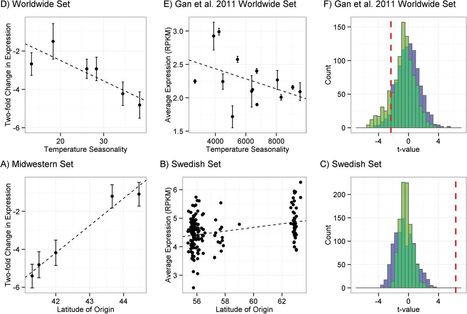
Some environments are more conducive to pathogen growth than others, and, as a consequence, plants might be expected to invest more in resistance when pathogen growth is favored. Resistance (R-) genes in Arabidopsis thaliana have unusually extensive variation in basal expression when comparing the same R-gene among accessions collected from different environments. R-gene expression variation was characterized to explore whether R-gene expression is up-regulated in environments favoring pathogen proliferation and down-regulated when risks of infection are low; down-regulation would follow if costs of R-gene expression negatively impact plant fitness in the absence of disease. Quantitative reverse transcription-PCR was used to quantify the expression of 13 R-gene loci in plants grown in eight environmental conditions for each of 12 A. thaliana accessions, and large effects of the environment on R-gene expression were found. Surprisingly, almost every change in the environment--be it a change in biotic or abiotic conditions--led to an increase in R-gene expression, a response that was distinct from the average transcriptome response and from that of other stress response genes. These changes in expression are functional in that environmental change prior to infection affected levels of specific disease resistance to isolates of Pseudomonas syringae. In addition, there are strong latitudinal clines in basal R-gene expression and clines in R-gene expression plasticity correlated with drought and high temperatures. These results suggest that variation in R-gene expression across environments may be shaped by natural selection to reduce fitness costs of R-gene expression in permissive or predictable environments.
|
|
Scooped by
Kamoun Lab @ TSL
February 2, 2018 6:28 AM
|
Plants sense and respond to microbes utilizing a multilayered signalling cascade. In seed plants, the phytohormones jasmonic and salicylic acid (JA and SA) are key denominators of how plants respond to certain microbes. Their interplay is especially well-known for tipping the scales in plants' strategies of dealing with phytopathogens. In non-seed plant lineages, the interplay is less well understood, but current data indicates that it is intertwined to a lesser extent and the canonical JA/SA antagonism appears to be absent. Here, we used the water fern Azolla filiculoidesto gain insights into the fern's JA/SA signalling and the molecular communication with its unique nitrogen fixing cyanobiont Nostoc azollae, which the fern inherits both during sexual and vegetative reproduction. By mining large-scale sequencing data, we demonstrate that Azolla has the genetic potential to produce and sense JA and SA. Using quantitative RT-PCR on the identified biosynthesis and signalling marker genes, we show that Azolla is responsive to exogenously applied SA. Furthermore, exogenous SA application influenced the abundance and gene expression of Azolla's cyanobiont. Our data provide a framework for JA/SA signalling in ferns and suggest that these phytohormones might be involved in the water fern's communication with its vertically inherited cyanobiont.
|
|
Scooped by
Kamoun Lab @ TSL
January 31, 2018 10:33 AM
|
High expression of plant nucleotide binding site leucine-rich repeat (NBS-LRR) defense genes is often lethal to plant cells, a phenotype perhaps associated with fitness costs. Plants implement several mechanisms to control the transcript level of NBS-LRR defense genes. As negative transcriptional regulators, diverse miRNAs target NBS-LRRs in eudicots and gymnosperms. To understand the evolutionary benefits of this miRNA-NBS-LRR regulatory system, we investigated the NBS-LRRs of 70 land plants, coupling this analysis with extensive small RNA data. A tight association between the diversity of NBS-LRRs and miRNAs was found. The miRNAs typically target highly duplicated NBS-LRRs. In comparison, families of heterogeneous NBS-LRRs were rarely targeted by miRNAs in Poaceae and Brassicaceae genomes. We observed that duplicated NBS-LRRs from different gene families periodically gave birth to new miRNAs. Most of these newly emerged miRNAs target the same conserved, encoded protein motif of NBS-LRRs, consistent with a model of convergent evolution for these miRNAs. By assessing the interactions between miRNAs and NBS-LRRs, we found nucleotide diversity in the wobble position of the codons in the target site drives the diversification of miRNAs. Taken together, we propose a co-evolutionary model of plant NBS-LRRs and miRNAs hypothesizing how plants balance the benefits and costs of NBS-LRR defense genes.
|
|
Scooped by
Kamoun Lab @ TSL
January 29, 2018 8:36 AM
|
The brown planthopper (BPH) and white-backed planthopper (WBPH) are the most destructive insect pests of rice, and they pose serious threats to rice production throughout Asia. Thus, there are urgent needs to identify resistance-conferring genes and to breed planthopper-resistant rice varieties. Here we report the map-based cloning and functional analysis of Bph6, a gene that confers resistance to planthoppers in rice. Bph6 encodes a previously uncharacterized protein that localizes to exocysts and interacts with the exocyst subunit OsEXO70E1. Bph6 expression increases exocytosis and participates in cell wall maintenance and reinforcement. A coordinated cytokinin, salicylic acid and jasmonic acid signaling pathway is activated in Bph6-carrying plants, which display broad resistance to all tested BPH biotypes and to WBPH without sacrificing yield, as these plants were found to maintain a high level of performance in a field that was heavily infested with BPH. Our results suggest that a superior resistance gene that evolved long ago in a region where planthoppers are found year round could be very valuable for controlling agricultural insect pests.
|
|
Rescooped by
Kamoun Lab @ TSL
from Plant Pathogenomics
January 24, 2018 1:02 PM
|
Plant immune receptors are under constant selective pressure to maintain resistance to plant pathogens. Nucleotide-binding leucine-rich repeat (NLR) proteins are one class of cytoplasmic immune receptors whose genes commonly show signatures of adaptive evolution. While it is known that balancing selection contributes to maintaining high intraspecific allelic diversity, the evolutionary mechanism that influences the transmission of alleles during speciation remains unclear. The barley Mla locus has over 30 described alleles conferring isolate-specific resistance to barley powdery mildew and contains three NLR families (RGH1, RGH2, and RGH3). We discovered (using sequence capture and RNAseq) the presence of a novel integrated Exo70 domain in RGH2 in the Mla3 haplotype. Allelic variation across barley accessions includes presence/absence of the integrated domain in RGH2. Expanding our search to several Poaceae species, we found shared interspecific conservation in the RGH2-Exo70 integration. We hypothesise that balancing selection has maintained allelic variation at Mla as a trans-species polymorphism over 24 My, thus contributing to and preserving interspecific allelic diversity during speciation.
|
|
Scooped by
Kamoun Lab @ TSL
January 22, 2018 7:16 AM
|
In plants, the highly conserved catabolic process of autophagy has long been known as a means of maintaining cellular homeostasis and coping with abiotic stress conditions. Accumulating evidence has linked autophagy to immunity against invading pathogens, regulating plant cell death, and antimicrobial defences. In turn, it appears that phytopathogens have evolved ways not only to evade autophagic clearance but also to modulate and co-opt autophagy for their own benefit. In this review, we summarize and discuss the emerging discoveries concerning how pathogens modulate both host and self-autophagy machineries to colonize their host plants, delving into the arms race that determines the fate of interorganismal interaction.
|
|
Scooped by
Kamoun Lab @ TSL
December 21, 2017 5:46 AM
|
Necrosis and ethylene-inducing peptide 1–like (NLP) proteins constitute a superfamily of proteins produced by plant pathogenic bacteria, fungi, and oomycetes. Many NLPs are cytotoxins that facilitate microbial infection of eudicot, but not of monocot plants. Here, we report glycosylinositol phosphorylceramide (GIPC) sphingolipids as NLP toxin receptors. Plant mutants with altered GIPC composition were more resistant to NLP toxins. Binding studies and x-ray crystallography showed that NLPs form complexes with terminal monomeric hexose moieties of GIPCs that result in conformational changes within the toxin. Insensitivity to NLP cytolysins of monocot plants may be explained by the length of the GIPC head group and the architecture of the NLP sugar-binding site. We unveil early steps in NLP cytolysin action that determine plant clade-specific toxin selectivity. See also commentary by Guido Van den Ackerveken "How plants differ in toxin-sensitivity". Bailey et al. 1995. on Fusarioum Nep1.
|
|
Scooped by
Kamoun Lab @ TSL
December 19, 2017 9:30 AM
|
Focus on Effector-Triggered Susceptibility Wenbo Ma, Yuanchao Wang, and John McDowell Trick or Treat: Microbial Pathogens Evolved Apoplastic Effectors Modulating Plant Susceptibility to Infection Yan Wang and Yuanchao Wang Altering Plant Defenses: Herbivore-Associated Molecular Patterns and Effector Arsenal of Chewing Herbivores Saumik Basu, Suresh Varsani, and Joe Louis Effector Biology in Focus: A Primer for Computational Prediction and Functional Characterization Ronaldo J. D. Dalio, John Herlihy, Tiago S. Oliveira, John M. McDowell, and Marcos Machado Lessons in Effector and NLR Biology of Plant-Microbe Systems Aleksandra Białas, Erin K. Zess, Juan Carlos De la Concepcion, Marina Franceschetti, Helen G. Pennington, Kentaro Yoshida, Jessica L. Upson, Emilie Chanclud, Chih-Hang Wu, Thorsten Langner, Abbas Maqbool, Freya A. Varden, Lida Derevnina, Khaoula Belhaj, Koki Fujisaki, Hiromasa Saitoh, Ryohei Terauchi, Mark J. Banfield, and Sophien Kamoun The Elicitor Protein AsES Induces a Systemic Acquired Resistance Response Accompanied by Systemic Microbursts and Micro–Hypersensitive Responses in Fragaria ananassa Verónica Hael-Conrad, Silvia Marisa Perato, Marta Eugenia Arias, Martín Gustavo Martínez-Zamora, Pía de los Ángeles Di Peto, Gustavo Gabriel Martos, Atilio Pedro Castagnaro, Juan Carlos Díaz-Ricci, and Nadia Regina Chalfoun The Type III Secretion Chaperone HpaB Controls the Translocation of Effector and Noneffector Proteins From Xanthomonas campestris pv. vesicatoria Felix Scheibner, Nadine Hartmann, Jens Hausner, Christian Lorenz, Anne-Katrin Hoffmeister, and Daniela Büttner The Bacterial Effector AvrPto Targets the Regulatory Coreceptor SOBIR1 and Suppresses Defense Signaling Mediated by the Receptor-Like Protein Cf-4 Jinbin Wu, Aranka M. van der Burgh, Guozhi Bi, Lisha Zhang, James R. Alfano, Gregory B. Martin, and Matthieu H. A. J. Joosten Potyviral Gene-Silencing Suppressor HCPro Interacts with Salicylic Acid (SA)-Binding Protein 3 to Weaken SA-Mediated Defense Responses Sylvain Poque, Hui-Wen Wu, Chung-Hao Huang, Hao-Wen Cheng, Wen-Chi Hu, Jun-Yi Yang, David Wang, and Shyi-Dong Yeh Inappropriate Expression of an NLP Effector in Colletotrichum orbiculare Impairs Infection on Cucurbitaceae Cultivars via Plant Recognition of the C-Terminal Region Nur Sabrina Ahmad Azmi, Suthitar Singkaravanit-Ogawa, Kyoko Ikeda, Saeko Kitakura, Yoshihiro Inoue, Yoshihiro Narusaka, Ken Shirasu, Masanori Kaido, Kazuyuki Mise, and Yoshitaka Takano A Gene Family Coding for Salivary Proteins (SHOT) of the Polyphagous Spider Mite Tetranychus urticae Exhibits Fast Host-Dependent Transcriptional Plasticity Wim Jonckheere, Wannes Dermauw, Mousaalreza Khalighi, Nena Pavlidi, Wim Reubens, Geert Baggerman, Luc Tirry, Gerben Menschaert, Merijn R. Kant, Bartel Vanholme, and Thomas Van Leeuwen Revisiting the Roles of Tobamovirus Replicase Complex Proteins in Viral Replication and Silencing Suppression Nachelli Malpica-López, Rajendran Rajeswaran, Daria Beknazariants, Jonathan Seguin, Victor Golyaev, Laurent Farinelli, and Mikhail M. Pooggin Specific Hypersensitive Response–Associated Recognition of New Apoplastic Effectors from Cladosporium fulvum in Wild Tomato Carl H. Mesarich, Bilal Ӧkmen, Hanna Rovenich, Scott A. Griffiths, Changchun Wang, Mansoor Karimi Jashni, Aleksandar Mihajlovski, Jérôme Collemare, Lukas Hunziker, Cecilia H. Deng, Ate van der Burgt, Henriek G. Beenen, Matthew D. Templeton, Rosie E. Bradshaw, and Pierre J. G. M. de Wit Suppression or Activation of Immune Responses by Predicted Secreted Proteins of the Soybean Rust Pathogen Phakopsora pachyrhizi Mingsheng Qi, James P. Grayczyk, Janina M. Seitz, Youngsill Lee, Tobias I. Link, Doil Choi, Kerry F. Pedley, Ralf T. Voegele, Thomas J. Baum, and Steven A. Whitham Type III Secretion–Dependent and –Independent Phenotypes Caused by Ralstonia solanacearum in Arabidopsis Roots Haibin Lu, Saul Lema A, Marc Planas-Marquès, Alejandro Alonso-Díaz, Marc Valls, and Núria S. Coll
|