Plant disease resistance is a complicated arms race between the plant and pathogens. Bacteria, viruses and fungi evolve in lock-step with plants, creating new ways to overcome new disease resistance strategies. Resistance to disease has a foundation in the gene-for-gene model, a model that hypothesizes that plants and pathogens have a molecular relationship with each other that mediates pathogenicity.
Today’s podcast features Drs. Lida Derevnina and Chih-Hang Wu, postdoctoral researchers with Sophien Kamoun (@KamounLab) at the Sainsbury Laboratory (@TheSainsburyLab) in Norwich, England. They describe the new thinking of disease resistance as a number of complex layers that integrates many gene-for-gene interactions with other mechanisms in mediating plant defense.
Plant intracellular nucleotide-binding leucine-rich repeat (NLR) immune receptors often function in pairs to detect pathogen effectors and activate defense. The Arabidopsis RRS1-R–RPS4 NLR pair recognizes the bacterial effectors AvrRps4 and PopP2 via an integrated WRKY transcription factor domain in RRS1-R that mimics the effector’s authentic targets. How the complex activates defense upon effector recognition is unknown. Deletion of the WRKY domain results in an RRS1 allele that triggers constitutive RPS4-dependent defense activation, suggesting that in the absence of effector, the WRKY domain contributes to maintaining the complex in an inactive state. We show the WRKY domain interacts with the adjacent domain 4, and that the inactive state of RRS1 is maintained by WRKY–domain 4 interactions before ligand detection. AvrRps4 interaction with the WRKY domain disrupts WRKY–domain 4 association, thus derepressing the complex. PopP2-triggered activation is less easily explained by such disruption and involves the longer C-terminal extension of RRS1-R. Furthermore, some mutations in RPS4 and RRS1 compromise PopP2 but not AvrRps4 recognition, suggesting that AvrRps4 and PopP2 derepress the complex differently. Consistent with this, a “reversibly closed” conformation of RRS1-R, engineered in a method exploiting the high affinity of colicin E9 and Im9 domains, reversibly loses AvrRps4, but not PopP2 responsiveness. Following RRS1 derepression, interactions between domain 4 and the RPS4 C-terminal domain likely contribute to activation. Simultaneous relief of autoinhibition and activation may contribute to defense activation in many immune receptors.
Plants have no eyes, no ears, no mouth and no hands. They do not have a brain or a nervous system. Muscles? Forget them. They’re stuck where they started, soaking up the sun and sucking up nutrients from the soil. And yet, when something comes around to eat them, they sense it.
The citrus industry is facing an unprecedented challenge from Huanglongbing (HLB). All cultivars can be affected by the HLB-associated bacterium ‘Candidatus Liberibacter asiaticus’ (CLas) and there is no known resistance. Insight into HLB pathogenesis is urgently needed in order to develop effective management strategies. Here, we use Sec-delivered effector 1 (SDE1), which is conserved in all CLas isolates, as a molecular probe to understand CLas virulence. We show that SDE1 directly interacts with citrus papain-like cysteine proteases (PLCPs) and inhibits protease activity. PLCPs are defense-inducible and exhibit increased protein accumulation in CLas-infected trees, suggesting a role in citrus defense responses. We analyzed PLCP activity in field samples, revealing specific members that increase in abundance but remain unchanged in activity during infection. SDE1-expressing transgenic citrus also exhibit reduced PLCP activity. These data demonstrate that SDE1 inhibits citrus PLCPs, which are immune-related proteases that enhance defense responses in plants.
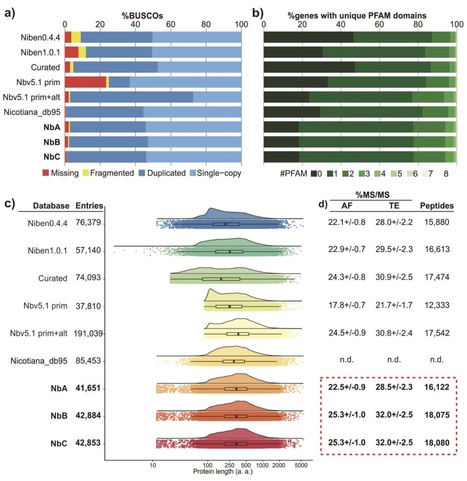
Nicotiana benthamiana is an important model organism and representative of the Solanaceae (Nightshade) family. N. benthamiana has a complex ancient allopolyploid genome with 19 chromosomes, and an estimated genome size of 3.1Gb. Several draft assemblies of the N. benthamiana genome have been generated, however, many of the gene-models in these draft assemblies appear incorrect. Here we present a nearly non-redundant database of improved N. benthamiana gene-models based on gene annotations from well-annotated genomes in the Nicotiana genus. We show that the new predicted proteome is more complete than the previous proteomes and more sensitive and accurate in proteomics applications, while maintaining a reasonable low gene number (~43,000). As a proof-of-concept we use this proteome to compare the leaf extracellular (apoplastic) proteome to a total extract of leaves. Several gene families are more abundant in the apoplast. For one of these apoplastic protein families, the subtilases, we present a phylogenetic analysis illustrating the utility of this database. Besides proteome annotation, this database will aid the research community with improved target gene selection for genome editing and off-target prediction for gene silencing.
Accelerated adaptive evolution is a hallmark of plant–pathogen interactions. Plant intracellular immune receptors (NLRs) often occur as allelic series with differential pathogen specificities. The determinants of this specificity remain largely unknown. Here, we unravelled the biophysical and structural basis of expanded specificity in the allelic rice NLR Pik, which responds to the effector AVR-Pik from the rice blast pathogen Magnaporthe oryzae. Rice plants expressing the Pikm allele resist infection by blast strains expressing any of three AVR-Pik effector variants, whereas those expressing Pikp only respond to one. Unlike Pikp, the integrated heavy metal-associated (HMA) domain of Pikm binds with high affinity to each of the three recognized effector variants, and variation at binding interfaces between effectors and Pikp-HMA or Pikm-HMA domains encodes specificity. By understanding how co-evolution has shaped the response profile of an allelic NLR, we highlight how natural selection drove the emergence of new receptor specificities. This work has implications for the engineering of NLRs with improved utility in agriculture.
Following the molecular characterisation of functional disease resistance genes in recent years, methods to track and verify the integrity of multiple genes in varieties are needed for crop improvement through resistance stacking. Diagnostic resistance gene enrichment sequencing (dRenSeq) enables the high-confidence identification and complete sequence validation of known functional resistance genes in crops. As demonstrated for tetraploid potato varieties, the methodology is more robust and cost-effective in monitoring resistances than whole-genome sequencing and can be used to appraise (trans)gene integrity efficiently. All currently known NB-LRRs effective against viruses, nematodes and the late blight pathogen Phytophthora infestans can be tracked with dRenSeq in potato and hitherto unknown polymorphisms have been identified. The methodology provides a means to improve the speed and efficiency of future disease resistance breeding in crops by directing parental and progeny selection towards effective combinations of resistance genes.
During plant cell invasion, the oomycete Phytophthora infestans remains enveloped by host-derived membranes whose functional properties are poorly understood. P. infestans secretes a myriad of effector proteins through these interfaces for plant colonization. Recently we showed that the effector protein PexRD54 reprograms host-selective autophagy by antagonising antimicrobial-autophagy receptor Joka2/NBR1 for ATG8CL binding (Dagdas, 2016). Here, we show that during infection, ATG8CL/Joka2 labelled defense-related autophagosomes are diverted toward the perimicrobial host membrane to restrict pathogen growth. PexRD54 also localizes to autophagosomes across the perimicrobial membrane, consistent with the view that the pathogen remodels host-microbe interface by co-opting the host autophagy machinery. Furthermore, we show that the host-pathogen interface is a hotspot for autophagosome biogenesis. Notably, overexpression of the early autophagosome biogenesis protein ATG9 enhances plant immunity. Our results implicate selective autophagy in polarized immune responses of plants and point to more complex functions for autophagy than the widely known degradative roles.
Plant disease resistance can be seen as a process of a dual nature: both qualitative and quantitative. The nature of non-self molecules perceived by plants has led to the depiction of plant immunity as a two-layer defence system. The first layer is mediated by cell surface and intracellular pattern recognition receptors (PRRs) which perceive conserved microbial elicitors, termed pathogen- associated molecular patterns (PAMPs). The perception of these conserved elicitors initiates cascades of signalling and transcrip- tion events, known as PAMP-triggered immunity (PTI). Adapted pathogens secrete effector molecules able to suppress PTI, but which may also be recognized by plant intracellular resistance (R) proteins. This initiates effector-triggered immunity (ETI), the second layer of plant defence. ETI typically yields complete disease resistance phenotypes against pathogens containing the recog- nized effector, a process designated as qualitative resistance. By contrast, perception of a single PAMP typically has a weaker contribution to overall plant resistance. More generally, in the absence of qualitative resistance, an incomplete resistance phe- nomenon is often observed, leading to a reduction rather than absence of disease. This is usually referred to as quantitative disease resistance (QDR).
Just like humans, plants have an immune system that they use to fend off pathogens and pests. Research involving plant immunity was guided by Harold Flor’s influential “gene-for-gene” model but this model is now supplanted by a more complex view of pant immunity. Disease resistance genes appear to work together in intricate networks that enable plants to detect and resist parasites more effectively. An in-depth understanding of the immune system can help us breed disease resistant crops.
Plants deploy numerous cell surface-localized pattern-recognition receptors (PRRs) to perceive host- and microbe-derived molecular patterns that are specifically released during infection and activate defense responses. The activation of the mitogen-activated protein kinases MPK3, MPK4 and MPK6 (MPK¾/6) is a hallmark of immune system activation by all known PRRs and is crucial for establishing disease resistance. The MAP kinase kinase kinase (MAPKKK) MEKK1 controls MPK4 activation, but the MAPKKKs responsible for MPK3/6 activation downstream of diverse PRRs and how the perception of diverse molecular patterns leads to the activation of MAPKKKs remain elusive. Here we show that two highly related MAPKKKs, MAPKKK3 and MAPKKK5, mediate MPK3/6 activation by at least four PRRs and confer resistance to bacterial and fungal pathogens in Arabidopsis thaliana. The receptor-like cytoplasmic kinases VII (RLCK VII), which act downstream of PRRs, directly phosphorylate MAPKKK5 Ser599, which is required for pattern-triggered MPK3/6 activation, defense gene expression, and disease resistance. Surprisingly, MPK6 further phosphorylates MAPKKK5 Ser682 and Ser692 to enhance MPK3/6 activation and disease resistance, pointing to a positive feedback mechanism. Finally, MEKK1 Ser603 is phosphorylated by both RLCK VII and MPK4, which is required for pattern-triggered MPK4 activation. These findings illustrate central mechanisms by which multiple PRRs activate MAPK cascades and disease resistance.
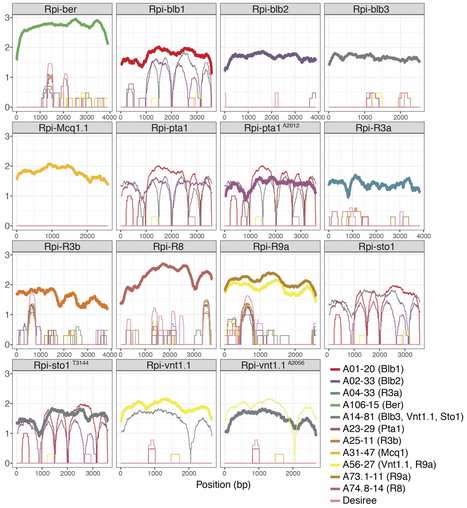
Late blight, caused by the oomycete pathogen Phytophthora infestans, is the most devastating disease in potato. For sustainable management of this economically important disease, resistance breeding relies on the availability of resistance (R) genes. Such R genes against P. infestans have evolved in wild tuber-bearing Solanum species from North, Central and South America, upon co-evolution with cognate avirulence (Avr) genes. Here, we report how effectoromics screens with Avr2 of P. infestans revealed defense responses in diverse Solanum species that are native to Mexico and Peru. We found that the response to AVR2 in the Mexican Solanum species is mediated by R genes of the R2 family that resides on a major late blight locus on chromosome IV. In contrast, the response to AVR2 in Peruvian Solanum species is mediated by Rpi-mcq1, which resides on chromosome IX and does not belong to the R2 family. The data indicate that AVR2 recognition has evolved independently on two genetic loci in Mexican and Peruvian Solanum species, respectively. Detached leaf tests on potato cultivar ‘Désirée’ transformed with R genes from either the R2 or the Rpi-mcq1 locus revealed an overlapping, but distinct resistance profile to a panel of 18 diverse P. infestans isolates. The achieved insights in the molecular R – Avr gene interaction can lead to more educated exploitation of R genes and maximize the potential of generating more broad-spectrum, and potentially more durable control of the late blight disease in potato.
Some pathogens and pests deliver small RNAs (sRNAs) into host cells to suppress host immunity. Conversely, hosts also transfer sRNAs into pathogens and pests to inhibit their virulence. Although sRNA trafficking has been observed in a wide variety of interactions, how sRNAs are transferred, especially from hosts to pathogens/pests, is still unknown. Here we show that host Arabidopsis cells secrete exosome-like extracellular vesicles to deliver sRNAs into fungal pathogen Botrytis cinerea. These sRNA-containing vesicles accumulate at the infection sites and are taken up by the fungal cells. Transferred host sRNAs induce silencing of fungal genes critical for pathogenicity. Thus, Arabidopsis has adapted exosome-mediated cross-kingdom RNA interference as part of its immune responses during the evolutionary arms race with the pathogen.
Plant pathogenic oomycetes secrete effector proteins to suppress host immune responses. Resistance genes may recognize effectors and activate immunity, which is often associated with a hypersensitive response (HR). Transient expression of effectors in plant germplasm and screening for HR has proven a powerful tool in the identification of new resistance genes. In this study, fourteen effectors from the lettuce downy mildew Bremia lactucae race Bl:24 were screened for HR induction in over 150 lettuce accessions. Three effectors ‐ BLN06, BLR38 and BLR40 – were recognized in specific lettuce lines. Recognition of effector BLR38 in Lactuca serriola LS102 did not co‐segregate with resistance against race Bl:24 but was linked to resistance against multiple other B. lactucae races. Two unlinked loci are both required for effector recognition and are located near known major resistance clusters. Gene dosage affects the intensity of the BLR38‐triggered HR but is of minor importance for disease resistance.
The rice blast fungus Magnaporthe oryzae is the most serious pathogen of cultivated rice and a significant threat to global food security. To accelerate targeted mutation and specific genome editing in this species, we have developed a rapid plasmid-free CRISPR-Cas9-based genome editing method. We show that stable expression of Cas9 is highly toxic to M. oryzae. However efficient gene editing can be achieved by transient introduction of purified Cas9 pre-complexed to RNA guides to form ribonucleoproteins (RNPs). When used in combination with oligonucleotide or PCR-generated donor DNAs, generation of strains with specific base pair edits, in-locus gene replacements, or multiple gene edits, is very rapid and straightforward. We demonstrate a co-editing strategy for the creation of single nucleotide changes at specific loci. Additionally, we report a novel counterselection strategy which allows creation of precisely edited fungal strains that contain no foreign DNA and are completely isogenic to the wild type. Together, these developments represent a scalable improvement in the precision and speed of genetic manipulation in M. oryzae and are likely to be broadly applicable to other fungal species.
The Pseudomonas syringae cysteine protease AvrPphB activates the Arabidopsis resistance protein RPS5 by cleaving a second host protein, PBS1. AvrPphB induces defense responses in other plant species, but the genes and mechanisms mediating AvrPphB recognition in those species have not been defined. Here, we show that AvrPphB induces defense responses in diverse barley cultivars. We show also that barley contains two PBS1 orthologs, that their products are cleaved by AvrPphB, and that the barley AvrPphB response maps to a single locus containing a nucleotide-binding leucine-rich repeat (NLR) gene, which we termed AvrPphB Resistance 1 (Pbr1). Transient co-expression of PBR1 with wild-type AvrPphB, but not a protease inactive mutant, triggered defense responses, indicating that PBR1 detects AvrPphB protease activity. Additionally, PBR1 co-immunoprecipitated with barley and N. benthamiana PBS1 proteins, suggesting mechanistic similarity to detection by RPS5. Lastly, we determined that wheat cultivars also recognize AvrPphB protease activity and contain a Pbr1 ortholog. Phylogenetic analyses showed however that Pbr1 is not orthologous to RPS5. Our results indicate that the ability to recognize AvrPphB evolved convergently, and imply that selection to guard PBS1-like proteins is ancient. Also, the results suggest that PBS1-based decoys may be used to engineer protease effector recognition-based resistance in barley and wheat.
Genome editing by sequence-specific nucleases (SSNs) has revolutionized biology by enabling targeted modifications of genomes. Although routine plant genome editing emerged only a few years ago, we are already witnessing the first applications to improve disease resistance. In particular, CRISPR-Cas9 has democratized the use of genome editing in plants thanks to the ease and robustness of this method. Here, we review the recent developments in plant genome editing and its application to enhancing disease resistance against plant pathogens. In the future, bioedited disease resistant crops will become a standard tool in plant breeding.
The rice blast fungus Magnaporthe oryzae is the most serious pathogen of cultivated rice and a significant threat to global food security. To accelerate targeted mutation and specific gene editing in this species, we have developed a rapid plasmid-free CRISPR-Cas9-based gene editing method. It has previously been reported in M. oryzae that transformation with plasmids expressing Cas9 can generate specific mutations using sgRNAs, directing the endonuclease to specific genes. We show, however, that expression of Cas9 is highly toxic to M. oryzae, rendering this approach impractical. We demonstrate that using purified Cas9 pre-complexed to RNA guides to form ribonucleoproteins (RNPs), provides an alternative and very effective gene editing procedure. When used in combination with oligonucleotide or PCR-generated donor DNAs, generation of strains with specific base pair edits, in-locus gene replacements, or multiple gene edits, is very rapid and straightforward. Additionally, we report a novel counterselection strategy which allows creation of precisely edited fungal strains that contain no foreign DNA and are completely isogenic to the wild type. Together, these developments represent a scalable improvement in the precision and speed of genetic manipulation in M. oryzae and are likely to be broadly applicable to other fungal species.
Brassinosteroids (BRs) form a group of steroidal hormones essential for plant growth, development and stress responses. Here, we report that plant-specific TETRATRICOPEPTIDE THIOREDOXIN-LIKE (TTL) proteins are positive regulators of BR signaling functioning as scaffold for BR signaling components in Arabidopsis. TTL3 forms a complex with all core components involved in BR signaling, including the receptor kinase BRASSINOSTEROID INSENSITIVE1 (BRI1), the transcription factor BRASSINAZOLE RESISTANT1 (BZR1) and the phosphatase BRI1-SUPPRESSOR1 (BSU1), but excluding the co-receptor BAK1. TTL3 is mainly localized in the cytoplasm, but BR treatment increases its localization at the plasma membrane, where it strengthens the association with BR signaling components. Consistent with a role in BR signaling, mutations in TTL3 and related TTL1 and TTL4 genes cause reduced BR responsiveness. We propose a mechanistic model for BR signaling, in which cytoplasmic/nuclear BR components bound to TTL proteins are recruited to the plasma membrane upon BR perception, which in turn allows the assembly of a BR signaling complex, leading to the de-phosphorylation and nuclear accumulation of the transcription factors BZR1 and BES1.
In the past 2 decades, progress in molecular analyses of the plant immune system has revealed key elements of a complex response network. Current paradigms depict the interaction of pathogen‐secreted molecules with host target molecules leading to the activation of multiple plant response pathways. Further research will be required to fully understand how these responses are integrated in space and time, and exploit this knowledge in agriculture. In this review, we highlight systems biology as a promising approach to reveal properties of molecular plant–pathogen interactions and predict the outcome of such interactions. We first illustrate a few key concepts in plant immunity with a network and systems biology perspective. Next, we present some basic principles of systems biology and show how they allow integrating multiomics data and predict cell phenotypes. We identify challenges for systems biology of plant–pathogen interactions, including the reconstruction of multiscale mechanistic models and the connection of host and pathogen models. Finally, we outline studies on resistance durability through the robustness of immune system networks, the identification of trade‐offs between immunity and growth and in silico plant–pathogen co‐evolution as exciting perspectives in the field. We conclude that the development of sophisticated models of plant diseases incorporating plant, pathogen and climate properties represent a major challenge for agriculture in the future.
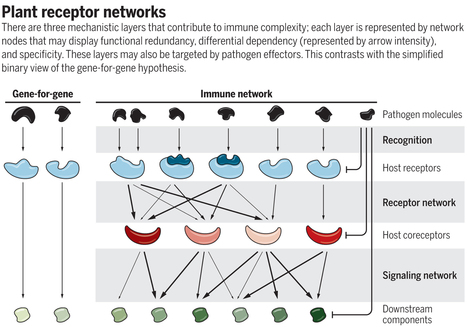
Plants are attacked by a multitude of pathogens and pests, some of which cause epidemics that threaten food security. Yet a fundamental concept in plant pathology is that most plants are actively resistant to most pathogens and pests. Plants fend off their innumerable biotic foes primarily through innate immune receptors that detect the invading pathogens and trigger a robust immune response. The conceptual basis of such interactions was elegantly articulated by Harold H. Flor, who, in 1942, proposed the hypothesis that single genes in plants and pathogens define the outcome of their interactions; that is, a plant harboring a specific gene displays resistance against a pathogen that carries an interacting virulence gene (1). This gene-for-gene model was hugely insightful and influential—it has helped to guide applied and basic research on disease resistance. However, recent findings are taking the field beyond this simplified binary view of plant-pathogen interactions. Plants carry extremely diverse and dynamic repertoires of immune receptors that are interconnected in complex ways. Conversely, plant pathogens secrete a diversity of virulence proteins and metabolites called effectors, and pathogen genomics has revealed hundreds of effector genes in many species. These effectors have evidently evolved to favor pathogen infection and spread, but a subset of them inadvertently activate plant immune receptors. The emerging paradigm is that dynamic webs of genetic and biochemical networks underpin the early stages of plant-pathogen interactions.
Plant heterotrimeric G-proteins function in important signaling pathways mediated by plant receptor kinases (RKs), however, the unique biochemical properties of Gα subunits have complicated our understanding of their regulation in plants. In their new paper in Cell Research, Liang et al. reveal that phosphorylation of the Gα regulator, RGS1, is critical for triggering G-protein signaling downstream of RK activation.
The wheat blast fungus (Triticum pathotype of Pyricularia oryzae) first arose in Brazil in 1985 and has recently spread to Asia. Resistance genes against this new pathogen are very rare in common wheat populations. We screened 520 local landraces of common wheat collected worldwide with Br48, a Triticum isolate collected in Brazil, and found a highly resistant, unique accession, GR119. When F2 seedlings derived from a cross between GR119 and Chinese Spring (CS, susceptible control) were inoculated with Br48, resistant and susceptible seedlings segregated in a 15:1 ratio, suggesting that GR119 carries two resistance genes. When the F2 seedlings were inoculated with Br48△A8 carrying a disrupted allele of AVR-Rmg8 (an avirulence gene corresponding to a previously reported resistance gene, Rmg8), however, the segregation fitted a 3:1 ratio. These results suggest that one of the two genes in GR119 was Rmg8. The other, new gene was tentatively designated as RmgGR119. GR119 was highly resistant to all Triticum isolates tested. Spikes of GR119 were highly resistant to Br48, moderately resistant to Br48△A8 and a hybrid culture carrying avr-Rmg8 (nonfunctional allele), and highly resistant to its transformant carrying AVR-Rmg8. The strong resistance of GR119 was attributed to the combined effects of Rmg8 and RmgGR119.
To get content containing either thought or leadership enter:
To get content containing both thought and leadership enter:
To get content containing the expression thought leadership enter:
You can enter several keywords and you can refine them whenever you want. Our suggestion engine uses more signals but entering a few keywords here will rapidly give you great content to curate.


 Your new post is loading...