The AvrPiz-t gene encodes a small protein predicted to be secreted that shows no homology to known proteins and is 108 amino acids in length. AvrPiz-t can suppress programmed cell death (PCD) induced by BAX in tobacco, suggesting that it might contribute to the pathogenicity of M. oryzae. These data suggested that AvrPiz-t functions primarily as a virulence effector contributing to the pathogenicity of M. oryzae. To further understand the mechanism of the pathogenicity-associated function of AvrPiz-t, we determined its solution structure.
Type III effectors are virulence factors of Gram-negative bacterial pathogens delivered directly into host cells by the type III secretion nanomachine where they manipulate host cell processes such as the innate immunity and gene expression. Here, we show that the novel type III effector XopL from the model plant pathogen Xanthomonas campestris pv. vesicatoriaexhibits E3 ubiquitin ligase activity in vitro and in planta, induces plant cell death and subverts plant immunity. E3 ligase activity is associated with the C-terminal region of XopL, which specifically interacts with plant E2 ubiquitin conjugating enzymes and mediates formation of predominantly K11-linked polyubiquitin chains. The crystal structure of the XopL C-terminal domain revealed a single domain with a novel fold, termed XL-box, not present in any previously characterized E3 ligase. Mutation of amino acids in the central cavity of the XL-box disrupts E3 ligase activity and prevents XopL-induced plant cell death. The lack of cysteine residues in the XL-box suggests the absence of thioester-linked ubiquitin-E3 ligase intermediates and a non-catalytic mechanism for XopL-mediated ubiquitination. The crystal structure of the N-terminal region of XopL confirmed the presence of a leucine-rich repeat (LRR) domain, which may serve as a protein-protein interaction module for ubiquitination target recognition. While the E3 ligase activity is required to provoke plant cell death, suppression of PAMP responses solely depends on the N-terminal LRR domain. Taken together, the unique structural fold of the E3 ubiquitin ligase domain within the Xanthomonas XopL is unprecedented and highlights the variation in bacterial pathogen effectors mimicking this eukaryote-specific activity.
Understanding the evolution of virulence is key to appreciating the role specific loci play in pathogenicity. Streptomyces species are generally non-pathogenic soil saprophytes, yet within their genome we can find homologues of virulence loci. One example of this is the mammalian cell entry (mce) locus, which has been characterised in Mycobacterium tuberculosis. To investigate the role in Streptomyces we deleted the mce locus and studied its impact on cell survival, morphology and interaction with other soil organisms. Disruption of the mce cluster resulted in virulence towards amoebae (Acanthamoeba polyphaga) and reduced colonization of plant (Arabidopsis) models, indicating these genes may play an important role in Streptomyces survival in the environment. Our data suggest that loss of mce in Streptomyces spp. may have profound effects on survival in a competitive soil environment, and provides insight in to the evolution and selection of these genes as virulence factors in related pathogenic organisms.
Tree lovers can add yet another pest to their list of worries. This time, it’s a beetle carrying an insidious fungus that can kill black walnut trees. Eight walnut twig beetles were found in traps set by state forestry and agriculture officials at a wood-processing business in Butler County in southwestern Ohio. Walnut products there have been quarantined.
“We definitely have a lot of walnut in Ohio, and it’s a very valuable species that we’re trying to protect,” said Dan Kenny, acting assistant chief of the Ohio Department of Agriculture’s plant health division. “We haven’t dealt with this pest before. There are a lot of questions out there, because it’s really a new discovery.” Although officials found beetles, they haven’t yet found any trees infested with the fungus that causes thousand cankers disease.
A group of over 20 organisations from the public sector, charities and the private sector have got together to produce two videos to help tackle the threat posed to our plant nurseries, gardens, woodlands and countryside from two devastating Phytophthora pathogens, Phytophthora ramorum and Phytophthora kernoviae.
This film is aimed more at professionals who work in environments where the diseases may be present or that could easily be contaminated. It describes the diseases in more detail and offers advice on appropriate biosecurity measures to help prevent the spread. It may also appeal to those studying life sciences at college or university.
The secretory pathway of eukaryotic cells has an elaborated set of endomembrane compartments involved in the synthesis, modification, and sorting of proteins and lipids. The secretory pathway in plant cells shares many features with that in other eukaryotic cells but also has distinct characteristics important for fundamental cell and developmental processes and for proper immune responses. Recently, there has been evidence that the remodeling of this pathway, and often the formation of viral-induced organelles, play an important role in viral replication and spread. The modification of the host secretory pathway seems to be a common feature among most single-stranded positive ss(+)RNA and even some DNA viruses. In this review, we will present the recent advances in the understanding of the organization and dynamics of the plant secretory pathway and the molecular regulation of membrane trafficking in the pathway. We will also discuss how different plant viruses may interact with the host secretory pathway for their efficient replication and spread, with a focus on tobacco mosaic virus and turnip mosaic virus.
The genetically modified potatoes are in the middle, with a row of withering Bintje plants to the left and right, and several rows of badly affected Nicola plants on the right.
Wetteren, 8 januari 2013. After a two-year scientific field trial with genetically modified potatoes, researchers have concluded that potatoes with multiple resistance to potato diseases can make our potato growing much more sustainable. Both in 2011 and 2012, genetically modified potatoes showed greatly decreased susceptibility to Phytophthora infestans.
Increasing numbers of infectious crop diseases that are caused by fungi and oomycetes urge the need to develop alternative strategies for resistance breeding. As an alternative for the use of resistance (R) genes, the application of mutant susceptibility (S) genes has been proposed as a potentially more durable type of resistance. Identification of S genes is hampered by their recessive nature. Here we explore the use of pathogen-derived effectors as molecular probes to identify S genes. Effectors manipulate specific host processes thereby contributing to disease. Effector targets might therefore represent S genes. Indeed, the Pseudomonas syringae effector HopZ2 was found to target MLO2, anArabidopsis thaliana homologue of the barley S gene Mlo. Unfortunately, most effector targets identified so far are not applicable as S genes due to detrimental effects they have on other traits. However, some effector targets such as Mlo are successfully used, and with the increase in numbers of effector targets being identified, the numbers of S genes that can be used in resistance breeding will rise as well.
The 10th International Congress of Plant Pathology (ICPP 2013), organized by Chinese Society for Plant Pathology, will be held in Beijing , China , August 25-30, 2013.
Early bird registration for ICPP2013 is open and will be closed on 28th February, 2013. Register before the deadline to receive your discounted rate. Don’t miss the opportunity to meet with friends and colleagues in one of the most beautiful cities in the world and to discuss recent advances and developments in plant pathology!
Please prepare your abstract based on the attached “Abstract Guidelines”. Submissions online are strongly encouraged.
An updated program is available on the Congress website. Please find out all the Congress details by visiting http://www.icppbj2013.org.
Don't forget to register for pre-/post-Congress workshops and post-Congress Excursion. Limited spaces available, so get in early!
Pre- and Post-Congress Workshops:
W1: 4th Workshop of the International Cereal Nematodes Initiative W2: 5th International Phytophthora, Pythium, and Related Genera Workshop W3: 11th International Epidemiology Workshop W4: 11th International Fusarium Workshop W5: Global Root Health Forum W6: International Workshop on Viroids and Satellite RNAs (IWVdS) W7: Plasmodiophorids, Biology, Environment and Control W8: 5th International Symposium on Rhizoctonia: Progress and Challenges in the 21st Century W9: 15th International Sclerotinia Workshop
When you look out on a golden-yellow field of oilseed rape you might not think you're seeing a battleground, but crops including oilseed rape, wheat, potato and tomato are engaged in a constant fight with pests and disease, trying to stay one step ahead.
As the world's human population looks set to increase to nine billion people by 2050, keeping plants healthy and productive is going to be essential to making sure there is enough food to go round.Aphids damage crops by feeding on them and transmitting plant diseases. "Crop pests are emerging earlier due to global warming and new variants are arriving from other countries, bringing new plant viruses", said Dr Saskia Hogenhout from the John Innes Centre (JIC) in Norwich, an institute strategically funded by the BBSRC.
Among these pests whitefly and green peach aphids cause hundreds of millions of pounds of damage and loss to crops through transmitting viruses and feeding. Both species are notorious for demonstrating the ability to rapidly develop resistance to conventional pesticides, and both attack a wide variety of crops, including cabbage, lettuce, beet, oilseed rape and potato. In UK cereal crops aphids alone can cause yield losses of over 40 per cent, and insect pests are responsible for an estimated 15 per cent of all crop losses globally. Dr Hogenhout said: "The aphids and whitefly themselves are problematic but they also transmit more than half of all plant viruses. They're called the mosquitoes of plants because like mosquitoes they feed on the vascular system and they transmit quite a number of viruses."
Very promissing non-chemical method to combath aphid and whitefly species in the future! Whiteflies suffer from an identity crisis, as they are not flies at all, in appearance they resemble tiny, pure white 'moths' but are in fact, closely related to sap-sucking aphids. Aphids and whiteflies can both cause severe damage to wide range of crops by sucking sap from the plant, resulting in damages of the leaves, as well as leaf loss, wilting and stunting. Not only do they feed on plants, but they also produce honeydew, which spoils the plants' appearance, attracts ants and black sooty mould. Both can also transmit different species of plant viruses, which cause further damage to crops. Until the gene silencing methods are applied, biologocial control could be used as alternative to insecticide's use.
Effector proteins are key elements in plant fungal interactions. The rice blast fungus Magnaporthe oryzae secretes numerous effectors suspected to be translocated inside plant cells. However, their cellular targets and the mechanisms of translocation are still unknown. Here, we have identified the open reading frame (ORF3) corresponding to the M. oryzae avirulence gene AVR1-C039 interacting with the rice resistance gene Pi-CO39 and encoding a small secreted protein without homologies to other proteins. We demonstrate that AVR1-C039 is specifically expressed and secreted at the plant fungal interface during the biotrophic phase of infection. Live cell imaging with M. oryzae transformants expressing a translational fusion between AVR1-C039 and the monomeric red fluorescent protein (mRFP), indicates that AVR1-C039 is translocated into the cytoplasm of infected rice cells. Transient expression of an AVR1-C039 isoform without signal peptide in rice protoplasts triggers a Pi-C039 specific HR suggesting that the recognition of AVR1-C039 by the Pi-C039 gene product occurs in the cytoplasm of rice cells. The native AVR1-C039 enters into the secretory pathway of rice protoplasts as demonstrated by the ER localization of AVR1-CO39:mRFP:HDEL translational fusions and is correctly processed as shown by Western blotting. However, this secreted AVR1-C039 isoform triggers Pi-CO39 specific HR and accumulates inside rice protoplasts as shown by western blotting and localisation of AVR1-C039:mRFP translational fusions. This indicates that AVR1-C039 is secreted by rice protoplasts and re-enters into the cytoplasm by unknown mechanisms suggesting that translocation of AVR1-C039 into rice cells occurs independently of fungal factors.
HERON today, gone tomorrow — that is the fear of a group of bird conservationists from Cilfrew.
They claim their favourite sedge of herons may be forced to move from their woodland home near Neath. This, they said, was because the larch trees they had nested in for years had been blighted by disease and condemned by Forestry Commission Wales (FCW). One of the group, Mike Davies, urged the authorities to spare the trees in question at Craig Gwladus Country Park, which is owned by Neath Port Talbot Council. The Post has been told it would be illegal to fell them during the heron nesting season, which is generally March and April, but can be from February to July. An FCW spokesman said he did not know the exact felling schedule for the site, but added: "The priority for us has to be controlling the disease (Phytophthora ramorum). If you don't do anything, the disease would spread and put other areas at risk. What we would not do is allow any felling while the nests are occupied."
Sedentary plant-parasitic nematodes engage in a long-lasting and intimate relationship with their host plant. This interaction starts in the soil when freshly hatched infective juveniles are attracted to specific parts of a host plant root system. Little is known of what determines the attractiveness of host plant roots, but a mix of biochemical and structural cues from specific host tissues in the roots likely triggers invasive behavior in nematodes. Similarly to nematodes, phloem-feeding aphids and other piercing-sucking (hemipteran) insects must establish close associations with their host plants in order to modulate plant cellular processes to promote feeding and reproduction. This focus issue on molecular interactions between plants and different representatives of the animal kingdom sheds light on recent developments and offers a platform for exciting new data in this field. We are grateful to all the authors for their diverse contributions and for making this focus issue possible.
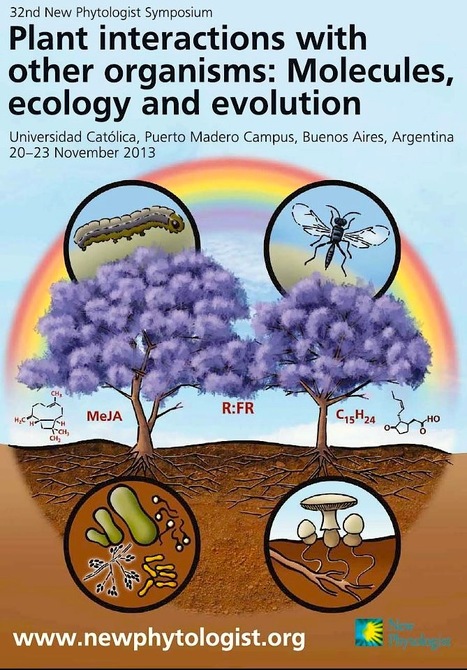
The goal of this symposium is to bring together researchers working in a wide range of disciplines in plant biology, ecology and evolution in the field of plant interactions with other organisms. The central objective is to discuss and integrate information from different approaches and perspectives in order to create a synthetic framework for understanding these interactions. Our hope is to have a diverse and dynamic group of scientists, who are willing to step out of their disciplinary comfort zone and engage in an effort to participate in discussions spanning the range from molecular approaches to ecosystem implications.
I have to admit that as a plant scientist plugged into the major social media networks that when I was inundated with articles and posts about ash dieback (Chalara fraxineai) in December, I got a bit fed up with it. Of course I appreciate all species have intrinsic value and it will be sad if Britain loses its ash trees – but I have no emotional attachment to ash trees, and pathogens are a fact of life. British countryside is managed land, so with effective management other trees will fill the gaps. However, a paper published in the February issue of American Journal of Preventive Medicine (Donovan et al., 2013) suggests the health effects on humans of losing trees are significant, and that serious loss of ash trees in the UK could have consequences beyond the financial burden on the forestry industry and the short-term loss of trees.
Chocolate has its origins in ancient Central America where the Maya and the Aztecs cultivated the cacao tree (Theobroma cacao L.) and extracted from the seeds or beans a highly prized drink, which was called chocolatl, a precursor to our modern English word chocolate. Theobroma means the source of the “food of the gods,” hence its scientific name Theo (god) and broma (food). The Spaniards, notably Hernan Cortez, introduced the drink to the Spanish royalty, but the bitter drink did not become popular for another one hundred years, when additives such as sugar, cinnamon, and chile peppers made the drink more palatable. Chocolate was the first mildly stimulating drink introduced to Europe, appearing even before coffee and tea.
The present-day popularity of chocolate and the drink cocoa needs no verification as attested to by the many “chocolate lovers” who especially look forward to occasions and national holidays when chocolate is traditionally given as a gift to loved ones and friends. The demand for chocolate is growing and the question now is will the world supply of a product that comes from a strictly tropical, rainforest-inhabiting tree will continue to meet the demand. Over the past two decades several important fungal diseases have gained considerable importance and pose a serious threat to the supply of chocolate. Depending on where cacao is grown, one or more of three diseases (black pod, witches’ broom, and frosty pod rot) may reach epiphytotic proportions that cause devastating losses.
Phil Twyford is walking the talk. The Te Atatu MP put on his walking shoes and tackled the 70km Hillary Trail through the Waitakere Ranges in a bid to raise public awareness of the kauri dieback disease. Mr Twyford was joined along the way by scientists who have been studying the disease he says is both heartbreaking and enlightening. "To get to take on the trail with these scientists has been like getting a crash course in botany. The funding for the research into the disease is due to finish midway through next year," he says. "At this point we don't know much about the problem but there needs to be government funded research into the science and a campaign to teach the public about what they need to do." Mr Twyford says the eco system a Kauri exists in is very specialised and up to 70 other plant species rely on them, all of which would be wiped out if the Phytophthora taxon agathis (PTA) disease keeps spreading. The five-year research programme is primarily funded by $4.8 million of government money but the Primary Industries Ministry says it will not seek another round of funding. Eleven per cent of Kauri in the ranges are affected and no cure has been found.
Leaf infilitration of Nicotiana benthamiana with a solution of the bacterium Agrobacterium tumefaciens. This assay enables transient gene expression in plant leaves and is routinely used in plant biology research.
I see, Thanks! But just out of curiosity, is any specific clues? Your paper "In planta Expression of Oomycete and Fungal Genes" seems not very concrete about the growth condition of N. benthamiana.
The XVI International Botrytis Symposium will be organized by the Section of Plant Pathology of the Department of Soil, Plant and Food Sciences of the University of Bari (Italy) (DISSPA) in cooperation with the Research, Experimentation and Educational Centre in Agriculture "Basile Caramia" (CRSFA). The Symposium will be held from 23 to 28 June 2013 in Locorotondo (Bari, Italy), a small and old town looking out over the Itria Valley (Valle d'Itria), one of the most beautiful landscapes and touristic attractive areas all over the Puglia region (Southern Italy). Like in the past meetings, the Symposium will bring together scientists representing a broad spectrum of countries, topics, research approaches, crops, and agricultural practices all over the world. Skilled and young researchers with different backgrounds and interests, all focused on Botrytis and related fungi, will share knowledge, expertise, and ideas. The XVI International Botrytis Symposium will be based on invited key lectures, oral presentations and posters concerning all the most relevant aspects of Botrytis and related fungi: identification, management, ecology and epidemiology, biology, genetics, chemical and biological control, post-harvest management, -omics, post-genomics and host-pathogen interactions. The Scientific Committee and the Organizing Committee of the Symposium are doing all their best to combine an exciting scientific programme with the pleasant and friendly hospitality, excellent foods and wines, beautiful landscapes, and historical traditions characterizing the Itria Valley and the Puglia region.
Avirulence (Avr) genes of plant pathogens encode effector proteins that trigger immunity in plants carrying appropriate resistance (R) genes. The Phytophthora sojae Avr3a gene displays allelic variation in messenger RNA transcript levels. P. sojae strains with detectable Avr3a gene transcripts are avirulent on plants carrying the R-gene Rps3a, whereas strains lacking Avr3a mRNA escape detection by Rps3a and are virulent. Here we show non-Mendelian interactions between naturally occurring Avr3a alleles that result in transgenerational gene silencing, and we identify small RNA molecules of 25 nucleotides that are abundant in gene-silenced strains but not in strains with Avr3a mRNA. This example of transgenerational gene silencing is exceptional because it is naturally occurring and results in gain of virulence in a pathogenic organism.
Medicago truncatula and Sinorhizobium meliloti form a symbiotic association resulting in the formation of nitrogen-fixing nodules. Nodule cells contain large numbers of bacteroids which are differentiated, nitrogen-fixing forms of the symbiotic bacteria. In the nodules, symbiotic plant cells home and maintain hundreds of viable bacteria. In order to better understand the molecular mechanism sustaining the phenomenon, we searched for new plant genes required for effective symbiosis.We used a combination of forward and reverse genetics approaches to identify a gene required for nitrogen fixation, and we used cell and molecular biology to characterize the mutant phenotype and to gain an insight into gene function.The symbiotic gene DNF2 encodes a putative phosphatidylinositol phospholipase C-like protein. Nodules formed by the mutant contain a zone of infected cells reduced to a few cell layers. In this zone, bacteria do not differentiate properly into bacteroids. Furthermore, mutant nodules senesce rapidly and exhibit defense-like reactions.This atypical phenotype amongst Fix− mutants unravels dnf2 as a new actor of bacteroid persistence inside symbiotic plant cells.
Background - Quantification of callose deposits is a useful measure for the activities of plant immunity and pathogen growth by fluorescence imaging. For robust scoring of differences, this normally requires many technical and biological replicates and manual or automated quantification of the callose deposits. However, previously available software tools for quantifying callose deposits from bioimages were limited, making batch processing of callose image data problematic. In particular, it is challenging to perform large-scale analysis on images with high background noise and fused callose deposition signals.
Results - We developed CalloseMeasurer, an easy-to-use application that quantifies callose deposition, a plant immune response triggered by potentially pathogenic microbes. Additionally, by tracking identified callose deposits between multiple images, the software can recognise patterns of how a given filamentous pathogen grows in plant leaves. The software has been evaluated with typical noisy experimental images and can be automatically executed without the need for user intervention. The automated analysis is achieved by using standard image analysis functions such as image enhancement, adaptive thresholding, and object segmentation, supplemented by several novel methods which filter background noise, split fused signals, perform edge-based detection, and construct networks and skeletons for extracting pathogen growth patterns. To efficiently batch process callose images, we implemented the algorithm in C/C++ within the AcapellaTM framework. Using the tool we can robustly score significant differences between different plant genotypes when activating the immune response. We also provide examples for measuring the in planta hyphal growth of filamentous pathogens.
Conclusions - CalloseMeasurer is a new software solution for batch-processing large image data sets to quantify callose deposition in plants. We demonstrate its high accuracy and usefulness for two applications: 1) the quantification of callose deposition in different genotypes as a measure for the activity of plant immunity; and 2) the quantification and detection of spreading networks of callose deposition triggered by filamentous pathogens as a measure for growing pathogen hyphae. The software is an easy-to-use protocol which is executed within the Acapella software system without requiring any additional libraries. The source code of the software is freely available at https://sourceforge.net/projects/bioimage/files/Callose.
LepR3, found in the Brassica napus cv ‘Surpass 400’, provides race-specific resistance to the fungal pathogen Leptosphaeria maculans, which was overcome after great devastation in Australia in 2004. We investigated the LepR3 locus to identify the genetic basis of this resistance interaction.We employed a map-based cloning strategy, exploiting collinearity with the Arabidopsis thaliana and Brassica rapa genomes to enrich the map and locate a candidate gene. We also investigated the interaction of LepR3 with the L. maculans avirulence geneAvrLm1 using transgenics.LepR3 was found to encode a receptor-like protein (RLP). We also demonstrated that avirulence towards LepR3 is conferred byAvrLm1, which is responsible for both the Rlm1 and LepR3-dependent resistance responses in B. napus.LepR3 is the first functional B. napus disease resistance gene to be cloned. AvrLm1's interaction with two independent resistance loci,Rlm1 and LepR3, highlights the need to consider redundant phenotypes in ‘gene-for-gene’ interactions and offers an explanation as to why LepR3 was overcome so rapidly in parts of Australia.
To get content containing either thought or leadership enter:
To get content containing both thought and leadership enter:
To get content containing the expression thought leadership enter:
You can enter several keywords and you can refine them whenever you want. Our suggestion engine uses more signals but entering a few keywords here will rapidly give you great content to curate.


 Your new post is loading...









interesting work