Your new post is loading...

|
Scooped by
Kamoun Lab @ TSL
February 22, 2013 10:41 AM
|
|
|
Scooped by
Kamoun Lab @ TSL
February 22, 2013 12:18 AM
|
The basidiomycete Ustilago maydis causes smut disease in maize, with large plant tumors being formed as the most prominent disease symptoms. During all steps of infection, U. maydis depends on a biotrophic interaction, which requires an efficient suppression of plant immunity. In a previous study, we identified the secreted effector protein Pit2, which is essential for maintenance of biotrophy and induction of tumors. Deletion mutants for pit2successfully penetrate host cells but elicit various defense responses, which stops further fungal proliferation. We now show that Pit2 functions as an inhibitor of a set of apoplastic maize cysteine proteases, whose activity is directly linked with salicylic-acid-associated plant defenses. Consequently, protease inhibition by Pit2 is required for U. maydis virulence. Sequence comparisons with Pit2 orthologs from related smut fungi identified a conserved sequence motif. Mutation of this sequence caused loss of Pit2 function. Consequently, expression of the mutated protein in U. maydis could not restore virulence of the pit2 deletion mutant, indicating that the protease inhibition by Pit2 is essential for fungal virulence. Moreover, synthetic peptides of the conserved sequence motif showed full activity as protease inhibitor, which identifies this domain as a new, minimal protease inhibitor domain in plant-pathogenic fungi.
|
|
Scooped by
Kamoun Lab @ TSL
February 21, 2013 11:12 AM
|
Biological invasions are one of the main drivers of biodiversity loss. Invasive alien species (IAS) may have far-reaching and harmful effects on the environment and natural resources for generations. The purpose of this report is to raise awareness among key stakeholders, decision-makers, policymakers and the general public about the environmental and socioeconomic impacts of IAS. Twenty-eight dedicated species accounts are provided to highlight the various types of impacts. These species accounts are based on thorough, up-to-date scientific information from recent research and studies, and highlight the multifaceted impacts of IAS at both the global and regional levels. Impacts of IAS on economic activities — damaging landscapes: Red palm weevil Rhynchophorus ferrugineus and Horse-chestnut leaf-miner Cameraria ohridella.
|
|
Scooped by
Kamoun Lab @ TSL
February 20, 2013 10:02 AM
|
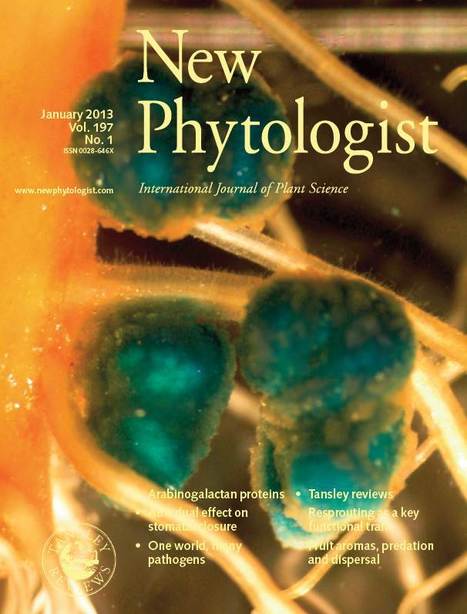
The expression of the promoter of the trehalase gene PvTRE1 fused to GUS is restricted to nodules in Phaseolus vulgaris. Courtesy of Aarón Barraza & Federico Sánchez.
|
|
Scooped by
Kamoun Lab @ TSL
February 19, 2013 4:21 PM
|
En nuestro grupo estudiamos los mecanismos de señalización durante la organogénesis de los nódulos fijadores de nitrógeno en las raíces de leguminosas. La nodulación es un modelo fascinante de diferenciación celular y del desarrollo en plantas y de la interacción de las leguminosas con microorganismos simbiontes. Asimismo, pensamos que el citoesqueleto es una ventana valiosa para estudiar este proceso porque está involucrado en diversas funciones celulares tales como división y expansión celular, la endocitósis y la comunicación célula-célula. Además, el citoesqueleto sufre rearreglos muy importantes tanto en las células animales como vegetales cuando interaccionan con microorganismos o con algunos de sus metabolitos (factores Nod, elicitores y patrones moleculares asociados a patógenos (PAMPs). La plasticidad y dinamismo del citoesqueleto de actina está mediada en gran parte por la acción y expresión diferencial de diferentes isoformas de actina y de sus proteínas asociadas. Estas proteínas controlan la organización espacial y temporal de los microfilamentos, el tráfico vesicular, el crecimiento polar y el movimiento de organelos, entre muchas otras funciones. Por esta razón, hemos clonado el gen que codifica una proteína de interacciona con actina, la profilina de Phaseolus vulgaris . Además, la profilina también interactúa con fosfoinosítidos (PIP2) y con muchas otras proteínas con dominios ricos en prolinas. Hemos reportado que la profilina en fríjol (la raíz y el nódulo) se encuentra fosforilada en varios residuos de tirosina. En eucariotes, dichas modificaciones están generalmente involucradas en las rutas de transducción de señales. Publicamos hace un tiempo que la fosforilación de la profilina en residuos de tirosina impide, tanto in vivo como in vitro, la interacción con la fosfatidil inositol 3-cinasa (PI3K), una enzima clave en la transducción de señales.
|
|
Scooped by
Kamoun Lab @ TSL
February 16, 2013 3:19 PM
|
http://www.nature.com/nature/journal/v438/n7071/full/4381070a.html A decade ago, the tequila industry was pummelled by plant diseases. Rex Dalton meets the scientists working to keep the blue agave diverse enough to survive. For centuries, artisans working in the adobe haciendas of Mexico's rural valleys have followed tradition to make the powerful spirit tequila. Copying age-old indigenous techniques, they distilled the liquor from sweet juice cooked out of the fat stems of a local succulent, the blue agave (Agave tequilana Weber, var. But in recent years, tequila makers have had to bring the latest science to the agricultural process to save both the industry and the culture it supports. Some of the oldest and biggest producers are employing scientists, building high-tech laboratories and funding academic research on the blue agave so that researchers from biochemists to geneticists can scrutinize this little-understood plant. The shift began nearly a decade ago, when disease and pests wiped out much of Mexico's crop of blue agave. The plants are grown in expansive ranches, as a single agave takes years to reach maturity for harvest. But those huge monocultural crops, planted to slake the worldwide thirst for tequila, are also an ideal place for disease to spread. Tequila was nearly destroyed by its own popularity.
|
|
Scooped by
Kamoun Lab @ TSL
February 14, 2013 4:37 AM
|
Xylella fastidiosa is not your ordinary kind of bug. It made it to the list of the most wanted plant pathogenic bacteria in 2012! This is well deserved: X. fastidiosa can infect over a hundred species (grapevine, oleander, citrus, almonds,…), and it causes severe symptoms that can kill the infected plant. TheXylella bacteria colonize the xylem vessels, and by doing so they block the transport of water in the plant. The water-deprived leaves dry and scorch, until finally they drop to the ground.
Check also the video on the glassy-winged sharpshooter leafhopper.
|
|
Scooped by
Kamoun Lab @ TSL
February 12, 2013 8:58 AM
|
Glycolate oxidase (GLO) is a key enzyme in photorespiration, catalyzing the oxidation of glycolate to glyoxylate. Arabidopsis GLO is required for nonhost defense responses to Pseudomonas syringae and for tobacco Pto/AvrPto-mediated defense responses. We previously described identification of rice GLO1 that interacts with a glutaredoxin protein, which in turn interacts with TGA transcription factors. TGA transcription factors are well known to participate in NPR1/NH1-mediated defense signaling, which is crucial to systemic acquired resistance in plants. Here we demonstrate that reduction of rice GLO1 expression leads to enhanced resistance to Xanthomonas oryzae pv oryzae (Xoo). Constitutive silencing of GLO1 leads to programmed cell death, resulting in a lesion-mimic phenotype and lethality or reduced plant growth and development, consistent with previous reports. Inducible silencing of GLO1, employing a dexamethasone-GVG (Gal4 DNA binding domain-VP16 activation domain-glucocorticoid receptor fusion) inducible system, alleviates these detrimental effects. Silencing of GLO1 results in enhanced resistance to Xoo, increased expression of defense regulators NH1, NH3, and WRKY45, and activation of PR1expression.
|
|
Scooped by
Kamoun Lab @ TSL
February 10, 2013 3:17 PM
|
Turnip mosaic potyvirus (TuMV) is probably the most widespread and damaging virus that infects cultivated brassicas worldwide. Previous work has indicated that the virus originated in western Eurasia, with all of its closest relatives being viruses of monocotyledonous plants. Here we report that we have identified a sister lineage of TuMV-like potyviruses (TuMV-OM) from European orchids. The isolates of TuMV-OM form a monophyletic sister lineage to the brassica-infecting TuMVs (TuMV-BIs), and are nested within a clade of monocotyledon-infecting viruses. Extensive host-range tests showed that all of the TuMV-OMs are biologically similar to, but distinct from, TuMV-BIs and do not readily infect brassicas. We conclude that it is more likely that TuMV evolved from a TuMV-OM-like ancestor than the reverse. We did Bayesian coalescent analyses using a combination of novel and published sequence data from four TuMV genes [helper component-proteinase protein (HC-Pro), protein 3(P3), nuclear inclusion b protein (NIb), and coat protein (CP)]. Three genes (HC-Pro, P3, and NIb), but not the CP gene, gave results indicating that the TuMV-BI viruses diverged from TuMV-OMs around 1000 years ago. Only 150 years later, the four lineages of the present global population of TuMV-BIs diverged from one another. These dates are congruent with historical records of the spread of agriculture in Western Europe. From about 1200 years ago, there was a warming of the climate, and agriculture and the human population of the region greatly increased. Farming replaced woodlands, fostering viruses and aphid vectors that could invade the crops, which included several brassica cultivars and weeds. Later, starting 500 years ago, inter-continental maritime trade probably spread the TuMV-BIs to the remainder of the world.
|
|
Scooped by
Kamoun Lab @ TSL
February 4, 2013 1:52 PM
|
Effectors are essential virulence proteins produced by a broad range of parasites, including viruses, bacteria, fungi, oomycetes, protozoa, insects and nematodes. Upon entry into host cells, pathogen effectors manipulate specific physiological processes or signaling pathways to subvert host immunity. Most effectors, especially those of eukaryotic pathogens, remain functionally uncharacterized. Here, we show that two effectors from the oomycete plant pathogen Phytophthora sojae suppress RNA silencing in plants by inhibiting the biogenesis of small RNAs. Ectopic expression of thesePhytophthora suppressors of RNA silencing enhances plant susceptibility to both a virus and Phytophthora, showing that some eukaryotic pathogens have evolved virulence proteins that target host RNA silencing processes to promote infection. These findings identify RNA silencing suppression as a common strategy used by pathogens across kingdoms to cause disease and are consistent with RNA silencing having key roles in host defense.
|
|
Scooped by
Kamoun Lab @ TSL
February 1, 2013 8:13 AM
|
During Napoleon's time, much of the coffee-producing area was lost by the Dutch to the English. In 1825, the British began development of their property in Ceylon (now Sri Lanka), and every suitable piece of land was planted to coffee plantations. By 1870, Ceylon was the world's greatest producer of coffee. Java remains a slang term for coffee, reflecting the time when coffee production centered in that part of the world. Today, however, 90% of the world's coffee comes from the tropical Western Hemisphere. Sri Lanka is now known best for its tea production, and the cup of tea, rather than coffee, has become a familiar part of England's culture. As with the Irish potato famine, a fungus was responsible for these changes, but only because of the agricultural practices of human beings.
|
|
Scooped by
Kamoun Lab @ TSL
January 31, 2013 6:12 PM
|
The curious connection between an invasive beetle that has destroyed over 100 million trees, and subsequent heart disease and pneumonia in the human populations nearby. The blight was first detected in June 2002, when the trees in Canton, Michigan, got sick. The culprit, the emerald ash borer, had arrived from overseas, and it rapidly spread -- a literal bug -- across state and national lines to Ohio, Minnesota, Ontario. It popped up in more distant, seemingly random locations as infested trees were unwittingly shipped beyond the Midwest. Within four years of first becoming infested, the ash trees die -- over 100 million since the plague began. In some cases, their death has an immediate impact, as they fall on cars, houses, and people. In the long term, their disappearance means parks and neighborhoods, once tree-lined, are now bare. Something else, less readily apparent, may have happened as well. When the U.S. Forest Service looked at mortality rates in counties affected by the emerald ash borer, they found increased mortality rates. Specifically, more people were dying of cardiovascular and lower respiratory tract illness -- the first and third most common causes of death in the U.S. As the infestation took over in each of these places, the connection to poor health strengthened.
|
|
Scooped by
Kamoun Lab @ TSL
January 28, 2013 6:12 PM
|
A fungal [sic] plant disease was identified on the Roaches, a beauty spot in the Staffordshire area of the national park, in 2011 that killed bilberry in some areas. The disease – called Phytophthora pseudosyringae – is harmless to humans and animals but can be spread to other plants on human clothing and the coats of animals. The Roaches remains open to the public but people are asked to avoid contact with bilberry by staying on the footpaths when walking and accessing climbing crags and boulders, and to keep dogs on a short lead. This will help reduce the risk of the disease spreading further. Monitoring in 2011 and 2012 indicated some spread of the disease on the estate but the majority of bilberry plants have remained healthy. Bilberry is one of the main moorland shrubs on the estate and there were concerns the infection could spread to other moorland sites.
|
|
|
Scooped by
Kamoun Lab @ TSL
February 22, 2013 1:31 AM
|
A major class of disease resistance (R) genes which encode nucleotide binding and leucinerich repeat (NB-LRR) proteins have been used in traditional breeding programs for crop protection. However, it has been difficult to functionally transfer NB-LRR-type R genes in taxonomically distinct families. Here we demonstrate that a pair of Arabidopsis (Brassicaceae) NB-LRR-type R genes, RPS4 and RRS1, properly function in two other Brassicaceae, Brassica rapa and Brassica napus, but also in two Solanaceae, Nicotiana benthamiana and tomato (Solanum lycopersicum). The solanaceous plants transformed with RPS4/RRS1 confer bacterial effector-specific immunity responses. Furthermore, RPS4 and RRS1, which confer resistance to a fungal pathogen Colletotrichum higginsianum in Brassicaceae, also protect against Colletotrichum orbiculare in cucumber (Cucurbitaceae). Importantly, RPS4/RRS1transgenic plants show no autoimmune phenotypes, indicating that the NB-LRR proteins are tightly regulated. The successful transfer of two R genes at the family level implies that the downstream components of R genes are highly conserved. The functional interfamily transfer of R genes can be a powerful strategy for providing resistance to a broad range of pathogens.
|
|
Scooped by
Kamoun Lab @ TSL
February 21, 2013 5:09 PM
|
Late blight caused by the oomycete Phytophthora infestans is the most serious disease of potato crops worldwide. As a major culprit of the Irish potato famine in the mid-nineteenth century, late blight has had a tremendous effect on human history. Elucidation of the life cycle of P. infestans by German botanist Anton de Bary is claimed as a founding moment of modern plant pathology. Using computer animations blended with real video shots and time lapse photography, this teaching video impressively illustrates the life cycle of P. infestans–thus leading to a better understanding of the development and epidemiological spread of this fungal-like pathogen. All stages of the disease cycle are explained in detail and will give your students and extension audiences a clear understanding of the nature of this disease.
|
|
Scooped by
Kamoun Lab @ TSL
February 20, 2013 12:19 PM
|
Lessons of the 2011 E.coli epidemic can be applied to ash dieback disease - In May 2011, a new strain of E.coli bacteria claimed 50 lives and struck 4000 more people as it spread around Europe from Germany. The worst outbreak of its kind on record, the event mobilised researchers across biological disciplines to find the source of this deadly epidemic. The effort highlighted a new form of scientific cooperation – crowdsourcing – in which a genetic sequence of the bacteria was released into the public domain allowing all scientists to join in the race to decode the organisms' DNA to work out how, where and why a usually harmless microbe that lives in our guts had evolved into an efficient killer. Now a new crowdsourcing effort is underway to tackle the ash dieback disease declared endemic in the UK that threatens the 129,000 hectares of woodland that Britain's 80M ash trees cover. Some BBSRC-funded scientists tackling the new scourge were involved in the original E.coli outbreak, and are revising what was learned and what more could be done in the future – for outbreaks of human disease as well as plant pathogens that threaten rural and agricultural communities. Video @ http://youtu.be/ttMnQIE-P-s
|
|
Scooped by
Kamoun Lab @ TSL
February 20, 2013 9:53 AM
|
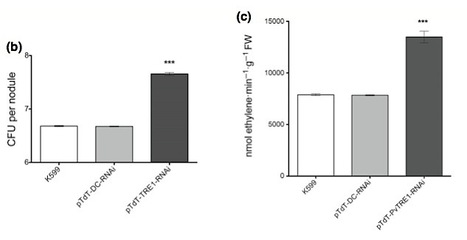
Legume–rhizobium interactions have been widely studied and characterized, and the disaccharide trehalose has been commonly detected during this symbiotic interaction. It has been proposed that trehalose content in nodules during this symbiotic interaction might be regulated by trehalase. In the present study, we assessed the role of trehalose accumulation by down-regulating trehalase in the nodules of common bean plants. We performed gene expression analysis for trehalase (PvTRE1) during nodule development. PvTRE1 was knocked down by RNA interference (RNAi) in transgenic nodules of the common bean. PvTRE1 expression in nodulated roots is mainly restricted to nodules. Down-regulation of PvTRE1 led to increased trehalose content (78%) and bacteroid number (almost one order of magnitude). In addition, nodule biomass, nitrogenase activity, and GOGAT transcript accumulation were significantly enhanced too. The trehalose accumulation, triggered by PvTRE1 down-regulation, led to a positive impact on the legume–rhizobium symbiotic interaction. This could contribute to the agronomical enhancement of symbiotic nitrogen fixation.
|
|
Scooped by
Kamoun Lab @ TSL
February 18, 2013 8:33 AM
|
http://www.nature.com/nri/journal/vaop/ncurrent/full/nri3398.html A fundamental question regarding any immune system is how it can discriminate between pathogens and non-pathogens. Here, we discuss how this discrimination can be mediated by a surveillance system distinct from pattern-recognition receptors that recognize conserved microbial patterns. It can be based instead on the ability of the host to sense perturbations in host cells induced by bacterial toxins or 'effectors' that are encoded by pathogenic microorganisms. Such 'effector-triggered immunity' was previously demonstrated mainly in plants, but recent data confirm that animals can also use this strategy.
|
|
Scooped by
Kamoun Lab @ TSL
February 16, 2013 11:36 AM
|
UKPSF has just launched a new website that collates the latest information on ash dieback. The site will be updated regularly with news on relevant research findings, funding opportunities, meetings and policy developments. You can sign up to receive email updates by subscribing via the homepage.
|
|
Scooped by
Kamoun Lab @ TSL
February 13, 2013 11:52 AM
|
Pathogens target important components of host immunity to cause disease. The Pseudomonas syringae type III-secreted effector HopU1 is a mono-ADP-ribosyltransferase required for full virulence onArabidopsis thaliana. HopU1 targets several RNA-binding proteins including GRP7, whose role in immunity is still unclear. Here, we show that GRP7 associates with translational components, as well as with the pattern recognition receptors FLS2 and EFR. Moreover, GRP7 binds specifically FLS2 and EFR transcripts in vivo through its RNA recognition motif. HopU1 does not affect the protein–protein associations between GRP7, FLS2 and translational components. Instead, HopU1 blocks the interaction between GRP7 and FLS2 and EFRtranscripts in vivo. This inhibition correlates with reduced FLS2 protein levels upon Pseudomonas infection in a HopU1-dependent manner. Our results reveal a novel virulence strategy used by a microbial effector to interfere with host immunity.
An annotated high-quality draft genome sequence for Xanthomonas campestris pv. campestris race 1 strain Xca5 (originally described as X. campestris pv. armoraciae), the causal agent of black rot on Brassicaceae plants, has been determined. This genome sequence is a valuable resource for comparative genomics within the campestris pathovar.
Via Nicolas Denancé
|
|
Rescooped by
Kamoun Lab @ TSL
from Rice Blast
February 7, 2013 4:25 AM
|
The rice blast fungus Magnaporthe oryzae infects plants with a specialized cell called an appressorium, which uses turgor to drive a rigid penetration peg through the rice leaf cuticle. Here, we show that NADPH oxidases (Nox) are necessary for septin-mediated reorientation of the F-actin cytoskeleton to facilitate cuticle rupture and plant cell invasion. We report that the Nox2–NoxR complex spatially organizes a heteroligomeric septin ring at the appressorium pore, required for assembly of a toroidal F-actin network at the point of penetration peg emergence. Maintenance of the cortical F-actin network during plant infection independently requires Nox1, a second NADPH oxidase, which is necessary for penetration hypha elongation. Organization of F-actin in appressoria is disrupted by application of antioxidants, whereas latrunculin-mediated depolymerization of appressorial F-actin is competitively inhibited by reactive oxygen species, providing evidence that regulated synthesis of reactive oxygen species by fungal NADPH oxidases directly controls septin and F-actin dynamics.
Via Elsa Ballini
|
|
Scooped by
Kamoun Lab @ TSL
February 4, 2013 11:35 AM
|
Chalara dieback of ash is a serious disease of ash trees. It causes leaf loss, especially in the crown of the tree, and will usually be fatal. Tracking diseased trees will improve our understanding of Chalara and help identify resistant strains. You can help by looking at oursymptoms videos or symptom images and reporting any sightings.
|
|
Scooped by
Kamoun Lab @ TSL
February 1, 2013 4:46 AM
|
Researchers marshal technology in bid to thwart fungal outbreak in Central America. - Where there is coffee, there is ‘coffee rust’. But the long stalemate between growers and the fungus behind the devastating disease has broken — with the fungus taking the advantage. As one of the most severe outbreaks ever rages through Central America, researchers are reaching for the latest tools in an effort to combat the pest, from sequencing its genome to cross-breeding coffee plants with resistant strains. Caused by the fungus Hemileia vastatrix, coffee rust generally does not kill plants, but the Institute of Coffee of Costa Rica estimates that the latest outbreak may halve the 2013–14 harvest in the worst affected areas of the nation. This outbreak is “the worst we’ve seen in Central America and Mexico since the rust arrived” in the region more than 40 years ago, says John Vandermeer, an ecologist at the University of Michigan in Ann Arbor, who has received “reports of devastation in Nicaragua, El Salvador and Mexico”.
|
|
Scooped by
Kamoun Lab @ TSL
January 31, 2013 5:49 PM
|
The major virulence strategy of phytopathogenic bacteria is to secrete effector proteins into the host cell to target the immune machinery. AvrPto and AvrPtoB are two such effectors fromPseudomonas syringae, which disable an overlapping range of kinases in Arabidopsis and Tomato. Both effectors target surface-localized receptor-kinases to avoid bacterial recognition. In turn, tomato has evolved an intracellular effector-recognition complex composed of the NB-LRR protein Prf and the Pto kinase. Structural analyses have shown that the most important interaction surface for AvrPto and AvrPtoB is the Pto P+1 loop. AvrPto is an inhibitor of Pto kinase activity, but paradoxically, this kinase activity is a prerequisite for defense activation by AvrPto. Here using biochemical approaches we show that disruption of Pto P+1 loop stimulates phosphorylation in trans, which is possible because the Pto/Prf complex is oligomeric. Both P+1 loop disruption and transphosphorylation are necessary for signalling. Thus, effector perturbation of one kinase molecule in the complex activates another. Hence, the Pto/Prf complex is a sophisticated molecular trap for effectors that target protein kinases, an essential aspect of the pathogen's virulence strategy. The data presented here give a clear view of why bacterial virulence and host recognition mechanisms are so often related and how the slowly evolving host is able to keep pace with the faster-evolving pathogen.
|


 Scoop.it!