Your new post is loading...

|
Scooped by
Kamoun Lab @ TSL
June 23, 2014 9:45 AM
|
Broad-spectrum disease resistance is a highly valuable trait in plant breeding and attracts special attention in research. The Arabidopsis gene locus RESISTANCE TO POWDERY MILDEW 8 (RPW8) contains two adjacent homologous genes, RPW8.1 and RPW8.2, and confers broad-spectrum resistance to powdery mildew. Remarkably, the RPW8.2 protein is specifically localized to the extrahaustorial membrane (EHM) encasing the feeding structure of powdery mildew whereby RPW8.2 activates haustorium-targeted defenses. Here, we show that ectopic expression of the yellow fluorescent protein (YFP)-tagged RPW8.1 from the native promoter leads to unique cell death lesions and enhances resistance to virulent fungal and oomycete pathogens that cause powdery mildew and downy mildew diseases, respectively. In powdery mildew infected plants, RPW8.1-YFP accumulates at higher levels in the mesophyll cells underneath the infected epidermal cells where RPW8.2-YFP is mainly expressed. This cell-type-preferential protein accumulation pattern largely correlates with that of H2O2 accumulation, suggesting that RPW8.1 may spatially collaborate with RPW8.2 in activation of resistance to powdery mildew. Interestingly, when ectopically expressed from theRPW8.2 promoter, RPW8.1-YFP is also targeted to the EHM of powdery mildew and the transgenic plants display resistance to both powdery mildew and downy mildew. Using YFP as a reporter, we further reveal that the RPW8.1 promoter is constitutively active but induced to higher levels in cells at the infection site, whereas the RPW8.2 promoter is activated specifically in cells at the infection site. Taken together, our results suggest that RPW8.1 (and its promoter) is functionally distinct fromRPW8.2 and may have a higher potential in engineering broad-spectrum resistance in plants.
|
|
Rescooped by
Kamoun Lab @ TSL
from Plant-Microbe Symbiosis
June 22, 2014 5:02 PM
|
|
|
Scooped by
Kamoun Lab @ TSL
June 21, 2014 7:36 AM
|
The 2014 Hemipteran-Plant Interactions Symposium (HPIS) is an interdisciplinary symposium bringing together researchers who study phytophagous piercing/sucking insects, their complex interactions with their host plants, and transmission of plant pathogens. The Symposium is designed to facilitate an exchange of ideas and foster collaborations among entomologists with expertise on phytophagous hemipteran insects (Orders Hemiptera and Thysanoptera) and their endosymbionts, plant biologists and physiologists with expertise on plant defenses and responses to hemipteran feeding, and plant pathologists with expertise on transmission of plant pathogens by hemipterans. The symposium will feature a stellar line-up of plenary speakers from the disciplines of entomology, plant biology and plant pathology, and is soliciting oral and poster presentations from participants. There also are two satellite workshops affiliated with the symposium: a pre-symposium Electrical Penetration Graph (EPG) Workshop and post-Symposium OMICs workshop.
|
|
Scooped by
Kamoun Lab @ TSL
June 18, 2014 5:00 AM
|
Background - Leguminous plants are able to form a root nodule symbiosis with nitrogen-fixing soil bacteria called rhizobia. This symbiotic association shows a high level of specificity. Beyond the specificity for the legume family, individual legume species/genotypes can only interact with certain restricted group of bacterial species or strains. Specificity in this system is regulated by complex signal exchange between the two symbiotic partners and thus multiple genetic mechanisms could be involved in the recognition process. Knowledge of the molecular mechanisms controlling symbiotic specificity could enable genetic improvement of legume nitrogen fixation, and may also reveal the possible mechanisms that restrict root nodule symbiosis in non-legumes.
Results - We screened a core collection of Medicago truncatula genotypes with several strains of Sinorhizobium meliloti and identified a naturally occurring dominant gene that restricts nodulation by S. meliloti Rm41. We named this gene as Mt-NS1 (for M. truncatula nodulation specificity 1). We have mapped the Mt-NS1 locus within a small genomic region on M. truncatula chromosome 8. The data reported here will facilitate positional cloning of the Mt-NS1 gene.
Conclusions - Evolution of symbiosis specificity involves both rhizobial and host genes. From the bacterial side, specificity determinants include Nod factors, surface polysaccharides, and secreted proteins. However, we know relatively less from the host side. We recently demonstrated that a component of this specificity in soybeans is defined by plant NBS-LRR resistance (R) genes that recognize effector proteins delivered by the type III secretion system (T3SS) of the rhizobial symbionts. However, the lack of a T3SS in many sequenced S. meliloti strains raises the question of how the specificity is regulated in the Medicago-Sinorhizobium system beyond Nod-factor perception. Thus, cloning and characterization of Mt-NS1 will add a new dimension to our knowledge about the genetic control of nodulation specificity in the legume-rhizobial symbiosis.
|
|
Scooped by
Kamoun Lab @ TSL
June 16, 2014 5:19 AM
|
You know people and animals get sick, but plants also get sick. Plant diseases threaten some of the world’s favorite food sources. Luckily, plant pathologists (plant doctors) stand between plant diseases and the world’s food supply.
|
|
Scooped by
Kamoun Lab @ TSL
June 12, 2014 5:46 AM
|
Cloning of the First Plant Immune Receptor Genes
Bent, A. F., Kunkel, B. N., Dahlbeck, D., Brown, K. L., Schmidt, R., Giraudat, J., Leung, J., and Staskawicz, B. J. 1994. RPS2 of Arabidopsis thaliana: A leucine-rich repeat class of plant disease resistance genes. Science 265:1856-1860.
Grant, M. R., Godiard, L., Straube, E., Ashfield, T., Lewald, J., Sattler, A., Innes, R. W., and Dangl, J. L. 1995. Structure of the Arabidopsis RPM1 gene which enables dual-specificity disease resistance. Science 269:843-846.
Jones, D. A., Thomas, C. M., Hammond-Kosack, K. E., Balint- Kurti, P. J., and Jones, J. D. 1994. Isolation of the tomato Cf-9 gene for resistance to Cladosporium fulvum by transposon tagging. Science 266:789-793.
Lawrence, G. J., Finnegan, E. J., Ayliffe, M. A., and Ellis, J. G. 1995. The L6 gene for flax rust resistance is related to the Arabidopsis bacterial resistance gene RPS2 and the tobacco viral resistance gene N. Plant Cell 7:1195-1206.
Martin, G. B., Brommonschenkel, S. H., Chunwongse, J., Frary, A., Ganal, M. W., Spivey, R., Wu, T., Earle, E. D., and Tanksley, S. D. 1993. Map-based cloning of a protein kinase gene conferring disease resistance in tomato. Science 262:1432-1436.
Mindrinos, M., Katagiri, F., Yu, G. L., and Ausubel, F. M. 1994. The A. thaliana disease resistance gene RPS2 encodes a protein containing a nucleotide-binding site and leucine-rich repeats. Cell 78:1089-1099.
Song, W. Y., Wang, G. L., Chen, L. L., Kim, H. S., Pi, L. Y., Holsten, T., Gardner, J., Wang, B., Zhai, W. X., Zhu, L. H., Fauquet, C., and Ronald, P. 1995. A receptor kinase-like protein encoded by the rice disease resistance gene Xa21. Science 270:1804-1806.
Whitham, S., Dinesh-Kumar, S. P., Choi, D., Hehl, R., Corr, C., and Baker, B. 1994. The product of the tobacco mosaic virus resistance gene N: Similarity to toll and the interleukin-1 receptor. Cell 78:1101- 1115.
Cloning of the First Plant Pathogen Avirulence Effector Gene
Staskawicz, B. J., Dahlbeck, D., and Keen, N. T. 1984. Cloned avirulence gene of Pseudomonas syringae pv. glycinea determines racespecific incompatibility on Glycine max (L.) Merr. Proc. Natl. Acad. Sci. USA 81:6024-6028.
IS-MPMI Reporter issue 2, 2014 http://www.ismpminet.org/Newsletter/2014_Iss2.asp
|
|
Scooped by
Kamoun Lab @ TSL
June 6, 2014 4:33 AM
|
- Nonhost resistance (NHR) is a plant immune response to resist most pathogens. The molecular basis of NHR is poorly understood, but recognition of pathogen effectors by immune receptors, a response known as effector-triggered immunity, has been proposed as a component of NHR.
- We performed transient expression of 54 Phytophthora infestansRXLR effectors in pepper (Capsicum annuum) accessions. We used optimized heterologous expression methods and analyzed the inheritance of effector-induced cell death in an F2 population derived from a cross between two pepper accessions.
- Pepper showed a localized cell death response upon inoculation with P. infestans, suggesting that recognition of effectors may contribute to NHR in this system. Pepper accessions recognized as many as 36 effectors. Among the effectors, PexRD8 and Avrblb2 induced cell death in a broad range of pepper accessions. Segregation of effector-induced cell death in an F2 population derived from a cross between two pepper accessions fit 15 : 1, 9 : 7 or 3 : 1 ratios, depending on the effector.
- Our genetic data suggest that a single or two independent/complementary dominant genes are involved in the recognition of RXLR effectors. Multiple loci recognizing a series of effectors may underpin NHR of pepper to P. infestans and confer resistance durability.
|
|
Scooped by
Kamoun Lab @ TSL
June 6, 2014 3:24 AM
|
Microorganisms play essential roles in almost every environment on earth. For instance, microbes decompose organic material, or establish symbiotic relationships that range from pathogenic to mutualistic. Symbiotic relationships have been particularly well studied for microbial plant pathogens and have emphasized the role of effectors; secreted molecules that support host colonization. Most effectors characterized thus far play roles in deregulation of host immunity. Arguably, however, pathogens not only deal with immune responses during host colonization, but also encounter other microbes including competitors, (myco)parasites and even potential co-operators. Thus, part of the effector catalog may target microbiome co-inhabitants rather than host physiology.
|
|
Rescooped by
Kamoun Lab @ TSL
from How microbes emerge
June 2, 2014 7:05 PM
|
The cause of potato late blight and the Great Irish Famine of the 1840s has been tracked to a pretty, alpine valley in central Mexico, which is ringed by mountains and now known to be the ancestral home of one of the most costly and deadly plant diseases in human history. Research published today in the Proceedings of the National Academy of Sciences, by researchers from Oregon State University, the USDA Agricultural Research Service and five other institutions, concludes that Phytophthora infestans originated in this valley and co-evolved with potatoes over hundreds or maybe a few thousand years, and later spread repeatedly to much of the world.
Goss et al. The Irish potato famine pathogen Phytophthora infestans originated in central Mexico rather than the Andes. PNAS http://www.pnas.org/content/early/2014/05/29/1401884111.abstract
Via Niklaus Grunwald
|
|
Scooped by
Kamoun Lab @ TSL
May 27, 2014 6:00 PM
|
|
|
Scooped by
Kamoun Lab @ TSL
May 22, 2014 1:32 PM
|
The hemibiotrophic pathogen Colletotrichum orbiculare develops biotrophic hyphae inside cucumber (Cucumis sativus) cells via appressorial penetration; later, the pathogen switches to necrotrophy. C. orbiculare also expresses specific effectors at different stages. Here, we found that virulence-related effectors of C. orbiculare accumulate in a pathogen–host biotrophic interface. Fluorescence-tagged effectors accumulated in a ring-like region around the neck of the biotrophic primary hyphae. Fluorescence imaging of cellular components and transmission electron microscopy showed that the ring-like signals of the effectors localized at the pathogen–plant interface. Effector accumulation at the interface required induction of its expression during the early biotrophic phase, suggesting that transcriptional regulation may link to effector localization. We also investigated the route of effector secretion to the interface. An exocytosis-related component, the Rab GTPase SEC4, localized to the necks of biotrophic primary hyphae adjacent to the interface, thereby suggesting focal effector secretion. Disruption of SEC4 in C. orbiculare reduced virulence and impaired effector delivery to the ring signal interface. Disruption of the v-SNARE SEC22also reduced effector delivery. These findings suggest that biotrophy-expressed effectors are secreted, via the endoplasmic reticulum-to-Golgi route and subsequent exocytosis, toward the interface generated between C. orbiculare and the host cell.
|
|
Rescooped by
Kamoun Lab @ TSL
from Plant Pathogenomics
May 21, 2014 5:37 AM
|
Both type III effector proteins and non-ribosomal peptide toxins play important roles for Pseudomonas syringae pathogenicity in host plants, but whether and how these pathways interact to promote infection remains unclear. Genomic evidence from one clade of P. syringae suggests a tradeoff between the total number of type III effector proteins and presence of syringomycin, syringopeptin, and syringolin A toxins. Here we report the complete genome sequence from P. syringae CC1557, which contains the lowest number of known type III effectors to date and has also acquired genes similar to sequences encoding syringomycin pathways from other strains. We demonstrate that this strain is pathogenic on Nicotiana benthamiana and that both the type III secretion system and a new type III effector family, hopBJ1, contribute to pathogenicity. We further demonstrate that activity of HopBJ1 is dependent on residues structurally similar to the catalytic site of E. coli CNF1 toxin. Taken together, our results provide additional support for a negative correlation between type III effector repertoires and the potential to produce syringomycin-like toxins while also highlighting how genomic synteny and bioinformatics can be used to identify and characterize novel virulence proteins.
|
|
Scooped by
Kamoun Lab @ TSL
May 19, 2014 12:01 PM
|
The plant immune system needs to be tightly controlled both positively and negatively to maintain normal plant growth and health. We previously identified SUPPRESSOR OF rps4-RLD1 (SRFR1) as a negative regulator specifically of effector-triggered immunity. SRFR1 is localized in both a cytoplasmic microsomal compartment and in the nucleus. Its TPR domain has sequence similarity to TPR domains of transcriptional repressors in other organisms, suggesting that SRFR1 may negatively regulate effector-triggered immunity via transcriptional control. We show here that excluding SRFR1 from the nucleus prevented complementation of the srfr1 phenotype. To identify transcription factors that may interact with SRFR1, we screened by yeast two-hybrid assay an Arabidopsis transcription factor prey library and isolated six class I members of the TEOSINTE BRANCHED1/CYCLOIDEA/PCF (TCP) transcription factor family. Specific interactions were verified in planta. While single or double T-DNA mutant tcp8, tcp14 or tcp15 lines were not more susceptible to bacteria expressing AvrRps4, the triple tcp8 tcp14 tcp15 mutant displayed decreased effector-triggered immunity mediated by the resistance genesRPS4, RPS6, RPM1 and RPS2. In addition, expression of PATHOGENESIS-RELATED PROTEIN2 was attenuated in srfr1-4 tcp8-1 tcp14-5 tcp15-3 plants compared to srfr1-4. TCP transcription factors to date have been implicated largely in developmental processes. Our data indicate that one function of a subset of TCP proteins is to regulate defense gene expression in antagonism to SRFR1, and suggest a mechanism for an intimate connection between plant development and immunity.
|
|
|
Scooped by
Kamoun Lab @ TSL
June 23, 2014 9:41 AM
|
Plants employ multiple cell-autonomous defense mechanisms to impede pathogenesis of microbial intruders. Previously we identified an exocytosis defense mechanism in Arabidopsis against pathogenic powdery mildew fungi. This pre-invasive defense mechanism depends on the formation of ternary protein complexes consisting of the plasma membrane-localized PEN1 syntaxin, the adaptor protein SNAP33, and closely sequence-related vesicle-resident VAMP721 or VAMP722 proteins. The Arabidopsis thaliana resistance to powdery mildew 8.2 protein (RPW8.2) confers disease resistance against powdery mildews upon fungal entry into host cells and is specifically targeted to the extrahaustorial membrane (EHM), which envelops the haustorial complex of the fungus. However, the secretory machinery involved in trafficking RPW8.2 to the EHM is unknown. Here we report that RPW8.2 is transiently located on VAMP721/722 vesicles, and later incorporated into the EHM of mature haustoria. RPW8.2 resistance activity against the powdery mildew Golovinomyces orontii is greatly diminished in the absence of VAMP721 but only slightly in the absence of VAMP722. Consistent with this result, trafficking of RPW8.2 to the EHM is delayed in the absence of VAMP721. These findings implicate VAMP721/722 vesicles as key components of the secretory machinery for carrying RPW8.2 to the plant-fungal interface. Quantitative fluorescence recovery after photobleaching suggests that vesicle-mediated trafficking of RPW8.2-YFP to the EHM occurs transiently during early haustorial development and that RPW8.2-YFP lateral diffusion within the EHM exceeds vesicle-mediated RPW8.2-YFP replenishment in mature haustoria. Our findings imply the engagement of VAMP721/722 in a bifurcated trafficking pathway for pre-invasive defense at the cell periphery and post-invasive defense at the EHM.
|
|
Scooped by
Kamoun Lab @ TSL
June 22, 2014 9:56 AM
|
|
|
Rescooped by
Kamoun Lab @ TSL
from WHEAT
June 18, 2014 5:58 PM
|
WA wheatgrowers have been advised to monitor crops throughout the season for signs of leaf rust following testing which confirmed an increased risk of rust in popular wheat varieties. Department of Agriculture and Food plant pathologist Geoff Thomas said that in 2013, wheat leaf rust with increased virulence for several popular varieties was discovered in WA. Testing through the Australian Cereal Rust Control Program at Sydney University confirmed the presence of the leaf rust pathotype named 76-1, 3, 5, 7, 9, 10, 12 +Lr 37. "This represents the first occurrence in WA of virulence for varieties which contain Lr13 resistance," Mr Thomas said. "As a result, several varieties, including Mace, are expected to have an altered response in the presence of this pathotype. "In order to gauge the rust response of wheat varieties popular in WA, the Department recently completed glasshouse trials to test the seedling and adult reactions of varieties to this new pathotype. "Our pathology tests confirmed that varieties Mace, Wyalkatchem and Corack, which all carry Lr13, are susceptible (S) as seedlings and moderately susceptible to susceptible (MS-S) as adult plants. "This result signifies a significant reduction in resistance from the moderately-resistant (MR) response of these varieties to the former dominant rust pathotype in WA.
Via CIMMYT, Int.
|
|
Scooped by
Kamoun Lab @ TSL
June 16, 2014 6:51 AM
|
Plant roots are host to a multitude of filamentous microorganisms. Among these, arbuscular mycorrhizal fungi provide benefits to plants, while pathogens trigger diseases resulting in significant crop yield losses. It is therefore imperative to study processes which allow plants to discriminate detrimental and beneficial interactions in order to protect crops from diseases while retaining the ability for sustainable bio-fertilisation strategies. Accumulating evidence suggests that some symbiosis processes also affect plant–pathogen interactions. A large part of this overlap likely constitutes plant developmental processes. Moreover, microbes utilise effector proteins to interfere with plant development. Here we list relevant recent findings on how plant–microbe interactions intersect with plant development and highlight future research leads.
|
|
Scooped by
Kamoun Lab @ TSL
June 13, 2014 9:00 AM
|
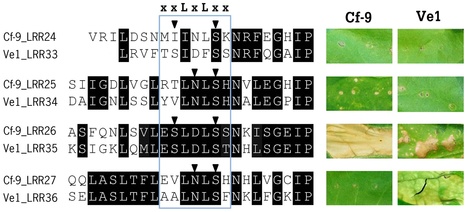
Pathogenic Verticillium species are economically important plant pathogens that cause vascular wilt diseases in hundreds of plant species. The Ve1 gene of tomato confers resistance against race 1 strains of Verticillium dahliae and V. albo-atrum. Ve1 encodes an extracellular leucine-rich repeat (eLRR) receptor-like protein (RLP) that serves as a cell surface receptor for recognition of the recently identified secreted Verticillium effector Ave1. To investigate recognition of Ave1 by Ve1, alanine scanning was performed on the solvent exposed β-strand/β-turn residues across the eLRR domain of Ve1. In addition, alanine scanning was also employed to functionally characterize motifs that putatively mediate protein-protein interactions and endocytosis in the transmembrane domain and the cytoplasmic tail of the Ve1 protein. Functionality of the mutant proteins was assessed by screening for the occurrence of a hypersensitive response upon co-expression with Ave1 upon Agrobacterium tumefaciens-mediated transient expression (agroinfiltration). In order to confirm the agroinfiltration results, constructs encoding Ve1 mutants were transformed into Arabidopsis and the transgenes were challenged with race 1 Verticillium. Our analyses identified several regions of the Ve1 protein that are required for functionality.
|
|
Scooped by
Kamoun Lab @ TSL
June 10, 2014 6:54 PM
|
As the world's human population continues to expand, and as water resources come under increasing pressure and pathogens that cause devastating crop losses continue to spread in the face of increased global commerce and climate change, there is a pressing need for plant research to contribute solutions to improving food security in a sustainable and safe way.
Plant translational research - the development of basic plant research discoveries into technologies or approaches that improve agriculture - has a vital role to play in meeting these challenges, and given the importance of research in this field, PLOS believes that such work should be published in open access journals, ensuring that it reaches the widest possible audience without any barriers to access.
The technical advances highlighted in this PLOS Collection exemplify how basic research discoveries are being translated into methods to develop and improve, both agriculturally and environmentally, important crop traits.
At PLOS, we are committed to supporting breakthroughs in both basic and translational plant science. We encourage plant researchers to submit their high quality plant research and, in particular, plant research that has clear translational possibilities.
The Collection was produced with the support of The Bill & Melinda Gates Foundation.
The Collection will be updated periodically with new Plant Translational Research.
www.ploscollections.org/planttranslationalresearch
|
|
Scooped by
Kamoun Lab @ TSL
June 6, 2014 3:43 AM
|
Aphids are devastating insect pests and cause great losses to agriculture worldwide. These sap-feeding plant pests harbor in their body cavity bacteria, which are essential for the aphids’ fecundity and survival. Buchnera, the bacterium, benefits also because it cannot grow outside the aphid. This mutually beneficial relationship is sabotaged, however, by the bacterium which proceeds to betray the aphid, a research team led by scientists at the University of California, Riverside has found.
“Although this betrayal is unintentional, it nevertheless alerts the plant about the aphid’s presence and the aphids are unable to reproduce in large numbers,” said Isgouhi Kaloshian, a professor of nematology, who led the research project. “A protein from the bacterium, found in the aphid saliva and likely delivered inside the plant host by the aphid, triggers plant immune responses against the aphid. It seems that the plant immune system targets the bacterium and exploits the strict mutual dependency between the plant and aphid to recognize the aphid as the intruder.”
Study results appear online this week in the Proceedings of the National Academy of Sciences http://www.pnas.org/content/early/2014/06/03/1407687111.abstract
|
|
Scooped by
Kamoun Lab @ TSL
June 6, 2014 3:22 AM
|
Filamentous plant pathogens that establish biotrophic interactions need to avoid plant immune responses. Recent findings from different pathosystems suggest that sufficient suppression of host immunity is based on the modulation of a rather limited number of host targets. Microbial strategies to target host physiology dependent on the duration of biotrophy, the style of host tissue colonization and the degree of interference with plant development. In this article, we present current concepts in biotrophic virulence strategies and discuss mechanisms of pathogen adaptation and effector specialization.
|
|
Scooped by
Kamoun Lab @ TSL
May 29, 2014 11:59 AM
|
Host plant resistance has been widely used for controlling the major rice pest brown planthopper (BPH, Nilaparvata lugens). However, adaptation of the wild BPH population to resistance limits the effective use of resistant rice varieties. Quantitative trait locus (QTL) analysis was conducted to identify resistance-breaking genes against the anti-feeding mechanism mediated by the rice resistance gene Bph1. QTL analysis in iso-female BPH lines with single-nucleotide polymorphism (SNP) markers detected a single region on the 10th linkage group responsible for the virulence. The QTL explained from 57 to 84% of the total phenotypic variation. Bulked segregant analysis with next-generation sequencing in F2 progenies identified five SNPs genetically linked to the virulence. These analyses showed that virulence to Bph1 was controlled by a single recessive gene. In contrast to previous studies, the gene-for-gene relationship between the major resistance gene Bph1 and virulence gene of BPH was confirmed. Identified markers are available for map-based cloning of the major gene controlling BPH virulence to rice resistance.
|
|
Scooped by
Kamoun Lab @ TSL
May 27, 2014 12:17 PM
|
Parasitic worms threaten human, animal and plant health by infecting people, livestock and crops worldwide. Animals and plants share an anciently evolved innate immune system. Parasites modulate this immune system by secreting proteins to maintain their parasitic lifestyle. This thesis describes how venom-allergen-like proteins (VAPs) that both animal- and plant-parasitic nematodes release into their hosts, modulate host innate immunity. On the one hand we found that one particular secreted VAP from the potato cyst nematode can activate host defenses in tomato plants, opening an opportunity for plant breeders to generate novel nematode-resistant cultivars. We showed that plants make more efficiently use of their limited repertoire of immune receptors by guarding common virulence targets of multiple unrelated plant pathogens. While on the other hand, we describe how VAPs may be used by parasites to suppress the host defense responses mediated by extracellular immune receptors. In short, this fundamental study contributes to our understanding of the molecular basis of persistent infections by parasitic nematodes in plants and in animals.
|
|
Scooped by
Kamoun Lab @ TSL
May 21, 2014 9:08 AM
|
When we think about threats to the environment, we tend to picture cars and smokestacks, not dinner. But the truth is, our need for food poses one of the biggest dangers to the planet.
|
|
Scooped by
Kamoun Lab @ TSL
May 19, 2014 5:54 PM
|
The US is stepping up support for coffee farmers in Central America. What is the coffee leaf rust that is killing their crop and threatens to push up the price of beans in the shops?
Coffee's plague starts with yellow spots and what look like burn marks. They form on the leaves of the coffee plant, causing the foliage to wither until the tree resembles a skeleton. It stops bean-producing cherries from growing. This is coffee rust or roya, caused by the hemileia vastatrix fungus. For two years it has been ravaging Central America and the Caribbean. Arabica plants - used for espresso and filter coffee - are particularly vulnerable. Arabica accounts for almost all production in the worst affected countries of Costa Rica, Dominican Republic, El Salvador, Guatemala, Honduras, Jamaica, Nicaragua, and Panama.
The current epidemic is the worst seen since the fungus appeared in Central America in 1976, says the International Coffee Organisation. More than half of the region's coffee-producing areas are affected. In 2013 alone, production fell 20%.
The US government worries that farmers could swap coffee for drug-producing crops. It has announced a $5m project for researchers at Texas A&M university to look at ways of eradicating the fungus. But that will not help in the short-term. The only real answer is to replant with fungus-resistant varieties as Colombia has done, says Mauricio Galindo, head of operations at the ICO.
|