Your new post is loading...

|
Scooped by
Kamoun Lab @ TSL
September 11, 2014 12:37 PM
|
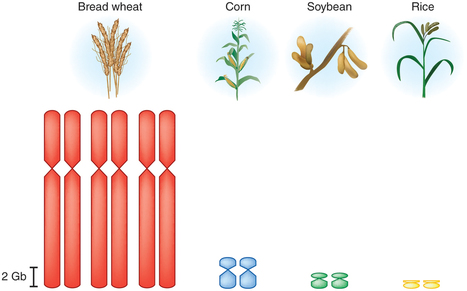
Knockout of all six alleles of a gene in the large wheat genome confers resistance to powdery mildew --- Genetic engineering to improve crops is entering a new era as conventional transgenesis technology, which involves random insertion of genes into the genome, is superseded by newer approaches that enable precise genetic alterations. A particular technological challenge in carrying out targeted genome modification in crops is that many plant genomes are polyploid, including such important species as wheat, potato and canola1. In this issue, Wang et al.2 report engineering of the hexaploid wheat genome using sequence-specific nucleases (SSNs)—the first demonstration in a polyploid crop of SSN-mediated genetic alterations that are stably transmitted to the next generation. By knocking out all six alleles encoding the MILDEW-RESISTANCE LOCUS (MLO) protein, the authors generated a mutant line that shows strong resistance to powdery mildew, a devastating fungal disease. This is a remarkable feat, given the ploidy and enormous size (17.1 Gb) of the wheat genome, and showcases the power of SSNs for engineering complex plant genomes and for creating crops with valuable traits.
|
|
Scooped by
Kamoun Lab @ TSL
September 10, 2014 9:49 AM
|
|
|
Scooped by
Kamoun Lab @ TSL
September 9, 2014 7:51 AM
|
The colonization of land by plants relied on fundamental biological innovations, among which was symbiosis with fungi to enhance nutrient uptake. Here we present evidence that several species representing the earliest groups of land plants are symbiotic with fungi of the Mucoromycotina. This finding brings up the possibility that terrestrialization was facilitated by these fungi rather than, as conventionally proposed, by members of the Glomeromycota. Since the 1970s it has been assumed, largely from the observation that vascular plant fossils of the early Devonian (400 Ma) show arbuscule-like structures, that fungi of the Glomeromycota were the earliest to form mycorrhizas, and evolutionary trees have, until now, placed Glomeromycota as the oldest known lineage of endomycorrhizal fungi. Our observation that Endogone-like fungi are widely associated with the earliest branching land plants, and give way to glomeromycotan fungi in later lineages, raises the new hypothesis that members of the Mucoromycotina rather than the Glomeromycota enabled the establishment and growth of early land colonists.
|
|
Scooped by
Kamoun Lab @ TSL
September 5, 2014 5:04 AM
|
In plants, innate immune responses are initiated by plasma membrane-located pattern recognition receptors (PRRs) upon recognition of elicitors, including exogenous pathogen-associated molecular patterns (PAMPs) and endogenous damage-associated molecular patterns (DAMPs). Arabidopsis thaliana produces more than 1000 secreted peptide candidates, but it has yet to be established whether any of these act as elicitors. Here we identified an A. thaliana gene family encoding precursors of PAMP-induced secreted peptides (prePIPs) through an in-silicoapproach. The expression of some members of the family, including prePIP1 and prePIP2, is induced by a variety of pathogens and elicitors. Subcellular localization and proteolytic processing analyses demonstrated that the prePIP1 product is secreted into extracellular spaces where it is cleaved at the C-terminus. Overexpression of prePIP1 and prePIP2, or exogenous application of PIP1 and PIP2 synthetic peptides corresponding to the C-terminal conserved regions in prePIP1 and prePIP2, enhanced immune responses and pathogen resistance in A. thaliana. Genetic and biochemical analyses suggested that the receptor-like kinase 7 (RLK7) functions as a receptor of PIP1. Once perceived by RLK7, PIP1 initiates overlapping and distinct immune signaling responses together with the DAMP PEP1. PIP1 and PEP1 cooperate in amplifying the immune responses triggered by the PAMP flagellin. Collectively, these studies provide significant insights into immune modulation by Arabidopsis endogenous secreted peptides.
|
|
Scooped by
Kamoun Lab @ TSL
September 3, 2014 4:45 AM
|
|
|
Scooped by
Kamoun Lab @ TSL
September 1, 2014 5:54 AM
|
- Plants detect pathogens by sensing microbe-associated molecular patterns (MAMPs) through pattern recognition receptors. Pattern recognition receptor complexes also have roles in cell death control, but the underlying mechanisms are poorly understood. Here, we report isolation of cerk1-4, a novel mutant allele of the Arabidopsis chitin receptor CERK1 with enhanced defense responses.
- We identified cerk1-4 in a forward genetic screen with barley powdery mildew and consequently characterized it by pathogen assays, mutant crosses and analysis of defense pathways. CERK1 and CERK1-4 proteins were analyzed biochemically.
- The cerk1-4 mutation causes an amino acid exchange in the CERK1 ectodomain. Mutant plants maintain chitin signaling capacity but exhibit hyper-inducible salicylic acid concentrations and deregulated cell death upon pathogen challenge. In contrast to chitin signaling, the cerk1-4 phenotype does not require kinase activity and is conferred by the N-terminal part of the receptor. CERK1 undergoes ectodomain shedding, a well-known process in animal cell surface proteins. Wild-type plants contain the full-length CERK1 receptor protein as well as a soluble form of the CERK1 ectodomain, whereas cerk1-4 plants lack the N-terminal shedding product.
- Our work suggests that CERK1 may have a chitin-independent role in cell death control and is the first report of ectodomain shedding in plants.
|
|
Scooped by
Kamoun Lab @ TSL
August 29, 2014 5:56 AM
|
Britain has “significantly underestimated” the risk that crop pests pose to its food supply. Fungi and viruses present so great a danger to staples such as wheat and potatoes that they may force the nation to change its diet, an academic has warned. The rise of deadly pests poses a threat to the world’s entire food system, but the UK is among the most vulnerable countries, according to a new study from the University of Exeter. It forecasts that food-growing nations, including the UK, will be “overwhelmed” by pests within the next 30 years as climate change, inadequate biosecurity measures and new variants help them spread. “The UK has significantly underestimated the scale of the threat. This is a huge problem that is lacking in public and political awareness. People are absolutely paralysed with fear of diseases like Ebola, but while they are extremely dangerous, the need to tackle crop diseases is just as pressing,” said Professor Sarah Gurr, of the University of Exeter and Rothamsted Research. “We are not spending enough on research, on training, on surveillance and on biosecurity. Unless we significantly step up our efforts we could be forced to change our diets in the future as crops come and go,” she added. Crop pests include fungi, bacteria, viruses, insects, nematodes (worms) and viroids (plant viruses). Fungi pose the biggest threat globally and in the UK, where they threaten the country’s wheat and potato harvests. Zymoseptoria tritici – or Septoria leaf blotch – and Blumeria graminis, a powdery mildew, are a danger to wheat, while the potato cyst nematode and new variants of Phytophthora infestans threaten the potato. The report warns that if crop pests continue to spread at their current rate a significant portion of the world’s biggest food-producing countries will be “saturated” with pests – the crops simply wouldn’t be able to accommodate any more.
|
|
Scooped by
Kamoun Lab @ TSL
August 27, 2014 6:41 AM
|
Plant diseases caused by fungi and oomycetes pose an increasing threat to food security and ecosystem health worldwide. These filamentous pathogens, while taxonomically distinct, modulate host defense responses by secreting effectors, which are typically identified based on the presence of signal peptides. Here we show that Phytophthora sojae and Verticillium dahliaesecrete isochorismatases (PsIsc1 and VdIsc1, respectively) that are required for full pathogenesis. PsIsc1 and VdIsc1 can suppress salicylate-mediated innate immunity in plantaand hydrolyse isochorismate in vitro. A conserved triad of catalytic residues is essential for both functions. Thus, the two proteins are isochorismatase effectors that disrupt the plant salicylate metabolism pathway by suppressing its precursor. Furthermore, these proteins lack signal peptides, but exhibit characteristics that lead to unconventional secretion. Therefore, this secretion pathway is a novel mechanism for delivering effectors and might play an important role in host–pathogen interactions.
|
|
Rescooped by
Kamoun Lab @ TSL
from TAL effector science
August 27, 2014 4:53 AM
|
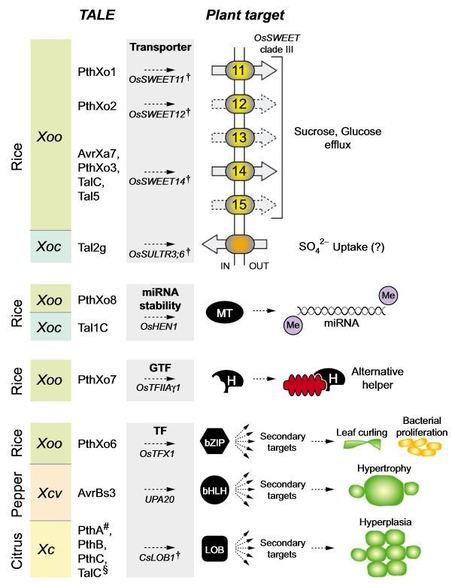
Transcription activator-like effectors (TALEs) from plant pathogenic Xanthomonas spp. and the related RipTALs from Ralstonia solanacearum are DNA-binding proteins with a modular DNA-binding domain. This domain is both predictable and programmable, which simplifies elucidation of TALE function in planta and facilitates generation of DNA-binding modules with desired specificity for biotechnological approaches. Recently identified TALE host target genes that either promote or stop bacterial disease provide new insights into how expression of TALE genes affects the plant–pathogen interaction. Since its elucidation the TALE code has been continuously refined and now provides a mature tool that, in combination with transcriptome profiling, allows rapid isolation of novel TALE target genes. The TALE code is also the basis for synthetic promoter-traps that mediate recognition of TALE or RipTAL proteins in engineered plants. In this review, we will summarize recent findings in plant-focused TALE research. In addition, we will provide an outline of the newly established gene isolation approach for TALE or RipTAL host target genes with an emphasis on potential pitfalls.
Via dromius
|
|
Scooped by
Kamoun Lab @ TSL
August 25, 2014 5:54 AM
|
BackgroundThe fungus Stagonospora nodorum is a necrotrophic pathogen of wheat. It causes disease by secreting proteinaceous effectors which interact with proteins encoded by dominant susceptibility genes in the host. The outcome of these interactions results in necrosis, allowing the fungus to thrive on dead plant material. The mechanisms of these effectors though are poorly understood. In this study, we undertake a comprehensive transcriptomics, proteomic and metabolomic approach to understand how a susceptible wheat cultivar responds to exposure to the Stagonospora nodorum effector protein SnTox3.ResultsMicroarray and proteomic studies revealed that SnTox3 strongly induced responses consistent with those previously associated with classical host defence pathways including the expression of pathogenicity-related proteins and the induction of cell death. Collapse of the photosynthetic machinery was also apparent at the transcriptional and translational level. SnTox3-infiltrated wheat leaves also showed a strong induction of enzymes involved in primary metabolism consistent with increases in hexoses, amino acids and organic acids as determined by primary metabolite profiling. Methionine and homocysteine metabolism was strongly induced upon exposure to SnTox3. Pathogenicity in the presence of homocysteine was inhibited confirming that the compound has a role in plant defence. Consistent with the strong defence responses observed, secondary metabolite profiling revealed the induction of several compounds associated with plant defence, including the phenylpropanoids chlorogenic acid and feruloylquinic acid, and the cyanogenic glucoside dhurrin. Serotonin did not accumulate subsequent to SnTox3 infiltration.ConclusionsThese data support the theory that the SnTox3 effector protein elicits a host cell death response to facilitate the pathogen?s necrotrophic infection cycle. Our data also demonstrate that the mechanism of SnTox3 appears distinct from the previously characterised Stagonospora nodorum effector SnToxA. Collectively, this comprehensive analysis has advanced our understanding of necrotrophic effector biology and highlighted the complexity of effector-triggered susceptibility.
|
|
Scooped by
Kamoun Lab @ TSL
August 15, 2014 4:35 AM
|
RNA trafficking in plants contributes to local and long-distance coordination of plant development and response to the environment. However, investigations of mobile RNA identity and function are hindered by the inherent difficulty of tracing a given molecule of RNA from its cell of origin to its destination. Several methods have been used to address this problem, but all are limited to some extent by constraints associated with accurately sampling phloem sap or detecting trafficked RNA. Certain parasitic plant species form symplastic connections to their hosts and thereby provide an additional system for studying RNA trafficking. The haustorial connections of Cuscuta andPhelipanche species are similar to graft junctions in that they are able to transmit mRNAs, viral RNAs, siRNAs, and proteins from the host plants to the parasite. In contrast to other graft systems, these parasites form connections with host species that span a wide phylogenetic range, such that a high degree of nucleotide sequence divergence may exist between host and parasites and allow confident identification of most host RNAs in the parasite system. The ability to identify host RNAs in parasites, and vice versa, will facilitate genomics approaches to understanding RNA trafficking. This review discusses the nature of host–parasite connections and the potential significance of host RNAs for the parasite. Additional research on host–parasite interactions is needed to interpret results of RNA trafficking studies, but parasitic plants may provide a fascinating new perspective on RNA trafficking.
Gene transfer has been identified as a prevalent and pervasive phenomenon and an important source of genomic innovation in bacteria. The role of gene transfer in microbial eukaryotes seems to be of a reduced magnitude but in some cases can drive important evolutionary innovations, such as new functions that underpin the colonization of different niches. The aim of this review is to summarize published cases that support the hypothesis that horizontal gene transfer (HGT) has played a role in the evolution of phytopathogenic traits in fungi and oomycetes. Our survey of the literature identifies 46 proposed cases of transfer of genes that have a putative or experimentally demonstrable phytopathogenic function. When considering the life-cycle steps through which a pathogen must progress, the majority of the HGTs identified are associated with invading, degrading, and manipulating the host. Taken together, these data suggest HGT has played a role in shaping how fungi and oomycetes colonize plant hosts.
Via Francis Martin
|
|
Scooped by
Kamoun Lab @ TSL
August 8, 2014 1:18 AM
|
Rust fungi include many species that are devastating crop pathogens. To develop resistant plants, a better understanding of rust virulence factors, or effector proteins, is needed. Thus far, only six rust effector proteins have been described: AvrP123, AvrP4, AvrL567, AvrM, RTP1 and PGTAUSPE-10-1. Although some are well established model proteins used to investigate mechanisms of immune receptor activation (avirulence activities) or entry into plant cells, how they work inside host tissues to promote fungal growth remains unknown. The genome sequences of four rust fungi (two Melampsoraceae and two Pucciniaceae) have been analyzed so far. Genome-wide analyses of these species, as well as transcriptomics performed on a broader range of rust fungi, revealed hundreds of small secreted proteins considered as rust candidate secreted effector proteins (CSEPs). The rust community now needs high-throughput approaches (effectoromics) to accelerate effector discovery/characterization and to better understand how they function in planta. However, this task is challenging due to the non-amenability of rust pathosystems (obligate biotrophs infecting crop plants) to traditional molecular genetic approaches mainly due to difficulties in culturing these species in vitro. The use of heterologous approaches should be promoted in the future.
|
|
|
Scooped by
Kamoun Lab @ TSL
September 11, 2014 6:22 AM
|
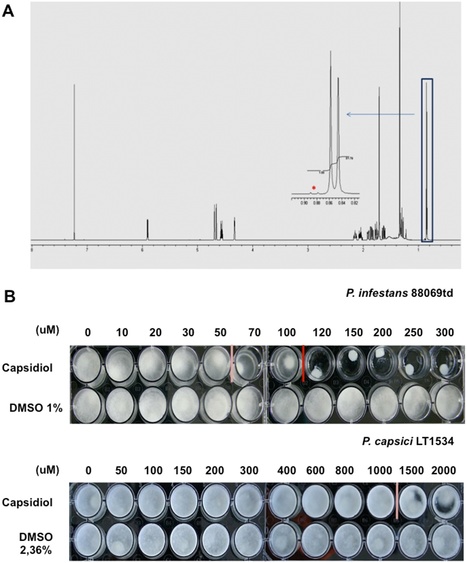
Plants protect themselves against a variety of invading pathogenic organisms via sophisticated defence mechanisms. These responses include deployment of specialized antimicrobial compounds, such as phytoalexins, that rapidly accumulate at pathogen infection sites. However, the extent to which these compounds contribute to species-level resistance and their spectrum of action remain poorly understood. Capsidiol, a defense related phytoalexin, is produced by several solanaceous plants including pepper and tobacco during microbial attack. Interestingly, capsidiol differentially affects growth and germination of the oomycete pathogensPhytophthora infestans and Phytophthora capsici, although the underlying molecular mechanisms remain unknown. In this study we revisited the differential effect of capsidiol on P. infestans and P. capsici, using highly pure capsidiol preparations obtained from yeast engineered to express the capsidiol biosynthetic pathway. Taking advantage of transgenicPhytophthora strains expressing fluorescent markers, we developed a fluorescence-based method to determine the differential effect of capsidiol on Phytophtora growth. Using these assays, we confirm major differences in capsidiol sensitivity between P. infestans and P. capsiciand demonstrate that capsidiol alters the growth behaviour of both Phytophthora species. Finally, we report intraspecific variation within P. infestans isolates towards capsidiol tolerance pointing to an arms race between the plant and the pathogens in deployment of defence related phytoalexins.
|
|
Scooped by
Kamoun Lab @ TSL
September 10, 2014 4:50 AM
|
The discovery of arbuscules in Aglaophyton major, an Early Devonian land plant, provides unequivocal evidence that mycorrhizae were established >400 million years ago. Nonseptate hyphac and arbuscules occur in a specialized meristematic region of the cortex that continually provided new cells for fungal infection. Arbuscules are morphologically identical to those of living arbuscular mycorrhizae in consisting of a basal trunk and repeatedly branched bush-like tuft within the plant cell. Although interpretations of the evolution of mycorrhizal mutualisms continue to be speculative, the existence of arbuscules in the Early Devonian indicates that nutrient transfer mutualism may have been in existence when plants invaded the land.
|
|
Scooped by
Kamoun Lab @ TSL
September 8, 2014 5:34 AM
|
Our overall goal is to understand how plants and their eukaryotic symbionts (fungi and fungi-like microorganisms, especially oomycetes) co-evolved during the early development of terrestrial ecosystems. Several diverse and rapidly developing disciplines are relevant to addressing this goal. Our workshop is designed to bringing together experts from across these disciplines to learn about recent developments, understand the range of approaches and to explore potential cross disciplinary collaborations. 1. We will bring together a multidisciplinary group of specialists in the biology and phylogenetics of living bryophytes and of fungi, experts on the evolution of plant-‐fungal interactions (biochemical/physiological/ecological) and specialists on the early fossil record. Our focus will be to determine how expertise in these diverse disciplines could be harnessed to investigate the early evolution of key events, metabolic pathways, and symbiotic associations.
2. We will identify themes which cut across the different disciplines and how best to harness collaboration. For example, recent genomic and molecular clock analyses indicate that the origin of lignin decomposition coincided with the end of the Carboniferous Period. A carefully constructed investigation of Palaeozoic Era fossil plants (e.g. evidence of white rots) and analyses of sediment geochemistry documenting could test these hypotheses. A second area of interest is arbuscular mycorrhizal symbioses, where much remains to be learned about the early evolution of the trait. This would benefit from focused discussion by experts on living bryophyte/fungal systems, developmental biologists and palaeontologists. A third area of interest is the early evolution and development of soil ecosystems, in which the identification and characterisation of modern analogues could greatly assist interpretation of sediments in the early fossil record.
3. The proposed workshop is a first step in community collaboration. We will look for ways to develop and strengthen collaboration at an international level. We envisage building a scheme of communication and knowledge sharing through laboratory exchange visits, and to take the field forward we intend to explore the possibility of developing multidisciplinary research networks/consortia.
|
|
Scooped by
Kamoun Lab @ TSL
September 3, 2014 11:43 AM
|
Horizontal gene transfer (HGT) is an important mode of adaptation and diversification of prokaryotes and eukaryotes and a major event underlying the emergence of bacterial pathogens and mutualists. Yet it remains unclear how complex phenotypic traits such as the ability to fix nitrogen with legumes have successfully spread over large phylogenetic distances. Here we show, using experimental evolution coupled with whole genome sequencing, that co-transfer of imuABC error-prone DNA polymerase genes with key symbiotic genes accelerates the evolution of a soil bacterium into a legume symbiont. Following introduction of the symbiotic plasmid of Cupriavidus taiwanensis, the Mimosasymbiont, into pathogenic Ralstonia solanacearum we challenged transconjugants to become Mimosa symbionts through serial plant-bacteria co-cultures. We demonstrate that a mutagenesis imuABC cassette encoded on the C. taiwanensis symbiotic plasmid triggered a transient hypermutability stage in R. solanacearum transconjugants that occurred before the cells entered the plant. The generated burst in genetic diversity accelerated symbiotic adaptation of the recipient genome under plant selection pressure, presumably by improving the exploration of the fitness landscape. Finally, we show that plasmid imuABC cassettes are over-represented in rhizobial lineages harboring symbiotic plasmids. Our findings shed light on a mechanism that may have facilitated the dissemination of symbiotic competency among α- and β-proteobacteria in natura and provide evidence for the positive role of environment-induced mutagenesis in the acquisition of a complex lifestyle trait. We speculate that co-transfer of complex phenotypic traits with mutagenesis determinants might frequently enhance the ecological success of HGT.
See also Symbiosis Plasmids Bring Their Own Mutagen to the Wedding Party http://dx.plos.org/10.1371/journal.pbio.1001943
|
|
Scooped by
Kamoun Lab @ TSL
September 2, 2014 12:14 PM
|
Oomycetes form a deep lineage of eukaryotic organisms that includes a large number of plant pathogens that threaten natural and managed ecosystems. We undertook a survey to query the community for their ranking of plant pathogenic oomycete species based on scientific and economic importance. In total, we received 263 votes from 62 scientists in 15 countries for a total of 33 species. The Top 10 species and their ranking are: (1) Phytophthora infestans; (2, tied) Hyaloperonospora arabidopsidis; (2, tied) Phytophthora ramorum; (4) Phytophthora sojae; (5) Phytophthora capsici; (6) Plasmopara viticola; (7) Phytophthora cinnamomi; (8, tied) Phytophthora parasitica; (8, tied) Pythium ultimum; and (10) Albugo candida. The article provides an introduction to these 10 taxa and a snapshot of current research. We hope that the list will serve as a benchmark for future trends in oomycete research.
See also [link below]:
Top 10 plant-parasitic nematodes in molecular plant pathology
Top 10 plant viruses in molecular plant pathology
Top 10 plant pathogenic bacteria in molecular plant pathology
The Top 10 fungal pathogens in molecular plant pathology
http://onlinelibrary.wiley.com/journal/10.1111/(ISSN)1364-3703/homepage/free_poster.htm
|
|
Scooped by
Kamoun Lab @ TSL
August 29, 2014 6:03 AM
|
|
|
Scooped by
Kamoun Lab @ TSL
August 28, 2014 11:41 AM
|
The complex Rsv1 locus in soybean plant introduction (PI) ‘PI96983’ confers extreme resistance (ER) against Soybean mosaic virus (SMV) strain N but not SMV-G7 and SMV-G7d. Both the SMV helper-component proteinase (HC-Pro) and P3 cistrons can serve as avirulence factors recognized by Rsv1. To understand the genetics underlying recognition of the two cistrons, we have utilized two soybean lines (L800 and L943) derived from crosses between PI96983 (Rsv1) and Lee68 (rsv1) with distinct recombination events within the Rsv1 locus. L800 contains a single PI96983-derived member (3gG2) of an Rsv1-associated subfamily of nucleotide-binding leucine-rich repeat (NB-LRR) genes. In contrast, although L943 lacks 3gG2, it contains a suite of five other NB-LRR genes belonging to the same family. L800 confers ER against SMV-N whereas L943 allows limited replication at the inoculation site. SMV-N-derived chimeras containing HC-Pro from SMV-G7 or SMV-G7d gained virulence on L943 but not on L800 whereas those with P3 replacement gained virulence on L800 but not on L943. In reciprocal experiments, SMV-G7- and SMV-G7d-derived chimeras with HC-Pro replacement from SMV-N lost virulence on L943 but retained virulence on L800 whereas those with P3 replacement lost virulence on L800 while remaining virulent on L943. These data demonstrate that distinct resistance genes at the Rsv1 locus, likely belonging to the NB-LRR class, mediate recognition of HC-Pro and P3.
|
|
Scooped by
Kamoun Lab @ TSL
August 27, 2014 6:11 AM
|
Plant pathogens deploy an array of virulence factors to suppress host defense and promote pathogenicity. Numerous strains of Pseudomonas syringae produce the phytotoxin coronatine (COR). A major aspect of COR function is its ability to mimic a bioactive jasmonic acid (JA) conjugate and thus target the JA-receptor COR-insensitive 1 (COI1). Biological activities of COR include stimulation of JA-signaling and consequent suppression of SA-dependent defense through antagonistic crosstalk, antagonism of stomatal closure to allow bacterial entry into the interior of plant leaves, contribution to chlorotic symptoms in infected plants, and suppression of plant cell wall defense through perturbation of secondary metabolism. Here, we review the virulence function of COR, including updates on these established activities as well as more recent findings revealing COI1-independent activity of COR and shedding light on cooperative or redundant defense suppression between COR and type III effector proteins.
|
|
Scooped by
Kamoun Lab @ TSL
August 25, 2014 6:37 AM
|
A hazelnut farm in Agassiz is determined not to let a rampant fungus hinder its ability to provide locally-grown nuts, even as damaged Turkish crops drive up prices and fears of a Nutella shortage around the world.
General manager Shelley Krahn of Agassiz’s Canadian Hazelnut Inc. said the Eastern Filbert Blight (EFB) has ravaged a number of the farm’s trees, shrinking the size of this year’s hazelnut harvest and jeopardizing the future of B.C.-grown hazelnuts.
“It’s become very rampant in the last two years,” Krahn said. “Back in the early 2000s, it only affected a tree here or there and now it’s widespread throughout B.C. in every single orchard.”
According to the Ministry of Agriculture, the EFB was first discovered in 2001 at several non-commercial sites in Abbotsford. Since then, it has also been detected at orchards in Langley, and most recently, in 2008 at a commercial orchard in Yarrow.
|
|
Scooped by
Kamoun Lab @ TSL
August 25, 2014 5:45 AM
|
In plants and animals, nucleotide-binding and leucine-rich repeat domain containing (NLR) immune receptors are utilized to detect the presence or activities of pathogen-derived molecules. However, the mechanisms by which NLR proteins induce defense responses remain unclear. Here, we report the characterization of one basic Helix-loop-Helix (bHLH) type transcription factor (TF), bHLH84, identified from a reverse genetic screen. It functions as a transcriptional activator that enhances the autoimmunity of NLR mutant snc1 (suppressor of npr1-1, constitutive 1) and confers enhanced immunity in wild-type backgrounds when overexpressed. Simultaneously knocking out three closely related bHLH paralogs attenuates RPS4-mediated immunity and partially suppresses the autoimmune phenotypes of snc1, while overexpression of the other two close paralogs also renders strong autoimmunity, suggesting functional redundancy in the gene family. Intriguingly, the autoimmunity conferred by bHLH84overexpression can be largely suppressed by the loss-of-function snc1-r1 mutation, suggesting that SNC1 is required for its proper function. In planta co-immunoprecipitation revealed interactions between not only bHLH84 and SNC1, but also bHLH84 and RPS4, indicating that bHLH84 associates with these NLRs. Together with previous finding that SNC1 associates with repressor TPR1 to repress negative regulators, we hypothesize that nuclear NLR proteins may interact with both transcriptional repressors and activators during immune responses, enabling potentially faster and more robust transcriptional reprogramming upon pathogen recognition.
|
|
Scooped by
Kamoun Lab @ TSL
August 15, 2014 4:26 AM
|
Movement of RNAs between cells of a single plant is well documented, but cross-species RNA transfer is largely unexplored. Cuscuta pentagona (dodder) is a parasitic plant that forms symplastic connections with its hosts and takes up host messenger RNAs (mRNAs). We sequenced transcriptomes of Cuscuta growing on Arabidopsis and tomato hosts to characterize mRNA transfer between species and found that mRNAs move in high numbers and in a bidirectional manner. The mobile transcripts represented thousands of different genes, and nearly half the expressed transcriptome of Arabidopsis was identified in Cuscuta. These findings demonstrate that parasitic plants can exchange large proportions of their transcriptomes with hosts, providing potential mechanisms for RNA-based interactions between species and horizontal gene transfer.
|
|
Scooped by
Kamoun Lab @ TSL
August 10, 2014 11:54 PM
|
Two weeks ago, at a conference in South Africa, scientists met to discuss how to contain a deadly banana disease outbreak in nearby Mozambique, Africa. At fault was a fungus that continues its march around the planet. In recent years, it has spread across Asia and Australia, devastating plants there that bear the signature yellow supermarket fruit.
The international delegation of researchers shared their own approaches to the malady, hoping to arrive at some strategy to insulate Mozambique and the rest of Africa: a continent where bananas are essential to the lives of millions. They left the Cape Town-based meeting with an air of optimism.
Only days after the meeting, however, a devastating new survey of the stricken Mozambique farm was released. Scientists at the conference assumed that the fungus was limited to a single plot. The new report suggested the entire plantation was infested, expanding 125 diseased acres to more than 3,500. All told, 7 million banana plants were doomed to wilt and rot.
“The future looks bleak,” says Altus Viljoen, the South African plant pathologist who organized the conference. "There’s no way they’ll be able to stop any further spread if they continue to farm.” Worse, he says, the disease's rapid spread endangers banana crops beyond Mozambique’s borders.
The story of the African farm is the story of a threat to the world’s largest fruit crop. Commercially, bananas generate $8 billion annually and, according to the United Nations Conference on Trade and Development, more than 400 million people rely on the fruit as their primary source of calories. Though more bananas are grown in Asia, Africans depend heavily on the crop; in countries like Rwanda and Uganda, for example, average banana consumption is about 500 pounds per person annually, or 20 times that of the typical American. If the bananas vanish, people starve.
|