Your new post is loading...

|
Rescooped by
Kamoun Lab @ TSL
from Plant Pathogenomics
October 28, 2014 7:00 AM
|
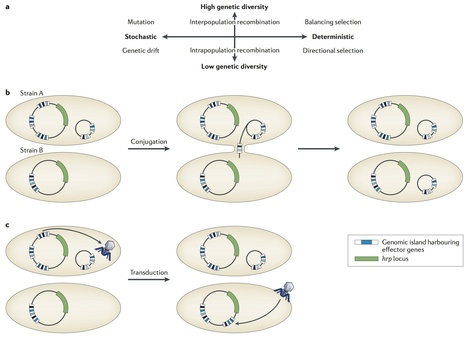
Advances in genome-based studies on plant-associated microorganisms have transformed our understanding of many plant pathogens and are beginning to greatly widen our knowledge of plant interactions with mutualistic and commensal microorganisms. Pathogenomics has revealed how pathogenic microorganisms adapt to particular hosts, subvert innate immune responses and change host range, as well as how new pathogen species emerge. Similarly, culture-independent community profiling methods, coupled with metagenomic and metatranscriptomic studies, have provided the first insights into the emerging field of research on plant-associated microbial communities. Together, these approaches have the potential to bridge the gap between plant microbial ecology and plant pathology, which have traditionally been two distinct research fields.
|
|
Scooped by
Kamoun Lab @ TSL
October 24, 2014 5:34 AM
|
Plant nucleotide-binding leucine-rich repeat (NB-LRR) disease resistance (R) proteins recognize specific “avirulent” pathogen effectors and activate immune responses. NB-LRR proteins structurally and functionally resemble mammalian Nod-like receptors (NLRs). How NB-LRR and NLR proteins activate defense is poorly understood. The divergently transcribed Arabidopsis R genes, RPS4 (resistance to Pseudomonas syringae 4) and RRS1 (resistance to Ralstonia solanacearum 1), function together to confer recognition of PseudomonasAvrRps4 and Ralstonia PopP2. RRS1 is the only known recessive NB-LRR R gene and encodes a WRKY DNA binding domain, prompting suggestions that it acts downstream of RPS4 for transcriptional activation of defense genes. We define here the early RRS1-dependent transcriptional changes upon delivery of PopP2 via Pseudomonas type III secretion. The Arabidopsis slh1 (sensitive to low humidity 1) mutant encodes an RRS1 allele (RRS1SLH1) with a single amino acid (leucine) insertion in the WRKY DNA-binding domain. Its poor growth due to constitutive defense activation is rescued at higher temperature. Transcription profiling data indicate that RRS1SLH1-mediated defense activation overlaps substantially with AvrRps4- and PopP2-regulated responses. To better understand the genetic basis of RPS4/RRS1-dependent immunity, we performed a genetic screen to identify suppressor of slh1 immunity (sushi) mutants. We show that many sushi mutants carry mutations in RPS4, suggesting that RPS4 acts downstream or in a complex with RRS1. Interestingly, several mutations were identified in a domain C-terminal to the RPS4 LRR domain. Using an Agrobacterium-mediated transient assay system, we demonstrate that the P-loop motif of RPS4 but not of RRS1SLH1 is required for RRS1SLH1 function. We also recapitulate the dominant suppression of RRS1SLH1 defense activation by wild type RRS1 and show this suppression requires an intact RRS1 P-loop. These analyses of RRS1SLH1shed new light on mechanisms by which NB-LRR protein pairs activate defense signaling, or are held inactive in the absence of a pathogen effector.
|
|
Scooped by
Kamoun Lab @ TSL
October 23, 2014 6:22 AM
|
Pseudoperonospora cubensis, an obligate biotrophic oomycete causing devastating foliar disease in species of the Cucurbitaceae family, was never reported in seeds or transmitted by seeds. We now show that P. cubensis occurs in fruits and seeds of downy mildew-infected plants but not in fruits or seeds of healthy plants. About 6.7% of the fruits collected during 2012–2014 have developed downy mildew when homogenized and inoculated onto detached leaves and 0.9% of the seeds collected developed downy mildew when grown to the seedling stage. This is the first report showing that P. cubensis has become seed-transmitted in cucurbits. Species-specific PCR assays showed that P. cubensis occurs in ovaries, fruit seed cavity and seed embryos of cucurbits. We propose that international trade of fruits or seeds of cucurbits might be associated with the recent global change in the population structure of P. cubensis.
|
|
Scooped by
Kamoun Lab @ TSL
October 23, 2014 5:18 AM
|
The British Council and the Mexican National Council of Science and Technology (CONACyT) have launched the programme 'Researcher Links' to encourage international research collaboration between young researchers from the UK and Mexico.
We are now inviting Early Career Researchers from the UK and Mexico to apply to attend this binational workshop on Genomics Research on Plant-Parasite Interactions to Increase Food Production that will take place in the city of Leon in the state of Guanajuato, Mexico.
All travel and accommodation expenses will be covered by the Researcher Links programme.
|
|
Scooped by
Kamoun Lab @ TSL
October 20, 2014 1:02 PM
|
ABOUT THIS OPPORTUNITY
We have grants for early career researchers to attend a workshop entitled 'Plant-microbe interactions: pathogen and host diversity, infection and defense mechanisms and disease protection'. All travel, accommodation and meals will be covered. Under the Researcher Links scheme offered within the Newton Fund, the British Council and the Thailand Research Fund will be holding a workshop on the above theme in Bangkok, Thailand on 16 – 19 February 2015. The workshop is being coordinated by Drs. Chatchawan Jantasuriyarat and Sophien Kamoun, and will have contributions from other leading researchers. The theme of the workshop is plant-pathogen interactions with an emphasis on studies of pathogen and host diversity, infection and defense mechanisms, as well as disease protection.
KEY DATES
Dates of workshop - 16-19 February 2015 Deadline for applications - 31 October 2014
|
|
Scooped by
Kamoun Lab @ TSL
October 13, 2014 10:40 AM
|
Plants detect microbes via two functionally interconnected tiers of immune receptors. Immune detection is suppressed by equally complex pathogen mechanisms. The small plasma-membrane-tethered protein RIN4 negatively regulates microbe-associated molecular pattern (MAMP)-triggered responses, which are derepressed upon bacterial flagellin perception. We demonstrate that recognition of the flagellin peptide MAMP flg22 triggers accumulation of RIN4 phosphorylated at serine 141 (pS141) that mediates derepression of several immune outputs. RIN4 is targeted by four bacterial type III effector proteins, delivered temporally after flagellin perception. Of these, AvrB acts with a host kinase to increase levels of RIN4 phosphorylated at threonine 166 (pT166). RIN4 pT166 is epistatic to RIN4 pS141. Thus, AvrB contributes to virulence by enhancing “rerepression” of immune system outputs. Our results explain the evolution of independent effectors that antagonize accumulation of RIN4 pS141 and of a specific plant intracellular NLR protein, RPM1, which is activated by AvrB-mediated accumulation of RIN4 pT166.
|
|
Scooped by
Kamoun Lab @ TSL
October 10, 2014 10:58 AM
|
The powdery mildew fungi are obligate biotrophic plant pathogens that develop a specialized structure for parasitism termed haustorium, which is responsible for nutrient uptake and factor exchange with the plant. In this work, we present a detailed microscopy analysis of the haustoria of the cucurbit powdery mildew fungus Podosphaera xanthii, a major limiting factor for cucurbit production worldwide. Despite being located inside plant epidermal cells, transmission electron microscopy (TEM) analysis showed the characteristic highly irregular outline of the extrahaustorial membrane that separates the extrahaustorial matrix of haustoria from the cytoplasm of the plant cell. TEM analysis also revealed the presence of some vesicles and electron-dense plaques of material surrounding the haustoria. In confocal microscopy analysis and aniline blue staining we found a positive correlation between haustorial development and deposition of callose, which is distributed as plaques around haustorial complex. In this study, a method for the isolation of P. xanthii haustoria was also adapted, which permitted the analysis of the formation of haustorial lobes and the visualization of vacuoles and the pool of vesicles inside the haustorial complex. Our findings suggested that the haustorial lobes were responsible for vesicular trafficking and most likely act as the main mediators of the fungus-plant dialogue. All of these findings were integrated into a model of the P. xanthii-host cellular interactions.
Importin-αs are essential adapter proteins that recruit cytoplasmic proteins destined for active nuclear import to the nuclear transport machinery. Cargo proteins interact with the importin-α armadillo repeat domain via nuclear localization sequences (NLSs), short amino acids motifs enriched in Lys and Arg residues. Plant genomes typically encode several importin-α paralogs that can have both specific and partially redundant functions. Although some cargos are preferentially imported by a distinct importin-α, it remains unknown how this specificity is generated and to what extent cargos compete for binding to nuclear transport receptors. Here we report that the effector protein HaRxL106 from the oomycete pathogen Hyaloperonospora arabidopsidis co-opts the host cell's nuclear import machinery. We use HaRxL106 as a probe to determine redundant and specific functions of importin-α paralogs from Arabidopsis thaliana. A crystal structure of the importin-α3/MOS6 armadillo repeat domain suggests that five of the six Arabidopsis importin-αs expressed in rosette leaves have an almost identical NLS binding site. Comparison of the importin-α binding affinities of HaRxL106 and other cargos in vitro and in plant cells suggests that relatively small affinity differences in vitro affect the rate of transport complex formation in vivo. Our results suggest that cargo affinity for importin-α, sequence variation at the importin-α NLS binding sites and tissue-specific expression levels of importin-αs determine formation of cargo/importin-α transport complexes in plant cells.
Via The Sainsbury Lab
|
|
Scooped by
Kamoun Lab @ TSL
October 6, 2014 5:07 AM
|
Nicotiana species carry cellular T-DNA sequences (cT-DNAs), acquired by Agrobacterium-mediated transformation. We characterized the cT-DNA sequences of the ancestral N. tabacum species N. tomentosiformis by deep sequencing. N. tomentosiformis contains four cT-DNA inserts derived from different Agrobacterium strains. Each has an incomplete inverted repeat structure. TA is similar to part of the A. rhizogenes 1724 mikimopine-type T-DNA, but has unusual orf14 and mis genes. TB carries a 1724 mikimopine-type orf14-mis fragment and a mannopine-agropine synthesis region (mas2’-mas1’-ags). The mas2’ gene codes for an active enzyme. TC is similar to the left part of the A. rhizogenes A4 T-DNA but also carries octopine synthase-like (ocl) and c-like genes normally found in A. tumefaciens. TD shows a complex rearrangement of T-DNA fragments similar to the right end of the A4 TL-DNA, and including an orf14-like gene and a gene with unknown function, orf511. The TA, TB, TC and TD insertion sites were identified by alignment to N. tabacum and N. sylvestris sequences. The divergence values for the TA, TB, TC and TD repeats provide an estimate for their relative introduction times. A large deletion has occurred in the central part of the N. tabacum cv. Basma/Xanthi TA region, another one removed the complete TC region in N. tabacum. N. otophora lacks TA, TB and TD, but contains TC and another cT-DNA, TE. This analysis, together with that of N. glauca and other Nicotiana species, indicates multiple sequential insertions of cT-DNAs during the evolution of the genus Nicotiana.
|
|
Scooped by
Kamoun Lab @ TSL
October 1, 2014 2:32 PM
|
Academia is not producing sufficient PhDs in the plant sciences to solve the crop production challenges facing a rapidly growing population.
|
|
Scooped by
Kamoun Lab @ TSL
September 19, 2014 12:15 PM
|
Editorial
Plant interactions with other organisms: molecules, ecology and evolution
Commentary
Different shades of JAZ during plant growth and defense
Nutrient supply differentially alters the dynamics of co-infecting phytoviruses
Letters
From shade avoidance responses to plant performance at vegetation level: using virtual plant modelling as a tool
F. J. Bongers, J. B. Evers, N. P. R. Anten & R. Pierik
Review
Magical mystery tour: MLO proteins in plant immunity and beyond
J. Acevedo-Garcia, S. Kusch & R. Panstruga
The squeeze cell hypothesis for the activation of jasmonate synthesis in response to wounding E. E. Farmer, D. Gasperini & I. F. Acosta
Lipochitooligosaccharide recognition: an ancient story
Y. Liang, K. Tóth, Y. Cao, K. Tanaka, C. Espinoza & G. Stacey
Herbivore-induced plant volatiles: targets, perception and unanswered questions
M. Heil
There’s no place like home? An exploration of the mechanisms behind plant litter–decomposer affinity in terrestrial ecosystems
A. T. Austin, L. Vivanco, A. González-Arzac & L. I. Pérez
Insect herbivore-associated organisms affect plant responses to herbivory
F. Zhu, E. H. Poelman & M. Dicke
When mutualism goes bad: density- dependent impacts of introduced bees on plant reproduction
M. A. Aizen, C. L. Morales, D. P. Vázquez, L. A. Garibaldi, A. Sáez & L. D. Harder
Insect and pathogen attack and resistance in maize and its wild ancestors, the teosintes
E. S. de Lange, D. Balmer, B. Mauch-Mani & T. C. J. Turlings
Full papers
Linking phytochrome to plant immunity: low red : far-red ratios increase Arabidopsis susceptibility to Botrytis cinerea by reducing the biosynthesis of indolic glucosinolates and camalexin
M. D. Cargnel, P. V. Demkura & C. L. Ballaré
To grow or defend? Low red : far-red ratios reduce jasmonate sensitivity in Arabidopsis seedlings by promoting DELLA degradation and increasing JAZ10 stability
M. Leone, M. M. Keller, I. Cerrudo & C. L. Ballaré
β-Glucosidase BGLU42 is a MYB72-dependent key regulator of rhizobacteria-induced systemic resistance and modulates iron deficiency responses in Arabidopsis roots
C. Zamioudis, J. Hanson & C. M. J. Pieterse
Deciphering the language of plant communication: volatile chemotypes of sagebrush
R. Karban, W. C. Wetzel, K. Shiojiri, S. Ishizaki, S. R. Ramirez & J. D. Blande
The context dependence of beneficiary feedback effects on benefactors in plant facilitation
C. Schöb, R. M. Callaway, F. Anthelme, R. W. Brooker, L. A. Cavieres, Z. Kikvidze, C. J. Lortie, R. Michalet, F. I. Pugnaire, S. Xiao, B. H. Cranston, M-C. García, N. R. Hupp, L. D. Llambí, E. Lingua, A. M. Reid, L. Zhao & B. J. Butterfield
Herbivore-mediated material fluxes in a northern deciduous forest under elevated carbon dioxide and ozone concentrations
T. D. Meehan, J. J. Couture, A. E. Bennett & R. L. Lindroth
Are plant–soil feedback responses explained by plant traits?
C. Baxendale, K. H. Orwin, F. Poly, T. Pommier & R. D. Bardgett
Environmental nutrient supply alters prevalence and weakens competitive interactions among coinfecting viruses
C. Lacroix, E. W. Seabloom & E. T. Borer
|
|
Scooped by
Kamoun Lab @ TSL
September 16, 2014 11:22 AM
|
Neurospora crassa has a long history as an excellent model for genetic, cellular, and biochemical research. Although this fungus is known as a saprotroph, it normally appears on burned vegetations or trees after forest fires. However, due to a lack of experimental evidence, the nature of its association with living plants remains enigmatic. Here we report that Scots pine (Pinus sylvestris) is a host plant for N. crassa. The endophytic lifestyle of N. crassa was found in its interaction with Scots pine. Moreover, the fungus can switch to a pathogenic state when its balanced interaction with the host is disrupted. Our data reveal previously unknown lifestyles of N. crassa, which are likely controlled by both environmental and host factors. Switching among the endophytic, pathogenic, and saprotrophic lifestyles confers upon fungi phenotypic plasticity in adapting to changing environments and drives the evolution of fungi and associated plants.
|
|
Scooped by
Kamoun Lab @ TSL
September 12, 2014 8:58 AM
|
Rust diseases caused by fungi of the order Pucciniales afflict a wide range of plants, including cereals, legumes, ornamentals, and fruit trees, and pose a serious threat to cropping systems and global food security. The obligate parasitic lifestyle of these fungi and their complex life cycles, often involving alternate hosts for the sexual and asexual stages, also make this group of pathogens of great biological interest. One of the most remarkable adaptations of rust fungi is the specialized infection structure that underpins the sustained biotrophic association with hosts; the haustorium (Figure 1A and C). This organ forms after penetration of the wall of a live host cell, expanding on the inner side of the cell wall while invaginating the surrounding host plasma membrane (Figure 1C). Through haustoria, the pathogen derives nutrients from the host and secretes virulence proteins called effectors, which are believed to be the key players that manipulate the physiological and immune responses of host cells [1]–[4]. Analogous terminal feeding structures have independently evolved in other organisms such as the haustorium in powdery mildews (ascomycetes) and downy mildews (oomycetes, not true fungi), and the arbuscules in arbuscular mycorrhizae, suggesting that such architecture represents a successful adaptation of these organisms to interact with their respective host plants [5], [6].
|
|
|
Scooped by
Kamoun Lab @ TSL
October 26, 2014 5:37 PM
|
Readers of PlantVillage (www.plantvillage.com) will be well aware of the devastation that plant diseases can cause, whether they are affecting garden produce or agricultural fields, the symptoms of plant diseases are very obvious from blights and rusts, to moulds and mildews.
The devastation reeked by plant pathogens also makes a huge impact on the ability of the world to feed itself. It has recently been estimated that losses due to plant pathogens are one of the most significant constraints on worldwide food production. Indeed, it has been estimated that if normal, low-level plant diseases could be effectively controlled, this would allow food production sufficient to feed 8.5% of the current human population (almost 600 million people). Therefore to ensure global food security, we will require more durable means of controlling plant diseases, and we have to do that in a more sustainable way that is less heavily dependent on fossil fuels, and does not adversely affect the environment, including human health. This is a big challenge and will take considerably greater understanding of plant diseases and the pathogens that cause them.
Continue reading at http://medium.com/@plantvillage/rice-blast-disease-hopes-for-control-910655049d10
|
|
Scooped by
Kamoun Lab @ TSL
October 24, 2014 4:29 AM
|
Chitin is a fungal microbe-associated molecular pattern (MAMP) that is recognized in Arabidopsis by a lysin motif receptor kinase (LYK), AtCERK1. Previous research suggested that AtCERK1 is the major chitin receptor in plants and mediates chitin-induced signaling through homodimerization and phosphorylation. However, the reported chitin binding affinity of AtCERK1 is quite low, suggesting another receptor with high chitin binding affinity might be present. Here, we propose that AtLYK5 is the primary chitin receptor in Arabidopsis. Mutations in AtLYK5 resulted in a significant reduction in the plant chitin response. However, AtLYK5 shares overlapping function with AtLYK4 and, therefore, only AtLYK4/AtLYK5-2 double mutants show a complete loss of chitin response. AtLYK5 interacts with AtCERK1 in a chitin-dependent manner. Chitin binding to AtLYK5 is indispensable for chitin-induced AtCERK1 phosphorylation. AtLYK5 binds chitin at a higher affinity than AtCERK1. The data suggest that AtLYK5 is the primary receptor for chitin to induce plant immunity.
|
|
Scooped by
Kamoun Lab @ TSL
October 23, 2014 5:38 AM
|
The objective of this symposium is to create a scientific event that is at the forefront of fundamental research in diverse aspects of legume biology.
The meeting will be divided into 5 sessions:
1) Symbiosis; 2) Genomics; 3) Pathogenesis; 4) Physiology and stress responses; 5) Development
The symposium will bring together about 150 participants in a rather informal atmosphere, facilitating exchanges. We also aim at proposing a highly attractive program at a moderate inscription fee to give the opportunity to researchers - in particular those at the early stage of their career – to participate to an exciting top-level scientific event. Young researchers will have the opportunity to present their work with a poster.
|
|
Scooped by
Kamoun Lab @ TSL
October 22, 2014 7:22 AM
|
Plants have evolved strong innate immunity mechanisms, but successful pathogens evade or suppress plant immunity via effectors delivered into the plant cell. Hyaloperonospora arabidopsidis (Hpa) causes downy mildew on Arabidopsis thaliana, and a genome sequence is available for isolate Emoy2. Here, we exploit the availability of genome sequences for Hpa and Arabidopsis to measure gene-expression changes in both Hpa and Arabidopsis simultaneously during infection. Using a high-throughput cDNA tag sequencing method, we reveal expression patterns of Hpa predicted effectors and Arabidopsis genes in compatible and incompatible interactions, and promoter elements associated with Hpa genes expressed during infection. By resequencing Hpa isolate Waco9, we found it evades Arabidopsis resistance gene RPP1through deletion of the cognate recognized effector ATR1. Arabidopsis salicylic acid (SA)-responsive genes including PR1 were activated not only at early time points in the incompatible interaction but also at late time points in the compatible interaction. By histochemical analysis, we found that Hpa suppresses SA-inducible PR1 expression, specifically in the haustoriated cells into which host-translocated effectors are delivered, but not in non-haustoriated adjacent cells. Finally, we found a highly-expressed Hpa effector candidate that suppresses responsiveness to SA. As this approach can be easily applied to host-pathogen interactions for which both host and pathogen genome sequences are available, this work opens the door towards transcriptome studies in infection biology that should help unravel pathogen infection strategies and the mechanisms by which host defense responses are overcome.
|
|
Scooped by
Kamoun Lab @ TSL
October 13, 2014 10:43 AM
|
In the absence of pathogen infection, plant effector-triggered immune (ETI) receptors are maintained in a preactivation state by intermolecular interactions with other host proteins. Pathogen effector-induced alterations activate the receptor. In Arabidopsis, the ETI receptor RPM1 is activated via bacterial effector AvrB-induced phosphorylation of the RPM1-interacting protein RIN4 at Threonine 166. We find that RIN4 also interacts with the prolyl-peptidyl isomerase (PPIase) ROC1, which is reduced upon RIN4 Thr166 phosphorylation. ROC1 suppresses RPM1 immunity in a PPIase-dependent manner. Consistent with this, RIN4 Pro149 undergoes cis/transisomerization in the presence of ROC1. While the RIN4P149V mutation abolishes RPM1 resistance, the deletion of Pro149 leads to RPM1 activation in the absence of RIN4 phosphorylation. These results support a model in which RPM1 directly senses conformational changes in RIN4 surrounding Pro149 that is controlled by ROC1. RIN4 Thr166 phosphorylation indirectly regulates RPM1 resistance by modulating the ROC1-mediated RIN4 isomerization.
|
|
Scooped by
Kamoun Lab @ TSL
October 12, 2014 9:56 AM
|
A mechanism of innate antiviral immunity operating against viruses infecting mammalian cells has been described during the last decade. Host cytidine deaminases (e.g., APOBEC3 proteins) edit viral genomes giving raise to hypermutated nonfunctional viruses; consequently, viral fitness is reduced through lethal mutagenesis. By contrast, sub-lethal hypermutagenesis may contribute to virus evolvability by increasing population diversity. To prevent genome editing, some viruses have evolved proteins that mediate APOBEC3 degradation. The model plant Arabidopsis thaliana encodes for nine cytidine deaminases (AtCDAs), raising the question of whether deamination is an antiviral mechanism in plants as well. Here we tested the effects of AtCDAs expression on the pararetrovirus Cauliflower mosaic virus (CaMV). We show that A. thaliana AtCDA1 gene product exerts a mutagenic activity, which indeed generates a negative correlation between the level of AtCDA1 expression and CaMV accumulation in the plant, suggesting that deamination may also work as an antiviral mechanism in plants.
|
|
Scooped by
Kamoun Lab @ TSL
October 8, 2014 9:35 AM
|
To cause plant disease, pathogenic fungi can secrete effector proteins into plant cells to suppress plant immunity and facilitate fungal infection. Most fungal pathogens infect plants using very long strand-like cells, called hyphae, that secrete effectors from their tips into host tissue. How fungi undergo long-distance cell signalling to regulate effector production during infection is not known. Here we show that long-distance retrograde motility of early endosomes (EEs) is necessary to trigger transcription of effector-encoding genes during plant infection by the pathogenic fungus Ustilago maydis. We demonstrate that motor-dependent retrograde EE motility is necessary for regulation of effector production and secretion during host cell invasion. We further show that retrograde signalling involves the mitogen-activated kinase Crk1 that travels on EEs and participates in control of effector production. Fungal pathogens therefore undergo long-range signalling to orchestrate host invasion.
Plant growth and development depend on the biosynthesis and remodeling of the cell wall. To coordinate these two processes, surveillance mechanisms have evolved to monitor the state of the cell wall. The brassinosteroid (BR) hormone signaling pathway plays an essential role in growth control and regulates the expression of a plethora of cell wall-related genes. We have previously shown that feedback signaling from the wall can modulate the outputs of the BR pathway, ensuring cell wall homeostasis and integrity. Here, we identified a receptor-like protein (RLP44), which mediates the activation of BR signaling through direct interaction with the BR coreceptor BAK1. Thus, RLP44 integrates cell wall surveillance with hormone signaling to control cell wall integrity and growth.
Via The Sainsbury Lab
|
|
Scooped by
Kamoun Lab @ TSL
October 3, 2014 10:29 AM
|
Microorganisms need to sense and respond to constantly changing microenvironments, and adapt their transcriptome, proteome, and metabolism accordingly to survive [1]. However, microbes sometimes react in a way which does not make immediate biological sense in light of the current environment—for example, by up-regulating an iron acquisition system in times of metal abundance. The reason for this seemingly nonsensical behavior can lie in the microbe's ability to predict a coming change in conditions by cues from the current environment. If the microbe (pre-)adapts accordingly, it will increase its fitness and chances of survival under subsequent selection pressures—a concept known as adaptive prediction.
|
|
Scooped by
Kamoun Lab @ TSL
September 24, 2014 2:01 PM
|
Ever since their discovery as key regulators of the jasmonate (JA) signaling pathway (Chini et al., 2007; Thines et al., 2007; Yan et al., 2007), repressor proteins of the JASMONATE ZIM-domain (JAZ) family have been rising stars in research on hormonal regulation of plant growth and defense. In plant cells, JAZ repressor proteins interact with an E3 ubiquitin ligase complex (SCFCOI1) that together function as a JA receptor. In resting cells, JAZs block the activity of transcriptional regulators of JA responses by physically binding to them. Upon perception of bioactive JAs, JAZ proteins are rapidly degraded via the ubiquitin/26S proteasome-dependent proteolytic pathway. This releases the JAZ-bound transcription factors, resulting in the activation of downstream JA responses (Fig. 1a). JAs play a dominant role in regulating defense responses against herbivorous insects and necrotrophic pathogens, and in adaptive responses to beneficial soilborne microbes (Wasternack & Hause, 2013; Pieterse et al., 2014). In addition, JAs have a signal function in a myriad other processes, including abiotic stress reactions and plant growth responses to environmental cues (Wasternack & Hause, 2013). The JA pathway functions in the context of a complex network of hormone-regulated signaling pathways that, depending on the environmental or developmental condition, can act antagonistically or synergistically on each other to finely balance resource allocation between growth and defense and minimize fitness tradeoffs (Pieterse et al., 2012; Vos et al., 2013). In the process of balancing plant growth and defense, gibberellins (GAs) have emerged as dominant antagonists of the JA signaling output (Hou et al., 2013).
Via Francis Martin
|
|
Scooped by
Kamoun Lab @ TSL
September 12, 2014 12:25 PM
|
Aim - To describe the patterns and trends in the spread of crop pests and pathogens around the world, and determine the socioeconomic, environmental and biological factors underlying the rate and degree of redistribution of crop-destroying organisms.
Location - Global.
Methods - Current country- and state-level distributions of 1901 pests and pathogens and historical observation dates for 424 species were compared with potential distributions based upon distributions of host crops. The degree of ‘saturation’, i.e. the fraction of the potential distribution occupied, was related to pest type, host range, crop production, climate and socioeconomic variables using linear models.
Results - More than one-tenth of all pests have reached more than half the countries that grow their hosts. If current trends continue, many important crop-producing countries will be fully saturated with pests by the middle of the century. While dispersal increases with host range overall, fungi have the narrowest host range but are the most widely dispersed group. The global dispersal of some pests has been rapid, but pest assemblages remain strongly regionalized and follow the distributions of their hosts. Pest assemblages are significantly correlated with socioeconomics, climate and latitude. Tropical staple crops, with restricted latitudinal ranges, tend to be more saturated with pests and pathogens than temperate staples with broad latitudinal ranges. We list the pests likely to be the most invasive in coming years.
Main conclusions - Despite ongoing dispersal of crop pests and pathogens, the degree of biotic homogenization of the globe remains moderate and regionally constrained, but is growing. Fungal pathogens lead the global invasion of agriculture, despite their more restricted host range. Climate change is likely to influence future distributions. Improved surveillance would reveal greater levels of invasion, particularly in developing countries.
|