


The global wearable band market grew 5.6% year on year with 40.9 million units shipping in Q2 2021. The decline of basic bands, which started in Q4 2020, has extended into Q2 2021. Shipments fell

 Your new post is loading...
 Scoop.it! The global wearable band market grew 5.6% year on year with 40.9 million units shipping in Q2 2021. The decline of basic bands, which started in Q4 2020, has extended into Q2 2021. Shipments fell 
No comment yet.
Sign up to comment
Scoop.it!
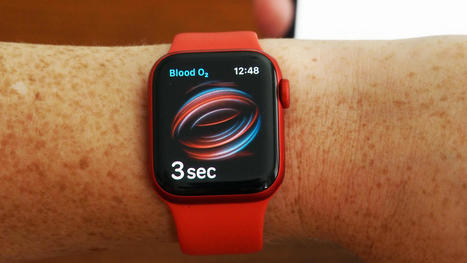
Well, well, well, I guess this is what happens when the screen size gets bigger.
Richard Platt's insight:
Until today, it was widely expected that the Apple Watch Series 7 would make its debut at the same time as the iPhone 13 lineup. Now, as Apple’s long-rumored September event approaches, it appears that the Series 7 might be delayed due to production issues. According to Nikkei Asia, the root of the problem is the Series 7's “complicated designs.” Supposedly, small-scale production began last week but the results were unsatisfactory because the design is “significantly different” from previous versions and there were issues assembling electronic modules, components, and displays. The delay was also corroborated by a Bloomberg report, which cited an anonymous source close to the matter. Rumors about the Series 7 have been thin compared to previous years, but one thing that’s been consistent is that the Apple Watch is getting a redesign. So far, we’ve seen some renders of a flat-edged watch that looks like a mini iPhone. Another recent rumor is that the size of screens are increasing, from 40mm and 44mm to 41mm and 45mm. Nikkei claims it’s not necessarily the exterior design causing issues—though the bigger screens ultimately do play a part. The report also says that new features, such as blood pressure monitoring, have required Apple to reconfigure the watch’s internal design. (Blood pressure monitoring is also a fairly new rumor, as it had long been speculated Apple was working on blood glucose monitoring instead.) Or put simply, it needs to cram more components into a watch that’s not that much bigger than its predecessor. This is what’s reportedly causing production issues, a problem that’s only been exacerbated by the pandemic. Specifically, Nikkei says the inability for Apple to work with its suppliers in person to verify specifications means the company is only coming across design challenges once test production starts.
Scoop.it!

The Galaxy Watch 4 uses a method called bioelectrical impedance analysis to calculate the amount of muscle and fat in someone’s body. It appeared fairly accurate in an initial study.
Richard Platt's insight:
Samsung’s new Galaxy Watch 4 has a feature that can calculate body fat percentage and muscle mass, the company announced yesterday. It’s the latest tech company to offer a body composition feature, joining Amazon, which has a body fat percentage feature in its Halo Band. Body fat is generally a better way to assess health than weight, but it’s often calculated using a metric called the body mass index (BMI), which is crude and inaccurate. If wearables prove accurate, they could give people a better resource to monitor their health, Diana Thomas, a mathematician who studies body weight regulation at West Point, told The Verge. The Galaxy measures body composition using a technique called bioelectrical impedance analysis (BIA), which sends a weak electric current through the body. It’s calculating the amount of water in the body — the signal moves more quickly through tissue that has higher percentages of water. Since fat has a lower water content than muscle, the technique can estimate how much fat is present in a person’s body. BIA can give an estimate of body fat, but it has limitations, said Thomas. There isn’t a perfect 1-to-1 ratio between the amount of water in the body and body fat, and the amount of water in the body changes over time, she said. It can go up and down with exercise, for example, or if someone is drinking a lot of water. One study found that BIA overestimated body fat if the measurement was taken right after someone drank around two cups of water. Most available devices that use BIA to track body composition send the current through the soles of the feet (like a smart scale) or through the palms. Samsung shrunk the sensors down to fit on the back of the watch. The company’s Healthcare Sensor Lab published a study in January 2021 describing the technology. In the study, 203 people had their body composition analyzed by the watch, two other BIA devices, and a device that uses dual-energy X-ray absorptiometry (DXA) — an X-ray technique that shows fat distribution through the body, which is considered the gold standard for body composition measurement.
Scoop.it!

LG's PuriCare Wearable Air Purifier is launching in Thailand in August with improved features including a mic and speaker..
Richard Platt's insight:
With face coverings still the norm, tech companies want you to up your mask game. Last year, LG unveiled the PuriCare Wearable Air Purifier featuring three fans and a pair of HEPA-style filters. 10 months later, it's finally revealed an initial release date for the device, an improved version of which arrives in Thailand in August. There's still no word on the price, however. The latest iteration features a smaller, lighter motor and a built-in mic, speaker and voice amplifier. LG says its "VoiceOn" tech automatically recognizes when you're talking and boosts the sound so others can hear you through the mask. Unfortunately, it can't make you sound like Darth Vader. LG has also bumped up the battery from 820mAh to 1,000 mAh, though the stated 8 hour running time is still the same. It's also touting a two hour recharge time using the included USB cable. The wearable purifier should roll out to more regions upon receiving approval from regulators, the company said. For now, LG is promoting the mask with the help of the Thai Olympics team, who wore it en route to the summer games in Tokyo. Clearly, the Korean company is pitching it as a go-to for those who train outdoors. But, LG's device has its rivals: We've previously seen tech-infused masks from Razer and, um, Will.i.Am.
Scoop.it!
Richard Platt's insight:
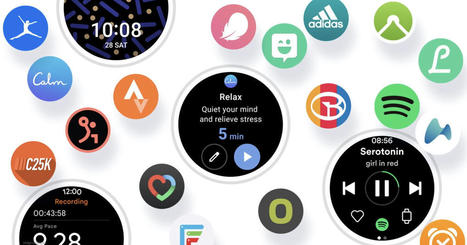
Samsung has taken the wraps off it and Google’s new unified smartwatch platform at MWC 2021 — sort of. Samsung did show off was a first look at what its new One UI Watch software will look like, and it elaborated on just what the new Google / Samsung partnership could mean for future Galaxy Watches. To be clear: what Samsung is showing of One UI Watch won’t be what all smartwatches built on the new unified Google / Samsung platform look like — it’s an added layer on top specifically for Samsung devices. The goal is a consistent look and experience across all of Samsung’s hardware and software, and so far it looks lovely. The Settings menu has been redesigned to look more like the phone’s menu, and things sync from the phone: if you have additional time zones set in your clock app, they’ll be there on the watch, and blocked callers on the phone will be blocked on watches, too. Samsung also showed off a new watchface design tool, which will be available for Android developers later this year to easily create new watchfaces for the platform. It’s unclear yet if current Tizen or Wear OS watchfaces will work with the new OS or One UI Watch, but the current options have also been seriously lacking, so any new choices — even ones largely reliant on developers — are welcome. Best of all, similar to the Apple Watch, when you install a smartwatch-compatible app on your phone, the corresponding watch app will automatically install on the watch as well. You won't need to manually install anything as you currently do on Tizen-based watches, or deal with the weird on-wrist app store that has made getting apps on Wear OS frustrating. You’ll just download an app to your phone and it should appear directly on your wrist, too.
Scoop.it!
Richard Platt's insight:
Apple has been quietly testing a program that would allow the tech company to provide primary health care service to patients with doctors employed by Apple at clinics also owned by Apple, according to a new report from the Wall Street Journal. The ambitious project, code-named Casper, was reportedly conceived in 2016, shortly after the Apple Watch was released in 2015. Apple COO Jeff Williams envisioned the health care project as something that would allow doctors and patients to be in more constant contact, according to the Journal, something he dubbed the “363"—apparently a reference to the fact that a typical person only seeing their doctor two times a year. Which is to say, people often only go to the doctor when something is wrong. The Journal is quick to note that the new Apple clinic project is now “largely stalled” but that doesn’t mean it’s altogether dead.
Scoop.it!

The Forerunner 945 LTE costs $650, while the Forerunner 55 is $200..
Richard Platt's insight:
Garmin is adding two more smartwatches to its lineup. The entry-level Forerunner 55 brings in some more general smartwatch features, while the Forerunner 945 LTE is aimed at fitness fanatics. Perhaps the most important features on the Forerunner 945 LTE are the ones that connect you with help when you need it. The wearable can send a message to your emergency contacts through the incident detection and assistance features. The assistance plus option can automatically share your name and location with a 24/7 monitoring and response team, which can contact and coordinate with emergency services if you feel unsafe or the watch senses an incident has occurred. You can also expect detained training data, activity tracking and performance monitoring. There are several more typical smartwatch features like Garmin Pay, music storage and notifications from a connected phone. As for the battery life, the Forerunner 945 LTE lasts for up to two weeks in smartwatch mode, according to Garnin, and seven hours in GPS mode when you’re listening to music and using the LiveTrack feature over LTE. The device comes in whitestone or black. It costs $650 and it's available now.
Scoop.it!

The growing need for soldiers’ coordination, training and health, the increase in asymmetric warfare, and modernization programs in the military, among others, are some of the factors that are fueling […] The U.S. military is turning to wearable technology to enhance soldiers’ capabilities and prevent injuries.
Richard Platt's insight:
The U.S. military is turning to wearable technology to enhance soldiers’ capabilities and prevent injuries. In recent months, various Defense Department components have been cautiously applying diverse wearable technologies to gauge soldiers’ stress, monitor for COVID-19 spread, and other health- and performance-related purposes. Including wearable Traumatic Brain Injury, or TBI, prevention devices.Specifically, they're exploring technologies — designed with the intent to be cleared by the FDA — that can protect service members from such traumas or at least reduce the severity of them, reports Brandi Vincent in NextGov. “Identification of medical device technologies with such capabilities are essential to protect the warfighter and is vital to force protection and strength,” officials stated. The U.S. Army is conducting several other studies designed to use wearable devices — special watches and rings that track heart rate, body temperature, and other physiological data — to evaluate how soldiers respond to stress and physical exertion. These devices also can be used for cognitive training to help soldiers learn how to cope with stress more effectively, increasing their physical performance, according to the experts from Booz Allen Hamilton.
Scoop.it!

The Apple Watch may gain the ability to measure blood pressure, blood glucose, and blood alcohol levels, according to newly-reveale
Richard Platt's insight:
Apple has been revealed to be the largest customer of the British electronics start-up Rockley Photonics. Rockley Photonics has developed non-invasive optical sensors for detecting multiple blood-related health metrics, including blood pressure, blood glucose, and blood alcohol levels, many of which are only normally detectable with more invasive dedicated medical equipment. Rockley's sensors beam infrared light through a user's skin, much like the existing sensors on the back of the Apple Watch for detecting heart rate and blood oxygen levels. Rockley's disclosure that its biggest client is Apple came about as the company prepares to go public in New York. The company's filings said that Apple accounted for the majority of its revenue over the last two years and that it has an ongoing "supply and development agreement" with the company, under which it expects to continue to heavily rely on Apple for most of its revenue. Given the growth of Rockley Photonics and the scale of Apple's partnership with the company, it seems to be virtually inevitable that the company's health sensor technology will be coming to the Apple Watch sooner rather than later. Rockley has said that its next-gen sensors could be in consumer smartwatches and other electronics as soon as next year. This would presumably align with the launch of Apple Watch Series 8 models. Until now, rumors had indicated that the upcoming Apple Watch Series 7 would be gaining blood glucose monitoring, but Rockley's comments may indicate that the feature has been delayed until 2022. It is also possible that blood glucose monitoring could still come to the Apple Watch Series 7 this year, followed by a significant expansion of Rockley's technology in the device next year with features like blood pressure and blood alcohol monitoring.

Lacy Bauer's curator insight,
May 6, 2021 7:55 PM
The apple watch was already advanced in its technology health features. Plans for the new watch not only have healthy features but now safety in my eyes. Plans for the new apple watch to read alcohol levels is a safety innovation. This feature can help people to know for sure it is time to call a cab instead of trying to get behind the wheel. This new feature can save lives and help with teenagers to know when they are on a verge of alcohol poison. The blood pressure and blood glucose level readings can save people time and energy. This could potently save health insurance companies money as well. If patients can keep track of their own blood pressure and glucose it can help them cut back on doctor visits and to provide more in-depth details to their physician. These features can also help people to monitor and take control of their own health with guidance from doctors.
Scoop.it!

The program focuses on the cardiology space and helps to send rhythm data back to the provider. Via Lionel Reichardt / le Pharmageek
Richard Platt's insight:
The program focuses on the cardiology space and helps to send rhythm data back to the provider.
Scoop.it!

A Stanford study has determined that the Apple Watch can monitor the frailty of cardiovascular disease patients when they're at home — it's about as good as a clinic.
Richard Platt's insight:
Stanford researchers funded by Apple have determined that the Apple Watch can accurately gauge the frailty (or rather, the distance traveled in a six-minute walk) of cardiovascular disease patients while they're at home. Personal smartwatch use was nearly as good as an in-clinic test, Stanford's study revealed. Scientists collected the data using the Apple Watch Series 3 and a specially-made VascTrac app, but the 3rd-party software likely won't be necessary in the future. WatchOS 7 includes the six-minute walk test and other mobility data, and you can review your performance in the Health app on your iPhone (in the Browse tab under Respiratory). The findings hint that the Apple Watch and other smartwatches could save patients the trouble of visiting the doctor to measure their functional capacity — they could simply walk around their homes and come in if there are signs of trouble. This clearly helps Apple continue pitching its wristwear as a health device, but it also hints at a future where the tech you already own is enough to provide doctors with an abundance of useful info.
Scoop.it!

Mobvoi's TicWatch Pro 3 GPS and LTE are among the first wearables with Qualcomm's Snapdragon 4100, and they underline its strength in the current test in comparison with other Wear OS smartwatches like the Oppo Watch.
Richard Platt's insight:
Mobvoi smartwatch with dual display The Mobvoi TicWatch Pro 3 LTE is a TicWatch Pro 3 GPS with integrated cellular communication. This makes the fitness tracker completely self-sufficient - during outdoor sports thanks to GPS and when making calls and retrieving data without a smartphone thanks to the cellular module. It also consumes more energy because the battery's capacity of 595 mAh isn't higher than that of its sibling model. Qualcomm's Snapdragon Wear 4100 is at the core of the hardware, and it can operate with 1 GB of RAM. There's 8 GB at disposal for data in gross terms, but only a bit over 4 GB is available in net terms, and communicates with all current satellite systems and measure heart rate as well as blood oxygen saturation, but they don't generate an ECG. With a speaker, microphone, and NFC for Google Assistant and Google Pay, providing essential functions of any Wear OS smartwatch, and are controlled via the touchscreen and the two buttons on the side. A special feature is the dual-display design, where Mobvoi puts a low-power FSTN LCD over an AMOLED screen. The TicWatch Pro 3 can run for several days if the FSTN LCD is generally activated instead of the AMOLED. In this case, however, you also give up the essential smartwatch functions. The TicWatch Pro 3 LTE, and downloads additional watch faces from the Internet. The Mobvoi app also includes a dashboard for the tracked data; you can read more on this under the section regarding health and fitness.
Scoop.it!

The latest wearables are using sweat from stress to monitor psychological stress. Here, experts give a deep dive into how it works.
Richard Platt's insight:
How sweat-from-stress tracking works - Dr. Ionescu explains that stress—both physical and mental—kicks off a response throughout the body, prepping it to face the stressor. One of those responses is sweating. But when we sweat, it isn’t just water seeping from our pores. Cortisol—aka the stress hormone—is excreted too. Cortisol, he says, can be detected in our blood, sweat, saliva, and urine. In experiments, the team created a chip that detects changes in cortisol through sweat. “This process is very sensitive and effective to quantify very small concentration changes,” In other words: The chip detects very minimal changes in cortisol levels; you don’t have to be sweating profusely for it to detect you’re experiencing stress. Cortisol levels naturally fluctuate over the course of 24 hours. (Generally, they’re higher in the morning when you wake up and lower at the end of the day.) The technology takes this into account, as well as if someone is secreting cortisol because of physical activity. “Abnormal cortisol levels can be indeed generated by stress but also by intense physical activity,”. “There is a circadian rhythm of cortisol but we know quite well the ‘normal’ limits… Moreover, the technology will enable quantitative measurements over few days, so the repetition of abnormalities monitoring could confirm that it is due to stress.” Dr. Lafon says Fitbit’s technology takes a different approach. “We approach managing stress holistically, which is why we don’t simply track the rise and fall of individual hormones or bioindicators, like cortisol,” she says. Instead, she says the Fitbit Sense is the first smartwatch with a sensor that detects electrodermal activity (the variation of the electrical conductance of the skin in response to sweat secretion). “Because sweat is good at conducting electricity, the more sweat you have, the easier the electrical current will flow from one of the Sense electrodes to the other, allowing us to measure your skin conductance, also known as your EDA response,” she says. “Sweat can be generated by different mechanisms, one of them is through small sweat waves—so small that they are not usually perceived by us as being ‘sweaty.’ These waves can be measured by Sense, and each of them is what we call an EDA response. Measuring these responses may help users understand their body’s response to stressors and can help them manage their stress.” The smartwatch also uses heartrate and sleep activity in conjunction with this to give an overall stress “score.” “Sense users with Premium are able to see minute-by-minute skin temperature variation while sleeping to see how your skin temperature changes throughout the night,” Dr. Lafon explains. Dr. Lafon emphasizes that electrodermal activity is the main stress-monitoring factor for the device, with heart-rate and sleep patterns also playing a role. This, she believes, gives a more complete picture of someone’s stress versus just cortisol changes alone.
|
Scoop.it!

Apple wants to add more advanced health features to the Apple Watch, but we're skeptical they'll arrive this year.
Richard Platt's insight:
While a number of new health features are reportedly in the works at Apple on its new watch, the two big ones are blood pressure-tracking and a thermometer to help with fertility planning. Both features already exist on wrist-based wearables, albeit not in as sleek a package as the Apple Watch. Omron made the 1st FDA-cleared blood pressure smartwatch (2019), with an inflatable strap. Samsung also has a blood pressure feature for its smartwatches, though it’s not available in the U.S. for regulatory reasons, and requires you to calibrate using a more traditional blood pressure-measuring device. Ava is a fertility tracker that measures not only body temperature but also things like perfusion to help couples trying to conceive. Fitbit also added a body temperature sensor to its Sense smartwatch, and the Oura Ring has had one for ages. According to a WSJ report, Apple’s blood pressure feature would attempt to show users how their blood pressure was trending without the need for baseline systolic and diastolic measurements. (This is why Samsung needs calibration for its blood pressure feature.) Current smartwatch sensors can’t really do this, unless they can be improved. Apple is trying to approximate traditional blood pressure calibration devices by measuring the “speed of the wave a heartbeat sends through a person’s arteries.” and is reportedly exploring the ability to take readings without an inflatable cuff at all. It’s not groundbreaking that Apple is exploring these health features—everybody is doing it and has been for years. Aside from when it added FDA-cleared ECG sensors to the Series 4, Apple isn’t known for being the first to any particular health feature. Detailed sleep tracking, SpO2 sensors, and cardio fitness metrics have been around way before Apple added them to the Series 6 and watchOS 7. The point is Apple generally doesn’t tip its hand until it’s 100% sure what it’s got is good, or at least sufficient to meet its high standards. This would be a big deal if the company could pull it off in a design similar to the current Apple Watch.
Scoop.it!

Smartwatch shipments grew by a whopping 47 percent in Q2 thanks to more demand for health tracking — and it wasn't just Apple and Samsung enjoying success..
Richard Platt's insight:
Strategy Analytics estimates smartwatch shipments grew by a whopping 47% Y-o-Y in Q2 of 2021, with 18.1 million of the wearables shipping this spring. Demand (at least from retailers) has returned to "pre-pandemic levels," according to the analyst firm's Steven Waltzer — it hasn't been this hot since 2018. Strategy Analytics attributed the spike to continued demand for personal health devices. It's not clear how much the pandemic recovery fuelled demand, although it wouldn't be surprising if the renewed interest in going outside prompted extra sales. It wasn't just the usual companies that benefited from the surge; Apple held on to a comfortable lead with 52% of the market, and Samsung saw its shipments jump 54%. Garmin's fitness-focused watches still jumped 25%, though, and "others" (including Fossil and other Wear OS backers) saw their shipments climb 55%. This was a strong overall market, even for smaller brands. There are signs this spike will continue. Apple Watch Series 7 could be weeks away as we write this, and Samsung's Wear OS-packing Galaxy Watch 4 might revitalize Android smartwatch sales. Low-cost LTE smartwatches from Chinese brands like Oppo and Xiaomi might also help, according to the analysts. This momentum will eventually die down, but it's unlikely to fade in the near future.
Scoop.it!
Richard Platt's insight:
Wear OS smartwatches over the last couple of years, have been over-promised on functionality by Qualcomm's processors. The Wear 4100 was mislabeled as something of a savior, going down to 12nm from the 28nm EUV process on which the Wear 3100 was built. Alas, it wasn't that much of an improvement, and Wear OS continues to perform pretty badly. With any luck, Samsung's new 5nm processor will be just the kick up the backside Wear OS needs. The freshly announced Exynos W920, which is set to debut in Samsung's upcoming Galaxy Watch4 series, promises 20% better CPU performance and 10x the GPU performance of its predecessor. This is thanks to 2 high-performance Arm Cortex-A55 cores and an Arm Mali G68 GPU, which can support up to a qHD display (969x540). And all of this comes in the smallest available wearables chipset, with LPDDR4 RAM and eMMC storage on board. As well as allowing for smaller hardware with bigger batteries, the new silicon includes a dedicated low-power display processor (Cortex-M55) that allows for Always-on-display functionality with minimal detriment to battery life. Other features include a 4G LTE Cat.4 modem and Global Navigation Satellite System (GNSS) L1 for activity tracking. The Exynos W920 will launch with Samsung's Galaxy Watch4 series, alongside the companies next-generation of foldable phones — it all gets unveiled tomorrow. The smartwatches will be the first to run the Samsung/Google co-developed version of Wear OS, which we're pretty excited about.
Scoop.it!

Flexible electronics have been done before, but not on this scale.
Richard Platt's insight:
Wearable electronics, like watches and fitness trackers, represent the next logical step in computing. They've sparked an interest in the development of flexible electronics, which could expand the category to include products like clothing and backpacks. Flexible electronics run into a problem, however: Our processing hardware is anything but flexible. Most efforts to deal with that limitation have involved splitting up processors into a collection of smaller units, linking them with flexible wiring, and then embedding all the components in a flexible polymer. To an extent, the process is a throwback to the early days of computing, when a floating-point unit might reside on a separate chip. But a group within the semiconductor company Arm has now managed to implement one of the company's smaller embedded designs using flexible silicon. The design works and executes all the instructions you'd expect from it, but it also illustrates the compromises we have to make to produce truly flexible electronics. Not quite CMOS - The basic idea behind flexible electronics is remarkably simple: start with a flexible substrate (like plastic or paper) and use it as a substrate for fabricating a thin layer of a flexible semiconductor. A variety of semiconductors fit the bill, ranging from atomically thin materials to semiconducting polymers. But most of the options aren't mature technologies with respect to their use in the fabrication of logic gates, so working with them involves two layers of experimentation—both with the materials themselves and with their flexibility. Amorphous silicon is a somewhat familiar option. The silicon used in the manufacture of existing processors is crystalline, meaning it's in the form of an ordered array of atoms. Amorphous silicon isn't, and it's flexible as a result. Plus, we know how to work with amorphous silicon, since we use it for things like solar panels and LCDs. It's also inexpensive, partly because it can be processed into transistors through simpler techniques than needed for crystalline silicon. The downside is that amorphous silicon comes up short in several measures, including performance, power efficiency, and circuit density. That said, many of the potential uses for flexible electronics don't require much in the way of performance. PlasticArm - In keeping with the idea of minimal performance requirements, the team at Arm worked with PragmatIC Semiconductor to implement a version of Arm's Cortex M0+ processor termed "PlasticArm." The M0+ is a 32-bit processor that can execute a simplified subset of the Arm "thumb" instructions; it's optimized for small sizes and low power use, and it is generally used as an embedded processor. Even by the standards of a very simplified processor, PlasticArm had some distinct features that set it apart. For one thing, the small bits of memory that processors use to store the data they're working on (called "registers") are normally located in the processor itself because it kills performance to go to external RAM in order to read this memory. To simplify the PlasticArm's processor, the CPU's registers are located in a reserve section of the RAM—and the system was made with only 128 bytes of RAM. The system and applications that run on PlasticArm are held in a 456 byte ROM chip that is also separated from the processing hardware. Right now, the ROM can't be updated (it's read-only), but the team hopes to change that in the next iteration. All the key pieces—the processor, the RAM, the ROM, and the interconnects—were made using amorphous silicon and fabricated on a flexible polymer. The system also has pins for off-chip communications. Overall, the performance isn't good. Its maximum clock speed is a stately 29 kilohertz, and it consumes about 20 milliwatts at that speed. That may sound like very little, but an M0+ implemented on standard silicon only needs a bit over 10 microwatts to hit a megahertz. On the positive side, it has over 18,000 individual gates, which is over an order of magnitude higher than any previously described flexible processor. It also successfully executed all the software in its ROM, although the researchers only did tests without bothering to use the processor's distinctive feature—they never actually flexed it.
Scoop.it!
Richard Platt's insight:
TCL NXTWear G, a wearable display that puts a 140-inch equivalent screen right in front of your eyes. The NXTWear G have a sunglass-like design, and are fairly lightweight at about 100 grams, so wearing them for the duration of the average movie shouldn’t be a problem. You stare at dual Sony OLED screens each with a Full HD resolution, which gives the impression of looking at a 140-inch, 16:9 aspect ratio screen. TCL says the NXTWear G will show both 3D and 4K resolution video, and because the glasses understand the position of your body, you can watch standing up, sitting down, or laying down and the screen will always stay in front of your eyes.The NXTWear G takes power from the device it’s connected to by a USB Type-C cable. It links to your smartphone, tablet, Windows PC, or Mac’s USB Display Port and effectively mirrors what you’d normally see on the screen. You can watch video from your phone, or make video calls from your computer, for example. Because the NXTWear G doesn’t cover your entire face like a Virtual Reality (VR) headset, you should still see the device, desk, or keyboard to work as normal. TCL says with the glasses connected to a phone — about 100 different models work with the NXTWear G so far — on average the device’s battery should provide enough power to watch about five hours of video. While there are speakers built into the glasses, listening to audio using Bluetooth headphones from the connected device will increase privacy. If you wear glasses normally, there’s the option to add your prescription to a separate lens that magnetically attaches to the inside of the NXTWear G, plus a selection of nose pads are included to help get the best fit. The glasses fold down ready to be stored in a case for easy transportation. TCL has been talking about its wearable display technology for a while, and it was revealed during CES 2021 as Project Archer. We’ve tried prototypes out at trade shows in the past, but we have yet to try it in this new, much more face-friendly hardware design. When will that change? It may be a little while yet, as TCL’s launch plans start in South Korea and Australia in July, with Europe to follow. A North American release is in the plans, but there’s no timeframe yet.
Scoop.it!
Richard Platt's insight:
GE Healthcare is creating the next generation of patient monitoring with wearable sensors. In the future, light-weight, even printable technology could help in ensuring patients’ safety in recovery after medical operations. Monitoring technologies offering precision in performance could give healthcare officials new possibilities to monitor patients from afar. These aspects are the core of VT
Scoop.it!

From
www

There could be three new versions of the wearable launching.
Richard Platt's insight:
Samsung is reportedly changing up its smartwatch system with the launch of the upcoming Galaxy Watch 4, updating from using Tizen to instead use Android Wear OS with One UI 3.x on top. Samsung could launch three new versions of the Galaxy Watch, including a classic version and an Active model, SamMobile reported Monday, under the codenames Wish, Fresh and Lucky. Samsung will also include new SmartThings features in the three smartwatches, the report said, including the Apple Watch-like walkie talkie feature. The report didn't say when Samsung would be launching the Galaxy Watch 4. Samsung just held its third Unpacked event of the year in April. Samsung launched the Galaxy Watch 3 in August 2020, featuring a new electrocardiogram feature and blood oxygen level measurement. Samsung didn't immediately respond to a request for comment.
Scoop.it!

Nextiles, Apple and Samsung are among several companies holding patents for computerized clothing.
Richard Platt's insight:
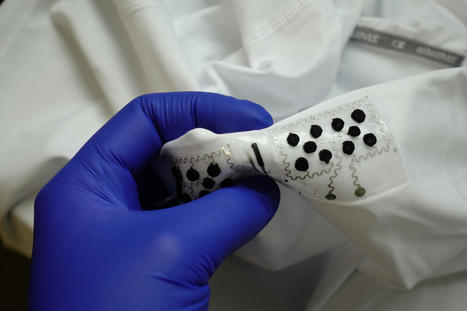
What if your shirt could sense that you’re sweating and adjust its temperature? Or what if your pants could notice that your stride has changed and alert you at the onset of injuries? That’s what the future may hold, textile researchers say. It might be years, possibly even decades, for the tech to reach consumers, but the foundation is being laid today with scientists creating pieces of fabric that push the boundaries of what’s been possible before. Nextiles, a National Science Foundation-backed textile company, wants to weave FitBit-like tech into textiles. It’s the latest addition to an evolving list of efforts to revolutionize the clothing we wear. The Brooklyn-based start-up last week launched its patented “smart fabric” — a machine-washable material with built-in circuitry — as a new way to capture biometric data. The 1st wave of the company’s technology is embedded in sportswear. The idea is that it enables athletes to measure their velocity, force, momentum and other metrics that you can’t get from today’s wearable wristbands and smartwatches. The broader vision is for the advanced fabric to trickle down to mass-market consumers to track heart rate and breathing through ordinary-looking garments. George Sun, Nextiles’ chief executive and a former executive at the sportswear designer Puma. “Rather than strapping a computer chip to your body, we can sew these circuitries directly into a sleeve, shirt and pants.” The company’s first offering is an arm and knee sleeve designed to measure mechanical changes from multiple data points on the garment. The information can be used to predict and prevent injuries and strain, Sun says. Nextiles is far from the first to dream of such a thing. The start-up’s product line represents the latest approach in a sea of ideas to revolutionize textiles so that apparel can do more than make a fashion statement. In February, Apple patented smart “fabric-based buttons” that might trigger controls on Apple Watches, iPhones and MacBooks. In 2018, Samsung patented plans for a “smart garment” T-shirt that changes colors on demand. Both companies fall behind Google, which launched its Project Jacquard smart fabric division in 2015. Two years later, Project Jacquard partnered with Levi’s on a jacket and corresponding app so you could use the clothes to answer calls. The jacket was met with mixed reviews. Still, the search giant continues to work with brands. Last year, it teamed up with Adidas on a smart insole for soccer players seeking to measure kicks, shot power, distance and speed. In March, researchers from China’s Fudan University published findings on electronic fabric capable of turning clothing into a display screen. They hope to turn their attention to the consumer market next, according to Qibing Pei, a materials scientist at the University of California, Los Angeles who co-authored the study. In 2019, scientists from the University of Maryland invented a fabric capable of warming up a person when they’re cold and cooling them off when they’re feeling hot. Image without a caption Nextiles’ approach to smart clothing is to use commonly available, machine washable threads. The start-up, founded in 2018, sources yarns from fabrics such as cotton, polyester and spandex then coats them with a conductive material, typically stainless steel, to collect data. Once melded with the conductive polymers, the fibers act like cables and are capable of transmitting signals. The company then weaves the fibers into fabric, layering the threads using proprietary stitching techniques. “We sew them in almost a cakelike fashion,” Sun said. “We sew a pattern in the first layer, a different pattern in the second layer, and maybe a few other layers, so the threads become almost like highways crisscrossing each other.” Sensors are strategically placed around the fabric, and Bluetooth chips about the size of a thumbnail are inserted to send the information to a smartphone or computer for processing. The firm says its fabrics are sensitive to any movement you make. It partners with and sells products to athletes to measure how the threads and fabric bends, stretches and twists around the body while they perform, which helps the start-up derive metrics hard to see with the naked eye such as momentum and torque. It’s working on other patents surrounding EKG and temperature tracking in the hopes to expand further into the connected fitness market, across the automotive sector and medical industry. Automakers might use sensing fabrics on car seats to augment human-vehicle interactions, or in tires to sense changes in the pavement. Imagine if your seat can tell that you’re cold, and automatically start to warm up.
Lacy Bauer's curator insight,
May 6, 2021 8:44 PM
Smart cloths to track heart rate, temperature, and muscle movement in future innovation in the works. Designers are working together with fabric makers to test device chips in different clothing to roll out for athletes to try first. Putting the chips in shoes to measure kicks and how the muscles in the body work while making that movement. The creators are trying to have the chips communicate to your phone for easy tracking and alerts. Which I see as great for a person with injuries to not push themselves so far to be reinjured. This would advise of health issues early to be caught before major health problems arise. The clothing items will be machine washable. I personal would question whether if too much water would make the sensors harmful to a person or limit the amount of wears the clothing would be good for. This question I'm sure is being looked at while designing the clothing.
Scoop.it!

The device, which is powered by ultrasonic waves, could help doctors monitor the health of transplanted organs and tissue Via Lionel Reichardt / le Pharmageek
Richard Platt's insight:
The device, which is powered by ultrasonic waves, could help doctors monitor the health of transplanted organs and tissue
Scoop.it!

Future of Electronics Panasonic researchers are developing unique and novel stretchable circuit materials. Credit Panasonic North America Future of Electronics Panasonic researchers are developing unique and novel stretchable circuit materials. Credit Panasonic North America Via TechinBiz
Richard Platt's insight:
Future of Electronics Panasonic researchers is developing unique and novel stretchable circuit materials. Electronics Panasonic researchers are developing unique and novel stretchable circuit materials.
Scoop.it!
Richard Platt's insight:
Nanoengineers at the University of California San Diego have developed a "wearable microgrid" that harvests and stores energy from the human body to power small electronics. It consists of three main parts: sweat-powered biofuel cells, motion-powered devices called triboelectric generators, and energy-storing supercapacitors. All parts are flexible, washable and can be screen printed onto clothing. "We're applying the concept of the microgrid to create wearable systems that are powered sustainably, reliably and independently," said co-first author Lu Yin, a nanoengineering Ph.D. student at the UC San Diego Jacobs School of Engineering. "Just like a city microgrid integrates a variety of local, renewable power sources like wind and solar, a wearable microgrid integrates devices that locally harvest energy from different parts of the body, like sweat and movement, while containing energy storage." The wearable microgrid is built from a combination of flexible electronic parts. Each part is screen printed onto a shirt and placed in a way that optimizes the amount of energy collected. Biofuel cells that harvest energy from sweat are located inside the shirt at the chest. Devices that convert energy from movement into electricity, called triboelectric generators, are positioned outside the shirt on the forearms and sides of the torso near the waist. They harvest energy from the swinging movement of the arms against the torso while walking or running. Supercapacitors outside the shirt on the chest temporarily store energy from both devices and then discharge it to power small electronics. Harvesting energy from both movement and sweat enables the wearable microgrid to power devices quickly and continuously. The triboelectric generators provide power right away as soon as the user starts moving, before breaking a sweat. Once the user starts sweating, the biofuel cells start providing power and continue to do so after the user stops moving.
Scoop.it!

Processors in tech wearables like heart rate monitors, could be replaced with mycelium which can actually sense electrical signals.
Richard Platt's insight:
Wearable electronic sensors, such as those within Fitbit watches and pedometers that detect biological signals, could be replaced in the future by… mushrooms. No that’s not a typo. In a proof-of-concept study, mycelium were able to perceive several external stimuli like light, temperature, and moisture, but also certain chemicals in the environment, and even electrical signals. Oyster mushroom mycelium, the fibrous mainframe tissues of fungi that colonize under the soil and from which mushrooms sprout, were able to perceive electrical signals in such a way as to replicate that part for sensors and processors, which are readable by a computer. In other (fantastical) words, the mushroom’s perceptions of the environment would become the data that gives you the beats-per-minute count on your heart rate monitor. In nature, mycelium organizes itself into geometric structures in and throughout the soil. While fungal mycelium don’t have many reasons for detecting electrical signals in nature that we know of, reprogramming oyster mushroom mycelium genes to form different geometric structures that would optimize the detection power of electrical signals is the ticket to ride that makes Prof. Andrew Adamtzky believe it’s worth investigating. “We have shown that it is possible to discern a nature of stimuli from the fungi electrical responses,” Adamatzky, who famously utilized slime molds to solve mazes and optimize city roadway planning in Tokyo and France, wrote in his new research paper. The patches referred to were hemp fabric colonized with mycelium and then hooked up to computer sensors. Spraying different chemicals onto the patch, as well as exposing it to different stimuli mentioned above, were what gave Adamatzky the surety of voice. It’s not anything that’s going to seize control of the markets anytime soon, but it’s another fascinating application of mycelium, which GNN has reported can be used to make building bricks, coffins, canoes, and to great effect on nuclear waste cleanup.
|







The global wearable band market grew 5.6% Y-o-Y with 40.9 million units shipping in Q2 2021. The decline of basic bands, which started in Q4 2020, has extended into Q2 2021. Shipments fell 23.8% to 15.5 million units. But the decline of basic bands is being offset by growth in wristwatches. Shipments of basic watches and smartwatches reached 25.4 million, up 37.9%. Wristwatches now account for 62% of global wearable band shipments. Wristwatch shipments overtook those of basic bands for the 1st time in Q4 2020, and this trend has continued since then, with wristwatches accounting for over 60% of all wearable band shipments for 3 consecutive quarters to date. Canalys expects wristwatches to be the key growth driver for the wearable band category for years to come. Xiaomi overtook Apple to become the top-shipping wearable band vendor in Q2 2021. Xiaomi’s performance was bolstered by the launch of the Mi Smart Band 6, despite India, one of Xiaomi’s strongholds, not on the initial global launch list. Huawei hung on to third place, mostly relying on China to stay afloat. “Xiaomi made a wise move to hasten the release of the Mi Band 6, which is a more compelling device than its predecessor,” said Canalys Research Analyst Cynthia Chen. “Xiaomi’s quick pivot to basic watches also helped the company boost its wristwatch shipments by 1.3 million units this quarter.”