


Recon will use the funding to nurture a developer base and tap Intel's chipmaking ability.

 Your new post is loading...
 Scoop.it! Recon will use the funding to nurture a developer base and tap Intel's chipmaking ability. 
No comment yet.
Sign up to comment
Scoop.it!

A new low-power microchip could be the future of preventive health care. Researchers at the University of Virginia are developing wearable technology that monitors a person's health in real time.
Richard Platt's insight:
Researchers at the University of Virginia are developing wearable technology that monitors a person's health in real time. - The microchip is attached to a person's body and is able to monitor body heat and motion, as well as external factors like temperature and sunlight. The microchip collects this data and then sends it wirelessly to another designated device, like a smart phone. In the event of an emergency, doctors will be able to look at the patient's vitals and respond immediately. - UVA's microchip development is part of a larger nanotech collaboration with the Advanced Self-Powered Systems of Integrated Sensors and Technologies (ASSIST) Center headquartered at North Carolina State University. Right now, researchers are focusing in on childhood asthma and ways to detect an asthma attack before it happens. ASSIST is developing sensors that will work with UVA's microchip to detect body changes as well as environmental factors that could warn of an impending asthma attack. - Eventually, they would like to apply this technology to all kinds of diseases.
Scoop.it!
NeuroMetrix, Inc. (NASDAQ: NURO) today announced the full commercial launch of Quell, which is now available on the Company's product website at QuellRelief.com and at select...
Richard Platt's insight:
Worn just below the knee, Quell calibrates automatically for every user, determining the ideal therapeutic intensity of electrical nerve stimulation to provide optimal pain relief. Quell triggers a central inhibition effect that "turns down the volume" of pain signals by stimulating the sensory nerves, which causes the brain to release endogenous opioids that ultimately reduce pain signal transmission. Quell provides widespread pain relief and is more than twice as strong as ordinary TENS (transcutaneous electrical nerve stimulation) devices, which typically provide only localized pain relief. - New York native Jesse Alberio has been living with painful diabetic neuropathy for over two years. After trying a number of different medications to control the pain, he was still experiencing burning and numbness in his lower extremities. "As a security supervisor and NYPD auxiliary police member, I'm on my feet all day," states Alberio. "I used to change my shoes up to five times a day to try to relieve the pain in my feet and even occasionally took opioid pain medication, which would make me feel groggy. Now, I have been using Quell daily and don't feel the need to change my shoes—it has significantly reduced my pain, I have been taking less medication and I am sleeping better."
Scoop.it!

The team at Modern Edge offer their take on the future of wearable tech and where Portland can fit in.
Richard Platt's insight:
When asked Charles Austen Angell, CEO and creative director at Modern Edge "why would I want to wear technology as clothing, he replied: “The question is not so much why you would want technology in your clothes, but rather, would wearable technology be useful to you. Garment-based, threadcasted technology offers a much more graceful and less obtrusive way to remain connected because it’s in the background. It’s not so much about putting the technology in the clothing as getting it out of the way.” The example provided: Push messaging takes text messaging to the next step, in which users can communicate information or self-expression with connected garments, she suggested. Early adopters would likely include teams, social groups traveling together and participants at conferences. “Imagine how the conversation will change when it’s not a virtual space you are looking at to receive messages from people, but the clothing they wear and how they are dressed. This has the potential to encourage different kinds of conversations and dynamics in public settings,”
Scoop.it!

Disney Playmation is coming and there's a reason for the buzz. It's like technology meets dress-up, make-believe and old school play. Read on for details!
Richard Platt's insight:
Each system is made up of set of toys that connect to the base hub. That’s where players can get basic outlines for a play session or have an adventure narrated for them. Like, in he Marvel’s Avengers series, the first to roll out later this fall, kids get 5 connected toys including that all-important Iron Man “Repulsor” glove for kids to wear. Your kid puts it on, and the toys communicate using a mix of gesture recognition, plus infrared and radio frequency technology. I think parents will like that it’s way more than a typical sit-on-your-tush, touch screen video game because it’s not tethered to an Internet connection. Players can explore the room, jump, run, tumble, dive, dodge, and live out their dreamed-up, dress-up, superhero adventure in the family room, the backyard, the basement — anywhere. So what Wii and Kinect for Xbox 360 started a while back with video games for the family that get you moving, Disney is definitely taking to the next level here. - Microsoft, Sony and Nintendo have competition now in game console business, now if we could only do this for adults (some of us still like to play to blow off steam)
Scoop.it!

The Internet of Things -- connecting everyday items with sensors -- is hitting the beach in time for the northern hemisphere's summer with a bikini that says when it's time to apply more sun screen.
Richard Platt's insight:
"There are flowerpots that give an alert when plants need watering, so I thought it was time to invent something to warn when the sun is too strong," Marie Spinali, founder of Spinali Design said.
Scoop.it!
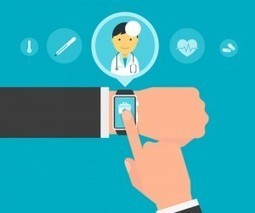
With products like smartphones, smartwatches and fitness trackers, there has been enormous growth in the wearable technology industry.
Richard Platt's insight:
Gamification of Exercise and Physical Therapy: Innovative devices like the Valedo Back Therapy are combining well-proven physical therapy exercises with video games similar to Nintendo’s Wii and Xbox’s Kinect to add more fun to your exercise routine. With Valedo, you attach a couple of smart sensors to different parts of your body to serve as controllers for various games. As you move your body through different physical therapy exercises for your lower back, you influence the path of your avatar through different stages and missions of the games. All of your movements are tracked during the game, and the better you perform, the higher the score you achieve. Monitoring and Prevention of Serious Disease: When it comes to diseases and illnesses, wearable health technology will play a major role in helping people track, monitor and even prevent serious health issues in the future. For example, with specialized devices, diabetics will be able to easily track their blood glucose levels so they'll know when to take their medication. Another innovative gadget designed by Cyrcadia Health is a smart bra that helps women track the conditions and rhythms of the tissue in their breasts so they can be alerted to any early warning signs of cancer. This device, which has been dubbed the iTBra, has been tested on over 500 women and has successfully offered vital information for the diagnosis of breast cancer for 87% of the participants.
Scoop.it!

From heart sensors to concussion trackers, wearable tech has thus far favored fitness and health gurus.
Richard Platt's insight:
If the eyes are the window to the soul, then Japanese eyewear manufacturer Jins know more about you than you do. Its Jins Meme smart glasses use bio-sensing technology to detect tiny changes in eye and head movement. This information is displayed on a companion app so you can monitor your fatigue and level of attention—a factor that could prove critical for long-distance drives, all-nighters, and just work in general. You may be able to tell how tired or focused you are by simply using your brain, but the idea behind these smart glasses is to provide a more accurate assessment of your level of focus—if that's something you (or an employer!) are interested in. The third-party research potential is also pretty compelling.
Scoop.it!

From
wtvox

Today, massive technological shifts – driven by Big Data, mobility, security and cloud computing – are rapidly transforming business and society. Entire industries are being completely transformed ... Via Lionel Reichardt / le Pharmageek
Richard Platt's insight:
While applications and tools are enabling self-monitoring of health, more sophisticated devices and technologies are also capable of delivering the data generated to healthcare professionals, who can process it to predict and prevent bigger health concerns in the future. Wearable devices are playing a major role in transferring actionable data from patients to doctors and caregivers, even employers. As a recent example, Google X Lab has partnered with Novartis to design contact lenses that track glucose levels in the wearer’s tears and transfers that information to a mobile device that the doctor uses for monitoring. Another Google X project is the use of nanotechnology for detecting cancer. This project aimed at developing the nanoparticles Pill, which when ingested will run through the bloodstream, detects any abnormalities that suggest the presence of cancer. The data generated will be transmitted to doctors through a wearable device. It may be a revolutionary innovation for detecting and eradicating life-threatening diseases in their early stages. The way disruptive technologies are creating seismic shifts in the healthcare landscape, it’s not hard to predict that we are in the midst of a healthcare revolution that empowers us more than ever to manage our lives to perform better on the field, at work, or in our home.
Scoop.it!

The new Apple Watch will hit stores next week, joining wearables from Google and others, but a survey finds consumers aren't wowed by such products.
Richard Platt's insight:
"Even though the Apple Watch has had early sales success, consumer survey data suggests manufacturers, specifically their marketing teams, have significant work to do in convincing the average person that a smartwatch is as worthy of their time and money as tablets proved to be," eMarketer analyst Cathy Boyle said. The report compiled and analyzed data from more than 25 third-party studies on wearable device adoption, usage and consumer awareness worldwide, in addition to including insights from some 15 interviews with marketing professionals and wearable technology experts, eMarketer said. - Wearable device shipment projections for 2015 vary widely, the report found. Research firm IDC forecast global shipments would reach 45.7 million units this year, up 133% from 2014. Market analysis firm CCS Insight estimated 75 million shipments, which it said would be a 159% jump. And Yano Research Institute forecasts shipments of 104.8 million wearable devices in 2015, more than four times its 2014 estimate. - "Assessing the state of wearable technology is actually becoming more difficult as time goes on," said Boyle, who added that "the number and variety of products that fall into the wearable category and the speed at which the selection of products is expanding are making forecasting difficult."
Scoop.it!

ROAR is a startup that's building a wearable device designed to deter attackers and notify loved ones.
Richard Platt's insight:
Athena, a wearable fashion accessory that doubles as a sort of high-tech rape whistle. When its wearer senses danger, they can hold down a button on the device for three seconds to activate a loud alarm and flashing lights. ROAR then pairs with its smartphone app to alert local authorities and pre-designated loved ones that something is up and shares the victim's location with those people.
Scoop.it!

There is a surprisingly rich ecosystem of devices, a plethora of uses, and importantly, a wealth (both in quantity and value) of markets that are..
Richard Platt's insight:
Using a periodic table to extract a framework and put some organization around the huge surface of wearable technology. Each item in a color-coded group is related to each other in some important way, just like the real periodic table. Instead of atomic number and chemical properties, we use value-prop and underlying technologies. We look at the elements first by Industry Series (bottom row) consisting of automotive manufacturers, telecoms, utilities and others. These elements are the foundation of the market, the users of wearable technology and the primary drivers for the rest of the chart. Wearables will have a profound impact on businesses of all types, in just about every industry. - They enable scenarios that are impossible to do in any other way, and in particular hands-on operational work. This is the killer app for wearables and so the Industry Series is built around companies with lots of people who build, fix, move and operate things. - The Hardware Series (second row from the bottom) is the collection of devices – smart glasses, smartwatches, and some of the peripherals – that, when combined with the other Industry Series elements, help businesses get things done. Not every device is created equal or is even able to perform every possible use case. But with experience, an enterprise can quickly find the right tool for the right job. You’ll see that standing in for Hydrogen, the most common element, is See What I See. It really does represent the most requested feature. The reason is that there is a universal need and huge value in delivering immediate access to expert help. Getting two sets of eyes on the job can make solving a problem faster, improve the quality and even allow lower-skilled resources to do high-skilled work with a little over-the-shoulder coaching. - The Communication Series represents different high-level concept requirements to enable real-time collaboration. This includes the ability to access expert help in real-time through video collaboration, telestration, audio calling, screen capture and more. - A business’s need to capture, transmit, and interact with key media is expressed in the Document and Share Series. These features include video and audio capture, high-resolution image capture, time-lapse images and barcode and QR code scanning. - Work and Help Series elements are the things that end-users need to get their job done effectively. These include individual work requirements such as workstreams, the ability to capture and view help videos, expedite tasks and more. These are what business leaders see as value drivers for their operations. The ROI delivered from this family of elements is demonstrated in improved training, access to stored guidance from experts and the ability to easily pass “tribal knowledge” and skills from more experienced employees to new hires.
Scoop.it!

VSP Global, an insurer covering 75 million members with various types of optical coverage, is getting into the mobile healthcare wearables market.
Richard Platt's insight:
Black frame glasses are not nearly as commonly worn as they used to be. But the glasses, with the technology inside the frame and invisible from the outside, were a good start to test the concept with 26 VSP employees, as the company continues to work on ways to put the technology on more marketable and less bulky styles of glasses, says Jay Sales, co-leader of VSP Global's innovation lab, called The Shop. - The initial beta found that use of wearables was more stable over a 90-day period than is often common with other tests of wearable health and fitness technology. Multiple connectivity issues also were found and are being addressed. The product includes a mobile app for Android with an iOS app soon to come. - VSP’s eyewear division, called Marchon, is the third largest manufacturer of frames in the world and has a wide range of product lines. Having wearable technologies in eyewear could be especially beneficial because the technology is with the user throughout the course of the day and can collect data on different profiles. For instance, because the software is near the body’s center of gravity, the data collected could give better insights into an individual’s posture and gait. That could help determine if changes in walking behavior could improve back pain or recovery from hip or knee surgery, Sales says.
|
Scoop.it!

Indian technology company EasyM2M has installed wifi at Eastern Coal Fields’ underground coal mines to improve occupational health and safety and increase response times to incidents.
Richard Platt's insight:
The Indian mines generally have one phone or an intercom to communicate with control teams on the surface during shifts and in the event of an accident. But they are notoriously unreliable and time is often lost during emergency response in trying to communicate into the mines. - “One miner dies every third day. A lot of time is lost in miners trying to communicate to the surface during an accident, emergency, or even for quick advice on how to fix a machine,” said Priya Ranjan Kumar, founder EasyM2M Technologies. - The company has built a wireless network to provide total, continuous wifi coverage to support wearable tech for the miners, which has Bluetooth connectivity and a gravity sensor to detect falls, monitors GPS co-ordinates in real time and a built-in camera for video calls.
Scoop.it!

The latest acquisition by Sarasota plastics company Octex is part of a two-year investment plan to grow in the market for building wearable technology components.
Richard Platt's insight:
Purchasing Choice Tools & Mold gives Octex new building means. The company can now take new tools from the design stage to packaging, Executive Vice President John Hoskins said in an interview June 15. From 2016 to 2018, Octex will focus on business growth within the burgeoning micro- and nano-molding markets to make components of medical, industrial and consumer products. Octex has already spent $10 million developing its building footprint and hundreds of thousands of dollars on analysis equipment. - That analysis equipment helps Octex speak the language of their consumer-facing clients, Hoskins said. End-user analytics also inform the development process and new uses for Octex components. - “It ties you in a very visceral way to where the product ends up,” - Octex wants its components to help out-of-body diagnoses and patient monitoring through implantable technology and mobile devices like iPhones.
Scoop.it!
Technology companies are developing a myriad of wearable health devices that can track physical activity, monitor glucose and even sense if the user falls. What do consumers think about wearables? What are the implications for the health industry? Via Giuseppe Fattori, Lionel Reichardt / le Pharmageek
Richard Platt's insight:
PwC does a good job of calling out that the state of the wearable market is far from a goldmine that it will eventually become - many in industry seem to overlook or forget that it is system integrators are going to take the lead in the acceptance and adoption of wearable tech.
Scoop.it!

"If we only got these two learnings out of this app, it would already be worth it."
Richard Platt's insight:
Comparing the tests of people who have Parkinson's and who use the app to the results of people who decided to join the app as part of the control group, Williams says that researchers made a startling observation: (1) Amongst the people who signed up as part of the control group, some of them exhibited symptoms similar to those who have Parkinson's. This could mean several things, including — potentially — that some of the people in the "control" group may have the disease as well. Since ResearchKit isn't a legal diagnostic tool yet, these results are still very preliminary. Plus, the study was only observational, meaning the researchers have no direct control over the experiment (they can't assign some people to develop Parkinson's and others to not develop it) and simply observe the way participants use the app. (2) Another valuable data point comes from looking at how people's medication affects their test results. After someone with Parkinson's takes their medicine, for example, that person should ideally have an easier time completing the app's tests, which include recording their voice and tapping their phone's screen as fast as they can. Subtle voice changes in tremor and volume as well as changes in dexterity have been shown to be a good way to measure the severity of Parkinson's symptoms, according to the University of Rochester Medical Center. For many of the app's recent users who reported taking their medicine regularly, however, their test results did not appear to improve significantly, said Williams. That's incredibly useful data for patients and doctors who want to see what effect — if any — their medication is having. - "If we only got these two learnings out of this app, it would already be worth it,"
Scoop.it!

From Google Glass to Bluetooth watches, the world of wearable technology is booming. So what happens when you add a bit of Kiwi ingenuity? Science reporter Jamie Morton looks at 10 - New Zealand Herald
Richard Platt's insight:
Great examples for the wearable / IoT space of technology products that could really make a difference - they have actual uses on real problems. Example - Impactwear uses advanced fabric technology to provide impact protection to help prevent hip fractures. At the moment of impact, the material reacts and its molecules bind together to form a protective shell to absorb and deflect the blow. The garments are designed to be worn by anyone at risk of a fall-related hip fracture, either due to age or an underlying medical condition such as osteoporosis. While protective garments have been around for years, they hadn't been widely used because the products were ugly and uncomfortable.
Scoop.it!

Many people are concerned about privacy issues when it comes to wearable technology, which could have a negative effect on the industry.
Richard Platt's insight:
Educate: Tech businesses need to reach out to their customers better by getting rid of the jargon and actually speaking in terms that the general public will understand. This way they will be able to explain the issues that surround wearable technology and show how they might relate to their lives. - The category of wearable technology is so much more than just privacy concerns but at the moment, consumers are not completely aware of the advantages that these devices can provide and how they can be beneficial to society. - For example, these devices aren’t just for the tech-savvy but can be used by doctors performing surgery, to locate missing dementia suffers, or as methods of payment in shops. Without reaching out and communicating with potential customers, these advantages will be overshadowed by the potential issues that are concerning people – such as privacy fears.
Scoop.it!

Do wearable devices that track or influence your brain activity really help you improve your focus or change your mood?
Richard Platt's insight:
MUSE helps you to train your brain by giving you real-time feedback on how your brain is performing as you’re guided through focused “attention training,” which its website says is “the mental equivalent of a treadmill.” It aims to improve your focus over time by teaching you to become aware of your distractions more quickly and to react more quickly to regain focus on a task. Re/Code’s Bonnie Cha described MUSE as a “Fitbit for your brain,” and reported that the sessions made her more relaxed during the stressful parts of her day, though she had yet to see any long-term effects. But MUSE is far from the only brand marketing EEG technology as a way to train your brain. While the MUSE costs $299, Neurosky makes a variety of EEG headsets, including one that costs just $79. Other options at various price points include the Melon Headband, the Versus headset, and Emotiv’s headsets. Though EEG devices designed for brain training are proliferating, many experts are skeptical about the effectiveness of using what amounts to games and gamified exercises to improve your brain’s performance. The Stanford Center on Longevity and the Berlin Max Planck Institute for Human Development last year asked leading cognitive psychologists and neuroscientists for their opinion on “brain games.” The consensus of the group was that claims promoting brain games are often exaggerated, and the performance gains that are experienced aren’t always lasting. The experts noted that “there is little evidence that playing brain games improves underlying broad cognitive abilities, or that it enables one to better navigate a complex realm of everyday life.”
Scoop.it!

“We’re Microsoft and we can bring these devices to life”
Richard Platt's insight:
Smartwatches obviously come with small touch displays that can be barely used for some tasks (Microsoft, for some reason, also offered a small keyboard on the Band, although it’s a nightmare to type on it, especially when wearing it on your wrist), but new tech could make it a lot more useful. - A technology that Microsoft presented in February can be used to analyze the text included in an email and provide you with options based on this content, so you can easily reply with a pre-defined message based on the displayed option. - “An example could be someone emailing you and asking what you want for tea when you get home - pizza or curry. Instead of displaying a long-winded email on a wearable with a small screen, the algorithm spots that you’re being asked a choice, and will present you with two options: pizza or curry, with a button for each,” he goes on to detail. - Just as expected, no specifics have been provided on when the next Band or wearable device could launch, but sources claim that the Band 2 is likely to see daylight after the debut of Windows 10 on July 29.
Scoop.it!

After a six-week dalliance with a handsome, much-ballyhooed new suitor (a.k.a. the Apple Watch), a writer decides to move on.
Richard Platt's insight:
Not a completely unreasonable take on why Apple's watch isn't the best thing since sliced bread. Read on to see whether or not you agree with the author's take on using it for 1.5 months. - "Because no matter how attractive the Apple Watch is in the context of other smartwatches or smartbands, no matter how much of an aesthetic advance its rounded corners and rectangular display, it still looks like a gadget. Especially on someone, like me, with relatively small wrists."
Scoop.it!

Huawei Signs Wearable Tech Deal In America - ChinaTechNews.com
Richard Platt's insight:
Huawei launched its smart band product TalkBand B2 in America and announced a strategic deal with smart band manufacturer Jawbone to integrate data from Huawei's wearable products into its UP application ecosphere. With the cooperation, Huawei's existing and future wearable products will be able to access Jawbone's UP application and enjoy Jawbone's data integration service. The data will be simultaneously stored in Huawei Wear and Jawbone UP. In the future, Huawei's smart watch will also be included in the Jawbone UP platform.
Scoop.it!
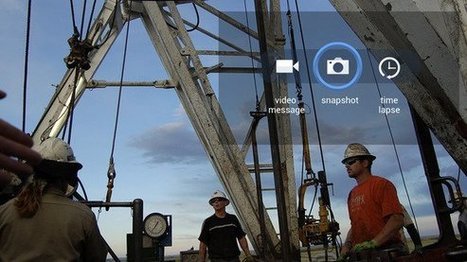
APX Labs expanded its Skylight software to support work management and voice controls on smart glasses-- and watches, helping hands-on workers...
Richard Platt's insight:
Skylight is designed to enable hands-on workers to access the information, applications, and systems necessary to do their jobs, without the interruption of turning away to use computers, phones, or paper manuals. The Skylight technology was originally used in military applications, such as on smart helmets worn by soldiers. In recent years, APX has been designing smart glasses applications for manufacturing and field service and has customers in the automotive, aerospace, oil and gas and energy industries. As an extension to enterprise resource management (ERP) and asset management systems, the Skylight software can push detailed instructions to someone working on a complicated wiring system, for example, as well as deliver alerts, capture images, share documents, conduct video calls, and pull up reference materials. The information is displayed on the smart glasses in the person’s line of vision so they can continue working while gathering information or next steps. The latest version, Skylight R5, adds a feature called Workstreams, a work management application that gives each user the instructions, content, and help they need for their job, be it a service or work order for equipment installation or repair, or a task list. The embedded content can be delivered in a diagram, schematic, or a video, providing individual steps required to get the job done. This feature is also important for transferring knowledge between expert and novice workers. An expert can take a video while they complete a task and store that content as part of the work stream for someone else to access when they are doing a similar job in the future.
Scoop.it!

With a varied and fast moving supply chain, loads of stock moving quickly through warehouses, delivery trucks, stores, and an increasingly digital mandate, the food retail sector is unlike any other retail segment. Paul Clarke, director of technology at Ocado, a leading online food retailer, explains how the cloud, robotics, and the Internet of Things is increasingly at the heart of everything the company does.
Richard Platt's insight:
Paul Clarke, director of technology at Ocado, a leading online food retailer, explains how the cloud, robotics, and the Internet of Things is increasingly at the heart of everything the company does. Ocado started 13 years ago as an online supermarket where consumers could quickly and easily order food goods. It does not own or operate any brick-and-mortar stores, though it effectively competes with all other food retailers. "IoT is very important for the company in several areas. Its warehouses are like little IoT worlds all on their own, Clarke says, with lots of M2M, hundreds of kilometres of conveyor, and thousands of things on the move at any one time including automated cranes and robotics. - Then there’s all of the data the company collects from drivers for things like route optimisation and operational improvement – things like wheel speed, tire pressure, road speed, engine revs, fuel consumption, cornering performance, which are all fed back to the company in real-time and used to track driver performance. - There’s also a big role for wearables in those warehouses. Clarke says down the line wearables have the potential to help it improve safety and productivity (“we’re not there yet but there is so much potential.”) - But where IoT can have the biggest impact in food retail, and where it’s most underestimated, Clarke explains, is the customer element: “This is where many companies underestimate the scale of transformation IoT is going to bring, the intersection of IoT and smart machines. In our space we see that in terms of the smart home, smart appliances, smart packaging, it’s all very relevant. The customers living in this world are going to demand this kind of smartness from all the systems they use, so it’s going to raise the bar for all the mobile apps and service we build.” - “Predictive analytics are going to play a big part there, as will machine learning, to help them do their shop up in our case, or knowing what they want before they even have a clue themselves. IoT has a very important part to play in that in terms of delivering that kind of information to the customer to the extent that they wish to share it,” he says.
|





Intel plans to integrate the company into its New Devices Group, whose task is to help Intel push into a new family of smart device platforms. Intel said it would continue selling the Recon goggles, as well as continue designing new products. Some of Recon’s knowledge will be used elsewhere, too, as Intel works hard to keep up with the evolution from the PC through phones and tablets into the Internet of Things. “The growth of wearable technology is creating a new playing field for innovation, and we’ve made tremendous strides in developing products and technologies to capture this next wave of computing,” said Josh Walden, a senior vice president and general manager in charge of Intel’s New Technology Group.